
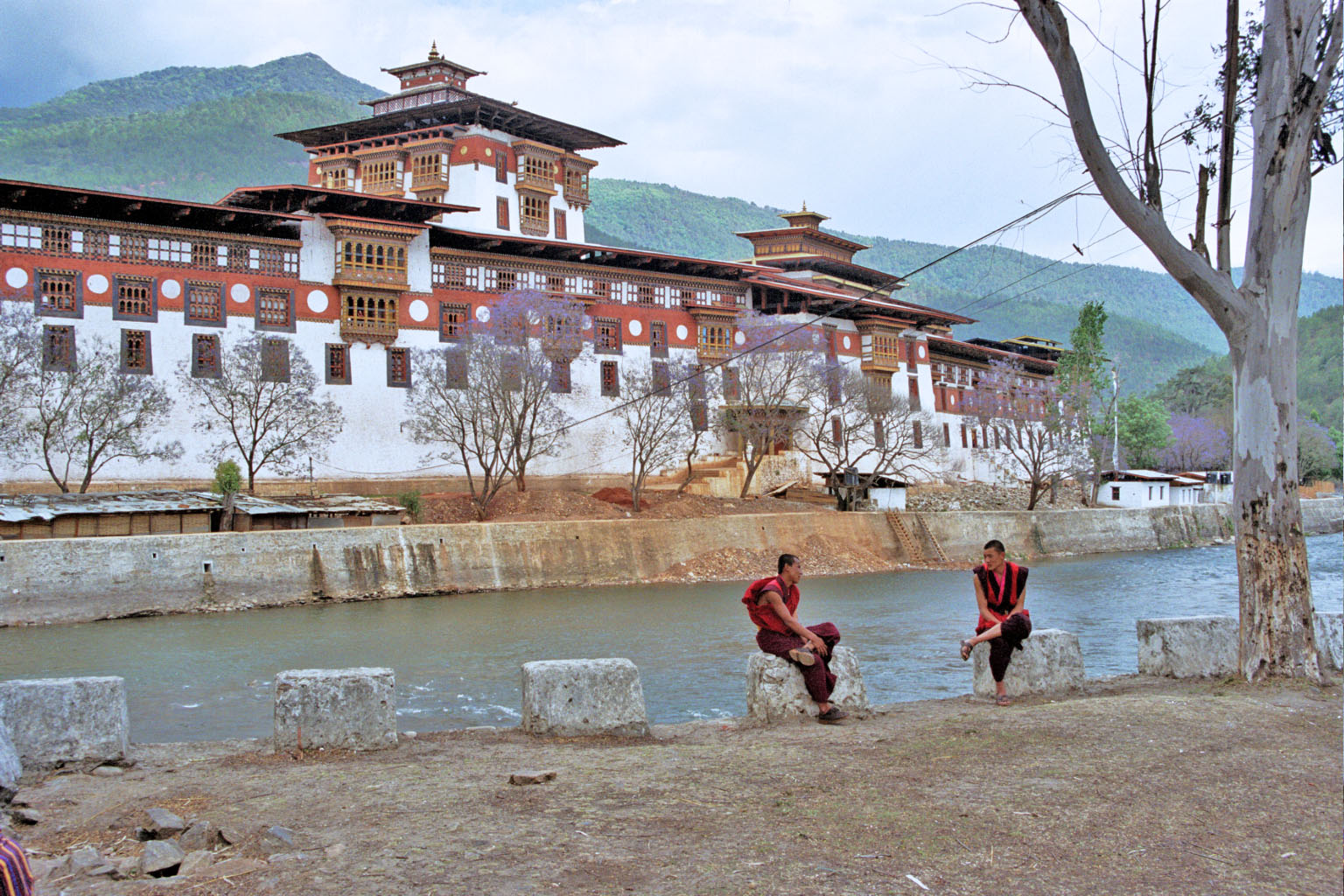
Why Punakha is Perfect for Your Celebration
- The Punakha Dzong — a 17th-century fortress at the confluence of two rivers — provides a ceremonial backdrop found nowhere else on earth
- Warm valley microclimate makes Punakha one of Bhutan's most comfortable year-round destinations, especially in spring and autumn
- Strict Bhutanese tourism policy naturally limits guest numbers, creating an atmosphere of genuine exclusivity and privacy
- Lush paddy fields, rhododendron forests, and the Mo Chhu and Pho Chhu rivers frame every outdoor event with extraordinary natural scenery
- Deeply rooted Bhutanese cultural traditions — from ceremonial dress to local cuisine — add authentic meaning to any celebration
- Small, curated resort properties offer highly personalised service suited to intimate destination weddings and private retreats
Compare Punakha with Other Top Destinations
Frequently Asked Questions
Is Punakha a good destination for a wedding?
Yes, particularly for small, intimate destination weddings. Punakha's combination of the iconic Punakha Dzong, riverside resort properties, and Bhutan's naturally exclusive tourism environment makes it one of Asia's most distinctive wedding settings. It works best for guest groups of roughly 20–80 people who prioritise scenery, cultural depth, and a private, meaningful experience over large-scale event production.
What is the best time of year to hold a celebration in Punakha?
Spring (March, April, May) and autumn (September, October, November) are the recommended seasons. Spring brings blooming rhododendrons and warm valley temperatures; October is widely considered the single best month, with clear skies, excellent Himalayan visibility, and a lush post-monsoon landscape. The monsoon months (June–August) are unsuitable for outdoor events due to heavy rainfall and river-level risks.
How do guests get to Punakha?
All guests fly into Paro International Airport — Bhutan's only international airport — served by Druk Air and Bhutan Airlines from regional hubs including Delhi, Kolkata, Kathmandu, Bangkok, and Singapore. From Paro, Punakha is a three-to-four-hour road journey over the Dochu La pass. There is no railway access to Bhutan. Event planners should build this transfer into arrival and departure logistics carefully.
Do international guests need a visa to attend an event in Punakha?
Yes. All international visitors to Bhutan (except Indian, Bangladeshi, and Maldivian nationals) require a visa and must pay Bhutan's Sustainable Development Fee, arranged in advance through a licensed Bhutanese tour operator. This is a mandatory regulatory step that event coordinators must manage well ahead of the event date — typically several weeks in advance at minimum.
What size of guest group can Punakha realistically accommodate for a wedding or event?
Punakha's venue inventory is best suited to groups of roughly 20–80 guests. The valley's boutique resort properties can typically accommodate intimate gatherings within this range, often on a full-buyout basis. Groups significantly larger than 80–100 guests will find the local accommodation and event space inventory stretched, and a different destination with larger-scale infrastructure would be more appropriate.
What kinds of venues are available for events in Punakha?
The primary venue format is the boutique resort or lodge, typically set within the valley's paddy fields or on elevated ground with river views. These properties offer private lawns, open-air terraces, and indoor dining spaces configurable for ceremonies and receptions. Full property buyouts are common for event groups. There are no large convention centres or standalone banquet halls — the destination is structured for intimate, whole-property experiences.
Can local vendors in Punakha handle wedding catering and décor?
For core catering and basic décor, yes — the valley's resort properties have in-house or established local catering capabilities, and Bhutanese cuisine is a genuine asset for celebration menus. For more specialised requirements (elaborate floral design, international AV production, specialist photography), most planners source vendors from Thimphu, Paro, or India. Lead times are longer than in more established destination wedding markets.
Is Punakha safe for international guests attending a wedding?
Yes. Bhutan is consistently rated among the safest countries in Asia for international visitors. Crime rates are very low, the political environment is stable, and the local population is welcoming toward guests. The main safety considerations are practical rather than security-related: mountain road conditions during monsoon or winter, and the physical demands of the Paro-to-Punakha road transfer for guests with mobility considerations.
What makes a Punakha wedding feel different from other destination weddings?
The Punakha Dzong — a 17th-century fortress-monastery at the confluence of two sacred rivers — provides a ceremonial backdrop that cannot be replicated anywhere else. Combined with Bhutan's regulated, uncrowded tourism environment, authentic Bhutanese cultural traditions (dress, cuisine, blessings), and the valley's extraordinary natural scenery, celebrations here carry a depth of meaning and visual distinctiveness that is genuinely rare among destination wedding locations.
How should I plan accommodation for a guest group in Punakha?
The most practical approach is a full buyout of one or more of the valley's boutique resort properties, which ensures your group has exclusive use of the facilities and dedicated staff attention throughout the event. Because the valley's total accommodation inventory is limited, early booking — ideally six to twelve months in advance for peak spring and autumn dates — is strongly advisable. Overflow accommodation in nearby Wangdue Phodrang town is an option for larger groups.
What is local transport like for a guest group once they arrive in Punakha?
There is no public transport infrastructure suited to event groups in the valley. Movement between properties, the Dzong, and any excursion sites is by private vehicle. Most resort properties arrange transfers for their guests, and event planners typically coordinate a dedicated vehicle fleet for the duration of the celebration. The valley is compact, so inter-property movement is manageable, but self-organised transport options are very limited.
Can Bhutanese cultural elements be incorporated into a wedding ceremony in Punakha?
Yes, and this is one of Punakha's genuine strengths. Traditional Bhutanese elements — including ceremonial blessings by local monks, traditional Kira and Gho dress for the couple or guests, local folk music and dance performances, and Bhutanese feast menus — can be authentically incorporated through coordination with local operators and resort properties. These elements feel genuinely rooted rather than staged, which is a meaningful distinction for couples seeking cultural depth.

Ready to explore venues in Punakha?
Punakha: Destination Wedding & Celebration Venues in Bhutan's Sacred Valley
◆Punakha is Bhutan's most celebrated valley destination for intimate, high-exclusivity weddings and private celebrations. Its primary vibe is romantic and dreamy — shaped by the 17th-century Punakha Dzong at the confluence of two sacred rivers, lush paddy terraces, and a warm microclimate that sets it apart from the rest of Bhutan. The destination suits small destination weddings, honeymoon-adjacent celebrations, and private milestone events particularly well. The best seasons are spring (March–May) and autumn (September–November); the monsoon months are genuinely unsuitable for outdoor events. Accessibility requires planning — all guests fly into Paro International Airport and travel onward by road — and the local venue inventory is deliberately small and curated, making Punakha a destination for those who prioritise depth of experience over scale.
Punakha at a Glance
| Attribute | Detail |
|---|---|
| Best For | Intimate destination weddings, honeymoon celebrations, private milestone events, spiritual/cultural ceremonies |
| Primary Vibe | Romantic & Dreamy |
| Other Vibes | Serene, Culturally Rich, Exclusive, Spiritual |
| Best Season | Spring (Mar, Apr, May, Sep, Oct, Nov) |
Why Choose Punakha?
- An unmatched ceremonial backdrop: The Punakha Dzong — a fortress-monastery built in 1637 at the meeting of the Mo Chhu and Pho Chhu rivers — is among the most visually dramatic settings for photography and ceremony in all of Asia. No constructed venue can replicate it.
- Genuine exclusivity by design: Bhutan's government-regulated tourism model limits visitor numbers and mandates a daily sustainable development fee for international visitors, which naturally keeps Punakha intimate and uncrowded — a meaningful advantage for couples who want privacy and a sense of occasion.
- Warm valley microclimate: Punakha sits at a lower elevation than Thimphu or Paro, giving it a noticeably warmer and more comfortable climate, particularly in spring and autumn when outdoor celebrations are genuinely pleasant rather than merely tolerable.
- Authentic Bhutanese cultural immersion: From traditional Kira and Gho dress codes to local Ara spirits, red rice cuisine, and the sounds of Bhutanese folk music, celebrations here carry a cultural authenticity that is impossible to stage elsewhere.
- Highly personalised hospitality: The small number of quality resort properties in the valley means that event groups typically receive a level of dedicated, personalised service that larger, more commercial destinations rarely match.
- Extraordinary natural scenery year-round: Even outside the peak seasons, the valley's terraced fields, river confluences, and forested hillsides provide a visual richness that elevates every element of an outdoor or semi-outdoor celebration.
Which Celebrations Work Best in Punakha?
- Intimate destination weddings: Punakha is particularly well-suited to small weddings — typically under 60–80 guests — where the emphasis is on meaning, scenery, and experience rather than scale. The valley's resort properties are designed for exactly this kind of gathering, and the Dzong's visual presence gives even a simple ceremony a sense of grandeur.
- Honeymoon and post-wedding celebrations: Couples who have already held a larger ceremony elsewhere frequently choose Punakha for a private, intimate follow-up celebration or honeymoon retreat. The combination of luxury accommodation, natural beauty, and cultural depth makes it one of the most compelling honeymoon destinations in Asia.
- Private milestone events: Significant anniversaries, landmark birthdays, and family reunion gatherings of a modest size translate well to Punakha's setting. The destination rewards groups who want to mark an occasion with genuine meaning rather than a conventional banquet-hall format.
- Spiritual and cultural ceremonies: For couples or families with a connection to Buddhist traditions, or simply a deep interest in Bhutanese culture, Punakha offers the possibility of incorporating genuine local ceremonial elements — blessings at the Dzong, traditional rituals, and cultural performances — in a way that feels authentic rather than staged.
Venues & Event Spaces
Punakha's event venue landscape is deliberately small and curated. The dominant format is the boutique resort or lodge — typically set within the valley's paddy fields or on elevated ground overlooking the river confluence — with private lawns, open-air terraces, and indoor dining spaces that can be configured for ceremonies, receptions, and dinners. These properties generally offer full buyout options for event groups, which is the most common arrangement for destination weddings here.
Outdoor riverside settings are a defining feature of Punakha celebrations. Many resorts have direct or near-direct views of the Punakha Dzong or the river confluence, and ceremonies are frequently held on manicured lawns with the Dzong as a natural backdrop. Covered pavilions and semi-open structures are available at several properties to provide weather contingency during the shoulder months.
There are no large convention centres or standalone banquet halls in Punakha in the conventional sense — the destination is not structured for conferences or mass-attendance events. Groups requiring ballroom-scale capacity or multiple simultaneous event spaces would find the local inventory limiting. The strength here is in intimate, whole-property experiences rather than large-format event infrastructure.
Best Time to Celebrate
The curated best seasons for Punakha are spring (March, April, May) and autumn (September, October, November), and both have distinct advantages for event planning.
Spring (March–May) brings Punakha's most visually spectacular conditions: the valley's jacaranda and rhododendron trees bloom in vivid colour, the paddy fields are a fresh green, and temperatures in the valley are warm and comfortable — typically ranging from the mid-teens at night to the high twenties during the day. March also coincides with the Punakha Tshechu festival, which adds a layer of cultural richness for groups who time their visit accordingly, though it also means the valley sees slightly more visitors during that window.
Autumn (September–November) offers clear skies, excellent visibility of the surrounding Himalayan peaks, and a harvest-season warmth in the valley. October is widely considered the single best month for outdoor events in Punakha — the monsoon has fully retreated, the landscape is lush from the rains, and the light is exceptional for photography.
Monsoon (June–August) is genuinely unsuitable for outdoor celebrations. Punakha receives significant rainfall during this period, and the Mo Chhu and Pho Chhu rivers can rise substantially, creating both logistical and safety considerations near riverside venues. Road conditions between Paro and Punakha can also be affected by landslides during heavy rain periods.
Winter (December–February) is cooler and drier, and while daytime temperatures in the valley remain relatively mild compared to higher-altitude Bhutanese towns, nights can be cold and some mountain road sections may be affected by frost or ice. The valley is quieter and more private in winter, which suits some couples, but outdoor evening events require careful planning around temperature management.
Getting There & Local Connectivity
All international guests arrive via Paro International Airport, Bhutan's only international airport, which is served by a small number of airlines — primarily Druk Air and Bhutan Airlines — with connections from regional hubs including Delhi, Kolkata, Kathmandu, Bangkok, Singapore, and a handful of other cities. Direct long-haul connections from Europe or North America do not exist; guests from those regions will connect through a regional hub. This is a meaningful planning consideration for international guest groups.
From Paro, Punakha is reached by road — a journey of roughly three to four hours depending on conditions, passing through Thimphu and over the Dochu La mountain pass. The Dochu La section is scenic but can be affected by fog, rain, or occasional snow in winter. Groups should factor this transfer into their arrival and departure logistics, particularly for guests with tight onward connections.
Within Punakha valley itself, movement is primarily by private vehicle. There is no public transport infrastructure suited to event groups. Most resort properties arrange transfers for their guests, and event planners typically coordinate a fleet of vehicles for the duration of the celebration. The valley is compact enough that inter-property movement is manageable, but guests should not expect the kind of taxi or ride-share availability found in larger cities.
Bhutan requires all international visitors (except Indian, Bangladeshi, and Maldivian nationals) to hold a valid visa and pay the Sustainable Development Fee, which must be arranged in advance through a licensed Bhutanese tour operator. This regulatory layer adds a planning step that event coordinators must account for well ahead of the event date.
Local Vendor & Hospitality Ecosystem
Punakha's vendor ecosystem is small but genuinely capable within its scale. The resort properties that anchor the valley's hospitality offering have experience hosting private events and can typically coordinate catering, décor, and basic event logistics in-house or through established local partnerships. Bhutanese cuisine — red rice, ema datshi (chilli and cheese), momos, and locally sourced meats — is a genuine asset for couples who want to incorporate local flavour into their celebration menus.
For more elaborate event production — large floral installations, international-standard audio-visual equipment, specialist wedding photographers, or complex multi-day event logistics — most planners bring in vendors from Thimphu, Paro, or even from India. The local vendor base in Punakha itself is not yet at the depth or specialisation level of a mature destination wedding market. This is not a barrier for well-planned events, but it does mean that lead times and coordination requirements are higher than in more established destinations.
Bhutanese hospitality culture is characterised by warmth, attentiveness, and a genuine pride in sharing the country's traditions with visitors. Staff at the valley's resort properties are generally well-trained and accustomed to the expectations of international guests. The overall service character tends toward quiet, personalised care rather than high-energy, large-team event execution — which aligns well with the intimate celebration formats that Punakha suits best.
Pros & Things to Consider
Why Punakha Works Well
- Genuinely world-class natural and architectural scenery — the Punakha Dzong and river confluence are irreplaceable as a backdrop
- Warm valley microclimate makes outdoor events comfortable across both peak seasons
- Bhutan's regulated tourism model ensures the destination never feels overcrowded or commercialised
- Boutique resort properties offer full buyout options and highly personalised service for event groups
- Rich Bhutanese cultural traditions add authentic meaning and visual distinctiveness to any celebration
- Very safe destination with low crime and a stable, welcoming environment for international guests
Things to Consider
- Venue capacity is genuinely limited — groups larger than 60–80 guests will find the local inventory stretched, and there is no large-format event infrastructure
- All guests must travel via Paro International Airport, which has limited airline connections and no direct long-haul routes from most Western countries
- The Paro-to-Punakha road transfer (3–4 hours) adds a logistical layer that requires careful coordination, especially for guests with onward travel plans
- Bhutan's visa and Sustainable Development Fee requirements add a regulatory planning step that must be managed well in advance for all international guests
- Specialist event vendors (photographers, florists, AV teams) often need to be sourced from outside the valley, increasing coordination complexity and lead times
- Internet and mobile connectivity in the valley is improving but remains patchy — guests and planners should not rely on consistent high-speed connectivity during the event
When Punakha May Not Be the Right Fit
- Large guest lists: If your celebration requires accommodating more than 80–100 guests in a single venue or across closely clustered properties, Punakha's current hospitality inventory will not comfortably support it. The destination is structured for intimacy, not scale.
- Guests with limited travel flexibility: The combination of a single international airport, a mandatory multi-hour road transfer, Bhutan's visa requirements, and limited airline connections makes Punakha a genuinely demanding journey for guests who are elderly, have mobility considerations, or have very tight travel windows.
- Monsoon-season outdoor events: If your preferred dates fall between June and August, Punakha's heavy monsoon rainfall and associated river-level and road-condition risks make outdoor celebrations impractical and potentially unsafe. A different season or a different destination would serve you better.
- Events requiring extensive specialist vendor infrastructure: Couples who envision elaborate multi-day productions with large creative teams, complex staging, or highly specialised vendor requirements will find Punakha's local ecosystem thin. The destination rewards simplicity and natural beauty over production complexity.