
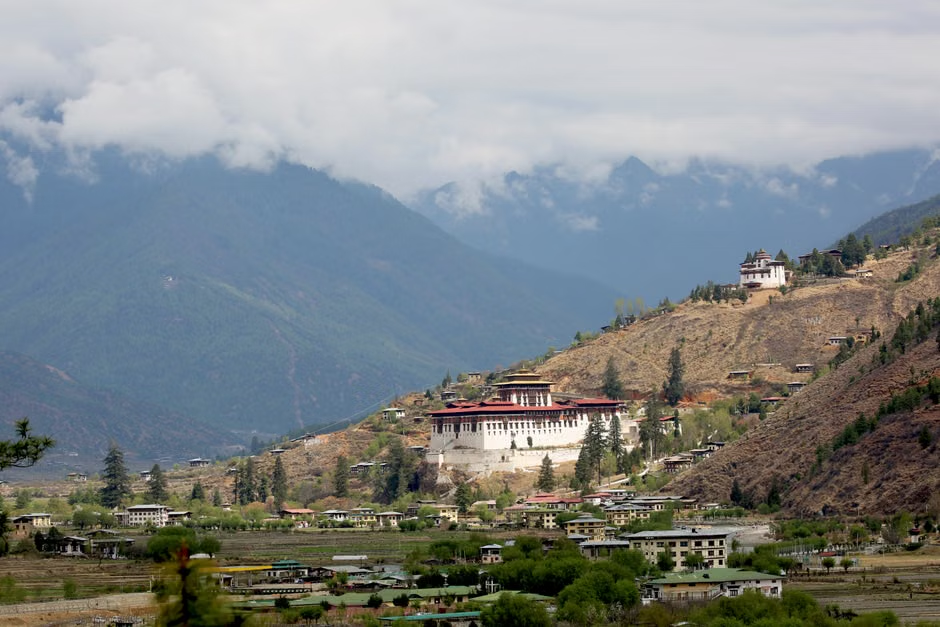
Why Paro is Perfect for Your Celebration
- Paro International Airport sits within the valley itself, making arrival a dramatic, scenic experience for guests
- Ancient dzongs and monasteries — including the iconic Tiger's Nest (Taktsang) — provide unmatched ceremonial backdrops
- Bhutan's controlled tourism policy ensures events remain exclusive, private, and uncrowded
- Spring festivals (Paro Tsechu) and autumn clarity offer culturally immersive, visually spectacular event seasons
- A growing collection of boutique luxury resorts and heritage lodges caters specifically to high-value, small-group stays
- The valley's clean air, forested ridgelines, and rice-paddy landscapes create naturally photogenic settings at every turn

Compare Paro with Other Top Destinations
Frequently Asked Questions
Is Paro a good destination for a wedding?
Yes, particularly for intimate, meaningful weddings. Paro is exceptionally well-suited to small destination weddings — typically under 100 guests — where cultural depth, natural beauty, and exclusivity are the priority. The valley's ancient monasteries, dzong architecture, and boutique luxury resorts create a setting that is genuinely unlike any other wedding destination in Asia.
How many guests can realistically attend an event in Paro?
Paro's venue and accommodation inventory comfortably supports events up to roughly 80–120 guests. Beyond that, the boutique nature of local properties means groups must be split across multiple hotels, which adds logistical complexity. The destination is best suited to intimate, curated celebrations rather than large-scale receptions.
Which airport do guests fly into for Paro?
Guests fly directly into Paro International Airport (PBH), which sits within the valley itself — making arrival a dramatic, scenic experience. Druk Air and Bhutan Airlines operate connections from major regional hubs including Delhi, Mumbai, Kolkata, Bangkok, Singapore, and Kathmandu. Flight slots are limited, so group bookings should be made several months in advance.
What is the best time of year to hold a celebration in Paro?
Spring (March, April, May) and autumn (September, October, November) are the recommended seasons. Spring coincides with the famous Paro Tsechu festival and blooming rhododendrons; autumn offers the clearest Himalayan skies and lush post-monsoon landscapes. Both seasons offer comfortable daytime temperatures and reliable conditions for outdoor events.
What kinds of venues and event spaces are available in Paro?
Paro's event spaces are primarily boutique luxury resorts and heritage lodges built in traditional Bhutanese architectural style, with outdoor lawns, terraces, and mountain-view settings. There are no large convention centres or standalone banquet halls; the entire event experience is property-led and intimate in character, which suits the destination's overall vibe well.
Do guests need a visa to attend an event in Paro?
Most international guests do. Indian, Bangladeshi, and Maldivian nationals can enter Bhutan without a visa using a valid passport or voter ID. All other nationalities require a Bhutanese visa and must book travel through a licensed Bhutanese tour operator. Event planners should factor this administrative requirement into guest communication and logistics well in advance.
How do guests get around Paro once they arrive?
The Paro valley is compact, with most resorts, cultural sites, and the town centre within 20–30 minutes of each other by road. There is no public transport system suited to group travel; event organisers typically arrange dedicated private vehicle fleets for guest transfers, which is standard practice at this destination's hospitality level.
Can local vendors in Paro handle full event production?
Partially. Paro's luxury resorts have experienced in-house event teams and strong local networks for cultural performance, traditional cuisine, and floral decoration. However, specialist vendors — photographers, stylists, large-scale decorators, entertainment acts — typically need to be brought in from India. Working with a local Bhutanese event coordinator who understands import regulations is strongly advisable.
Is there a railway option for guests travelling to Paro?
No. Bhutan has no railway network. The practical option for most guests is flying into Paro International Airport. An overland road entry from the Phuentsholing border crossing in West Bengal is possible but involves a five-to-six-hour mountain drive and suits only a small number of guests who prefer that experience.
What makes Paro culturally distinctive as an event destination?
Paro's cultural identity is rooted in living Vajrayana Buddhist tradition — ancient dzongs, active monasteries, traditional festivals, and a national philosophy of Gross National Happiness. Events here can incorporate genuine cultural elements: traditional Bhutanese music, masked dance performances, monastery blessing ceremonies, and local cuisine, all of which are authentic rather than staged for tourists.
Is altitude a concern for guests attending an event in Paro?
It can be for some guests. Paro sits at approximately 2,200 metres above sea level. Most healthy adults acclimatise within a day or two without difficulty, but older guests or those with respiratory or cardiovascular conditions may need extra time. Building a rest day into the event schedule before the main celebration is a sensible precaution for groups with diverse age ranges.
How far in advance should I plan a destination event in Paro?
At least 9–12 months in advance for spring or autumn events. Limited flight slots, small accommodation inventory, and the need to coordinate Bhutanese tour operator arrangements for international guests all require longer lead times than most other destination wedding locations. Popular properties during Paro Tsechu season (March–April) can book out even earlier.

Ready to explore venues in Paro?
Paro: Destination Wedding & Celebration Venues in Bhutan's Sacred Valley
◆Paro is Bhutan's most celebrated valley and the country's primary gateway for international visitors, making it the natural choice for destination weddings, intimate private celebrations, and culturally immersive events in the Himalayas. Its primary vibe is Cultural & Timeless — shaped by ancient Buddhist monasteries, traditional dzong architecture, forested ridgelines, and a national philosophy of measured, high-value tourism. Events here are inherently small-scale and exclusive; the destination suits couples and hosts seeking depth of experience over scale of spectacle. The best seasons run through spring (March to May) and autumn (September to November), when skies are clear and temperatures are comfortable. Accessibility is moderate — Paro has its own international airport, but flight slots are limited and advance planning is essential for groups.
Paro at a Glance
| Attribute | Detail |
|---|---|
| Best For | Intimate Destination Weddings, Spiritual Ceremonies, Private Celebrations, Honeymoon Retreats |
| Primary Vibe | Cultural & Timeless |
| Other Vibes | Serene, Himalayan, Exclusive, Spiritual |
| Best Season | Spring (Mar, Apr, May, Sep, Oct, Nov) |
Why Choose Paro?
- Unmatched ceremonial backdrops: The Paro Dzong (Rinpung Dzong), the Tiger's Nest Monastery (Taktsang), and the valley's rice-paddy landscapes offer settings that are genuinely impossible to replicate anywhere else in the world.
- Built-in exclusivity: Bhutan's sustainable tourism policy limits visitor numbers and mandates a minimum daily spend for international tourists, which naturally filters events toward a high-value, low-crowd experience — your celebration will never feel like it's competing with mass tourism.
- Boutique luxury accommodation: Paro hosts some of the most acclaimed small luxury resorts in Asia, including internationally recognised ultra-luxury properties that cater specifically to private, high-touch group stays.
- Cultural immersion as an event feature: The annual Paro Tsechu festival (typically March–April) brings masked dances, traditional music, and monastic ceremony that can form a genuinely extraordinary backdrop or pre-event experience for guests.
- Clean, dramatic natural environment: The valley sits at roughly 2,200 metres above sea level, surrounded by forested Himalayan ridges. Air quality, natural light, and landscape photography conditions are exceptional during the best seasons.
- Safety and political stability: Bhutan is consistently rated among the safest countries in Asia, with very low crime and a stable, welcoming environment for international guests.
Which Celebrations Work Best in Paro?
- Intimate Destination Weddings: Paro is particularly well-suited to small, meaningful weddings — typically under 100 guests — where the setting, cultural depth, and exclusivity matter more than grand scale. The valley's heritage properties and luxury resorts are designed for exactly this kind of private, curated celebration.
- Spiritual & Blessing Ceremonies: Buddhist blessing ceremonies, traditional Bhutanese wedding rituals, and meditation-integrated events find a genuinely authentic home here. Local monasteries and dzongs can provide ceremonial context that is deeply meaningful rather than performative.
- Honeymoon Retreats & Anniversary Celebrations: Couples seeking a private, unhurried retreat after a wedding elsewhere — or marking a significant anniversary — find Paro's combination of luxury accommodation, dramatic scenery, and cultural richness exceptionally well-matched to the occasion.
- Private Corporate Retreats & Leadership Gatherings: Small executive groups (typically under 40 people) find Paro's combination of natural seclusion, world-class boutique hospitality, and philosophical environment — Bhutan's Gross National Happiness framework is itself a conversation-starter — well-suited to reflective, high-value corporate retreats.
- Pre-Wedding Experiences & Mehendi/Ritual Events: For couples hosting a multi-day celebration, Paro's outdoor spaces, monastery visits, and valley hikes create natural programming for pre-wedding events that guests will genuinely remember.
Venues & Event Spaces
Paro's event venue landscape is defined by boutique luxury resorts and heritage lodges rather than large convention hotels or banquet complexes. Properties in the valley are typically designed in traditional Bhutanese architectural style — whitewashed stone walls, timber detailing, sloping roofs — and sit within landscaped grounds that open onto mountain or paddy-field views. Outdoor lawns and terraces are the most commonly used event spaces, particularly during the spring and autumn seasons when weather is reliable. Indoor event halls exist within the larger properties but are generally intimate in scale, suited to ceremonies and dinners rather than large receptions. Some properties offer dedicated ceremony pavilions or can arrange temporary outdoor structures for larger gatherings. The valley also has access to culturally significant outdoor spaces — monastery courtyards, dzong forecourts, and riverside meadows — that can be incorporated into event programming with appropriate permissions and local coordination. There are no large standalone banquet halls or convention centres in Paro; the entire event experience is resort- and property-led, which reinforces the destination's character as a place for curated, small-group celebrations rather than mass-attendance events.
Best Time to Celebrate
The curated best seasons for events in Paro are spring (March, April, May) and autumn (September, October, November), and the distinction between them is worth understanding for event planning purposes.
Spring brings warming temperatures, blooming rhododendrons across the hillsides, and — most significantly — the Paro Tsechu, Bhutan's most famous festival, typically held in March or April. This makes spring the most culturally immersive season, though it is also the busiest for tourism and accommodation should be secured well in advance. May is slightly warmer and less crowded than March–April, with good visibility and comfortable daytime temperatures.
Autumn (September through November) is widely considered the finest season for Himalayan clarity. Post-monsoon skies are exceptionally clear, mountain views are at their sharpest, and the landscape is lush and green from the summer rains. October in particular is regarded as the peak month for visibility and outdoor event conditions. Temperatures begin to drop noticeably in November, particularly in the evenings, so outdoor evening events in late November require planning for warmth.
Monsoon (June–August) brings persistent rain, reduced visibility, and slippery mountain roads — outdoor events are significantly compromised, and the valley's scenic appeal is partially obscured. This period is generally not recommended for destination events. Winter (December–February) brings cold temperatures, particularly at night (sub-zero is possible), and some higher-altitude access routes may be restricted. While the valley itself remains accessible and has a stark, quiet beauty in winter, the conditions are challenging for guests unaccustomed to cold and for outdoor event formats.
Getting There & Local Connectivity
Paro is served by Paro International Airport (PBH), which sits within the valley itself — one of the world's most technically demanding airports to land at, operated by a small number of certified airlines. Druk Air (Royal Bhutan Airlines) and Bhutan Airlines are the primary carriers, with connections from major regional hubs including Delhi, Mumbai, Kolkata, Bangkok, Singapore, Kathmandu, and Dhaka. Direct flights from most Indian cities are available, though frequency is limited compared to major international airports, and seats fill quickly during peak seasons. Groups should plan flights at least three to four months in advance for spring and autumn events.
There is no railway network in Bhutan. Guests who prefer an overland approach can enter via the Phuentsholing border crossing from West Bengal, India, followed by a road journey of approximately five to six hours to Paro — a scenic but time-intensive option that suits only a small subset of guests. For most international and Indian guests, flying into Paro is the practical standard.
Within the valley, local transport is primarily by private vehicle. The valley is compact — most resorts, the town centre, and key cultural sites are within 20–30 minutes of each other by road. Event organisers typically arrange dedicated vehicle fleets for guest transfers, which is both practical and expected at the destination's typical hospitality level. Roads are generally well-maintained within the valley, though mountain driving requires experienced local drivers, particularly for properties on elevated sites.
Local Vendor & Hospitality Ecosystem
Paro's hospitality ecosystem is small, specialised, and high-quality at the upper end, but limited in scale. The destination's luxury resorts employ experienced event coordinators and have established relationships with local vendors for floral decoration, traditional Bhutanese cuisine, cultural performance, and photography. However, the overall vendor pool is significantly smaller than in a major Indian destination wedding city — there are fewer independent event management companies, fewer large catering operations, and a more limited range of entertainment options.
For couples and planners accustomed to the scale and variety of a large Indian wedding market, this requires a different planning approach: most specialist vendors (photographers, stylists, entertainment acts, large-scale decorators) will need to be brought in from outside Bhutan, typically from India. This is common practice for destination events here and is well-understood by the local hospitality industry. Bhutanese regulations around importing goods and services should be factored into logistics planning, and working with a local Bhutanese tour operator or event coordinator who understands the regulatory environment is strongly advisable.
Where the local ecosystem genuinely excels is in cultural authenticity: traditional Bhutanese musicians, mask dancers, local weavers, and monastery-affiliated ceremony officiants are available and add a layer of genuine cultural experience that cannot be replicated by importing performers. Local cuisine — featuring red rice, ema datshi (chilli and cheese), and a range of Himalayan-influenced dishes — can be incorporated into event menus in ways that are both distinctive and genuinely delicious.
Pros & Things to Consider
Why Paro Works Well
- Genuinely one-of-a-kind setting — no other destination combines Himalayan scenery, Buddhist heritage, and boutique luxury at this level
- Built-in exclusivity and privacy; the destination's tourism model actively limits crowds
- Internationally acclaimed luxury properties with experienced event teams
- Exceptional natural light and landscape photography conditions in peak seasons
- Very high safety standards and a politically stable, welcoming environment for international guests
- Cultural programming (Tsechu festival, monastery visits, traditional crafts) provides ready-made guest experiences beyond the event itself
Things to Consider
- Scale limitations: Paro is not suited to large weddings or events above roughly 100–120 guests; the accommodation and venue inventory simply does not support it without significant logistical strain
- Flight availability: Limited airline slots and a small number of certified carriers mean group travel requires very early booking and careful coordination
- Vendor import complexity: Bringing specialist vendors, décor, and equipment into Bhutan involves customs and regulatory considerations that add planning complexity
- Altitude adjustment: At approximately 2,200 metres, some guests — particularly older attendees or those with respiratory conditions — may need a day or two to acclimatise
- Bhutanese visa and permit requirements: All international guests (except Indian, Bangladeshi, and Maldivian nationals) require a visa and must book through a licensed Bhutanese tour operator; this adds an administrative layer to guest management
- Limited nightlife and entertainment infrastructure: Paro is a serene, culturally conservative destination — guests expecting vibrant nightlife, large entertainment venues, or a bustling city atmosphere will find it quiet by design
When Paro May Not Be the Right Fit
- Large guest lists: If your event requires more than 100–120 guests staying together in one location, Paro's boutique accommodation inventory will not comfortably support it without splitting groups across multiple properties at significant distance from each other.
- Monsoon-season outdoor events: June through August brings persistent rain and reduced visibility; couples committed to outdoor ceremonies during these months will face significant weather risk that is difficult to mitigate in this environment.
- Guests with limited international travel flexibility: The combination of Bhutanese visa requirements, limited flight options, and the need to book through licensed operators creates a higher logistical bar for guests than most other destination wedding locations — if a significant portion of your guest list has limited passport or travel flexibility, this can create real attendance challenges.
- Events requiring large-scale production infrastructure: If your vision involves large stage productions, extensive imported décor, or high-volume catering for hundreds of guests, the local infrastructure and import logistics will work against you; a destination with a more developed large-event ecosystem would serve that vision better.