
Why Ghent is Perfect for Your Celebration
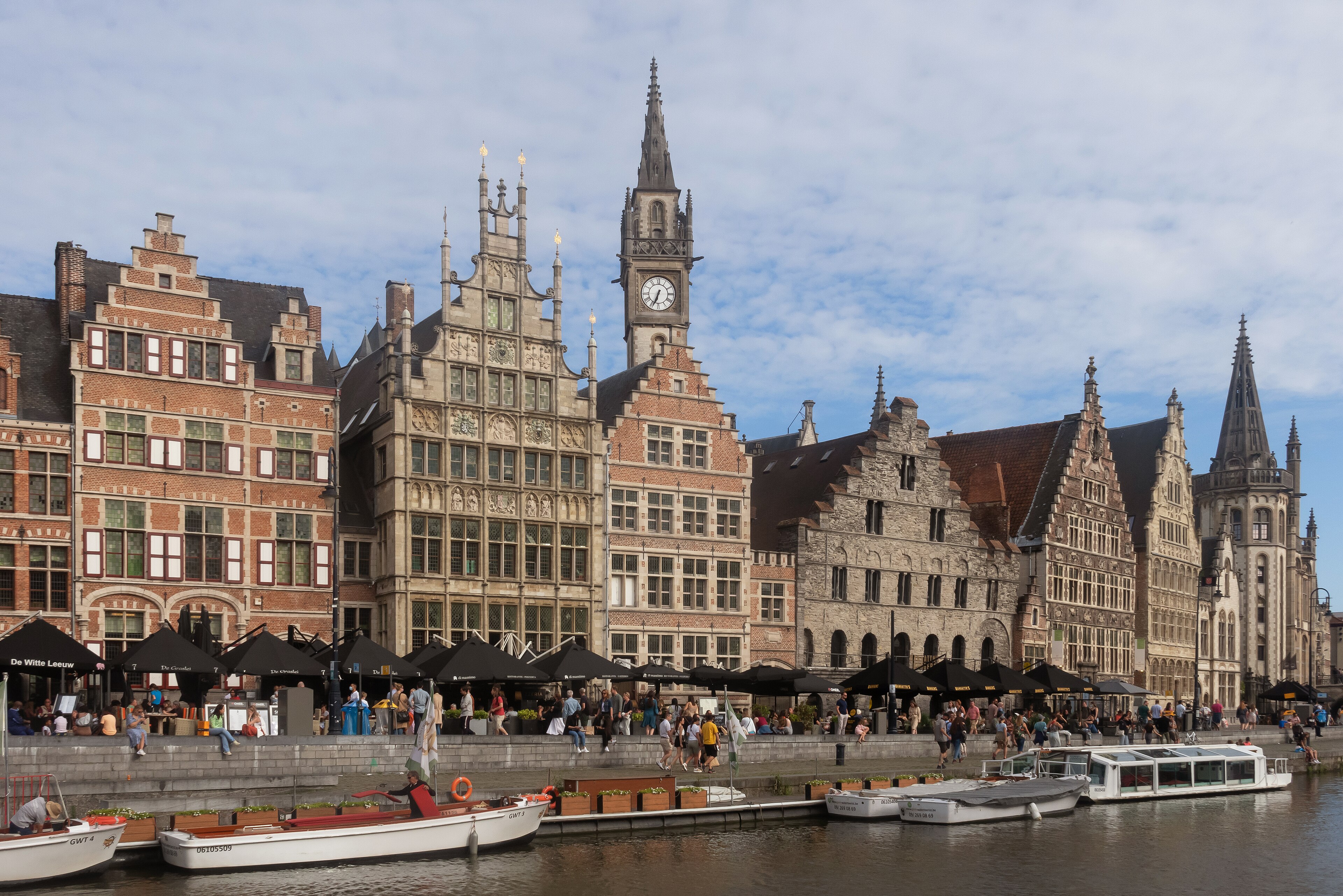
- Stunning medieval architecture — Gothic cathedrals, guild halls, and castle estates provide unmatched ceremony backdrops
- Romantic canal-side settings ideal for outdoor receptions and evening celebrations during summer
- Excellent rail connectivity to Brussels, Bruges, and Antwerp makes guest travel seamless
- A mature hospitality ecosystem with experienced event caterers, florists, and wedding planners familiar with international clients
- Compact, walkable historic centre means guests can move easily between ceremony, reception, and accommodation
- Long summer daylight hours (sunset after 9 pm in June–July) extend outdoor event windows significantly
Compare Ghent with Other Top Destinations
Frequently Asked Questions
Is Ghent a good destination for a wedding?
Yes. Ghent is particularly well-suited to intimate and medium-scale weddings — typically in the range of 30 to 200 guests. Its medieval architecture, canal-side settings, and heritage venues create a genuinely distinctive atmosphere, and the city's mature hospitality ecosystem means experienced local planners, caterers, and florists are readily available. It is less suited to very large-scale weddings requiring a single high-capacity ballroom.
What is the best time of year to hold a celebration in Ghent?
May through September is the recommended window. This period offers the mildest temperatures, the lowest rainfall relative to the rest of the year, and — crucially — very long daylight hours (sunset after 9 pm in June and July), which extend outdoor event windows significantly. September is a particularly good shoulder option: comfortable temperatures, thinner crowds, and warm autumn light that photographs well.
How do guests typically travel to Ghent for an event?
Most international guests fly into Brussels Airport and take a direct train to Ghent-Sint-Pieters station, a journey of roughly 30 minutes from Brussels. Guests based in Belgium, the Netherlands, or northern France can often travel entirely by rail. The city centre is compact and walkable once guests arrive, making local movement straightforward for most event formats.
What kinds of venues are available in Ghent for private events?
Ghent offers historic mansion and castle-estate venues, canal-side hotel ballrooms and terraces, converted guild halls and civic buildings, and boutique hotel private dining rooms and courtyard gardens. The inventory is characterful and mid-scale rather than high-capacity — the city's strength is in distinctive heritage spaces rather than purpose-built large banquet halls.
Can Ghent accommodate a large guest group for accommodation?
Yes, for groups up to around 200–250 guests, Ghent's central hotels and boutique properties can collectively accommodate most event-sized groups, particularly if bookings are made well in advance. For very large groups, guests may need to be distributed across multiple properties, which is manageable given the city's compact centre. Booking early is essential during the summer festival season.
Is Ghent suitable for corporate social events and team celebrations?
Yes. Ghent's combination of distinctive venues, a strong restaurant scene, and good rail connectivity from Brussels and Antwerp makes it a credible choice for corporate dinners, milestone celebrations, and team events. The city's cultural richness also gives multi-day corporate programmes genuine substance beyond the hosted event itself.
What is the local vendor ecosystem like for events in Ghent?
Ghent has a mature events industry shaped by its role as a university city and a regular host of large public festivals. Local caterers are experienced in high-quality multi-course private dining, floral designers are well-established, and AV and production companies are accustomed to working within historic buildings. Most vendors operate in English as well as Dutch, which is a practical advantage for international couples.
Are outdoor ceremonies and receptions practical in Ghent?
Yes, during May through September. The long daylight hours and relatively mild temperatures make outdoor canal-side receptions and garden ceremonies genuinely practical in this window. However, Belgian summer weather remains variable — a credible indoor contingency plan is always advisable. Outside the May–September window, outdoor events carry significant weather risk and are generally not recommended.
How far in advance should we book venues and accommodation in Ghent?
For summer events — particularly in July, which coincides with the Ghent Festival — booking 12 to 18 months in advance is strongly advisable for both venues and accommodation. May, June, and September are somewhat less pressured but still benefit from early booking, especially for the most distinctive heritage venues, which have limited availability by nature of their size and character.
What makes Ghent distinctive compared to other European event destinations?
Ghent's combination of genuinely intact medieval architecture, romantic canal-side settings, and a compact walkable historic centre is relatively rare among accessible European cities. Unlike some heritage destinations where the historic core is largely a tourist backdrop, Ghent's old town remains a living city with a serious food culture, active arts scene, and well-developed hospitality infrastructure — giving celebrations here a depth of context that purely resort-based destinations typically cannot offer.

Ready to explore venues in Ghent?
Ghent: Destination Wedding & Cultural Event Venues in Belgium
◆Ghent is a well-preserved medieval city in East Flanders, Belgium, best suited to intimate-to-medium-scale weddings, cultural celebrations, corporate social events, and milestone gatherings. Its primary vibe is Cultural & Timeless — defined by Gothic architecture, historic guild halls, and romantic canal-side settings rather than resort-style luxury. The best season runs from May through September, when long daylight hours and mild temperatures make outdoor events genuinely practical. Ghent is highly accessible by rail from Brussels, Bruges, and Antwerp, and within comfortable reach of Brussels Airport, making it a realistic choice for European and international guest groups. It is not a large-scale banquet destination — its strength lies in character, heritage, and a mature local hospitality ecosystem.
Ghent at a Glance
| Category | Detail |
|---|---|
| Best For | Intimate weddings, cultural celebrations, social gatherings, milestone events |
| Primary Vibe | Cultural & Timeless |
| Other Vibes | Romantic, Heritage, Artistic |
| Best Season | Summer (May, Jun, Jul, Aug, Sep) |
Why Choose Ghent?
- Unrivalled medieval architecture: Ghent's skyline — dominated by the Gravensteen castle, St. Bavo's Cathedral, and the Belfry — provides a genuinely rare ceremonial backdrop that few European cities can match at this scale of accessibility.
- Romantic canal-side settings: The Graslei and Korenlei quaysides offer some of the most photographed waterfront scenery in northern Europe, making them natural focal points for outdoor receptions and evening celebrations during summer.
- Exceptional rail connectivity: Ghent-Sint-Pieters station places the city within 30 minutes of Brussels and under 25 minutes of Bruges by direct train, meaning guests arriving from across Europe can reach the city centre without a car or complex transfer.
- Compact, walkable historic centre: The entire old town is navigable on foot, which significantly simplifies group logistics — guests can move between ceremony venues, reception spaces, and accommodation without organised transport for most events.
- Mature event and hospitality ecosystem: Ghent hosts major international festivals (including the Ghent Festival, one of Belgium's largest) and has a well-developed network of event caterers, florists, AV specialists, and wedding planners experienced with international clients.
- Extended summer daylight: In June and July, sunset falls after 9 pm, giving outdoor receptions and canal-side dinners a naturally extended golden-hour window that is genuinely difficult to replicate in more southerly destinations during the same months.
Which Celebrations Work Best in Ghent?
- Intimate and medium-scale weddings: Ghent is particularly well-suited to weddings in the range of 30–200 guests. The city's heritage venues — historic mansions, castle estates on the city's outskirts, and canal-side hotel ballrooms — are designed for this scale, and the intimate character of the old town enhances rather than overwhelms a smaller guest list.
- Cultural and arts-themed celebrations: The city's identity as a centre of Flemish art, music, and culture makes it a natural fit for celebrations where the destination itself is part of the experience — anniversary dinners, milestone birthdays, and cultural gatherings benefit directly from the city's museum-quality surroundings.
- Corporate social events and team celebrations: Ghent's conference infrastructure, combined with its distinctive venues and strong restaurant scene, makes it a credible choice for corporate dinners, product launches with a social component, and team celebration events for European-based organisations.
- Pre-wedding and multi-day celebration programmes: The city's density of restaurants, breweries, historic sites, and day-trip options (Bruges is 25 minutes away by train) makes it well-suited to multi-day celebration itineraries where guests are expected to explore independently between hosted events.
Venues & Event Spaces
Ghent offers a genuinely diverse range of event spaces, though the overall inventory is more characterful than voluminous. The most distinctive category is historic mansion and castle-estate venues — properties on the city's edges that combine period architecture with private grounds suitable for outdoor ceremonies and receptions. Within the historic centre, canal-side hotel ballrooms and terraces provide elegant settings with direct waterfront views, particularly well-suited to evening receptions during summer. The city also has a number of converted guild halls and civic buildings that can be hired for private events, offering a level of architectural drama that purpose-built banquet halls rarely match. For smaller, more intimate gatherings, boutique hotel private dining rooms and courtyard gardens are widely available. Outdoor lawn and garden settings exist primarily at estate properties outside the immediate city centre, and these typically require more logistical planning for guest transport. Purpose-built large-scale banquet halls are less prevalent here than in dedicated resort destinations — Ghent's strength is in character-rich, mid-scale spaces rather than high-capacity ballrooms.
Best Time to Celebrate
The curated best season for Ghent is Summer: May through September, and this reflects several concrete advantages beyond simply "pleasant weather."
- May and June offer mild temperatures (typically 15–20°C), low rainfall relative to the autumn and winter months, and the longest daylight hours of the year — outdoor ceremonies and canal-side receptions are genuinely practical, and the city's parks and waterfront are at their most photogenic.
- July and August are the warmest months (occasionally reaching 25–28°C), coinciding with Ghent's peak cultural calendar including the Ghent Festival in late July — a vibrant backdrop for celebrations, though advance venue booking becomes more competitive during festival weeks.
- September offers a useful shoulder window: temperatures remain comfortable (14–18°C), crowds thin after the summer peak, and the city's autumn light gives a warm, golden quality to photography that many couples find preferable to the harsher midday light of July.
- October through April presents genuine challenges for event planning: temperatures drop to 4–10°C from November through February, rainfall is frequent and persistent, and the short daylight hours (sunset as early as 4:30 pm in December) make outdoor elements impractical. March and April can be pleasant on clear days but are characterised by unpredictable showers and cool winds that make outdoor receptions a logistical risk without robust contingency planning.
Getting There & Local Connectivity
Ghent is among the more accessible mid-sized European cities for international guest groups. Brussels Airport (BRU) is the primary international gateway, located approximately 55 km from Ghent city centre and connected by a direct train service that makes the journey manageable without private transfers for most guests. Brussels South Charleroi Airport serves additional low-cost European routes and is reachable by coach or car, though the connection is less seamless than from BRU. Ghent-Sint-Pieters station is the city's main rail hub, with frequent direct services to Brussels (approximately 30 minutes), Bruges (approximately 25 minutes), and Antwerp (approximately 50 minutes) — making it realistic for guests based across Belgium and the Netherlands to travel in on the day of an event.
Within the city, the historic centre is compact enough that most guests staying in central hotels can walk to ceremony and reception venues. For guests accommodated at estate properties outside the centre, or for groups requiring coordinated movement between multiple event locations, local taxi services and private coach hire are readily available and well-organised. Ghent also has an extensive tram network that covers the broader city efficiently. Parking in the historic centre is restricted, so guests arriving by car should be directed to the city's park-and-ride facilities on the periphery.
Local Vendor & Hospitality Ecosystem
Ghent has a well-developed hospitality and events industry, shaped in part by its role as a major university city and a regular host of large-scale public festivals. This means the local vendor ecosystem is more mature than might be expected for a city of its size. Event catering is a particular strength — Ghent has a serious food culture rooted in Flemish culinary tradition, and local caterers are experienced in delivering high-quality multi-course dinners for private events. Floral design is well-served by a number of specialist studios with experience in both contemporary and heritage-style event aesthetics. AV and event production companies operating out of Ghent and nearby Brussels are accustomed to working in historic buildings with acoustic and structural constraints. Wedding planning and coordination services are available in English as well as Dutch and French, which is a practical advantage for international couples. The city's hotel properties generally have dedicated events teams with experience managing multi-day guest programmes. One genuine consideration is that the most distinctive historic venues — castle estates, guild halls, civic buildings — often require coordination with separate catering and production suppliers rather than offering a fully integrated in-house package, which adds a layer of planning complexity compared to a purpose-built resort.
Pros & Things to Consider
Why Ghent Works Well
- Genuinely distinctive architectural settings — Gothic, Flemish Renaissance, and medieval — that are difficult to replicate elsewhere in Europe at this level of accessibility
- Excellent rail connectivity makes the city realistic for guests travelling from across Belgium, the Netherlands, France, and the UK (via Eurostar to Brussels)
- Long summer daylight hours extend outdoor event windows significantly, particularly in June and July
- A mature, English-speaking hospitality and vendor ecosystem reduces planning friction for international couples
- Compact historic centre simplifies guest logistics — most of the city's key event locations are within walking distance of central accommodation
- Strong restaurant and cultural scene gives multi-day guest programmes genuine substance beyond the hosted events themselves
Things to Consider
- The city's most characterful venues are typically mid-scale — couples expecting a single venue to accommodate 400+ guests in a single ballroom will find the local inventory limited
- Historic buildings often carry acoustic, structural, and logistical constraints (no vehicle access, restricted amplification hours, heritage preservation rules) that require careful planning
- The most distinctive standalone estate venues outside the city centre require organised guest transport, adding a logistical layer that canal-side city venues do not
- Summer coincides with Ghent's peak tourism and festival season — accommodation availability tightens significantly in late July, and advance booking of both venues and hotels is essential
- Belgium's weather, even in summer, is genuinely variable — outdoor events should always have a credible indoor contingency plan
When Ghent May Not Be the Right Fit
- Very large guest lists (300+): If the event requires a single venue capable of seating several hundred guests in one space, Ghent's historic venue inventory may not comfortably support it — a purpose-built conference and events city would be a more practical choice.
- Outdoor-only events planned outside May–September: Ghent's autumn and winter climate is genuinely inhospitable for outdoor celebrations — couples committed to an outdoor ceremony or reception in October through April face significant weather risk that contingency planning alone cannot fully mitigate.
- Guests travelling primarily from outside Europe: While Brussels Airport is well-connected internationally, guests flying in from South Asia, North America, or East Asia face long-haul journeys with no direct connection to Ghent itself — for a guest list that is predominantly non-European, a destination with a larger international hub airport may reduce travel fatigue more effectively.
- Couples seeking a resort-style, all-inclusive event experience: Ghent's strongest venues are heritage properties and boutique hotels that typically require coordination across multiple suppliers. Couples who prefer a single resort property handling catering, accommodation, décor, and entertainment under one roof may find the local model less convenient than a dedicated resort destination.