
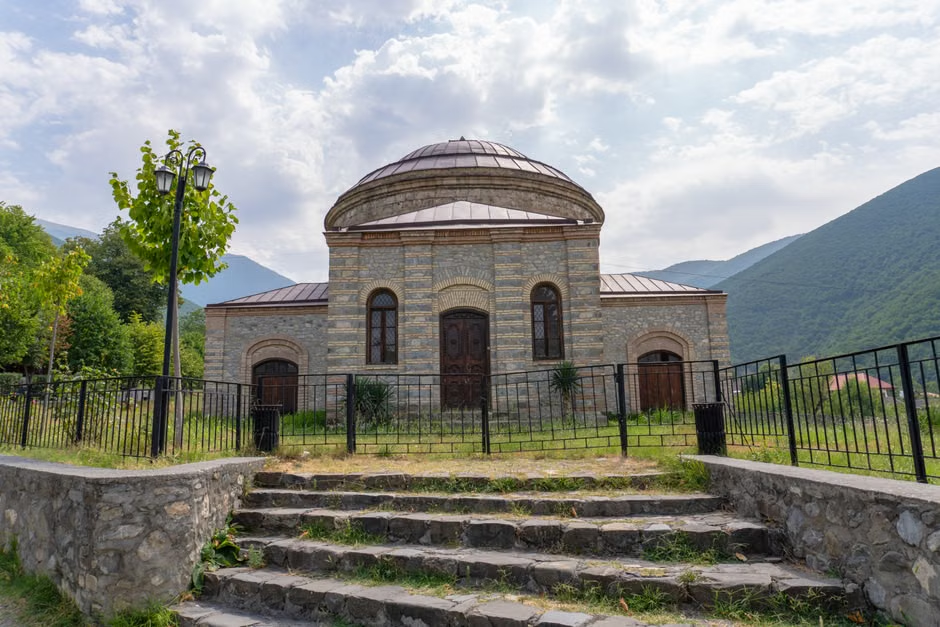
Why Sheki is Perfect for Your Celebration
- Home to the UNESCO-listed Khan's Palace — one of the most ornate historic structures in the South Caucasus, offering an unmatched ceremonial backdrop
- Centuries-old caravanserais converted into boutique hotels provide intimate, character-rich event spaces unlike anything in a modern city
- Surrounded by forested Caucasus foothills, offering dramatic natural scenery for outdoor ceremonies in spring and autumn
- Authentic Azerbaijani cuisine and local sheki halva confectionery tradition add a genuinely distinctive culinary dimension to celebrations
- Relatively uncrowded and unhurried — ideal for private, exclusive gatherings where guests can immerse in local culture without tourist-crowd pressure
- Spring and early autumn bring mild, photogenic weather with blooming landscapes and golden foliage respectively

Compare Sheki with Other Top Destinations
Frequently Asked Questions
Is Sheki a good destination for a wedding?
Yes, particularly for intimate, culturally immersive weddings. Sheki's medieval caravanserais, Khan's Palace setting, and Caucasus mountain backdrop make it one of the most distinctive heritage wedding destinations in the South Caucasus. It is best suited to smaller guest groups — typically up to around 150–200 guests — where atmosphere and cultural depth are prioritised over large-scale production.
What is the best time of year to hold a celebration in Sheki?
April through June and September through October are the strongest windows. Spring brings mild temperatures and lush mountain scenery; early autumn offers golden foliage and comfortable evenings. July and August can be warm and humid in the valley, making extended outdoor events less comfortable. November through March brings genuine winter conditions that limit outdoor viability significantly.
How do guests get to Sheki from abroad?
Most international guests fly into Heydar Aliyev International Airport in Baku, which is well-connected to European, Middle Eastern, and Central Asian hubs. From Baku, Sheki is reachable by road in approximately four to five hours or by Azerbaijani Railways in around five to six hours. Guests should factor this onward journey into their travel planning and allow adequate time.
What size of guest group can Sheki realistically accommodate?
Sheki's boutique hospitality inventory is best matched to gatherings of up to approximately 150–200 guests. The city's heritage properties — caravanserais and smaller hotels — offer intimate event spaces rather than large ballroom-scale facilities. For very large events requiring 300 or more guests in a single venue, the local inventory is likely to be insufficient.
What kinds of event spaces are available in Sheki?
The most distinctive spaces are restored caravanserais with internal courtyards, arched galleries, and traditional architectural detailing — ideal for ceremonies and receptions with strong visual character. Several hotels also offer dedicated banquet halls and outdoor terrace or garden areas. The overall character is heritage and boutique rather than large modern convention-style facilities.
Do guests need a visa to travel to Azerbaijan for an event in Sheki?
Most international nationalities require a visa for Azerbaijan. The country operates an e-visa system (ASAN Visa) that is straightforward to use, but it requires advance application. Event planners should communicate visa requirements to guests well ahead of the event date and build sufficient lead time into the planning timeline to avoid last-minute complications.
What is the local food and catering like for events in Sheki?
Sheki has a strong and distinctive culinary tradition — local catering is particularly well-suited to traditional Azerbaijani cuisine, including slow-cooked meat dishes, fresh herb-based preparations, and the city's famous sheki halva confectionery. For international cuisine or highly specialised dietary menus, supplementing with vendors from Baku is advisable and logistically manageable.
Can local vendors in Sheki handle full event production?
Local vendors handle catering, basic decoration, and coordination well. For larger production elements — specialist lighting, elaborate floral installations, or international entertainment — sourcing from Baku and transporting to Sheki is the standard approach. Local event coordinators are generally experienced in managing this logistics chain, but it should be planned well in advance.
What makes Sheki culturally distinctive as a wedding destination?
Sheki sits on the historic Silk Road and retains living traditions — silk weaving, a distinctive local cuisine, centuries-old caravanserais, and the ornate Khan's Palace. These elements allow multi-day wedding programmes to incorporate genuinely meaningful cultural experiences: craft workshops, palace visits, village excursions, and local culinary traditions that guests are unlikely to encounter at any other destination.
Is Sheki safe for international guests attending a wedding or event?
Yes. Sheki is generally considered very safe for visitors. Azerbaijan as a whole has a low rate of tourist-directed crime, and Sheki's compact, walkable historic core is particularly relaxed and unhurried. Standard travel precautions apply, and event planners should ensure guests are briefed on local customs and the visa process, but safety is not typically a concern for groups visiting the city.
What transport is available for moving guests around Sheki during an event?
Within Sheki, the historic core is compact and walkable. For group transfers between accommodation, venues, and cultural sites, local minibus hire and private car arrangements are readily available and are the practical standard. The road network within the city is generally good. Event planners should arrange group transport in advance, particularly for evening returns from outdoor or hillside venues.

Ready to explore venues in Sheki?
Sheki: Destination Wedding & Cultural Event Venues in Azerbaijan
◆Sheki is best suited to intimate, culturally immersive weddings, milestone celebrations, and heritage-themed events for smaller to mid-sized guest groups. Its primary strength is its extraordinary Silk Road architectural character — medieval caravanserais, the ornate Khan's Palace, and forested Caucasus mountain scenery — making it one of the most distinctive event destinations in the South Caucasus. The best seasons are spring (April–June) and early autumn (September–October), when temperatures are mild and the landscape is at its most photogenic. Accessibility requires planning: guests typically fly into Baku and travel onward by road or rail, so Sheki rewards hosts who build the journey itself into the experience. The hospitality ecosystem is boutique in scale, authentic in character, and generally well-priced relative to Western European or Gulf alternatives.
Sheki at a Glance
| Category | Detail |
|---|---|
| Best For | Intimate weddings, cultural celebrations, heritage gatherings, milestone anniversaries |
| Primary Vibe | Cultural & Timeless |
| Other Vibes | Rustic, Mountain, Boutique, Romantic |
| Best Season | Spring (Apr, May, Jun, Sep, Oct) |
Why Choose Sheki?
- Unrivalled heritage character: Sheki's UNESCO-associated Khan's Palace and its surviving caravanserais offer a ceremonial and visual backdrop that is genuinely rare — not a reconstructed heritage theme, but living, centuries-old architecture still in active use.
- Intimate scale by design: The city's boutique hospitality inventory naturally suits smaller, more personal gatherings where every guest feels the occasion rather than being absorbed into a large resort complex.
- Dramatic natural setting: The Greater Caucasus foothills rise directly behind the city, providing forested ridgelines, clean mountain air, and a landscape that shifts beautifully between seasons — particularly lush in spring and golden in October.
- Authentic culinary tradition: Sheki is famous across Azerbaijan for its distinctive cuisine — including the city's own piti (slow-cooked lamb stew) and the celebrated sheki halva — giving celebrations a genuinely local gastronomic identity that guests remember.
- Low crowd density: Unlike major regional capitals, Sheki remains relatively unhurried and uncrowded even during its peak visitor months, allowing event groups to move through the city and its venues with a sense of privacy and exclusivity.
- Cultural depth for multi-day programmes: The combination of the Khan's Palace, the old bazaar, silk workshops, and surrounding villages means a multi-day wedding programme can be filled with genuinely meaningful cultural experiences rather than generic tourist activities.
Which Celebrations Work Best in Sheki?
- Intimate destination weddings: Sheki is particularly well-suited to couples seeking a deeply atmospheric, culturally rich setting for a smaller wedding — typically up to 150–200 guests — where the destination itself becomes part of the story. The heritage venues and mountain scenery create a naturally cinematic environment without requiring elaborate decoration.
- Heritage and cultural celebrations: Milestone anniversaries, family reunions with a cultural travel dimension, or celebrations tied to Azerbaijani or broader Caucasian heritage find a natural home here. The city's living traditions — silk weaving, local crafts, historic architecture — lend these events an authenticity that purpose-built resort destinations cannot replicate.
- Pre-wedding retreats and mehendi/engagement gatherings: The intimate, garden-courtyard character of Sheki's caravanserai-style properties makes them especially well-suited to pre-wedding functions where a relaxed, immersive atmosphere is more important than large-scale production.
- Corporate cultural retreats: Small executive groups or creative teams seeking an off-the-beaten-path retreat with genuine cultural programming — workshops, heritage tours, local craft experiences — will find Sheki a compelling and memorable choice within the broader Caucasus region.
Venues & Event Spaces
Sheki's event venue landscape is defined by its heritage properties rather than large modern convention facilities. The most distinctive spaces are the city's restored caravanserais — historic waystation complexes with internal courtyards, arched galleries, and thick stone walls that provide natural acoustic character and visual drama. These properties typically offer courtyard ceremony spaces, indoor banquet rooms with traditional architectural detailing, and garden areas suitable for outdoor receptions during the spring and autumn seasons.
Beyond the caravanserai-style properties, Sheki has a small number of purpose-built hotels with dedicated banquet and function halls, capable of accommodating mid-sized gatherings. Outdoor lawn and terrace spaces are available at several properties, taking advantage of the mountain backdrop and the city's elevated, forested setting. For very large events requiring ballroom-scale capacity, the local inventory is limited — Sheki is genuinely best matched to gatherings where intimacy and atmosphere are prioritised over sheer scale.
The surrounding villages and forested hillside areas also offer possibilities for outdoor ceremonial settings, particularly for couples interested in a more natural, open-air celebration framed by the Caucasus landscape. Local event coordinators can typically arrange temporary structures and décor for such settings during the favourable seasons.
Best Time to Celebrate
The curated best season for Sheki — April, May, June, September, and October — reflects the city's genuinely four-season climate and the specific windows when outdoor events are both comfortable and visually rewarding.
Spring (April–June) brings mild daytime temperatures, blooming vegetation across the Caucasus foothills, and long, clear evenings well-suited to outdoor ceremonies and receptions. April and May are particularly photogenic, with fresh greenery and occasional wildflower coverage on the surrounding hillsides. June remains pleasant, though temperatures begin climbing toward the upper end of comfort for outdoor midday events.
Early autumn (September–October) is arguably the most atmospheric window. September retains summer warmth without the peak heat, while October brings the Caucasus foliage into golden and amber tones — a backdrop that is especially striking for photography and outdoor gatherings. Evenings cool noticeably in October, which suits evening receptions with fire features or covered outdoor settings.
July and August bring the warmest and most humid conditions in the valley, making extended outdoor events uncomfortable and logistically demanding. While indoor venues remain usable, the outdoor character that defines Sheki's appeal is diminished.
November through March brings genuine winter to Sheki — cold temperatures, the possibility of snow in the foothills, and significantly reduced hospitality operations at some properties. Outdoor events are generally not viable, and the reduced daylight hours limit the natural-light photography that is one of the destination's key assets. This period is best avoided for destination celebrations unless a specifically winter-themed, fully indoor event is planned.
Getting There & Local Connectivity
Sheki is located in northwestern Azerbaijan, approximately 350 kilometres from Baku. The primary gateway for international guests is Heydar Aliyev International Airport in Baku, which is well-connected to major European, Middle Eastern, and Central Asian hubs. From Baku, guests can reach Sheki by road (a scenic drive of approximately four to five hours along well-maintained highways) or by Azerbaijani Railways (a journey of approximately five to six hours, offering a comfortable and scenic alternative for guests who prefer not to drive).
There is a small regional airport at Zagatala, approximately 100 kilometres west of Sheki, which has historically served limited domestic routes — however, guests should verify current operational status when planning, as domestic air services in the region can be seasonal or subject to schedule changes. For most international guests, Baku remains the reliable entry point.
Within Sheki itself, the city is compact and walkable at its historic core. For event groups, local minibus hire and private car arrangements are readily available and are the practical standard for moving guests between accommodation, venues, and cultural sites. The road network within and immediately around the city is generally good, though some hillside and village routes require appropriate vehicles.
Guests travelling from outside Azerbaijan should note that Azerbaijan has its own visa requirements — most nationalities can obtain an e-visa through the official ASAN Visa system, and event planners should factor visa lead times into their guest communication well in advance of the event date.
Local Vendor & Hospitality Ecosystem
Sheki's hospitality ecosystem is genuinely well-developed for a city of its size, reflecting its long history as a Silk Road trading hub and its growing profile as a cultural tourism destination within Azerbaijan. Local hotels — particularly the heritage caravanserai properties — have experience hosting private events and can typically provide in-house catering rooted in the city's distinctive culinary tradition.
Local catering vendors are strong in traditional Azerbaijani cuisine, and the city's food culture — built around slow-cooked meats, fresh herbs, walnut-based sweets, and the famous sheki halva — gives celebrations a genuinely distinctive gastronomic identity. For couples or planners seeking international cuisine or highly specialised dietary menus, supplementing with vendors from Baku is advisable and logistically straightforward given the road connection.
Event decoration, floral, and production vendors exist locally but are more limited in scale and variety than in Baku. For larger or more elaborate production requirements — lighting rigs, large floral installations, specialist entertainment — sourcing from Baku and transporting to Sheki is the standard approach, and local coordinators are generally experienced in managing this logistics chain.
Photography and videography professionals familiar with Sheki's heritage settings are available, and the city's architectural and natural assets make it a genuinely rewarding location for creative visual storytelling. The relatively low tourist density during shoulder months means photographers can work without the crowd management challenges common in more heavily visited destinations.
Pros & Things to Consider
Why Sheki Works Well
- Genuinely rare and distinctive heritage setting — caravanserais and the Khan's Palace provide a visual and atmospheric backdrop unavailable at most other destinations in the region
- Authentic local cuisine and confectionery tradition add a memorable, place-specific culinary dimension to celebrations
- Low crowd density ensures privacy and exclusivity for event groups, particularly during the spring and autumn seasons
- Compact, walkable historic core makes multi-day guest programmes easy to organise without heavy transport logistics within the city
- Strong cultural programming options — silk workshops, palace tours, village excursions — enrich multi-day wedding itineraries meaningfully
- Generally well-priced hospitality relative to Western European or Gulf destination wedding markets
Things to Consider
- International accessibility requires a multi-leg journey for most guests — Baku is the gateway, and the onward road or rail leg adds meaningful travel time that must be built into guest planning
- Venue capacity is limited at the upper end — Sheki is not well-suited to very large events (300+ guests) given the boutique scale of its hospitality inventory
- Specialist event production (large lighting, international entertainment, elaborate floral) typically needs to be sourced from Baku and transported, adding logistical complexity
- Winter months (November–March) significantly limit outdoor viability and reduce the destination's core visual appeal
- Visa requirements for Azerbaijan apply to most international guests and require advance planning — this is an additional administrative step compared to visa-free destinations
- English-language communication with local vendors may require a local coordinator or interpreter, particularly for detailed event planning discussions
When Sheki May Not Be the Right Fit
- Very large guest lists: If your celebration requires comfortable accommodation and event space for 300 or more guests in a single location, Sheki's boutique inventory will likely fall short — a larger city with more hotel density would serve better.
- Guests with limited travel flexibility: The multi-leg journey from most international origins (international flight to Baku, then a 4–5 hour road or rail journey) is genuinely demanding for elderly guests, guests with young children, or those with tight travel windows. If guest travel ease is a top priority, a destination with direct international airport access is a stronger choice.
- Outdoor events planned for winter months: If your preferred dates fall between November and March, Sheki's cold temperatures and potential snow make outdoor ceremonies and receptions impractical, and the destination's primary visual assets — its mountain scenery and heritage courtyards — are significantly less accessible and appealing in this period.
- Highly production-intensive events: Celebrations requiring large-scale technical production, international entertainment acts, or elaborate multi-stage setups will face real logistical friction in Sheki. The local production infrastructure is suited to intimate, atmosphere-led events rather than high-production-value spectacles.