
Why Salzburg is Perfect for Your Celebration
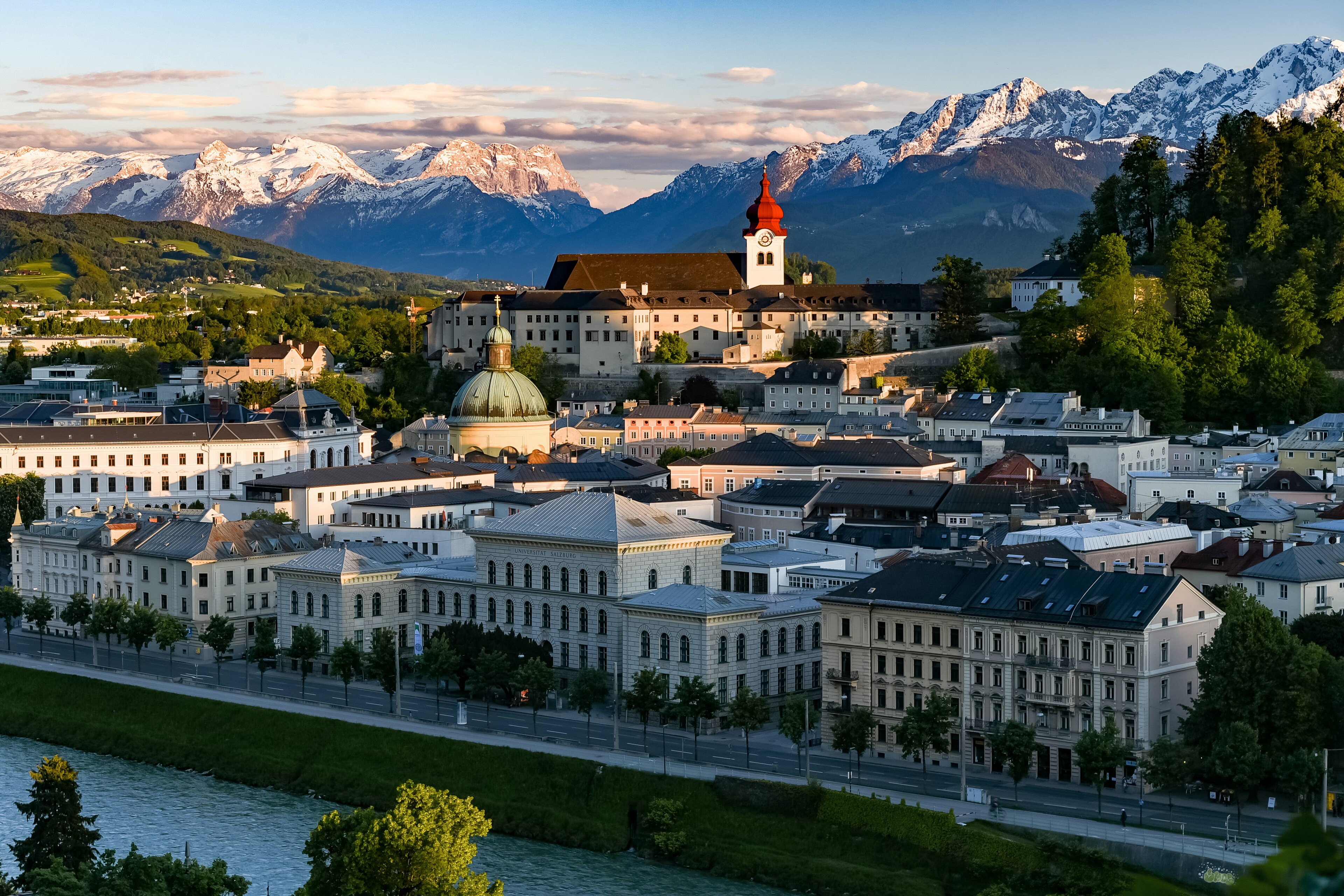
- UNESCO World Heritage Old Town provides a uniquely cinematic backdrop for ceremonies and receptions
- Hohensalzburg Fortress and Baroque palace estates offer genuinely historic, grand event settings
- Summer festival season (Salzburg Festival) creates a culturally vibrant atmosphere for celebrations
- Compact city centre means guests can walk between accommodation, ceremony and reception venues
- Excellent rail connections from Vienna, Munich and Zurich make international guest travel straightforward
- Alpine scenery — the Salzkammergut lake district is within easy reach for pre- or post-event excursions
Compare Salzburg with Other Top Destinations
Frequently Asked Questions
Is Salzburg a good destination for a wedding?
Yes. Salzburg is particularly well-suited to intimate and medium-scale destination weddings — typically 20 to 200 guests — where setting and atmosphere are the priority. Its UNESCO-listed Baroque Old Town, palace estates, and alpine scenery create a genuinely extraordinary backdrop, and the city's hospitality infrastructure is experienced in delivering high-expectation international events, especially during the summer season.
What is the best time of year to hold a wedding or event in Salzburg?
May through September is the curated best window. Long daylight hours, warm temperatures, and full access to outdoor gardens and terrace venues make this the most practical and visually rewarding season. September is often the strongest single month — summer conditions without peak festival crowds. Events outside this window lose access to most outdoor venue configurations.
How do international guests typically travel to Salzburg?
Salzburg Airport (SZG) sits approximately 4 km from the city centre and handles direct flights from major European hubs. Guests from outside Europe typically connect through Munich, Frankfurt, Vienna, or Zurich. The central railway station offers direct trains from Vienna (under 3 hours), Munich (under 2 hours), and Zurich (approximately 4 hours), making rail travel a genuinely practical option for European guests.
What guest group sizes can Salzburg venues realistically support?
Most of Salzburg's heritage and luxury venues comfortably support events in the 20–200 guest range. Some contemporary hotel banquet facilities can accommodate up to 250–300 guests. For very large events of 400 or more guests requiring a single venue, the local inventory becomes more constrained — Salzburg's strengths are in intimate to medium-scale celebrations rather than mass-scale events.
What kinds of venues are available for events in Salzburg?
The venue landscape includes Baroque palace estates with garden and terrace settings, heritage hotel properties in the Old Town with vaulted salons and rooftop terraces, contemporary hotel banquet facilities with modern AV infrastructure, and cultural spaces such as concert halls and museum event rooms. Nearby Salzkammergut lake district venues — within roughly 30–50 km — add alpine lakeside options for outdoor receptions.
Is the Salzburg Festival a help or a hindrance for event planning in July and August?
Both. The festival creates a vibrant cultural atmosphere that enriches a multi-day guest experience, and the city's hospitality ecosystem is at its most polished during this period. However, accommodation is at its most competitive and booking lead times need to be significantly longer. Couples who want summer conditions with less competition should consider May, June, or September instead.
What makes Salzburg's local vendor and hospitality ecosystem suited to destination events?
The Salzburg Festival trains the city's hospitality professionals to handle high-expectation international events every summer. Hotel event teams, private caterers, florists, and entertainment providers are experienced with international guest groups. The city is also particularly well-sourced for live classical music — string quartets and chamber ensembles — which is both authentic to the destination and logistically straightforward to arrange.
Are there heritage venue restrictions I should be aware of when planning in Salzburg?
Yes. Many of Salzburg's most desirable event spaces are protected historic buildings, which can impose constraints on décor installation, lighting rigs, amplified sound levels, and event end times. These restrictions are manageable but require early planning and ideally a locally-based event coordinator who has existing relationships with the specific venue and understands its operational requirements.
How easy is it for guests to move around Salzburg during a multi-day celebration?
Very easy for events based in or near the Old Town. The Altstadt is compact and largely pedestrianised, so guests can typically walk between their hotel, ceremony venue, and reception space. For events incorporating venues in the surrounding countryside or Salzkammergut, private coach transfers are standard — journey times to nearby alpine venues are generally under an hour on good roads.
Is Salzburg suitable for corporate retreats and executive events, not just weddings?
Yes. Salzburg's combination of world-class hotels, excellent European rail and air connectivity, and a stimulating cultural environment makes it a strong choice for senior leadership retreats, incentive travel programmes, and high-end corporate gatherings. The city is accustomed to international business visitors year-round, and its cultural programme — music, architecture, alpine excursions — provides meaningful off-agenda content for executive groups.
What should I know about accommodation availability for a large guest group in Salzburg?
Salzburg is a compact city with a finite hotel inventory. Securing a large block of rooms — particularly 150 or more — in a single property or within a very small radius can be challenging, especially during the July–August festival season. Early booking (12–18 months ahead for peak season) and working with a local coordinator who has established hotel relationships is strongly advisable for groups of this size.

Ready to explore venues in Salzburg?
Salzburg: Destination Wedding & Cultural Event Venues in Austria
◆Salzburg is a compact, UNESCO-listed Baroque city in western Austria, best suited to intimate-to-medium-scale destination weddings, milestone celebrations, corporate retreats, and cultural events. Its primary vibe is Cultural & Timeless — defined by Baroque palaces, Mozart heritage, alpine scenery, and a world-class festival culture. The curated best season runs from May through September, when long daylight hours, warm temperatures, and full access to outdoor venues and gardens make celebrations genuinely comfortable. Salzburg is well-connected by both rail and air, with a city-centre airport and direct trains from Vienna, Munich, and Zurich, making international guest travel straightforward. It is a premium-tier European destination; event planning here reflects that positioning.
Salzburg at a Glance
| Attribute | Detail |
|---|---|
| Best For | Destination Weddings, Cultural Celebrations, Milestone Events, Corporate Retreats |
| Primary Vibe | Cultural & Timeless |
| Other Vibes | Romantic, Alpine, Heritage, Festive |
| Best Season | Summer (May, Jun, Jul, Aug, Sep) |
Why Choose Salzburg?
- Genuinely historic venue settings: Salzburg's Baroque palaces, hilltop fortress, and UNESCO-listed Old Town streets provide a ceremonial backdrop that is rare even by European standards — the architecture itself becomes part of the event aesthetic without requiring additional decoration.
- Compact, walkable city: The Old Town (Altstadt) is small enough that guests can walk between ceremony venues, reception spaces, and accommodation, significantly reducing the logistical complexity of group transport that larger cities demand.
- World-class hospitality infrastructure: Salzburg hosts the internationally renowned Salzburg Festival every summer, which means the city's hotels, caterers, event coordinators, and service staff are accustomed to handling high-expectation, international clientele at scale.
- Alpine scenery within easy reach: The Salzkammergut lake district — with its glacial lakes and mountain panoramas — is within roughly 30–50 minutes of the city, offering exceptional options for pre-wedding shoots, guest excursions, and outdoor receptions in a distinctly alpine setting.
- Excellent international connectivity: Salzburg Airport (SZG) sits approximately 4 km from the city centre and handles direct flights from major European hubs. The central railway station connects directly to Vienna (under 3 hours), Munich (under 2 hours), and onward to Zurich and other European cities, making it genuinely accessible for international guest groups.
- Cultural richness as an event asset: The city's association with Mozart, its opera houses, its Baroque gardens, and its festival calendar mean that guests attending a celebration in Salzburg have a rich cultural programme available to them beyond the event itself — a meaningful differentiator for multi-day destination celebrations.
Which Celebrations Work Best in Salzburg?
- Destination Weddings: Salzburg is particularly well-suited to intimate and medium-scale destination weddings — typically in the range of 20 to 200 guests — where the setting, atmosphere, and guest experience are prioritised over sheer scale. The city's heritage properties and palace venues create a naturally ceremonial environment, and the summer season provides reliable outdoor access for garden ceremonies and terrace receptions.
- Cultural Celebrations & Milestone Events: Significant anniversaries, landmark birthdays, and family reunion events find a natural home in Salzburg's heritage venues. The city's cultural identity — music, art, architecture — lends these occasions a sense of occasion that generic hotel ballrooms cannot replicate.
- Corporate Retreats & Executive Events: Salzburg's combination of world-class hotels, excellent European rail connectivity, and a stimulating cultural environment makes it a strong choice for senior leadership retreats, incentive travel programmes, and high-end corporate gatherings. The city is experienced in hosting international business visitors during the festival season and year-round.
- Pre-Wedding Celebrations & Engagement Events: The city's romantic streetscapes, riverside promenades, and Baroque gardens are well-suited to smaller pre-wedding events — engagement dinners, welcome receptions, and rehearsal gatherings — that benefit from an intimate, atmospheric setting rather than a large banquet hall.
Venues & Event Spaces
Salzburg's event venue landscape is defined by its historic built environment. The most distinctive spaces are Baroque palace estates and historic manor properties, several of which sit on elevated positions above the city with panoramic views of the Old Town and the surrounding Alps. These properties typically offer a combination of formal indoor salons, chapel or courtyard ceremony spaces, and terraced gardens suitable for outdoor receptions during the summer months.
Within the Old Town itself, heritage hotel properties — many occupying buildings that are centuries old — provide intimate ballrooms, vaulted dining rooms, and rooftop terraces with direct views of the Hohensalzburg Fortress. These spaces are particularly well-suited to smaller, refined celebrations where architectural character is a priority.
Beyond the historic core, contemporary hotel conference and banquet facilities offer more flexible floor plans and higher guest capacities for events that require modern AV infrastructure alongside a Salzburg address. The city also has access to dedicated cultural venues — concert halls, festival spaces, and museum event rooms — that can be hired for private celebrations, particularly during the shoulder periods of the festival calendar when availability opens up.
For events that want to incorporate the alpine landscape directly, lakeside and mountain venues in the nearby Salzkammergut region — within roughly 30–50 km of the city — provide a genuinely different setting: open water, mountain backdrops, and a more relaxed, resort-style atmosphere that complements the formality of an Old Town ceremony.
Best Time to Celebrate
The curated best season for events in Salzburg runs from May through September, and this recommendation is grounded in several concrete factors beyond simply "the weather is nice."
May and June offer the most comfortable conditions for outdoor ceremonies — temperatures are warm but not oppressive (typically 15°C–22°C), the city's Baroque gardens are in full bloom, and daylight extends well into the evening, allowing outdoor receptions to run naturally late without artificial lighting. Crowds are present but not yet at peak festival density, which means accommodation availability and vendor attention are generally better than in July and August.
July and August coincide with the Salzburg Festival, one of the world's most prestigious classical music and opera festivals. This creates an exceptionally vibrant cultural atmosphere in the city — a genuine asset for guests attending a multi-day celebration — but it also means that accommodation is at its most competitive and the city is at its busiest. Events planned during this window benefit from the festival energy but require earlier booking lead times for both venues and hotels.
September is widely regarded as one of the most pleasant months in Salzburg: the festival crowds have thinned, temperatures remain warm (typically 12°C–20°C), the alpine foliage begins its early autumn colour, and the city returns to a more relaxed pace. For couples and planners who want summer conditions without peak-season pressure, September is often the strongest single month in the window.
October marks a rapid transition: temperatures drop noticeably, daylight shortens, and many outdoor venue configurations close for the season. It is not impossible to plan an event in October, but the outdoor flexibility that defines a Salzburg summer celebration is largely gone by mid-month.
November through March brings cold, grey, and frequently snowy conditions. While Salzburg in winter has its own aesthetic appeal — particularly around the Christmas market season in December — outdoor events are impractical, and the city's event infrastructure is oriented primarily toward indoor, smaller-scale gatherings during this period. The Salzburg Festival and most garden venues are entirely closed.
April is a genuine shoulder month: temperatures are still cool and unpredictable, spring blooms are beginning but not reliable, and some outdoor venues have not yet reopened for the season. It is not recommended for events that depend on outdoor access.
Getting There & Local Connectivity
By air: Salzburg Airport W. A. Mozart (SZG) is one of the most conveniently located city airports in Central Europe, sitting approximately 4 km from the Old Town. Direct flights operate from major European hubs including London, Amsterdam, Frankfurt, Zurich, and several UK regional airports, particularly during the summer season. For guests travelling from outside Europe, Munich Airport (MUC) — approximately 150 km away — serves as the primary long-haul gateway, with onward connections to Salzburg by rail (under 2 hours) or road.
By rail: Salzburg Hauptbahnhof (the central railway station) is a major node on the Austrian and Bavarian rail networks. Direct services connect to Vienna (approximately 2.5–3 hours), Munich (approximately 1.5 hours), Innsbruck (approximately 2 hours), and Zurich (approximately 4 hours). For European guest groups, rail travel to Salzburg is often more convenient than flying, particularly from Germany, Switzerland, and eastern Austria.
Local movement: The Old Town is compact and largely pedestrianised, meaning that for events based in or near the Altstadt, guests can typically walk between their hotel, the ceremony venue, and the reception space. For guests staying slightly further out, or for events incorporating venues in the surrounding countryside or Salzkammergut, private coach transfers are the standard approach — the road network is good and journey times to nearby alpine venues are generally under an hour.
Local Vendor & Hospitality Ecosystem
Salzburg's vendor ecosystem is meaningfully shaped by the Salzburg Festival, which runs every summer and draws an international audience of tens of thousands. This means the city's hospitality professionals — hotel event coordinators, private caterers, florists, photographers, and entertainment providers — are genuinely experienced in delivering high-expectation events for international clients, often under significant logistical pressure.
The catering culture in Salzburg reflects both Austrian culinary tradition and a strong international hospitality influence. Event menus can range from formal Austrian cuisine — featuring regional specialities from the Salzburg and Salzkammergut area — to fully international menus suited to diverse guest groups. The city's hotel kitchens, particularly at the upper-tier properties, are well-equipped for large banquet service.
Specialist wedding and event planners operating in Salzburg typically have established relationships with the city's heritage venues, which often require navigating heritage protection regulations and specific operational constraints that a local planner will understand far better than an outside coordinator. Engaging a Salzburg-based event professional is strongly advisable for any celebration involving a historic property.
Floral, décor, and entertainment vendors are well-developed, with access to both local Austrian suppliers and broader European networks. The city's musical heritage means that live classical music — string quartets, chamber ensembles, solo pianists — is particularly well-sourced here, and incorporating a musical element into a Salzburg celebration is both authentic and logistically straightforward.
Pros & Things to Consider
Why Salzburg Works Well
- UNESCO World Heritage setting provides a genuinely extraordinary visual backdrop that requires minimal additional styling
- Compact city layout simplifies guest logistics significantly compared to larger European capitals
- Excellent European rail and air connectivity makes international guest travel manageable
- Hospitality ecosystem is mature, internationally experienced, and accustomed to high-expectation events
- Summer season offers long daylight hours, reliable warmth, and full access to outdoor and garden venues
- Rich cultural programme (music, architecture, alpine excursions) gives multi-day guest groups meaningful activities beyond the event itself
- Genuine heritage venue options — palace estates, fortress settings, Baroque gardens — that are rare even by European standards
Things to Consider
- Scale limitations: Salzburg is a relatively small city. Events requiring very large guest capacities (500+ guests) will find the local venue inventory more constrained than in a major European capital. The city's strengths are in intimate-to-medium-scale celebrations, not mass-scale events.
- Festival season competition: July and August coincide with the Salzburg Festival, which creates significant competition for accommodation and venues. Booking lead times during this window need to be substantially longer than for other European destinations.
- Heritage venue constraints: Many of Salzburg's most desirable event spaces are protected historic buildings, which can impose restrictions on décor, lighting, noise levels, and event timing. These are manageable with the right local planner but should be factored into early planning.
- Seasonal dependency: The destination's strongest assets — outdoor gardens, terrace receptions, alpine scenery — are largely inaccessible outside the May–September window. Events planned outside this season will have a materially different character and more limited venue options.
- Non-European guest travel: While Salzburg is well-connected within Europe, guests travelling from outside the continent will typically require a connection through a major hub (Munich, Frankfurt, Vienna, or Zurich), adding travel time and complexity compared to a destination with direct long-haul service.
When Salzburg May Not Be the Right Fit
- Very large guest lists: If your celebration requires accommodating 400 or more guests in a single venue with full banquet service, Salzburg's heritage-focused venue inventory may not comfortably support that scale. A larger European city would offer more options at that capacity.
- Events planned for winter or early spring: If your preferred dates fall between November and April, Salzburg's core outdoor and garden venue assets are unavailable, and the city's event character shifts significantly toward smaller, indoor-only gatherings. A destination with year-round outdoor capability would serve better.
- Guest groups with limited European travel experience: While Salzburg is very safe and well-organised, guests who are unfamiliar with European rail travel or who are travelling from regions without strong European air connections may find the journey more complex than a destination with direct long-haul access.
- Events requiring a very large, concentrated accommodation block: Because Salzburg is a compact city with a finite hotel inventory, securing a large block of rooms in a single property or within a very small radius can be challenging, particularly during the festival season. Groups that need 200+ rooms in one location may find the local supply insufficient.