
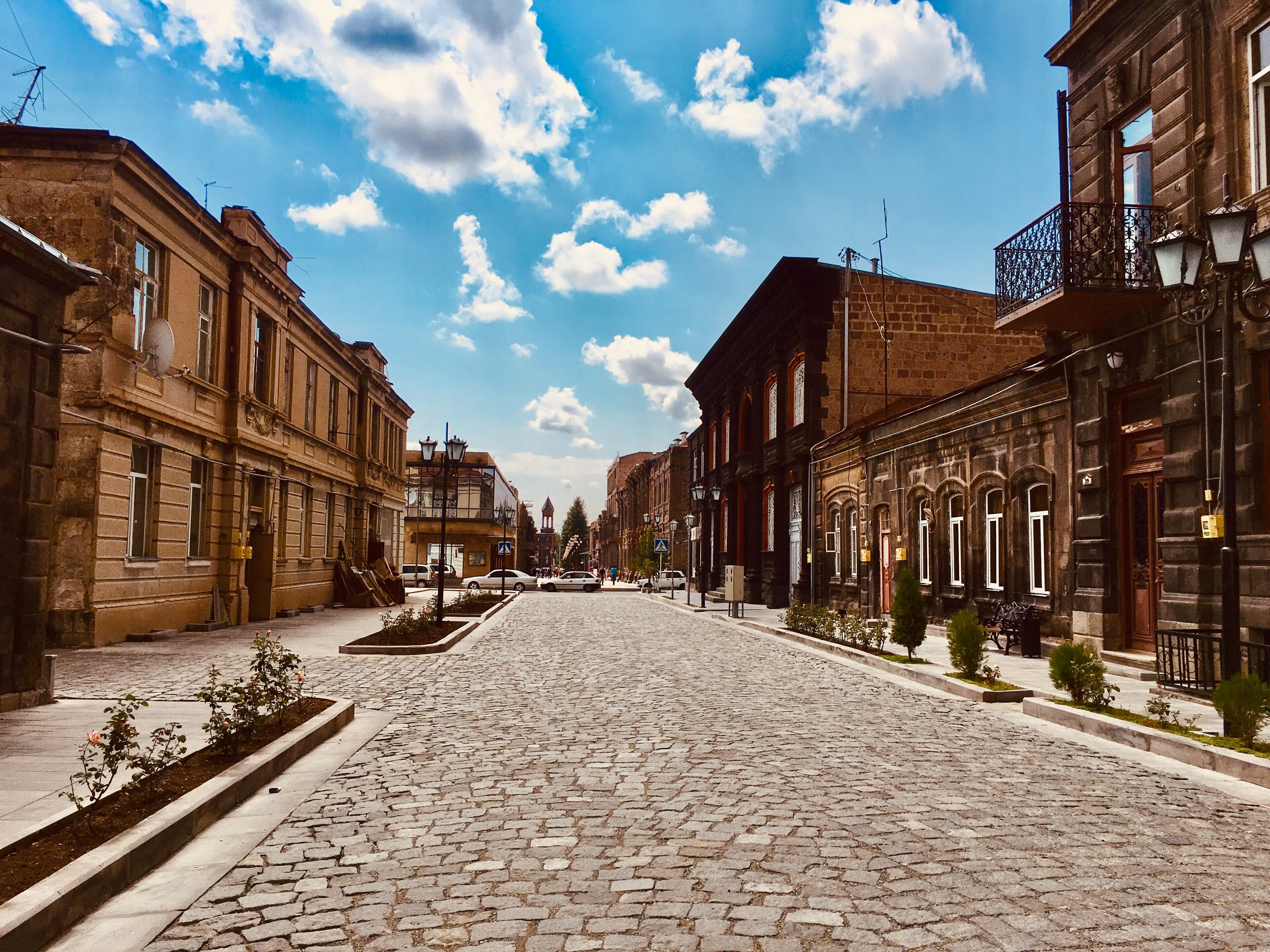
Why Gyumri is Perfect for Your Celebration
- Unique 19th-century Kumayri historic district provides a rare, photogenic backdrop unavailable in most event destinations
- Authentic Armenian stone architecture (black and red tuff) creates a naturally dramatic aesthetic for ceremonies and receptions
- Strong local artisan and craft tradition enriches décor, catering, and cultural programming possibilities
- Relatively intimate city scale suits smaller, more personal celebrations without the noise of a major metropolis
- Spring and early autumn seasons offer genuinely pleasant outdoor conditions for garden and courtyard events
- Growing boutique hospitality scene with properties that reflect local character rather than generic international branding

Top Venues in Gyumri

Ani Grand Hotel Gyumri
Compare Gyumri with Other Top Destinations
Frequently Asked Questions
Is Gyumri a good destination for a wedding?
Yes, particularly for intimate weddings of under 200 guests. Gyumri's 19th-century Kumayri historic district, authentic Armenian cultural atmosphere, and locally-owned boutique hospitality make it a genuinely distinctive choice for couples who want a meaningful, character-rich setting rather than a generic resort backdrop. It suits couples with a connection to Armenian heritage or a preference for understated, culturally rooted celebrations.
What guest group sizes can Gyumri realistically accommodate for an event?
Gyumri is best suited to events in the range of 50 to 200 guests. The city's boutique hotel and venue inventory can comfortably support smaller, intimate celebrations, but very large groups — particularly those requiring 300 or more guests to be housed and hosted in one location — may find the local accommodation supply stretched. For larger events, supplementary accommodation in nearby areas or a phased guest-arrival approach may be needed.
How do international guests typically get to Gyumri?
Most international guests arrive via Zvartnots International Airport in Yerevan, then travel onward to Gyumri by road or rail — a journey of approximately two to two-and-a-half hours. Gyumri does have its own Shirak Airport, but its scheduled international routes are limited, so Yerevan remains the primary entry point for overseas guests. Private coach transfers from Yerevan are a practical group-travel option.
What is the best time of year to hold a celebration in Gyumri?
April through June and September through October are the strongest windows. Spring brings mild temperatures, clear skies, and fresh greenery ideal for outdoor ceremonies, while early autumn offers similar conditions with golden light and cooling evenings. July and August can be warm and dry, making outdoor daytime events less comfortable. November through March brings heavy snowfall and sub-zero temperatures, making outdoor events impractical.
What kinds of event spaces and venues are available in Gyumri?
Gyumri offers boutique hotel event halls, restored historic buildings within the Kumayri district, courtyard and garden spaces, and standalone banquet halls. The city does not have large resort complexes or convention centres, so the venue character is intimate and architecturally distinctive rather than large-scale. Outdoor spaces work well in spring and early autumn. The volcanic tuff-stone architecture of the old town provides a naturally dramatic visual backdrop.
How easy is it to move a large guest group around Gyumri during an event?
Relatively straightforward. Gyumri's historic city centre is compact and largely walkable, which simplifies movement between ceremony, reception, and accommodation for smaller groups. For larger groups, local taxis and privately arranged minibuses or coaches are available. Some streets in the historic district are narrow, so vehicle logistics for large coaches may need advance planning with local operators or the hosting venue.
What is the local vendor and catering ecosystem like for events in Gyumri?
Gyumri has a genuine but developing vendor ecosystem. Local caterers are experienced in Armenian cuisine and large celebratory spreads, and traditional musicians, florists, and photographers are available locally. Specialist wedding vendors — such as lighting designers or large-format décor suppliers — may be more limited, and planners sometimes source these from Yerevan. Earlier lead times and proactive coordination are advisable compared to more mature event destinations.
Can traditional Armenian cultural elements be incorporated into a celebration in Gyumri?
Yes, and Gyumri is particularly well-suited to this. The city has historically been Armenia's artistic heartland, with strong traditions in music (including duduk and folk ensembles), visual arts, and craft. Local vendors can provide traditional musical performances, artisan-crafted décor, and authentic Armenian cuisine. For couples or planners wanting to weave genuine cultural programming into an event, Gyumri offers more depth in this area than most Armenian cities outside Yerevan.
Is Gyumri suitable for non-wedding celebrations like anniversaries or corporate retreats?
Yes. Milestone anniversaries, family reunions with Armenian heritage connections, and smaller corporate retreats or creative gatherings all suit Gyumri well. The city's cultural richness, relative quietness, and characterful event spaces make it a credible choice for any celebration where authenticity and a distinctive sense of place are priorities. It is less suited to large-scale corporate conferences requiring convention-centre infrastructure.
What are the main logistical challenges of planning an event in Gyumri?
The primary challenges are: limited direct international flight connectivity (most guests route through Yerevan); a boutique-scale accommodation inventory that may not suit very large guest lists; and a specialist wedding vendor pool that is less developed than in major event cities, sometimes requiring vendors to be sourced from Yerevan. Winter events face additional complexity due to heavy snowfall and road conditions. Early planning and a locally-experienced coordinator are strongly advisable.
Is Gyumri safe for international guests attending a celebration?
Yes. Gyumri is generally considered very safe for visitors, including international guests. Armenia as a whole has a low rate of tourist-targeted crime, and Gyumri's relatively small, community-oriented city character reinforces this. Standard travel precautions apply, but safety is not typically a concern that event planners or guests need to prioritise when considering this destination.

Ready to explore venues in Gyumri?
Gyumri: Destination Wedding & Cultural Event Venues in Armenia
◆Gyumri is Armenia's second-largest city and its most culturally distinctive event destination, best suited to intimate weddings, milestone celebrations, and cultural gatherings where authenticity and historic character matter more than large-scale resort infrastructure. Its primary vibe is Cultural & Timeless, shaped by a preserved 19th-century old town, volcanic tuff stone architecture, and a living artisan tradition. The best seasons to plan are spring (April–June) and early autumn (September–October), when temperatures are mild and outdoor spaces are genuinely usable. Gyumri is accessible from Yerevan by road or rail, making it a realistic choice for guests arriving internationally through the Armenian capital, though direct international connectivity to Gyumri itself is limited.
Gyumri at a Glance
| Category | Detail |
|---|---|
| Best For | Intimate weddings, cultural celebrations, milestone anniversaries, engagement events |
| Primary Vibe | Cultural & Timeless |
| Other Vibes | Artisan, Historic, Intimate, Authentic |
| Best Season | Spring (Apr, May, Jun, Sep, Oct) |
Why Choose Gyumri?
- Rare architectural backdrop: The Kumayri historic district — a protected zone of 19th-century merchant houses, churches, and public squares built from black and red volcanic tuff — provides a genuinely photogenic setting that is difficult to replicate anywhere else in the South Caucasus region.
- Authentic cultural depth: Gyumri has historically been Armenia's artistic and intellectual heartland, home to a strong tradition of painting, sculpture, theatre, and music. This living culture can be woven meaningfully into event programming, from local musicians to artisan-crafted décor elements.
- Intimate city scale: Unlike a sprawling capital, Gyumri's compact, walkable historic core means that guests can move between ceremony, reception, and accommodation without complex logistics, which is a genuine advantage for smaller, tightly-knit celebrations.
- Genuine local hospitality character: Gyumri's hospitality scene is shaped by independent, locally-owned properties rather than international chain hotels, which typically translates into more personalised service and a stronger sense of place for guests.
- Relatively accessible from Yerevan: The city sits roughly 120–130 km north of Yerevan, reachable in approximately two to two-and-a-half hours by road or rail, making it a practical extension for guests who fly into Zvartnots International Airport in the capital.
- Emerging event infrastructure: While Gyumri is not yet a mature wedding-industry hub, its growing boutique hotel and restaurant scene, combined with a pool of local vendors experienced in Armenian celebrations, means that well-planned events can be executed with genuine quality.
Which Celebrations Work Best in Gyumri?
- Intimate destination weddings: Gyumri is particularly well-suited to smaller weddings — typically under 200 guests — where the couple wants a setting with real historical and cultural weight rather than a generic resort backdrop. The city's stone courtyards, historic halls, and boutique hotel gardens lend themselves naturally to ceremony and reception setups that feel personal and rooted in place.
- Cultural and heritage celebrations: Events that deliberately incorporate Armenian history, music, craft, or cuisine — such as milestone anniversaries, family reunions with Armenian heritage connections, or cultural gatherings — find Gyumri an especially resonant setting, given the city's status as a living centre of Armenian artistic identity.
- Engagement and pre-wedding events: The city's atmospheric old town, with its lantern-lit streets and historic squares, provides a naturally romantic and photogenic environment for engagement parties, pre-wedding shoots, and mehendi or equivalent pre-celebration gatherings.
- Corporate retreats and creative gatherings: Gyumri's combination of cultural richness, relative quietness compared to Yerevan, and a growing number of characterful event spaces makes it a credible choice for smaller corporate retreats, creative industry gatherings, or team events where inspiration and a change of environment are priorities.
Venues & Event Spaces
Gyumri's event venue landscape is defined primarily by boutique hotels with event halls or courtyard spaces, restored historic buildings within the Kumayri district, and a small number of standalone banquet and reception halls that cater to local celebrations. Outdoor lawns and garden settings are available through select hotel properties, particularly suited to spring and early autumn events. The city does not currently offer large-scale resort complexes or purpose-built convention centres, which means that events requiring capacity for several hundred guests may need to work creatively across multiple spaces or consider a combination of indoor and outdoor setups. For couples and planners who value character over scale, however, the available spaces — particularly those housed within or adjacent to the historic tuff-stone architecture of the old town — offer a genuinely distinctive aesthetic that is hard to find elsewhere.
Best Time to Celebrate
The curated best season for Gyumri is spring and early autumn: April, May, June, September, and October. Here is why each window works, and what makes the remaining months less suitable:
- April and May bring warming temperatures (typically 10°C–20°C), fresh greenery, and clear skies after the winter snowmelt. These months are ideal for outdoor ceremonies and garden receptions, and the city feels particularly alive after the long winter. Occasional spring showers are possible but generally brief.
- June extends the pleasant spring window into early summer, with longer daylight hours and reliably warm (though not yet hot) conditions. It is arguably the most comfortable month for outdoor events, with temperatures typically in the 18°C–25°C range.
- September and October offer the autumn equivalent — cooling temperatures after the summer heat, golden light, and a return of comfortable outdoor conditions. September in particular can feel like a second spring, with clear skies and mild evenings well-suited to outdoor receptions.
- July and August are the warmest months, with temperatures occasionally reaching 28°C–32°C. While not extreme by regional standards, the heat can make outdoor daytime events uncomfortable, and the dry, dusty character of high summer is less appealing for outdoor celebrations than the spring and autumn windows.
- November through March brings genuine winter conditions to Gyumri, which sits at an elevation of approximately 1,500 metres above sea level. Snowfall is common and can be heavy, temperatures regularly drop below freezing, and outdoor events become impractical. Indoor celebrations are possible year-round, but winter logistics — including road conditions and guest travel — add meaningful complexity.
Getting There & Local Connectivity
Gyumri is served by Shirak Airport, located just a few kilometres from the city centre. However, Shirak Airport has limited scheduled international routes, and most international guests will realistically arrive via Zvartnots International Airport in Yerevan, then travel onward to Gyumri by road or rail. The journey from Yerevan takes approximately two to two-and-a-half hours by car or marshrutka (shared minibus), and a similar duration by train. For groups, hiring a private coach or minibus from Yerevan is a practical and commonly used option that simplifies logistics considerably.
Within Gyumri itself, the historic city centre is compact and largely walkable, which is a genuine advantage for event groups. Taxis and ride-hailing services operate in the city, and for larger groups, local transport can typically be arranged through hotels or local operators. The road network within the city is generally adequate, though some older streets in the historic district are narrow and may require careful planning for large vehicle movements.
Local Vendor & Hospitality Ecosystem
Gyumri's vendor ecosystem is genuine but developing. The city has a strong tradition of Armenian cuisine and hospitality, and local catering teams are experienced in producing the large, generous spreads characteristic of Armenian celebrations — think lavash, khorovats (barbecue), dolma, and an extensive array of mezze and sweets. Local florists, musicians (particularly traditional duduk players and folk ensembles), and photographers are available and can bring authentic cultural elements to an event.
Where Gyumri differs from a more mature event destination is in the depth and specialisation of its wedding-industry vendor pool. Planners accustomed to working with a wide roster of specialist wedding vendors — lighting designers, international DJs, large-format décor suppliers — may find the local options more limited and may need to bring some vendors from Yerevan or coordinate remotely. This is a manageable challenge for well-organised planners, but it does require earlier lead times and more proactive coordination than a destination with a fully developed wedding industry would demand. The upside is that local vendors tend to be genuinely invested in each event and bring a personal, non-transactional quality to their work that guests often notice and appreciate.
Pros & Things to Consider
Why Gyumri Works Well
- Genuinely unique historic setting — the Kumayri district is unlike any other event backdrop in the region
- Authentic Armenian cultural experience that can be meaningfully integrated into event programming
- Compact, walkable city centre simplifies guest movement between event spaces and accommodation
- Warm, personal hospitality from locally-owned properties and vendors
- Pleasant spring and early autumn seasons with reliable outdoor event conditions
- Relatively uncrowded compared to capital-city destinations, giving events a sense of exclusivity and privacy
Things to Consider
- Limited direct international flight connectivity — most guests will need to route through Yerevan, adding travel time and complexity
- Boutique-scale accommodation inventory means that very large guest lists (200+) may face challenges finding sufficient rooms within the city itself
- The specialist wedding vendor ecosystem is less developed than in Yerevan or major international event cities — some vendors may need to be sourced from the capital
- Winter months (November–March) are genuinely harsh at this elevation, making outdoor events impractical and adding logistical risk for guests travelling in those months
- The city is still building its profile as an international event destination, which means less established planning infrastructure compared to more tourism-mature cities
When Gyumri May Not Be the Right Fit
- Very large weddings or events (300+ guests): The current accommodation and venue inventory in Gyumri is best suited to intimate to mid-sized celebrations. Groups requiring 300 or more guests to be housed and hosted in a single location may find the local supply insufficient without significant logistical creativity.
- Guests with limited travel flexibility: International guests who cannot easily manage a two-stage journey (international flight to Yerevan, then onward transfer to Gyumri) may find the travel burden disproportionate, particularly for a short celebration weekend.
- Events planned for winter months: Couples or planners committed to a November–March date and requiring outdoor elements should consider a different destination — Gyumri's winter conditions are genuinely challenging and outdoor celebrations are not reliably feasible in that window.
- Those seeking a full-service, internationally-branded resort experience: Gyumri's hospitality offering is characterful and locally-rooted, but it does not currently include large international chain resorts with the full-service event infrastructure that some planners and couples expect. If that model is a firm requirement, a different destination would be a better fit.