
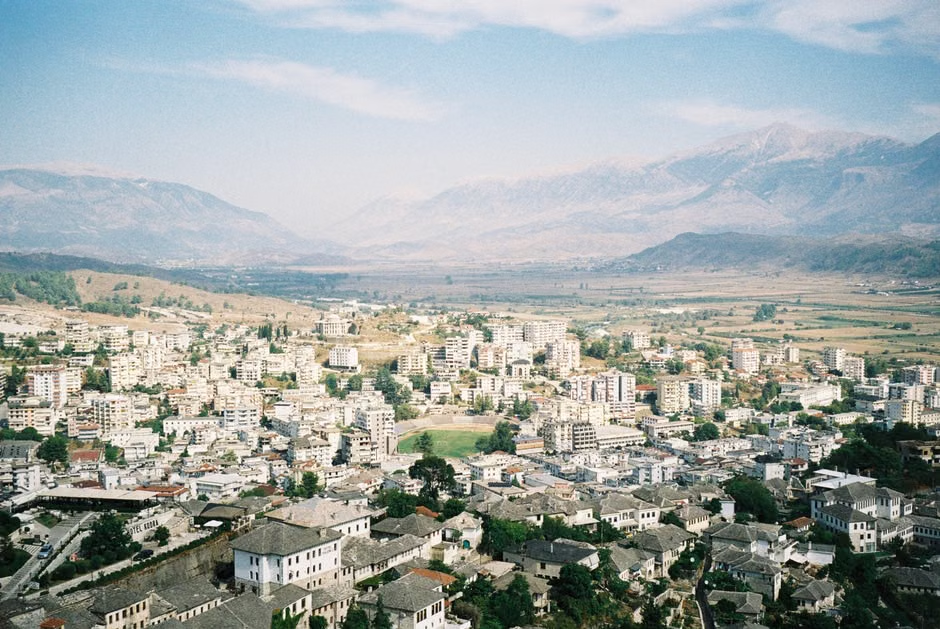
Why Gjirokaster is Perfect for Your Celebration
- UNESCO World Heritage status gives every event an unmatched historic backdrop
- Gjirokaster Castle provides a dramatic, one-of-a-kind ceremonial setting
- Traditional Ottoman stone mansions (kulla) offer intimate, characterful venue spaces
- Spring and early autumn bring clear mountain light and comfortable temperatures for outdoor celebrations
- Relatively undiscovered by mass tourism, ensuring privacy and exclusivity for events
- Proximity to the Albanian Riviera and Butrint National Park extends the guest experience

Compare Gjirokaster with Other Top Destinations
Frequently Asked Questions
Is Gjirokaster a good destination for a small wedding?
Yes, particularly for intimate gatherings. Gjirokaster is well-suited to small destination weddings — typically up to around 80–100 guests — where the couple prioritises a UNESCO World Heritage setting, authentic Albanian character, and a sense of exclusivity. Its Ottoman stone mansions, castle backdrop, and cobblestone streets create a naturally cinematic atmosphere that requires minimal additional decoration.
What is the best time of year to hold a wedding or event in Gjirokaster?
April, May, June, September, and October are the recommended months. Spring brings mild temperatures and fresh mountain scenery; early autumn offers warm, settled weather with softer light and fewer tourists. July and August are hot and crowded, while November through March brings cold, wet conditions and occasional snow that make outdoor events impractical.
How do guests typically get to Gjirokaster for a destination event?
Most guests arrive by road transfer. Tirana International Airport is the primary international gateway, with a road journey of approximately 3–3.5 hours to Gjirokaster. Ioannina Airport in northern Greece is a closer option for guests routing via Athens, placing the city roughly 1.5–2 hours away. There is no active railway connection, so coordinated private transfers are the standard approach for event groups.
What kinds of event spaces are available in Gjirokaster?
The venue landscape is defined by the city's historic fabric: restored Ottoman stone mansions (kulla), boutique hotel courtyards and terraces, and the grounds of Gjirokaster Castle. These spaces are intimate and atmospheric rather than large-scale. There are no purpose-built convention centres or resort-style event lawns — the city's strength lies in characterful, heritage-rich settings for smaller gatherings.
How many guests can realistically be accommodated for an event in Gjirokaster?
The city's combined boutique hotel and guesthouse inventory can typically accommodate groups of up to 60–80 rooms across multiple properties. For events, single-space capacity is generally in the range of 50–100 guests depending on the venue. Larger groups may need to use overflow accommodation in nearby towns such as Saranda, approximately 60 km away.
Is Gjirokaster suitable for a cultural festival or arts event?
Yes. Gjirokaster has a genuine tradition of hosting large-scale cultural events, most notably Albania's National Folklore Festival, which has been held at the castle. This heritage makes the city a natural fit for folk music gatherings, arts-oriented events, and cultural programming that draws on Albanian and Balkan traditions. The castle grounds and Old Bazaar area are particularly evocative settings for this type of event.
What is the local catering and vendor scene like for events?
Local catering draws on strong Albanian culinary traditions — lamb dishes, byrek, and regional specialities — which can be a genuine asset for events wanting authentic local food culture. The broader vendor ecosystem (floristry, décor, specialist event planning) is growing but modest; couples are advised to work with a planner experienced in the city, and to source specialist suppliers from Tirana where needed.
Are there any accessibility challenges guests should know about?
Yes. Gjirokaster's historic Old City is built on steep hillside terrain and is largely navigable only on foot via cobblestone paths and steps. This is a meaningful consideration for elderly guests or those with mobility limitations. Vehicles can access the lower city and main road, but the historic core — where most event venues are located — requires walking on uneven surfaces.
Can guests extend their trip beyond Gjirokaster itself?
Yes, and this is one of the destination's genuine strengths for multi-day event programmes. Gjirokaster sits within reach of the Albanian Riviera, Butrint National Park (a UNESCO World Heritage site), and the Blue Eye natural spring — all of which can be incorporated into pre- or post-event itineraries, giving guests a richer experience of southern Albania beyond the city itself.
Is Gjirokaster safe for international guests attending an event?
Generally yes. Gjirokaster is considered safe for international visitors, and the city has a welcoming local culture with a growing familiarity with international tourism. Standard travel precautions apply, and event planners should ensure guests are briefed on the city's terrain and the road transfer requirements. The Albanian government and local authorities are generally supportive of tourism and cultural events.
What makes Gjirokaster genuinely different from other European heritage wedding destinations?
Its combination of UNESCO status, very low tourist saturation relative to equivalent cities in Italy or Greece, and an almost entirely intact Ottoman urban fabric makes it rare. Couples and planners who have visited consistently note the sense of having a historic European city largely to themselves — a quality that is increasingly difficult to find in more popular Mediterranean destinations.

Ready to explore venues in Gjirokaster?
Gjirokaster: Destination Wedding & Cultural Event Venues in Albania
◆Gjirokaster is best suited to intimate, culturally immersive celebrations — elopements, small destination weddings, anniversary events, and boutique cultural gatherings — held against the backdrop of one of the Balkans' finest UNESCO World Heritage townscapes. Its primary vibe is Cultural & Timeless: Ottoman-era stone mansions, a hilltop castle, and cobblestone bazaar streets define the setting. The best season runs through spring and early autumn (April–June, September–October), when temperatures are comfortable and the city is at its most photogenic. Accessibility requires planning — guests typically arrive by road transfer from Tirana or via northern Greece — making Gjirokaster a destination that rewards those who prioritise authenticity and exclusivity over convenience and scale.
Gjirokaster at a Glance
| Attribute | Detail |
|---|---|
| Best For | Intimate weddings, elopements, cultural festivals, boutique private events |
| Primary Vibe | Cultural & Timeless |
| Other Vibes | Historic, Romantic, Secluded, Atmospheric |
| Best Season | Spring (Apr, May, Jun, Sep, Oct) |
Why Choose Gjirokaster?
- UNESCO World Heritage status: Gjirokaster is one of only two UNESCO-listed cities in Albania, giving every event held here an internationally recognised historic context that is genuinely rare among European wedding destinations.
- Gjirokaster Castle as a ceremonial centrepiece: The hilltop fortress, dating to the 12th century and expanded under Ottoman rule, provides a dramatic, visually arresting backdrop for ceremonies and receptions that no purpose-built venue can replicate.
- Traditional kulla (tower houses) as intimate venue spaces: The city's characteristic multi-storey stone mansions — some now operating as guesthouses and event spaces — offer a genuinely immersive, characterful setting for small gatherings.
- Low tourist density relative to Western European heritage cities: Gjirokaster remains comparatively undiscovered by mass international tourism, which translates to greater privacy, less competition for venue access, and a more authentic local atmosphere during events.
- Scenic mountain and valley setting: The city sits above the Drinos River valley, surrounded by the Gjerë mountains, providing a naturally photogenic landscape that enhances outdoor ceremonies and photography.
- Gateway to broader Albanian experiences: Proximity to the Albanian Riviera, Butrint National Park (another UNESCO site), and the Blue Eye natural spring allows event planners to build multi-day guest itineraries that extend well beyond the city itself.
Which Celebrations Work Best in Gjirokaster?
- Intimate destination weddings: Gjirokaster is particularly well-suited to small weddings — typically under 80–100 guests — where the couple prioritises atmosphere, heritage, and a sense of place over large-scale production. The city's stone architecture and castle views create a naturally cinematic setting without requiring elaborate decoration.
- Elopements and micro-weddings: For couples seeking a deeply personal, low-footprint ceremony in a genuinely historic European setting, Gjirokaster offers a compelling alternative to more crowded Italian or Greek destinations. The intimacy of the Old City lends itself naturally to small, meaningful gatherings.
- Cultural festivals and arts events: Gjirokaster has a long tradition of hosting the National Folklore Festival, held periodically at the castle. This heritage makes the city a natural fit for cultural programming, folk music events, and arts-oriented gatherings that draw on Albanian and broader Balkan traditions.
- Private anniversary and milestone celebrations: The combination of heritage accommodation, mountain scenery, and a relatively uncrowded environment makes Gjirokaster a strong choice for private milestone events — anniversaries, significant birthdays, or family reunions — where the experience of the place is itself the centrepiece.
- Photography and creative retreats: The city's extraordinary visual character — slate rooftops, Ottoman arches, castle silhouettes — makes it a natural draw for photography-focused events, creative workshops, and editorial shoots tied to a celebration.
Venues & Event Spaces
Gjirokaster's event venue landscape is defined by its historic built fabric rather than purpose-built hospitality infrastructure. The primary venue typologies available include:
- Ottoman stone mansions (kulla): Several of the city's traditional tower houses have been sensitively restored and now operate as boutique guesthouses or private event spaces. These properties typically accommodate smaller gatherings and offer an unmatched sense of historic authenticity.
- Castle grounds and terraces: Gjirokaster Castle's outer terraces and courtyard areas have been used for cultural events and can, with appropriate permissions, serve as ceremonial or reception spaces with panoramic valley views.
- Boutique hotel courtyards and terraces: Several of the city's heritage hotels feature stone-paved courtyards and terraced outdoor areas that are well-suited to intimate receptions and dinners, particularly during the spring and early autumn seasons.
- Old Bazaar area: The historic bazaar district, with its arched stone passages and traditional workshops, provides an atmospheric backdrop for cultural events, folk-themed receptions, and informal celebrations that draw on the city's living heritage.
It is important to note that Gjirokaster does not currently have large-scale banquet halls, convention centres, or resort-style event lawns of the kind found in more developed tourism destinations. The venue inventory is genuinely intimate in scale, which is a strength for the right event type and a genuine constraint for larger gatherings.
Best Time to Celebrate
The curated best season for events in Gjirokaster runs across April, May, June, September, and October — broadly the spring and early autumn windows.
- April and May bring mild temperatures (typically 15°C–22°C), fresh greenery on the surrounding hillsides, and long daylight hours without the intensity of summer heat. These months are particularly well-suited to outdoor ceremonies and photography.
- June sits at the transition into summer — temperatures begin to climb toward the upper 20s°C, but the city remains comfortable for daytime events, especially at altitude. Early June is generally preferable to late June for outdoor receptions.
- September and October offer arguably the most balanced conditions: summer heat has eased, the light takes on a warm autumnal quality, and the city is quieter following the peak tourist months. October in particular can be exceptionally atmospheric, with cooler evenings that suit candlelit indoor receptions in stone-walled spaces.
July and August bring intense heat — temperatures regularly exceed 32°C–35°C in the valley — combined with the highest tourist density of the year, making outdoor daytime events uncomfortable and accommodation harder to secure exclusively for a group. November through March brings cold, wet, and occasionally snowy conditions; the city's altitude and stone construction mean interiors can be difficult to heat adequately, and road access can be affected by winter weather. These months are generally unsuitable for outdoor events and challenging for destination gatherings.
Getting There & Local Connectivity
Gjirokaster's accessibility is one of the most important planning considerations for any event here. The city does not have its own airport or active railway connection, meaning all guests arrive by road.
- From Tirana: Tirana International Airport is the primary international gateway for guests flying into Albania. The road journey from Tirana to Gjirokaster takes approximately 3–3.5 hours by private transfer or coach, travelling south along the SH4 highway. This is a manageable journey for a destination event but requires coordinated group transfer logistics.
- From northern Greece: Ioannina Airport in northwestern Greece is a closer option for guests flying via Greek hubs, with the road crossing at Kakavia border point placing Gjirokaster within roughly 1.5–2 hours of Ioannina. This route is particularly useful for guests connecting through Athens.
- Local movement within the city: Gjirokaster's Old City is largely pedestrianised and built on steep hillside terrain — much of it is accessible only on foot via cobblestone paths and steps. This is a significant practical consideration for elderly guests or those with mobility limitations. Vehicles can access the lower parts of the city and the main road, but the historic core requires walking.
- Group transfers: Private minibuses and coaches are the standard solution for moving guest groups between the airport, accommodation, and event venues. Local transfer operators are available, though advance booking is strongly recommended, particularly during the spring and autumn seasons when demand is higher.
Local Vendor & Hospitality Ecosystem
Gjirokaster's vendor and hospitality ecosystem is growing but remains modest in scale relative to more established European destination wedding markets.
- Catering: Local restaurants and guesthouses offer traditional Albanian cuisine — lamb, byrek, tavë kosi, and regional specialities — which can be a genuine asset for events that want to incorporate authentic local food culture. Catering for larger groups may require coordination with operators from Tirana or Saranda.
- Event planning: A small number of local and Tirana-based event planners have experience working in Gjirokaster, particularly for cultural events and smaller weddings. International couples are advised to work with a planner who has specific on-the-ground experience in the city, given the logistical complexity of the location.
- Floristry and décor: Local floristry is available but limited in range. Couples seeking elaborate floral installations or specialist décor should plan to source these from Tirana or import elements, factoring in lead times.
- Photography and videography: The city's extraordinary visual character has attracted a growing community of photographers who specialise in Gjirokaster and the broader Albanian heritage circuit. This is one area where the local and regional vendor pool is relatively strong.
- Accommodation capacity: The city's boutique hotel and guesthouse inventory is sufficient for small guest groups (typically up to 60–80 rooms across multiple properties), but a large wedding party requiring exclusive use of a single large property will find options limited. Overflow accommodation in nearby Saranda (approximately 60 km away) is sometimes used for larger groups.
Pros & Things to Consider
Why Gjirokaster Works Well
- Genuinely unique UNESCO World Heritage setting that is difficult to replicate anywhere else in Europe
- Low tourist saturation compared to equivalent heritage cities in Italy, Greece, or Croatia — greater exclusivity and privacy
- Strong visual and photographic character built into the city's fabric — minimal decoration required to create a compelling aesthetic
- Authentic Albanian hospitality and cuisine add a distinctive cultural dimension to the guest experience
- Spring and autumn seasons offer comfortable, photogenic conditions with manageable logistics
- Proximity to other exceptional Albanian destinations allows for extended multi-day guest programmes
Things to Consider
- No direct international airport — all guests require a road transfer of at least 1.5–3.5 hours from the nearest airports, which adds complexity and cost to group logistics
- Venue scale is genuinely limited — the city is not suited to weddings or events requiring more than approximately 100 guests in a single space
- The Old City's steep cobblestone terrain is challenging for elderly guests or those with mobility limitations
- The local vendor ecosystem, while growing, is less mature than in more established destination wedding markets — specialist suppliers may need to be sourced from Tirana
- Internet and mobile connectivity in parts of the Old City can be limited, which may affect real-time event coordination
- Accommodation inventory within the city itself is modest; larger guest groups will need to be distributed across multiple properties or supplemented with accommodation in nearby towns
When Gjirokaster May Not Be the Right Fit
- Large weddings or events (100+ guests): The city's venue and accommodation inventory is genuinely not suited to large-scale events. Couples expecting a guest list above approximately 80–100 people will find the local infrastructure a significant constraint.
- Guests with significant mobility limitations: The historic Old City is built on steep hillside terrain and is largely navigable only on foot via cobblestone paths. Events where a meaningful proportion of guests have mobility challenges are better suited to a flat, purpose-built venue environment.
- Events requiring seamless international guest travel: If the majority of guests are flying internationally and ease of arrival is a priority, Gjirokaster's distance from the nearest airports and absence of rail connections make it a more demanding destination than alternatives with direct international airport access.
- Events planned for July or August: Summer heat and peak tourist season make Gjirokaster a less comfortable and less exclusive choice during these months. Couples with fixed summer dates are generally better served by a destination with more robust summer event infrastructure.