
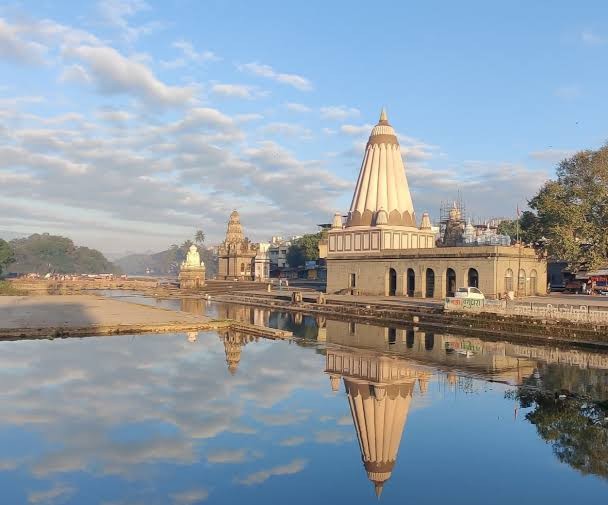
Why Wai is Perfect for Your Celebration
- Ancient ghats and riverside temples create an unmatched spiritual backdrop for religious and cultural events
- Ganesh Chaturthi and Gudi Padwa celebrations here carry deep local tradition, making community gatherings especially authentic
- Proximity to Mahabaleshwar and Panchgani adds scenic hill-station appeal for extended guest stays
- Compact, walkable town layout makes it easy for family groups to move between temples, ghats, and event venues
- Cool, pleasant post-monsoon climate in September–October is ideal for outdoor rituals and festival gatherings
- Strong local catering and puja-arrangement ecosystem suited to religious family functions and naming ceremonies

Compare Wai with Other Top Destinations
Frequently Asked Questions
Is Wai a good destination for a Ganesh Chaturthi celebration?
Yes, Wai is particularly well-suited for Ganesh Chaturthi gatherings. The town has a long-standing community tradition around this festival, with active temple participation, ghat processions, and a culturally immersive atmosphere. Groups wanting to celebrate in a genuinely traditional Maharashtrian setting — rather than a resort-style event — will find Wai one of the more meaningful options in the region.
What size of guest group can Wai realistically accommodate for an event?
Wai works best for small-to-medium gatherings, typically up to around 150–200 guests for a single-venue event. Larger groups can be accommodated by combining multiple properties and spaces, but the town does not have a single large convention or banquet facility. For events exceeding 250–300 guests, supplementing with nearby Mahabaleshwar or Panchgani venues is generally advisable.
How do guests typically travel to Wai for an event?
Most guests travel to Wai by road from Pune, which is approximately 90–100 km away and takes around two to two-and-a-half hours. Pune Airport is the nearest air gateway. The closest railway station is Wathar, about 10 km from town, but connectivity there is limited, so road transfers from Pune are the most practical option for the majority of guests.
What is the best time of year to plan a spiritual gathering or temple festival in Wai?
Autumn — specifically September and October — is the recommended season. The monsoon has typically withdrawn by mid-September, leaving the landscape lush and the weather comfortable. This period also coincides with Ganesh Chaturthi and the broader festive season, making the town's cultural and spiritual energy particularly vibrant. November through February is a quieter but still pleasant alternative for non-festival events.
Are local priests and puja arrangement services available in Wai for religious functions?
Yes. Wai has a well-established ecosystem of experienced purohits (priests), puja material suppliers, and flower vendors who regularly support family functions, temple ceremonies, and festival gatherings. This is one of the town's genuine strengths for spiritually oriented events, and arrangements can typically be made through local contacts or event coordinators familiar with the town.
What kinds of venues are available in Wai for events and gatherings?
Wai offers riverfront guesthouses and small heritage-influenced hotels near the ghats, along with resort-style properties on the town's outskirts that have open lawns for outdoor gatherings. The ghats themselves serve as natural ceremonial spaces for processions and aarti events. Local dharamshalas and community halls can supplement private venue capacity for larger group functions.
Is Wai suitable for a Gudi Padwa family gathering?
Yes. As a deeply Maharashtrian town, Wai observes Gudi Padwa with local customs and temple rituals that give family gatherings here an authentic cultural context. The town's identity aligns naturally with the spirit of the Marathi New Year, making it a meaningful setting for families wanting to mark the occasion in a traditionally rooted environment.
How should event organisers handle catering and décor for a large function in Wai?
Local Maharashtrian catering — including traditional thali meals and prasad preparation — is well-supported in Wai. For large-scale or multi-cuisine catering, and for elaborate décor, lighting, or audio-visual production, vendors are typically sourced from Pune. This is standard practice for events in smaller Maharashtra towns and requires advance coordination, ideally several weeks before the event date.
Is Wai a good fit for a corporate offsite or leadership retreat?
Wai can work for small corporate groups seeking a quiet, reflective environment away from city distractions. Its peaceful riverside setting and proximity to the Sahyadri hills provide a calming backdrop for leadership retreats or team-building sessions. However, it lacks large conference facilities and specialist corporate event infrastructure, so it suits informal, nature-adjacent offsites better than structured corporate conferences.
What should I know about local transport within Wai during a multi-day event?
Wai's town centre is compact and walkable for guests staying near the ghats. For groups spread across multiple properties, local auto-rickshaws are available but limited in number. App-based cab services have minimal presence in the town. Event organisers are strongly advised to pre-arrange dedicated vehicles or a shuttle service for guest transfers, particularly for early-morning temple visits or late-evening event returns.
Can a traditional temple wedding be held in Wai?
Yes, Wai's active temples and ghat settings can accommodate traditional Hindu weddings conducted in a genuinely sacred environment. These are typically intimate ceremonies — suited to smaller guest lists — rather than large-format weddings. Families who prioritise ritual authenticity and a spiritually meaningful setting over venue grandeur will find Wai a fitting choice for a temple or spiritual wedding.

Ready to explore venues in Wai?
Wai: Temple Town Weddings, Spiritual Gatherings & Riverfront Event Venues
◆Wai is a compact temple town on the Krishna River in Maharashtra's Satara district, best suited for spiritually rooted celebrations — Ganesh Chaturthi gatherings, Gudi Padwa events, temple festivals, pilgrimage-linked family functions, and religious ceremonies. Its primary vibe is Spiritual & Soulful, shaped by ancient ghats, centuries-old temples, and a deeply Maharashtrian cultural identity. The best season is Autumn (September–October), when the post-monsoon landscape is lush and festival energy is at its peak. Accessibility is moderate — road connections from Pune are reliable, though direct rail and air links are limited. Venue scale is intimate rather than grand, making Wai most suitable for small-to-medium gatherings rather than large-format weddings.
Wai at a Glance
| Attribute | Detail |
|---|---|
| Best For | Ganesh Chaturthi Celebration, Gudi Padwa Gathering, Temple Festival, Spiritual / Pilgrimage Gathering |
| Primary Vibe | Spiritual & Soulful |
| Other Vibes | Heritage & Cultural, Riverside & Scenic, Community-Centred |
| Best Season | Autumn (September–October) |
Why Choose Wai?
- Authentic ghat culture: Wai's stepped ghats along the Krishna River — particularly the Ganpati Ghat cluster — provide a genuinely sacred, visually striking setting that few other Maharashtra towns can replicate for religious events.
- Dense temple ecosystem: The town contains a remarkable concentration of well-maintained temples within a walkable area, making it naturally suited to multi-day pilgrimage gatherings, temple festivals, and spiritually themed family functions.
- Strong Ganesh Chaturthi tradition: Wai has a long-standing, community-driven Ganesh Chaturthi celebration culture, making it one of the more meaningful locations in Maharashtra to host or participate in this festival as a group.
- Scenic post-monsoon landscape: The surrounding Sahyadri hills and the Krishna River valley are at their most lush and photogenic in September–October, adding natural beauty to outdoor rituals and processions.
- Gateway to Mahabaleshwar and Panchgani: Wai sits at the foot of the road leading to these popular hill stations, allowing event organisers to combine a spiritual gathering in Wai with extended guest stays in the cooler hills nearby.
- Intimate, community-scale atmosphere: The town's compact size and unhurried pace make it well-suited to close-knit family reunions, naming ceremonies, and community gatherings where personal connection matters more than grand spectacle.
Which Celebrations Work Best in Wai?
Ganesh Chaturthi Celebration: Wai is among the more culturally resonant places in Maharashtra to celebrate Ganesh Chaturthi. The town's ghats, local processions, and community involvement give group celebrations here an authenticity that is difficult to manufacture elsewhere. Families and community groups who want to mark the festival in a genuinely traditional setting will find Wai particularly fitting.
Gudi Padwa Gathering: As a deeply Maharashtrian town, Wai observes Gudi Padwa with local customs and temple rituals that make it a meaningful backdrop for family and community gatherings marking the Marathi New Year. The town's cultural identity aligns naturally with the spirit of the occasion.
Temple Festival: With multiple active temples — including the well-known Ganpati temples along the ghats — Wai regularly hosts temple festivals that draw devotees from across the region. Organising a group visit or a private celebration around a temple festival here is straightforward and culturally immersive.
Spiritual / Pilgrimage Gathering: Wai is a recognised pilgrimage stop in Maharashtra, and its riverfront ghats are used for ritual bathing, prayers, and ceremonies year-round. Groups organising a pilgrimage-linked gathering — whether a family puja, a religious anniversary, or a multi-generational spiritual retreat — will find the infrastructure and local knowledge to support it.
Cultural Festival Gathering: Beyond strictly religious events, Wai's heritage architecture, ghat culture, and Maharashtrian folk traditions make it a compelling setting for cultural festivals and community celebrations that draw on regional identity and shared heritage.
Religious Family Function: Naming ceremonies, thread ceremonies, and other family religious milestones are well-supported in Wai by local priests, puja suppliers, and catering traditions rooted in Maharashtrian cuisine and ritual practice. The town's temples can often be engaged for associated blessings and ceremonies.
Naming / Family Ceremony: The intimate scale of Wai's venues and the availability of local ritual specialists make it a practical and meaningful choice for naming ceremonies, particularly for families with a connection to the region's spiritual traditions.
Family Reunion: Wai's peaceful, unhurried character and its scenic riverside setting make it a pleasant gathering point for extended families, especially those with roots in Maharashtra who want a culturally grounded reunion rather than a purely resort-style one.
Community Gathering: The town's public ghats and open spaces, combined with its tradition of large community celebrations during festivals, make it naturally accommodating for community-scale events that blend public participation with organised group activities.
Baby Shower / Godh Bharai: For families seeking a spiritually auspicious setting for a Godh Bharai, Wai's temple environment and local ritual traditions provide a meaningful context, particularly when the ceremony is intended to include a temple visit or riverside blessing.
Temple / Spiritual Wedding: Wai's active temples and ghat settings can accommodate traditional Hindu weddings conducted in a genuinely sacred environment. These are typically intimate ceremonies rather than large-format weddings, suited to families who prioritise ritual authenticity over venue grandeur.
Corporate Offsite, Leadership Retreat, Team-Building Retreat: While not Wai's primary strength, the town's quiet, distraction-free environment and its proximity to the Sahyadri hills make it a viable option for small corporate groups seeking a reflective, nature-adjacent offsite experience away from city noise.
Venues & Event Spaces
Wai's venue landscape is characterised by intimate, heritage-influenced properties rather than large convention-scale facilities. The town offers riverfront guesthouses and small hotels close to the ghats, which are well-positioned for groups wanting to combine accommodation with easy access to temple rituals and riverside ceremonies. Several properties on the outskirts of town provide resort-style settings with open lawns suitable for outdoor gatherings, family functions, and small receptions.
For larger ceremonial spaces, the ghats themselves — particularly the Ganpati Ghat area — function as natural event venues for processions, aarti gatherings, and community celebrations, though these are public spaces rather than privately bookable venues. Local dharamshalas and community halls can supplement private venue capacity for larger group functions. Event organisers planning gatherings of more than 200–250 guests may need to consider a combination of multiple smaller spaces or look to nearby Satara or Mahabaleshwar for additional capacity.
Best Time to Celebrate
The Autumn season (September–October) is the curated best time to plan events in Wai, and for good reason. The monsoon typically withdraws from this part of Maharashtra by mid-to-late September, leaving the landscape visibly refreshed — the Krishna River is full, the surrounding hills are green, and the air is clear and comfortable. Temperatures in this window generally range from the low-to-mid twenties at night to the low thirties during the day, making outdoor rituals, ghat ceremonies, and processions genuinely pleasant.
Critically, September–October also coincides with Ganesh Chaturthi (typically in August–September) and the broader festive season leading into Navratri and Diwali, meaning the town's cultural and spiritual energy is at its annual peak. Groups celebrating religious or community events during this window benefit from an atmosphere that is already charged with collective celebration.
November through February represents a reasonable shoulder season — cooler temperatures (sometimes dropping to 10–12°C at night in December–January) make outdoor events comfortable, though the festive intensity of the autumn peak is absent. This period suits quieter family functions, retreats, and pilgrimage visits.
March through May brings rising heat, with daytime temperatures climbing toward the low-to-mid thirties and humidity increasing ahead of the monsoon. Outdoor events become progressively less comfortable, and the landscape loses the lushness of the post-monsoon period.
June through August is the active monsoon season. Wai receives substantial rainfall during this period, and while the ghats and river are visually dramatic, outdoor events are significantly disrupted. Travel on the Pune–Wai road can be affected by landslides and waterlogging in the Sahyadri foothills, making logistics for large guest groups more complicated.
Getting There & Local Connectivity
Wai is most practically reached by road from Pune, which is approximately 90–100 km away via the NH48 and the Pune–Satara highway. The drive typically takes around two to two-and-a-half hours under normal traffic conditions, making it a feasible day-trip or weekend destination for guests based in Pune or Mumbai. Mumbai guests can expect a drive of roughly four to five hours depending on traffic and route.
The nearest airport is Pune Airport, which connects to major Indian cities and a growing number of international destinations. Guests flying in from other parts of India will typically land at Pune and travel onward by road. There is no airport in Wai itself or in the immediately surrounding area.
The nearest railway station is Wathar, on the Pune–Miraj rail line, located approximately 10 km from Wai town. However, not all trains on this route stop at Wathar, and the station's connectivity is limited compared to Pune Junction or Satara. Most event organisers find it more practical to arrange road transfers from Pune for arriving guests rather than relying on rail connections to Wathar.
Within Wai itself, the town is compact and walkable for guests staying near the ghats. For groups spread across multiple accommodation properties, local auto-rickshaws and hired vehicles are the standard mode of transport. Organising a dedicated shuttle or vehicle pool for a large guest group is advisable, as app-based cab services have limited availability in the town.
Local Vendor & Hospitality Ecosystem
Wai has a well-established local ecosystem for religious and ritual services — experienced priests (purohits), puja material suppliers, and flower vendors are readily available and accustomed to supporting family functions, temple ceremonies, and festival gatherings. This is one of the town's genuine strengths for spiritually oriented events.
Local Maharashtrian catering is strong, with caterers experienced in traditional thali-style meals, prasad preparation, and festival-specific menus. For events requiring more elaborate multi-cuisine catering or large-scale banquet setups, it is generally advisable to engage caterers from Pune or Satara who can bring additional capacity and equipment.
The décor and event management vendor base in Wai is more limited than in larger cities. Basic floral decoration and mandap setup are available locally, but for elaborate event styling, lighting rigs, or audio-visual production, vendors will typically need to be sourced from Pune. This adds a logistical layer but is a standard practice for events in smaller Maharashtra towns.
Accommodation capacity in Wai is sufficient for small-to-medium gatherings, but a large guest list (100+ overnight guests) will require a combination of properties in Wai and nearby Panchgani or Mahabaleshwar, which are well-equipped with hotels and resorts of varying scales.
Pros & Things to Consider
Why Wai Works Well
- Genuinely sacred and culturally authentic setting for religious and spiritual events
- Strong local ecosystem for ritual services, puja arrangements, and traditional catering
- Beautiful post-monsoon landscape in September–October, ideal for outdoor ceremonies
- Compact, walkable town makes it easy for family groups to navigate between temples, ghats, and venues
- Proximity to Mahabaleshwar and Panchgani extends accommodation options and adds scenic value for guests
- Relatively peaceful and unhurried atmosphere, well-suited to reflective retreats and intimate family gatherings
Things to Consider
- Venue capacity is limited — Wai is not well-suited to large-format events requiring 300+ guests under one roof
- No direct airport or well-connected railway station; most guests will need road transfers from Pune, which adds travel time
- Specialist event vendors (décor, AV, large-scale catering) typically need to be sourced from Pune, requiring advance planning and logistics coordination
- The monsoon season (June–August) makes outdoor events genuinely risky and road access occasionally difficult
- App-based cab and transport services are limited within the town, so group transport needs to be pre-arranged
- Accommodation inventory within Wai itself is modest; large guest groups will need to be distributed across nearby hill-station properties
When Wai May Not Be the Right Fit
- Large-scale weddings or events (300+ guests): Wai's venue inventory is oriented toward intimate gatherings. Groups requiring a single venue with large banquet halls, multiple event lawns, and on-site accommodation for hundreds of guests will find the local supply insufficient.
- Guests travelling from distant cities without easy Pune connections: For guest lists drawn heavily from cities without good Pune air connectivity, the onward road journey adds meaningful travel burden, particularly for elderly guests or those with young children.
- Events planned during the monsoon (June–August): Outdoor ceremonies, ghat rituals, and processions — which are central to Wai's appeal — are significantly disrupted by heavy rainfall. The town's scenic and spiritual character is best experienced outside the monsoon window.
- Events requiring a full-service luxury resort experience: Wai does not currently have large luxury resort properties with spa facilities, multiple dining outlets, and grand ballrooms. Groups for whom a premium resort experience is a primary requirement will be better served by nearby Mahabaleshwar or Panchgani.