
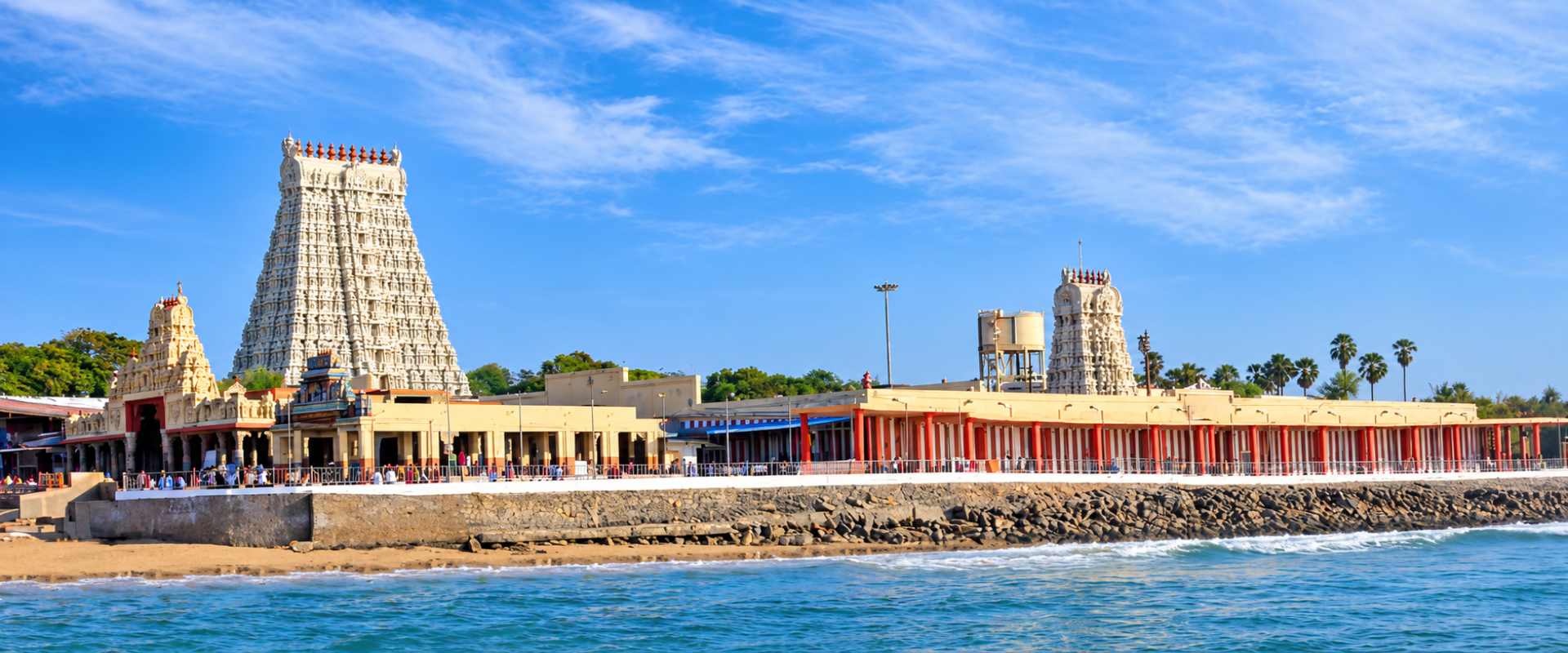
Why Tiruchendur is Perfect for Your Celebration
- Home to the Arulmigu Subramania Swamy Temple, one of the holiest Murugan shrines in India — ideal for temple-linked ceremonies
- Beachside location on the Bay of Bengal adds a serene, scenic backdrop for family gatherings and pilgrimages
- Deep Tamil cultural calendar — Skanda Sashti, Thai Poosam, and Pongal draw massive devotional gatherings naturally suited to group celebrations
- Compact, walkable temple town atmosphere fosters close-knit community and family reunion events
- Direct rail connectivity from Tirunelveli and Chennai makes group travel feasible for large pilgrim families
- Authentic local catering traditions — temple prasadam culture and Tamil Brahmin cuisine vendors well-established for religious functions
Top Venues in Tiruchendur

TTDC Hotel Tamil Nadu (Tiruchendur)
Compare Tiruchendur with Other Top Destinations
Frequently Asked Questions
Is Tiruchendur a good destination for a religious family function?
Yes, strongly so. Tiruchendur is one of the most spiritually significant locations in Tamil Nadu for Hindu family ceremonies. Its proximity to the Arulmigu Subramania Swamy Temple — a sacred Murugan shrine — gives religious rites of passage like thread ceremonies, ear-piercing rituals, and naming ceremonies a depth of meaning that families specifically travel here to access. Local priests, ritual specialists, and traditional musicians are readily available.
What is the best time of year to hold an event in Tiruchendur?
November through February is the recommended window. Coastal temperatures are comfortable (roughly 25°C–30°C), the sea breeze is pleasant, and the town's major festival calendar — including Skanda Sashti, Pongal, and Thai Poosam — falls within or just before this period. Avoid March–May (intense heat), June–September (northeast monsoon and heavy rain), and October (residual cyclone risk).
How do guests typically travel to Tiruchendur?
Most guests arrive by train — Tiruchendur has its own railway station at the end of the Tirunelveli branch line, connecting to major Tamil Nadu cities. The nearest airport is at Thoothukudi (Tuticorin), roughly 55 km away, with limited flight options. Guests from major metros often fly into Madurai or Tirunelveli and continue by road or rail. Group travel by chartered bus from Tirunelveli is a common and practical option.
What kinds of venues are available for events in Tiruchendur?
Venues are primarily hotel banquet halls, community halls managed by religious trusts, and open grounds near the beach suitable for daytime gatherings. Temporary pandal (marquee) structures are widely used for large family functions — a well-established practice in Tamil Nadu. The Devasthanam (temple trust) also manages certain facilities for religious functions with appropriate permissions. There are no large luxury ballrooms or palace-style heritage venues in the town.
Can Tiruchendur accommodate a large pilgrim or family group?
Yes, within practical limits. The town has decades of experience managing large pilgrim inflows and its accommodation, catering, and transport infrastructure is calibrated for group arrivals. For very large groups (several hundred guests), a combination of multiple hotels, community halls, and pandal setups is typically used. Booking well in advance is essential, especially around major festival dates when the town fills quickly.
Is Tiruchendur suitable for a Pongal celebration event?
Yes, it is one of the most fitting destinations in Tamil Nadu for a Pongal gathering. The town's Tamil cultural identity is strongly expressed during this harvest festival in January, and the combination of temple rituals, communal cooking traditions, and family gatherings aligns naturally with the local atmosphere. The timing also falls within the best season, making outdoor elements of the celebration comfortable.
What local vendors and services are available for event planning in Tiruchendur?
Local caterers are experienced in large-scale traditional Tamil banana-leaf meals for religious functions. Flower vendors, puja material suppliers, priests, nadaswaram musicians, and traditional performers are all locally available. Photography and basic decoration vendors exist in town; for high-production décor or contemporary entertainment, most planners source from Tirunelveli or Madurai and bring vendors in.
Is Tiruchendur appropriate for a temple festival gathering or cultural event?
Yes. The town's own festival calendar — particularly Skanda Sashti and Thai Poosam — provides a natural framework for groups wishing to time a gathering around a major religious event. Carnatic music performances and devotional cultural programmes are regularly staged near the temple precinct, making it a viable setting for cultural gatherings with a classical or devotional arts focus.
How safe is Tiruchendur for families and elderly guests?
Tiruchendur is generally considered very safe. It is a well-established pilgrimage town with a conservative, community-oriented atmosphere and a strong culture of hospitality toward visiting families. The town is compact and walkable near the temple. The main practical consideration for elderly guests is the multi-leg journey required to reach the town, rather than any safety concern once they arrive.
What should I know about planning an event during peak festival season in Tiruchendur?
During major festivals like Skanda Sashti (October–November), the town receives very large crowds and accommodation books out weeks or months in advance. The temple precinct becomes extremely congested, and local transport can be slow. If your event is timed to coincide with a festival, plan accommodation and logistics significantly earlier than you would for an off-peak date, and build extra time into all movement schedules for your group.
Is a destination wedding possible in Tiruchendur?
A temple-style or spiritually rooted wedding is genuinely possible and meaningful here, particularly for Tamil Hindu families with a devotional connection to the Murugan shrine. However, couples expecting a large-scale destination wedding with luxury resort facilities, elaborate entertainment, and high-production décor will find the local infrastructure limiting. Tiruchendur suits intimate, ceremony-focused weddings with a strong religious character rather than large social celebrations.

Ready to explore venues in Tiruchendur?
Tiruchendur: Temple Celebrations, Spiritual Gatherings & Event Venues
◆Tiruchendur is a coastal pilgrimage town in southern Tamil Nadu, best suited for spiritually rooted celebrations — temple festivals, religious family functions, Pongal gatherings, and pilgrimage-linked events. Its primary identity is devotional: the town is anchored by the Arulmigu Subramania Swamy Temple, one of the six sacred Paadal Petra Sthalams of Lord Murugan, and virtually every major gathering here is shaped by that religious context. The best season runs from November through February, when coastal temperatures are manageable and the major festival calendar is active. Accommodation is modest and largely in the 3-star range; this is not a luxury resort destination, but it offers genuine cultural depth and strong local hospitality for groups with a spiritual or community purpose.
Tiruchendur at a Glance
| Attribute | Detail |
|---|---|
| Best For | Pongal Celebration, Religious Family Function, Temple Festival, Spiritual / Pilgrimage Gathering |
| Primary Vibe | Spiritual & Soulful |
| Other Vibes | Coastal & Serene, Community-Centred, Culturally Rooted |
| Best Season | Winter (November–February) |
Why Choose Tiruchendur?
- One of India's most sacred Murugan shrines: The Arulmigu Subramania Swamy Temple is a living, active pilgrimage centre — hosting a ceremony or family function here carries profound religious significance that no purpose-built banquet hall can replicate.
- A natural gathering point for Tamil devotional families: Generations of Tamil families across India and the diaspora have a personal connection to Tiruchendur, making it a deeply meaningful reunion and ceremony destination.
- Active festival calendar aligned with major Tamil celebrations: Skanda Sashti, Thai Poosam, and Pongal all have strong local observance, giving event planners a ready-made cultural framework to build around.
- Beachside setting on the Bay of Bengal: The temple's dramatic coastal position — the sanctum faces the sea — provides a naturally scenic and spiritually charged environment for outdoor gatherings and dawn rituals.
- Established pilgrim hospitality infrastructure: Decades of managing large pilgrim inflows have given the town a practical, if modest, hospitality ecosystem — accommodation, catering, and logistics for large groups are well-understood locally.
- Genuine community atmosphere: Tiruchendur's compact scale means family groups and community gatherings feel cohesive rather than dispersed across a large city, which suits intimate religious functions and naming ceremonies well.
Which Celebrations Work Best in Tiruchendur?
- Pongal Celebration: Pongal is among the most naturally fitting events for Tiruchendur. The town's Tamil cultural identity is deeply expressed during this harvest festival, and the combination of temple rituals, communal cooking, and family gatherings aligns perfectly with the local atmosphere and the season (January).
- Religious Family Function: Thread ceremonies (Upanayanam), ear-piercing ceremonies (Karnavedha), and other Tamil Hindu rites of passage are regularly conducted in proximity to the Murugan temple, lending them a sacred dimension that families specifically travel here to access.
- Temple Festival: Tiruchendur's own temple festival calendar — particularly Skanda Sashti in October–November — draws enormous crowds and creates a natural backdrop for families wishing to time a celebration with a major religious event. Smaller monthly festivals also provide regular opportunities.
- Spiritual / Pilgrimage Gathering: Group pilgrimages — whether organised by a community, a family, or a religious institution — are the most natural use of Tiruchendur as a destination. The infrastructure, the local vendors, and the town's entire rhythm are calibrated around this kind of gathering.
- Cultural Festival Gathering: Tamil classical music, Bharatanatyam performances, and devotional music (Carnatic bhajans) are regularly staged in and around the temple precinct, making Tiruchendur a viable venue for cultural gatherings with a devotional or classical arts focus.
- Local Folk Festival / Fair: The coastal Tamil Nadu region has a rich tradition of local folk arts — Villu Paatu, Karagattam, and Oyilattam — and community fairs tied to the temple calendar. Tiruchendur's setting supports these folk-cultural gatherings organically.
Venues & Event Spaces
Tiruchendur's venue landscape is shaped by its identity as a pilgrimage town rather than a leisure resort destination. The primary event spaces are hotel banquet halls and open courtyards attached to mid-range properties, community halls managed by religious trusts, and open beach-adjacent grounds suitable for daytime gatherings. The Devasthanam (temple trust) manages certain facilities within and around the temple complex that can be accessed for religious functions with appropriate permissions. For larger gatherings, organisers typically use a combination of hotel banquet space and rented community halls, supplemented by temporary pandal (marquee) structures — a well-established practice in Tamil Nadu for large family events. Outdoor spaces near the beach are particularly atmospheric for dawn rituals, group prayers, and cultural performances, though they require careful planning around tidal patterns and seasonal wind conditions. There are no large-scale luxury resort ballrooms or palace-style heritage venues in Tiruchendur itself; the venue character is functional, devotional, and community-oriented.
Best Time to Celebrate
The curated best season for Tiruchendur is Winter (November–February), and this recommendation is well-grounded in the town's specific climate and festival calendar. During these months, daytime temperatures along the coast typically range from around 25°C to 30°C, with cooler evenings and a manageable sea breeze — conditions that make outdoor temple rituals, beach-side gatherings, and multi-day family functions genuinely comfortable. Critically, this window also overlaps with the most significant events on the local religious calendar: Skanda Sashti falls in October–November (the very start of the window), Pongal in January, and Thai Poosam in January–February — meaning a celebration timed to coincide with these festivals benefits from the town's peak devotional energy.
The rest of the year presents real challenges. March through May brings intense coastal heat, with temperatures regularly exceeding 35°C and high humidity that makes outdoor events uncomfortable and potentially unsafe for elderly guests and children. June through September is the monsoon period — the northeast monsoon, which affects the Tamil Nadu coast particularly strongly, brings heavy and sometimes unpredictable rainfall, rough seas, and occasional cyclonic activity. October carries residual cyclone risk and can see sudden heavy rain. These months are not impossible for indoor functions, but they require contingency planning and are generally not recommended for events that depend on outdoor access to the beach or temple precincts.
Getting There & Local Connectivity
Tiruchendur is accessible primarily by rail and road. The town has its own railway station, which serves as the terminal point of the Tirunelveli–Tiruchendur branch line. Trains connect Tiruchendur to Tirunelveli Junction, which in turn has broader connectivity to Chennai, Madurai, Coimbatore, and other major Tamil Nadu cities. For guests travelling from outside Tamil Nadu, the typical approach is to fly into a larger regional hub and continue by train or road. The nearest airport with meaningful connectivity is at Thoothukudi (Tuticorin), roughly 55 km away, though its flight network is limited. Guests from major metros may find it more practical to fly into Madurai or Tirunelveli and travel onward by road or rail.
Within Tiruchendur itself, the town is compact and walkable for those staying near the temple. Auto-rickshaws are the primary local transport mode, and they are plentiful and familiar with the town's key locations. For larger groups requiring coordinated movement — between accommodation, the temple, and event venues — hiring private vehicles or minibuses through local operators is straightforward and commonly done for pilgrim groups. Road quality on the main routes into town is generally adequate, though narrow streets near the temple precinct can create congestion during peak festival periods.
Local Vendor & Hospitality Ecosystem
Tiruchendur's vendor ecosystem is purpose-built for religious and community events rather than luxury weddings or corporate functions. Local caterers are highly experienced in preparing large-scale traditional Tamil meals — particularly the multi-course banana-leaf meals (sadhya-style) served at religious functions — and in managing the logistics of feeding several hundred guests efficiently. Flower vendors, puja material suppliers, and ritual specialists (priests, nadaswaram musicians, and traditional performers) are all locally available and well-versed in the requirements of temple-adjacent ceremonies.
Photography and videography services exist locally, though for high-production-value coverage, many families bring in vendors from Tirunelveli or Madurai. Decoration vendors are available for traditional floral and kolam-based setups; elaborate contemporary décor may require sourcing from larger nearby cities. The overall hospitality character is warm, community-oriented, and practically efficient — guests are well looked after in a functional sense, even if the experience lacks the polish of a dedicated luxury event destination.
Pros & Things to Consider
Why Tiruchendur Works Well
- Unmatched spiritual significance for Tamil Hindu families — the Murugan temple's presence elevates any religious ceremony conducted here
- Experienced local ecosystem for large pilgrim and community group logistics — accommodation, catering, and transport are well-practised
- Festival calendar alignment — Pongal, Skanda Sashti, and Thai Poosam create natural anchors for group celebrations
- Compact, cohesive town atmosphere keeps family groups together rather than dispersed across a large city
- Beachside setting adds genuine scenic and spiritual value to dawn rituals and outdoor gatherings
- Generally very safe and family-friendly environment, with a strong community culture around the temple
Things to Consider
- Accommodation is predominantly in the 3-star range — guests expecting luxury resort facilities will need to adjust expectations or plan to stay in Tirunelveli and travel in
- Air connectivity is limited; guests from distant cities face multi-leg journeys, which can be tiring for elderly pilgrims or large family groups
- Peak festival periods (especially Skanda Sashti) bring very large crowds to the town — accommodation books out early and the temple precinct becomes extremely congested
- The town's character is devotional and conservative — events with a primarily social or entertainment focus (DJ nights, elaborate cocktail functions) are not well-suited to the local environment
- Vendor capacity for high-production contemporary event décor and entertainment is limited locally; sourcing from outside adds logistical complexity
When Tiruchendur May Not Be the Right Fit
- Guests prioritising luxury accommodation: If a significant portion of your guest list expects 4- or 5-star resort facilities, Tiruchendur's current hospitality inventory will not meet that expectation — a larger Tamil Nadu city would be more appropriate.
- Large-scale destination weddings with elaborate entertainment: Events requiring large ballrooms, luxury décor vendors, live bands, or extensive entertainment infrastructure are better served by cities with a more developed wedding hospitality sector.
- Monsoon-season outdoor events: Any celebration that depends on outdoor access — beach gatherings, open-air ceremonies — faces genuine risk from June through October due to the northeast monsoon and cyclone season on this coastline.
- Guests with very limited travel flexibility: The multi-leg journey required for guests from most major Indian metros (fly + train or road) can be a real barrier for elderly guests or those with mobility challenges — destinations with direct air access may be more practical for such groups.