
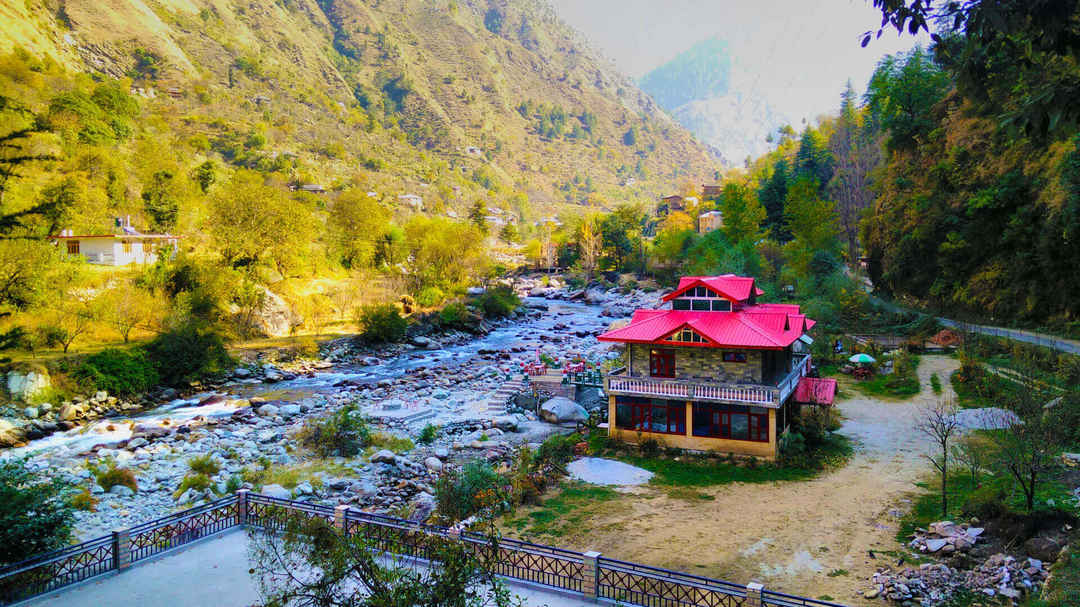
Why Tirthan Valley is Perfect for Your Celebration
- Pristine Tirthan River frontage creates a naturally dramatic, private event backdrop
- Boutique eco-resorts and riverside camps offer exclusive buyouts for small groups
- Location within Great Himalayan National Park buffer zone ensures unspoiled scenery
- Ideal for team-building with trout fishing, trekking, and river-crossing activities on-site
- Low footfall and minimal commercialisation mean genuine privacy for milestone gatherings
- Clear May–June skies allow outdoor celebrations under open mountain air
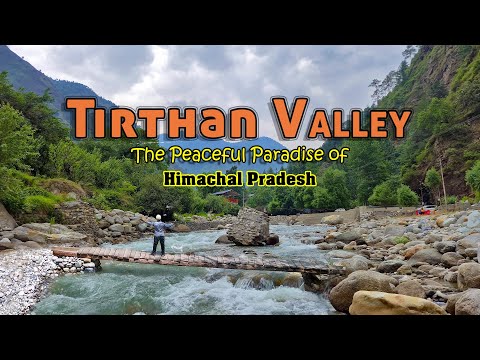
Top Venues in Tirthan Valley
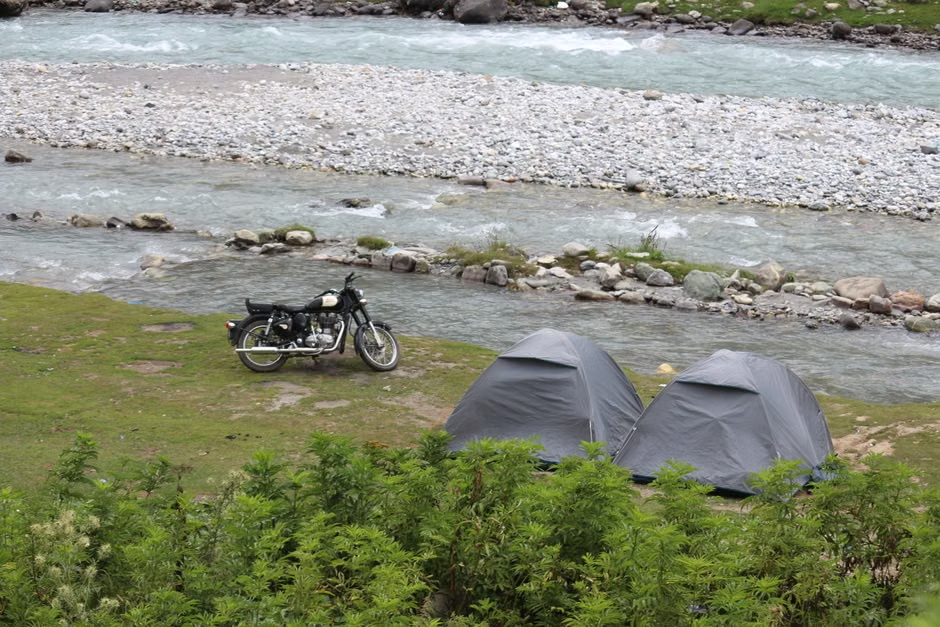
Raju Bharti's Guesthouses & Riverside Camps
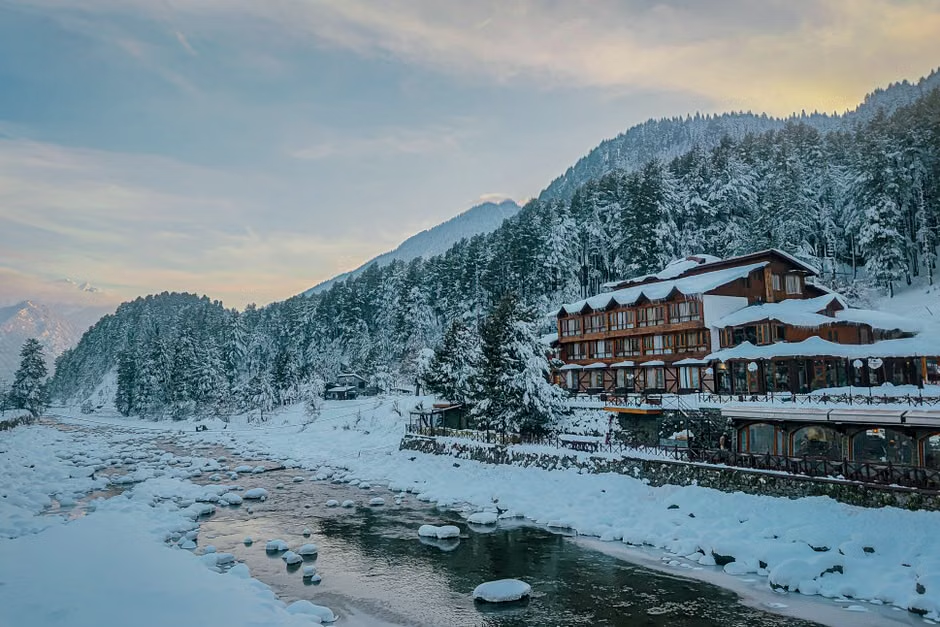
Tirthan Valley Trout House
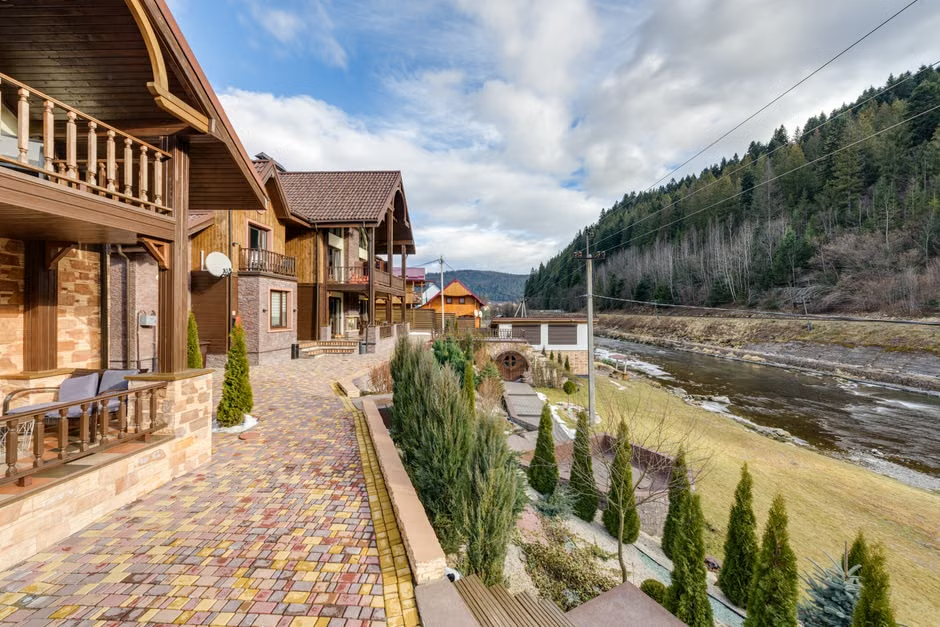
Tirthan Riverside Retreat
Compare Tirthan Valley with Other Top Destinations
Frequently Asked Questions
Is Tirthan Valley a good destination for a family reunion weekend?
Yes. Tirthan Valley is particularly well-suited to family reunions of 20 to 60 guests. Boutique riverside resorts can be booked on an exclusive-use basis, keeping the group together in a contained, private environment. The valley's gentle trails, trout fishing, and village walks offer activities that work across age groups, and the informal, camp-like atmosphere encourages easy togetherness.
What size group can Tirthan Valley realistically accommodate for an event?
Most individual properties in the valley comfortably host groups of 15 to 60 guests. Groups of up to 80 can be managed by coordinating across two adjacent properties. Beyond that, the local accommodation inventory becomes fragmented and logistics more complex. Tirthan Valley is genuinely best suited to small, intimate gatherings rather than large-scale events.
How do guests get to Tirthan Valley from major cities?
The most practical route is a flight to Bhuntar Airport (Kullu-Manali Airport), followed by a road transfer of roughly one to one and a half hours to the valley. Guests from Delhi can also travel by road via Chandigarh, which takes several hours. There is no direct rail access to the valley; the nearest broad-gauge railheads are at Chandigarh or Ambala, both requiring onward road travel.
What is the best time of year to plan a retreat or celebration in Tirthan Valley?
May and June are the clearest and most reliable months. Temperatures are mild, skies are generally clear, and the river is at scenic levels without monsoon-related risk. The monsoon (July–September) brings heavy rain and landslide risk on approach roads, making it unsuitable for planned events. October can work for small, flexible groups, but May–June is the recommended window.
What kinds of venues and event spaces are available in Tirthan Valley?
The valley's event spaces are almost entirely boutique eco-resorts, riverside camps, and small heritage-style guesthouses — not conventional banquet halls or conference centres. Most properties offer outdoor riverside lawns, wooden decks, open-air dining areas, and small indoor meeting rooms. Exclusive property buyouts are common and well-suited to retreats and intimate celebrations.
Is Tirthan Valley suitable for a corporate leadership or team-building retreat?
Yes, and it is among the stronger choices in Himachal Pradesh for this purpose. Limited mobile connectivity and immersive natural surroundings support focused, distraction-free leadership sessions. The valley's trekking, river activities, and village experiences map directly onto team-building objectives, and boutique property buyouts give corporate groups a contained, cohesive environment for the duration of the retreat.
How should event organisers handle catering and external vendors in Tirthan Valley?
Most properties manage catering in-house with Himachali and simple continental menus. For specialist dietary requirements or elaborate menus, discuss needs with the property well in advance — local supply chains for specialist ingredients are limited. External vendors such as decorators, AV technicians, and photographers are not based in the valley and must be sourced from Kullu, Manali, or Chandigarh and transported in.
What activities are available for groups staying in Tirthan Valley?
Trout fishing, guided treks into the Great Himalayan National Park buffer zone, river crossings, nature walks, and Himachali village visits are all available within the valley. Many properties can arrange local cultural performances and bonfire evenings. These activities are available without leaving the valley cluster, making them practical for group programmes without complex logistics.
Is internet and mobile connectivity reliable in Tirthan Valley for a corporate group?
No — connectivity is limited and patchy in parts of the valley. Some properties have minimal or no mobile signal. For corporate groups, this should be communicated clearly to attendees in advance. For leadership retreats and strategy meets, this limited connectivity is often treated as a deliberate advantage; for groups that need to remain operationally reachable throughout, it requires careful planning and expectation management.
Can Tirthan Valley work for a milestone birthday celebration like a 40th or 50th birthday?
Yes. A close group of friends or family celebrating a milestone birthday will find the valley's intimate, private setting genuinely memorable. A riverside property buyout, bonfire dinner, morning trek, and personalised local experiences create a celebration that feels distinctive and personal. The valley works best for groups of 15 to 50 for this kind of event.
What are the main logistical challenges of organising an event in Tirthan Valley?
The key challenges are: road-dependent access for all guests (requiring coordinated vehicle transfers), the need to source external vendors from outside the valley, limited accommodation capacity for large groups, and the narrow monsoon-risk window that constrains event dates. Organisers who plan these elements well in advance — particularly transport and vendor logistics — generally find the valley very manageable for small group events.

Ready to explore venues in Tirthan Valley?
Tirthan Valley: Destination Events, Retreats & Social Celebrations
◆Tirthan Valley is best suited to small, intimate gatherings — family reunions, leadership and team-building retreats, milestone birthdays, and anniversary celebrations — where the draw is privacy, natural beauty, and genuine disconnection rather than grand-scale infrastructure. The primary vibe is Nature & Serene: a pristine river corridor, dense forest, and mountain air replace ballrooms and banquet halls. The valley sits within the buffer zone of the Great Himalayan National Park in Himachal Pradesh, making it one of the more ecologically protected event destinations in northern India. Summer (May–June) is the clear best window. Accessibility requires planning — guests typically fly into Bhuntar and drive onward — but the journey itself is part of the experience for groups who choose this valley deliberately.
Tirthan Valley at a Glance
| Attribute | Detail |
|---|---|
| Best For | Family Getaway & Reunion Weekend, Leadership Retreat, Team-Building Retreat, Destination Birthday Getaway |
| Primary Vibe | Nature & Serene |
| Other Vibes | Adventure, Rustic, Intimate |
| Best Season | Summer (May–June) |
Why Choose Tirthan Valley?
- Unmatched natural privacy: The valley sees relatively low tourist footfall compared to more commercialised Himachal destinations, meaning boutique properties can be bought out entirely for a group — a genuine rarity in the hills.
- River-frontage settings: The Tirthan River runs through the valley's core, and many properties sit directly on its banks, offering a naturally dramatic, sound-rich backdrop for outdoor gatherings, bonfires, and morning sessions.
- Built-in team-building terrain: Trout fishing, guided treks into the Great Himalayan National Park buffer zone, river crossings, and village walks are all available within minutes of most properties — no manufactured activity infrastructure needed.
- Boutique and exclusive-use properties: The accommodation inventory skews toward small, independently run eco-resorts and riverside camps that are well-suited to full-group buyouts, creating a cohesive, contained event environment.
- Genuine digital detox conditions: Mobile connectivity and internet access are limited in parts of the valley — a feature, not a bug, for leadership retreats and strategy meets that benefit from focused, distraction-free time.
- Ecological and cultural authenticity: Proximity to the Great Himalayan National Park and traditional Himachali villages gives groups access to a cultural and ecological context that is genuinely distinctive and difficult to replicate elsewhere.
Which Celebrations Work Best in Tirthan Valley?
Family Getaway & Reunion Weekend: Tirthan Valley is particularly well-suited to multi-generational family reunions. The contained, camp-like environment of a riverside resort buyout keeps the group together naturally, while the valley's gentle trails, fishing spots, and village walks offer activities that work across age groups without requiring specialist logistics.
Leadership Retreat: The combination of limited connectivity, immersive natural surroundings, and small-group accommodation makes Tirthan Valley a strong choice for senior leadership offsites. The physical remove from urban distractions supports the kind of reflective, high-focus conversation that leadership retreats are designed to generate.
Team-Building Retreat: The valley's outdoor activity ecosystem — trekking, river activities, nature walks, and local cultural experiences — maps directly onto team-building objectives. Groups can move between structured sessions and experiential activities without leaving the property cluster, keeping energy and cohesion high throughout.
Destination Birthday Getaway: For a milestone birthday celebrated with a close group of friends or family, Tirthan Valley offers the kind of intimate, memorable setting that a city hotel simply cannot replicate. A riverside bonfire dinner, a morning trek, and a private property buyout create a personalised experience that feels genuinely special rather than generic.
Alumni Reunion: Small alumni groups — typically 20 to 50 people — find the valley's boutique resorts a natural fit. The shared adventure of reaching and exploring the valley itself becomes part of the reunion narrative, and the informal, communal atmosphere of riverside camps encourages the kind of easy reconnection that alumni gatherings aim for.
Anniversary Celebration: Couples celebrating a significant anniversary with close family and friends will find Tirthan Valley's quiet, scenic character well-suited to an intimate, meaningful gathering. The absence of large crowds and the presence of genuinely beautiful natural surroundings make it a strong choice for those who want the celebration to feel personal rather than performative.
Venues & Event Spaces
Tirthan Valley's event venue landscape is defined almost entirely by boutique eco-resorts, riverside camps, and small heritage-style guesthouses rather than conventional banquet halls or large hotel conference centres. Most properties are independently operated and sit directly on or very close to the Tirthan River, with outdoor lawns, wooden decks, and open-air dining areas that serve as natural event spaces.
Typical event configurations include riverside bonfire setups, open-air dining under the stars, small indoor meeting rooms within resort buildings, and covered outdoor pavilions. Properties in the valley are generally best suited to groups of 15 to 80 guests; larger groups may need to coordinate across two or more adjacent properties. Exclusive buyouts are common and often the preferred arrangement for corporate retreats and family reunions, as they give the organising group full control over the space, schedule, and catering.
The absence of large-format banquet infrastructure is a deliberate characteristic of the valley — properties here have generally chosen to preserve the natural environment rather than build convention-scale facilities. Event planners should approach Tirthan Valley with this in mind: the setting itself is the venue, and the best events here work with that rather than against it.
Best Time to Celebrate
May and June represent the clearest and most reliable window for events in Tirthan Valley. Daytime temperatures are mild and comfortable, typically ranging from the mid-teens to the mid-twenties Celsius at valley floor level. The river is flowing well but has not yet reached the dangerous levels brought by the monsoon. Skies are generally clear, wildflowers are in bloom along the trails, and the surrounding forest is at its most vivid green. Outdoor evening gatherings are comfortable without being cold, and the long daylight hours allow for flexible scheduling.
The monsoon (July through September) brings heavy and sustained rainfall to the valley. Landslide risk on the approach roads is real and well-documented; road closures can strand groups for days. Outdoor event setups become impractical, and the river rises to levels that make riverside activities unsafe. This period is strongly inadvisable for any planned group event.
October and November offer a post-monsoon shoulder window. The valley is clear and beautiful, and temperatures are still manageable in October. By November, evenings become noticeably cold, and the window for comfortable outdoor events narrows. This period can work for small, well-prepared groups but requires contingency planning for cold-weather conditions.
December through February brings heavy snowfall to the higher reaches and very cold temperatures throughout the valley. Road access can be severely disrupted, and most boutique properties either close or operate at minimal capacity. This period is not suitable for planned group events.
March and April are a transitional spring period. The valley begins to open up, temperatures are rising, and the landscape is attractive. However, pre-monsoon weather can be unpredictable, with sudden rain and hail possible. April can work for small, flexible groups, but May–June remains the more reliable choice.
Getting There & Local Connectivity
The most practical air access point for Tirthan Valley is Bhuntar Airport (Kullu-Manali Airport), which receives limited scheduled flights primarily from Delhi. From Bhuntar, the valley is reached by road — a scenic drive of roughly an hour to an hour and a half depending on the specific property. Groups should plan for this road transfer as part of the event journey; it is not a quick taxi hop.
For guests travelling by rail, the nearest broad-gauge railhead is at Chandigarh or Ambala, from where road travel of several hours is required. The narrow-gauge Joginder Nagar line is an option for the adventurous but is not practical for group logistics. Most event groups travelling from Delhi or other major cities find that a combination of flight to Bhuntar plus road transfer, or a direct road journey from Chandigarh, works best.
Within the valley itself, local transport is almost entirely road-based. There is no public transport infrastructure suited to group movement. Event organisers typically arrange dedicated vehicles — tempo travellers or SUVs — for the duration of the group's stay. This is standard practice for valley events and should be budgeted and coordinated in advance. The roads within the valley are narrow and mountain-standard; large coaches are generally not suitable beyond the main highway.
Mobile connectivity is patchy in parts of the valley, with some properties having limited or no signal. This is worth communicating clearly to guests in advance, particularly for corporate groups who may need to manage expectations around availability.
Local Vendor & Hospitality Ecosystem
Tirthan Valley's hospitality ecosystem is small, personal, and experience-led rather than large-scale and convention-ready. The valley's property owners and local operators have deep knowledge of the terrain and are generally well-practised at hosting small group events, particularly retreats and family gatherings. Many properties have established relationships with local guides, activity providers, and Himachali cultural performers who can be brought in for group programmes.
Catering within the valley leans toward home-style Himachali cuisine and simple continental options. Properties typically manage catering in-house or through trusted local cooks. For groups with specific or elaborate catering requirements — multi-cuisine menus, large-format banquet service, or specialist dietary needs at scale — it is advisable to discuss requirements in detail with the property well in advance, as the local supply chain for specialist ingredients is limited.
External event vendors (decorators, AV technicians, professional photographers) are not based in the valley and would need to be brought in from Kullu, Manali, or in some cases Chandigarh. This adds a logistical layer that event planners should account for in their timelines. That said, for the kinds of events the valley is best suited to — intimate, nature-forward, experience-led — the need for elaborate external vendor support is typically lower than at a conventional urban or resort destination.
The overall hospitality character is warm, informal, and genuinely attentive at the better properties. Guests who arrive expecting five-star hotel-style service will need to recalibrate; guests who arrive expecting genuine care, local knowledge, and a host who treats the group as individuals rather than room numbers will generally leave very satisfied.
Pros & Things to Consider
Why Tirthan Valley Works Well
- Exceptional natural setting — the Tirthan River and surrounding forest create a backdrop that is genuinely difficult to replicate
- High privacy and exclusivity — boutique property buyouts give groups full control of their environment
- Built-in activity ecosystem — trekking, fishing, nature walks, and cultural experiences are available without leaving the valley
- Genuine digital detox conditions — limited connectivity supports focused retreats and meaningful gatherings
- Authentic local hospitality — independently run properties offer personal, attentive service with real local character
- Low commercialisation — the valley retains an unspoiled quality that more popular hill destinations have lost
Things to Consider
- Limited large-group capacity — the valley's properties are best suited to groups of under 80; larger gatherings require careful coordination across multiple properties
- Road-dependent access — all guests must travel by road for the final leg, which can be challenging for elderly guests or those with mobility considerations
- Monsoon risk is significant — the July–September window is genuinely unsuitable, and any event planned close to the monsoon edges carries weather risk
- External vendor logistics — specialist decorators, AV teams, and photographers must be sourced and transported from outside the valley
- Limited connectivity — patchy mobile and internet access is a feature for some groups but a genuine operational challenge for others
- No large banquet or conference infrastructure — groups expecting conventional event facilities will find the valley's offering does not match that expectation
When Tirthan Valley May Not Be the Right Fit
- Large guest lists (100+): The valley's boutique property inventory does not comfortably support large-scale events. Groups of this size would find accommodation fragmented and event logistics significantly more complex than at a destination with larger resort infrastructure.
- Monsoon-season plans: Any event planned between July and September faces real risk of road closures, landslides, and sustained rainfall that makes outdoor settings unusable. This is not a manageable risk — it is a genuine operational hazard.
- Guests with significant mobility or accessibility needs: The valley's terrain, narrow mountain roads, and property layouts are not well-suited to guests with limited mobility. The journey itself and the on-ground environment both require a reasonable level of physical ease.
- Groups requiring conventional conference or banquet facilities: If the event programme depends on large-format AV setups, tiered seating, or hotel-standard banquet service, Tirthan Valley's current venue inventory will not meet those requirements without significant external vendor effort and cost.