
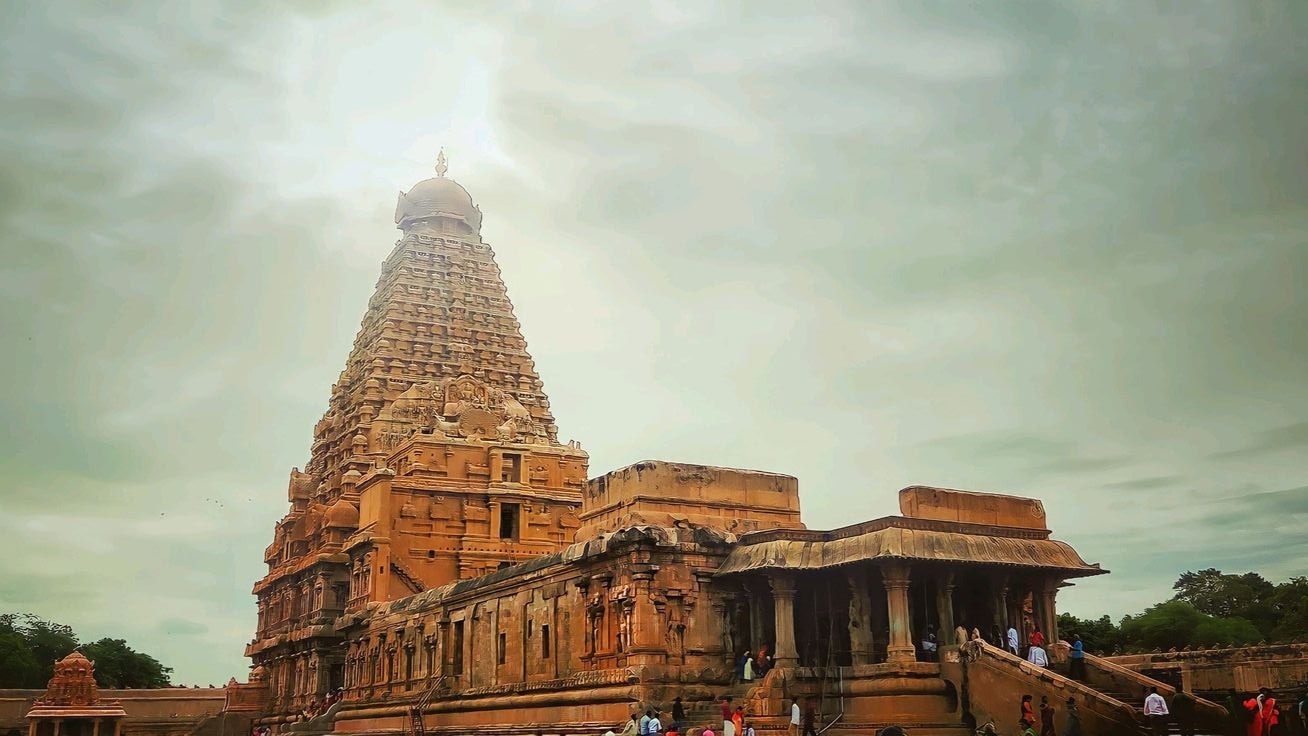
Why Tenkasi is Perfect for Your Celebration
- Home to the ancient Kasi Viswanathar Temple — a landmark backdrop for spiritual and religious ceremonies
- Proximity to Courtallam waterfalls creates a uniquely refreshing, nature-immersed event atmosphere
- Deep-rooted Pongal and temple festival traditions make community and cultural gatherings feel authentic
- Western Ghats foothills provide scenic, green surroundings rarely found in flat urban event venues
- Tenkasi Junction offers direct rail links to major Tamil Nadu cities, easing guest travel
- Strong local folk and classical arts culture enriches cultural festival gatherings and family reunions
Compare Tenkasi with Other Top Destinations
Frequently Asked Questions
Is Tenkasi a good destination for a Pongal celebration or temple festival event?
Yes, strongly so. Tenkasi's agricultural heritage, active temple culture centered on the Kasi Viswanathar Temple, and community-rooted festival calendar make it one of the more authentic settings in southern Tamil Nadu for Pongal celebrations and temple festival gatherings. Local caterers, priests, and folk performers are well-practiced at supporting these specific event types.
What size of guest group can Tenkasi realistically accommodate for an event?
Tenkasi is best suited to mid-sized gatherings of roughly 100–300 guests. The local hotel and banquet hall inventory can comfortably support this range. For significantly larger groups, accommodation will need to be spread across multiple properties, and planners should confirm availability well in advance, particularly during peak festival periods like Pongal in January.
How do guests typically travel to Tenkasi for an event?
Most guests from within Tamil Nadu travel by rail — Tenkasi Junction has direct connections to Chennai, Madurai, Tirunelveli, and Nagercoil. Guests flying in from outside the state typically land at Madurai Airport and complete the journey by road, which takes approximately two hours. Pre-arranged group transport from Madurai is advisable for large guest lists.
What is the best time of year to hold a celebration in Tenkasi?
November through February is the recommended window. Temperatures are comfortably cool, humidity is lower, and rainfall is minimal — making outdoor temple processions, cultural performances, and open-air gatherings practical. January is particularly strong as it coincides with Pongal. The monsoon months (June–September) and the hot pre-summer period (March–May) are best avoided.
What kinds of event spaces are available in Tenkasi?
Tenkasi offers mid-scale hotel banquet halls, open lawns at nature resorts near Courtallam, temple courtyards, and traditional community mandapams. These spaces suit religious ceremonies, cultural festivals, and family gatherings well. For events requiring large-scale production infrastructure or luxury resort settings, planners will need to supplement with vendors brought in from Tirunelveli or Madurai.
Can local vendors in Tenkasi handle traditional Tamil catering and ritual requirements?
Yes. Local caterers are experienced in traditional Tamil feast formats — including banana-leaf sadhya-style meals — at scale. Temple priests, Nadaswaram and Thavil musicians, and folk performance groups are readily available locally or from nearby Tirunelveli. For high-production-value décor or event management, external vendors from larger cities are typically brought in.
Is Tenkasi suitable for a spiritual or pilgrimage-themed family gathering?
Yes, it is one of the more naturally suited destinations in the region for this purpose. The Kasi Viswanathar Temple is a significant pilgrimage site, and the town's hospitality ecosystem is accustomed to accommodating groups combining religious observance with family gatherings. The serene, nature-rich environment of the Western Ghats foothills adds to the spiritual character of such events.
What makes Tenkasi different from a typical urban event destination?
Tenkasi's distinctiveness lies in its combination of active temple heritage, the Courtallam waterfalls, and Western Ghats foothills scenery — none of which are typical of urban banquet-hall destinations. Events here carry a genuine cultural and spiritual weight that is difficult to replicate in a city hotel setting, making it particularly meaningful for religious, community, and folk-cultural celebrations.
How far in advance should I book for a Pongal or temple festival event in Tenkasi?
At least three to six months in advance is strongly advisable, particularly for January events coinciding with Pongal. Local accommodation, temple-adjacent event spaces, and specialist vendors — priests, folk performers, traditional caterers — are in high demand during festival periods. Last-minute bookings during peak season carry real risk of unavailability.
Is local transport within Tenkasi easy to arrange for a large guest group?
It requires planning. Auto-rickshaws and local taxis are available but limited in number for large groups. Pre-arranged minibuses or coaches hired from Tirunelveli or Madurai are the most reliable option for moving 50+ guests between accommodation, event venues, and temple sites. Planners should coordinate transport logistics as part of the event plan rather than leaving it to guests to arrange independently.
Can Tenkasi support a corporate offsite or leadership retreat format?
Yes, in a modest way. Nature resorts near Courtallam offer a quiet, distraction-free environment well-suited to small leadership retreats and team-building programs that benefit from a nature-immersed setting. The destination is better suited to groups of 20–60 for this format; large corporate offsites requiring extensive conference infrastructure would be better served by a more developed business-hospitality destination.

Ready to explore venues in Tenkasi?
Tenkasi: Temple Town Celebrations, Spiritual Gatherings & Cultural Events
◆Tenkasi is a temple town in southern Tamil Nadu, best suited for spiritual gatherings, Pongal celebrations, temple festivals, and cultural community events. Its primary vibe is nature-infused and serene, anchored by the ancient Kasi Viswanathar Temple and the famous Courtallam waterfalls at the Western Ghats foothills. The destination is most accessible by rail, with Tenkasi Junction offering direct connections to major Tamil Nadu cities; the nearest airport requires a longer road transfer. Event infrastructure is modest and community-oriented rather than luxury-resort-scale, making it a strong fit for mid-sized religious, family, and cultural gatherings rather than large-scale destination weddings.
Tenkasi at a Glance
| Attribute | Detail |
|---|---|
| Best For | Pongal Celebration, Temple Festival, Spiritual / Pilgrimage Gathering, Cultural Festival Gathering |
| Primary Vibe | Nature & Serene |
| Other Vibes | Spiritual, Heritage, Folk & Community |
| Best Season | Winter (November–February) |
Why Choose Tenkasi?
- Ancient temple heritage: The Kasi Viswanathar Temple — one of Tamil Nadu's significant Shiva shrines — provides an authentic, spiritually charged backdrop that few destinations in the region can replicate for religious and pilgrimage-oriented gatherings.
- Courtallam waterfall proximity: Known as the "Spa of South India," the Courtallam falls create a genuinely refreshing natural environment that elevates outdoor cultural and community events beyond a standard banquet-hall experience.
- Strong folk and classical arts tradition: Tenkasi and its surrounding villages have a living tradition of Villupattu, Karagattam, and other Tamil folk arts, making it possible to source authentic cultural performances for festival gatherings and family celebrations.
- Rail connectivity to major Tamil Nadu cities: Tenkasi Junction is directly connected to Chennai, Madurai, Tirunelveli, and Nagercoil, meaning guests from across the state can arrive without requiring a flight.
- Genuine Pongal festival culture: The town's agricultural and temple-festival calendar is deeply embedded in local life, so Pongal celebrations here feel participatory and community-rooted rather than staged for tourists.
- Western Ghats foothills scenery: The green, forested backdrop of the Ghats provides natural visual richness for outdoor events, photography, and nature-retreat-style corporate or leadership gatherings.
Which Celebrations Work Best in Tenkasi?
- Pongal Celebration: Tenkasi's agricultural roots and strong temple culture make Pongal one of the most naturally fitting celebrations here. The town's community spaces, temple courtyards, and open grounds lend themselves to traditional Pongal rituals, kolam-drawing, and communal cooking in a way that feels genuinely rooted rather than curated.
- Temple Festival: With the Kasi Viswanathar Temple as a central landmark, temple festivals — including chariot processions, classical music performances, and ritual observances — are a core part of Tenkasi's identity. Organizing a celebration around a temple festival calendar here is both logistically natural and culturally meaningful.
- Spiritual / Pilgrimage Gathering: Families and communities undertaking pilgrimages to the Kasi Viswanathar Temple or the Courtallam area frequently combine their visit with a larger family or community gathering. The town's hospitality infrastructure is well-practiced at accommodating groups with spiritual itineraries.
- Cultural Festival Gathering: Tenkasi's proximity to the folk arts belt of southern Tamil Nadu makes it a practical base for organizing cultural festivals featuring traditional music, dance, and craft. The town's open spaces and community halls can host mid-sized cultural programs effectively.
- Local Folk Festival / Fair: The region's living folk traditions — including seasonal fairs tied to the agricultural and temple calendar — make Tenkasi a natural venue for folk festival events that draw on authentic local participation rather than imported entertainment.
- Religious Family Function: Naming ceremonies, thread ceremonies, and other religious family milestones are well-supported by Tenkasi's network of temple priests, traditional caterers, and community halls. The spiritual atmosphere of the town adds meaning to these rites-of-passage events.
Venues & Event Spaces
Tenkasi's event venue landscape is primarily community- and hospitality-oriented rather than luxury-resort-driven. Guests and planners will typically find mid-scale hotels with attached banquet halls and open lawns suitable for gatherings of 100–300 guests, along with nature resorts near the Courtallam area that offer outdoor event spaces against a forested backdrop. Temple courtyards and community mandapams (traditional halls) are central to religious and cultural events, and many families use these spaces for pilgrimages, naming ceremonies, and festival gatherings. For larger events, planners often combine hotel accommodation with separately booked community or temple-adjacent event spaces. Outdoor lawns near the Western Ghats foothills are available through resort properties and are particularly well-suited to the winter season when the weather is dry and comfortable. The venue ecosystem here is best described as functional, authentic, and community-rooted — it rewards planners who want a genuine local experience over those seeking a fully managed luxury resort package.
Best Time to Celebrate
The curated best season for Tenkasi is Winter (November–February), and this recommendation is well-grounded in the destination's specific climate and event character. During these months, temperatures are typically in the low-to-mid 20s°C, humidity drops noticeably compared to the rest of the year, and rainfall is minimal. This makes outdoor temple processions, open-air cultural performances, and Pongal celebrations genuinely comfortable for guests of all ages. The Pongal festival itself falls in mid-January, placing it squarely within this window and making January a particularly strong month for community and cultural events.
The rest of the year presents real challenges. March through May brings rising heat and humidity that can make outdoor events uncomfortable, particularly for elderly guests and children who are common attendees at religious and family functions. June through September is the primary monsoon period — the Courtallam waterfalls, while spectacular, also cause the surrounding area to become flood-prone and logistically difficult; outdoor events are largely impractical. October sees lingering post-monsoon rains that can disrupt event logistics even as the season begins to ease. Planners should treat November as the earliest reliable month and February as the latest before conditions begin to deteriorate again.
Getting There & Local Connectivity
Tenkasi is most practically reached by rail. Tenkasi Junction is a functioning railway station with direct or well-connected services to Chennai, Madurai, Tirunelveli, and Nagercoil, covering the major guest-origin cities for most Tamil Nadu-based gatherings. For guests traveling from outside Tamil Nadu, the typical approach is to fly into Madurai Airport and then complete the journey by road — a transfer of roughly two hours depending on traffic and road conditions. This two-leg journey is manageable for most guests but should be factored into event scheduling, particularly for elderly or mobility-limited attendees.
Within Tenkasi and the Courtallam area, local auto-rickshaws, taxis, and hired minivans are the primary modes of group transport. For larger guest groups, pre-arranged coach or minibus hire from Tirunelveli or Madurai is a practical option. The road network connecting Tenkasi to Courtallam and the surrounding temple sites is generally in reasonable condition, though narrow in places. Planners organizing multi-day events should arrange dedicated transport for guests rather than relying on ad-hoc local availability, particularly during peak festival periods when demand for local vehicles rises sharply.
Local Vendor & Hospitality Ecosystem
Tenkasi's vendor ecosystem is well-developed for the specific event types it hosts most frequently — religious ceremonies, temple festivals, Pongal celebrations, and community gatherings. Local caterers are experienced in preparing traditional Tamil Brahmin and non-Brahmin feast menus (sadhya-style banana-leaf meals) at scale, and temple priests and ritual specialists are readily available for religious functions. Flower decoration vendors, traditional music ensembles (Nadaswaram, Thavil), and folk performance groups can be sourced locally or from nearby Tirunelveli with relative ease.
For more specialized event requirements — professional event management companies, large-scale lighting and sound production, or luxury décor — planners will generally need to bring vendors in from Tirunelveli, Madurai, or Chennai. The local ecosystem is strong for authenticity and traditional execution but thinner on the production-scale and luxury-styling side. This is not a weakness for the destination's core event types, but it is a genuine consideration for planners expecting a fully managed, high-production-value event without importing external vendors.
Pros & Things to Consider
Why Tenkasi Works Well
- Authentic spiritual and temple heritage that genuinely enhances religious and pilgrimage-oriented events
- Courtallam waterfalls and Western Ghats scenery provide a distinctive natural backdrop unavailable in urban venues
- Strong local folk arts and traditional catering ecosystem for cultural and community gatherings
- Rail connectivity makes the destination accessible for guests across Tamil Nadu without requiring a flight
- Winter season (November–February) offers genuinely comfortable outdoor event conditions
- Community-oriented atmosphere creates a warm, participatory environment for family and religious functions
Things to Consider
- The nearest airport requires a lengthy road transfer, which can be tiring for guests flying in from outside Tamil Nadu or from other states
- Luxury and high-production-value event infrastructure is limited; large-scale or heavily styled events will require importing vendors from larger cities
- Accommodation capacity for very large guest groups (300+) is constrained by the current hotel inventory, requiring careful planning and potentially spreading guests across multiple properties
- The monsoon season (June–September) makes the destination largely unsuitable for outdoor events and can affect road access to Courtallam
- Peak festival periods (especially Pongal in January and major temple festival dates) see high local demand for accommodation, transport, and vendors — early booking is essential
When Tenkasi May Not Be the Right Fit
- Large-scale destination weddings (500+ guests): The current accommodation and venue inventory in and around Tenkasi is best suited to mid-sized gatherings. Very large guest lists will face real constraints in finding sufficient rooms and event space within a single property or cluster.
- Events requiring luxury resort amenities: Guests expecting five-star spa facilities, international cuisine, or high-end resort experiences will find the local hospitality offering more functional than luxurious. Planners with strong luxury-experience expectations should consider destinations with a more developed upscale resort ecosystem.
- Monsoon-season events: Any event planned between June and September faces significant risk from heavy rainfall, flooding near Courtallam, and disrupted road access. This is not a suitable window for outdoor or semi-outdoor celebrations at this destination.
- Guests with limited mobility or complex travel needs: The two-leg journey (flight to Madurai + road transfer) and the relatively limited local transport infrastructure can be challenging for elderly guests or those with mobility requirements. Destinations with direct airport access and flat, well-serviced urban infrastructure may serve such guest groups better.