
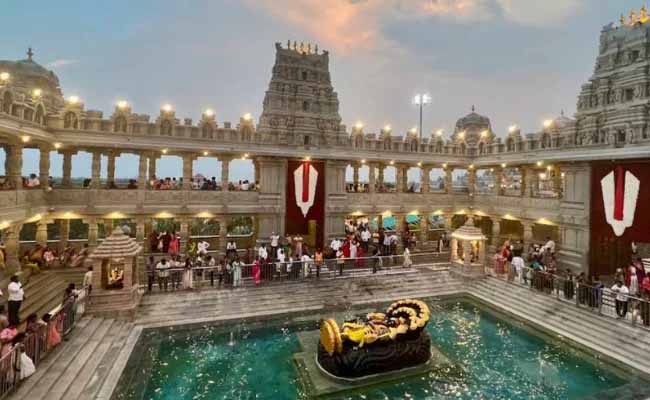
Why Srisailam is Perfect for Your Celebration
- Home to the Mallikarjuna Jyotirlinga, one of India's twelve most sacred Shiva shrines — unmatched for spiritually rooted ceremonies
- Krishna River ghats provide a serene, ritually significant setting for religious family functions and naming ceremonies
- Nallamala Hills forest backdrop creates a naturally secluded, peaceful atmosphere for retreats and pilgrimage gatherings
- Srisailam Dam and reservoir add scenic grandeur rarely found at pilgrimage destinations of this scale
- Winter months (November–February) offer genuinely comfortable temperatures for outdoor temple festivals and large gatherings
- Strong local tradition of hosting Sankranti and Ugadi celebrations with authentic regional cultural programming
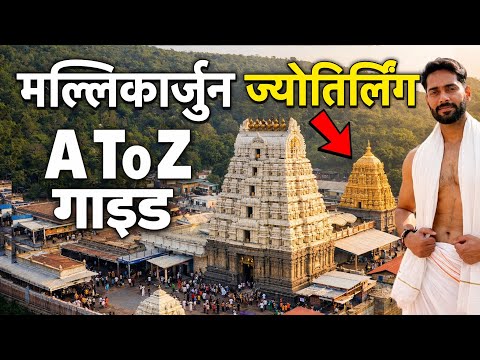
Compare Srisailam with Other Top Destinations
Frequently Asked Questions
Is Srisailam a good destination for a Sankranti or Ugadi celebration?
Yes, it is particularly well-suited for both. Srisailam's deep Telugu cultural roots and proximity to the Mallikarjuna Jyotirlinga give Sankranti and Ugadi celebrations an authenticity and spiritual resonance that is difficult to replicate elsewhere. Local vendors, priests, and caterers are experienced in supporting these specific festival formats, including traditional rituals, sattvic communal meals, and cultural performances.
What size of gathering can Srisailam realistically accommodate?
Srisailam is best suited to small-to-medium gatherings, typically in the range of 50 to 300 guests. The town's venue and accommodation inventory is oriented toward pilgrimage groups rather than large-scale weddings or conferences. Groups larger than 300–400 guests may find it challenging to secure sufficient event space and accommodation within the immediate area without significant advance planning.
How do guests typically travel to Srisailam for an event?
Most guests travel by road. The nearest major airport is in Hyderabad, roughly 220 km away, making it a 4–5 hour drive. Guests can also reach nearby railway stations at Markapur Road or Kurnool and then travel onward by road. Pre-arranged group transport — private coaches or tempo travellers — is the standard and most practical approach for event groups.
What is the best time of year to hold a spiritual gathering or temple festival in Srisailam?
November through February is the best window. Temperatures are comfortable (typically 18°C–28°C), the air is dry, and the roads through the Nallamala Hills are in good condition. This period also aligns with major Telugu festival dates including Sankranti (January), making it the most popular and logistically reliable season for planned events.
What kinds of event spaces are available in Srisailam?
Srisailam offers resort banquet halls, open lawns, and ghat-side outdoor spaces suited to pilgrimage gatherings, religious ceremonies, and cultural programmes. The venue character is traditional and functional rather than luxury or contemporary. Dharamshalas and temple trust guesthouses provide supplementary accommodation for larger pilgrimage groups, though these are not dedicated event venues.
Is Srisailam suitable for a corporate offsite or leadership retreat?
Yes, with the right expectations. Srisailam's secluded forest and riverside setting makes it genuinely effective for introspective leadership retreats and team-building programmes with a wellness or spiritual dimension. However, it lacks large conference facilities and high-speed business infrastructure, so it suits smaller, reflective retreats rather than large-scale corporate conferences.
Can we arrange traditional Telugu catering and ritual services locally in Srisailam?
Yes. The local vendor ecosystem is well-developed for exactly this. Experienced priests associated with the Mallikarjuna temple, traditional sattvic caterers, flower vendors, and folk performers are all readily available. The town's hospitality culture is oriented around pilgrimage groups, so communal dining, ritual support, and traditional décor are standard offerings rather than special requests.
Are there any months we should definitely avoid when planning an event in Srisailam?
Yes. June through September (monsoon) should generally be avoided — heavy rainfall affects the ghat roads through the Nallamala Hills and can cause disruptions to travel and outdoor events. March through May should also be approached cautiously, as temperatures can exceed 38°C, making outdoor ceremonies uncomfortable and potentially unsafe for elderly guests and children.
Is Srisailam appropriate for a family naming ceremony or religious family function?
Yes, it is a strong choice for this. The proximity to the Mallikarjuna Jyotirlinga and the availability of experienced local priests make Srisailam a meaningful and practically well-supported setting for naming ceremonies, thread ceremonies, and other milestone religious family functions. The compact pilgrimage circuit also makes it manageable for multi-generational family groups.
What should we know about local transport for guests once they arrive in Srisailam?
Within the town, the core pilgrimage circuit — temple, ghats, and main accommodation zone — is compact and navigable by auto-rickshaw or on foot for most guests. For coordinated group movement between event spaces, pre-arranged local vehicles are advisable. The ghat road sections leading into town are best navigated during daylight hours, particularly for larger vehicles.

Ready to explore venues in Srisailam?
Srisailam: Spiritual Gatherings, Temple Festivals & Event Venues
◆Srisailam is best suited for spiritually rooted celebrations — pilgrimage gatherings, temple festivals, Sankranti and Ugadi events, religious family functions, and community ceremonies. Its primary vibe is Spiritual & Soulful, anchored by the Mallikarjuna Jyotirlinga, the Krishna River ghats, and the Nallamala Hills forest setting. The destination is most accessible by road, with the nearest major airport roughly 220 km away, making it a considered journey rather than a quick hop — best suited to guests who are travelling with devotional intent or as part of an organised group. Winter (November–February) is the clear best season for events here.
Srisailam at a Glance
| Category | Details |
|---|---|
| Best For | Sankranti Celebration, Ugadi Celebration, Spiritual / Pilgrimage Gathering, Temple Festival |
| Primary Vibe | Spiritual & Soulful |
| Other Vibes | Nature Retreat, Cultural & Traditional, Community-Centred |
| Best Season | Winter (November–February) |
Why Choose Srisailam?
- One of India's twelve Jyotirlingas: The Mallikarjuna Swamy temple gives Srisailam a level of religious significance that very few destinations in India can match, making it a genuinely meaningful backdrop for spiritually motivated events and family ceremonies.
- Krishna River ghats for ritual ceremonies: The ghats along the Krishna River provide a naturally sanctified space for religious rites, naming ceremonies, and community prayers that are integral to many Telugu family traditions.
- Nallamala Hills seclusion: The surrounding forest reserve creates a naturally private, calm environment — particularly valuable for leadership retreats, spiritual retreats, and community gatherings that benefit from distance from urban noise.
- Authentic regional festival culture: Srisailam has a long-standing tradition of large-scale Sankranti and Ugadi observances, meaning local vendors, priests, and hospitality providers are genuinely experienced in supporting these specific event types.
- Srisailam Dam and reservoir scenery: The dam and its vast backwaters add a dramatic scenic dimension that is unusual for a pilgrimage town, offering memorable backdrops for group photography and outdoor gatherings.
- Relatively contained, walkable pilgrimage circuit: The core temple, ghats, and accommodation zone are close together, which simplifies logistics for elderly guests and large family groups who need to move between ritual spaces and rest areas without long transfers.
Which Celebrations Work Best in Srisailam?
Sankranti Celebration: Srisailam's deep Telugu cultural roots make it a particularly resonant setting for Sankranti. The harvest festival's themes of gratitude, community, and renewal align naturally with the town's devotional atmosphere, and local vendors are well-versed in traditional Sankranti programming including rangoli, kite flying, and ritual offerings at the temple.
Ugadi Celebration: As the Telugu New Year, Ugadi carries strong religious and familial significance. Celebrating it in Srisailam — with access to the Mallikarjuna temple for morning prayers and the ghats for ritual bathing — gives the occasion an authenticity and spiritual weight that a hotel banquet hall in a metro city simply cannot replicate.
Spiritual / Pilgrimage Gathering: This is arguably Srisailam's strongest suit. Families and communities who wish to combine a group pilgrimage with a structured gathering — including group darshan, communal meals, and devotional programmes — will find the town's infrastructure well-oriented toward exactly this format.
Temple Festival: The Mallikarjuna temple hosts several significant annual festivals, and organising a private or community celebration to coincide with — or independently of — these occasions is a well-established practice here. The town's priests, flower vendors, and ritual specialists are experienced in supporting large-group temple events.
Cultural Festival Gathering: Srisailam's setting in the Nallamala Hills, combined with its strong Telugu folk traditions, makes it a credible venue for cultural gatherings that incorporate classical music, Kuchipudi performances, or folk art — particularly when the event has a devotional or regional heritage theme.
Religious Family Function: Whether a thread ceremony, a first rice-feeding (annaprasana), or a family prayer gathering, Srisailam's proximity to a major Jyotirlinga and its network of experienced local priests makes it a genuinely practical choice for families who want a sacred setting for milestone religious functions.
Venues & Event Spaces
Srisailam's venue landscape is modest in scale but purposeful in character. The primary event spaces are government-managed and independent resorts and guesthouses that cater to pilgrimage groups, with banquet halls and open lawns suited to gatherings of roughly 100–300 guests. Several properties have dedicated spaces for communal dining — a practical necessity for pilgrimage groups — as well as basic audio-visual facilities for cultural programmes. Outdoor spaces near the ghats and within resort grounds are commonly used for morning rituals, group prayers, and cultural performances during the cooler winter months. There are no large convention-style venues here; the destination is best suited to intimate-to-medium-scale gatherings rather than very large weddings or corporate conferences requiring extensive technical infrastructure. Dharamshalas and temple trust guesthouses also provide supplementary accommodation for larger pilgrimage groups, though these are functional rather than event-oriented spaces.
Best Time to Celebrate
Winter — specifically November through February — is the clear best season for events in Srisailam. Temperatures during this period typically range from around 18°C to 28°C, making outdoor ceremonies, ghat rituals, and temple visits genuinely comfortable even for elderly guests and young children. The air is dry, the forest is green from the retreating monsoon, and the Krishna River is at a manageable level — all of which contribute to a pleasant and logistically smooth event experience.
The pre-summer months of March through May bring rapidly rising temperatures that can exceed 38°C by April and May. Outdoor events become uncomfortable and potentially unsafe for vulnerable guests, and the heat significantly reduces the appeal of the ghat and forest settings that make Srisailam distinctive.
The monsoon season (June through September) brings heavy rainfall to the Nallamala Hills, which can make the ghat roads and forest access routes difficult or temporarily impassable. The Srisailam Dam fills significantly during this period, and while the scenery is dramatic, the practical risks for large group travel — including road closures and flooding — make it an unsuitable window for planned events. October is a transitional month: the rains ease, but humidity remains high and road conditions can still be unpredictable, making it a marginal shoulder period rather than a reliable event window.
Getting There & Local Connectivity
Srisailam is primarily a road-access destination. The nearest major airport is Rajiv Gandhi International Airport in Hyderabad, approximately 220 km away, making it a roughly 4–5 hour drive depending on route and traffic. Guests flying in from other cities will need to plan for this onward road journey, which is best managed through pre-arranged group transport — private coaches or tempo travellers are the standard solution for pilgrimage and event groups.
The nearest railway stations are at Markapur Road (approximately 80 km away) and Kurnool (approximately 100 km away), both of which are connected to major cities including Hyderabad, Chennai, and Bengaluru. From these stations, guests again rely on road transport for the final leg. The roads into Srisailam pass through the Nallamala forest reserve via ghat sections, which are scenic but require careful driving — particularly for large vehicles at night or during the early monsoon period.
Within Srisailam itself, the core pilgrimage circuit — temple, ghats, and main accommodation zone — is compact enough that most guests can move between key locations on foot or by auto-rickshaw. For larger groups requiring coordinated movement between venues, pre-arranged local transport is advisable. Mobile connectivity within the town is generally adequate for basic communication, though it can be patchy in the deeper forest areas around the dam.
Local Vendor & Hospitality Ecosystem
Srisailam's vendor ecosystem is genuinely well-developed for the specific event types it serves. Local priests and ritual specialists associated with the Mallikarjuna temple are experienced in conducting large-group ceremonies, and the town has a well-established network of flower vendors, prasadam suppliers, and traditional catering providers who specialise in sattvic (vegetarian, temple-style) cuisine — a practical necessity for pilgrimage gatherings and religious family functions.
For cultural programming, the region has access to Kuchipudi dancers, Harikatha performers, and folk musicians who are familiar with the devotional event format. Event decorators in the area tend to specialise in traditional Telugu styles — marigold garlands, banana-leaf settings, and temple-inspired décor — rather than contemporary or fusion aesthetics.
Where the ecosystem is thinner is in large-scale logistics: professional event management companies with experience in very large weddings or corporate-scale productions are not as readily available locally as they would be in Hyderabad. Groups planning complex, multi-day events with significant technical requirements may need to bring specialist vendors from Hyderabad or Kurnool, factoring in travel and accommodation costs for those teams.
Pros & Things to Consider
Why Srisailam Works Well
- Unmatched spiritual significance as a Jyotirlinga site — gives religious events genuine sanctity and meaning
- Experienced local ecosystem for pilgrimage-format events: priests, ritual caterers, and traditional decorators are readily available
- Naturally secluded forest and riverside setting provides privacy and calm that urban venues cannot replicate
- Compact pilgrimage circuit makes movement easy for elderly guests and large family groups
- Winter weather is genuinely comfortable for outdoor ceremonies and ghat rituals
- Strong cultural authenticity for Sankranti, Ugadi, and Telugu regional festival programming
Things to Consider
- Road access via ghat sections can be challenging for guests who are not accustomed to hill driving, and requires careful transport planning for large groups
- No major airport nearby — guests from distant cities face a 4–5 hour road journey after landing in Hyderabad
- Venue capacity is limited; very large gatherings (500+ guests) may strain the available accommodation and event space inventory
- The destination is strongly vegetarian and devotional in character — events with non-vegetarian catering or a party-oriented atmosphere are not well-suited to the local context
- Professional event management infrastructure for complex productions is thinner than in larger cities; specialist vendors may need to be sourced from Hyderabad
- Mobile and internet connectivity, while adequate in the town centre, can be unreliable in peripheral areas around the dam and forest
When Srisailam May Not Be the Right Fit
- Large-scale weddings with 500+ guests: The local accommodation and venue inventory is not well-equipped to absorb very large guest lists comfortably; a destination with a broader hotel base would serve better.
- Events planned during the monsoon (June–September): Ghat road conditions and heavy rainfall make this period genuinely risky for planned group travel into the Nallamala Hills area.
- Guests requiring easy, direct flight access: With the nearest major airport over 200 km away and no direct rail connection to the town, guests who cannot manage a long road journey — particularly those with mobility limitations — may find the travel demanding.
- Events with a contemporary, non-devotional character: Srisailam's identity is deeply religious and traditional. Events that are primarily social, entertainment-focused, or require a cosmopolitan venue atmosphere are better suited to a larger city destination.