
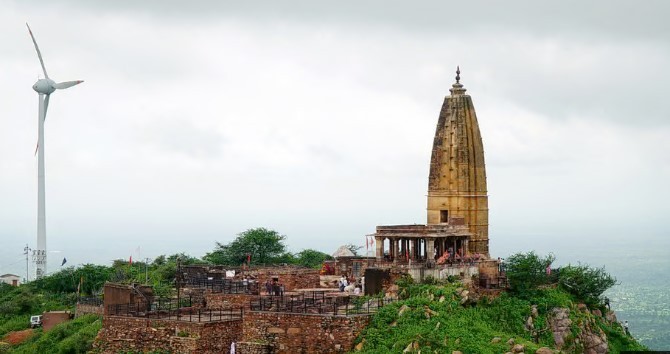
Why Sikar is Perfect for Your Celebration
- Shekhawati's ornate painted havelis offer a genuinely unique heritage backdrop unavailable in most Rajasthan cities
- Deep-rooted Teej, Gangaur, and folk festival traditions make cultural celebrations feel authentically local
- Strong Marwari and Rajput ceremonial culture aligns naturally with religious family functions and traditional weddings
- Direct rail connectivity to Jaipur and Delhi makes guest travel straightforward for most North Indian families
- Relatively less commercialised than Jaipur or Udaipur, offering a more intimate and community-rooted event atmosphere
- Local folk artists, dhol players, and traditional caterers are readily available for authentic Rajasthani event experiences
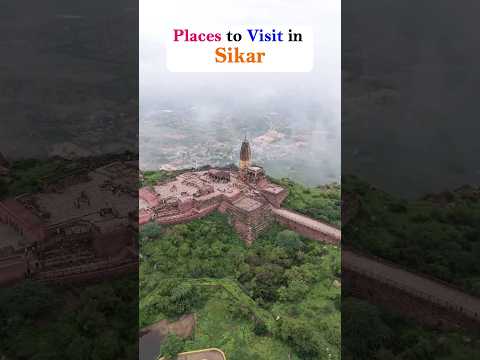
Top Venues in Sikar
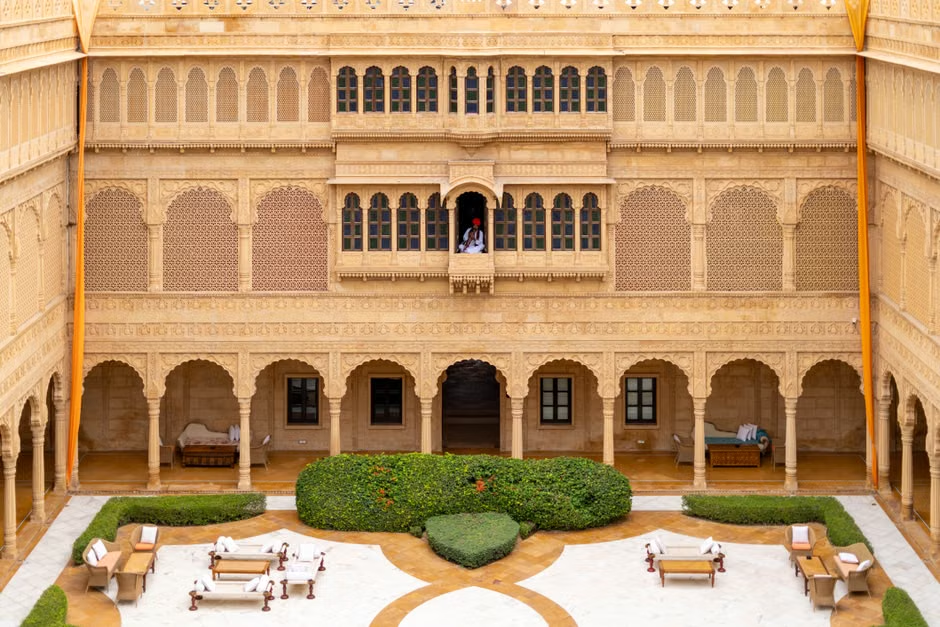
Hotel Shree Shekhawati
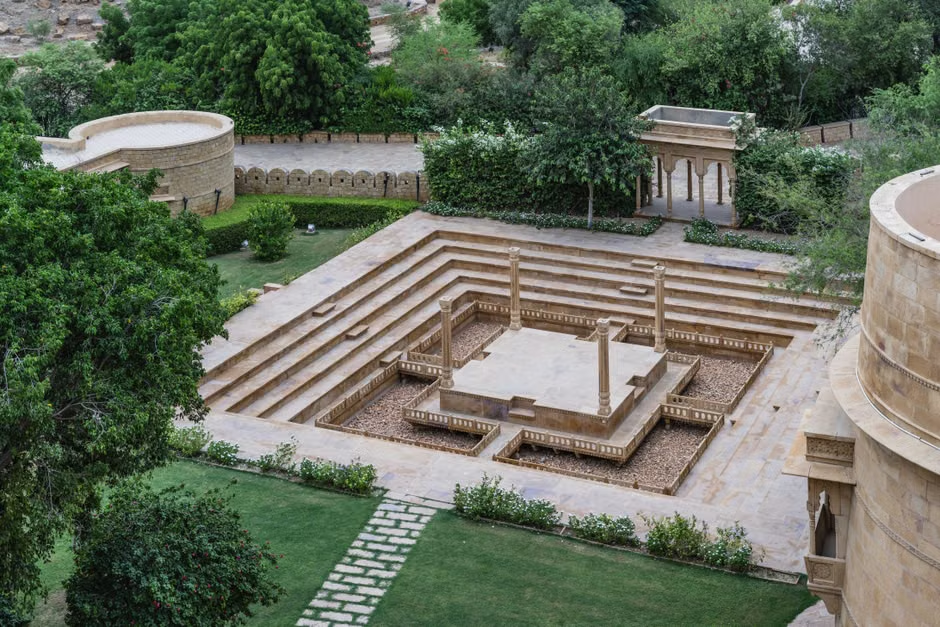
Hotel Natraj
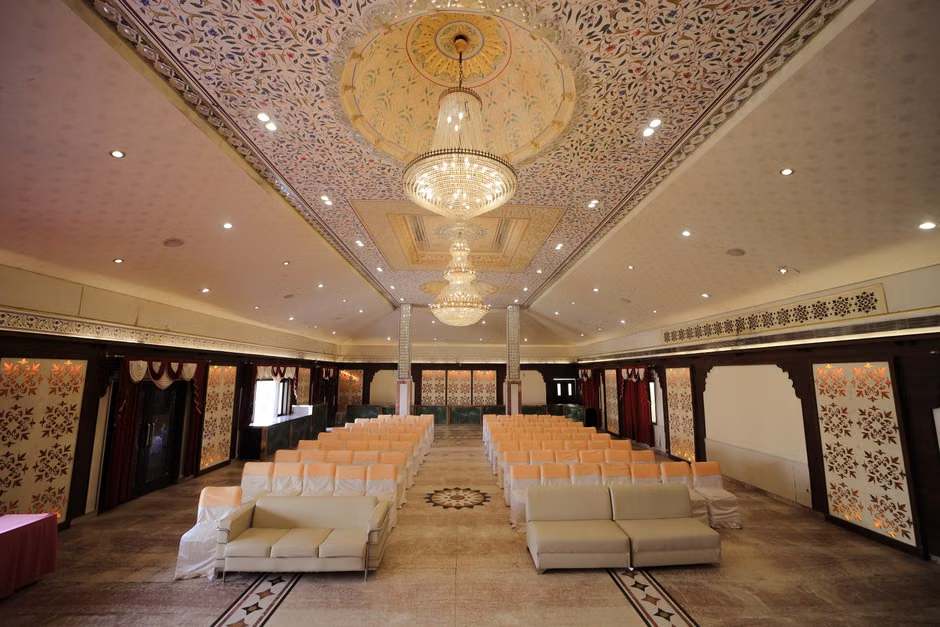
Hotel Prabhat
Compare Sikar with Other Top Destinations
Frequently Asked Questions
Is Sikar a good destination for a Teej or Gangaur celebration?
Yes, Sikar is among the most authentic settings in Rajasthan for Teej and Gangaur celebrations. These festivals are deeply embedded in the local Marwari and Rajput community calendar, meaning families celebrating here benefit from genuine local participation — processions, traditional dress, and community rituals that make the occasion feel culturally rooted rather than staged for visitors.
What types of events work best in Sikar?
Sikar is particularly well-suited to Teej and Gangaur celebrations, cultural festival gatherings, palace and heritage-style weddings, religious family functions, local folk festivals, and temple festivals. Its Shekhawati heritage character and strong Marwari ceremonial traditions make it a natural fit for events that lean into Rajasthani culture and community ritual rather than contemporary or fusion formats.
What is the best time of year to hold a wedding or celebration in Sikar?
November through February is the optimal window. Daytime temperatures are typically between 10°C and 25°C, evenings are cool and clear, and conditions are genuinely comfortable for outdoor ceremonies and multi-day celebrations. March and October are manageable shoulder months. April through June brings extreme heat (regularly above 40°C), and July through September brings monsoon humidity and dust storms — both periods are inadvisable for outdoor-heavy events.
How do guests typically travel to Sikar?
Most guests arrive by rail — Sikar Railway Station has direct or one-change connections to Jaipur, Delhi, and several other major North Indian cities, making it the most convenient option for many families. Guests flying in use Jaipur International Airport, which is approximately 110 km away and reached by a roughly two-hour road transfer. Private taxis and coach transfers are the standard arrangement for wedding groups.
What kinds of venues are available for events in Sikar?
Sikar's most distinctive event spaces are haveli-style heritage properties — traditional Rajasthani mansions with ornate painted courtyards and covered mandap areas, well-suited to intimate weddings and family functions. The city also has standalone banquet halls and hotel event spaces for larger receptions. Outdoor lawns are popular for winter evening ceremonies. For very large guest lists, planners sometimes use multiple properties across the city.
How large a guest list can Sikar venues realistically accommodate?
Sikar's heritage properties are generally best suited to mid-scale gatherings — typically up to a few hundred guests in a single venue setting. For larger events of 400–600 guests, a combination of a main event venue and separate accommodation properties is the common approach. Very large-scale weddings requiring a single integrated campus for 600 or more guests may find the local inventory limiting.
Are local vendors and performers available for traditional Rajasthani celebrations?
Yes. Sikar has a well-developed local ecosystem for traditional Rajasthani catering, folk performers (dhol players, kalbeliya dancers, bhopa storytellers, puppet artists), and ritual specialists. For highly customised décor or specialist photography, some planners supplement with vendors from Jaipur. Early booking during peak winter season is advisable, as the local vendor pool is smaller than in larger Rajasthan cities.
Is Sikar suitable for a religious family function such as a mundan or thread ceremony?
Yes. Sikar has a strong and experienced community of priests and ritual specialists familiar with a wide range of Hindu ceremonial traditions. The city's Marwari and Rajput cultural roots mean that religious family functions — naming ceremonies, mundan, thread ceremonies, and similar occasions — are well-supported by local infrastructure and feel genuinely embedded in community tradition.
What makes Sikar different from other Rajasthan wedding destinations?
Sikar's distinctiveness lies in its Shekhawati identity — the region's ornate painted havelis, living folk festival traditions, and Marwari community ceremonial culture are not replicated in the same way elsewhere in Rajasthan. It is less commercialised than Jaipur or Udaipur, which can mean greater flexibility in scheduling, a more intimate atmosphere, and a stronger sense of cultural authenticity for events rooted in Rajasthani tradition.
How should a planner handle accommodation for a large guest list in Sikar?
For large guest lists, the standard approach is to spread accommodation across multiple properties in the city and arrange dedicated coach or minibus transfers between accommodation and the event venue. Sikar does not have a single large resort campus that can house several hundred guests under one roof, so coordinated multi-property logistics are typically necessary for weddings and gatherings above 150–200 guests.
Are there folk festival or fair events in Sikar that a celebration could be built around?
Yes. The Shekhawati region hosts several local fairs and folk gatherings through the year, and Sikar as the regional hub is a practical base for groups attending or organising events tied to these occasions. The local folk performance ecosystem — musicians, dancers, puppeteers — is well-developed relative to the city's size, and planners can incorporate authentic local performers into privately organised celebrations.
What are the main logistical considerations for planning an event in Sikar?
Key considerations include: booking vendors early during peak winter season (November–February) given the smaller local pool; arranging coach transfers from Jaipur airport for flying guests; coordinating multi-property accommodation for large guest lists; and ensuring décor or specialist vendor requirements are confirmed well in advance, as some categories may need to be sourced from Jaipur. The city's rail connectivity is a genuine logistical asset for most North Indian guest groups.

Ready to explore venues in Sikar?
Sikar: Heritage Wedding & Cultural Event Destination in Shekhawati
◆Sikar is the cultural and commercial hub of Rajasthan's Shekhawati region, best suited for heritage-style weddings, Teej and Gangaur celebrations, religious family functions, and cultural festival gatherings. Its primary vibe is Royal and Heritage, rooted in the Marwari and Rajput traditions that define the Shekhawati belt. The destination is most accessible in winter (November–February), when the climate is genuinely comfortable for outdoor ceremonies and large gatherings. Guests typically arrive by rail from Jaipur or Delhi, with road transfer from Jaipur International Airport as the main air access route. Sikar is generally a more intimate, community-rooted destination than the larger Rajasthan tourism cities, with a hospitality ecosystem that suits mid-scale events and traditional celebrations particularly well.
Sikar at a Glance
| Attribute | Detail |
|---|---|
| Best For | Teej & Gangaur Celebration, Cultural Festival Gathering, Palace / Heritage Wedding, Religious Family Function |
| Primary Vibe | Royal & Heritage |
| Other Vibes | Folk & Festive, Intimate & Community-Rooted, Traditionally Rajasthani |
| Best Season | Winter (November–February) |
Why Choose Sikar?
- Shekhawati's painted haveli culture gives Sikar a visual and architectural identity that is genuinely distinct — the region's ornate frescoed buildings provide a backdrop that larger, more commercialised Rajasthan cities cannot replicate authentically.
- Living festival traditions — Teej, Gangaur, and local folk fairs are not staged for tourists here; they are community events, which means celebrations tied to these occasions carry real cultural weight and atmosphere.
- Strong Marwari and Rajput ceremonial infrastructure — local priests, traditional caterers, folk musicians (dhol, shehnai, kalbeliya dancers), and ritual specialists are readily available and experienced in large family functions.
- Good rail connectivity from Jaipur, Delhi, and other major North Indian cities makes Sikar accessible for guests travelling without air connections, which is a practical advantage for large family gatherings.
- Relatively uncrowded event calendar — unlike Jaipur or Udaipur, Sikar does not face the same venue-booking competition during peak wedding season, which can translate to greater flexibility in scheduling and vendor availability.
- Authentic local hospitality character — the city's event culture is shaped by Marwari community traditions of generous hosting, which tends to produce a warm, family-oriented atmosphere for multi-day celebrations.
Which Celebrations Work Best in Sikar?
Teej & Gangaur Celebration
Sikar is among the most authentic settings in Rajasthan for Teej and Gangaur observances. These festivals are deeply embedded in the local Marwari and Rajput community calendar, and families celebrating them here benefit from a genuinely participatory local atmosphere — processions, traditional dress, and community rituals that make the occasion feel rooted rather than staged.
Cultural Festival Gathering
The Shekhawati region's folk art, music, and craft traditions make Sikar a natural venue for cultural gatherings — whether a family reunion built around local heritage, a corporate cultural event, or a community celebration. Local performers, artisans, and storytellers are accessible and add genuine texture to such occasions.
Palace / Heritage Wedding
While Sikar's heritage properties are generally more intimate in scale than those in Udaipur or Jodhpur, the haveli-style architecture and Shekhawati aesthetic create a distinctive setting for couples seeking a heritage wedding that feels personal and culturally specific rather than grand and generic.
Religious Family Function
Sikar's strong religious infrastructure — temples, local priests, and a community deeply familiar with Rajasthani Hindu ceremonial traditions — makes it well-suited for naming ceremonies, thread ceremonies, mundan, and other family religious functions that benefit from a traditional, community-embedded setting.
Local Folk Festival / Fair
The Shekhawati region hosts several local fairs and folk gatherings through the year, and Sikar's position as the regional hub means it is a practical base for groups attending or organising events tied to these occasions. The local folk performance ecosystem — musicians, dancers, puppeteers — is well-developed relative to the city's size.
Temple Festival
Sikar district is home to significant temples, including the Khatu Shyamji temple complex (a major pilgrimage site in the broader region), and the city itself has a strong tradition of temple-linked celebrations. Groups organising events around temple festivals or pilgrimage occasions will find local logistics and hospitality well-attuned to such needs.
Venues & Event Spaces
Sikar's event venue landscape is shaped primarily by its heritage character. The most distinctive spaces are haveli-style properties — traditional Rajasthani mansions with ornate painted facades, open courtyards, and covered mandap areas that suit both ceremonial and social functions. These properties typically accommodate mid-scale gatherings rather than very large banquets, making them particularly well-suited to intimate weddings, family functions, and cultural gatherings of up to a few hundred guests.
Beyond heritage havelis, the city has standalone banquet halls and hotel event spaces that can handle larger guest lists for receptions and community functions. Outdoor lawns attached to heritage properties are popular for evening ceremonies during the winter season, when the weather is reliably cool and clear. For very large-scale events requiring extensive accommodation blocks on a single campus, the local inventory is more limited, and planners sometimes arrange accommodation across multiple properties in the city.
The broader Shekhawati region — including nearby towns such as Fatehpur, Nawalgarh, and Mandawa — offers additional heritage properties that are within reasonable driving distance and are sometimes used in conjunction with Sikar-based events for accommodation overflow or day-excursion experiences.
Best Time to Celebrate
November through February is the clear optimal window for events in Sikar. Daytime temperatures during this period typically range from around 10°C to 25°C, with cool, dry evenings that are genuinely comfortable for outdoor ceremonies, processions, and open-air receptions. The air is clear, dust levels are lower than in other seasons, and the overall conditions suit the kind of multi-day, multi-function celebrations that heritage weddings and festival gatherings typically involve.
March and October can serve as shoulder months — temperatures are rising or settling, and while not ideal, they are manageable for indoor-focused events. However, by April through June, Sikar experiences the full force of Rajasthan's summer heat, with temperatures regularly exceeding 40°C and occasionally reaching 45°C. Outdoor events become genuinely impractical, and even indoor venues require robust air conditioning. This period is strongly inadvisable for large gatherings.
July through September brings the monsoon season. While Sikar receives less rainfall than wetter parts of India, the humidity rises significantly, dust storms (andhi) can occur, and the general conditions are unfavourable for outdoor celebrations. Heritage properties with open courtyards are particularly vulnerable to weather disruption during this period. Planners should avoid committing to outdoor-heavy event formats in these months.
Getting There & Local Connectivity
The primary air gateway for Sikar is Jaipur International Airport, which is approximately 110 km away and typically reached by road in around two hours depending on traffic. Jaipur is well-connected to major Indian cities and several international routes, making it a practical entry point for guests flying in. The road between Jaipur and Sikar is a reasonably well-maintained national highway corridor, and private taxis and coach transfers are the standard arrangement for wedding groups.
Sikar Railway Station provides direct or one-change rail connections to Jaipur, Delhi, and several other major North Indian cities, which is a significant practical advantage for guests who prefer or need to travel by train. For large family gatherings where many guests are coming from Rajasthan or Delhi NCR, rail is often the most convenient and cost-effective mode of arrival.
Within the city, local transport for event groups is typically managed through hired vehicles — auto-rickshaws and local taxis are available but may not be sufficient in volume for very large guest groups arriving simultaneously. Event planners generally arrange dedicated coach or minibus transfers between accommodation properties and venue sites, particularly for multi-day celebrations where guests are spread across different hotels.
Local Vendor & Hospitality Ecosystem
Sikar's vendor ecosystem is genuinely strong in categories that align with its cultural identity. Traditional catering — Rajasthani thali, dal baati churma, and Marwari sweets — is well-represented by experienced local caterers who are accustomed to large family functions. Folk performers including dhol players, kalbeliya dancers, bhopa storytellers, and puppet artists are available locally and add authentic texture to cultural events.
Floral decoration and mandap setup vendors are present in the city, though for very elaborate or highly customised décor, some planners bring in specialists from Jaipur. Similarly, photography and videography professionals are available locally, with a growing number of studios experienced in heritage-style wedding documentation; however, the pool is smaller than in larger Rajasthan cities, and early booking is advisable for peak season dates.
The city's priest and ritual specialist community is well-established and experienced across a wide range of Hindu ceremonial traditions, which is a practical asset for religious family functions and temple-linked celebrations. Overall, the local ecosystem suits events that lean into Rajasthani tradition — it is less well-equipped for highly Westernised or fusion-format events that require specialist vendors not typically based in smaller regional cities.
Pros & Things to Consider
Why Sikar Works Well
- Authentic Shekhawati heritage architecture provides a visually distinctive and culturally specific event backdrop
- Living folk and festival traditions make cultural celebrations feel genuinely rooted rather than staged
- Strong local ecosystem for traditional Rajasthani catering, ritual specialists, and folk performers
- Good rail connectivity from Delhi and Jaipur makes guest travel manageable for North Indian families
- Less venue-booking competition during peak season compared to larger Rajasthan tourism cities
- Warm, community-oriented local hospitality culture well-suited to multi-day family gatherings
Things to Consider
- Heritage venue capacity is generally mid-scale — very large guest lists (500+) may require multiple properties or purpose-built banquet spaces rather than a single heritage campus
- Air access requires a roughly two-hour road transfer from Jaipur, which adds logistical complexity for guests flying in from distant cities
- The pool of specialist vendors (high-end décor, fusion catering, international-style photography) is smaller than in Jaipur or Udaipur — early booking and some vendor sourcing from outside the city may be necessary
- Summer heat (April–June) is extreme and effectively rules out outdoor event formats for several months of the year
- International guests or those unfamiliar with smaller Indian regional cities may find the infrastructure and amenity range more limited than in larger Rajasthan destinations
When Sikar May Not Be the Right Fit
- Very large-scale weddings (600+ guests) requiring a single integrated venue campus with extensive on-site accommodation may find Sikar's current heritage property inventory insufficient — a larger Rajasthan city with purpose-built resort complexes may serve better.
- Events planned for April through September — the combination of extreme summer heat and monsoon-season disruption makes outdoor-heavy celebrations genuinely impractical during these months, and the destination's strongest assets (open courtyards, outdoor lawns, heritage facades) are largely unavailable.
- Guests with limited rail or road travel tolerance — if a significant portion of the guest list is flying in from distant cities and expects seamless airport-to-venue transfers, the two-hour road journey from Jaipur airport may be a friction point that a destination with its own airport would avoid.
- Couples seeking a highly Westernised or fusion-format wedding with specialist international-style vendors, contemporary luxury resort amenities, and a cosmopolitan event atmosphere will find Sikar's ecosystem less well-matched to those expectations than larger, more tourism-developed Rajasthan cities.