
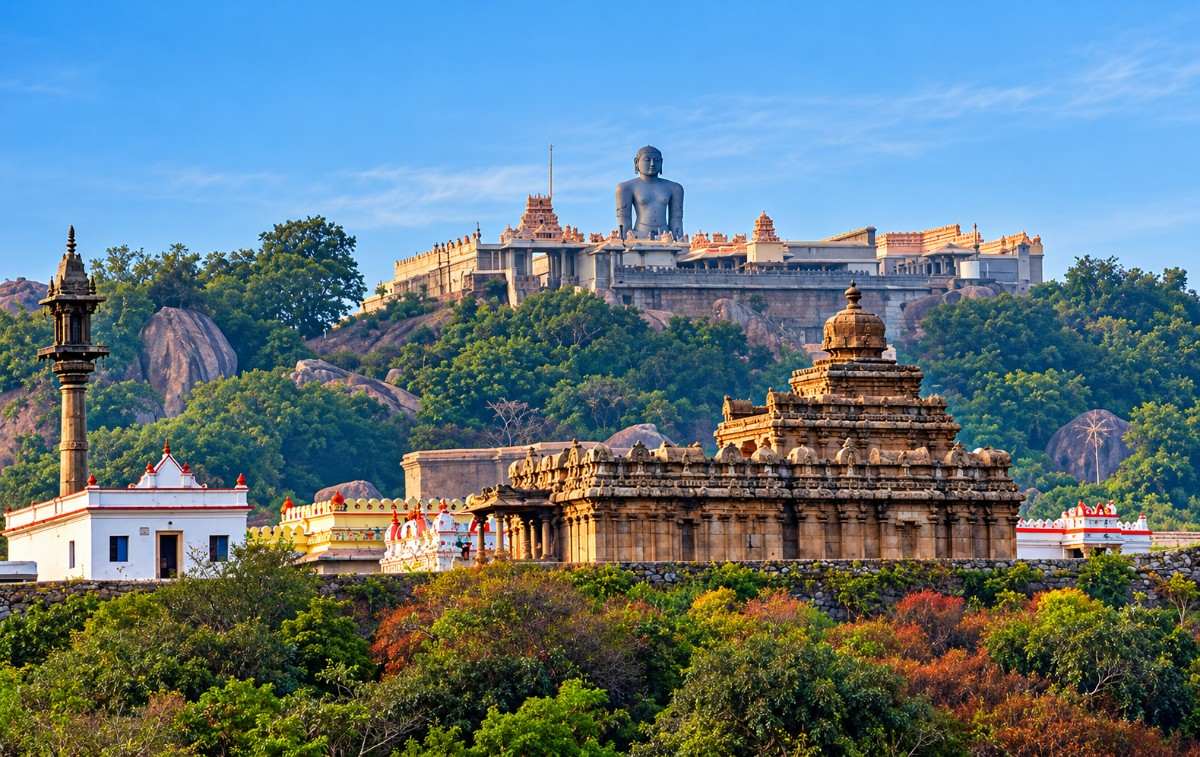
Why Shravanabelagola is Perfect for Your Celebration
- Home to the iconic 57-foot monolithic Gommateshwara statue, one of India's most sacred Jain landmarks
- Deeply spiritual atmosphere uniquely suited to pilgrimage gatherings, religious family functions, and temple festivals
- Hosts the grand Mahamastakabhisheka festival, drawing lakhs of devotees — a once-in-a-decade cultural spectacle
- Compact, serene town ideal for intimate, spiritually-rooted celebrations away from commercial event circuits
- Pleasant winter climate (November–February) makes outdoor rituals, processions, and gatherings comfortable
- Proximity to Hassan and Mysuru expands accommodation and vendor options for larger guest groups
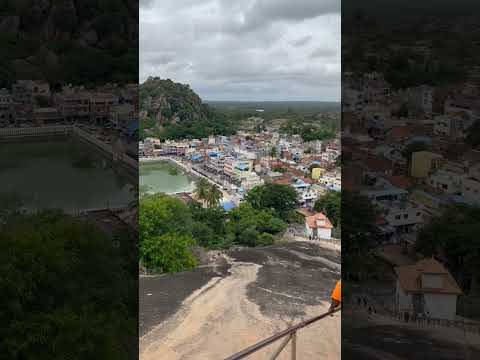
Top Venues in Shravanabelagola
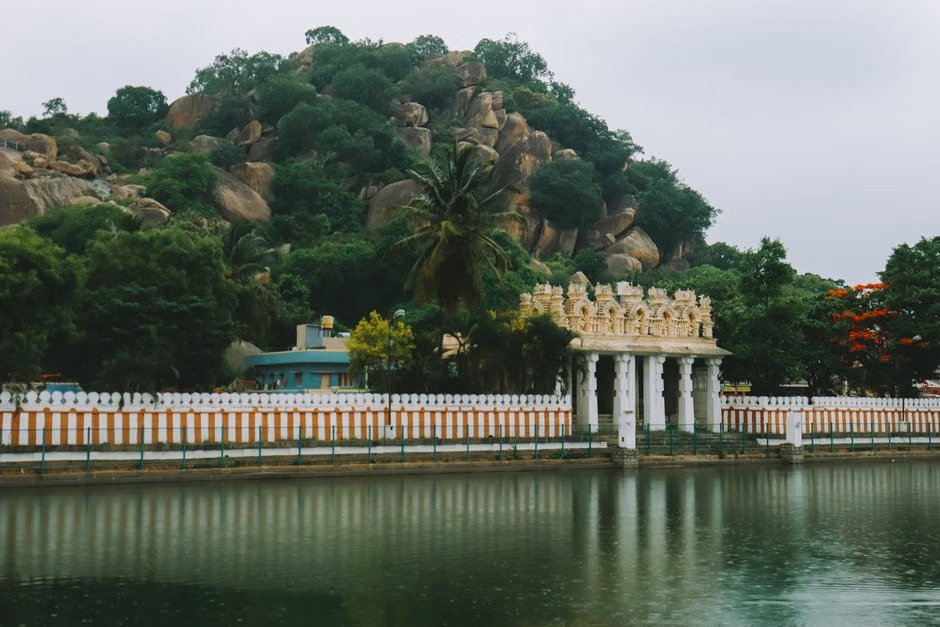
Hotel Raghu
Compare Shravanabelagola with Other Top Destinations
Frequently Asked Questions
Is Shravanabelagola a good destination for a spiritual or pilgrimage gathering?
Yes, it is among the strongest destinations in Karnataka for this purpose. Shravanabelagola is one of India's most important Jain pilgrimage sites, home to the monolithic Gommateshwara statue and a network of ancient temples. The town's entire character — its priests, catering traditions, dharamshalas, and community spaces — is oriented around supporting religious and pilgrimage-linked gatherings of all sizes.
What is the best time of year to hold an event in Shravanabelagola?
November through February is the recommended window. Temperatures are cool and comfortable, skies are generally clear, and the dry conditions make outdoor rituals and hilltop processions practical. The summer months (March–May) bring intense heat, while the monsoon (June–September) disrupts road access and makes the hilltop paths unsafe for groups.
How do guests typically travel to Shravanabelagola?
Most guests fly into Kempegowda International Airport in Bengaluru, approximately 155 km away, and then travel by road — typically a 2.5–3 hour drive. Guests preferring rail can travel to Hassan Railway Station (roughly 50 km away) or Mysuru Junction (roughly 83 km away) and continue by road. Chartered coaches are the most practical option for large groups.
What guest-group sizes can Shravanabelagola realistically accommodate?
Intimate to medium-sized groups — typically up to 100–150 guests — are most comfortably served by the in-town accommodation and event spaces. For larger groups, a hybrid arrangement is common: some guests stay in Shravanabelagola itself while others are based in Hassan (~50 km away), with group transport coordinated for the ceremonial portions of the event.
What kinds of event spaces are available in Shravanabelagola?
The primary spaces include dharamshalas and open courtyards managed by the Jain Math, modest hotel function areas suitable for intimate gatherings, and the dramatic natural outdoor settings around Vindhyagiri and Chandragiri hills. For larger banquet or lawn requirements, Hassan's hospitality sector provides supplementary options within a manageable driving distance.
Is Shravanabelagola suitable for a temple or spiritual wedding?
Yes, particularly for couples seeking a ceremony rooted in spiritual meaning rather than scale. The temple environment and meditative atmosphere are genuinely supportive of sacred ceremonies. Guest numbers should be kept modest given the venue constraints, and the event works best when aligned with the town's Jain or broadly spiritual character rather than a conventional wedding-reception format.
What catering options are available for events in Shravanabelagola?
The town has a strong tradition of sattvic vegetarian cooking — pure, no onion or garlic — which is excellent for Jain family functions, pilgrimage gatherings, and spiritually-oriented events. Non-vegetarian catering is not readily available locally and must be sourced from Hassan or Bengaluru, adding logistical complexity. Event planners should confirm dietary requirements early.
Do I need to bring event vendors (decorators, AV, staging) from outside Shravanabelagola?
Yes. Specialist event production vendors — decorators, lighting, AV, and staging companies — are not based in the town itself. These services are typically contracted from Hassan, Mysuru, or Bengaluru and transported in. This is entirely feasible but requires earlier lead times than in larger event cities, so planning 3–6 months ahead is advisable.
Is Shravanabelagola suitable for a Ugadi or Karnataka cultural gathering?
Yes. Ugadi, the Karnataka New Year, carries deep cultural resonance in this region, and Shravanabelagola's heritage setting provides an authentically Karnataka backdrop for gatherings that blend ritual, music, and community celebration. The town's community-oriented character and temple precincts make it a meaningful — and relatively uncrowded — alternative to larger urban venues for such events.
Are there any accessibility considerations for guests attending events here?
Yes. The primary attraction — the Gommateshwara statue on Vindhyagiri Hill — requires climbing several hundred steps. This is not accessible for all guests without assistance, and event planners should factor in the needs of elderly guests or those with mobility limitations. The town itself is flat and walkable, but the hilltop experience requires advance planning for mixed-ability groups.
What makes Shravanabelagola distinctive compared to other Karnataka event destinations?
Its spiritual identity is genuinely irreplaceable. No other destination in Karnataka — or India — offers the combination of the Gommateshwara monolith, living Jain pilgrimage traditions, and a community ecosystem built entirely around sacred gatherings. For events where spiritual meaning is the primary driver, this specificity is a significant asset rather than a limitation.

Ready to explore venues in Shravanabelagola?
Shravanabelagola: Spiritual Gatherings, Temple Festivals & Event Venues
◆Shravanabelagola is primarily suited to spiritual, religious, and cultural gatherings rather than large commercial weddings. Its defining character is deeply Jain and broadly Karnataka-spiritual — anchored by the monolithic Gommateshwara statue and a network of ancient temples. The best season runs from November through February, when the climate is cool and dry. Accessibility is moderate: guests typically fly into Bengaluru and travel by road, making it most practical for groups comfortable with a 2.5–3 hour drive. Accommodation within the town itself is modest, though nearby Hassan expands options. It suits intimate, meaning-led events far better than high-volume celebrations.
Shravanabelagola at a Glance
| Category | Details |
|---|---|
| Best For | Ugadi / Karnataka Cultural Gathering, Spiritual / Pilgrimage Gathering, Cultural Festival Gathering, Temple Festival |
| Primary Vibe | Spiritual & Soulful |
| Other Vibes | Heritage, Contemplative, Community-rooted |
| Best Season | Winter (November–February) |
Why Choose Shravanabelagola?
- Unmatched spiritual gravitas: The 57-foot monolithic statue of Gommateshwara (Bahubali) on Vindhyagiri Hill is one of the world's most remarkable Jain monuments, lending any gathering held here a profound sense of place and purpose.
- Authentic Karnataka cultural setting: The town preserves centuries of Jain and Karnataka heritage through its temples, inscriptions, and living pilgrimage traditions — making it genuinely distinctive for Ugadi celebrations and Karnataka cultural gatherings.
- Mahamastakabhisheka legacy: Shravanabelagola hosts the Mahamastakabhisheka (grand head-anointing ceremony) roughly every 12 years, one of India's largest religious gatherings — a context that makes the town deeply familiar to Jain communities across the country as a sacred event destination.
- Intimate, distraction-free environment: Unlike larger event cities, Shravanabelagola's compact, quiet character means spiritual and religious gatherings are not competing with commercial noise — the atmosphere itself reinforces the event's intent.
- Reasonable road connectivity from Bengaluru and Mysuru: While there is no local airport or direct express rail, the road network from both Bengaluru (~155 km) and Mysuru (~83 km) is generally reliable, making self-drive and chartered coach travel practical for organised groups.
- Proximity to Hassan's broader hospitality base: Hassan city, roughly 50 km away, provides additional accommodation and catering infrastructure that can supplement the limited in-town options for larger guest groups.
Which Celebrations Work Best in Shravanabelagola?
- Ugadi / Karnataka Cultural Gathering: Ugadi, the Karnataka and Telugu New Year, carries deep cultural resonance in this region. Shravanabelagola's heritage setting and community-oriented character make it a meaningful backdrop for Ugadi gatherings that blend ritual, music, and shared meals in an authentically Karnataka environment.
- Spiritual / Pilgrimage Gathering: This is the destination's strongest suit. Families and communities undertaking Jain or broader Hindu pilgrimage circuits frequently organise group gatherings here — the town's entire infrastructure, from its temples to its guesthouses, is oriented around this kind of event.
- Cultural Festival Gathering: Karnataka's rich tradition of classical music, folk performance, and religious art finds a natural home in Shravanabelagola's temple precincts and open spaces. Organised cultural festivals — particularly those with a Jain or Kannada heritage theme — work well here.
- Temple Festival: The town's own temple calendar includes regular festivals that draw regional devotees. Hosting a private or community temple festival event here, timed around or inspired by the local ritual calendar, is both logistically feasible and culturally coherent.
- Local Folk Festival / Fair: The surrounding Hassan district has a living tradition of folk performance and rural fairs. Shravanabelagola's open grounds and community spaces can accommodate smaller folk festival formats, particularly those with a devotional or harvest-linked theme.
- Temple / Spiritual Wedding: Couples seeking a wedding rooted in spiritual meaning rather than spectacle will find Shravanabelagola's temple environment and meditative atmosphere genuinely supportive. Ceremonies conducted in or near the temple precincts carry a sanctity that more commercial venues cannot replicate — though guest numbers must be kept modest.
Venues & Event Spaces
Shravanabelagola's venue landscape is modest by the standards of larger event destinations, which is both a trade-off and, for the right event, a feature. The primary event spaces available include:
- Temple precincts and dharamshalas: The Jain Math and associated religious trusts manage dharamshalas (pilgrim rest houses) and open courtyards that can be used for religious gatherings, community meals (bhojanalayas), and ritual functions. These are the most contextually appropriate spaces for pilgrimage-linked events.
- Small hotels and guesthouses with function areas: A handful of properties within the town offer modest banquet or open-air spaces suitable for intimate gatherings of up to roughly 100 guests. These are best suited to family functions, naming ceremonies, and small religious celebrations rather than large receptions.
- Outdoor hilltop and garden settings: The landscape around Vindhyagiri and Chandragiri hills provides naturally dramatic outdoor settings for photography, small processions, and open-air rituals — though formal event infrastructure (staging, catering tents) must be brought in.
- Hassan-based venues for overflow: For events requiring larger banquet halls, resort lawns, or more substantial hospitality infrastructure, Hassan city's growing hospitality sector provides a practical supplement — with guests basing themselves there and travelling to Shravanabelagola for the ceremonial portions of the event.
Best Time to Celebrate
The curated best season — November through February — aligns with Shravanabelagola's most comfortable and logistically reliable period for events. Temperatures during these months typically range from around 15°C at night to the mid-20s°C during the day, making outdoor rituals, hilltop processions, and open-air gatherings genuinely pleasant. The air is dry, skies are generally clear, and the pilgrimage footfall — while present — is more manageable than during peak festival periods.
The rest of the year presents real challenges:
- March – May: Temperatures climb sharply, often exceeding 35°C by April and May. Outdoor events, particularly those involving the steep climb to Vindhyagiri Hill, become physically demanding and uncomfortable for older guests and children.
- June – September: The southwest monsoon brings significant rainfall to this part of Karnataka. Road access can be disrupted, outdoor spaces become unusable, and the hilltop paths to the statue are slippery and potentially unsafe for large groups.
- October: A transitional month — the monsoon typically retreats, but residual humidity and occasional late rains make it an uncertain choice. It is not the worst month, but the November–February window is clearly preferable for event planning.
If the event is tied to the Mahamastakabhisheka festival (held roughly every 12 years, most recently in 2018), planning must account for extremely high footfall and accommodation scarcity across the entire region — advance planning of 12–18 months is essential for those events.
Getting There & Local Connectivity
Shravanabelagola does not have its own airport or a railway station directly in the town. The most practical access routes are:
- By air then road: Kempegowda International Airport in Bengaluru is the primary gateway, approximately 155 km away. From there, chartered coaches or private vehicles cover the distance in roughly 2.5–3 hours via the Hassan highway — a well-maintained route that is generally reliable outside monsoon season.
- From Mysuru by road: Mysuru is approximately 83 km away and is a common staging point for guests arriving from southern Karnataka or travelling by train to Mysuru Junction before continuing by road.
- Hassan Railway Station: Hassan, roughly 50 km from Shravanabelagola, has rail connections to Bengaluru and Mysuru. For guests preferring train travel, Hassan is the practical railhead, with onward road transfer to the town.
Within Shravanabelagola itself, the town is compact and walkable for most purposes. However, for large groups, local auto-rickshaws and hired vehicles are the primary means of moving between accommodation, the temple complex, and event spaces. Coordinating group transport — particularly for the hilltop climb, which involves several hundred steps — requires advance planning, especially for guests with mobility limitations.
Local Vendor & Hospitality Ecosystem
Shravanabelagola's vendor ecosystem is shaped almost entirely by its pilgrimage identity rather than a commercial events industry. This has specific implications for event planners:
- Catering: The town has a strong tradition of sattvic (pure vegetarian, no onion/garlic) cooking, aligned with Jain dietary norms. For events where this is appropriate — pilgrimage gatherings, Jain family functions, spiritual weddings — local catering is genuinely well-suited and often excellent in quality. For events requiring non-vegetarian menus or more elaborate multi-cuisine spreads, catering must be sourced from Hassan or Bengaluru.
- Decoration and event production: Specialist event decorators, lighting vendors, and staging companies are not based in Shravanabelagola itself. These services need to be contracted from Hassan, Mysuru, or Bengaluru and transported in — which is entirely feasible but requires earlier lead times and logistics coordination.
- Priests and ritual specialists: For religious and spiritual events, the town has an excellent supply of qualified Jain and Hindu priests, ritual specialists, and temple administrators who are experienced in managing large-group ceremonies.
- Accommodation capacity: In-town accommodation is limited to modest guesthouses and a small number of hotels. For events with more than 50–80 overnight guests, a hybrid approach — some guests staying in town, others based in Hassan — is typically necessary.
Pros & Things to Consider
Why Shravanabelagola Works Well
- Unrivalled spiritual and heritage atmosphere for pilgrimage-linked and religious events
- Genuinely distinctive setting — the Gommateshwara statue provides a backdrop no other destination in India can replicate
- Strong local tradition of sattvic catering, well-suited to Jain and many Hindu event requirements
- Compact, safe, and community-oriented town — easy to manage as a group destination
- Pleasant winter climate makes November–February events comfortable for all age groups
- Relatively uncrowded outside major festival periods, allowing for a more private, focused event experience
Things to Consider
- No direct airport or railway access — all guests must travel by road for the final leg, which adds time and coordination complexity
- In-town accommodation is limited and modest; larger guest groups require a split-stay arrangement with Hassan
- Event production vendors (decorators, AV, staging) must be sourced from outside the town and transported in
- The hilltop climb to the Gommateshwara statue involves several hundred steps — not accessible for all guests without assistance
- Non-vegetarian catering is not readily available locally and must be arranged from further afield
- During the Mahamastakabhisheka festival year, accommodation and logistics across the entire region become extremely constrained
When Shravanabelagola May Not Be the Right Fit
- Large-scale weddings with 300+ guests: The local venue and accommodation inventory cannot comfortably support very large guest lists without extensive external logistics. Destinations with larger resort and banquet infrastructure would serve such events better.
- Events planned during the monsoon (June–September): Road access can be unreliable, outdoor spaces are unusable, and the hilltop paths are unsafe for groups — the destination's primary experiential draw becomes inaccessible.
- Guests expecting luxury resort amenities: Shravanabelagola's in-town properties are modest. Guests expecting full-service luxury hospitality within the destination itself will find the options limited — this is a destination where the experience is spiritual and cultural, not resort-driven.
- Events requiring non-vegetarian catering as a core feature: The local ecosystem is built around sattvic food traditions. Events where non-vegetarian menus are central to the celebration will face real logistical friction in sourcing and serving them here.