
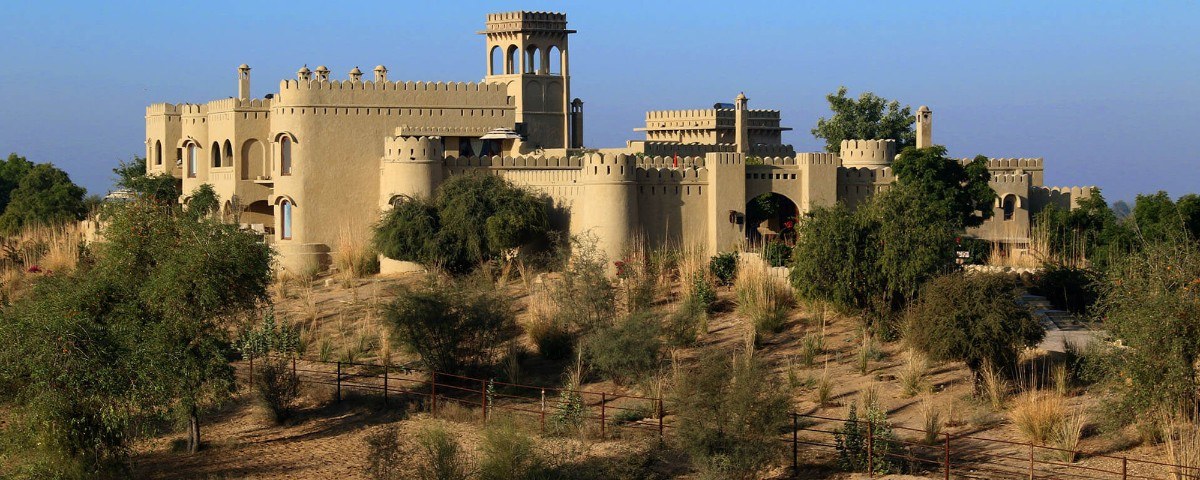
Why Rohet is Perfect for Your Celebration
- Home to a genuine centuries-old Rajput fortified haveli — one of Rajasthan's most authentic heritage event venues
- Intimate village scale creates a private, exclusive atmosphere rarely found at larger Rajasthan destinations
- Rich living tradition of Marwari folk music, Teej & Gangaur festivals, and Rajput ceremonial culture
- Open desert landscape and flat terrain ideal for large outdoor mandap setups, folk performances, and starlit dinners
- Proximity to Jodhpur (~40 km) gives access to a full vendor, catering, and logistics ecosystem
- Cool, dry winters (November–February) deliver near-perfect outdoor event conditions with minimal weather risk
Top Venues in Rohet
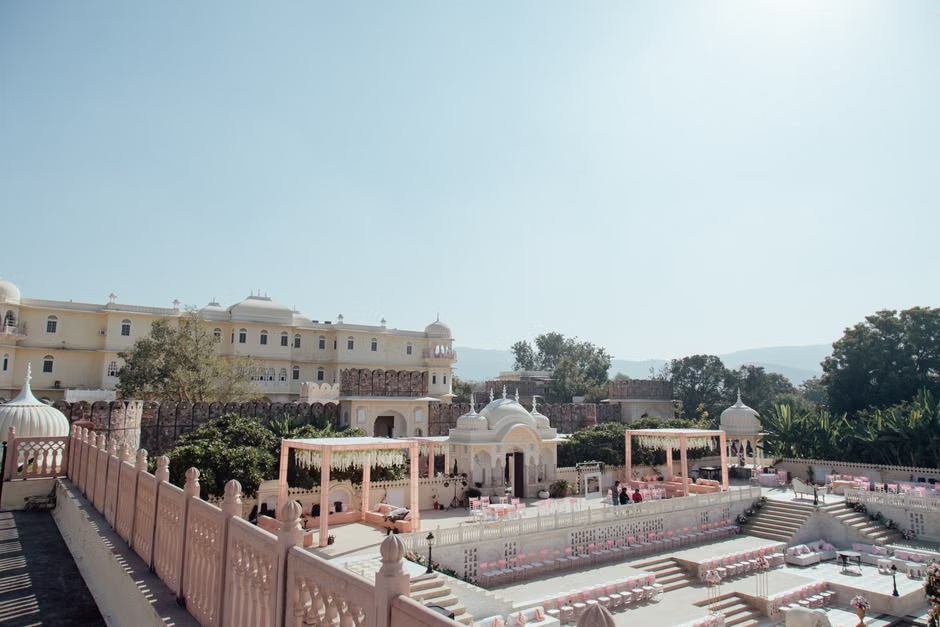
Rohet Garh
Compare Rohet with Other Top Destinations
Frequently Asked Questions
Is Rohet a good destination for a palace or heritage wedding?
Yes, it is among Rajasthan's most authentic choices for this format. Rohet's centuries-old Rajput haveli provides a genuine heritage setting — not a themed resort — with courtyards, terraces, and open grounds suited to traditional ceremonies, baraat processions, and evening receptions. The living Rajput and Marwari cultural traditions of the region add further depth to the experience.
What guest group sizes does Rohet realistically support for a wedding or event?
Rohet is best suited to intimate and mid-size celebrations, typically in the range of 50 to 300 guests. The heritage estate's own accommodation is limited, so larger groups will need overflow rooms in Jodhpur with daily transfers arranged. Groups significantly above 300 guests will find the destination's infrastructure stretched.
How do guests travel to Rohet, and what is the nearest airport?
The nearest airport is Jodhpur Airport, which receives direct flights from Delhi, Mumbai, and other major Indian cities. From Jodhpur, Rohet is approximately 40 km by road — around 45 to 60 minutes. Most wedding groups arrange chartered coaches or a fleet of vehicles from Jodhpur for the transfer.
What is the best time of year to hold a wedding or event in Rohet?
November through February is the strongly recommended window. Temperatures are cool and comfortable, rainfall is negligible, and the open desert landscape is at its most photogenic. The summer months (March–May) bring extreme heat, and the monsoon period (June–September) brings dust, occasional rain, and unreliable road conditions — both are generally unsuitable for outdoor heritage events.
Can Rohet host a Teej or Gangaur celebration authentically?
Yes. Rohet sits in the heart of the Marwar region, where Teej and Gangaur are observed with genuine devotion. Local women's processions, traditional songs, and ritual practices are part of the living cultural fabric here — not staged for tourists. Hosting these festivals at Rohet gives guests an immersive, authentic experience.
What kinds of event spaces are available at Rohet?
The primary venue type is a fortified Rajput haveli with multiple inner courtyards, rooftop terraces, garden lawns, and indoor halls. These spaces suit ceremonies, receptions, folk performances, and outdoor dining. The surrounding open desert terrain also allows for large tented structures and bonfire setups. Rohet is a single-estate destination rather than a multi-venue complex.
How does the local vendor and catering ecosystem work for events in Rohet?
Rohet itself does not have a large independent vendor market, but its proximity to Jodhpur — roughly 40 km — gives planners access to experienced Jodhpur-based caterers, decorators, and sound and lighting specialists. Folk performers (Manganiyar musicians, Kalbelia dancers) are genuinely local to the region. Advance planning and coordination are important, as last-minute sourcing in a rural village is not straightforward.
Is Rohet suitable for a destination wedding with out-of-town or international guests?
Yes, particularly for groups seeking an immersive, single-venue Rajasthan experience. The contained geography means all events can unfold within the same heritage estate, giving the wedding a coherent arc. International guests typically fly into Jodhpur and transfer by road. The destination's exclusivity and cultural richness make it a distinctive choice for guests travelling specifically for the celebration.
Can Rohet accommodate a corporate event, gala, or incentive trip?
Yes, for smaller, senior-level groups. The heritage setting and exclusivity make Rohet a credible choice for high-end corporate retreats, leadership offsites, awards galas, and incentive trips where a distinctive, non-generic venue is a deliberate statement. Large all-hands conferences or events requiring high-bandwidth connectivity are less well-suited to the village's rural infrastructure.
What makes Rohet different from other Rajasthan wedding destinations?
Rohet's defining quality is authenticity at a small scale. It is a living Rajput village anchored by a genuine ancestral haveli — not a resort designed to look like one. There is no competing tourist traffic, no adjacent commercial strip, and no shared public spaces. For couples who want a Rajasthan wedding that feels private, culturally real, and unhurried, Rohet offers something genuinely distinct.
What should event planners know about local logistics once guests arrive in Rohet?
Within the heritage estate, the destination is compact and walkable. For guests accommodated in Jodhpur, a coordinated shuttle service is essential — the rural road is not well-served by public transport or app-based cabs. Backup power arrangements are advisable for large events given rural electricity standards. The heritage property's in-house team is typically the best first point of coordination for on-site logistics.

Ready to explore venues in Rohet?
Rohet: Heritage Palace Weddings & Destination Event Venues in Rajasthan
◆Rohet is a small Rajput village in the Pali district of Rajasthan's Marwar region, best suited to intimate palace weddings, heritage destination celebrations, Teej & Gangaur cultural gatherings, and private receptions. Its primary vibe is royal and rustic heritage — anchored by a genuine centuries-old fortified haveli rather than a purpose-built resort. The destination suits groups of roughly 50 to 300 guests most comfortably. Winter (November–February) is the only reliably suitable season for outdoor events. Guests typically fly into Jodhpur and transfer by road, making logistics straightforward for well-organised groups, though the village's small scale means most vendor and accommodation resources are drawn from the wider Jodhpur ecosystem.
Rohet at a Glance
| Category | Detail |
|---|---|
| Best For | Palace / Heritage Wedding, Teej & Gangaur Celebration, Destination Wedding, Wedding Reception |
| Primary Vibe | Royal & Heritage |
| Other Vibes | Rustic, Intimate, Desert, Cultural |
| Best Season | Winter (November–February) |
Why Choose Rohet?
- A living heritage property: Rohet's central haveli has been occupied by the same Rajput family for over three centuries, giving events here an authenticity that purpose-built heritage-themed resorts cannot replicate — guests experience a working aristocratic estate, not a reconstruction.
- Genuine privacy and exclusivity: Because Rohet is a small village rather than a tourist town, a group booking the primary heritage property effectively has the destination to themselves — there is no competing foot traffic, no adjacent hotel strip, and no shared public spaces crowded with unrelated visitors.
- Rich living cultural traditions: The Marwar region's folk music (Manganiyar and Langa musicians), Teej and Gangaur festival rituals, camel and horse processions, and Rajput ceremonial customs are all genuinely local here — not imported for tourist consumption — making cultural programming feel organic rather than staged.
- Ideal outdoor event terrain: The flat, open desert landscape around Rohet is well-suited to large mandap structures, folk performance arenas, and starlit dinner setups, with minimal obstruction and dramatic open-sky backdrops at dusk and dawn.
- Jodhpur's vendor ecosystem within reach: At roughly 40 km from Jodhpur, Rohet benefits from proximity to one of Rajasthan's most mature wedding vendor markets — caterers, decorators, photographers, sound and lighting specialists, and luxury transport operators can all be sourced from Jodhpur and deployed at Rohet without significant logistical strain.
- Uncrowded and unhurried pace: For couples and families who want a Rajasthan wedding without the commercial bustle of Jaipur or Udaipur, Rohet offers a quieter, more contemplative setting where the focus remains entirely on the celebration rather than the surrounding tourist economy.
Which Celebrations Work Best in Rohet?
- Palace / Heritage Wedding: This is Rohet's strongest suit. The fortified haveli architecture, Rajput ceremonial traditions, and private estate character create a setting that is genuinely difficult to replicate elsewhere. Baraat processions through village lanes, pheras in a courtyard lit by diyas, and mehendi evenings on open terraces all feel entirely natural here.
- Teej & Gangaur Celebration: Rohet sits in the heart of Marwar, where Teej and Gangaur are observed with particular devotion. Hosting these festivals here — with local women's processions, traditional songs, and authentic ritual — gives guests an immersive cultural experience rather than a curated performance.
- Destination Wedding: For out-of-town or international guests seeking a single-venue, fully immersive Rajasthan experience, Rohet works well. The contained geography means all events — from welcome dinner to farewell brunch — can unfold within the same heritage estate, giving the wedding a coherent, story-like arc.
- Wedding Reception: The haveli's courtyards and open grounds lend themselves to elegant evening receptions, with folk musicians, fire performers, and traditional Rajasthani cuisine creating a distinctive atmosphere that a conventional banquet hall cannot match.
- Intimate Wedding: Rohet's scale is naturally suited to smaller guest lists. Groups of 50–150 guests can occupy the destination in a way that feels full and celebratory without the property feeling overwhelmed or under-used — a balance that is harder to strike at larger, more commercial venues.
- Welcome Dinner / Pre-Wedding Celebration: An opening evening in Rohet — perhaps a bonfire dinner under the desert sky with Manganiyar musicians — sets a tone of warmth and cultural richness that primes guests for the celebrations ahead. The informal, open-air character of the village makes pre-wedding gatherings feel relaxed and genuinely hospitable.
- Annual Conference / Awards & Gala Night / Product Launch: While Rohet is primarily a social and wedding destination, its heritage setting and exclusivity make it a credible choice for high-end corporate retreats, leadership offsites, and gala evenings where a distinctive, non-generic venue is a deliberate brand statement. The limited scale means it suits smaller, senior-level groups rather than large all-hands events.
- Cultural Festival Gathering / Temple Festival / Local Folk Festival / Fair: The village's living cultural calendar — including local temple festivals and seasonal fairs — makes Rohet a natural host for gatherings that want to engage with authentic Rajasthani traditions rather than observe them from a distance.
- Diwali Celebration / Religious Family Function: The haveli's architecture — with its inner courtyards, carved stone facades, and oil-lamp-friendly surfaces — is particularly evocative during Diwali and religious family milestones, where the setting amplifies the ceremonial significance of the occasion.
Venues & Event Spaces
Rohet's event venue landscape is defined by its heritage haveli estate rather than a broad portfolio of competing properties. The primary venue type is a fortified Rajput haveli — a multi-courtyard, multi-wing ancestral property with indoor and outdoor spaces that can be configured for ceremonies, receptions, dining, and accommodation within a single estate. Typical spaces within such a property include open inner courtyards suitable for pheras and mandap setups, rooftop terraces for cocktail evenings, garden lawns for folk performances and outdoor dining, and period-furnished indoor halls for formal dinners or conference sessions.
Beyond the primary heritage property, the surrounding village and open desert terrain offer natural event extensions — flat open ground for large tented structures, village lanes for baraat processions, and agricultural fields that can be transformed into atmospheric outdoor venues for bonfires and folk evenings. Guests seeking additional accommodation beyond the heritage estate's own rooms typically draw on properties in the broader Jodhpur corridor, with transport arranged between the two points.
The overall venue character at Rohet is intimate and exclusive rather than large-scale and multi-venue. Event planners should approach Rohet as a single-estate destination and design their event programme accordingly, rather than expecting the kind of multi-property, multi-ballroom infrastructure available in larger Rajasthan cities.
Best Time to Celebrate
November through February is the only season that reliably supports outdoor events in Rohet. During these months, daytime temperatures typically range from the mid-teens to the mid-twenties Celsius, evenings are cool and clear, and rainfall is negligible. The low humidity and clean desert air make outdoor mandap ceremonies, evening receptions, and open-air dinners genuinely comfortable for guests dressed in formal or traditional attire — a consideration that matters more than it might seem when guests are wearing heavy lehengas, sherwanis, or sarees.
The winter season also coincides with the peak of Rajasthan's cultural calendar, meaning folk musicians, artisans, and ceremonial performers are more readily available and in active practice. Visibility is excellent, sunsets are vivid, and the desert landscape takes on a softer, more photogenic quality in the low winter light.
March through May brings rapidly escalating heat — temperatures in the Pali-Jodhpur belt regularly exceed 40°C by April and May, making outdoor events genuinely uncomfortable and potentially unsafe for elderly guests or young children. Air-conditioned indoor spaces provide some relief, but Rohet's primary appeal is its outdoor and semi-outdoor character, which is largely lost in summer.
June through September is the monsoon period. While Rohet receives less rainfall than wetter parts of India, the combination of dust, occasional heavy showers, and high humidity makes outdoor event planning unreliable. Road conditions between Jodhpur and Rohet can also be affected by seasonal flooding on rural routes. October is a transitional month — temperatures begin to moderate, but residual humidity and unpredictable weather make it a marginal choice; late October can work for smaller, flexible events, but November is the safer starting point for firm bookings.
Getting There & Local Connectivity
The most practical arrival point for guests travelling to Rohet is Jodhpur Airport, which receives direct flights from Delhi, Mumbai, and several other major Indian cities, as well as some international connections via hub airports. From Jodhpur, Rohet is approximately 40 km by road — a journey of roughly 45 to 60 minutes depending on traffic and road conditions. For wedding groups, chartered coaches or a fleet of SUVs from Jodhpur is the standard and most comfortable arrangement.
Guests arriving by train can use Jodhpur Junction, which is well-connected to Delhi, Mumbai, Jaipur, and other major cities on the Indian Railways network. Rohet itself has a small railway station on the Jodhpur–Ahmedabad line, but the frequency and connectivity of trains stopping there is limited — most guests will find it more practical to arrive at Jodhpur Junction and transfer by road.
Within Rohet itself, the destination is compact enough that guests staying at the heritage estate can walk between most event spaces. For guests accommodated in Jodhpur or at nearby properties, a coordinated shuttle service is strongly recommended — the rural road between Jodhpur and Rohet is not well-served by public transport or app-based cab services, and self-navigation in unfamiliar rural Rajasthan can be challenging for out-of-town guests.
Local sightseeing — village walks, camel safaris, visits to nearby temples and step-wells — is easily arranged through the heritage property itself, and the surrounding Marwar countryside offers genuinely rewarding excursions for guests with time before or after the main event.
Local Vendor & Hospitality Ecosystem
Rohet's own village does not have a large independent vendor ecosystem — it is not a commercial wedding market in the way that Jaipur or Udaipur are. However, this is less of a limitation than it might appear, because the destination's proximity to Jodhpur gives event planners access to one of Rajasthan's most experienced and well-resourced wedding vendor communities.
Jodhpur-based caterers with expertise in Marwari cuisine, Rajasthani thali service, and multi-cuisine banquet formats regularly operate at Rohet. Decoration and floral vendors from Jodhpur are experienced with heritage property constraints — working around carved stone, managing open-flame lighting safely, and designing setups that complement rather than overwhelm traditional architecture. Sound and lighting specialists familiar with outdoor desert events are also available from the Jodhpur market.
Folk performers — Manganiyar and Langa musicians, Kalbelia dancers, fire artists, and puppet shows — are genuinely local to this region and can be engaged directly or through the heritage property's own network, often at a quality and authenticity that is difficult to source in more urbanised destinations.
The heritage property itself typically plays a central coordinating role for events held on its estate, and its in-house team's familiarity with the property's quirks, capacities, and seasonal rhythms is a genuine asset for event planners working from outside Rajasthan. Communication and advance planning are important — Rohet is not a destination where last-minute vendor sourcing is straightforward.
Pros & Things to Consider
Why Rohet Works Well
- Authentic, centuries-old Rajput heritage setting that cannot be replicated by purpose-built venues
- Genuine privacy and exclusivity — no competing tourist traffic or adjacent commercial activity
- Living cultural traditions (folk music, Teej, Gangaur, Rajput ceremony) that enrich event programming organically
- Excellent winter weather (November–February) for outdoor celebrations
- Jodhpur's mature vendor ecosystem within easy reach for catering, décor, and logistics
- Compact, walkable estate layout that keeps guests together and creates a cohesive event atmosphere
- Particularly well-suited to intimate and mid-size groups where the scale of the destination matches the scale of the celebration
Things to Consider
- Limited venue inventory: Rohet is essentially a single-estate destination. If the primary heritage property is unavailable or fully booked, there is no comparable alternative within the village itself.
- Small accommodation capacity on-site: The heritage property's own room inventory is limited. Large guest lists will require overflow accommodation in Jodhpur, which adds a daily transfer requirement to the event logistics.
- Rural infrastructure: Power supply, internet connectivity, and road quality are at a rural Rajasthan standard — reliable for most purposes but not at the level of a five-star urban hotel. Backup power arrangements are advisable for large events.
- Seasonal window is narrow: The usable event season is effectively four months (November–February). Couples with flexible dates have good options; those with fixed dates outside this window face real compromises.
- Vendor coordination requires advance planning: Because most specialist vendors are based in Jodhpur rather than Rohet itself, event logistics require earlier and more detailed planning than at destinations with on-the-ground vendor clusters.
- Limited nightlife and off-site entertainment: Rohet is a quiet village. Guests seeking urban entertainment, shopping, or restaurant variety will need to travel to Jodhpur — which is manageable but requires organisation.
When Rohet May Not Be the Right Fit
- Very large guest lists (400+): Rohet's heritage estate and surrounding infrastructure are best suited to intimate and mid-size celebrations. Groups significantly above 300 guests will find the on-site capacity stretched, and the logistics of accommodating and moving a very large group in a rural village setting become genuinely complex.
- Events planned outside November–February: If your event date falls in the summer months (March–May) or the monsoon period (June–September), Rohet's primary appeal — its outdoor heritage character — is largely unavailable, and the destination offers limited compensating advantages over more urban, climate-controlled alternatives.
- Guests with significant mobility or accessibility requirements: Heritage havelis, by their nature, feature uneven stone floors, narrow doorways, staircases without lifts, and outdoor terrain that is not optimised for wheelchair access or guests with limited mobility. This is worth considering carefully for families with elderly or differently-abled guests forming a significant portion of the group.
- Corporate events requiring high-bandwidth connectivity or large AV infrastructure: Rohet's rural setting means internet connectivity and technical infrastructure are at a village standard. Large-scale conferences, hybrid events with significant streaming requirements, or product launches needing sophisticated AV setups will find the local infrastructure limiting without substantial supplementary investment.