
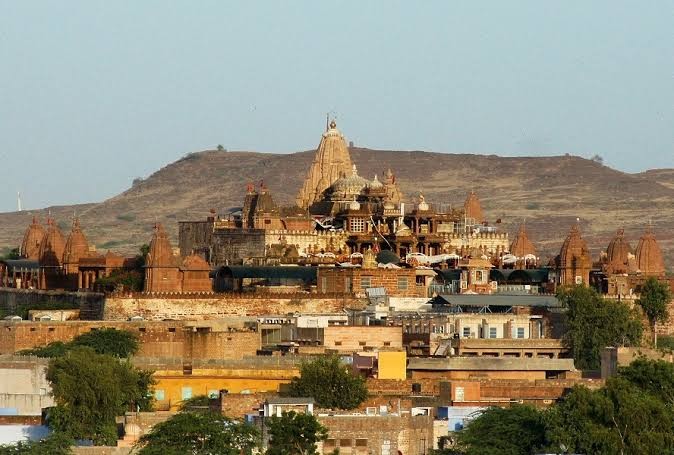
Why Osian is Perfect for Your Celebration
- Ancient cluster of 8th–11th century Hindu and Jain temples provides a genuinely sacred, atmospheric backdrop for religious and heritage ceremonies
- Sweeping Thar Desert sand dunes create a dramatic, one-of-a-kind setting for sundowners, folk performances, and outdoor celebrations
- Strong local tradition of Rajasthani folk music, camel pageantry, and festival culture makes cultural gatherings feel deeply authentic
- Intimate scale of the town naturally suits smaller, private weddings and close-knit family celebrations rather than mass-market events
- Winter months (November–February) deliver cool, clear desert nights that are genuinely pleasant for outdoor evening events
- Proximity to Jodhpur allows guests to combine the Osian experience with a larger city's amenities and connectivity

Top Venues in Osian
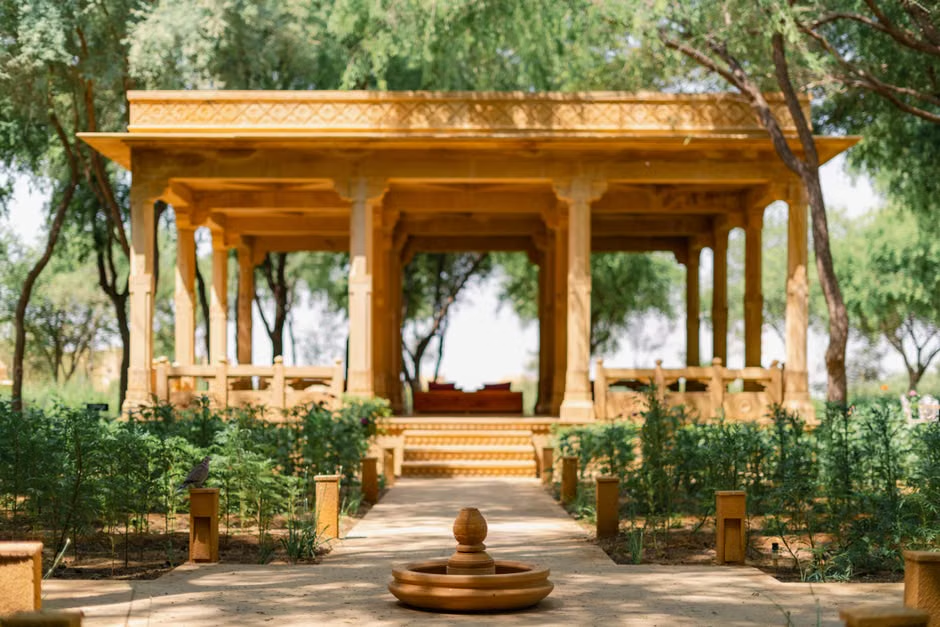
Osian Camel Camp
Compare Osian with Other Top Destinations
Frequently Asked Questions
Is Osian a good destination for an intimate wedding?
Yes. Osian is particularly well-suited to small, intimate weddings. Its ancient temple landscape, desert dune settings, and heritage camp properties create a visually distinctive and deeply atmospheric backdrop that works best for close-knit guest lists. The town's limited scale naturally produces exclusive, personal celebrations rather than large, impersonal events, making it a strong choice for couples who prioritise atmosphere and authenticity over scale.
What makes Osian suitable for Teej and Gangaur celebrations?
Osian's active temple culture, proximity to communities that observe Teej and Gangaur with genuine devotional fervour, and its deeply rooted Rajasthani folk traditions make it an organically fitting location for these celebrations. The town's sacred landscape — including the Sachiya Mata temple — and its living folk performance culture give these festivals a sense of place and authenticity that is difficult to replicate at more commercialised destinations.
How do guests typically travel to Osian?
Most guests arrive via Jodhpur Airport, which receives flights from Delhi, Mumbai, Jaipur, and other major Indian cities. From Jodhpur, Osian is approximately 65 km by road — roughly one to one-and-a-half hours. Osian also has its own railway station on the Jodhpur–Jaisalmer line, making train travel from Jodhpur a practical supplementary option. Planners should arrange dedicated road transfers for guest groups rather than relying on independent navigation.
What is the best time of year to hold an event in Osian?
November through February is the strongly recommended window. Desert temperatures during these months are genuinely comfortable — cool, clear evenings ideal for outdoor events, folk performances, and open-air dinners. From March onward, temperatures rise rapidly, exceeding 40°C by April–May. June through September brings extreme heat and occasional dust storms. October is transitional and still warm enough to make outdoor evening events less than comfortable.
What kinds of event venues and spaces are available in Osian?
Osian's venue landscape is characterised by desert camp resorts, heritage-style properties, and open-air outdoor spaces — sand dunes, temple precincts, and open desert clearings — rather than large conventional banquet halls. The settings suit intimate gatherings, cultural events, and outdoor ceremonies particularly well. For larger events requiring conventional indoor banquet space, planners typically supplement with Jodhpur's broader hotel inventory.
How many guests can Osian realistically accommodate for a destination event?
Osian works most comfortably for guest lists in the range of 50–150 people. Accommodation within the town itself is limited, so larger groups will require overflow stays in Jodhpur, roughly 65 km away. This split-location arrangement is common for Osian events and is manageable with proper transport coordination, but planners should factor in the additional logistics when assessing whether the destination suits their specific guest count.
Is Osian suitable for a Cultural Festival Gathering or folk-themed event?
Yes, strongly so. Osian's living traditions of Rajasthani folk music, Kalbelia dance, camel pageantry, and craft culture make it one of the more genuinely authentic settings in Rajasthan for a cultural festival gathering. Local operators have real experience organising folk performances and desert-themed cultural programmes, and the town's ancient temple architecture provides a backdrop that gives such events a sense of historical depth.
Do I need to bring vendors from outside Osian for a wedding or large event?
For most specialist services — photography, floral design, lighting and sound production, bespoke catering — yes, vendors will typically need to be sourced from Jodhpur or further afield. Local operators are strong on folk performances, camel arrangements, and traditional Rajasthani cuisine, but the broader specialist wedding vendor ecosystem is limited within Osian itself. This is standard practice for events in smaller Rajasthani towns and is manageable with advance planning.
What is mobile and internet connectivity like in Osian for event coordination?
Connectivity in Osian is limited compared to larger Rajasthani cities. Mobile data coverage can be patchy, and planners should not rely on real-time digital coordination tools without testing connectivity on-site in advance. It is advisable to have offline contingency plans for key coordination tasks and to brief vendors and guests about potential connectivity limitations before arrival.
Is Osian suitable for a Temple Festival or religious family function?
Yes. Osian has one of Rajasthan's most significant concentrations of ancient temples still in active religious use, including the Sachiya Mata temple and the Mahavira Jain temple. This makes it a natural fit for temple festival events and religious family functions. The town's sacred atmosphere and the genuine devotional activity around its temples give religious ceremonies a sense of authenticity and spiritual weight that is genuinely distinctive.
What local experiences can be incorporated into a multi-day celebration in Osian?
Osian offers several genuinely distinctive experiential elements that can be woven into a multi-day event programme: camel safaris and dune excursions, temple visits and heritage walks through the ancient temple cluster, folk music and Kalbelia dance performances, traditional Rajasthani cuisine experiences, and camel processions that can serve as a memorable baraat or welcome arrival. These experiences are locally rooted rather than manufactured for tourists, which gives them real character.
Are there any situations where Osian might not be the right choice for my event?
Osian may not be the right fit if your guest list is large and requires self-contained on-site accommodation for 200 or more guests, if your event is planned during the summer months (April–September) when desert heat is extreme, if your guests include many elderly or mobility-limited individuals who may find the terrain and rustic conditions challenging, or if your production requires a large specialist vendor team that cannot be practically coordinated from outside the town.

Ready to explore venues in Osian?
Osian: Desert Weddings, Temple Festivals & Heritage Event Venues in Rajasthan
◆Osian is a small desert town in Rajasthan's Jodhpur district, best suited to intimate weddings, temple festivals, cultural gatherings, and offbeat celebrations that draw on the town's ancient heritage and Thar Desert landscape. Its primary strength is authenticity — a cluster of well-preserved 8th–11th century Hindu and Jain temples, sweeping sand dunes, and a living tradition of Rajasthani folk culture that few destinations in India can match at this scale. The venue inventory is limited and largely heritage or camp-style in character, making it ideal for smaller, close-knit groups rather than large-scale banquet events. Guests typically arrive via Jodhpur, roughly 65 km away, and the best season runs from November through February when desert temperatures are genuinely comfortable.
Osian at a Glance
| Attribute | Detail |
|---|---|
| Best For | Teej & Gangaur Celebration, Cultural Festival Gathering, Private Party, Intimate Wedding |
| Primary Vibe | Adventure & Offbeat |
| Other Vibes | Heritage & Spiritual, Folk & Festive, Desert Rustic |
| Best Season | Winter (November–February) |
Why Choose Osian?
- A genuinely rare temple landscape: Osian's concentration of ancient Mahavira, Sachiya Mata, and Surya temples — many dating to the 8th century — provides a sacred, architecturally striking setting that is almost impossible to replicate at any mainstream wedding destination in Rajasthan.
- Desert dune scenery for outdoor events: The Thar Desert dunes immediately surrounding the town create a dramatic natural amphitheatre for sundowners, folk performances, camel processions, and open-air dinners that feel genuinely cinematic rather than staged.
- Living folk culture: Osian sits within a region where Rajasthani folk music, Kalbelia dance, camel pageantry, and traditional craft traditions are still actively practised — not performed for tourists alone — giving cultural gatherings and festival celebrations an authenticity that is hard to manufacture.
- Intimate scale suits smaller guest lists: The town's limited size and accommodation inventory naturally filters for smaller, more private celebrations, meaning events here tend to feel exclusive and personal rather than crowded or impersonal.
- Proximity to Jodhpur as a logistics anchor: Jodhpur's airport, larger hotel inventory, and established vendor ecosystem are within roughly an hour's drive, allowing planners to use Osian as the primary event venue while drawing on Jodhpur's infrastructure for overflow accommodation and specialist suppliers.
- Relatively uncrowded event calendar: Unlike Jaipur or Udaipur, Osian does not yet attract a high volume of destination weddings, which means local hospitality teams can give individual events more focused attention during the peak winter season.
Which Celebrations Work Best in Osian?
Teej & Gangaur Celebration
Osian's deep roots in Rajasthani religious and folk tradition make it a particularly fitting location for Teej and Gangaur observances. The town's active temple culture, proximity to communities that celebrate these festivals with genuine fervour, and its desert landscape provide a backdrop that feels organically connected to the spirit of these occasions rather than artificially constructed.
Cultural Festival Gathering
Few small towns in Rajasthan offer the combination of ancient temple architecture, living folk performance traditions, and open desert space that Osian does. A cultural festival gathering here — whether centred on music, craft, or regional heritage — benefits from a setting that is itself a cultural artefact, lending the event an atmosphere of depth and place-specificity.
Private Party
The intimate, off-the-beaten-path character of Osian makes it well-suited to private parties for smaller groups who want an exclusive, immersive experience. Desert camp settings, open-air dune venues, and the absence of large tourist crowds mean a private gathering here can feel genuinely secluded and special.
Intimate Wedding
Osian works particularly well for couples who want a wedding that is small, meaningful, and visually distinctive. The ancient temple precincts, desert dunes at golden hour, and heritage-style accommodation create a wedding aesthetic that is both deeply rooted in Rajasthani tradition and visually striking — without requiring a large guest list or a sprawling venue to achieve it.
Temple Festival
With one of Rajasthan's most significant concentrations of ancient temples still in active religious use, Osian is a natural fit for temple festival events — whether a family's private religious ceremony timed to a festival calendar, or a larger gathering organised around one of the town's own festival observances. The Sachiya Mata temple in particular draws significant devotional activity during key festival periods.
Palace / Heritage Wedding
While Osian does not have a palace in the conventional Rajput sense, its heritage camp and desert resort properties carry a strong sense of historical character and regional identity. Couples drawn to the idea of a heritage wedding — one that feels rooted in a specific place and time — will find that Osian's architectural and cultural fabric delivers that quality in a more raw, unpolished form than the more commercialised palace-hotel circuit.
Venues & Event Spaces
Osian's event venue landscape is characterised by desert camp resorts, heritage-style properties, and open-air outdoor spaces rather than large conventional banquet halls or purpose-built wedding venues. The most distinctive settings are those that use the natural desert environment — sand dunes, open skies, and the silhouette of ancient temple spires — as the primary visual backdrop. Tented or semi-permanent camp structures are common, offering a rustic-luxury aesthetic that suits intimate gatherings and cultural events particularly well.
Outdoor lawns and dune-side clearings can be dressed for evening ceremonies, folk performances, and open-air dinners, and local operators are experienced in setting up temporary event infrastructure in these environments. For larger gatherings that require more conventional indoor banquet space, planners typically look to Jodhpur's broader hotel inventory as a supplement, using Osian primarily for the experiential, outdoor elements of a multi-day celebration.
The overall venue character here rewards planners who are comfortable working with natural, slightly unpredictable environments and who value atmosphere and authenticity over polished, air-conditioned convention. Groups expecting a fully equipped, large-scale banquet facility within Osian itself will find the options limited.
Best Time to Celebrate
The curated best season for Osian is Winter (November–February), and this recommendation is grounded in the specific realities of a Thar Desert climate rather than a generic preference for cooler weather. During these months, daytime temperatures typically range from the mid-teens to the mid-twenties Celsius, and evenings can drop to single figures — genuinely comfortable for outdoor events, folk performances, and open-air dinners under a clear desert sky. The air is dry and dust-settled, visibility is excellent, and the quality of natural light during golden hour on the dunes is at its most photogenic.
March marks the beginning of a rapid temperature climb. By April and May, daytime highs regularly exceed 40°C, making outdoor events during daylight hours genuinely uncomfortable and potentially unsafe for guests, particularly the elderly and children. June through September brings the fringes of the monsoon system — while Osian receives far less rainfall than wetter parts of Rajasthan, it does experience periodic dust storms (andhi) and oppressive heat that make event planning during this period inadvisable. October is a transitional month: temperatures begin to ease but can still be warm enough to make outdoor evening events less than comfortable. November is generally when conditions become reliably pleasant, and February remains excellent before the heat begins to build again in March.
Planners should also note that the Osian Camel Festival, when held, typically falls in the winter season — timing a celebration to coincide with or draw inspiration from this event can add a layer of cultural richness to a gathering.
Getting There & Local Connectivity
The primary gateway for guests travelling to Osian is Jodhpur Airport (JDH), which receives flights from major Indian cities including Delhi, Mumbai, and Jaipur. From Jodhpur, Osian is approximately 65 km by road — a journey of roughly one to one-and-a-half hours depending on traffic and road conditions. The road is generally in reasonable condition and the route is well-travelled, making it manageable for guest convoys, though planners should arrange dedicated transport rather than relying on guests to navigate independently.
Osian also has its own railway station on the Jodhpur–Jaisalmer line, which is a practical option for guests travelling from Jodhpur city by train — a relatively short and scenic journey. However, train frequency on this route is limited, so it works best as a supplementary option rather than the primary arrival mode for a large guest group.
Local movement within and around Osian is almost entirely road-dependent. There is no local public transport infrastructure suited to event groups, so planners should budget for dedicated vehicles — jeeps, tempo travellers, or coaches depending on group size — for transfers between accommodation, event venues, temple sites, and the dunes. Camel carts and camel rides are available locally and can be incorporated into the event experience itself, particularly for processions or baraat-style arrivals.
Mobile connectivity in Osian is limited compared to larger Rajasthani cities — guests should be advised to expect patchy data coverage, and event planners should not rely on real-time digital coordination tools without testing connectivity in advance.
Local Vendor & Hospitality Ecosystem
Osian's vendor ecosystem is smaller and less developed than that of Jodhpur, Jaipur, or Udaipur, which is both a constraint and, for the right event, an advantage. Local operators — particularly those running desert camp properties — have genuine experience in organising folk performances, camel pageants, traditional Rajasthani cuisine, and outdoor event setups in the desert environment. This local knowledge is difficult to import from outside and gives Osian-based operators a real edge for culturally immersive events.
For specialist wedding services — photography, floral design, bespoke catering, lighting and sound production — planners will typically need to bring vendors in from Jodhpur or, for larger productions, from Jaipur. This is a standard practice for events in smaller Rajasthani towns and is generally manageable, though it adds a logistical layer that planners should account for in their timelines and coordination plans.
Accommodation capacity within Osian itself is limited, and for guest lists beyond a modest size, overflow accommodation in Jodhpur becomes necessary. This split-location arrangement is common for Osian events and works well when transport logistics are properly managed, but it does require more active coordination than a self-contained destination like a large resort town.
Local catering for traditional Rajasthani cuisine — dal baati churma, ker sangri, traditional sweets — is genuinely strong and authentic, and incorporating local food traditions into an event menu is one of the more straightforward and rewarding aspects of planning a celebration here.
Pros & Things to Consider
Why Osian Works Well
- Genuinely distinctive visual setting — ancient temples, desert dunes, and open skies create a backdrop that is difficult to replicate at any mainstream destination
- Authentic Rajasthani folk culture and living temple traditions give cultural and religious events real depth and specificity
- Intimate scale naturally produces exclusive, personal celebrations rather than crowded, impersonal ones
- Winter season delivers reliably comfortable outdoor conditions — cool evenings, clear skies, excellent light
- Jodhpur's proximity provides a practical logistics anchor for airport access, overflow accommodation, and specialist vendors
- Relatively uncrowded destination wedding market means local operators can give individual events more focused attention
Things to Consider
- Accommodation inventory within Osian itself is limited — larger guest lists will require overflow stays in Jodhpur, adding transport coordination complexity
- Specialist wedding vendors (photographers, florists, production teams) generally need to be sourced from Jodhpur or further afield, increasing logistics overhead
- Mobile and internet connectivity is limited — real-time digital coordination during events requires advance testing and contingency planning
- The desert environment, while beautiful, is unpredictable — dust, wind, and cold desert nights in December–January require robust contingency planning for outdoor events
- The offbeat, rustic character of the destination is a strong fit for some couples and groups but may not suit guests expecting polished, urban-standard amenities
- Road transfer from Jodhpur Airport adds roughly one to one-and-a-half hours to every guest's journey, which can be tiring for elderly guests or those with young children
When Osian May Not Be the Right Fit
- Large guest lists requiring on-site accommodation for 200+ guests: Osian's in-town accommodation capacity is modest. Events requiring a large, self-contained resort with rooms for a big guest list will find the local inventory insufficient and the split-location arrangement (Osian events, Jodhpur stays) logistically demanding.
- Guests with limited mobility or low tolerance for rustic conditions: The desert camp and heritage property aesthetic, combined with uneven terrain around temple sites and dunes, can be challenging for elderly guests or those with mobility constraints. Planners should assess their specific guest profile carefully.
- Events planned for the summer months (April–September): The Thar Desert in summer is genuinely extreme. Any event requiring outdoor elements during this period faces serious comfort and safety challenges that are difficult to mitigate, and the destination is not recommended for celebrations during these months.
- Couples or planners expecting a full-service, urban-standard wedding production without importing vendors: If a celebration requires a large, specialist vendor team operating seamlessly on-site, Osian's limited local ecosystem means significant external coordination is unavoidable — a destination with a more mature wedding industry infrastructure may be a better operational fit.