
Why Omkareshwar is Perfect for Your Celebration
- Home to the Omkareshwar Jyotirlinga, one of India's twelve sacred Shiva shrines — unmatched sanctity for religious family functions and pilgrimage gatherings
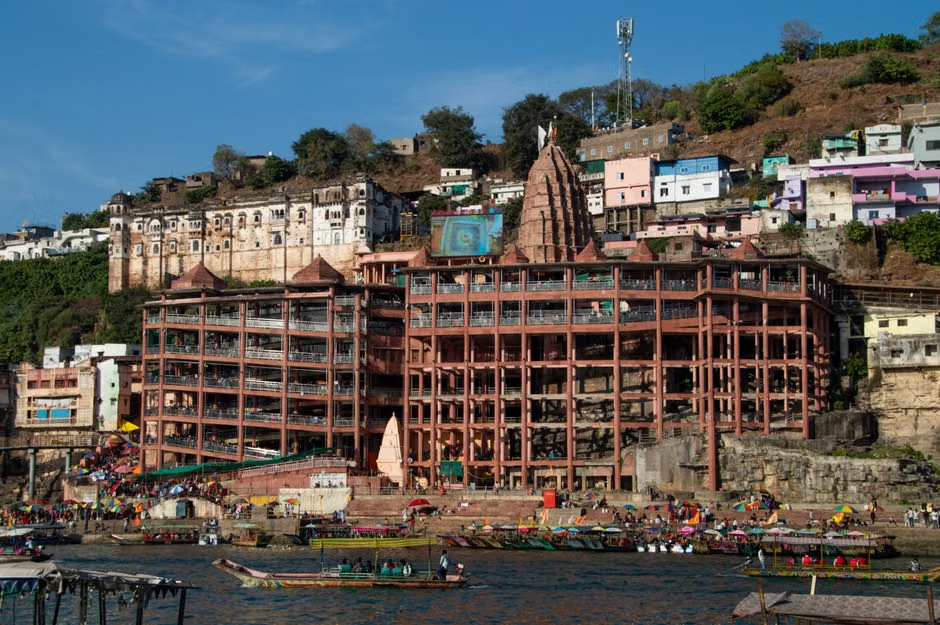
- Narmada riverfront ghats provide a naturally dramatic, spiritually charged backdrop for rituals, aarti ceremonies, and community gatherings
- The island's OM-shaped geography (formed by the Narmada and Kaveri rivers) is considered deeply auspicious, adding symbolic meaning to any celebration held here
- Winter months (November–February) bring cool, dry weather perfectly suited to outdoor temple festivals, folk fairs, and multi-day family events
- A compact, walkable town with a strong tradition of hosting large pilgrimage groups — local hospitality and catering ecosystems are well-practised in managing community-scale gatherings
- Authentic regional folk and cultural traditions — including Narmada Jayanti celebrations and local melas — give cultural festival gatherings a genuinely rooted, non-manufactured character
Top Venues in Omkareshwar

Narmada Resort Omkareshwar
SEETARAM ATITHI GRHA
MPT Sailani Island Resort
Narmada Hills Resort
Ashirwad Hotel
Compare Omkareshwar with Other Top Destinations
Frequently Asked Questions
Is Omkareshwar a good destination for a religious family function?
Yes, strongly so. Omkareshwar is home to one of India's twelve Jyotirlinga shrines and has a well-established community of priests and ritual specialists experienced in conducting a wide range of Hindu ceremonies — from mundan and thread ceremonies to elaborate multi-day pujas. The sacred atmosphere and riverfront setting add genuine spiritual significance that purpose-built event venues cannot replicate.
What size of gathering can Omkareshwar realistically accommodate?
Omkareshwar is best suited to small-to-medium gatherings, typically up to around 150–200 guests. The town's accommodation and event space inventory is modest, and very large groups will need to be distributed across multiple properties. For community meals and prasad-style catering, local caterers are experienced in serving larger numbers, but single-venue capacity for seated events is limited.
How do guests typically travel to Omkareshwar?
Most guests fly into Devi Ahilya Bai Holkar Airport in Indore, approximately 77 km away, then travel onward by road — roughly 1.5 to 2 hours. Guests can also arrive by train at Omkareshwar Road railway station, about 12 km from the town, though it is a smaller halt requiring a connection at a major junction. Private chartered vehicles or buses are the most practical option for group transfers.
What is the best time of year to plan a spiritual gathering or temple festival in Omkareshwar?
November through February is the clearly preferred window. Cool, dry weather (typically 18°C–28°C) makes extended outdoor ceremonies, ghat-side rituals, and parikrama walks comfortable for guests of all ages. The Narmada is at its most serene and accessible during this period, and several significant temple festivals fall within or adjacent to the winter calendar.
Are there outdoor event spaces with river views available in Omkareshwar?
Yes. The Narmada ghats themselves are the most iconic open-air ceremonial spaces, used for aarti, ritual bathing, and community gatherings. Several riverfront hotels and retreat properties also offer open terraces or garden spaces with river views, well-suited to intimate gatherings and folk performance evenings during the winter season.
Is Omkareshwar suitable for a corporate offsite or leadership retreat?
Yes, for the right kind of offsite. Omkareshwar suits leadership retreats and corporate offsites that prioritise reflection, team bonding, and a distraction-free environment over conventional conference infrastructure. The town's compact, contemplative character and riverfront setting work well for smaller leadership groups. It is not suited to large-format conferences requiring high-bandwidth connectivity or extensive AV infrastructure.
What kinds of catering are available for events in Omkareshwar?
Local caterers are well-practised in sattvic (pure vegetarian) cooking for community meals, prasad distribution, and bhandara-style large-group dining — a genuine strength for religious and pilgrimage gatherings. The range of cuisine styles is more limited than in a metropolitan city. Non-vegetarian catering is culturally inappropriate in this sacred town and practically very difficult to arrange.
Can I arrange a pilgrimage gathering for a large family group in Omkareshwar?
Yes. The town's infrastructure has evolved over centuries to serve large pilgrimage groups. The island's walkable parikrama circuit, multiple temple access points, boat crossings, and ghat facilities are all structured for collective pilgrimage. Advance coordination for accommodation across multiple properties and group meal arrangements is advisable for groups above 50–60 people.
What makes Omkareshwar suitable for a regional folk and cultural festival gathering?
Omkareshwar sits within the Nimar region of Madhya Pradesh, which has a rich tradition of folk music, devotional performance, and seasonal melas. The riverfront setting, temple precincts, and the town's own festival calendar — including Narmada Jayanti celebrations — provide a genuinely rooted cultural context for regional folk gatherings, rather than a staged or manufactured one.
How reliable is internet and mobile connectivity in Omkareshwar?
Connectivity within the island town is limited compared to larger cities. Basic mobile coverage is generally available, but high-bandwidth connectivity for live-streaming, large file transfers, or real-time remote coordination should not be assumed. Event planners and guests should test connectivity at their specific property in advance and arrange offline backups for critical event documentation.
Are there any cultural or practical restrictions event planners should be aware of?
Yes. Omkareshwar is a deeply sacred pilgrimage town, and its cultural norms shape what is practically feasible for events. Loud amplified music (particularly non-devotional), alcohol service, and non-vegetarian catering are all culturally inappropriate and difficult to arrange. Events that align with the town's devotional character — religious ceremonies, folk performances, community meals — will find the local ecosystem fully supportive.

Ready to explore venues in Omkareshwar?
Omkareshwar: Sacred Destination for Spiritual Gatherings, Temple Festivals & Cultural Events
◆Omkareshwar is a sacred island town in Madhya Pradesh, best suited to spiritually rooted celebrations: religious family functions, pilgrimage gatherings, temple festivals, regional folk and cultural festival gatherings, and community events tied to devotion and tradition. Its primary vibe is Spiritual & Soulful, shaped by the Omkareshwar Jyotirlinga shrine, the Narmada riverfront ghats, and centuries of pilgrimage culture. The ideal season is November through February, when cool, dry weather makes outdoor rituals and multi-day gatherings comfortable. Accessibility requires a road transfer from Indore (the nearest major airport, roughly 77 km away) or arrival at the nearby Omkareshwar Road railway halt. The town is compact and intimate — it suits small-to-medium gatherings with genuine spiritual intent rather than large-scale commercial events.
Omkareshwar at a Glance
| Attribute | Detail |
|---|---|
| Best For | Regional Folk & Cultural Festival Gathering, Religious Family Function, Spiritual / Pilgrimage Gathering, Temple Festival |
| Primary Vibe | Spiritual & Soulful |
| Other Vibes | Heritage & Devotional, Riverfront & Scenic, Folk & Community |
| Best Season | Winter (November–February) |
Why Choose Omkareshwar?
- Unmatched sacred significance: Omkareshwar houses one of the twelve Jyotirlinga shrines of Lord Shiva, making it among the most spiritually potent locations in India for religious family functions, naming ceremonies, and pilgrimage-linked celebrations.
- Naturally auspicious geography: The island is shaped like the Sanskrit symbol OM, formed by the confluence of the Narmada and Kaveri rivers — a geographical feature considered deeply auspicious and symbolically meaningful for any sacred gathering held here.
- Riverfront ghat culture: The Narmada ghats provide a living, ceremonially active backdrop — morning and evening aarti, ritual bathing, and community prayers are woven into daily life, giving events here an authenticity that purpose-built venues cannot replicate.
- Strong tradition of hosting large pilgrimage groups: The town's hospitality and catering infrastructure has evolved over centuries to serve large numbers of pilgrims and community groups, making it practically experienced in managing multi-day, multi-family gatherings.
- Authentic regional folk traditions: Festivals such as Narmada Jayanti and local melas bring genuine folk music, dance, and cultural programming that enrich regional folk and cultural festival gatherings with rooted, non-manufactured content.
- Intimate, distraction-free environment: The town's compact scale and absence of commercial entertainment infrastructure means gatherings here remain focused, contemplative, and community-centred — a genuine advantage for spiritual retreats, leadership retreats, and family reunions seeking depth over spectacle.
Which Celebrations Work Best in Omkareshwar?
- Regional Folk & Cultural Festival Gathering: Omkareshwar's living tradition of Narmada-linked festivals, local melas, and devotional folk arts makes it a natural host for regional cultural gatherings. The riverfront setting and temple precincts provide ready-made ceremonial spaces that amplify the cultural character of such events.
- Religious Family Function: Whether a mundan (first haircut), thread ceremony, annaprashan, or multi-generational puja, religious family functions gain profound meaning when conducted at a Jyotirlinga site. Priests, ritual specialists, and the necessary ceremonial infrastructure are readily available here.
- Spiritual / Pilgrimage Gathering: Groups travelling together for darshan, parikrama (circumambulation of the island), or extended spiritual retreat find Omkareshwar ideally structured for this purpose — the island's walkable circuit, multiple temples, and ghat access make collective pilgrimage both practical and deeply immersive.
- Temple Festival: The town's annual and seasonal temple festivals — particularly those tied to Shiva-related calendrical events — draw large congregations and provide a ready framework for community-organised temple festival gatherings, with local administrative and priestly support well-established.
- Cultural Festival Gathering: Beyond strictly religious programming, Omkareshwar's heritage architecture, riverfront ambience, and folk performance traditions support broader cultural festival gatherings that blend devotional and artistic elements — particularly suited to groups interested in classical music, devotional poetry, or traditional crafts.
- Local Folk Festival / Fair: The town and its surrounding Nimar region have a strong tradition of seasonal fairs and folk gatherings. Organising or participating in a local folk festival here connects guests to living regional culture rather than a staged recreation of it.
Venues & Event Spaces
Omkareshwar's event infrastructure is shaped by its identity as a pilgrimage town rather than a leisure resort destination. The primary venue types available include:
- Riverfront ghat spaces: The Narmada ghats are the most iconic and atmospherically powerful settings for open-air ceremonies, aarti gatherings, and community rituals. These are public sacred spaces rather than privately bookable venues, but they form the ceremonial heart of most events held here.
- Temple precincts and dharamshalas: Several dharamshalas (pilgrim rest houses) and temple-managed spaces can accommodate community gatherings, group meals (prasad distribution), and religious programming for moderate-sized groups.
- Riverfront hotels and retreats: A modest but growing number of riverfront hotels and retreat properties offer indoor and semi-outdoor event spaces suitable for family functions, corporate offsites, and leadership retreats. These properties typically cater to small-to-medium group sizes rather than large banquet-scale events.
- Outdoor lawns and open terraces: Several properties on the island and its immediate surroundings offer open terraces or garden spaces with river views — well-suited to intimate gatherings, folk performance evenings, and community meals during the winter season.
Event planners should note that Omkareshwar does not currently have the large-format banquet halls or convention-centre infrastructure found in major tier-1 pilgrimage cities. The town's strength lies in intimate, spiritually charged spaces rather than high-capacity commercial event venues.
Best Time to Celebrate
November through February is the clearly preferred window for events in Omkareshwar, and for concrete reasons beyond simply "pleasant weather."
- Temperature comfort: Daytime temperatures typically range from around 18°C to 28°C during peak winter, making extended outdoor ceremonies, ghat-side rituals, and parikrama walks genuinely comfortable for guests of all ages — including elderly pilgrims and young children who commonly attend religious family functions.
- River conditions: The Narmada is at its most serene and accessible during winter. Boat crossings to the island, ghat access, and riverside ceremonies are all at their safest and most visually striking during this period.
- Festival alignment: Several significant temple festivals and regional melas fall within or adjacent to the winter calendar, making it easier to align a private gathering with the town's own ceremonial energy.
- Crowd character: While Omkareshwar receives pilgrims year-round, the winter months attract a particularly engaged, devotionally motivated visitor profile — which complements rather than disrupts private spiritual gatherings.
March through May sees temperatures climbing sharply, often exceeding 40°C by April and May. Extended outdoor ceremonies become physically taxing, and the heat significantly reduces the comfort of multi-day gatherings. June through September brings the monsoon, with heavy rainfall, elevated river levels, and periodic flooding of low-lying ghat areas — outdoor events are largely impractical, and access to the island itself can be disrupted. October is a transitional month: residual humidity and occasional late showers make it less reliable than the core winter window, though it can work for indoor-focused events.
Getting There & Local Connectivity
Omkareshwar is accessible but requires deliberate planning for guest logistics, particularly for larger groups.
- By air: The nearest commercial airport is Devi Ahilya Bai Holkar Airport in Indore, approximately 77 km from Omkareshwar. Indore is well-connected to major Indian cities. From Indore, guests travel onward by road — a journey of roughly 1.5 to 2 hours depending on traffic and road conditions.
- By rail: Omkareshwar Road railway station, on the Ratlam–Khandwa line, is approximately 12 km from the town. It is a smaller halt rather than a major junction, so guests travelling by train from distant cities will typically need to change at Indore, Khandwa, or Ratlam. From the station, auto-rickshaws and taxis connect to the town.
- By road: State highway connectivity from Indore is reasonably good, and private vehicle or chartered bus travel is the most practical option for group transfers. Road conditions within the town itself are narrow and not suited to large coaches — smaller vehicles are recommended for the final approach.
- Local movement: The island town is compact and largely walkable for guests staying within the main pilgrimage circuit. Boat crossings (by small ferry) connect the island to the mainland bank. For guests staying in properties slightly outside the main island, auto-rickshaws and shared vehicles are the primary local transport. There is no app-based cab service of the kind available in larger cities.
Local Vendor & Hospitality Ecosystem
Omkareshwar's vendor ecosystem is shaped by centuries of pilgrimage hospitality rather than modern event-industry infrastructure.
- Ritual and ceremonial specialists: The town has a well-established community of priests, pujaris, and ritual specialists experienced in conducting a wide range of Hindu religious ceremonies — from simple family pujas to elaborate multi-day yagnas. This is a genuine strength for religious family functions and temple festivals.
- Catering for community meals: Large-scale prasad distribution and community dining (bhandara) is a deeply practised tradition here. Caterers experienced in preparing sattvic (pure vegetarian) food for hundreds of guests are available, though the range of cuisine styles is more limited than in a metropolitan event hub.
- Decoration and event styling: Basic floral decoration, traditional rangoli, and devotional event styling are available locally. However, for more elaborate or contemporary event design, planners may need to source vendors from Indore and arrange transportation — this adds lead time and logistical complexity.
- Photography and documentation: Local photographers are available for religious event documentation. For high-end event photography or videography, Indore-based professionals are typically brought in.
- Accommodation capacity: The town's accommodation inventory spans dharamshalas, guesthouses, and a modest number of hotels and riverfront retreats. For very large groups (200+ guests), accommodation will need to be distributed across multiple properties, and advance booking during peak winter months is strongly advisable.
Pros & Things to Consider
Why Omkareshwar Works Well
- Genuine, living sacred atmosphere that cannot be replicated in a purpose-built venue — events here carry authentic spiritual weight
- Experienced local ecosystem for religious ceremonies, community meals, and pilgrimage-group logistics
- Narmada riverfront provides a naturally beautiful, symbolically powerful setting for outdoor rituals and photography
- Compact, walkable island layout keeps guests together and focused — well-suited to retreat-style and community-bonding events
- Winter season (November–February) offers genuinely comfortable conditions for multi-day outdoor gatherings
- Relatively lower commercial noise compared to larger pilgrimage cities — the atmosphere remains contemplative and community-centred
Things to Consider
- Limited large-format event infrastructure — the town does not have high-capacity banquet halls or convention spaces; events must be scaled to match what is genuinely available
- Accommodation inventory is modest; very large guest groups will need to be distributed across multiple properties, requiring careful coordination
- Specialist vendors (contemporary event designers, high-end AV, large catering operations) may need to be sourced from Indore, adding logistics and lead time
- The town's sacred character means certain types of programming (loud music, alcohol-centric celebrations, non-vegetarian catering) are culturally inappropriate and practically difficult to arrange
- Road access to the island is narrow; large vehicle convoys require advance planning and may face restrictions during major festival periods when pilgrim traffic is very high
- Internet and mobile connectivity within the island town is limited — guests and planners should not rely on high-bandwidth connectivity for live-streaming or real-time coordination without testing in advance
When Omkareshwar May Not Be the Right Fit
- Large-scale events requiring high-capacity venues: If your gathering requires a single venue accommodating 500 or more guests under one roof, Omkareshwar's current hospitality inventory is unlikely to meet that need without significant logistical compromise.
- Events planned during the monsoon (June–September): Outdoor ceremonies, ghat access, and island connectivity are all genuinely disrupted during heavy monsoon periods — if your dates are fixed in this window, a different destination with better-covered infrastructure would serve you more reliably.
- Celebrations centred on contemporary entertainment formats: Events where the primary draw is a DJ night, cocktail reception, or non-vegetarian feast will find Omkareshwar's cultural and practical environment a poor fit — the town's sacred character makes such programming both culturally incongruous and logistically difficult.
- Guests with very limited travel flexibility: For a guest list drawn primarily from cities without direct connectivity to Indore, or for elderly guests who find multi-leg journeys difficult, the road transfer from Indore adds a layer of travel complexity that may reduce overall guest comfort and attendance.