
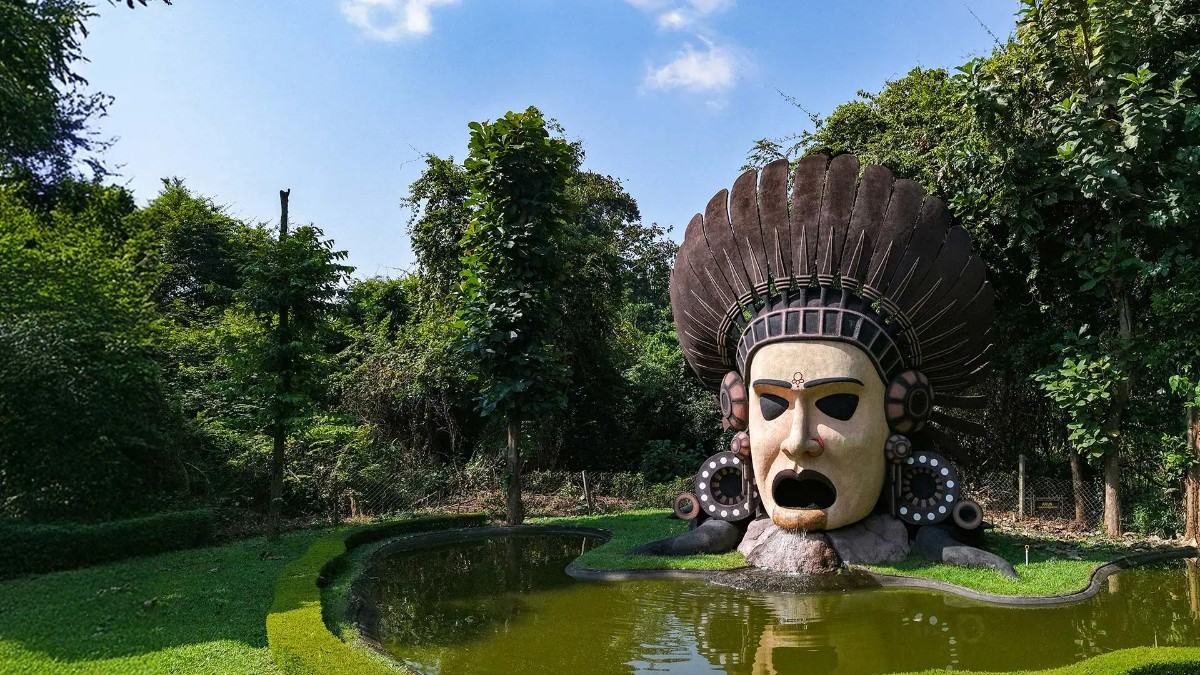
Why Nilambur is Perfect for Your Celebration
- Home to one of the world's oldest teak plantations — a genuinely rare, photogenic backdrop for ceremonies
- Eco-resorts and forest lodges offer exclusive buyout options ideal for intimate weddings and private retreats
- Cool, dry winters (November–February) create comfortable outdoor event conditions in a lush green setting
- Rich Onam and local folk traditions make it an authentic venue for Kerala cultural celebrations
- Low crowd density and seclusion make it well-suited for leadership retreats and corporate offsite programs
- Chaliyar River and surrounding forest trails provide natural team-building and experiential activity backdrops
Compare Nilambur with Other Top Destinations
Frequently Asked Questions
Is Nilambur a good destination for a wedding?
Yes, particularly for intimate destination weddings and resort-style celebrations. Nilambur's eco-resorts and jungle lodges suit smaller guest lists — typically under 150 — and the forest setting provides a genuinely distinctive backdrop. It works best for couples who prioritise seclusion, natural beauty, and a Kerala cultural experience over large-scale grandeur or conventional hotel-ballroom formats.
What is the best time of year to hold an event in Nilambur?
November through February is the ideal window. The Southwest Monsoon has cleared, the forest is at its most vivid, and daytime temperatures are comfortable for outdoor ceremonies and open-air dining. March–May brings rising heat and humidity, while June–September is the heavy monsoon season — outdoor events are not practical during that period.
How do guests travel to Nilambur for a destination event?
Most guests fly into Calicut International Airport (Kozhikode), which is the nearest commercial airport with good connections to major Indian cities and Gulf destinations. From there, Nilambur is reached by road — typically one and a half to two and a half hours. Pre-arranged group transfers are strongly recommended, as on-demand transport at scale is limited locally.
Is Nilambur suitable for an Onam celebration event?
Yes, it is one of the most authentic settings for an Onam celebration in Kerala. Local caterers, hospitality staff, and vendors are genuinely familiar with Onasadya feasts, pookalam arrangements, and folk performance traditions. The cultural grounding here is real rather than staged, which makes it particularly meaningful for groups wanting an immersive Kerala cultural experience.
What kind of venues are available in Nilambur for events?
The venue landscape is dominated by eco-resorts, jungle lodges, and nature retreats rather than conventional banquet halls. Event spaces typically include outdoor lawns, riverside decks, open-air pavilions, and forest clearings. Indoor halls are modest in scale. Many properties offer full or partial buyout arrangements, which suits destination weddings and corporate retreats well.
How large a guest group can Nilambur realistically accommodate?
Nilambur is best suited to groups of roughly 30 to 150 guests. The local accommodation and event space inventory is not structured for very large gatherings. Groups significantly above 150 will find options stretched and logistics more complex — for larger events, a destination with a denser hotel and venue ecosystem would be more practical.
Is Nilambur a good choice for a corporate offsite or leadership retreat?
Yes. The seclusion, natural surroundings, and limited urban distraction make it well-suited for corporate offsites and leadership retreats. The Chaliyar River, forest trails, and nearby waterfalls provide natural team-building activity options. The patchy mobile connectivity in some forest zones can be reframed as a deliberate digital-detox feature for focused strategy sessions.
What local activities are available for event guests during a multi-day stay?
Guests can visit the Conolly's Plot teak plantation — one of the world's oldest — as well as Adyanpara and other nearby waterfalls, the Chaliyar River for nature walks and water activities, and local tribal heritage sites. These experiences are well-suited to team-building programming or leisure days built into a destination wedding or retreat itinerary.
How mature is the local vendor ecosystem for events in Nilambur?
The ecosystem is genuine but limited in depth. Local caterers excel at Kerala cuisine and traditional Onasadya spreads. Floral and décor vendors are available for nature-aesthetic setups, though elaborate productions typically require vendors brought in from Calicut. Lead time for planning is important — last-minute coordination is harder here than in a larger event city.
What is the internet and mobile connectivity like for guests staying in Nilambur?
Connectivity is limited and patchy in the deeper forest zones around Nilambur. Major networks have coverage in the town area, but eco-resorts set within forest land may have weak or intermittent signals. This is worth communicating to guests in advance — and for retreat formats, it can be positioned as a feature rather than a drawback.
Is Nilambur suitable for a family reunion or multi-generational group?
It can work well for family groups that are comfortable with a nature-resort setting and the road journey from Calicut. The serene environment and Kerala hospitality suit multi-generational gatherings. However, guests with significant mobility limitations may find forest-terrain resort settings and the travel logistics more demanding than a city-based venue.

Ready to explore venues in Nilambur?
Nilambur: Forest Destination Weddings, Eco Retreats & Nature Events
◆Nilambur is a forest destination in Kerala's Malappuram district, best suited for intimate destination weddings, Onam celebrations, resort-style events, and corporate or leadership retreats. Its primary vibe is serene and nature-immersed — anchored by ancient teak plantations, the Chaliyar River, and a cluster of eco-resorts and jungle lodges. The ideal season runs from November through February, when the post-monsoon landscape is lush but the rains have cleared. Accessibility requires planning — guests typically fly into Calicut (Kozhikode) and travel onward by road — making it best suited for smaller, curated guest lists rather than large-scale gatherings.
Nilambur at a Glance
| Attribute | Detail |
|---|---|
| Best For | Onam Celebration, Resort Wedding, Destination Wedding, Corporate Offsite |
| Primary Vibe | Nature & Serene |
| Other Vibes | Rustic, Cultural, Intimate, Offbeat |
| Best Season | Winter (November–February) |
Why Choose Nilambur?
- One of the world's oldest teak plantations: The Conolly's Plot teak plantation in Nilambur is a genuinely rare landmark — a living, centuries-old forest that provides a dramatic and photogenic backdrop unlike anything available in a conventional hotel-city destination.
- Eco-resort exclusivity: The local accommodation model leans heavily toward boutique eco-resorts and jungle lodges that can be partially or fully bought out for a group, giving event hosts a level of privacy and cohesion that larger hotel-city destinations rarely offer.
- Authentic Kerala cultural immersion: Nilambur sits within a region with deep Onam traditions, local folk performance culture, and tribal heritage — making it a genuinely meaningful setting for Kerala-rooted celebrations rather than a generic resort backdrop.
- Natural activity infrastructure: The Chaliyar River, surrounding forest trails, and nearby waterfalls (such as Adyanpara) provide ready-made settings for team-building activities, nature walks, and experiential programming without needing to import entertainment.
- Low crowd density: Unlike Kerala's more commercialised destinations, Nilambur remains relatively undiscovered on the mainstream event circuit, which translates to fewer competing events, more attentive local hospitality, and a genuinely secluded atmosphere.
- Post-monsoon greenery at its peak: The winter season arrives after the Southwest Monsoon has saturated the landscape, meaning November–February guests experience the forest at its most vivid and photogenic without the disruption of active rainfall.
Which Celebrations Work Best in Nilambur?
Onam Celebration: Nilambur's deep roots in Kerala's cultural calendar make it one of the most authentic settings for an Onam gathering. Local vendors, caterers, and hospitality staff are genuinely familiar with the traditions — pookalam arrangements, Onasadya feasts, and folk performances can be organised with real cultural grounding rather than a staged approximation.
Resort Wedding: The eco-resort and jungle lodge format suits couples who want a wedding that feels like a private estate takeover. Smaller guest lists (typically under 150) are well-served, with ceremony spaces set against forest canopies or riverside lawns that require minimal decoration to feel special.
Destination Wedding: For couples specifically seeking an offbeat, nature-first destination wedding in Kerala — distinct from the backwaters or beach circuit — Nilambur offers a genuinely different proposition. The forest setting, cooler winter temperatures, and seclusion make it particularly appealing for guests who value experience over conventional grandeur.
Corporate Offsite: The combination of seclusion, natural surroundings, and a range of outdoor activity options makes Nilambur a practical choice for corporate offsites where the goal is to remove teams from their usual environment. The absence of urban distractions is a feature, not a limitation, for this format.
Leadership Retreat: Small, senior leadership groups benefit from Nilambur's quiet intensity — the forest environment naturally encourages focused discussion, and the limited connectivity (patchy mobile networks in some areas) can be reframed as a deliberate digital-detox feature for strategy sessions.
Team-Building Retreat: River activities, forest treks, nature trails, and waterfall visits provide a ready-made activity menu for team-building programs. Local operators familiar with group logistics in the forest zone can support structured outdoor programming across a multi-day retreat format.
Venues & Event Spaces
Nilambur's event venue landscape is defined primarily by eco-resorts, jungle lodges, and nature retreats rather than conventional banquet halls or urban hotel ballrooms. Most properties are set within or immediately adjacent to forested land, with outdoor lawns, riverside decks, and open-air pavilions forming the primary event spaces. Indoor halls tend to be modest in scale, suited to intimate gatherings rather than large assemblies. Some properties offer full buyout arrangements, which is particularly valuable for destination weddings and corporate retreats where group cohesion matters. Outdoor ceremony setups — under teak canopies, beside the Chaliyar River, or on hillside clearings — are among the most distinctive offerings. Guests should expect a rustic-luxury or eco-luxury aesthetic rather than the marble-and-chandelier grandeur of a palace hotel. Catering is typically handled in-house by the resorts, with Kerala cuisine as the natural default and the ability to arrange traditional Onasadya-style spreads for cultural celebrations.
Best Time to Celebrate
The curated best season for Nilambur events is Winter: November through February. During these months, the Southwest Monsoon has fully retreated, leaving the forest landscape at its greenest and most photogenic. Daytime temperatures are comfortable — typically in the low-to-mid twenties Celsius — and evenings are pleasantly cool, making outdoor ceremonies and open-air dinners genuinely enjoyable rather than a heat endurance exercise.
November is particularly attractive because the post-monsoon freshness is at its most vivid, with rivers running clear and the forest canopy at full density. December and January represent the peak of the dry-cool window. February remains comfortable, though by late February humidity begins to creep back as the pre-monsoon season approaches.
March through May brings rising temperatures and increasing humidity — outdoor events become uncomfortable, and the landscape begins to dry and brown in patches. This period is generally not recommended for outdoor-heavy celebrations.
June through September is the Southwest Monsoon season, which in Nilambur is particularly intense given its position at the foot of the Western Ghats. Rainfall is heavy and sustained, forest roads can become difficult to navigate, and outdoor event setups are essentially impractical. Some indoor retreat formats can work during this period for groups specifically seeking a monsoon-forest experience, but it requires careful contingency planning.
October is a transitional month — the monsoon is retreating but not fully gone, and conditions can be unpredictable. It is generally treated as a shoulder period rather than a reliable event window.
Getting There & Local Connectivity
The primary gateway for guests travelling to Nilambur by air is Calicut International Airport (Kozhikode), which is the nearest commercial airport and is well-connected to major Indian cities as well as several Gulf destinations — relevant given Kerala's large NRI community. From the airport, Nilambur is reached by road, a journey that typically takes between one and a half to two and a half hours depending on traffic and the specific resort location. Pre-arranged group transfers are strongly recommended, as local taxi availability at scale can be limited.
By rail, Nilambur Road Railway Station serves as the terminal point of a branch line that connects through Shoranur Junction — itself a major interchange on the Kerala rail network. While this provides a rail option, the branch line has limited frequency and the journey from major cities involves a change at Shoranur, making it less convenient than road transfer from Calicut for most guest groups.
Within Nilambur itself, local transport infrastructure is modest. Most eco-resorts are self-contained, so guests staying on-property have little need for local movement. For excursions — to the teak plantation, waterfalls, or the town — coordinated resort vehicles or pre-booked private cabs are the practical solution. Auto-rickshaws are available in the town area but are not suited to group movement. Mobile network coverage can be patchy in the deeper forest zones, so groups should plan for limited connectivity as a feature of the experience rather than a logistical failure.
Local Vendor & Hospitality Ecosystem
Nilambur's vendor ecosystem is genuinely suited to smaller, nature-themed events but has real limitations for large-scale or highly elaborate productions. Local caterers are experienced with Kerala cuisine — particularly traditional Onasadya spreads, fish-forward menus, and vegetarian Kerala feasts — and this is where the local food offering is strongest. For non-Kerala cuisine or highly customised menus, bringing in vendors from Calicut or Kozhikode is common practice and generally straightforward given the road distance.
Floral decoration vendors familiar with forest and nature aesthetics are available locally, though for elaborate mandap or stage setups, event planners typically coordinate with Calicut-based decorators who travel to the site. Photography and videography professionals who specialise in forest and outdoor settings are increasingly active in this region, drawn by the distinctive visual character of the teak plantation and riverside environments.
The hospitality culture in Nilambur is warm and genuinely Kerala in character — attentive, unhurried, and food-generous. Resort staff at the established eco-properties are experienced with hosting event groups and understand the rhythm of a multi-day celebration or retreat. However, the overall vendor ecosystem is less mature and less densely populated than in Kerala's more established event destinations, which means lead time for planning and coordination is important — last-minute arrangements are harder to execute here than in a larger city.
Pros & Things to Consider
Why Nilambur Works Well
- Genuinely distinctive forest setting — the ancient teak plantation and Chaliyar River provide backdrops that are difficult to replicate elsewhere in Kerala
- Eco-resort buyout model suits intimate weddings and private retreats where group cohesion and exclusivity matter
- Authentic cultural grounding for Onam celebrations and Kerala folk traditions
- Natural activity infrastructure (river, trails, waterfalls) reduces the need to import entertainment for retreats
- Low event-circuit competition means more attentive local hospitality and fewer clashing events on the same weekend
- Cool, comfortable winter climate makes outdoor ceremonies genuinely pleasant from November through February
Things to Consider
- Guest list scale is naturally limited — the local venue inventory is best suited to groups under 150; very large weddings will find the accommodation and event space options insufficient
- Accessibility requires active planning — guests need to be briefed on the road transfer from Calicut airport, and group logistics need to be coordinated in advance
- Vendor ecosystem depth is limited compared to larger Kerala destinations — elaborate production elements (large stage builds, imported cuisine, specialist entertainment) need to be sourced from Calicut or beyond
- Mobile and internet connectivity is patchy in forest zones — a genuine feature for digital-detox retreats, but a real constraint for events requiring live streaming or constant coordination
- The monsoon season (June–September) is a hard no for outdoor events and significantly limits indoor options too, given road access challenges
When Nilambur May Not Be the Right Fit
- Large guest lists (200+): The local venue and accommodation inventory is not structured to support very large gatherings comfortably. Groups of this size will find the options stretched and the logistics significantly more complex than in a larger event city.
- Monsoon-season outdoor events: Planning any outdoor-heavy celebration between June and September carries substantial weather risk in Nilambur, where monsoon rainfall is among the heaviest in the region. Even partially outdoor formats are difficult to execute reliably during this window.
- Guests with limited travel flexibility: Elderly guests or those with mobility considerations may find the road transfer from Calicut and the forest-terrain resort settings more challenging than a city-based venue. The destination rewards guests who are comfortable with a degree of travel effort.
- Events requiring elaborate production infrastructure: Couples or corporates planning large-scale stage productions, multi-vendor food courts, or highly technical AV setups will find the local vendor ecosystem less equipped than in a major event city — and the logistics of bringing everything in from outside add complexity and lead time.