
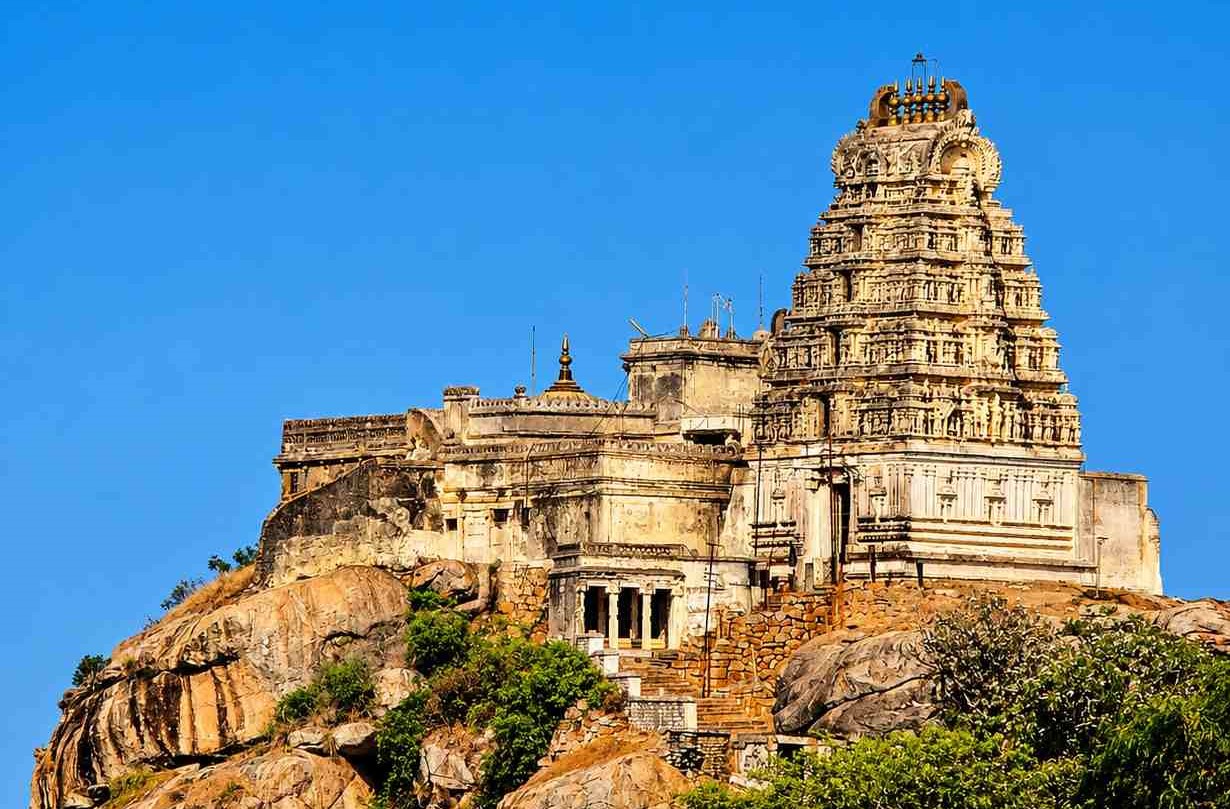
Why Melukote is Perfect for Your Celebration
- Home to the ancient Cheluvanarayana Swamy Temple, one of Karnataka's most revered Vaishnava shrines — an unmatched backdrop for spiritual and religious gatherings
- Vairamudi Festival draws tens of thousands of devotees, making it one of South India's most celebrated temple festivals
- Ugadi celebrations here carry deep Karnataka cultural authenticity, rooted in centuries of local tradition
- Quiet, unhurried hilltop setting naturally suited to intimate religious family functions, naming ceremonies, and pilgrimage-linked gatherings
- Cool, dry winters (November–February) provide comfortable conditions for multi-day outdoor religious events and family reunions
- Proximity to Mysuru and Bengaluru makes it accessible for guests travelling from major Karnataka cities by road
Compare Melukote with Other Top Destinations
Frequently Asked Questions
Is Melukote a good destination for a Ugadi celebration or Karnataka cultural gathering?
Yes, strongly so. Melukote's deep-rooted Vaishnava and Karnataka cultural traditions make it one of the most authentic settings in the state for Ugadi. The town's temple rituals, community spirit, and local customs give a Ugadi gathering here a genuine cultural resonance that is difficult to replicate in a commercial venue. It is particularly well-suited for families with Karnataka heritage who want the occasion to carry real meaning.
What size of guest group can Melukote realistically accommodate for an event?
Melukote is best suited to intimate to mid-sized gatherings — typically up to a few hundred guests for community or religious events. Accommodation within the town itself is limited, so larger groups are commonly based in Mysuru and transported to Melukote for the core event activities. Very large gatherings requiring on-site accommodation for hundreds of guests are better served by a more commercially developed destination.
How do guests typically travel to Melukote?
Most guests arrive by road. Mysuru is approximately 50–60 km away and Bengaluru around 130–140 km, both reachable by private vehicle or hired cab. The nearest railway station is Mandya, about 28 km away, with connections to Mysuru and Bengaluru. The nearest airport with regular services is in Mysuru, though Bengaluru's international airport is the more practical gateway for guests arriving from outside Karnataka.
What is the best time of year to plan a spiritual gathering or temple festival event in Melukote?
November through February is the optimal window. The weather is cool and dry, making outdoor temple gatherings, circumambulations, and multi-day religious functions comfortable for guests of all ages. The summer months (March–May) bring significant heat, and the monsoon (June–September) brings heavy rain that disrupts outdoor events and makes the hilltop temple terrain difficult to navigate safely.
What kinds of event spaces are available in Melukote?
Melukote offers temple trust halls, dharamshalas, modest guesthouses, and open areas around the temple complex. These are spiritually appropriate and functional spaces rather than purpose-built commercial event venues. There are no large banquet halls or resort lawns within the town itself. For events requiring more elaborate infrastructure, planners typically bring in services from Mysuru.
Is Melukote suitable for a religious family function like a naming ceremony or thread ceremony?
Yes. Conducting a naming ceremony, thread ceremony, or similar family religious function in proximity to the Cheluvanarayana Swamy Temple gives the occasion genuine spiritual significance. The town's atmosphere, local priests, and traditional catering options are all well-aligned with these kinds of intimate family observances. It is a meaningful choice for families with a Vaishnava or Karnataka cultural background.
What catering options are available for events in Melukote?
Local caterers specialise in traditional Vaishnava sattvic cuisine — pure vegetarian food prepared according to religious dietary norms. Traditional Karnataka festival meals and community dining formats (samaradhane) are well within local capability. Non-vegetarian catering is culturally inappropriate in this setting and largely unavailable locally. For multi-cuisine or more elaborate catering, planners need to engage vendors from Mysuru or Bengaluru.
How does the Vairamudi Festival affect event planning in Melukote?
The Vairamudi Festival is one of South India's most significant temple festivals and draws very large crowds to Melukote, typically in spring. During this period, accommodation becomes scarce and the town is extremely busy. Planning a private event around the festival requires early booking and careful coordination. Outside this peak festival window, the town is considerably quieter and more manageable for private group events.
Is Melukote accessible for elderly guests or those with mobility limitations?
Partially. The town centre is compact and walkable, but the main temple complex involves stone steps and uneven rocky terrain on the hilltop. This can be challenging for guests with significant mobility limitations. Planners should factor this in when designing the event itinerary and consider whether all guests will be able to participate comfortably in temple-based activities.
What makes Melukote distinctive compared to other Karnataka event destinations?
Melukote's distinctiveness lies in its unbroken spiritual and cultural continuity — it is a living pilgrimage town, not a heritage property repurposed for events. The Cheluvanarayana Swamy Temple's antiquity, the Vairamudi Festival's devotional scale, and the town's sattvic, community-oriented character give gatherings here an authenticity that is genuinely rare. It is the right choice when spiritual meaning, not commercial spectacle, is the priority.
Can a community gathering or local folk festival be organised in Melukote?
Yes. The region has a living tradition of community fairs and folk celebrations tied to the religious and agricultural calendar. Local organisers are familiar with these formats, and the town's community infrastructure — halls, open spaces, and local participation — can support such events. These gatherings tend to work best when organised in collaboration with local community leaders or temple administration rather than as purely externally produced events.

Ready to explore venues in Melukote?
Melukote: Temple Hill Destination for Spiritual Gatherings, Festivals & Cultural Events
◆Melukote is a small, deeply spiritual temple town in Karnataka's Mandya district, strongest for religious, pilgrimage-linked, and Karnataka cultural gatherings. Its primary vibe is Spiritual & Soulful, anchored by the ancient Cheluvanarayana Swamy Temple atop a rocky hill. It suits Ugadi celebrations, temple festivals, spiritual pilgrimages, religious family functions, and community gatherings best. The ideal season is November through February, when the climate is cool and dry. Accessibility is moderate — reachable by road from Mysuru and Bengaluru — and the local hospitality ecosystem is modest in scale, making it most appropriate for intimate to mid-sized gatherings rather than large-scale destination weddings.
Melukote at a Glance
| Aspect | Detail |
|---|---|
| Best For | Ugadi / Karnataka Cultural Gathering, Spiritual / Pilgrimage Gathering, Temple Festival, Cultural Festival Gathering |
| Primary Vibe | Spiritual & Soulful |
| Other Vibes | Heritage, Community-Rooted, Serene & Contemplative |
| Best Season | Winter (November–February) |
Why Choose Melukote?
- One of Karnataka's most sacred Vaishnava sites: The Cheluvanarayana Swamy Temple, believed to date back over a thousand years, lends an unmatched spiritual gravitas to any religious gathering or pilgrimage event held here.
- Authentic festival culture: Melukote is home to the Vairamudi Festival, one of South India's most significant temple festivals, drawing enormous devotional energy and a well-established tradition of large community gatherings that local organisers understand deeply.
- Naturally intimate scale: The town's compact, hilltop geography encourages close-knit, focused gatherings — ideal for families seeking a spiritually meaningful setting rather than a commercial event venue.
- Genuine Karnataka cultural identity: Ugadi and other Karnataka cultural celebrations here carry centuries of local tradition, making the destination particularly resonant for families with roots in the region.
- Peaceful, distraction-free environment: Unlike larger pilgrimage towns, Melukote remains relatively unhurried, offering a contemplative atmosphere that suits multi-day religious functions and family reunions with a devotional focus.
- Reasonable road connectivity from major cities: Mysuru is roughly 50–60 km away and Bengaluru around 130–140 km, making Melukote a practical day-trip or short-stay destination for guests travelling from Karnataka's urban centres.
Which Celebrations Work Best in Melukote?
- Ugadi / Karnataka Cultural Gathering: Ugadi, the Karnataka and Telugu New Year, is celebrated with particular authenticity in Melukote. The town's temple traditions, local rituals, and community spirit make it an ideal setting for families wishing to mark the occasion in a culturally rooted, spiritually charged environment.
- Spiritual / Pilgrimage Gathering: Melukote is fundamentally a pilgrimage destination. Groups travelling together for darshan, spiritual retreats, or devotional programmes find the town's entire infrastructure — from its temples to its guesthouses — oriented around this purpose.
- Temple Festival: The Vairamudi Festival and other annual temple observances are among the most compelling reasons to plan a group visit here. Attending or organising events around these festivals gives gatherings a shared, deeply meaningful focal point.
- Cultural Festival Gathering: Karnataka's classical music, Carnatic traditions, and Vaishnava cultural arts have a natural home in Melukote. Cultural gatherings that incorporate these elements — whether formal performances or informal community celebrations — feel genuinely at home here.
- Local Folk Festival / Fair: The region around Melukote has a living tradition of local fairs and folk celebrations tied to the agricultural and religious calendar. Groups interested in experiencing or incorporating these traditions into a gathering will find willing local participation.
- Religious Family Function: Naming ceremonies, thread ceremonies, and other family religious functions gain a special significance when conducted in proximity to a major temple. Melukote's sacred environment makes it a meaningful choice for families who want their function to carry genuine spiritual weight, not just a decorative religious backdrop.
Venues & Event Spaces
Melukote's venue landscape is modest and in keeping with its character as a pilgrimage town rather than a commercial event destination. The primary event spaces available include:
- Temple trust halls and dharamshalas: The temple administration and associated trusts maintain halls and rest houses that can accommodate pilgrim groups and religious gatherings. These are functional, spiritually appropriate spaces rather than decorated event venues.
- Guesthouses and small hotels: A small number of guesthouses and modest hotels in and around the town offer basic accommodation and limited event hosting capacity, suitable for intimate family functions and small group stays.
- Outdoor temple precincts and hilltop spaces: The rocky hilltop setting and the open areas around the main temple complex provide natural gathering spaces for community events, particularly during festival seasons when large numbers of devotees congregate.
- Community and municipal halls: The town has basic community infrastructure that can be engaged for cultural programmes, folk performances, and local gatherings, typically through local organisers familiar with the town's administrative processes.
Planners should note that Melukote does not have the kind of purpose-built banquet halls, luxury resort lawns, or large convention facilities found in major event destinations. The venue ecosystem here is best understood as spiritually and culturally appropriate rather than commercially event-ready at scale.
Best Time to Celebrate
The winter months of November through February are the clear optimal window for events in Melukote. Daytime temperatures during this period are typically comfortable — warm enough for outdoor gatherings without the intensity of summer heat — while evenings and early mornings are pleasantly cool. This makes multi-day outdoor religious functions, temple circumambulations, and community gatherings physically comfortable for guests of all ages, including elderly pilgrims and young children who are often central to family religious events.
The Vairamudi Festival, one of the town's most significant annual events, typically falls in the spring (often March or April depending on the lunar calendar), which sits just outside the ideal winter window — planners attending this specific festival should prepare for warmer conditions.
March through May brings increasingly intense heat to this part of Karnataka. Temperatures can climb significantly, making outdoor events uncomfortable and potentially taxing for older guests or those unaccustomed to the climate. While the Vairamudi Festival draws visitors regardless, general event planning during this period requires careful attention to shade, hydration, and timing of outdoor activities.
June through September is the Southwest Monsoon season. Melukote receives moderate to good rainfall during this period, and the rocky hilltop terrain can make movement around the temple complex slippery and difficult. Road access from Mysuru and Bengaluru, while generally maintained, can be affected by heavy rain. Outdoor gatherings are largely impractical, and the overall logistics of hosting a group event become considerably more complex.
October is a transitional shoulder month — the monsoon typically retreats, and conditions begin to improve, though some residual rain is possible. It can work for smaller, flexible gatherings but is not as reliable as the November–February window.
Getting There & Local Connectivity
Melukote is primarily a road-access destination. The town sits roughly 50–60 km from Mysuru and approximately 130–140 km from Bengaluru, both of which are well-connected to the rest of India by air and rail. Most guests travelling to Melukote will arrive by road from one of these two cities, either by private vehicle, hired cab, or organised group transport.
The nearest airport with meaningful connectivity is Mysuru Airport, though its flight network is limited compared to Kempegowda International Airport in Bengaluru, which is the more practical air gateway for guests arriving from outside Karnataka. From Bengaluru, the drive to Melukote typically takes around two and a half to three hours depending on traffic and route.
Mandya Railway Station, approximately 28 km from Melukote, is the closest rail point and connects to both Mysuru and Bengaluru on the main line. From Mandya, guests would need onward road transport to reach the town itself — auto-rickshaws, taxis, and hired vehicles are available, though pre-arrangement is advisable for groups.
Within Melukote itself, the town is compact and much of the temple area is best navigated on foot. The main temple complex involves some climbing on stone steps, which should be factored into planning for guests with mobility considerations. For groups, hiring a fleet of vehicles from Mysuru or Mandya for the duration of the event is the most practical approach to local movement.
Local Vendor & Hospitality Ecosystem
Melukote's vendor and hospitality ecosystem is oriented around pilgrimage and religious observance rather than commercial event production. This has both strengths and limitations for event planners.
On the positive side, local caterers and cooks are experienced in preparing traditional Vaishnava sattvic cuisine — pure vegetarian food prepared according to religious dietary norms — which is genuinely appropriate and often expected at the kinds of gatherings this destination suits best. Prasadam-style meals, traditional Karnataka festival foods, and community dining (samaradhane) are well within local capability.
However, planners seeking multi-cuisine catering, elaborate décor production, professional AV and lighting setups, or large-scale event management services will generally need to source these from Mysuru or Bengaluru and bring them in. The local vendor base for these services is limited. This is not unusual for a town of Melukote's size and character, but it does require advance planning and coordination with vendors from larger nearby cities.
Accommodation capacity in the town itself is modest. For larger groups, a practical approach is to base the majority of guests in Mysuru — which has a fuller range of hotel options — and organise day trips or short stays in Melukote for the core event activities. This hybrid approach is commonly used by families planning multi-day religious functions centred on the temple.
Pros & Things to Consider
Why Melukote Works Well
- Authentic, centuries-old spiritual environment that cannot be replicated in a commercial venue setting
- Deeply resonant for Karnataka Vaishnava families and communities with a genuine connection to this tradition
- Cool, comfortable winter climate well-suited to outdoor religious gatherings and multi-day events
- Compact, walkable town centre makes movement easy for pilgrimage-style gatherings
- Traditional sattvic catering is locally available and culturally appropriate for the event types this destination suits
- Relatively uncrowded outside major festival periods, offering a peaceful, focused environment for family functions
Things to Consider
- Accommodation capacity within the town is limited — larger groups will need to be based partly or fully in Mysuru, adding a logistical layer
- Commercial event services (décor, AV, multi-cuisine catering) must be sourced from Mysuru or Bengaluru and transported in
- The hilltop temple terrain involves stone steps and uneven surfaces — not easily accessible for guests with significant mobility limitations
- During major festival periods (particularly Vairamudi), the town becomes very crowded, which can complicate private event logistics and accommodation availability
- Non-vegetarian catering is culturally inappropriate in this setting and largely unavailable locally — this is a firm constraint for event menus
- Digital connectivity (mobile data, internet) can be patchy in parts of the town, which may affect event coordination and guest communication
When Melukote May Not Be the Right Fit
- Large-scale destination weddings requiring luxury resort infrastructure: If a wedding requires a large banquet hall, luxury accommodation for hundreds of guests on-site, and full commercial event production, Melukote's current hospitality inventory cannot comfortably support this — a larger city would serve better.
- Events planned during the monsoon (June–September): Heavy rainfall, slippery temple terrain, and potential road disruptions make this period genuinely unsuitable for planned group events, particularly those with outdoor components.
- Guests requiring non-vegetarian catering or a non-religious event atmosphere: Melukote's identity is inseparable from its Vaishnava religious character. Events that require a secular or non-vegetarian setting will feel out of place here, and local infrastructure will not support them.
- Groups needing direct flight access or minimal travel complexity: With no major airport nearby and limited rail connectivity directly to the town, guests travelling from outside Karnataka — particularly international guests — face a multi-leg journey. For groups where travel ease is a priority, a better-connected destination would reduce friction significantly.