
Why Mayapur is Perfect for Your Celebration
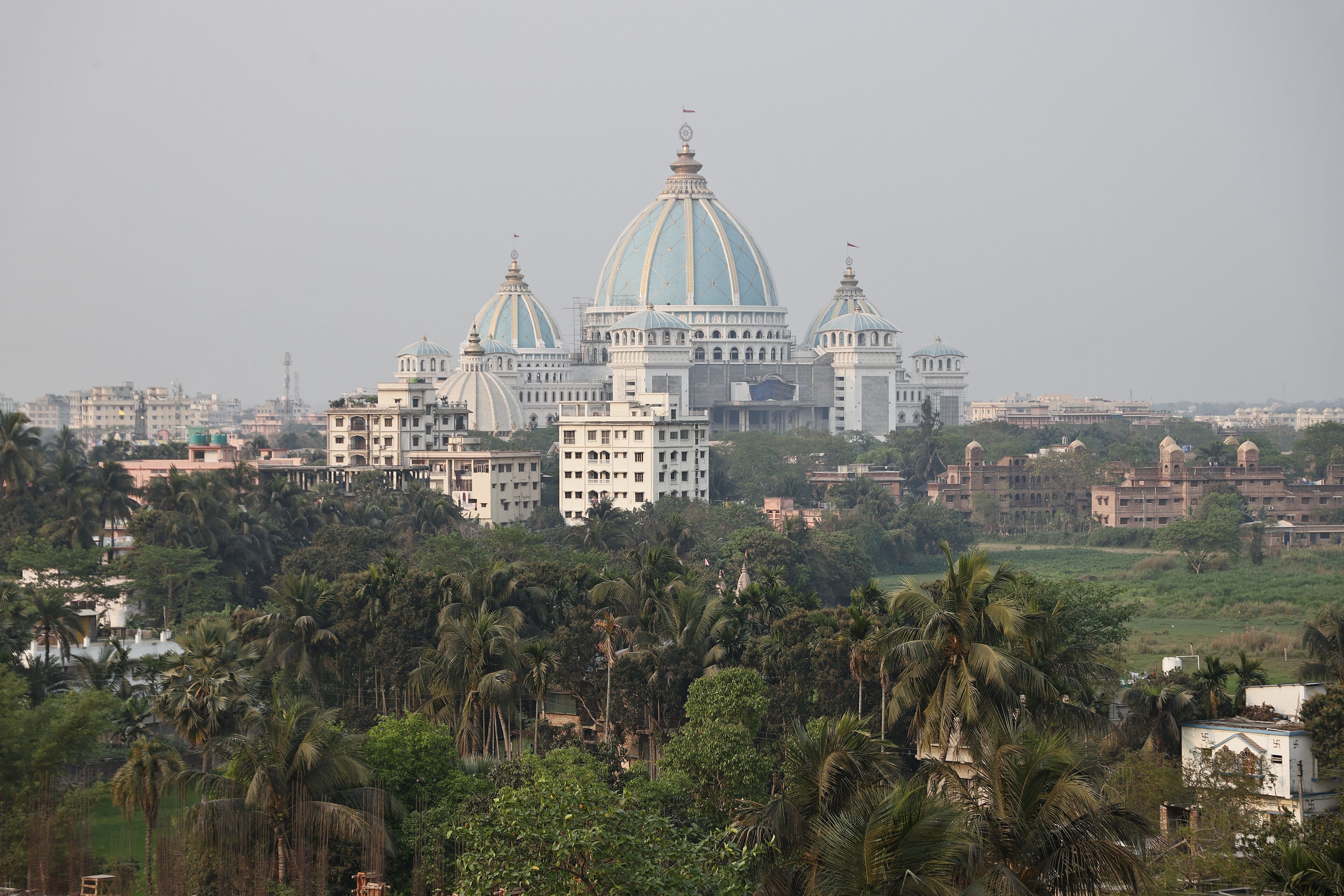
- Home to the iconic ISKCON Chandrodaya Mandir — one of the world's largest temple complexes — providing a breathtaking ceremonial backdrop
- Ganges riverfront setting lends a sacred, serene atmosphere uniquely suited to religious and spiritual gatherings
- Globally recognised pilgrimage hub attracting devotees from across India and abroad, making it naturally equipped for large religious congregations
- Vibrant annual festivals like Gaura Purnima and Durga Puja draw massive, well-organised crowds, demonstrating strong local event infrastructure
- Deeply rooted cultural and folk traditions of the Nadia district enrich any celebration with authentic Bengali heritage
- Ashrams, guesthouses, and retreat-style accommodations cater specifically to group pilgrimages and spiritual family gatherings

Top Venues in Mayapur
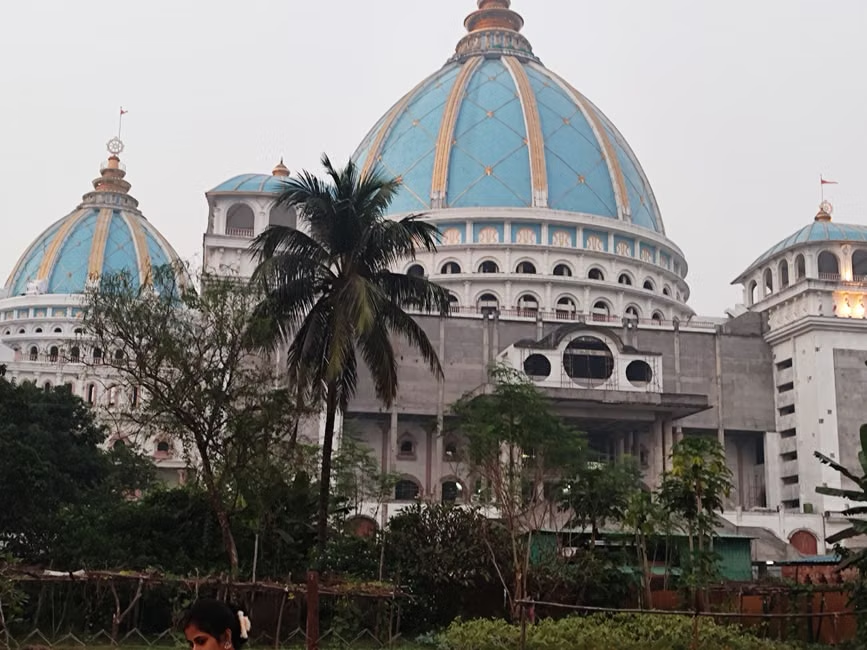
Mayapur Chandrodaya Mandir Pilgrim Complex
Compare Mayapur with Other Top Destinations
Frequently Asked Questions
Is Mayapur a good destination for a Durga Puja celebration or temple festival?
Yes, strongly so. Mayapur sits in the heart of West Bengal's Vaishnava and Bengali Hindu cultural belt, and the Nadia district has deep roots in devotional festival traditions. The ISKCON campus and surrounding temple precincts provide a naturally immersive setting for Durga Puja and other temple festivals, with experienced local priests, abundant ritual vendors, and a community atmosphere that amplifies the celebration's spiritual character.
What size of guest group can Mayapur realistically accommodate for a religious gathering?
Mayapur regularly hosts pilgrim congregations of thousands during major festivals, so the destination is genuinely experienced with large groups. For private events, the ISKCON campus can accommodate gatherings ranging from small family ceremonies of 50–100 guests to larger congregations of several hundred, particularly when using the campus's community dining halls and open courtyards. Very large private events may require coordinating accommodation across multiple guesthouses and lodges in the area.
How do guests typically travel to Mayapur for an event?
Most guests fly into Kolkata's Netaji Subhas Chandra Bose International Airport and then travel to Mayapur by road — approximately 3 to 4 hours. Alternatively, guests can take a train to Krishnanagar or Navadwip and complete the journey by road or a short boat crossing across the Ganges. Pre-arranged group transport from Kolkata is the most practical solution for large guest lists.
What is the best time of year to hold a spiritual gathering or religious family function in Mayapur?
November through February is the best period. The weather is cool and dry — typically 10°C to 25°C — making outdoor ceremonies, processions, and riverfront rituals comfortable for all age groups. The monsoon (June–September) brings flooding risk near the riverfront, and the pre-summer months (March–May) are hot and humid, making large outdoor gatherings physically demanding.
What kinds of event spaces are available in Mayapur for religious and cultural celebrations?
Mayapur's event spaces are primarily retreat-style and pilgrimage-campus venues — open courtyards, temple precincts, community dining halls, and riverfront ghats. The ISKCON campus is the dominant venue environment. There are no conventional luxury ballrooms or resort-style event lawns within Mayapur itself; groups needing that kind of infrastructure typically base guests in Kolkata or Krishnanagar and travel to Mayapur for ceremony days.
Is the food at Mayapur suitable for all guests at a large family gathering?
Mayapur's food culture is strictly sattvic vegetarian, reflecting its Vaishnava pilgrimage character. The ISKCON campus operates large-scale prasadam dining that can feed hundreds of guests with high-quality vegetarian meals. Non-vegetarian catering is generally not available within the main pilgrimage zone and would need to be sourced externally from Krishnanagar or Kolkata — event planners should factor this in early.
Are local priests and ritual specialists readily available for ceremonies in Mayapur?
Yes. Mayapur has an abundant and experienced community of pujaris, priests, and ritual specialists associated with the ISKCON campus and local temples. They are well-versed in a wide range of Hindu ceremonies — from naming ceremonies and annaprashan to elaborate multi-day religious functions — and can be engaged through the ISKCON administration or local contacts well in advance of the event.
What makes Mayapur particularly suited to a pilgrimage-style family gathering compared to a conventional event destination?
Mayapur offers something genuinely rare: a self-contained spiritual campus on the banks of the Ganges where accommodation, dining, ceremonial spaces, and ritual support are all within walking distance and oriented entirely around devotional life. For families whose gathering is as much about shared spiritual experience as celebration, this integrated environment is a meaningful advantage over a conventional hotel-based event.
How far in advance should I book for a large event in Mayapur, especially around festival periods?
For events coinciding with major festivals like Gaura Purnima or Janmashtami, booking 6–12 months in advance is strongly advisable — accommodation within the ISKCON campus and surrounding guesthouses fills very quickly during these periods. For events in the quieter winter months outside peak festival dates, 3–6 months of lead time is generally sufficient, though earlier is always better for large groups.
What local transport options are available for guests once they arrive in Mayapur?
Within the ISKCON campus and central Mayapur, most movement is on foot or by cycle-rickshaw. For guests staying in surrounding areas or needing to travel between Mayapur and Navadwip or Krishnanagar, auto-rickshaws and private vehicles are available. For large groups, pre-arranged private coaches or tempo travellers are the most reliable option — there is no formal public transit system within Mayapur itself.
Can Mayapur accommodate a community gathering or cultural festival with folk music and traditional performances?
Yes. The Nadia district has a living tradition of kirtan, Baul music, and Bengali Vaishnava folk arts, and local performers and cultural groups can be engaged for events. The open courtyards and community spaces of the ISKCON campus and surrounding areas are well-suited to folk performance settings. This makes Mayapur a genuinely strong choice for cultural festival gatherings that want authentic regional content rather than generic entertainment.

Ready to explore venues in Mayapur?
Mayapur: Spiritual Gatherings, Temple Festivals & Riverfront Event Venues
◆Mayapur, located in the Nadia district of West Bengal on the sacred confluence of the Ganges and Jalangi rivers, is India's foremost spiritual event destination. It is strongest for religious gatherings, temple festivals, Durga Puja celebrations, and pilgrimage-oriented family functions. The primary vibe is deeply Spiritual & Soulful, anchored by the global ISKCON headquarters and centuries of Vaishnava tradition. The best season to plan any event here is November through February, when the weather is cool, dry, and comfortable for large outdoor congregations. Accessibility is moderate — guests typically travel via Kolkata and then by road — making it most practical for committed devotee groups and spiritually motivated families rather than casual destination-event crowds.
Mayapur at a Glance
| Attribute | Detail |
|---|---|
| Best For | Durga Puja Celebration, Spiritual / Pilgrimage Gathering, Religious Family Function, Temple Festival |
| Primary Vibe | Spiritual & Soulful |
| Other Vibes | Cultural & Folk, Community-Centred, Riverfront Serene |
| Best Season | Winter (November–February) |
Why Choose Mayapur?
- Global spiritual landmark: Mayapur is the international headquarters of ISKCON and one of the most visited Vaishnava pilgrimage sites in the world, lending any event held here an unmatched sense of sacred significance and global recognition among devotee communities.
- Ganges riverfront setting: The confluence of the Ganges and Jalangi rivers provides a naturally sacred and visually striking backdrop for ceremonies, rituals, and open-air gatherings that no constructed venue can replicate.
- Proven large-congregation infrastructure: Mayapur regularly hosts tens of thousands of pilgrims during festivals like Gaura Purnima and Janmashtami, meaning the local ecosystem — from crowd management to prasadam (community dining) at scale — is genuinely experienced with large group events.
- Rich Nadia district cultural heritage: The broader Nadia region is the birthplace of Sri Chaitanya Mahaprabhu and carries deep Bengali Vaishnava folk traditions, including kirtan, classical devotional music, and local fair culture, all of which can authentically enrich a celebration.
- Dedicated pilgrim accommodation campus: The ISKCON campus itself offers a self-contained environment with guesthouses, dining halls, and event spaces, making it practical for groups who want everything within walking distance in a spiritually consistent environment.
- Relatively accessible from Kolkata: While not a short journey, Mayapur is reachable from Kolkata — a major international hub — within approximately 3–4 hours by road or a combination of train and road, making it viable for guests flying in from across India and abroad.
Which Celebrations Work Best in Mayapur?
- Durga Puja Celebration: West Bengal's most iconic festival finds a particularly resonant home in Mayapur, where the cultural and religious energy of the Nadia district amplifies the celebration. The riverfront setting and community-scale participation make Durga Puja here a genuinely immersive experience rather than a staged event.
- Spiritual / Pilgrimage Gathering: This is Mayapur's single strongest suit. Groups of devotees, spiritual seekers, and religious communities from across the world converge here regularly. The infrastructure, the temple environment, and the local hospitality ecosystem are all calibrated for exactly this kind of gathering.
- Religious Family Function: Naming ceremonies, sacred thread ceremonies, annaprashan (first rice-feeding), and other family rites of passage carry deep meaning when performed in Mayapur's temple precincts or on the banks of the Ganges. Families seeking a spiritually significant setting rather than a conventional banquet hall find Mayapur particularly compelling.
- Temple Festival: Mayapur's calendar is dense with temple festivals — Gaura Purnima, Janmashtami, Radhashtami, and more — and private groups can time their visit to coincide with these, or organise smaller dedicated temple-based celebrations with the support of local priests and the ISKCON administration.
- Cultural Festival Gathering: The Nadia district's folk and classical traditions — kirtan, Baul music, Bengali devotional arts — make Mayapur a natural venue for cultural festival gatherings that want authentic regional content rather than generic entertainment packages.
- Local Folk Festival / Fair: The area around Mayapur hosts traditional Bengali melas (fairs) and folk gatherings, particularly in the winter months, offering groups an opportunity to experience or incorporate genuine local folk culture into their event programming.
Venues & Event Spaces
Mayapur's event spaces are primarily retreat-style and pilgrimage-campus venues rather than conventional luxury hotel ballrooms. The dominant venue typology is the large, self-contained ashram or guesthouse complex — most notably within the ISKCON campus — which offers open courtyards, community dining halls, and temple precincts capable of accommodating gatherings ranging from intimate family ceremonies to congregations of several hundred. Outdoor lawns and riverfront ghats serve as natural ceremonial spaces for rituals, particularly those involving the Ganges. There are also smaller dharamshalas and pilgrim lodges in the surrounding area that can house overflow guests for larger events. For groups requiring more conventional banquet or conference infrastructure, the nearest significant options are in Krishnanagar or Kolkata, which some event planners use as a base for guests while scheduling day-visits or ceremony days in Mayapur itself. The venue character here is overwhelmingly spiritual and community-oriented — groups seeking grand ballrooms, rooftop cocktail terraces, or resort-style pool venues will need to look elsewhere.
Best Time to Celebrate
The winter months of November through February are unambiguously the best period for any event in Mayapur. Temperatures during this window typically range from around 10°C at night to the mid-20s°C during the day — genuinely comfortable for outdoor ceremonies, processions, and large open-air gatherings that are central to the Mayapur experience. Humidity drops significantly compared to the rest of the year, and rainfall is minimal, making outdoor riverfront events and temple courtyard functions reliably feasible.
The pre-summer months of March through May see temperatures climb rapidly, with April and May regularly reaching 38–40°C with high humidity — conditions that make large outdoor gatherings physically taxing and logistically complicated, particularly for elderly guests and children who form a significant part of most pilgrimage and family-function groups.
The monsoon season from June through September brings heavy rainfall to the Nadia district, and Mayapur's riverfront location makes it particularly vulnerable to flooding and waterlogging during peak monsoon months. Outdoor events are essentially impractical, and access roads can become difficult. This is the period most strongly to avoid for any planned celebration.
October is a transitional month — the monsoon typically retreats, but residual humidity and occasional late rains mean it is not yet reliably comfortable. Durga Puja itself falls in October (or occasionally late September), and while the festival atmosphere is electric, event planners should be prepared for unpredictable weather and very high local footfall that can strain accommodation and logistics.
Getting There & Local Connectivity
The primary gateway for guests travelling to Mayapur from outside West Bengal is Kolkata's Netaji Subhas Chandra Bose International Airport, which is well-connected to major Indian cities and several international destinations. From Kolkata, guests typically travel to Mayapur by road — a journey of roughly 3 to 4 hours depending on traffic and route — or by a combination of train to Krishnanagar or Navadwip and then a short road or boat transfer to Mayapur. The boat crossing from Navadwip to Mayapur across the Ganges is a short but memorable part of the journey for many pilgrims.
Within Mayapur itself, the ISKCON campus is compact and largely walkable for guests staying on-site. For guests staying in surrounding areas, cycle-rickshaws, auto-rickshaws, and private vehicles are the primary modes of local transport. There is no metro or formal public transit system within Mayapur. For large groups, pre-arranged private coaches or tempo travellers from Kolkata or Krishnanagar are the most practical solution. Event planners should factor in the road transfer time and coordinate group transport carefully, particularly for elderly or mobility-limited guests.
Local Vendor & Hospitality Ecosystem
Mayapur's hospitality ecosystem is purpose-built for pilgrimage and religious gatherings rather than for conventional wedding or corporate event production. The ISKCON campus operates its own large-scale prasadam (vegetarian community dining) facilities that can feed thousands of guests — a genuine logistical strength for large religious gatherings. Local catering is predominantly sattvic vegetarian, reflecting the Vaishnava tradition of the area; groups requiring non-vegetarian catering will need to source it from outside Mayapur, as it is generally not available within the main pilgrimage zone.
Priests, pujaris, and ritual specialists are readily available and experienced in conducting a wide range of Hindu ceremonies, from simple family pujas to elaborate multi-day religious functions. Local vendors for flowers, garlands, ritual materials, and devotional items are plentiful and affordable. However, vendors for conventional event production — professional lighting rigs, sound systems for large concerts, luxury décor, or Western-style catering — are limited locally and would typically need to be brought in from Kolkata or Krishnanagar. Event planners working on larger or more production-intensive celebrations should build in additional lead time and logistics for this.
Pros & Things to Consider
Why Mayapur Works Well
- Unmatched spiritual atmosphere and sacred significance for devotee communities and religious families
- Ganges riverfront provides a naturally powerful ceremonial setting for rituals and gatherings
- Proven infrastructure for large pilgrim congregations — community dining, crowd management, and on-campus accommodation are genuinely experienced
- Rich local supply of priests, ritual specialists, and devotional vendors at accessible rates
- Winter weather (November–February) is genuinely comfortable for outdoor events and large gatherings
- Strong cultural programming options through local kirtan, folk music, and Bengali Vaishnava traditions
Things to Consider
- Accommodation options are predominantly retreat-style and pilgrim-grade — guests expecting luxury hotel amenities will find the local inventory limited
- Strictly vegetarian food culture within the main pilgrimage zone; non-vegetarian catering requires external sourcing
- Road transfer from Kolkata adds 3–4 hours to most guests' journeys, which can be tiring for large groups with elderly members
- Peak festival periods (Gaura Purnima, Janmashtami) bring very high footfall that can strain local accommodation and transport — early booking is essential
- Conventional event production vendors (luxury décor, professional AV, non-devotional entertainment) are not locally abundant and must be sourced from Kolkata
- Monsoon season (June–September) and the riverfront location create genuine flooding risk — event planning must account for seasonal vulnerability
When Mayapur May Not Be the Right Fit
- Guests expecting luxury resort amenities: If your guest list expects five-star hotel facilities, spa services, rooftop bars, or resort-style pools as part of the event experience, Mayapur's current accommodation inventory will not meet those expectations — a different destination would serve better.
- Non-vegetarian or mixed-diet groups: The strictly sattvic vegetarian food culture of Mayapur's pilgrimage zone is a genuine constraint for groups where non-vegetarian catering is important to the celebration — this is not a minor logistical workaround but a fundamental character of the destination.
- Outdoor events planned during monsoon months (June–September): Mayapur's riverfront location makes it particularly susceptible to flooding and waterlogging during the monsoon. Any event with significant outdoor components during this period faces real weather and access risk.
- Groups needing large-scale conventional event production: If your celebration requires elaborate stage production, professional concert-scale sound and lighting, or a wide range of non-devotional entertainment vendors, the local ecosystem will require significant external sourcing from Kolkata, adding complexity and cost that may make a more event-infrastructure-rich destination a more practical choice.