
Why Mandawa is Perfect for Your Celebration
- Iconic frescoed havelis converted into heritage hotels provide a one-of-a-kind palace wedding backdrop
- Compact, walkable town centre creates an immersive, exclusive feel for intimate guest groups
- Authentic Shekhawati folk traditions — kalbeliya dance, puppetry, camel processions — enrich celebrations naturally
- Teej and Gangaur festivals are celebrated with particular vibrancy here, making cultural event timing highly rewarding
- Cool, dry winters (November–February) deliver near-perfect outdoor event conditions in the desert
- Heritage property courtyards and rooftop terraces offer naturally photogenic event spaces with no artificial theming needed
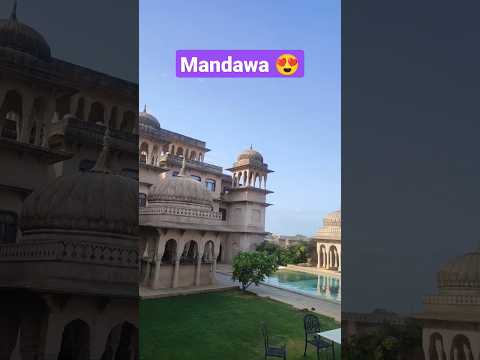
Top Venues in Mandawa
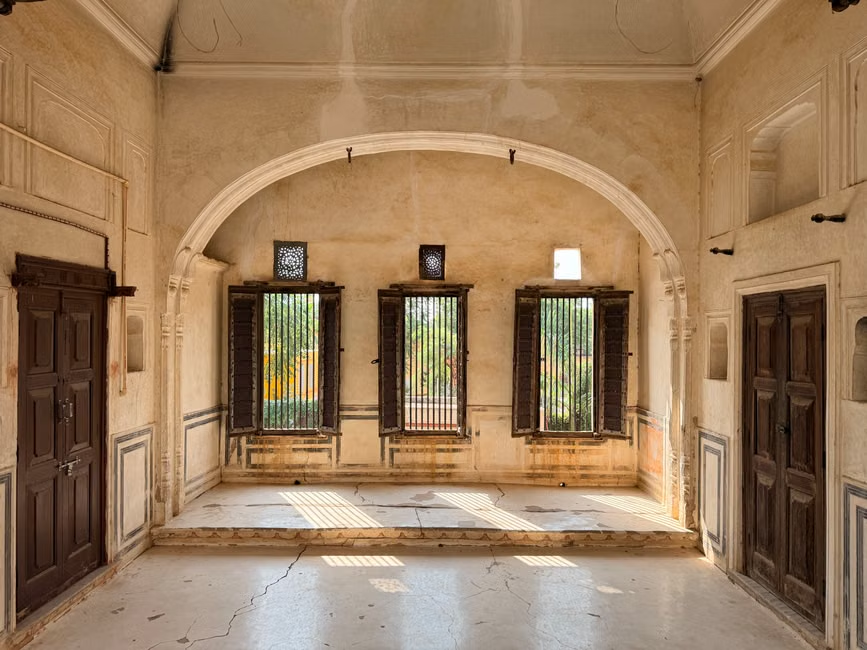
Castle Mandawa
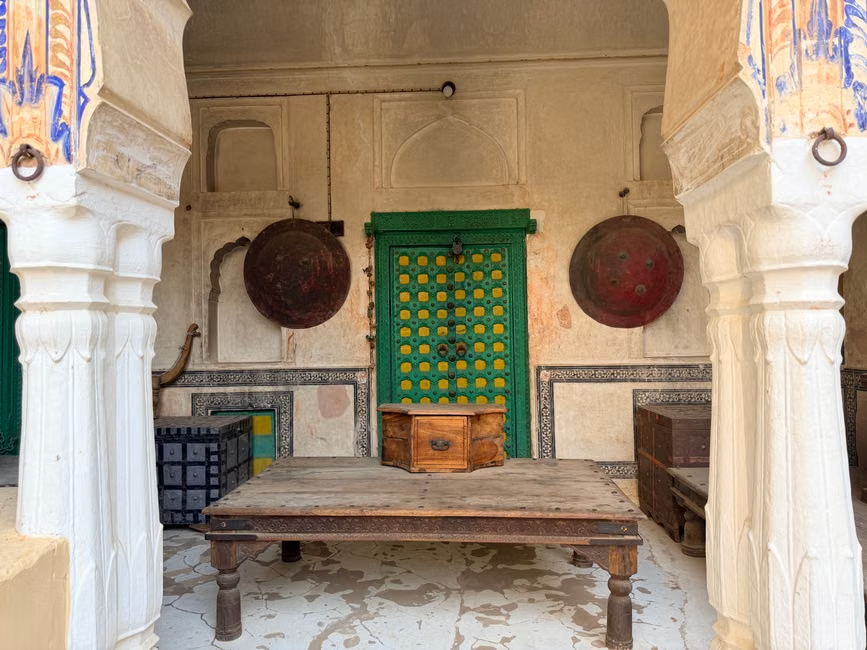
Hotel Mandawa Haveli
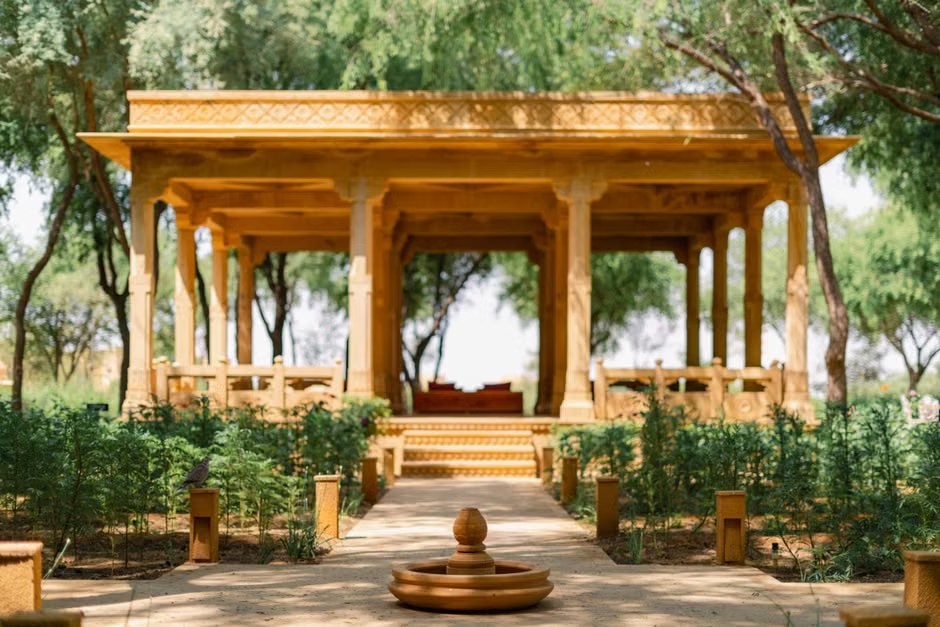
Desert Resort Mandawa
Compare Mandawa with Other Top Destinations
Frequently Asked Questions
Is Mandawa a good destination for a palace-style heritage wedding?
Yes. Mandawa is particularly well-suited to palace and heritage weddings. Its frescoed havelis and historic castle-style properties offer genuinely historic settings — ornate courtyards, rooftop terraces, and painted interiors — that provide an authentic Rajasthani backdrop without requiring artificial theming. It works best for intimate to mid-sized guest groups rather than very large gatherings.
What guest group sizes can Mandawa venues realistically accommodate?
Mandawa's heritage properties are generally best suited to events of roughly 50 to 300 guests. The courtyard and rooftop spaces of converted havelis and castle hotels are intimate by design. For very large guest lists of 400 or more, the local venue inventory may feel constraining, and couples should assess specific properties carefully before committing.
What is the best time of year to hold a wedding or celebration in Mandawa?
November through February is the strongly recommended window. Temperatures are cool and dry, outdoor evening events are comfortable, and the desert light is particularly beautiful. The broader Rajasthani wedding and festival season also peaks during this period, meaning local vendors and folk performers are active and well-supplied.
How do guests typically travel to Mandawa for a destination event?
Most guests fly into Jaipur International Airport and travel to Mandawa by road — a journey of approximately three to four hours. By rail, the nearest station is Jhunjhunu, roughly 30 kilometres away, with connections to Jaipur, Delhi, and Bikaner. Coordinated road transfers from Jaipur or Jhunjhunu are the standard approach for event groups.
Is Mandawa suitable for celebrating Teej or Gangaur festivals?
Yes, and it is one of the stronger choices in Rajasthan for this purpose. The Shekhawati region observes Teej and Gangaur with genuine community participation — processions, traditional dress, folk music, and rituals. Timing a family gathering or pre-wedding celebration around these festivals in Mandawa adds authentic cultural depth that is difficult to replicate in more commercialised destinations.
What kinds of event spaces are available in Mandawa?
The venue landscape is dominated by heritage properties — converted havelis and castle-style hotels offering open courtyards, rooftop terraces, indoor banquet halls, and garden lawns. Desert-edge resort spaces on the town's outskirts provide more operational flexibility for larger setups. Mandawa does not have large-scale convention or modern banquet infrastructure; the inventory is genuinely heritage-focused.
Can I find local folk performers and traditional vendors for my event in Mandawa?
Yes. Kalbeliya dancers, puppeteers, dhol and shehnai musicians, and traditional Rajasthani caterers are locally available and experienced in working within heritage event settings. For more elaborate production requirements — specialist lighting, international catering, high-end AV — vendors are typically brought in from Jaipur, which is a standard and well-understood practice for Mandawa events.
How does accommodation work for a large guest group in Mandawa?
Heritage hotels in Mandawa can typically be partially or fully taken over for multi-day events, which suits the destination wedding format well. However, the total room inventory across the town is limited. For larger guest groups, planners often arrange accommodation across multiple properties and organise shuttle transfers between them — advance planning and early booking are important.
Is Mandawa suitable for a welcome dinner or pre-wedding celebration?
Yes, and it is one of the most effective uses of the destination. A welcome dinner in a haveli courtyard — with folk performers, traditional lanterns, and Rajasthani cuisine — sets a strong cultural tone for a multi-day celebration. The setting provides atmosphere naturally, reducing the need for elaborate imported theming.
What should I be aware of when planning an outdoor event in Mandawa?
Outdoor events are best planned strictly within the November–February window. Outside this period, desert heat (often exceeding 38–40°C from April onwards) makes outdoor celebrations impractical. Even in winter, evenings can be cool enough to warrant light wraps for guests. Dust storms (andhi) are a risk in summer months and should factor into any contingency planning for events outside the recommended season.
Does Mandawa work well for a multi-day destination wedding format?
Yes. Mandawa's compact heritage character, the availability of full property takeovers at heritage hotels, and the richness of local cultural programming make it well-suited to multi-day destination weddings. Guests who are immersed in the town's haveli architecture, folk traditions, and desert landscape tend to find the destination itself becomes part of the celebration experience.

Ready to explore venues in Mandawa?
Mandawa: Heritage Haveli Weddings, Festivals & Celebration Venues in Shekhawati
◆Mandawa is a compact heritage town in Rajasthan's Shekhawati region, best suited to intimate weddings, palace-style receptions, and culturally rooted celebrations such as Teej and Gangaur. Its primary vibe is Royal and Heritage, defined by ornately frescoed havelis and desert courtyard settings rather than large-scale luxury resort infrastructure. The town works best for guest groups of roughly 50–300, and is most accessible by road from Jaipur. Winter (November–February) is the clear event season. Mandawa is a genuinely distinctive, atmosphere-rich destination for couples and families who prioritise authenticity and cultural immersion over scale or metropolitan convenience.
Mandawa at a Glance
| Category | Details |
|---|---|
| Best For | Teej & Gangaur Celebration, Palace / Heritage Wedding, Intimate Wedding, Wedding Reception |
| Primary Vibe | Royal & Heritage |
| Other Vibes | Desert Folk, Cultural & Festive, Rustic Elegance |
| Best Season | Winter (November–February) |
Why Choose Mandawa?
- Unmatched haveli architecture: Mandawa's havelis — many converted into heritage hotels — feature some of the finest surviving fresco art in Rajasthan, providing a naturally theatrical backdrop that no purpose-built venue can replicate.
- Authentic Shekhawati folk culture: Kalbeliya dancers, puppeteers, camel processions, and traditional Rajasthani musicians are locally available and deeply rooted in the region's living culture, not imported as a performance package.
- Intimate scale by design: The town's compact geography and the courtyard-centred layout of its heritage properties naturally favour smaller, curated guest lists, giving events a genuinely exclusive character.
- Teej and Gangaur festival alignment: These festivals are celebrated with particular colour and community participation in the Shekhawati region, making Mandawa one of the more rewarding places in Rajasthan to time a cultural celebration around them.
- Relatively uncrowded compared to larger Rajasthani cities: Mandawa receives far fewer mass-market tourists than Jaipur or Udaipur, which means event groups typically have heritage spaces more to themselves and local hospitality is more attentive.
- Road connectivity from Jaipur is straightforward: The drive from Jaipur is manageable for guests arriving by air, and the route passes through scenic Shekhawati countryside, which many guests find adds to the destination experience.
Which Celebrations Work Best in Mandawa?
Teej & Gangaur Celebration: Mandawa and the broader Shekhawati region observe these festivals with genuine community fervour — processions, traditional dress, folk music, and rituals that families can participate in rather than merely observe. Timing a family gathering or pre-wedding celebration around these festivals adds a layer of cultural meaning that is difficult to replicate elsewhere.
Palace / Heritage Wedding: The frescoed courtyards, arched corridors, and rooftop terraces of Mandawa's heritage properties are purpose-made for a palace-style wedding aesthetic. Couples seeking a genuinely historic setting — rather than a modern hotel decorated to look historic — will find Mandawa particularly compelling.
Intimate Wedding: Mandawa's venue scale and town character are naturally suited to smaller weddings of 50–200 guests. The intimacy is structural, not just stylistic — heritage courtyards and haveli spaces work best when they are not overcrowded, and the local hospitality ecosystem is calibrated to this scale.
Wedding Reception: Rooftop terraces and open courtyards lit with traditional lanterns and marigold décor make for highly atmospheric reception settings, particularly on clear winter evenings when temperatures are comfortable and the desert sky is vivid.
Destination Wedding: For couples whose guest list is largely from outside Rajasthan, Mandawa offers a genuinely immersive destination experience — guests are not just attending a wedding but spending time in a living heritage town, which makes the multi-day destination wedding format feel purposeful and memorable.
Welcome Dinner / Pre-Wedding Celebration: A welcome dinner in a haveli courtyard, with folk performers and traditional Rajasthani cuisine, is one of the most effective ways to set the tone for a multi-day celebration in Mandawa. The setting does much of the atmospheric work without requiring elaborate theming.
Cultural Festival Gathering: Mandawa's position in the Shekhawati region — historically a prosperous merchant belt with a rich tradition of arts patronage — makes it a natural venue for cultural gatherings, heritage walks, and community celebrations that go beyond a standard event format.
Venues & Event Spaces
Mandawa's event venue landscape is defined almost entirely by heritage properties — converted havelis and historic castle-style hotels that offer a combination of indoor banquet halls, open courtyards, rooftop terraces, and garden lawns. These spaces are characterised by thick sandstone walls, ornate painted ceilings, and traditional Rajasthani architectural detailing that provides a ready-made event aesthetic.
Outdoor lawns and desert-edge resort spaces are also available on the town's outskirts, offering more flexibility for larger setups, stage arrangements, and catering logistics. These tend to be less architecturally dramatic than the in-town haveli properties but provide more operational space for larger guest counts or elaborate mandap and stage configurations.
Rooftop terraces are a particular strength of Mandawa's heritage properties — they offer panoramic views over the town's roofscape and are especially effective for evening receptions and welcome dinners during the winter months. Most heritage venues in Mandawa are independently operated and can be taken over partially or fully for a multi-day event, which suits the destination wedding format well.
Couples and planners should note that Mandawa does not have the large-scale convention or banquet infrastructure of a major city — the venue inventory is genuinely heritage-focused and intimate in character, which is a strength for the right event type but a real constraint for very large guest lists.
Best Time to Celebrate
November through February is the clear window for events in Mandawa. Daytime temperatures during this period typically range from around 10°C to 25°C, with cool, dry evenings that are well-suited to outdoor courtyard and rooftop celebrations. The air is clear, the light is warm and golden, and the desert landscape is at its most visually appealing. This is also the period when Rajasthan's broader wedding and festival season is in full swing, meaning local vendors, decorators, and folk performers are active and well-supplied.
March and April represent a transitional shoulder period — daytime temperatures begin climbing sharply, and while early March can still be manageable, outdoor evening events become increasingly uncomfortable by April. This period is generally not recommended for outdoor-heavy celebrations.
May and June bring intense dry heat, with temperatures regularly exceeding 40°C in the Shekhawati desert. Outdoor events are essentially impractical, and even indoor spaces in heritage properties — which often lack modern air conditioning — can be uncomfortable for guests.
July through September is the monsoon-adjacent period. While Mandawa receives less rainfall than wetter parts of Rajasthan, the heat remains high, humidity increases, and occasional dust storms (andhi) can disrupt outdoor setups. This is the least suitable period for events.
October is a transitional month — temperatures begin to ease but can still be warm enough to make outdoor evening events uncomfortable. It is generally considered a shoulder month rather than a reliable event window, though late October can work for indoor-focused celebrations.
Getting There & Local Connectivity
Mandawa does not have its own commercial airport. The most practical air gateway is Jaipur International Airport, from which Mandawa is reachable by road in approximately three to four hours depending on traffic and route. This road journey is well-established and passes through the scenic Shekhawati countryside, which many guests find adds to the destination experience rather than detracting from it.
By rail, the nearest functional station is Jhunjhunu, which is connected to Jaipur, Delhi, and Bikaner. From Jhunjhunu, Mandawa is a short road transfer of roughly 30 kilometres. Some guests travelling from Delhi may also find the Sikar or Churu rail routes useful depending on their specific origin point.
For event groups, the most practical approach is typically to arrange coordinated road transfers from Jaipur airport or Jhunjhunu station — private coaches, tempo travellers, or car convoys are all commonly used for this route. Local transport within Mandawa itself is limited; the town is compact enough to walk across, but guests staying at properties on the outskirts will benefit from organised shuttle arrangements between venues and accommodation.
Mobile connectivity in Mandawa is generally adequate for basic communication but should not be assumed to be uniformly strong across all heritage properties — older haveli buildings with thick walls can affect indoor signal quality. Event planners should verify connectivity at specific venues in advance, particularly if live-streaming or digital coordination is part of the event plan.
Local Vendor & Hospitality Ecosystem
Mandawa has a well-established, if modestly scaled, hospitality ecosystem built around heritage tourism and the Rajasthani wedding circuit. Local vendors — including traditional caterers specialising in Rajasthani cuisine, folk performers, floral decorators, and dhol and shehnai musicians — are genuinely available and experienced in working within heritage event settings.
For more elaborate production requirements — large lighting rigs, international catering styles, high-end audio-visual setups, or specialist wedding photographers — planners typically bring vendors in from Jaipur or Delhi. This is a standard and well-understood practice for Mandawa events, and the road access from Jaipur makes vendor logistics manageable.
Heritage hotel staff in Mandawa generally have multi-generational experience hosting guests and events, and the hospitality character tends to be warm, personalised, and attentive — a natural fit for intimate celebrations where guest experience matters more than operational scale. Couples working with a Jaipur- or Delhi-based wedding planner who has prior Mandawa experience will typically find the coordination process smoother than attempting to source everything locally from scratch.
Pros & Things to Consider
Why Mandawa Works Well
- Genuinely historic haveli and castle settings that provide authentic atmosphere without artificial theming
- Intimate scale suits smaller, curated guest lists and multi-day destination wedding formats
- Rich local folk culture — music, dance, craft — integrates naturally into celebrations
- Teej and Gangaur festival timing creates unique opportunities for culturally layered events
- Relatively uncrowded compared to major Rajasthani cities, giving event groups more exclusive access to spaces
- Cool, clear winter weather makes outdoor evening events genuinely comfortable and visually beautiful
Things to Consider
- No commercial airport in Mandawa — guests must travel by road from Jaipur (approximately 3–4 hours), which adds a logistical layer for large or geographically dispersed guest lists
- Venue capacity is limited — heritage properties are not designed for very large guest counts, and couples expecting 400+ guests may find the local inventory constraining
- Modern amenities (consistent air conditioning, high-speed Wi-Fi, large conference or AV infrastructure) are not uniformly available across heritage properties
- Specialist vendors for high-production events typically need to be sourced from Jaipur or Delhi and transported in, adding coordination complexity
- The town's limited commercial infrastructure means guests have fewer independent dining, shopping, or entertainment options outside the event programme itself — the destination works best when the event itself is the primary experience
When Mandawa May Not Be the Right Fit
- Very large guest lists (400+): Mandawa's heritage venue inventory is genuinely suited to intimate and mid-sized events. Couples expecting a very large guest count will likely find the available spaces insufficient without significant compromise on the heritage character that makes Mandawa distinctive.
- Guests with limited travel flexibility: The absence of a nearby commercial airport means all guests must commit to a road journey of several hours from Jaipur. For elderly guests, guests with mobility considerations, or international guests on tight schedules, this transfer can be a meaningful barrier.
- Events planned for summer (April–June): The desert heat during these months makes outdoor celebrations impractical and can make even indoor heritage spaces uncomfortable. Couples with fixed summer dates would be better served by a different destination or a venue with robust climate control.
- Couples seeking large-scale luxury resort infrastructure: Mandawa's strengths are heritage and authenticity, not the kind of full-service luxury resort amenities — spa facilities, multiple dining outlets, large pool areas, high-end fitness centres — that some destination wedding couples prioritise. Those requirements are better met by larger Rajasthani cities with a broader hotel inventory.