
Why Madurai is Perfect for Your Celebration
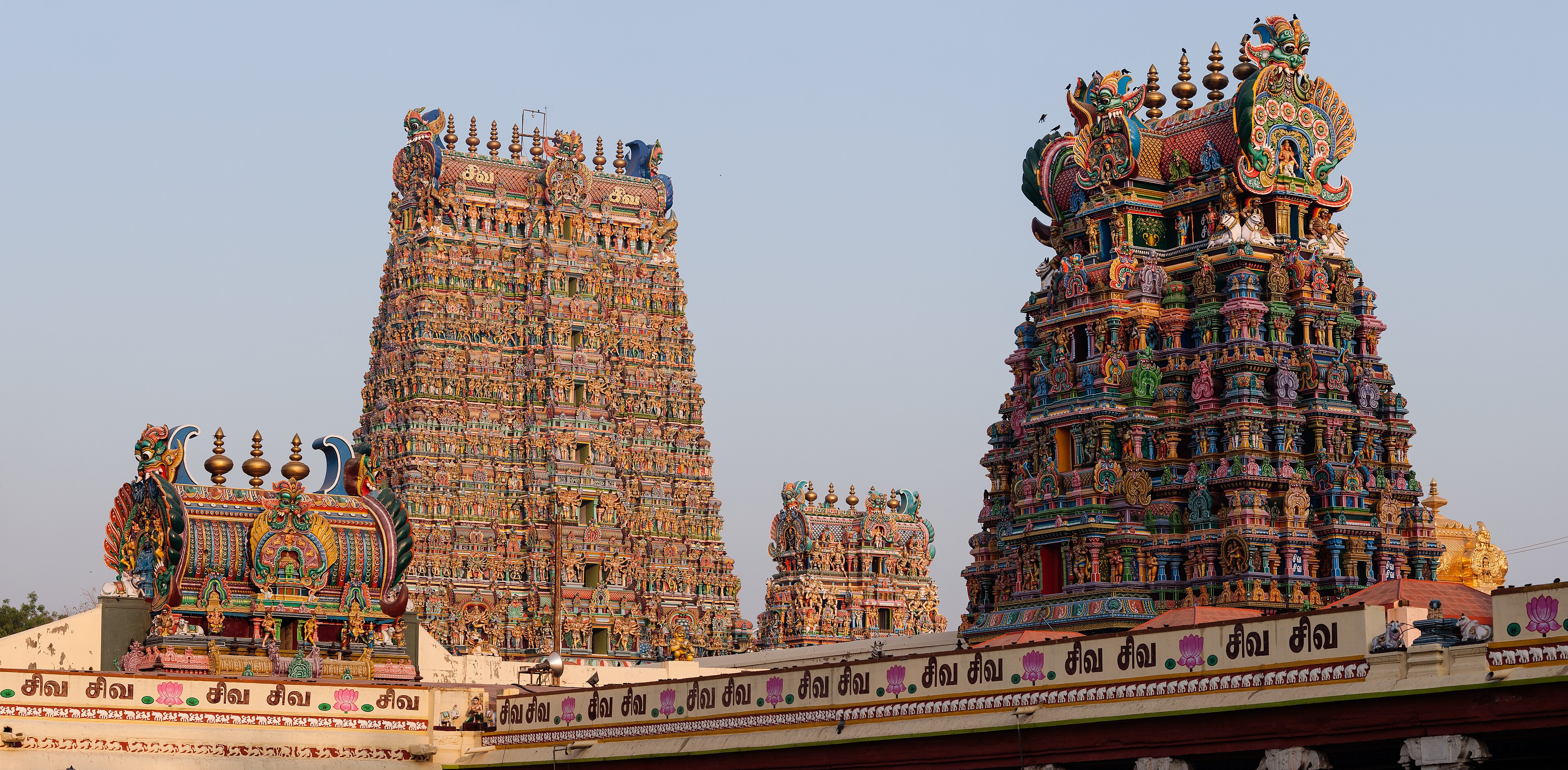
- Home to the iconic Meenakshi Amman Temple — a living, active sacred site that lends unmatched spiritual gravitas to temple weddings and religious gatherings
- One of South India's most experienced cities for large-scale festival events, including the famous Chithirai Festival and Pongal celebrations
- Strong local vendor ecosystem — experienced caterers, floral decorators, nadaswaram musicians, and traditional ritual specialists deeply familiar with Tamil ceremonies
- Well-connected by air (Madurai Airport, IXM) and rail (Madurai Junction, MDU), making guest travel manageable from across Tamil Nadu and beyond
- Heritage mandapams and modern banquet halls offer flexible capacity for intimate family ceremonies as well as large community gatherings
- Pleasant winter climate (November–February) creates comfortable conditions for multi-day outdoor and semi-outdoor celebrations
Top Venues in Madurai
Taj Gateway Hotel Madurai
Courtyard by Marriott Madurai
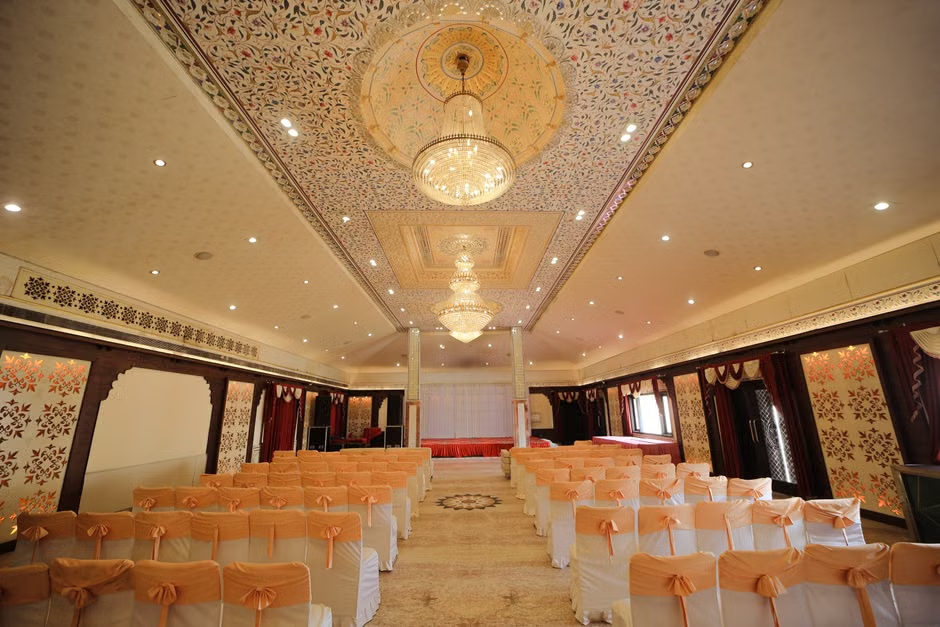
Fortune Pandiyan Hotel
Compare Madurai with Other Top Destinations
Frequently Asked Questions
Is Madurai a good destination for a temple wedding?
Yes. Madurai is among South India's strongest destinations for temple weddings. The city's sacred landscape, centred on the Meenakshi Amman Temple, provides an unmatched spiritual setting. Local priests, ritual specialists, nadaswaram musicians, and traditional caterers are all experienced in Tamil wedding ceremonies, making end-to-end coordination of a traditional temple wedding genuinely straightforward here.
What is the best time of year to hold an event in Madurai?
November through February is the recommended window. Temperatures are cooler and conditions are drier, making both outdoor and indoor events comfortable. March onwards brings significant heat, and October–November can see residual northeast monsoon rainfall. For events tied to the Chithirai Festival, April–May is culturally significant but requires careful planning around the heat.
How easy is it for guests to travel to Madurai from other cities?
Generally straightforward. Madurai Airport (IXM) has direct flights from Chennai, Bengaluru, Mumbai, and other major cities. Madurai Junction (MDU) is one of Tamil Nadu's busiest railway stations, well-connected to Chennai, Coimbatore, and Trichy. Road access is also strong. Most guests from within South India can reach Madurai without a connecting journey.
Can Madurai handle large festival-format gatherings like Chithirai or Pongal events?
Yes. Madurai is the home of the Chithirai Festival and has hosted large-scale community and festival gatherings for centuries. The city's event infrastructure — mandapams, banquet halls, catering networks, and local organisers — is genuinely calibrated for multi-day, large-group festival formats in a way that smaller cities typically are not.
What kinds of event venues are available in Madurai?
Madurai offers heritage mandapams with traditional Tamil architecture, modern air-conditioned banquet halls, hotel ballrooms and outdoor lawns, and temple-adjacent open spaces suitable for processions and community gatherings. The inventory covers a wide range of guest sizes, generally from around 100 to 500 guests for a seated function, with flexibility across formats.
Is Madurai suitable for a spiritual or pilgrimage-linked family gathering?
Yes, particularly so. Madurai is one of South India's most significant pilgrimage cities. Families organising satsangs, spiritual retreats, or gatherings tied to a temple visit will find the city's sacred geography, experienced local priests, and accommodation options well-suited to this format. The Meenakshi Amman Temple's active ritual calendar provides a natural anchor for such events.
How should a large guest group manage local transport once they arrive in Madurai?
For groups, pre-arranged coach or minibus transfers coordinated through a local event manager or travel agent are the most practical option. The city centre is compact, and most venues and the temple are within manageable distance of the main hotel clusters. Auto-rickshaws and app-based cabs are available for smaller groups or individual guests moving independently.
What makes Madurai's local vendor ecosystem well-suited to traditional Tamil celebrations?
Madurai has an unbroken tradition of hosting large family and community events. Caterers experienced in banana-leaf feast formats, nadaswaram musicians, Kolam artists, floral decorators, and ritual specialists are all locally available and deeply familiar with Tamil ceremony requirements — not imported from Chennai. This depth of local expertise is a genuine advantage for culturally authentic events.
Is Madurai a good fit for a Pongal celebration or community gathering?
Yes. Pongal is celebrated with strong community spirit in Madurai, and the city's caterers, event spaces, and local organisers are experienced in traditional Pongal feast and gathering formats. For families or communities wishing to mark Pongal with a large, culturally authentic gathering, Madurai offers both the right atmosphere and the practical infrastructure to support it.
How far in advance should I book venues and accommodation for a Madurai event?
For events during the peak winter season (November–February) or around major festival dates like Chithirai (April–May), booking at least four to six months in advance is advisable. Accommodation in particular can become constrained during festival periods when the city sees very high visitor volumes. Early coordination with a local event manager is strongly recommended.
What guest group sizes can Madurai's venues realistically support?
Most established mandapams and hotel event spaces in Madurai comfortably accommodate between 150 and 500 guests for a seated function. Larger community gatherings of 500 to 1,000 guests are feasible using a combination of spaces or larger mandapams, though this requires more detailed advance planning. Very intimate gatherings of under 100 guests are also well-served by smaller heritage mandapams.
Are there any genuine limitations to planning a celebration in Madurai?
Yes. The luxury accommodation inventory, while genuine, is smaller than in larger metro destinations — very large guest lists requiring premium rooms across a single property may need to spread across multiple hotels. The city's dense urban character and predominantly Tamil-language environment can add complexity for guest groups unfamiliar with South India. Heat from March to May also limits outdoor event formats significantly.

Ready to explore venues in Madurai?
Madurai: Temple Weddings, Festival Gatherings & Spiritual Event Venues
◆Madurai is Tamil Nadu's foremost destination for spiritually rooted celebrations — temple weddings, festival gatherings, pilgrimage events, and large religious family functions. Its primary vibe is Spiritual & Soulful, anchored by the living sacred culture surrounding the Meenakshi Amman Temple. The best season to plan is November through February, when the climate is cooler and dry. Guest accessibility is strong, with a domestic airport and a major railway junction both serving the city. The local vendor and hospitality ecosystem is mature and deeply experienced in traditional Tamil ceremonies, making Madurai particularly well-suited for events where cultural authenticity matters as much as logistics.
Madurai at a Glance
| Attribute | Detail |
|---|---|
| Best For | Chithirai Festival Gathering, Pongal Celebration, Temple Festival, Spiritual / Pilgrimage Gathering |
| Primary Vibe | Spiritual & Soulful |
| Other Vibes | Cultural & Heritage, Community & Family-Centred |
| Best Season | Winter (November–February) |
Why Choose Madurai?
- A living sacred landscape: The Meenakshi Amman Temple is not a backdrop — it is an active, functioning centre of Tamil religious life. Celebrations held in or around it carry a spiritual weight that purpose-built event venues simply cannot replicate.
- Deep festival infrastructure: Madurai has hosted the Chithirai Festival — one of South India's largest temple festivals — for centuries. The city's logistics, crowd management, and vendor networks are genuinely calibrated for large-scale, multi-day gatherings in ways that smaller cities are not.
- Experienced traditional vendors: Nadaswaram ensembles, Kolam artists, traditional caterers specialising in Tamil Brahmin and non-Brahmin feast formats, and ritual specialists are all locally available and experienced — not imported from Chennai at a premium.
- Flexible venue inventory: Heritage mandapams, modern air-conditioned banquet halls, hotel lawns, and open-air temple-adjacent spaces together cover a wide range of guest sizes and ceremony formats.
- Solid multi-modal connectivity: Madurai Airport (IXM) handles direct flights from several major Indian cities, and Madurai Junction (MDU) is one of Tamil Nadu's busiest railway stations — guests can arrive by air, rail, or road without significant difficulty.
- Authentic Tamil cultural immersion: For families seeking a celebration that is genuinely rooted in Tamil tradition — the food, the music, the rituals, the architecture — Madurai offers an authenticity that is difficult to replicate in more cosmopolitan or resort-oriented destinations.
Which Celebrations Work Best in Madurai?
- Chithirai Festival Gathering: Madurai is the home of the Chithirai Festival, celebrated at the Meenakshi Amman Temple each April–May. Families and communities who wish to organise gatherings, reunions, or cultural programmes around this festival will find the city's infrastructure, accommodation, and local knowledge uniquely suited to the occasion.
- Pongal Celebration: Pongal — Tamil Nadu's harvest festival — is celebrated with particular warmth and community spirit in Madurai. The city's strong family and community networks, combined with experienced caterers and event organisers familiar with traditional Pongal formats, make it an excellent base for large family Pongal gatherings.
- Temple Festival: Beyond Chithirai, Madurai's temple calendar is rich year-round. Families wishing to organise celebrations tied to specific temple festivals — processions, abhishekams, or community feasts — will find local organisers who understand these formats intimately.
- Spiritual / Pilgrimage Gathering: Madurai is one of South India's most significant pilgrimage cities. Groups organising spiritual retreats, satsangs, or pilgrimage-linked family gatherings will find the city's sacred geography, accommodation options, and local knowledge genuinely supportive.
- Cultural Festival Gathering: Madurai has a strong tradition of classical Tamil music, Bharatanatyam, and folk arts. Cultural festival gatherings — whether centred on a performance, a heritage walk, or a multi-day arts programme — fit naturally into the city's identity and available spaces.
- Religious Family Function: Upanayanams, ear-piercing ceremonies, annaprashanams, and other Tamil religious family milestones are handled with great expertise by Madurai's local priests, caterers, and mandapam operators. The city is a natural home for these events.
Venues & Event Spaces
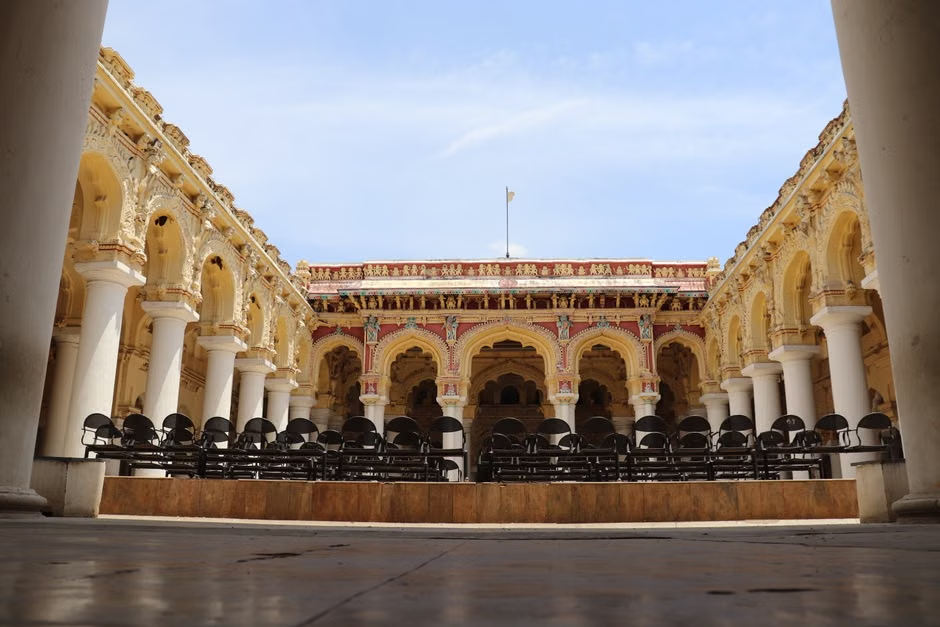
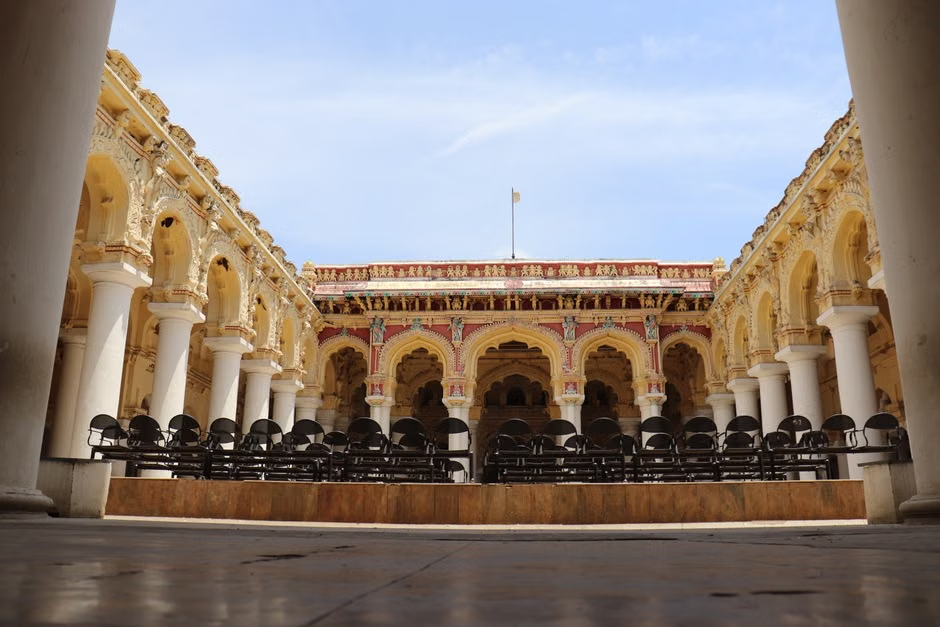
Madurai's venue landscape is shaped by its identity as a temple city and a major regional centre. The most distinctive spaces are heritage mandapams — traditional Tamil event halls, often with ornate pillared architecture, that have hosted family celebrations for generations. These range from modest neighbourhood mandapams to larger, well-maintained heritage properties capable of hosting several hundred guests.
The city also has a growing stock of modern banquet halls and hotel event spaces, including properties affiliated with national and international hotel groups, which offer air-conditioned ballrooms, outdoor lawns, and full catering infrastructure. These are particularly useful for multi-day events where guests need on-site accommodation alongside event facilities.
For outdoor celebrations, hotel lawns and garden spaces are available and work well during the winter season. Temple-adjacent open spaces, while not privately bookable in the conventional sense, provide an atmospheric setting for processions and community gatherings that are part of larger festival events. Overall, the venue inventory is well-suited to mid-to-large guest lists, with most properties comfortably accommodating between 150 and 500 guests for a seated function.
Best Time to Celebrate
November through February is the clear best window for events in Madurai. Temperatures during this period typically range from around 20°C at night to 30°C during the day — genuinely comfortable for outdoor ceremonies, processions, and multi-day gatherings. The air is drier, the light is clear, and the city is at its most hospitable for guests travelling from other parts of India.
March and April see temperatures begin to climb sharply, often reaching 38°C or above by May. Outdoor events become physically demanding for guests, and the heat can affect food safety, floral arrangements, and general comfort in ways that are difficult to mitigate. The Chithirai Festival falls in April–May — so while this is a peak cultural moment, planners should account for the heat when designing event formats and scheduling outdoor elements.
The northeast monsoon, which typically affects Madurai from October through December, can bring heavy and unpredictable rainfall — particularly in October and November. Early November can still see residual monsoon activity, so events planned for November should build in contingency for indoor alternatives. By mid-to-late November, conditions are generally more settled.
June through September sees lower rainfall than the northeast monsoon period but remains warm and humid. This is generally the least favourable window for large outdoor events, though indoor banquet-format functions remain feasible year-round.
Getting There & Local Connectivity
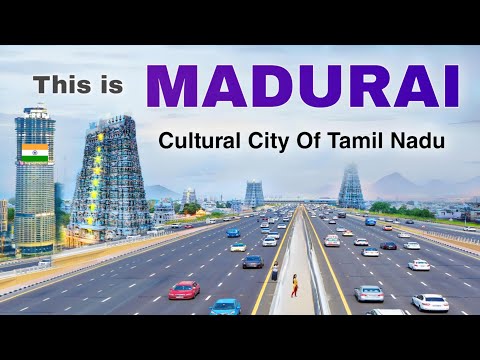
Madurai is well-served by Madurai Airport (IXM), which handles direct flights from Chennai, Bengaluru, Mumbai, and several other major Indian cities. The airport is close to the city centre, making arrival and transfer straightforward for guests. For guests travelling from within Tamil Nadu and neighbouring states, Madurai Junction (MDU) is one of the state's most important railway stations, with frequent services to Chennai, Coimbatore, Trichy, and beyond. Long-distance road connectivity is also strong, with national highways linking Madurai to the rest of Tamil Nadu and Kerala.
Within the city, auto-rickshaws, app-based cabs, and local taxis are all available and generally reliable for moving guests between accommodation, venues, and the temple. For large groups, local travel agents and event coordinators can arrange dedicated coach or minibus transfers, which is the most practical option for coordinating guest movement across a multi-day celebration. The city centre is compact enough that most key venues and the temple are within a manageable distance of the main hotel clusters.
Local Vendor & Hospitality Ecosystem
Madurai's vendor ecosystem is one of its genuine strengths for event planning. The city has a long, unbroken tradition of hosting large family and community celebrations, which means that caterers, ritual specialists, floral decorators, nadaswaram musicians, and mandapam operators are all locally available, experienced, and familiar with the specific requirements of Tamil ceremonies — from the precise sequencing of a traditional wedding to the catering formats expected at a Pongal feast or a community satsang.
Traditional Tamil catering — including both vegetarian Brahmin-style meals served on banana leaves and non-vegetarian feast formats — is a particular strength. Madurai is also known for its distinctive local cuisine, and incorporating local food traditions into a celebration is both easy and genuinely appreciated by guests.
Photography and videography vendors experienced in temple and heritage settings are available locally, though for very large or high-production events, some planners choose to supplement with vendors from Chennai. Event management companies with experience in large festival-format gatherings operate in the city and can handle end-to-end coordination for complex, multi-day programmes.
Hotel-based hospitality is professional and improving, with properties affiliated with national groups offering consistent service standards. The city's overall hospitality character is warm and community-oriented rather than resort-luxurious — which suits the spiritual and cultural nature of most events held here very well.
Pros & Things to Consider
Why Madurai Works Well
- Unmatched spiritual and cultural authenticity for temple-rooted celebrations
- Experienced local vendor ecosystem deeply familiar with Tamil ceremony formats
- Strong multi-modal connectivity — air, rail, and road all viable for guests
- Heritage mandapams and modern banquet halls together cover a wide range of event formats and guest sizes
- The city's festival calendar creates natural hooks for community and cultural gatherings
- Warm, community-oriented local hospitality that suits family-centred events
Things to Consider
- The city is not primarily a leisure resort destination — guests expecting a beach, hill station, or palace-hotel experience will find Madurai's offering more urban and temple-centric
- Peak festival periods (especially Chithirai in April–May) bring very large crowds to the city, which can affect accommodation availability, traffic, and general logistics — early planning and booking are essential
- The heat from March through May is significant and can make outdoor event formats uncomfortable; this requires careful scheduling and contingency planning
- The northeast monsoon (October–November) can bring unpredictable heavy rain, requiring indoor backup arrangements for any outdoor elements
- Luxury accommodation options, while present, are more limited in number than in larger metro cities — for very large guest lists requiring high-end rooms, early booking across multiple properties is necessary
When Madurai May Not Be the Right Fit
- Primarily outdoor, garden-style events planned for April–September: The combination of intense heat (April–May) and monsoon rainfall (October–November, with residual humidity through September) makes Madurai a difficult choice for events where outdoor settings are non-negotiable and no indoor backup is planned.
- Guests expecting a resort or leisure destination experience: Madurai is a temple city and a living cultural centre — it does not offer the beach, backwater, or hill-resort experience that some guest groups expect from a destination event. Families whose primary draw is scenic leisure rather than cultural immersion may find the city less immediately appealing.
- Very large guest lists requiring a high volume of luxury rooms in a single property: The luxury hotel inventory in Madurai, while genuine, is smaller than in larger metro or resort destinations. Events requiring a single property to house several hundred guests in premium rooms may find the local supply stretched.
- Guests with very limited familiarity with South Indian travel: For guest groups travelling primarily from North India or internationally, Madurai's language environment (predominantly Tamil), the city's dense urban character, and the absence of a large international airport may add a layer of logistical complexity that some groups find challenging without experienced local coordination.