
Why Madhubani is Perfect for Your Celebration
- Home of the globally renowned Madhubani/Mithila folk art tradition — a living cultural backdrop unlike any other Indian wedding destination
- Deeply embedded Chhath Puja culture makes it one of India's most authentic settings for sacred family gatherings and religious functions
- Intimate scale of the town naturally suits smaller, close-knit weddings and family ceremonies with a genuine community feel
- Winter months (November–February) bring cool, dry, comfortable weather perfectly suited to outdoor rituals and evening celebrations
- Strong Maithili cultural identity — local music, cuisine, and ritual traditions enrich every celebration with authentic regional character
- Rail connectivity directly into the town makes it accessible for guests traveling from across Bihar and neighbouring states
Compare Madhubani with Other Top Destinations
Frequently Asked Questions
Is Madhubani a good destination for a Chhath Puja family gathering?
Yes, it is one of the most authentic settings in India for Chhath Puja. Madhubani sits in the heart of the Mithila region, where Chhath Puja is deeply embedded in community life. Families gathering here participate in the festival in its most culturally resonant form, with local ghats, community traditions, and ritual specialists all naturally in place.
What size of wedding or family event can Madhubani realistically support?
Madhubani is best suited to intimate to mid-sized gatherings — typically up to around 150–200 guests. The local venue and accommodation inventory is modest, and very large events (400+ guests) would require significant external vendor support and distributing guests across multiple properties, including in nearby Darbhanga.
What is the best time of year to hold a wedding or celebration in Madhubani?
November through February is the recommended window. Temperatures are cool and dry — typically 8°C to 22°C — making outdoor ceremonies and evening receptions comfortable. Late October and November also coincide with Chhath Puja season, adding cultural vibrancy. Avoid March–June (intense heat) and July–September (heavy monsoon rains and flooding risk).
How do guests typically travel to Madhubani for an event?
Rail is the most practical option for most guests. Madhubani has its own railway station with connections to Darbhanga, Patna, and major cities. Guests flying in use Darbhanga Airport, which has expanded domestic connectivity, followed by a road transfer of roughly 60 km to Madhubani town — typically 1.5 to 2 hours.
What kinds of venues are available for weddings and events in Madhubani?
The venue landscape includes heritage havelis, zamindari-era properties, community halls, and outdoor spaces including riverbanks and temple precincts. There is no large purpose-built resort corridor here. The character of available spaces suits intimate, culturally rooted celebrations rather than large-format destination wedding productions.
Is Madhubani suitable for a heritage or palace-style wedding?
Yes, within the context of Mithila's zamindari heritage. The region has a tradition of landlord estates and heritage residential properties that lend a dignified, historically textured setting to wedding ceremonies. These are not palace-hotels in the Rajasthan sense, but they carry genuine Maithili aristocratic character that suits heritage-style celebrations.
What makes Madhubani distinctive as a wedding or event destination compared to other Bihar cities?
Madhubani's defining distinction is its living Mithila folk art tradition and its deep Chhath Puja cultural identity. Celebrations here can authentically incorporate Madhubani painting in décor, Maithili folk music, traditional cuisine, and ritual specialists — elements that are genuinely of this place rather than imported for event purposes.
Are there local vendors and caterers experienced in Maithili wedding traditions?
Yes. Local caterers, priests, and ritual specialists are well-versed in Maithili ceremonies and traditional cuisine. Local artisans can provide authentic Madhubani art décor. However, for large-scale event management, tent and décor companies, or high-capacity catering operations, families may need to source vendors from Darbhanga or Patna.
How should we plan accommodation for a larger guest list in Madhubani?
Accommodation within Madhubani town is modest in capacity. For gatherings beyond 50–80 guests, planners should expect to distribute guests across multiple smaller properties or arrange accommodation in nearby Darbhanga with shuttle transport. Early booking is strongly advisable, particularly during the Chhath Puja season when local accommodation fills quickly.
Is Madhubani a good setting for a religious family function such as a mundan or upanayana?
Yes. Madhubani's strong Brahminical and Maithili cultural traditions mean that local priests and ritual specialists are deeply familiar with the correct forms for a wide range of family ceremonies. Religious functions here feel genuinely rooted in local tradition rather than arranged for outsiders, which is a meaningful distinction for families who value ritual authenticity.
What should event planners know about digital and logistical connectivity in Madhubani?
Mobile data and broadband connectivity can be inconsistent in parts of the district, which may affect real-time coordination during multi-day events. Planners should build in contingency for communication gaps and consider pre-arranging local SIM cards or portable Wi-Fi devices for key coordination staff. Road conditions within the district can also vary, so allow extra travel time for guest transfers.

Ready to explore venues in Madhubani?
Madhubani: Cultural Wedding & Event Destination in the Heart of Mithila
◆Madhubani is best suited to intimate weddings, religious family functions, Chhath Puja gatherings, and culturally rooted celebrations in the Mithila region of Bihar. Its primary vibe is Cultural & Festive — shaped by the globally recognised Madhubani folk art tradition, deep Maithili heritage, and the sacred rhythms of festivals like Chhath Puja. The destination is most accessible by rail, with limited air connectivity via Darbhanga Airport. It is a genuinely distinctive, community-scale destination rather than a large-format luxury wedding hub, and is generally well-suited to guests seeking authenticity, spiritual depth, and cultural immersion over resort-style grandeur.
Madhubani at a Glance
| Attribute | Detail |
|---|---|
| Best For | Chhath Puja Gathering, Palace / Heritage Wedding, Religious Family Function, Intimate Wedding |
| Primary Vibe | Cultural & Festive |
| Other Vibes | Spiritual, Folk & Artisanal, Community-Rooted |
| Best Season | Winter (November–February) |
Why Choose Madhubani?
- A living folk art tradition as your backdrop: Madhubani is the birthplace of Mithila painting — one of India's most internationally recognised folk art forms. Celebrations here are naturally infused with this visual and cultural identity, from hand-painted décor motifs to artisan-led workshops that can be woven into pre-wedding events.
- Unmatched authenticity for Chhath Puja and religious gatherings: Few places in India carry the spiritual weight of Madhubani during Chhath Puja. For families wishing to hold a sacred gathering in its most culturally resonant setting, this destination is genuinely difficult to replicate elsewhere.
- Intimate scale that suits close-knit celebrations: Madhubani is not a sprawling metro — its town character naturally supports smaller, more personal gatherings where community warmth and local hospitality take centre stage rather than large-scale event logistics.
- Rich Maithili culinary and musical traditions: Local cuisine — including dishes like thekua, makhana-based preparations, and traditional Maithili sweets — and folk music forms like Vidyapati songs add layers of authentic regional character to any celebration.
- Rail accessibility directly into the town: Madhubani has its own railway station with connections to Darbhanga, Patna, and beyond, making it reachable for guests traveling from across Bihar and neighbouring states without requiring a long road transfer.
- A genuinely off-the-beaten-path destination: For couples and families who want a celebration that feels rooted, personal, and culturally meaningful rather than formulaic, Madhubani offers a sense of place that larger, more commercialised wedding destinations cannot.
Which Celebrations Work Best in Madhubani?
- Chhath Puja Gathering: This is arguably Madhubani's single strongest suit as an event destination. The town's deep cultural and spiritual connection to Chhath Puja — one of the most important festivals in the Maithili calendar — means that families gathering here for this occasion are participating in something genuinely rooted in the place itself, not a staged recreation.
- Palace / Heritage Wedding: The Mithila region has a history of zamindari (landlord) estates and heritage properties that lend a dignified, historically textured setting to wedding ceremonies. A heritage-style wedding here carries the weight of Maithili aristocratic tradition.
- Religious Family Function: Whether a mundan, upanayana, naming ceremony, or other Maithili ritual, Madhubani's strong Brahminical and Maithili cultural traditions mean that local priests, ritual specialists, and family networks are deeply familiar with the correct forms and customs — making religious functions feel genuinely authentic rather than arranged for outsiders.
- Intimate Wedding: The town's scale and character suit weddings of 50–200 guests particularly well. Smaller guest lists allow families to make full use of local hospitality, heritage spaces, and community involvement in a way that larger destination weddings often cannot.
- Anniversary Celebration: Couples with a connection to Mithila culture — or those drawn to its artistic and spiritual identity — will find Madhubani a deeply meaningful setting for a milestone anniversary, particularly when combined with a Chhath Puja visit or a cultural immersion programme.
- Wedding Reception: A post-wedding reception in Madhubani, especially one incorporating Madhubani art installations, Maithili folk performances, and traditional cuisine, can be a genuinely memorable cultural event for guests who may not have experienced this region before.
Venues & Event Spaces
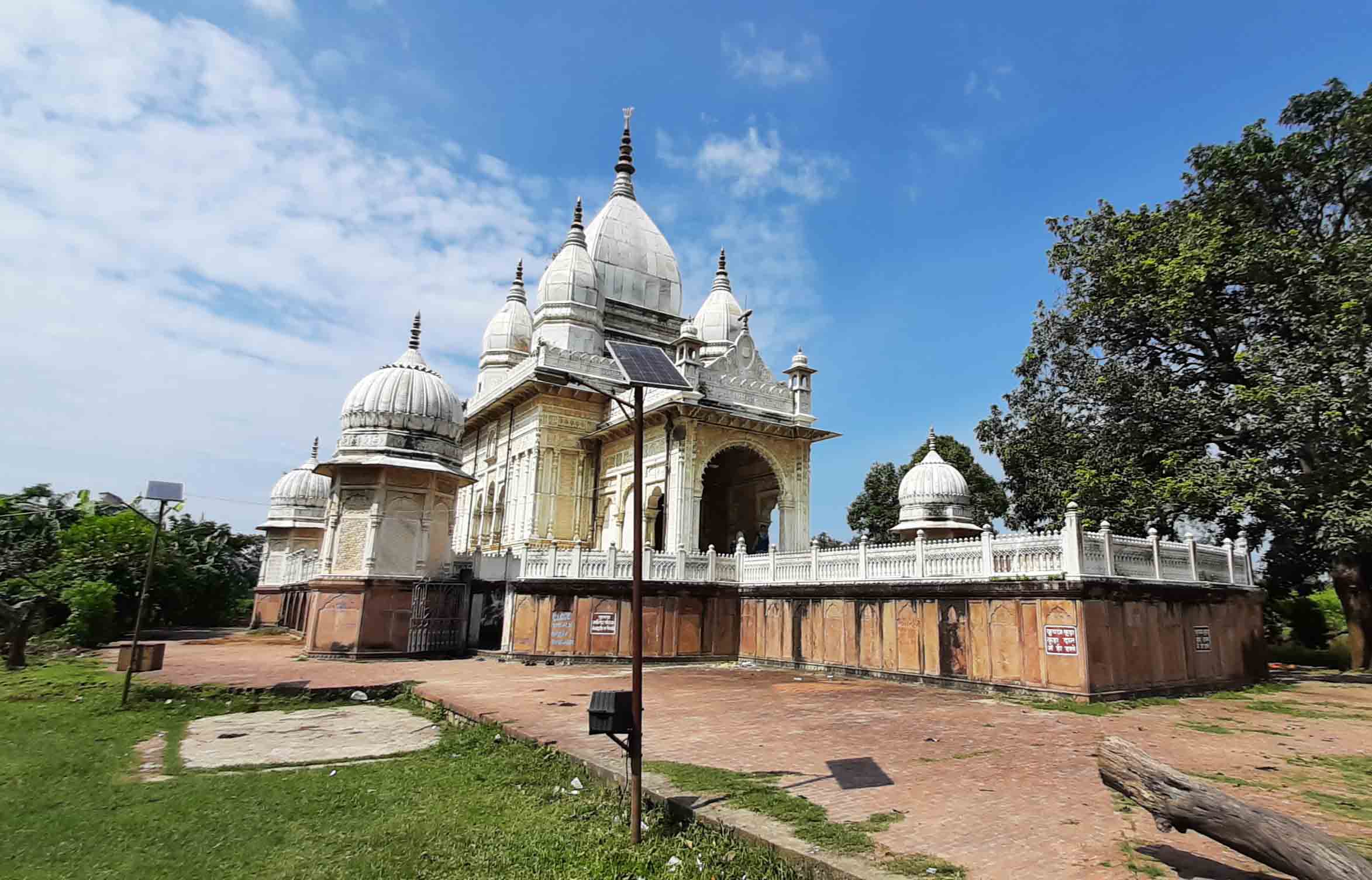
Madhubani's event venue landscape is characterised by heritage havelis, zamindari-era properties, and community halls rather than large purpose-built resort complexes. Families planning celebrations here typically draw on a combination of heritage residential properties (some of which are available for private hire), local dharamshalas and community spaces for religious functions, and outdoor settings — particularly riverbanks and temple precincts — for Chhath Puja and other ritual gatherings.
The town does not currently have a well-developed luxury resort corridor in the way that larger Indian wedding destinations do. This is both a trade-off and a feature: it means that celebrations here tend to feel more personal, community-embedded, and culturally authentic, but it also means that large-scale event infrastructure (professional banquet halls with in-house catering, dedicated wedding coordination teams, and high-capacity accommodation blocks) is more limited than in established destination wedding cities.
Outdoor lawns and garden spaces attached to heritage properties can work well for evening receptions and mehendi functions during the winter months. For Chhath Puja gatherings, the ghats and water bodies in and around the district are the natural and traditional setting, and local communities are well-practised in organising large gatherings in these spaces.
Best Time to Celebrate
The winter months of November through February are the clear best season for events in Madhubani. Temperatures during this period typically range from around 8°C at night to 22°C during the day — cool, dry, and comfortable for outdoor ceremonies, evening receptions, and multi-day family gatherings. The air is generally clear, and the risk of rain is low, making outdoor settings reliably usable.
Chhath Puja itself falls in October–November (the Kartik Chhath), which means that the festival season and the beginning of the comfortable winter window overlap — making late October through November a particularly vibrant and culturally rich time to be in Madhubani.
The summer months (March through June) bring progressively intense heat, with temperatures regularly exceeding 40°C by May and June. Outdoor events become genuinely uncomfortable and potentially unsafe for elderly guests and children during this period. The monsoon (July through September) brings heavy rainfall across the Mithila plains, with a real risk of localised flooding — outdoor events are largely impractical, and travel disruptions are common. October is a transitional month: the rains typically recede, but residual humidity and occasional late showers make it a less reliable choice than November onward.
Getting There & Local Connectivity
Madhubani is most conveniently reached by rail. The town has its own railway station with regular services connecting it to Darbhanga (a major junction in north Bihar), Patna (the state capital), and onward to cities including Kolkata and Delhi via connecting services. For guests traveling from within Bihar and neighbouring states, the train is typically the most practical option.
The nearest airport is Darbhanga Airport, which has seen expanded connectivity in recent years with flights to major Indian cities. However, guests flying in will need to arrange road transport from Darbhanga to Madhubani — a journey of roughly 60 km that typically takes 1.5 to 2 hours depending on road conditions. This adds a layer of logistical planning for outstation guests, particularly large groups arriving at different times.
Within the town and district, local transport options include auto-rickshaws, cycle-rickshaws, and hired vehicles. For event groups, pre-arranged private vehicle hire is the most practical solution for moving guests between accommodation, venues, and ritual sites. Road conditions within the district can vary, and it is worth factoring in additional travel time for guests unfamiliar with the area, particularly during the festival season when roads can be busier than usual.
Local Vendor & Hospitality Ecosystem
Madhubani's vendor ecosystem is genuinely strong in areas directly tied to its cultural identity. Local artisans specialising in Madhubani painting can be engaged for bespoke décor, invitation design, and live art installations — a distinctive offering that few other Indian destinations can match authentically. Maithili caterers and cooks are well-versed in traditional cuisine for religious functions and family celebrations, and local priests and ritual specialists are experienced in the full range of Maithili ceremonies.
However, the ecosystem for large-scale, professionally managed destination wedding services — including dedicated wedding planners with experience handling 500+ guest events, large-format tent and décor companies, and high-capacity in-house catering operations — is more limited than in established wedding destinations. Families planning larger or more logistically complex events may need to bring in vendors from Darbhanga, Patna, or further afield, which adds coordination complexity and lead time to the planning process.
Accommodation capacity in and immediately around Madhubani town is modest. Guests attending larger gatherings may need to be distributed across multiple smaller properties, or some may need to stay in Darbhanga and travel in for events. This is a genuine logistical consideration for event planners and should be factored into the planning timeline early.
Pros & Things to Consider
Why Madhubani Works Well
- Unrivalled cultural authenticity — Mithila folk art, Maithili traditions, and Chhath Puja heritage are genuinely of this place, not imported
- Ideal for intimate, community-rooted celebrations where personal warmth matters more than large-scale infrastructure
- Winter weather (November–February) is reliably comfortable for outdoor ceremonies and multi-day gatherings
- Local artisan community offers genuinely distinctive décor and cultural programming options
- Rail connectivity directly into the town makes it accessible for guests from across Bihar and neighbouring states
- Strong local knowledge of Maithili religious rituals and ceremonies among priests and community elders
Things to Consider
- Limited luxury and large-format venue infrastructure — not suited to very large weddings (500+ guests) without significant external vendor support
- Air connectivity requires a connecting road journey from Darbhanga Airport, adding complexity for outstation guests
- Accommodation capacity within the town is modest; larger guest lists will require careful distribution across multiple properties or nearby towns
- The summer and monsoon seasons (March–September) make outdoor events impractical and travel unreliable
- Professional destination wedding management services are less developed here than in established wedding cities — early planning and external vendor sourcing are advisable
- Digital connectivity (mobile data, broadband) can be inconsistent, which may affect real-time coordination during multi-day events
When Madhubani May Not Be the Right Fit
- Large-scale weddings with 400+ guests: The local venue and accommodation inventory is not well-suited to very large events. Families expecting a high-capacity, resort-style wedding with all guests under one roof will find the options here genuinely limited.
- Guests with limited travel flexibility: If a significant portion of the guest list is traveling from outside Bihar and has limited experience navigating multi-leg journeys (flight + road transfer), the logistics of reaching Madhubani may be a genuine barrier to attendance.
- Events planned for the monsoon season (July–September): Outdoor ceremonies and multi-day gatherings during the monsoon are not reliably feasible here. Families with fixed dates in this window should consider an alternative destination or fully indoor venue options.
- Couples seeking a fully managed luxury destination wedding experience: If the priority is a seamlessly managed, high-end resort wedding with in-house event coordination, multiple luxury accommodation options, and a mature destination wedding vendor ecosystem, Madhubani's current infrastructure is not the strongest match — and a more developed destination would serve those needs better.