
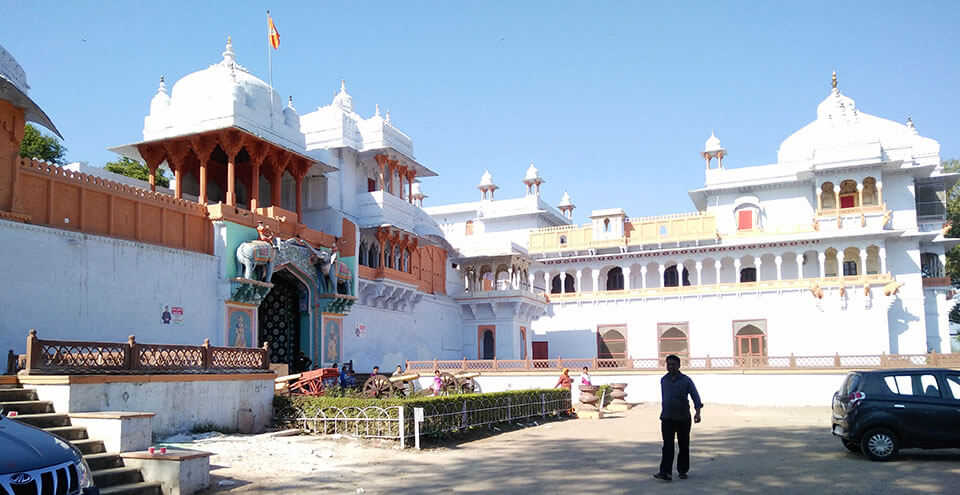
Why Kota is Perfect for Your Celebration
- Chambal riverfront settings offer scenic backdrops for outdoor celebrations and photography
- Rich festival culture — Teej and Gangaur are celebrated with authentic local grandeur
- Kota Junction is one of Rajasthan's best-connected railway stations on the Delhi–Mumbai corridor
- Heritage havelis and palace-style properties provide characterful event venues
- Relatively lower event costs compared to more tourist-heavy Rajasthan cities
- Strong local catering and décor vendor base shaped by a large resident population
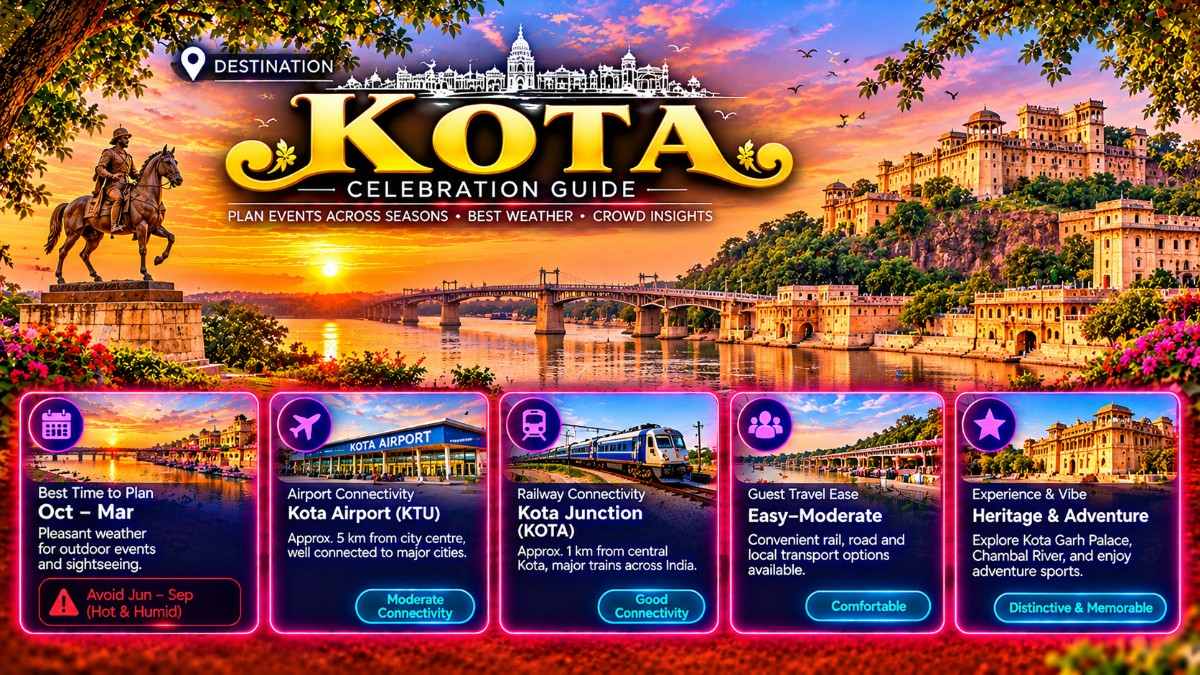
Top Venues in Kota
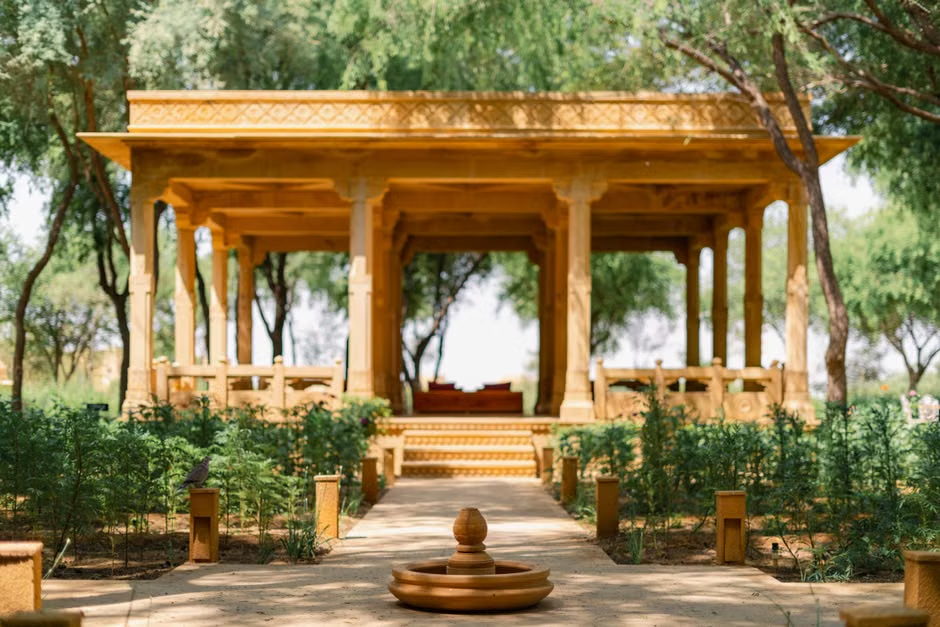
Hotel Sukhdham Kothi
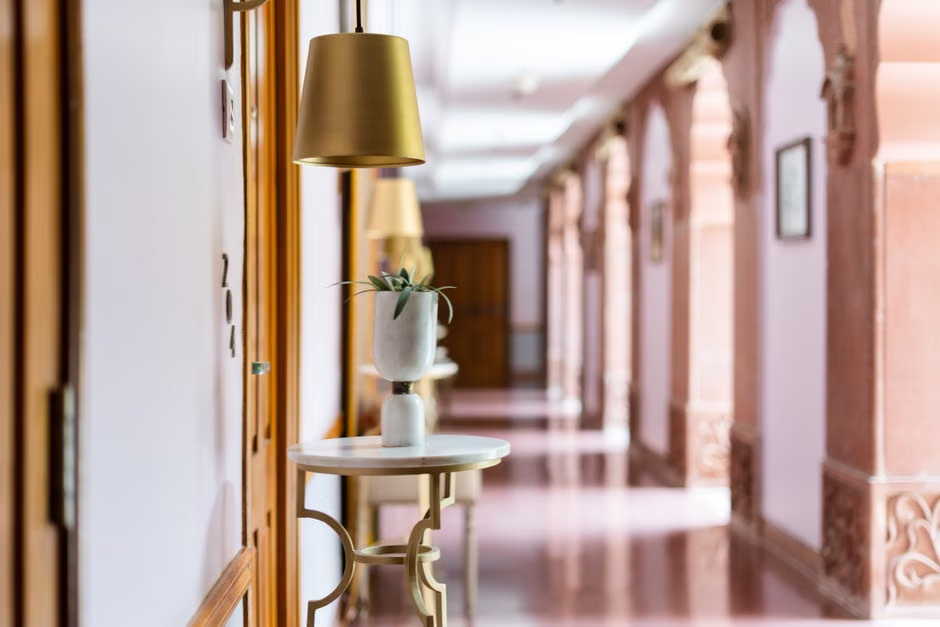
Brijraj Bhawan Palace Hotel
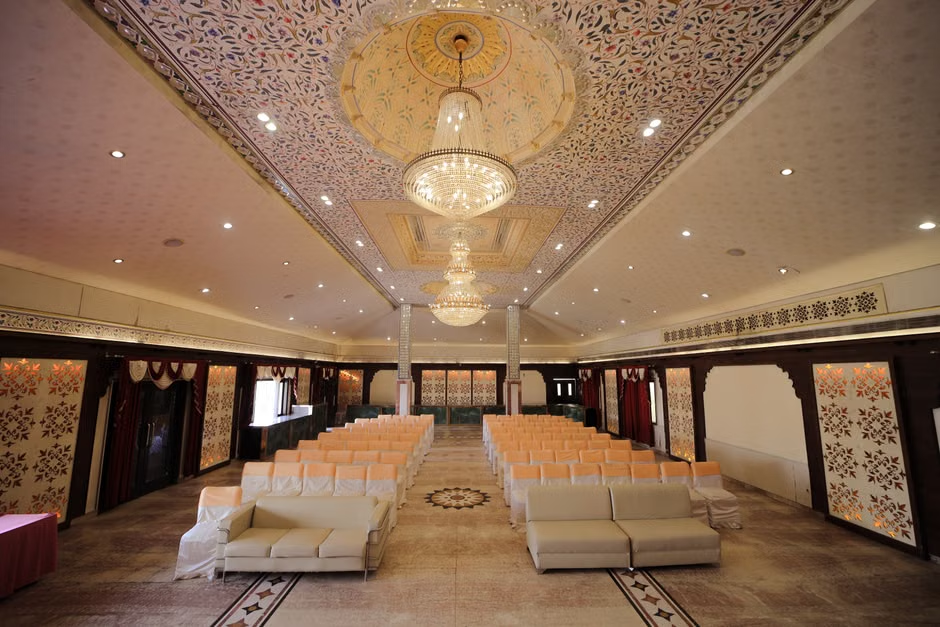
Hotel Navrang
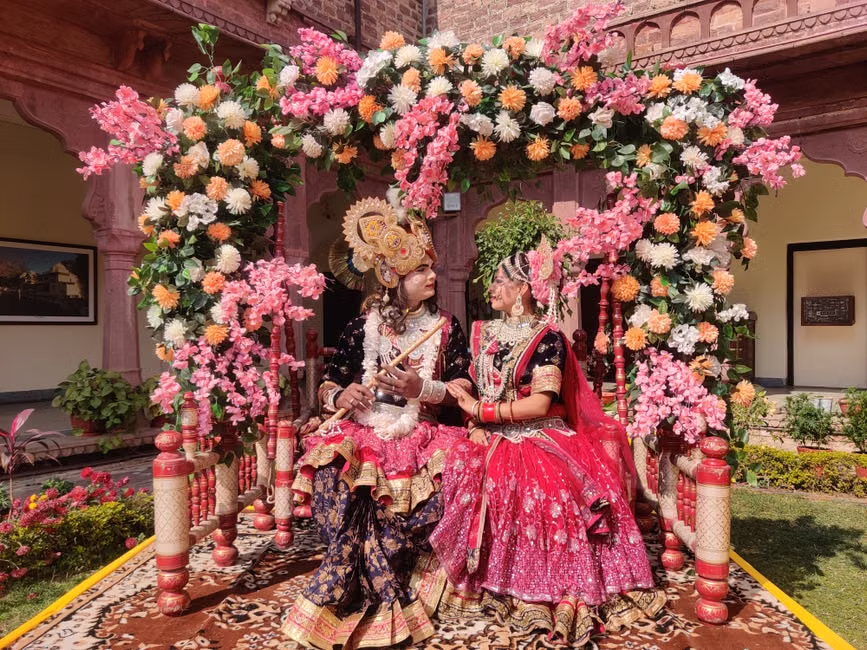
Palkiya Haveli
Compare Kota with Other Top Destinations
Frequently Asked Questions
Is Kota a good destination for an alumni reunion?
Yes. Kota is particularly well-suited to alumni reunions. Its position on the Delhi–Mumbai rail corridor means guests can arrive conveniently from most major Indian cities without requiring a flight. The city has a range of banquet halls, heritage properties, and outdoor lawn venues that accommodate the varied formats a reunion typically needs — formal dinners, casual networking sessions, and group cultural outings along the Chambal riverfront.
What size of guest group can Kota's venues realistically support?
Kota's venues are generally well-suited to groups of 50 to 500 guests. Mid-scale banquet halls and hotel properties can comfortably handle gatherings in the 100–300 range. For larger events approaching 500 guests, combining a primary venue's indoor and outdoor spaces is typically the approach. Very large events above 500 guests may require distributing accommodation across multiple properties.
How do guests typically travel to Kota for an event?
Rail is the most practical option for most guests. Kota Junction is a major stop on the Delhi–Mumbai rail corridor and receives frequent express trains from Delhi, Mumbai, Jaipur, Ahmedabad, and other cities. Kota Airport operates limited scheduled services, so guests requiring air travel will generally need to fly into a larger hub and continue by road or rail — worth factoring into travel planning for out-of-state attendees.
What is the best time of year to hold an event in Kota?
November through February is the strongly recommended window. Temperatures are cool and dry, outdoor venues are fully usable, and the city's cultural calendar is at its most active. March and October are usable shoulder months for indoor-focused events. April through June brings extreme heat regularly exceeding 40°C, and July through September is the monsoon season — both periods are generally unsuitable for outdoor celebrations.
What kinds of venues are available in Kota for celebrations?
Kota offers a range of venue types: heritage palace properties and historic havelis for culturally themed events, modern banquet halls and convention facilities for corporate and social formats, outdoor lawn spaces for evening functions, and Chambal riverfront settings for scenic outdoor gatherings. Several hotel properties combine indoor and outdoor spaces, giving planners flexibility for multi-session programmes.
Is Kota suitable for a family reunion with multi-generational guests?
Yes. Kota works well for multi-generational family reunions. Spacious banquet halls and lawn venues accommodate large family groups comfortably. The city's heritage sites — step-wells, palaces, and riverside ghats — provide shared experiences for guests of all ages. Strong rail connectivity also makes it easier for elderly guests and families with children to travel without the complexity of flight connections.
Can Teej and Gangaur celebrations be hosted authentically in Kota?
Yes, and Kota is one of the stronger choices in Rajasthan for this. Both festivals are celebrated with genuine community participation — traditional processions, folk music, and local rituals are part of the city's own cultural life, not staged for visitors. Events planned around these festivals benefit from an authentic local atmosphere that is difficult to replicate in more tourist-oriented cities.
What is the local vendor ecosystem like for events in Kota?
Kota has a well-developed local vendor base shaped by its large resident population. Experienced decorators, caterers specialising in traditional Rajasthani cuisine, sound and lighting vendors, and event coordinators are all available locally. For very large or high-profile events, some planners supplement local vendors with specialists from Jaipur, but for most mid-scale events the local ecosystem is fully capable.
How easy is it to arrange local transport for a large guest group in Kota?
Reasonably straightforward. Auto-rickshaws and app-based cabs are available for individual guest movement. For coordinated group transfers between the railway station, hotels, and venues, pre-arranged coaches or tempo travellers are the most practical option and are readily available through local operators. Peak-hour congestion in older parts of the city is worth accounting for in event-day schedules.
Is Kota a good fit for a retirement celebration?
Yes. Kota's heritage ambience, warm local hospitality, and relaxed city pace make it well-suited to retirement events that prioritise cultural depth and personal warmth over high-energy formats. Heritage properties with garden settings and traditional Rajasthani hospitality are particularly appropriate. The strong rail connectivity also makes it easy for guests of varying ages and mobility levels to travel comfortably.
What makes Kota distinctive compared to other Rajasthan event destinations?
Kota's most distinctive features are its Chambal riverfront setting, its authentic festival culture around Teej and Gangaur, and its exceptional rail connectivity on the Delhi–Mumbai corridor. It offers genuine Rajasthani heritage character — palaces, havelis, step-wells — at a generally more accessible cost level than the state's most-visited tourist cities, making it a practical choice for groups seeking cultural richness without the premium of a primary leisure destination.

Ready to explore venues in Kota?
Kota: Riverside Heritage Destination for Weddings, Reunions & Social Events
◆Kota is a well-connected, culturally rich city in southeastern Rajasthan, best suited for alumni reunions, family reunions, anniversary celebrations, retirement gatherings, and cultural events like Teej and Gangaur. Its primary vibe is urban and contemporary, layered with genuine Rajasthani heritage — Chambal riverfront settings, step-wells, and palace properties give events here a distinctive character without the premium price tag of more tourist-heavy Rajasthan cities. The winter months (November–February) are the clear planning window. Kota Junction is one of the strongest rail hubs in the region, making guest travel straightforward for groups arriving from Delhi, Mumbai, or Jaipur, though air connectivity remains limited.
Kota at a Glance
| Category | Detail |
|---|---|
| Best For | Alumni Reunion, Anniversary Celebration, Family Reunion, Retirement Celebration |
| Primary Vibe | Urban & Contemporary |
| Other Vibes | Riverside, Heritage, Cultural |
| Best Season | Winter (November–February) |
Why Choose Kota?
- Chambal Riverfront Ambience: The Chambal River running through the city provides genuinely scenic outdoor settings for evening functions, photography, and riverside gatherings — a feature few Rajasthan cities can offer at this scale.
- Heritage Venue Diversity: Kota has a meaningful stock of palace-style properties and heritage havelis that lend authentic Rajasthani character to celebrations, alongside modern banquet halls and convention facilities suited to corporate and social formats.
- Outstanding Rail Connectivity: Kota Junction sits on the main Delhi–Mumbai rail corridor and is one of the busiest and best-served railway stations in Rajasthan, making it genuinely easy for guests to arrive from across India without requiring a flight.
- Authentic Festival Culture: Teej and Gangaur are celebrated in Kota with traditional processions, music, and community participation — events timed around these festivals gain a cultural dimension that is hard to replicate elsewhere.
- Relatively Accessible Event Costs: Compared to Udaipur, Jaipur, or Jodhpur, Kota's hospitality and vendor ecosystem is generally more accessible, making it a practical choice for groups seeking Rajasthani character without the premium associated with the state's most-visited cities.
- Large Resident Population & Vendor Base: As one of Rajasthan's largest cities, Kota has a mature local ecosystem of caterers, decorators, sound and lighting vendors, and event coordinators experienced in handling mid-to-large group events.
Which Celebrations Work Best in Kota?
- Alumni Reunion: Kota's strong rail links and central Rajasthan location make it easy for former classmates or colleagues to converge from multiple cities. The city's mix of banquet halls, heritage properties, and riverside venues suits the varied formats a reunion typically needs — formal dinners, casual networking, and group outings.
- Anniversary Celebration: Heritage palace properties and Chambal riverfront settings provide a romantic, characterful backdrop for milestone anniversaries. Intimate private dining, cultural performances, and curated local experiences are all available within the city.
- Family Reunion: Kota's venue inventory — ranging from spacious lawns to large banquet halls — comfortably accommodates multi-generational family groups. The city's cultural richness, including its museums, step-wells, and riverside ghats, gives families plenty of shared experiences beyond the event itself.
- Retirement Celebration: The city's relaxed pace, heritage ambience, and accessible hospitality make it well-suited to retirement events that prioritise warmth and cultural depth over high-energy nightlife. Venues with garden settings and traditional Rajasthani hospitality are particularly appropriate for this format.
- Naming / Family Ceremony: Kota's strong local traditions around family ceremonies, combined with experienced local priests, caterers, and decorators familiar with Hindu ritual formats, make it a natural fit for naming ceremonies and other family milestones.
- Teej & Gangaur Celebration: Few cities in Rajasthan celebrate Teej and Gangaur with the same community-wide participation as Kota. Events planned around these festivals — whether private celebrations or larger hosted gatherings — benefit from the city's authentic processions, folk music, and traditional décor that are genuinely part of local life here, not staged for tourists.
Venues & Event Spaces
Kota's event venue landscape spans several distinct categories. At the heritage end, the city has palace-style properties and historic havelis that offer ornate architecture, courtyard spaces, and traditional Rajasthani interiors — well-suited to anniversary dinners, family ceremonies, and culturally themed celebrations. For larger gatherings, the city has modern banquet halls and convention-style facilities capable of hosting conferences, dealer meets, and MICE programmes with standard AV and staging infrastructure.
Outdoor lawn venues and riverside settings along the Chambal are available for evening functions and provide a scenic alternative to purely indoor formats. Several hotel properties combine indoor banquet space with outdoor lawns, giving event planners flexibility to run multi-session programmes across a single venue. Rooftop spaces are available at select urban properties, suitable for smaller DJ nights, cocktail receptions, and city-view parties. Overall, the venue inventory is strongest in the mid-scale segment, with a growing number of properties that blend heritage character with contemporary event facilities.
Best Time to Celebrate
The clear planning window for events in Kota is November through February. During these months, daytime temperatures typically range from around 15°C to 25°C, with cool evenings that make outdoor functions genuinely comfortable. The dry air and clear skies of the Rajasthan winter mean that outdoor lawns, riverside settings, and rooftop venues can all be used without weather risk. This is also the period when Kota's cultural calendar is most active, with festivals and local events adding to the celebratory atmosphere.
March and early April represent a short shoulder window — temperatures are rising but outdoor events in the morning or evening remain manageable. From late April through June, temperatures regularly exceed 40°C and can reach 45°C, making outdoor events impractical and placing significant strain on guests travelling to the city. July through September brings the monsoon, with heavy and sometimes unpredictable rainfall that disrupts outdoor plans and can affect road access. October is a transitional month — the monsoon typically recedes, humidity drops, and temperatures begin to fall, making it a usable shoulder month for indoor-focused events, though not yet ideal for outdoor formats.
Getting There & Local Connectivity
Kota's single greatest logistical strength is its railway station. Kota Junction is a major stop on the Delhi–Mumbai rail corridor — one of India's busiest — and receives a large number of express and superfast trains daily connecting it to Delhi, Mumbai, Jaipur, Ahmedabad, and other major cities. For most guest groups, train travel to Kota is genuinely convenient and does not require a connecting journey from another city's airport.
Kota Airport operates limited scheduled services, and guests requiring air travel will typically need to fly into a larger regional hub and continue by road or rail. This is worth factoring into guest travel planning, particularly for attendees coming from outside India or from cities without a direct rail connection to Kota.
Within the city, local transport options include auto-rickshaws, app-based cab services, and hired vehicles — all reasonably available for group movement between hotels, venues, and local attractions. For large groups requiring coordinated transfers, pre-arranged coach or tempo traveller hire is the most practical approach and is readily available through local operators. The city's road network is generally functional, though peak-hour congestion in the older parts of the city is worth accounting for in event-day logistics.
Local Vendor & Hospitality Ecosystem
As one of Rajasthan's larger cities, Kota has a well-developed local vendor ecosystem that extends well beyond basic catering. The city has experienced decorators familiar with both traditional Rajasthani aesthetics and contemporary event styling, sound and lighting vendors equipped for mid-to-large events, and a catering industry shaped by decades of hosting large family and community gatherings.
Local caterers are particularly strong in traditional Rajasthani cuisine — dal baati churma, gatte ki sabzi, and other regional specialities — which adds genuine culinary character to events. Multi-cuisine catering is also available through hotel properties and established independent caterers. Photography and videography professionals experienced in event documentation are present in the city, though for very large or high-profile events, some planners choose to bring in specialists from Jaipur or other larger cities.
The hospitality sector, while not as internationally polished as in Udaipur or Jaipur, is warm, attentive, and experienced in managing group bookings. Hotel properties in the city are generally responsive to event-specific requirements such as room blocks, early check-ins for arriving guests, and coordinated F&B for multi-day programmes.
Pros & Things to Consider
Why Kota Works Well
- Exceptional rail connectivity makes guest travel straightforward from most major Indian cities
- Authentic Rajasthani cultural setting — festivals, heritage architecture, and riverside ambience are genuinely part of the city's character
- Mature local vendor ecosystem capable of handling mid-to-large events without heavy reliance on outside suppliers
- Venue diversity spans heritage palaces, modern banquet halls, outdoor lawns, and riverside settings
- Generally more accessible event costs than Rajasthan's most-visited tourist cities
- Teej and Gangaur celebrations offer a unique cultural layer for events timed around these festivals
Things to Consider
- Air connectivity is limited — guests who cannot travel by train will face a multi-leg journey, which may deter some attendees
- The luxury end of the hotel inventory is less developed than in Udaipur or Jaipur — guests expecting internationally branded five-star properties will find fewer options here
- Summer heat (April–June) is extreme and effectively rules out outdoor events for several months of the year
- The city's tourism infrastructure is less developed than Rajasthan's primary leisure destinations, meaning fewer curated guest experiences and pre-packaged sightseeing options for accompanying guests
- For very large events (500+ guests requiring multiple luxury room blocks), the current hotel inventory may require guests to be distributed across several properties
When Kota May Not Be the Right Fit
- Outdoor-heavy events planned outside November–February: If your event format relies significantly on outdoor lawns, riverside settings, or rooftop spaces, the summer heat and monsoon rains make Kota a poor choice for roughly six months of the year.
- Guests requiring direct international or domestic air access: If a significant portion of your guest list is flying in — particularly from international origins or cities without a direct rail connection to Kota — the limited air connectivity will create logistical friction that a better-connected city would avoid.
- Events requiring a large block of internationally branded luxury rooms: If your guest profile expects internationally recognised luxury hotel brands and a high volume of premium rooms in a single property, Kota's current inventory may not meet that expectation, and a city with a stronger luxury hotel presence would be a better fit.
- Groups primarily seeking a leisure-tourism experience alongside their event: Kota has genuine heritage attractions, but its tourism infrastructure is less developed than Rajasthan's primary leisure destinations. Groups for whom the surrounding sightseeing and curated guest experiences are as important as the event itself may find a more tourism-oriented city more satisfying.