
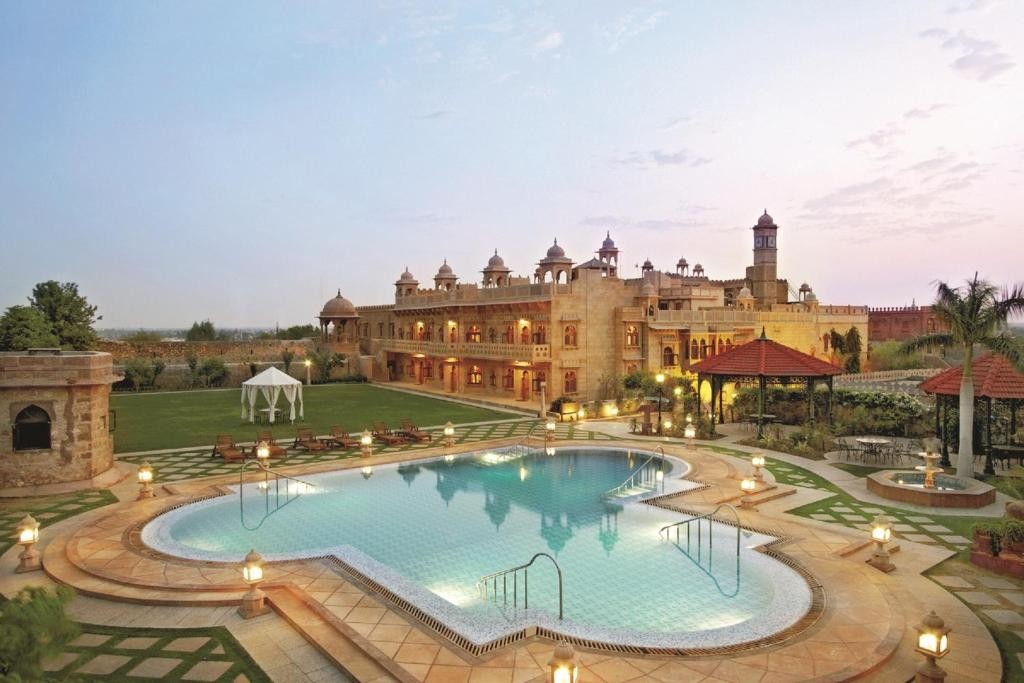
Why Khimsar is Perfect for Your Celebration
- A genuine 15th-century fort as the primary event venue — not a replica or themed resort
- Exclusive desert-dune landscape creates a naturally dramatic, photogenic backdrop
- Small-town exclusivity means your event is rarely competing with another large group
- Authentic Rajput hospitality and heritage décor built into the property itself
- Ideal for intimate guest lists where every detail can be curated without compromise
- Cool, clear winter nights under open desert skies make sundowners and outdoor dinners exceptional

Top Venues in Khimsar
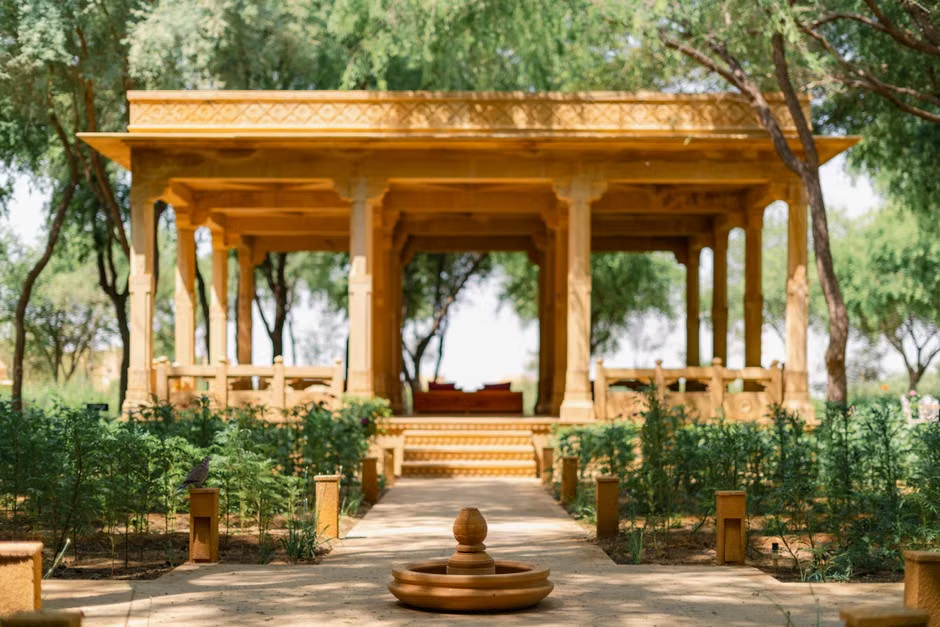
Khimsar Fort & Dunes Village Resort
Compare Khimsar with Other Top Destinations
Frequently Asked Questions
Is Khimsar a good destination for a heritage or palace-style wedding?
Yes, it is among the more authentic options in Rajasthan for this style. Khimsar's fort is a genuine 15th-century Rajput structure — not a modern hotel with heritage-inspired décor — giving weddings a historical weight and visual character that is difficult to replicate. It is particularly well-suited to couples who want an intimate, exclusive celebration in a real heritage setting rather than a large-scale commercial venue.
What guest-group sizes can Khimsar realistically accommodate for a wedding or event?
Khimsar is best suited to groups of roughly 50 to 300 guests. The destination's primary heritage property has a range of indoor and outdoor event spaces that work well at this scale. For significantly larger groups, the available accommodation and event space inventory may be insufficient, and a destination with a broader venue base would be more practical.
How do guests typically get to Khimsar?
Most guests fly into Jodhpur Airport (JDH), which has regular domestic connections from Delhi, Mumbai, and Jaipur, and then travel by road — approximately 90 kilometres, or around 90 minutes to two hours by car. Guests preferring rail can arrive at Nagaur Railway Station, roughly 40 kilometres away, though rail connectivity to Nagaur is more limited than to Jodhpur. Coordinated fleet transfers from Jodhpur are strongly recommended for event groups.
What is the best time of year to plan a wedding or event in Khimsar?
November through February is the optimal window. Desert temperatures are comfortable during the day and cool in the evenings, with clear skies and low humidity — ideal for outdoor ceremonies, sundowners, and evening receptions. The summer months (April–September) bring extreme heat and occasional dust storms, making outdoor events impractical during that period.
What kinds of event spaces are available at Khimsar?
The primary heritage property offers a range of spaces: original fort courtyards, open lawns with desert and dune views, heritage banquet halls, and terrace areas. A dunes village extension provides a more rustic, tented environment closer to the sand dunes. The surrounding desert landscape — including the dunes themselves — is also commonly used for camel processions, folk performance stages, and bonfire dinners.
Can Khimsar accommodate all guests within the destination itself, or do some need to stay elsewhere?
For smaller to mid-sized groups, the heritage property's accommodation is generally sufficient to house all guests on-site, which is one of the destination's key advantages — guests remain fully immersed in the celebration environment. For larger groups approaching or exceeding the property's room capacity, overflow accommodation would need to be arranged in Nagaur or Jodhpur, which adds logistical complexity.
Do I need to bring wedding vendors from outside Khimsar?
For most specialist requirements — photographers, videographers, luxury floral designers, and bespoke caterers — yes. Khimsar's local vendor base is limited by the town's small size, and most planners source these from Jodhpur, Jaipur, or Delhi. The heritage property is experienced in accommodating external vendor teams. Folk performers, camel handlers, and traditional Rajasthani entertainers, however, are genuinely available locally and are among the destination's authentic strengths.
Is Khimsar suitable for a Teej or Gangaur celebration?
Yes, and it is one of the more culturally authentic settings for either festival in Rajasthan. The fort's heritage character, combined with genuine local access to traditional folk performers, artisans, and cultural practitioners, means these celebrations can be staged with real authenticity rather than as a themed recreation. The winter and early spring timing of these festivals also aligns well with Khimsar's comfortable event season.
What makes Khimsar work well for a corporate incentive trip or retreat?
The combination of a self-contained heritage property, desert landscape activities (camel safaris, dune experiences, stargazing), and genuine exclusivity makes Khimsar a strong choice for incentive groups seeking a memorable, distinctive experience. The destination's remoteness reinforces the sense of a dedicated retreat, and the property's event spaces can support smaller conference or gala formats alongside leisure programming.
How reliable is internet and mobile connectivity in Khimsar?
Connectivity in Khimsar is limited compared to larger Rajasthani cities. Mobile coverage is generally available but can be patchy, and high-speed internet infrastructure is not as robust as in urban event destinations. For corporate events requiring reliable digital connectivity — live streaming, large video conferences, or real-time data access — this is a genuine consideration, and backup connectivity solutions should be planned in advance.
Is Khimsar safe for guests travelling from other cities or countries?
Yes, Khimsar is generally considered very safe. The town is small and the primary heritage property is self-contained, meaning guests spend most of their time within a managed environment. The road transfer from Jodhpur is on well-travelled routes. Standard travel precautions apply, but there are no specific safety concerns that would distinguish Khimsar from other rural Rajasthani destinations.

Ready to explore venues in Khimsar?
Khimsar: Fort Weddings, Heritage Events & Desert Celebrations
◆Khimsar is a heritage fort destination in the Nagaur district of Rajasthan, best suited to palace and heritage weddings, intimate celebrations, welcome dinners, and curated corporate retreats. Its primary draw is a genuine 15th-century fort set against open desert and sand dunes, offering an exclusive, low-footprint event environment that larger Rajasthani cities cannot replicate. The best season runs from November through February, when desert temperatures are comfortable for outdoor events. Accessibility is moderate — guests typically fly into Jodhpur and transfer by road — making it most practical for groups that value exclusivity and atmosphere over ease of mass travel logistics.
Khimsar at a Glance
| Attribute | Detail |
|---|---|
| Best For | Palace / Heritage Wedding, Intimate Wedding, Welcome Dinner / Pre-Wedding Celebration, Wedding Reception |
| Primary Vibe | Royal & Heritage |
| Other Vibes | Desert Solitude, Rustic Grandeur, Starlit Exclusivity |
| Best Season | Winter (November–February) |
Why Choose Khimsar?
- An authentic, centuries-old fort as your event canvas: Unlike purpose-built heritage-style resorts, Khimsar's fort is a real Rajput structure with original architecture, courtyards, and bastions — giving events a sense of historical weight that is genuinely rare.
- Natural exclusivity by geography: Khimsar's relative remoteness means the destination does not attract the volume of concurrent events that busier Rajasthani cities do. Your celebration is unlikely to share the landscape with another large group.
- Desert and dune landscape for dramatic visuals: The surrounding sand dunes and open desert terrain create a naturally cinematic backdrop for photography, sundowners, and outdoor ceremonies that no amount of décor can manufacture elsewhere.
- Ideal scale for intimate guest lists: The venue inventory is well-calibrated for groups of roughly 50 to 300 guests — large enough for a meaningful celebration, small enough that every detail can be personally curated.
- Strong fit for Rajasthani cultural celebrations: Festivals like Teej and Gangaur, which are deeply rooted in Rajasthani tradition, find a particularly authentic setting here, with local artisans, folk performers, and cultural practitioners readily available.
- Corporate and incentive travel appeal: The combination of heritage accommodation, desert activities (camel safaris, dune experiences), and a self-contained property makes Khimsar a compelling choice for incentive trips and leadership retreats seeking something beyond a standard conference hotel.
Which Celebrations Work Best in Khimsar?
Palace / Heritage Wedding: This is Khimsar's strongest suit. The fort's original architecture — its ramparts, inner courtyards, and ornate interiors — provides a ready-made royal setting. Couples who want the visual and emotional weight of a genuine heritage structure, rather than a modern hotel with heritage-inspired décor, will find Khimsar particularly compelling.
Intimate Wedding: Khimsar is especially well-suited to smaller guest lists. The destination's scale, its single dominant heritage property, and its remote character all naturally favour celebrations where the couple wants every guest to feel genuinely hosted rather than processed through a large-scale event machine.
Welcome Dinner / Pre-Wedding Celebration: The fort's outdoor spaces — lit against a desert sky — make welcome dinners and mehendi evenings feel genuinely theatrical. Folk musicians, fire performers, and traditional Rajasthani entertainers are part of the local cultural fabric and integrate naturally into pre-wedding programming.
Wedding Reception: Whether held in the fort's inner courtyard, on a lawn with dune views, or within a heritage banquet space, receptions at Khimsar carry an atmosphere of understated grandeur that photographs exceptionally well and leaves a lasting impression on guests.
Destination Wedding: For couples whose guest list is travelling specifically for the wedding — rather than guests who happen to live nearby — Khimsar's remoteness becomes an asset. The journey itself becomes part of the experience, and the destination's self-contained character means guests are fully immersed in the celebration environment for the duration of their stay.
Teej & Gangaur Celebration: These are among Rajasthan's most visually rich traditional festivals, and Khimsar's cultural authenticity makes it one of the more meaningful places to host a celebration tied to either. Local artisans, traditional costumes, and folk performance traditions are genuinely accessible here, not imported from elsewhere.
Incentive Trip: The combination of heritage accommodation, desert landscape activities, and a self-contained property environment makes Khimsar a strong choice for corporate incentive groups seeking an experience that feels genuinely distinctive and memorable rather than interchangeable with a standard resort destination.
Cocktail Party / Sundowner / Sunset Party: Desert sunsets at Khimsar are among the destination's most celebrated natural features. The open horizon, warm light, and dune silhouettes make sundowner events here particularly atmospheric, and the fort's terraces and outdoor spaces are well-suited to cocktail-format gatherings.
Awards & Gala Night / Annual Conference: While Khimsar is not a large-scale conference destination, its heritage property can accommodate smaller gala dinners and leadership conferences where the setting itself is intended to signal prestige and exclusivity to attendees.
Reunion Party / Private Party / Product Launch / Temple Festival: The destination's self-contained, exclusive character suits private gatherings of all kinds — family reunions, brand launches seeking a heritage backdrop, and celebrations tied to the local temple festival calendar all find a natural home here.
Venues & Event Spaces
Khimsar's event venue landscape is anchored by its heritage fort property, which functions as both accommodation and event space. Within this property, guests typically have access to a range of distinct spaces: original fort courtyards suitable for ceremonies and receptions, open lawns with desert and dune views ideal for outdoor dining and sundowners, heritage banquet halls for formal dinners and gala events, and terrace spaces that work well for cocktail gatherings under open skies. The property also typically includes a dunes village-style extension — a cluster of tented or cottage-style accommodation units set closer to the sand dunes — which can serve as a secondary event environment for more rustic, immersive experiences.
Beyond the primary heritage property, the surrounding landscape itself functions as an event space: sand dunes within easy reach of the fort are commonly used for camel processions, folk performance stages, and bonfire dinners. For groups requiring a more conventional banquet hall or ballroom environment, Khimsar's inventory is limited — this is a destination where the heritage and outdoor spaces are the product, and events are best designed around them rather than despite them.
Best Time to Celebrate
The optimal window for events in Khimsar runs from November through February. During these months, daytime temperatures are typically comfortable — ranging from the mid-teens to the mid-twenties Celsius — and evenings are cool and clear, with low humidity and excellent visibility. The desert sky in winter is particularly striking, making outdoor evening events genuinely memorable. This period also aligns with the broader Indian wedding season, meaning vendors, performers, and hospitality staff are experienced and well-prepared for event work.
March and April represent a transitional shoulder period — daytime temperatures begin climbing sharply, and while early March can still be manageable for indoor or early-morning events, outdoor celebrations become increasingly uncomfortable as the month progresses.
May through September is strongly inadvisable for outdoor events. Summer temperatures in this part of Rajasthan regularly exceed 40°C, and the desert environment amplifies heat without the moderating effect of humidity or greenery. Dust storms (locally known as andhi) are a genuine risk during the pre-monsoon and early monsoon period. Unlike coastal or hill destinations, Khimsar does not benefit meaningfully from monsoon cooling — rainfall is sparse, and the heat remains intense.
October is a genuine shoulder month — temperatures begin to ease from their summer peak, and by late October conditions are approaching comfortable for events, though the November–February window remains the clear preference for any outdoor programming.
Getting There & Local Connectivity
The most practical gateway for guests travelling to Khimsar is Jodhpur Airport (JDH), which is served by regular domestic flights from major Indian cities including Delhi, Mumbai, and Jaipur. From Jodhpur, Khimsar is approximately a 90-kilometre road journey — typically around 90 minutes to two hours by car, depending on traffic and road conditions. The road is generally well-maintained and the drive through the Rajasthani landscape is considered part of the experience by many guests.
For guests preferring rail travel, Nagaur Railway Station is the nearest significant railhead, approximately 40 kilometres from Khimsar, with connections to Jodhpur and onward to Jaipur and Delhi. However, rail connectivity to Nagaur is more limited than to Jodhpur, and most event planners route guests through Jodhpur for both air and rail arrivals before arranging coordinated road transfers.
Local transport within Khimsar itself is straightforward — the destination is compact, and the primary heritage property is self-contained, meaning guests rarely need to travel between multiple venues or accommodation sites. For groups requiring transfers between the fort and the dunes, or for excursions to nearby areas, the property and local operators typically provide vehicle support. It is advisable for event planners to arrange dedicated fleet transfers for all guests rather than relying on local taxi availability, which is limited in this small town.
Local Vendor & Hospitality Ecosystem
Khimsar's hospitality ecosystem is centred on its heritage property, which has accumulated significant experience in managing destination weddings and corporate events over many years. The in-house team at the fort property is generally well-versed in the specific logistical demands of multi-day celebrations — coordinating accommodation, catering, décor, and entertainment within a single heritage campus.
For specialist wedding vendors — photographers, videographers, floral designers, and luxury caterers — most couples and planners bring their preferred vendors from Jodhpur, Jaipur, or Delhi, as Khimsar's own local vendor base is limited by the town's small size. This is a standard and well-established practice for this destination, and the heritage property is accustomed to accommodating external vendor teams.
Folk performers, camel handlers, traditional musicians, and local artisans are genuinely available in and around Khimsar, and these cultural elements are among the destination's authentic strengths. Rajasthani folk entertainment — kalbeliya dancers, bhopa storytellers, puppet shows — can be arranged through the property or local cultural organisations and adds a layer of authenticity that is difficult to replicate in more urbanised event destinations.
Catering at the primary heritage property is generally of a high standard for Rajasthani and North Indian cuisine, with the ability to accommodate broader menus for destination wedding groups. For very large or highly customised catering requirements, supplementary catering teams from Jodhpur are commonly brought in.
Pros & Things to Consider
Why Khimsar Works Well
- Genuine 15th-century fort architecture provides an event setting with authentic historical character
- Natural exclusivity — the destination's remoteness means your event is the destination, not one of many
- Desert landscape and open skies create exceptional conditions for outdoor evening events and photography
- Strong cultural authenticity — folk performers, traditional festivals, and Rajput heritage are genuinely local, not imported
- Self-contained property means guests are fully immersed in the celebration environment throughout their stay
- Well-suited to intimate guest lists where personalised hosting is a priority
Things to Consider
- Accessibility requires planning — all guests need coordinated road transfers from Jodhpur, which adds logistical complexity for large or geographically dispersed guest lists
- Venue inventory is limited — Khimsar is not a destination with multiple competing heritage properties, so flexibility in venue choice is minimal compared to larger Rajasthani cities
- Most specialist wedding vendors need to be sourced from and transported from Jodhpur or further afield, which requires advance coordination and adds to planning lead time
- The destination is not well-suited to very large guest lists — groups significantly above 300 guests may find the available spaces and accommodation inventory stretched
- Internet and mobile connectivity can be limited, which may be a consideration for corporate events requiring reliable digital infrastructure
- The summer and pre-monsoon months are genuinely unsuitable for outdoor events, narrowing the usable event calendar to roughly four to five months per year
When Khimsar May Not Be the Right Fit
- Very large guest lists: If your celebration requires accommodation and event space for significantly more than 250–300 guests within a single destination, Khimsar's available inventory will likely be insufficient without complex overflow arrangements in distant towns.
- Guests with limited travel flexibility: For guest lists that include a high proportion of elderly guests, international travellers unfamiliar with Indian road travel, or guests with mobility considerations, the 90-kilometre road transfer from Jodhpur may present a genuine challenge that a more directly accessible destination would avoid.
- Events planned for April through September: Any celebration requiring comfortable outdoor spaces during the summer or monsoon period will find Khimsar's desert climate actively working against the event — this is not a destination with a year-round outdoor event season.
- Corporate events requiring large-scale conference infrastructure: Groups needing multiple breakout rooms, high-capacity auditoriums, or robust digital connectivity for a large annual conference will find Khimsar's heritage property better suited to smaller leadership retreats than full-scale corporate conventions.