
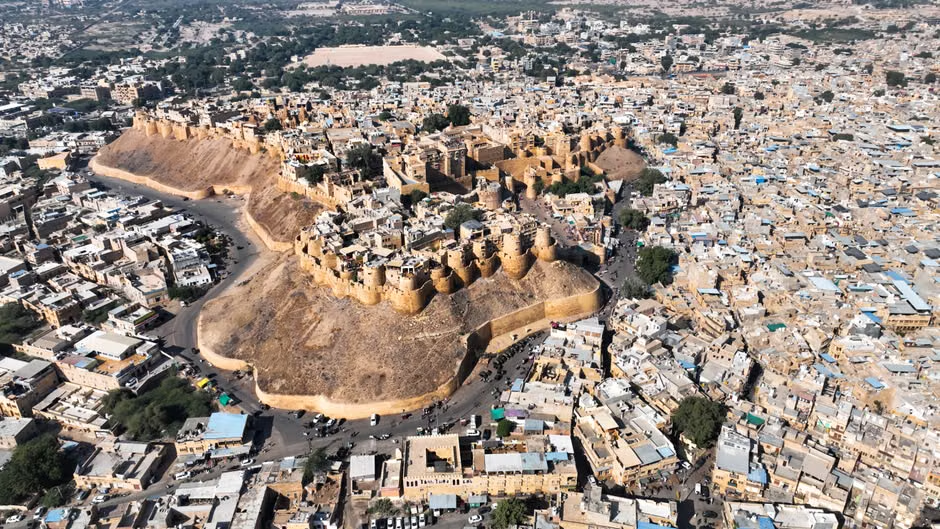
Why Jaisalmer is Perfect for Your Celebration
- Jaisalmer Fort — a UNESCO World Heritage Site and a living fort — provides an unmatched backdrop for palace and heritage weddings
- Vast Sam and Khuri sand dunes offer dramatic open-air settings for desert camp receptions and sundowner celebrations
- The annual Desert Festival (held in February) makes Jaisalmer a natural host for cultural festival gatherings and themed celebrations
- Golden sandstone architecture, camel processions, and Rajasthani folk performances create built-in event spectacle unavailable elsewhere
- Cool, dry winter weather (November–February) is near-perfect for multi-day outdoor wedding functions
- A growing inventory of heritage hotels, fort properties, and luxury desert camps caters specifically to destination wedding groups
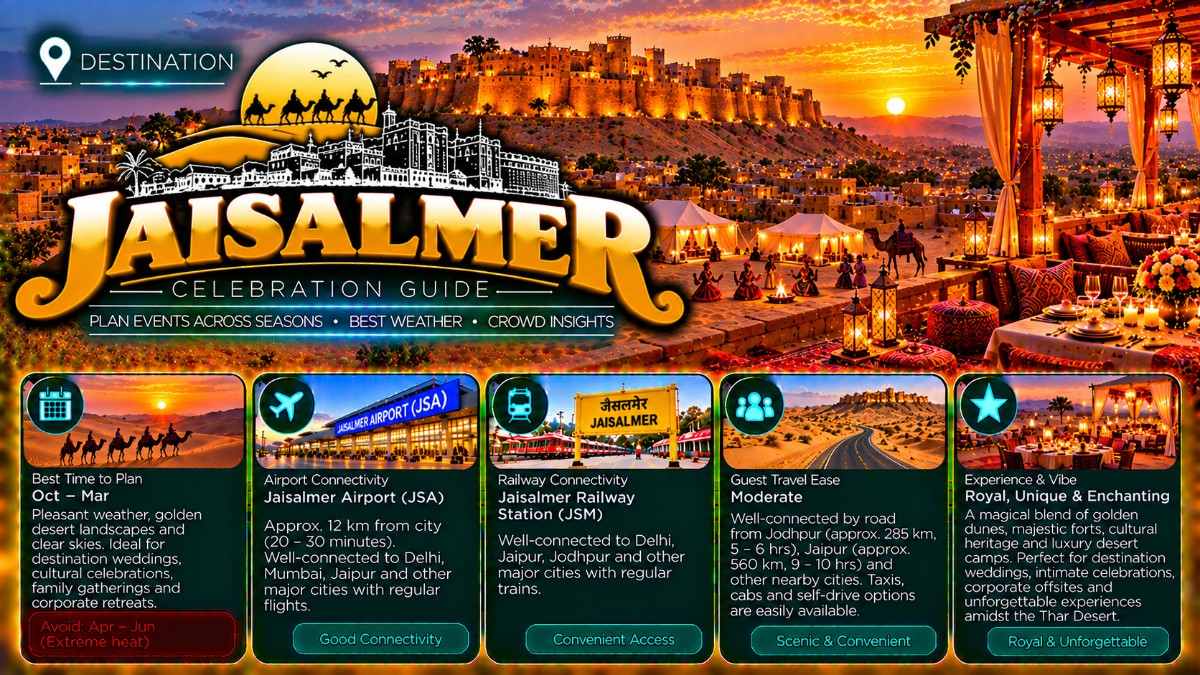
Top Venues in Jaisalmer
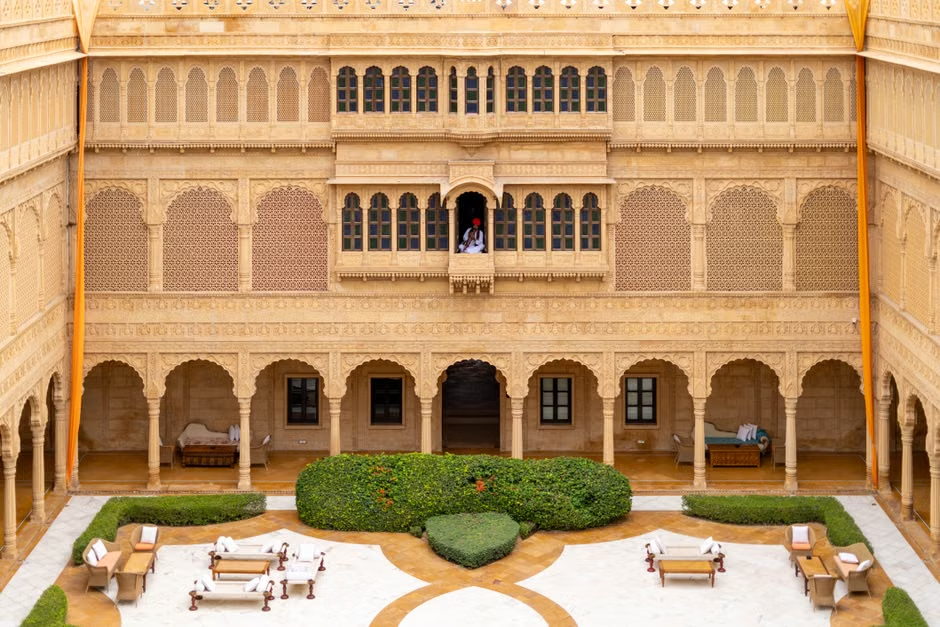
Suryagarh
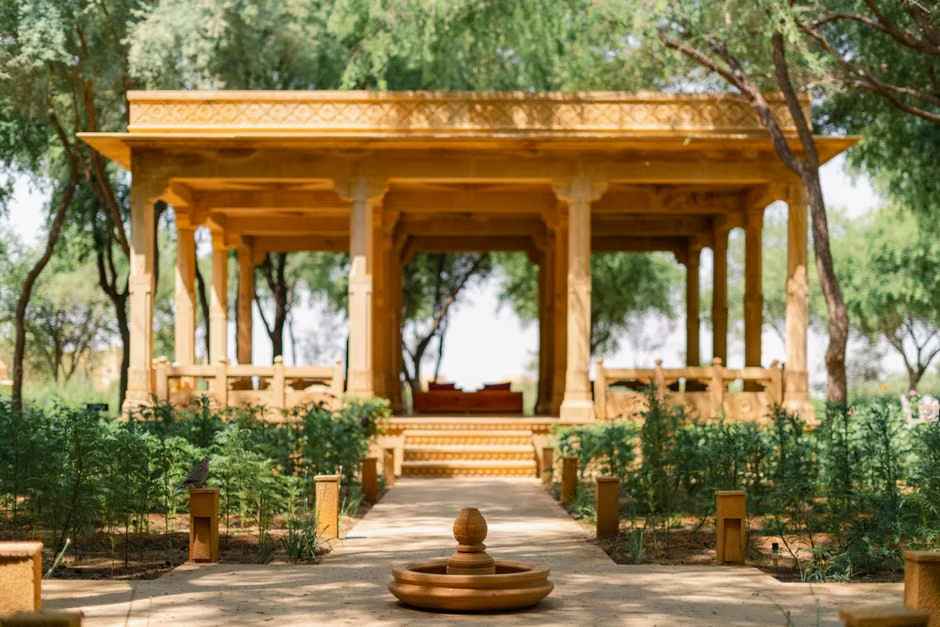
Taj Hotel & Convention Centre, Jaisalmer
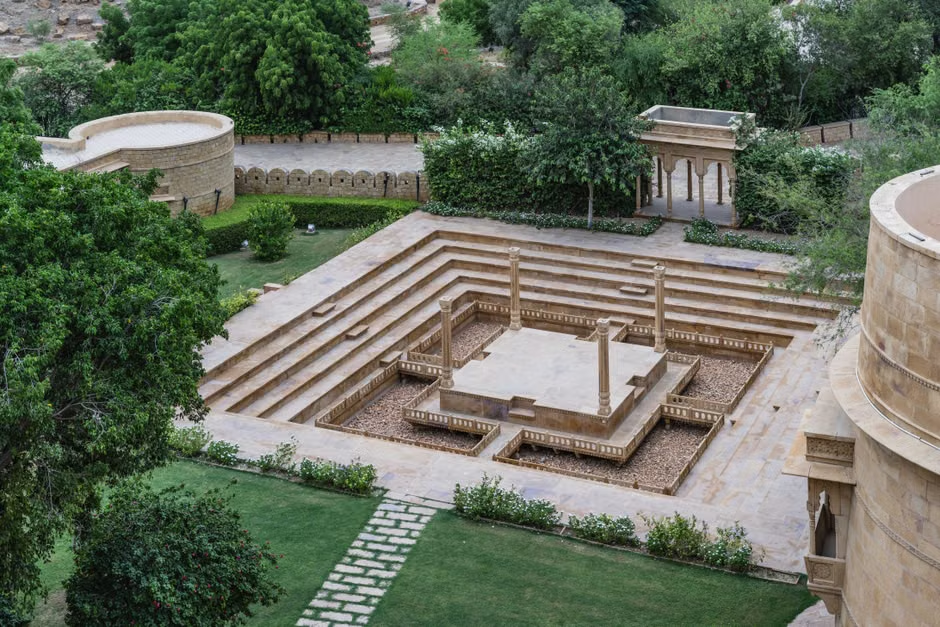
Jaisalmer Marriott Resort & Spa
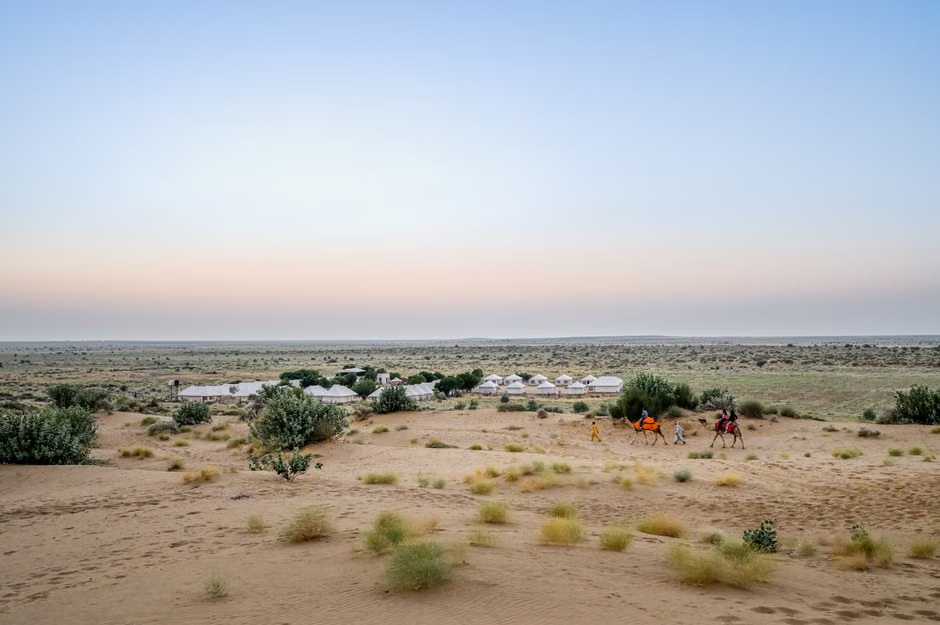
THE VELVET DUNES - BEST LUXURY DESERT CAMP IN SAM SAND DUNES JAISALMER
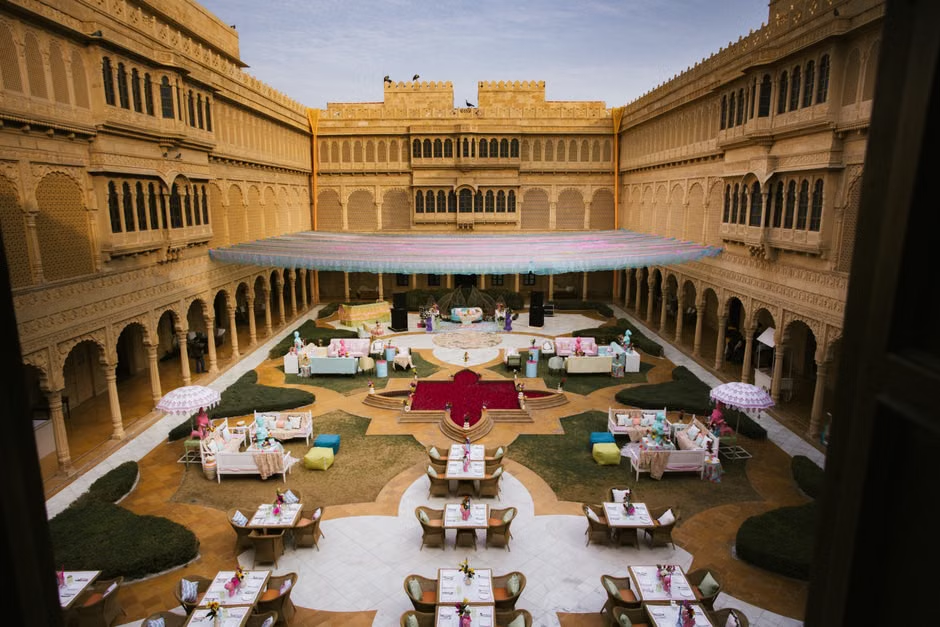
The Serai
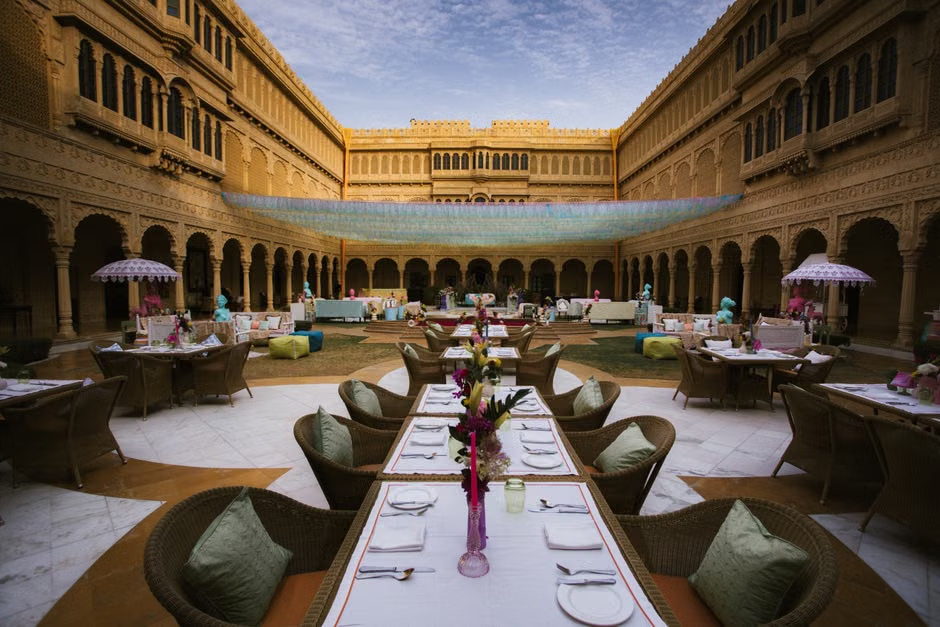
Hotel Rang Mahal
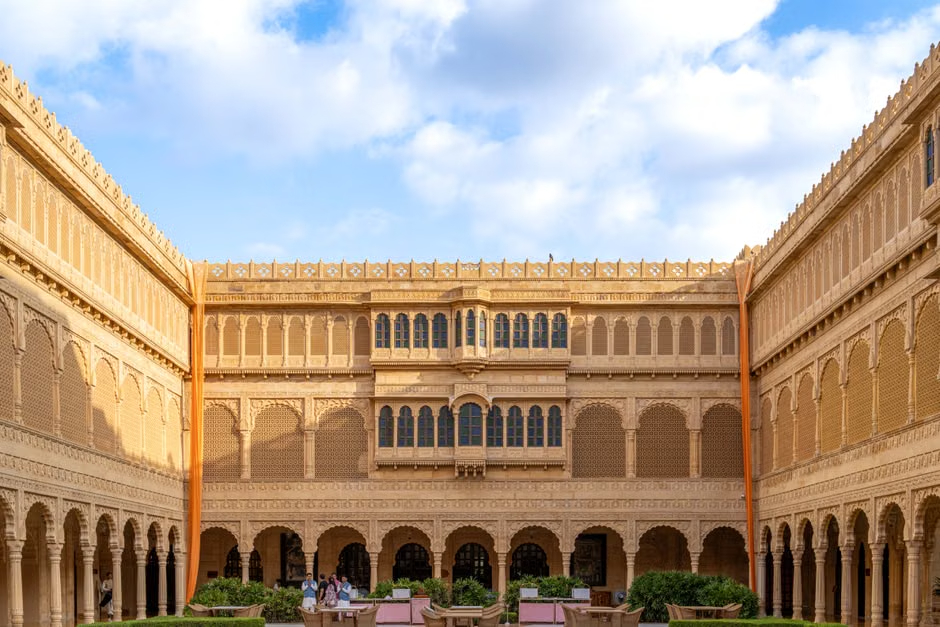
Hotel Killa Bhawan
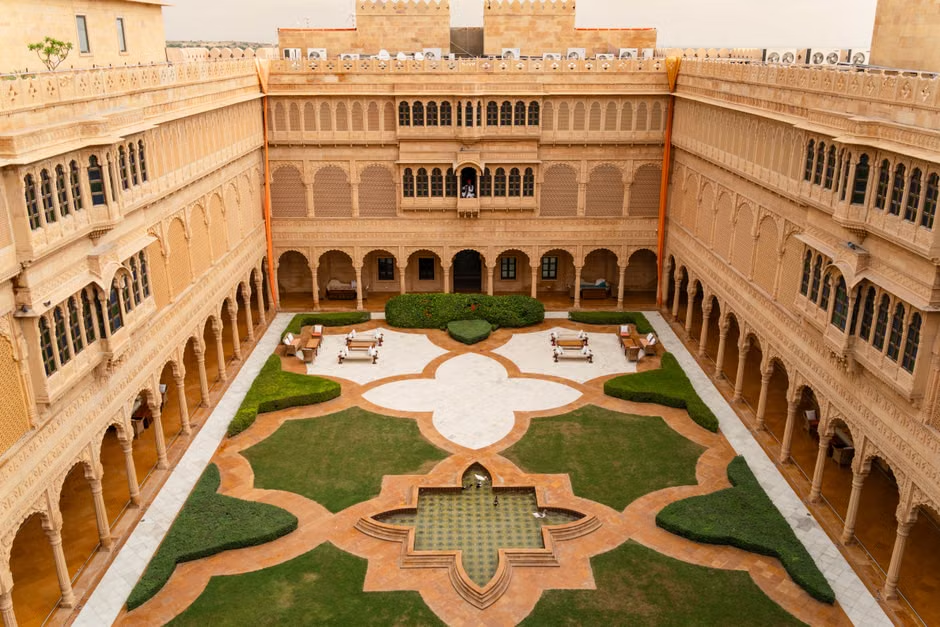
HOTEL AUREA JAISALMER

Gorbandh Palace
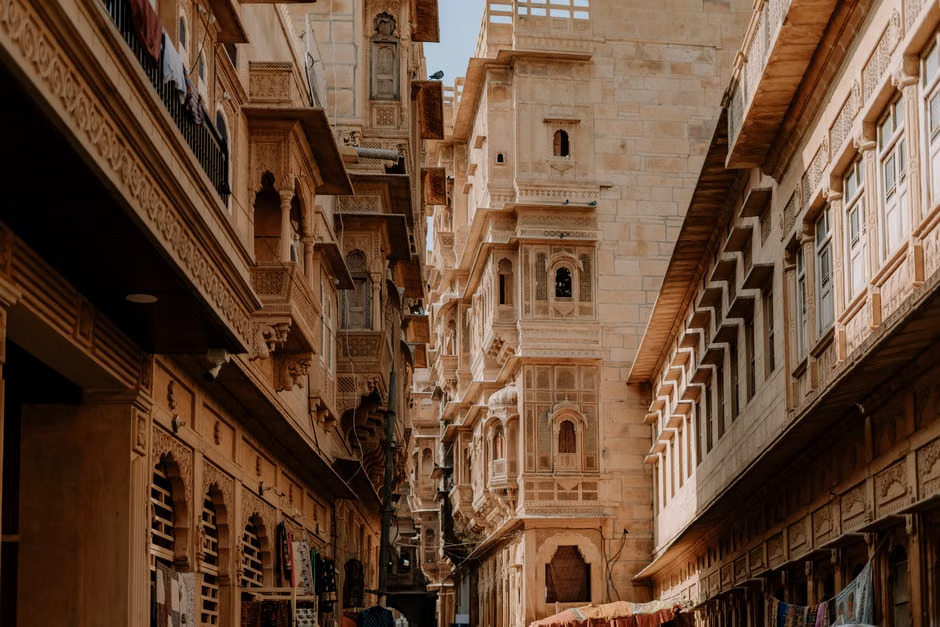
Nachana Haveli
Hotel Fifu
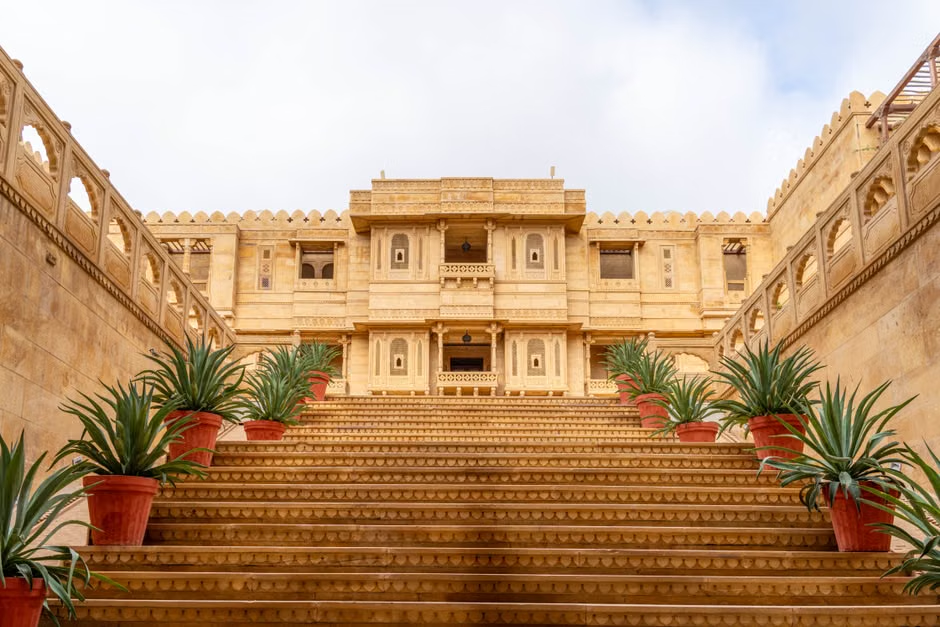
SandCastle Resort
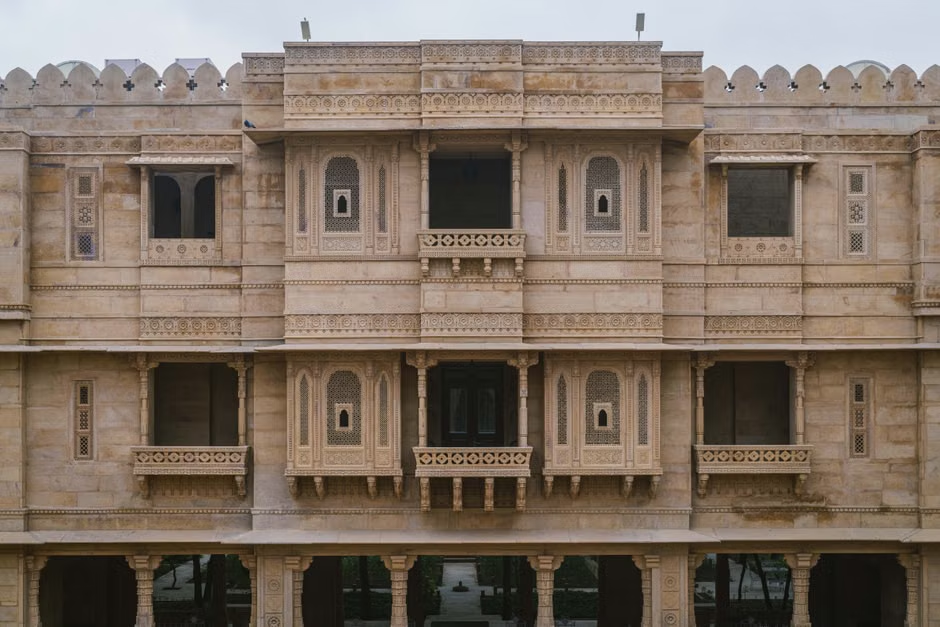
Hotel Royal Fort
HOTEL RAJSHAHI JAISALMER
Hotel Shahiraj Jaisalmer
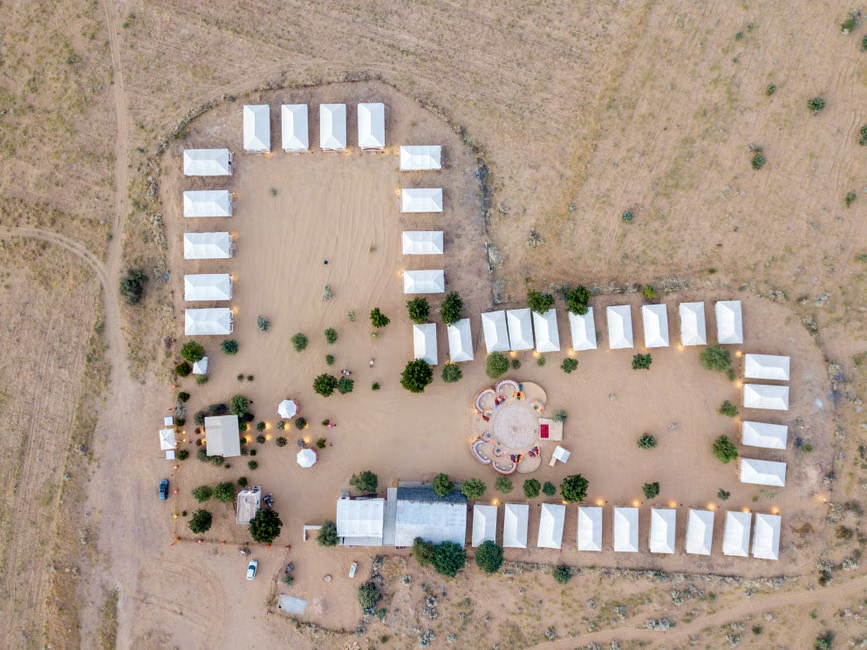
Roadside desert safari camp sam jaisalmer
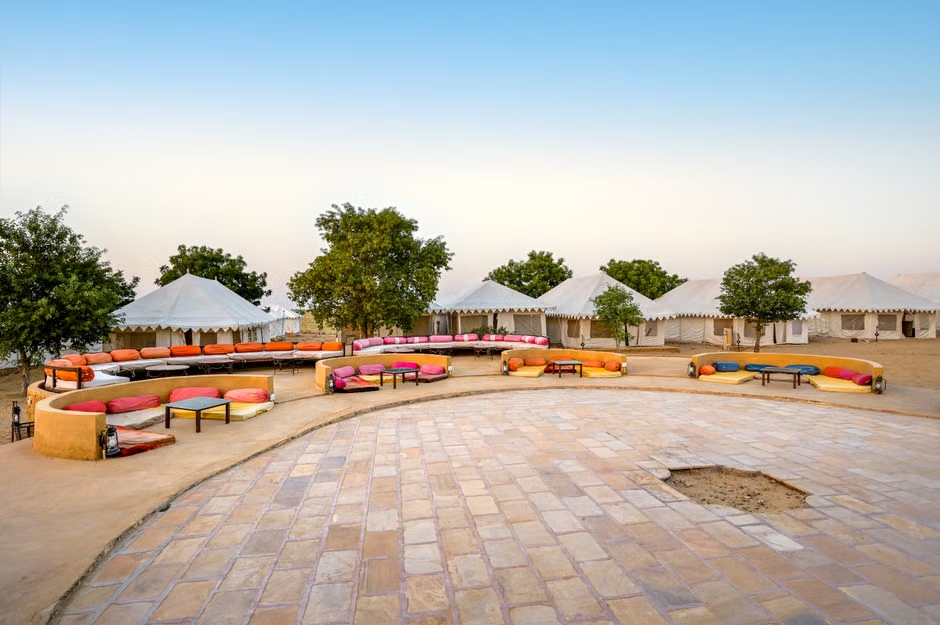
Desert Dream Adventure Camp & Resort Jaisalmer
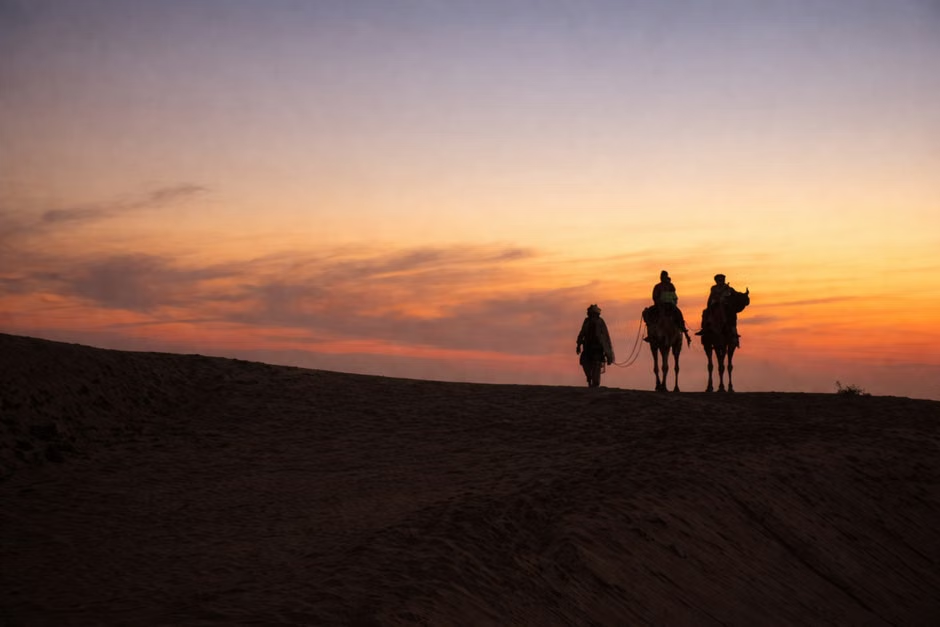
Sam Sand Dunes Desert Camp Jaisalmert
Hotel Oasis Villa
Compare Jaisalmer with Other Top Destinations
Frequently Asked Questions
Is Jaisalmer a good destination for a palace or heritage wedding?
Yes, strongly so. Jaisalmer is among India's most compelling heritage wedding destinations, with a living sandstone fort, ornate haveli properties, and palace hotels that provide ceremony and reception settings of genuine historical character. A baraat through the fort lanes or a pheras in a haveli courtyard is a genuinely distinctive experience that few other Indian cities can offer.
What is the best time of year to hold a wedding or celebration in Jaisalmer?
November through February is the strongly recommended window. Daytime temperatures are comfortable, evenings are pleasantly cool, and skies are reliably clear — ideal for outdoor ceremonies and dune receptions. February also coincides with the Jaisalmer Desert Festival, which adds cultural energy to the city. Avoid March onwards, when heat rises rapidly and outdoor events become impractical.
How do guests typically travel to Jaisalmer for a destination wedding?
Guests have three main options: flying into Jaisalmer Airport (limited frequency, connections typically through Delhi, Mumbai, or Jaipur), taking a direct overnight train from Delhi or Jaipur to Jaisalmer Railway Station, or flying into Jodhpur and transferring by road (roughly four to five hours). Most destination wedding groups use a combination of all three, and it is worth building extra travel time into guest itineraries.
What kinds of event venues are available in Jaisalmer?
Jaisalmer offers heritage palace hotels and haveli properties with sandstone courtyards, luxury tented desert camp resorts near the dunes, contemporary resort hotels with banquet halls and lawns, and intimate fort-area spaces for smaller functions. Open dune locations near Sam and Khuri can also be set up as temporary event sites for desert dinners and sundowner parties.
Can Jaisalmer accommodate a large wedding guest list?
Yes, for most destination wedding scales. The leading resort hotels and desert camp properties can comfortably handle groups of 200–500 guests across accommodation and event functions. For very large single-venue events exceeding 800–1,000 guests, the local venue inventory may be stretched, and it is worth discussing capacity requirements with a local planner early in the planning process.
Is Jaisalmer suitable for a Desert Festival-themed celebration?
Yes — it is the natural home for this event type. Whether timed to coincide with the official Jaisalmer Desert Festival in February or designed as a standalone themed celebration, the dune landscape, folk performers, camel processions, and golden-hour light make this the destination's single strongest suit. Local vendors experienced in this format are readily available.
What local cultural elements can be incorporated into a Jaisalmer wedding or event?
Jaisalmer has a rich and accessible local cultural ecosystem. Rajasthani folk musicians (including traditional dhol, shehnai, and sarangi players), kalbeliya and ghoomar dancers, camel and horse procession organisers, puppet shows, and turban-tying ceremonies are all locally available and genuinely authentic — not imported entertainment but a living expression of the region's culture.
How does local transport work for guests during a multi-day wedding in Jaisalmer?
Group transport is typically managed through chartered vehicles — jeeps, tempo travellers, and coaches — arranged by the host hotel or event coordinator. This is particularly important for evening events at dune locations outside the city, where guests need organised return transport after dark. Most experienced Jaisalmer wedding planners build a dedicated transport plan into the event programme.
Is the local vendor and catering ecosystem in Jaisalmer capable of handling a destination wedding?
Generally yes, for most requirements. In-house catering at leading heritage hotels and desert camp resorts is strong, and traditional Rajasthani cuisine is a genuine culinary highlight. For highly specialised requirements — international cuisine, large-scale floral installations, or complex AV production — vendors are often sourced from Jodhpur, Jaipur, or Delhi, which requires additional lead time.
Is Jaisalmer safe for wedding guests, including those travelling from abroad?
Yes. Jaisalmer is generally considered very safe for tourists and event guests, including international visitors. The city has a well-established tourism infrastructure and is accustomed to hosting large groups. Standard travel precautions apply, and the leading hotels have professional security arrangements for private events.
Can a cocktail party or sundowner event be held at the dunes or fort area?
Yes, and these are among Jaisalmer's most celebrated event formats. Rooftop terraces overlooking the fort, haveli courtyards, and dune-edge platforms are particularly well-suited to cocktail parties and sundowner events. The golden hour light in Jaisalmer is exceptional, and early-evening functions timed to the sunset are a signature experience of the destination.
What should I know about connectivity and internet access for guests at a Jaisalmer event?
Mobile and internet connectivity is generally adequate at established hotels in the city and along the Sam Road corridor. However, connectivity can be patchy near the dunes and in some areas within the fort. It is worth flagging this to guests in advance and factoring it into any event technology planning — particularly for live-streaming or social media-heavy programmes.

Ready to explore venues in Jaisalmer?
Jaisalmer: Desert Wedding & Heritage Event Destination Guide
◆Jaisalmer is one of India's most distinctive destination wedding and celebration locations, best suited to palace and heritage weddings, desert festival-style gatherings, destination weddings, and wedding receptions. Its primary vibe is Royal & Heritage, shaped by a living sandstone fort, ornate havelis, and the sweeping Thar Desert landscape. The ideal season is November through February, when cool, dry conditions make multi-day outdoor events genuinely comfortable. Accessibility is moderate — Jaisalmer has its own airport and railway station, though flight options are limited and many guests travel via Jodhpur or Jaipur. The destination suits groups seeking dramatic visual impact and cultural immersion over pure logistical convenience.
Jaisalmer at a Glance
| Category | Details |
|---|---|
| Best For | Desert Festival Celebration, Palace / Heritage Wedding, Destination Wedding, Wedding Reception |
| Primary Vibe | Royal & Heritage |
| Other Vibes | Desert & Rustic, Cultural & Folk, Intimate & Romantic |
| Best Season | Winter (November–February) |
Why Choose Jaisalmer?
- A living UNESCO World Heritage Fort: Jaisalmer Fort is not a ruin or a museum — it is an inhabited sandstone citadel whose lanes, temples, and havelis can form the literal backdrop of a wedding procession or cocktail evening, a setting that no other Indian city can replicate.
- Unmatched desert landscape for outdoor events: The Sam and Khuri dune fields, just outside the city, offer vast open-air canvases for desert camp receptions, sundowner parties, and bonfire dinners under some of the darkest, most star-filled skies in northern India.
- A mature destination wedding hospitality ecosystem: Jaisalmer has developed a well-established network of luxury heritage hotels, tented desert camps, and specialist event vendors who are experienced in managing multi-day destination wedding programmes for large guest groups.
- Built-in cultural spectacle: Rajasthani folk musicians, kalbeliya dancers, camel processions, and puppet shows are locally available and deeply authentic — they are not imported entertainment but a genuine expression of the region's living culture.
- The Desert Festival connection: Held annually in February, the Jaisalmer Desert Festival is a nationally recognised cultural event. Celebrations timed around it gain an extraordinary ambient energy, with folk performances, turban-tying competitions, and camel races as a natural backdrop.
- Compact city core with good internal logistics: The main heritage zone, fort, and most event-grade hotels are within a manageable radius, making guest movement between functions relatively straightforward during the winter season.
Which Celebrations Work Best in Jaisalmer?
Desert Festival Celebration: Jaisalmer is the natural home of this event type. Whether timed to coincide with the official Desert Festival in February or designed as a standalone themed celebration, the dune landscape, folk culture, and golden-hour light make this the destination's single strongest suit. Groups can incorporate camel safaris, folk performances, and open-air dune dinners into a cohesive multi-day programme.
Palace / Heritage Wedding: The fort, havelis, and sandstone palace hotels provide ceremony and reception settings of genuine historical weight. A baraat (wedding procession) through the fort lanes or a pheras conducted in a haveli courtyard carries a visual and emotional impact that is difficult to manufacture elsewhere.
Destination Wedding: For couples seeking a multi-day, multi-function wedding that gives guests a complete travel experience — arrival, cultural immersion, ceremony, and celebration — Jaisalmer delivers a coherent narrative from start to finish. The destination's relative remoteness actually works in its favour here, encouraging guests to stay for the full programme rather than commuting in and out.
Wedding Reception: Luxury desert camp settings and the open lawns of heritage hotels are particularly well-suited to large evening receptions, where the combination of ambient lighting, folk entertainment, and the desert night sky creates an atmosphere that is genuinely memorable for guests.
Private Party: Jaisalmer's intimate heritage properties and exclusive tented camps are well-suited to private group parties — milestone birthdays, anniversaries, or corporate celebrations — where exclusivity and a dramatic setting matter more than urban convenience.
Cocktail Party: Rooftop terraces overlooking the fort, haveli courtyards, and dune-edge platforms are among the most photogenic cocktail party settings in Rajasthan. The golden hour light in Jaisalmer is particularly celebrated and makes early-evening cocktail functions visually exceptional.
Venues & Event Spaces
Jaisalmer's event venue landscape spans several distinct types, each suited to different functions and group sizes. Heritage palace hotels and haveli properties form the backbone of the destination wedding market — these are typically converted royal residences or merchant mansions with sandstone courtyards, ornate jharokha windows, and intimate indoor halls. They are best suited to ceremonies, mehendi functions, and smaller receptions where architectural character matters most.
Luxury desert camp resorts represent Jaisalmer's most distinctive venue category — large tented complexes set on or near the dunes, with permanent infrastructure for weddings including decorated dining pavilions, open-air stages, and bonfire areas. These properties can accommodate substantial guest lists and are particularly popular for reception dinners and sangeet nights.
Contemporary resort hotels along the Sam Road corridor offer more conventional banquet hall and lawn combinations, with the capacity to handle larger guest counts and the logistical infrastructure (in-house catering, accommodation blocks, AV facilities) that multi-day destination weddings require.
Fort and haveli spaces within the living fort itself are available for smaller, more intimate functions — a pheras in a temple courtyard, a cocktail evening on a fort bastion, or a heritage walk-and-dinner experience. These spaces require careful coordination with local authorities and are generally better suited to groups of under 100 guests.
Open dune locations near Sam and Khuri can be set up as temporary event sites for desert dinners, sundowner parties, and cultural performances, typically managed through the resort hotels that have established relationships with the relevant land-use permissions.
Best Time to Celebrate
The winter months of November through February are the clear and strongly recommended window for events in Jaisalmer. Daytime temperatures during this period typically range from the mid-teens to the mid-twenties Celsius, and evenings cool pleasantly — conditions that are genuinely comfortable for outdoor ceremonies, dune dinners, and multi-hour receptions. The sky is reliably clear, the light is golden and photogenic, and the desert landscape is at its most visually dramatic without the harshness of summer heat.
February carries the additional draw of the Jaisalmer Desert Festival, which typically falls around the full moon of the Hindu month of Magha. Events planned around this period benefit from an extraordinary ambient cultural energy across the city.
March and April represent a transitional shoulder period — temperatures begin climbing rapidly, and while early March can still be manageable for indoor-heavy programmes, outdoor evening events become increasingly uncomfortable as the month progresses. By April, daytime temperatures regularly exceed 38°C, making outdoor functions impractical.
May through September should generally be avoided for large outdoor celebrations. May and June bring extreme heat, with temperatures frequently reaching 45°C or above. The monsoon season (July–September) brings some humidity and occasional dust storms, though Jaisalmer receives far less rainfall than most of India — the heat and dust, rather than rain, are the primary concerns. October is a transitional month: temperatures begin to moderate but remain warm enough that outdoor evening events require careful timing and contingency planning.
Getting There & Local Connectivity
Jaisalmer is served by its own domestic airport, located just a few kilometres from the city centre, with scheduled services connecting it to major Indian cities. However, flight frequency is limited compared to larger Rajasthani cities, and guests travelling from smaller metros or international origins will typically need to connect through Delhi, Mumbai, or Jaipur. It is worth building extra travel time into guest itineraries to account for connection logistics.
The railway is often the most reliable and comfortable option for guests travelling from within Rajasthan or from Delhi. Jaisalmer Railway Station has direct train connections to Jodhpur, Jaipur, and Delhi, and the overnight journey from Delhi is a popular and practical choice for large guest groups. The station is centrally located and well-managed.
Road travel from Jodhpur (approximately 285–300 km) is a common option for guests who fly into Jodhpur and then transfer by road — a journey of roughly four to five hours through the desert landscape. This route is well-maintained and frequently used by destination wedding groups.
Within Jaisalmer, local transport for event groups is typically managed through chartered vehicles — jeeps, tempo travellers, and coaches — arranged by the host hotel or a local event coordinator. The distances between the fort area, Sam Road hotels, and the dune sites are manageable but require organised group transport, particularly for evening events when guests need to return from remote dune locations after dark.
Local Vendor & Hospitality Ecosystem
Jaisalmer has developed a reasonably mature vendor ecosystem specifically oriented around destination weddings and large cultural celebrations. The city's established position as a tourism and wedding destination means that specialist vendors — including Rajasthani folk performers, camel and horse procession organisers, traditional dhol and shehnai musicians, and local floral decorators — are readily available and experienced in working within event timelines.
Catering at the leading heritage hotels and desert camp resorts is generally strong, with in-house teams experienced in managing large multi-course banquets for wedding groups. Traditional Rajasthani cuisine — dal baati churma, ker sangri, and a range of royal Marwari dishes — is a genuine culinary strength of the destination and can be incorporated meaningfully into event menus rather than treated as a token gesture.
For highly specialised requirements — international cuisine, large-scale floral installations, bespoke lighting design, or luxury AV production — it is common and advisable to bring vendors in from Jodhpur, Jaipur, or Delhi. The local vendor base, while capable and enthusiastic, has natural limits in terms of scale and specialisation for very large or technically complex productions.
Event coordination and wedding planning services have grown significantly in Jaisalmer over the past decade, and several experienced local and regional planners now operate here with established relationships across the hotel, vendor, and permissions landscape. Engaging a planner with specific Jaisalmer experience is particularly valuable given the logistical complexity of managing guests across multiple remote event sites.
Pros & Things to Consider
Why Jaisalmer Works Well
- Genuinely unique visual setting — the golden fort, sandstone havelis, and dune landscape are unlike any other Indian wedding destination
- Strong winter weather window (November–February) with reliable clear skies and comfortable evening temperatures for outdoor events
- Rich, authentic cultural programming available locally — folk music, dance, camel processions, and craft traditions that enhance event experiences organically
- A growing inventory of luxury heritage hotels and desert camp resorts specifically experienced in destination wedding logistics
- The Desert Festival (February) provides a natural cultural anchor for themed celebrations and adds ambient energy to the city
- Relatively compact city core makes guest movement between functions manageable during the peak season
Things to Consider
- Limited flight connectivity: Jaisalmer Airport has restricted flight frequency, meaning many guests will need to connect through another city — this adds travel time and complexity, particularly for international guests or those from smaller Indian cities
- Extreme off-season conditions: The summer months are genuinely harsh, and the usable event window is narrower than in many other Rajasthani destinations — planning flexibility around the November–February window is essential
- Remote dune event logistics: The most dramatic event settings (Sam and Khuri dunes) are located outside the city and require organised group transport, which adds a logistical layer that needs careful coordination, especially for late-night returns
- Specialist vendor limitations: For very large-scale or technically complex productions, some vendor categories will need to be sourced from Jodhpur, Jaipur, or Delhi, adding lead time and coordination complexity
- Water scarcity context: Jaisalmer is a desert city with genuine water resource constraints — large events should be planned with awareness of this, and responsible water use is both an ethical and a practical consideration
- Mobile and internet connectivity: While generally adequate in the city and at established hotels, connectivity can be patchy near the dunes and in some fort areas — worth flagging to guests and factoring into event tech planning
When Jaisalmer May Not Be the Right Fit
- Events planned outside November–February: If your dates fall between March and October, Jaisalmer's extreme heat and dust conditions make large outdoor celebrations genuinely impractical and potentially uncomfortable for guests — a different destination with a broader usable season would serve you better.
- Guests with significant international travel or complex connections: For a guest list that is predominantly international or spread across many smaller Indian cities, the limited flight connectivity into Jaisalmer can create meaningful travel friction. Groups where guest convenience is the top priority may find a better-connected city more appropriate.
- Very large guest lists requiring a single venue: While Jaisalmer's leading properties can accommodate substantial groups, the destination's venue inventory is not designed for extremely large single-venue events of 1,000+ guests. Groups at that scale may find the local infrastructure stretched.
- Couples seeking a lush, green, or water-centric setting: Jaisalmer's beauty is arid, golden, and desert-defined. If the vision for a wedding is centred on gardens, lakes, or tropical greenery, this destination is genuinely not the right fit — and a different Rajasthani or coastal destination would better match that aesthetic.