
Why Haridwar is Perfect for Your Celebration
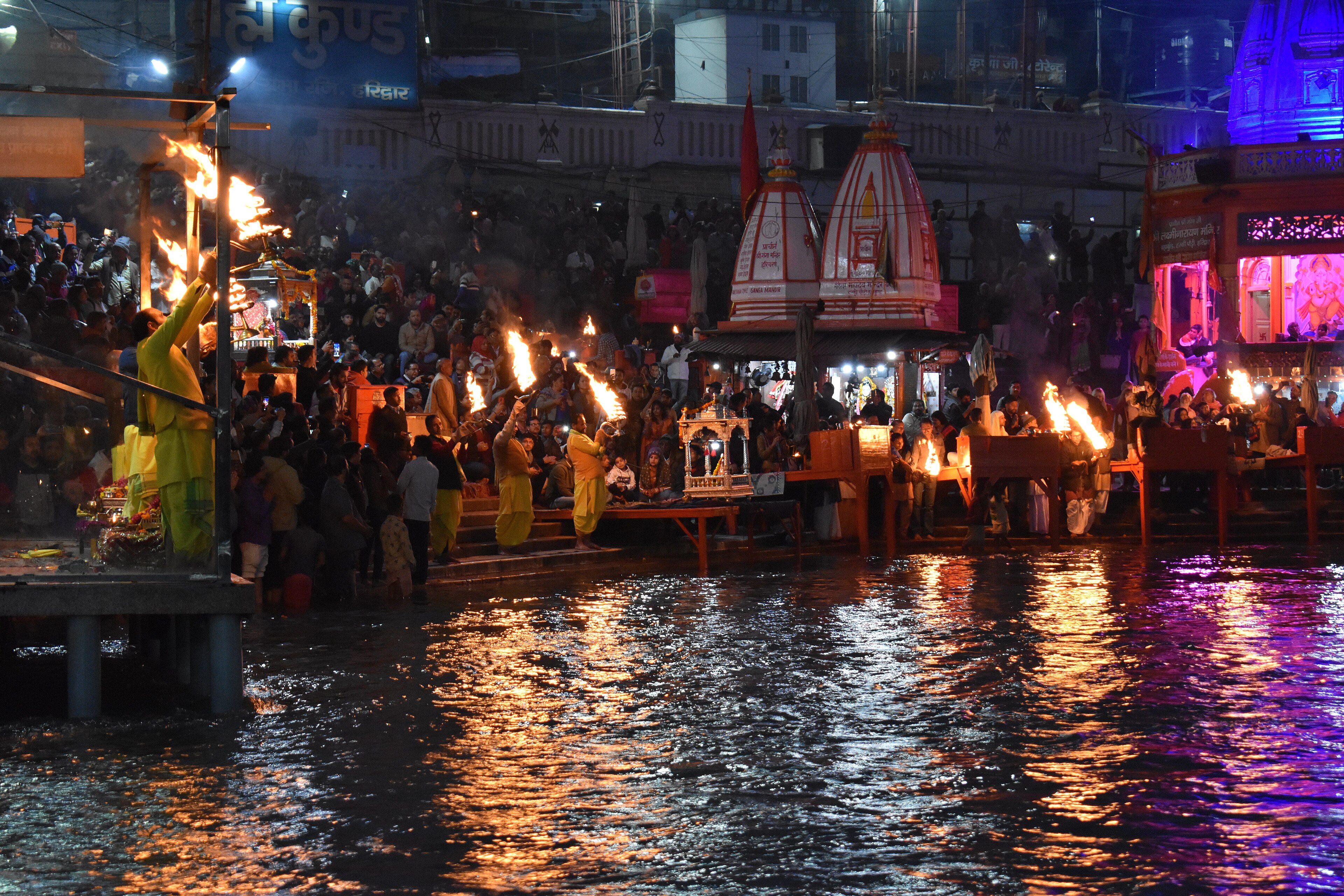
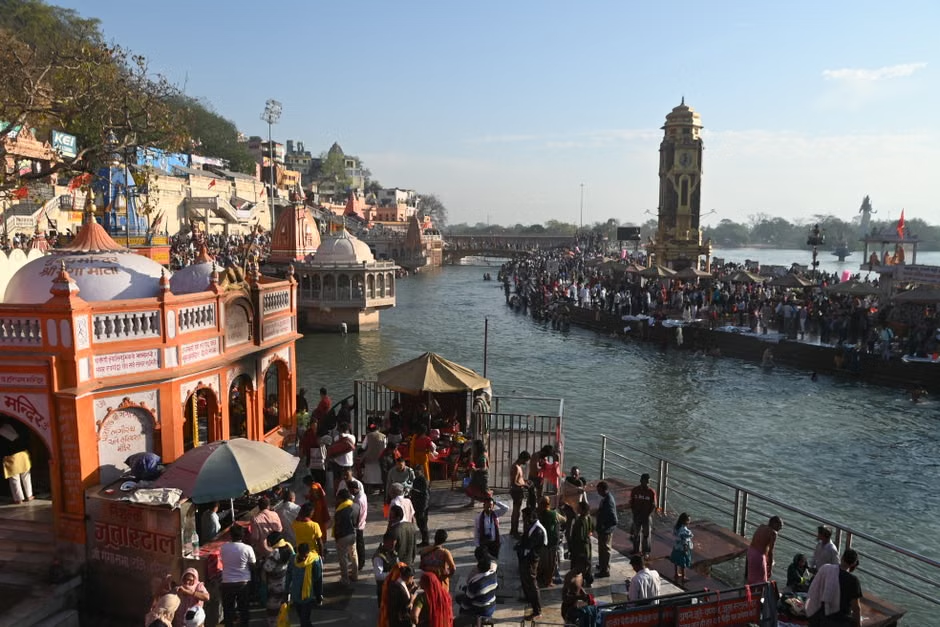
- Home to Har Ki Pauri and the world-famous Ganga Aarti — an unmatched ceremonial backdrop for spiritual events
- One of four Kumbh Mela host cities, with established large-scale gathering infrastructure
- Excellent railway connectivity via Haridwar Junction, with direct trains from Delhi, Mumbai, Kolkata and beyond
- A dense ecosystem of ashrams, dharamshalas, and retreat centres suited to pilgrimage and spiritual group stays
- Cool, dry winters (November–February) create comfortable outdoor conditions for multi-day ceremonies and gatherings
- Proximity to Rishikesh (~25 km) expands venue and accommodation options for larger guest groups
Top Venues in Haridwar
Haveli Hari Ganga
Hotel Ganga Lahari
Sagar Ganga Resort
Compare Haridwar with Other Top Destinations
Frequently Asked Questions
Is Haridwar a good destination for a Kumbh or Ganga spiritual gathering?
Yes, absolutely. Haridwar is one of India's four Kumbh Mela host cities and the most accessible of them by rail. Its ghats, temples, and established gathering infrastructure make it the natural choice for Kumbh-centred events and Ganga spiritual gatherings. The city's entire ecosystem — from ritual specialists to large-scale vegetarian catering — is oriented around exactly this type of event.
What size of guest group can Haridwar realistically accommodate for a religious event?
Haridwar can accommodate groups ranging from small family gatherings of 20–30 to very large community gatherings of several hundred or more, particularly during Kumbh periods when the city's infrastructure scales significantly. For mid-sized events of 100–300 guests, the combination of hotels, ashrams, and dharamshalas within Haridwar and nearby Rishikesh provides workable accommodation and event space options.
How do guests typically travel to Haridwar from major Indian cities?
Rail is the most practical option for most guests. Haridwar Junction has direct train connections from Delhi (approximately 4–5 hours), Mumbai, Kolkata, Varanasi, and many other cities. Guests flying in use Jolly Grant Airport in Dehradun, about 35 km away, which connects to Delhi and select other cities. From Delhi, road travel by car or bus is also common, taking roughly 4–5 hours.
What is the best time of year to plan a spiritual gathering or religious function in Haridwar?
November through February is the optimal window. Cool, dry weather makes outdoor ceremonies and ghat-side gatherings comfortable, and the Ganga Aarti is particularly atmospheric in winter evenings. This period also aligns with the Kumbh and Ardh Kumbh calendar when applicable. Avoid the monsoon (July–September) for outdoor events due to heavy rainfall and elevated river levels.
What kinds of venues are available in Haridwar for religious and spiritual events?
Haridwar offers a distinctive mix of ghats and riverfront open-air spaces, heritage havelis converted into boutique hotels, ashrams and spiritual retreat centres with residential capacity, and mid-range hotel banquet halls and lawns. For events requiring larger or more polished venue infrastructure, nearby Rishikesh (approximately 25 km) meaningfully expands the available options.
Is Haridwar suitable for a religious family function like a mundan or shraddh ceremony?
Yes. Haridwar is one of the most established destinations in India for family religious functions including mundan (head-shaving) ceremonies, asthi visarjan (immersion of ashes), shraddh rituals, and similar rites of passage. A large and experienced community of pandits and ritual specialists is readily available, and ghat-side facilities are well-suited to these ceremonies.
Can large guest groups find accommodation together in Haridwar?
For groups up to around 100–150 guests, block bookings across Haridwar's hotels, heritage properties, and ashrams are generally manageable. Larger groups may need to distribute accommodation across Haridwar and Rishikesh. Ashrams and dharamshalas offer a distinctive and cost-effective residential option for pilgrimage-style gatherings where communal living aligns with the event's character.
Is Haridwar a dry city, and how does that affect event planning?
Yes. Haridwar strictly prohibits alcohol, and virtually all venues operate on a vegetarian-only basis. For spiritual, religious, and pilgrimage-centred events, this is typically a natural fit rather than a constraint. However, event planners should be aware that this is a hard rule — there are no exceptions — and it shapes the overall character of any celebration held here.
What local vendors and services are available for organising a religious event in Haridwar?
Haridwar has a strong local ecosystem of pandits, ceremonial coordinators, and large-scale vegetarian caterers experienced in religious functions and community feasts. For specialist event production — décor, AV, lighting — the local market is more limited, and vendors are often sourced from Delhi or Dehradun. This is a common and workable arrangement given the city's good road and rail connectivity.
What makes the Ganga Aarti at Har Ki Pauri significant for event groups visiting Haridwar?
The nightly Ganga Aarti at Har Ki Pauri is one of India's most iconic religious ceremonies — a large-scale, deeply atmospheric ritual of lamps, chanting, and river worship that takes place every evening. For groups attending spiritual gatherings or religious functions in Haridwar, experiencing the Aarti together is typically a central and memorable part of the programme, requiring no special arrangement beyond being present at the ghat.
How far in advance should a spiritual gathering or religious event in Haridwar be planned?
For standard religious functions and smaller gatherings, three to six months of lead time is generally sufficient to secure accommodation, pandits, and catering. For events coinciding with Kumbh Mela or major festival dates — when the city sees extraordinary visitor volumes — planning twelve to eighteen months in advance is strongly advisable, as accommodation and ghat access become significantly more constrained during these peak periods.

Ready to explore venues in Haridwar?
Haridwar: Spiritual Gatherings, Sacred Festivals & Riverfront Event Venues
◆Haridwar is India's foremost destination for spiritual gatherings, religious ceremonies, and pilgrimage-centred celebrations. Its primary strength lies in events rooted in faith and community — Kumbh and Ganga spiritual gatherings, religious family functions, temple festivals, and cultural celebrations tied to the sacred Ganges. The city's vibe is deeply spiritual and soulful, shaped by its ghats, temples, and centuries of religious tradition. The best season runs from November through February, when cool, dry weather makes outdoor ceremonies comfortable. Haridwar is well-connected by rail from across India, making guest travel generally straightforward, and its accommodation and event ecosystem spans ashrams, heritage properties, and mid-range resorts.
Haridwar at a Glance
| Aspect | Detail |
|---|---|
| Best For | Kumbh / Ganga Spiritual Gathering, Ganga / Spiritual Festival Gathering, Religious Family Function, Spiritual / Pilgrimage Gathering |
| Primary Vibe | Spiritual & Soulful |
| Other Vibes | Cultural, Heritage, Community-Centred |
| Best Season | Winter (November–February) |
Why Choose Haridwar?
- Unmatched sacred setting: Har Ki Pauri and the nightly Ganga Aarti provide a ceremonial backdrop that no purpose-built event venue can replicate — the river itself becomes part of the celebration.
- Kumbh Mela infrastructure: As one of four Kumbh host cities, Haridwar has demonstrated capacity for gatherings of extraordinary scale, with established crowd management, temporary accommodation, and logistics networks that benefit even smaller organised events.
- Strong rail connectivity: Haridwar Junction is directly connected to Delhi, Mumbai, Kolkata, Varanasi, and dozens of other cities, making it one of the more accessible pilgrimage destinations in northern India for guests travelling from across the country.
- Dense ashram and retreat ecosystem: The city and its immediate surroundings host a large number of ashrams, dharamshalas, and spiritual retreat centres that can accommodate group stays in a manner aligned with the nature of religious and pilgrimage events.
- Authentic cultural and religious programming: Local priests, pandits, and ritual specialists are readily available and experienced in organising large-scale religious functions, naming ceremonies, and community gatherings with proper ceremonial structure.
- Proximity to Rishikesh: The neighbouring city of Rishikesh, approximately 25 km away, meaningfully expands the available pool of accommodation, retreat venues, and event spaces for groups whose guest list exceeds what Haridwar's own inventory can comfortably absorb.
Which Celebrations Work Best in Haridwar?
- Kumbh / Ganga Spiritual Gathering: Haridwar is one of the four sacred Kumbh cities, and no other destination in India offers the same combination of ghat infrastructure, ritual tradition, and mass-gathering experience for this specific event type. Groups attending or organising around Kumbh find the city's entire ecosystem oriented toward this purpose.
- Ganga / Spiritual Festival Gathering: The Ganges at Haridwar is the focal point of numerous annual festivals — from Ganga Dussehra to Kartik Purnima — and the city's ghats, temples, and open spaces are naturally suited to festival-format spiritual gatherings with large community participation.
- Religious Family Function: Families travelling to Haridwar for mundan ceremonies, asthi visarjan (immersion of ashes), shraddh rituals, or other rites of passage find a well-established local ecosystem of priests, ritual specialists, and ghat-side facilities that make organising these functions relatively straightforward.
- Spiritual / Pilgrimage Gathering: Haridwar sits at the gateway to the Char Dham pilgrimage circuit, making it a natural assembly and departure point for pilgrimage groups. Retreat centres and ashrams are well-equipped to host multi-day spiritual programmes, meditation retreats, and satsang gatherings.
- Temple Festival: The city's dense concentration of temples — including Mansa Devi, Chandi Devi, and Maya Devi — means that temple-centred festival celebrations have authentic, historically significant venues available, with local communities already accustomed to large-scale festival participation.
- Cultural Festival Gathering: Haridwar's calendar of cultural and religious events, combined with its Himalayan foothills setting and riverfront character, makes it a compelling location for cultural festivals that blend performance, community gathering, and spiritual experience in a single programme.
Venues & Event Spaces
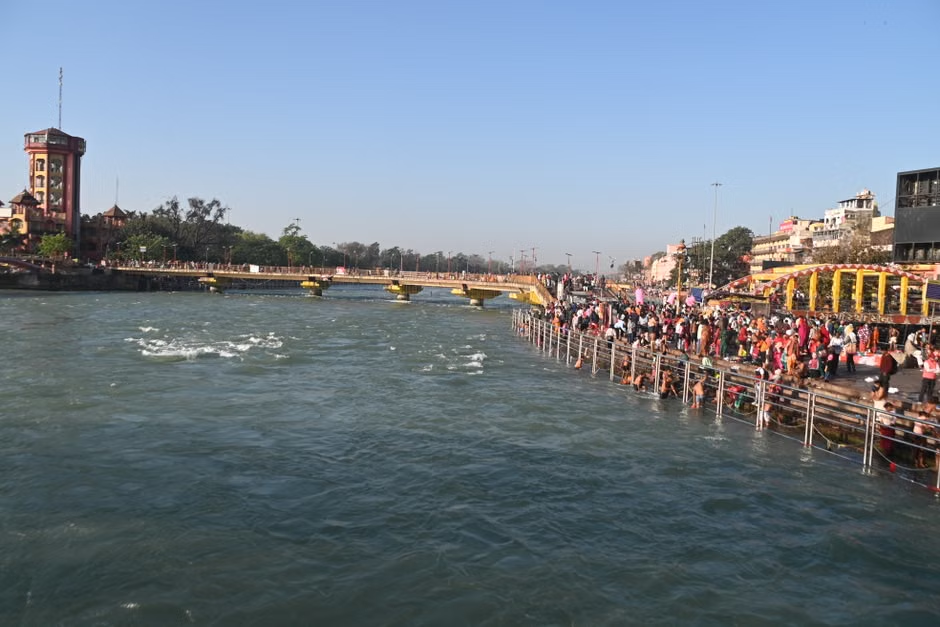
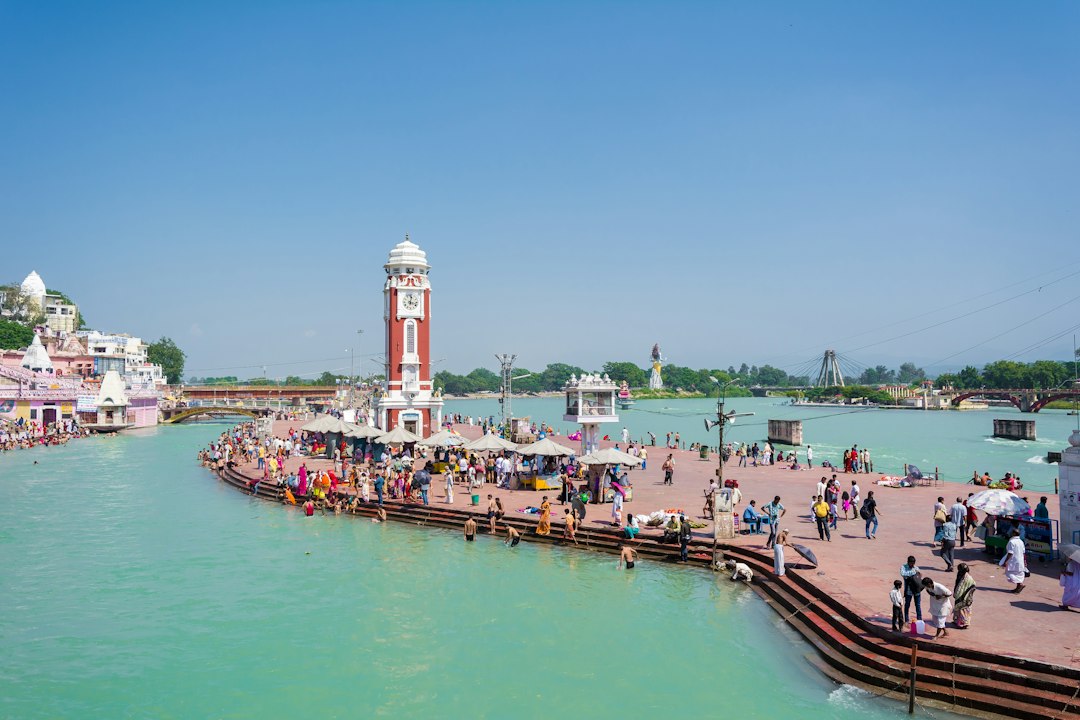
Haridwar's event venue landscape is shaped by its identity as a pilgrimage city rather than a leisure tourism hub. The most distinctive spaces are its ghats and riverfront areas, which serve as natural open-air venues for ceremonies, aarti gatherings, and community events — though their use for private functions is subject to local authority permissions and the city's alcohol-free, vegetarian-only character.
Beyond the ghats, the city offers heritage havelis that have been converted into boutique hotels with event facilities, providing an intimate, historically textured setting for smaller religious family functions and gatherings. Ashrams and spiritual retreat centres represent a significant and distinctive category — many have large halls, open courtyards, and accommodation blocks that can host multi-day residential programmes for groups of varying sizes.
Mid-range and upper-mid-range hotels and resorts along the Ganges and in the broader Haridwar area offer banquet halls and lawns suited to religious functions, naming ceremonies, and community gatherings. For events requiring larger banquet capacity or more polished hospitality infrastructure, the nearby Rishikesh corridor provides additional options within a short drive.
It is worth noting that Haridwar is a dry city — alcohol is prohibited — and most venues operate on a strictly vegetarian basis. Event planners should factor this into their planning, as it shapes both the catering and the overall event character in ways that are well-aligned with spiritual and religious gatherings but may be a constraint for other event types.
Best Time to Celebrate
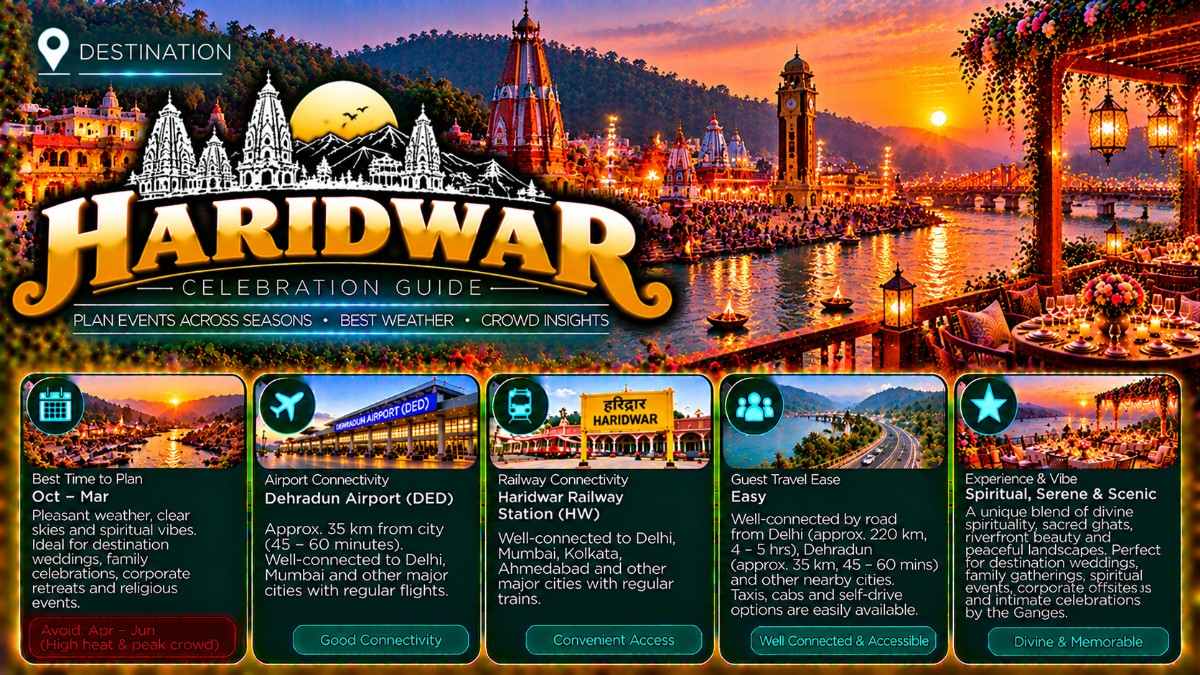
The winter months of November through February are the clear optimal window for events in Haridwar. Daytime temperatures typically range from around 10°C to 22°C, making outdoor ceremonies, ghat-side gatherings, and multi-day programmes genuinely comfortable. The air is dry and clear, visibility toward the Himalayan foothills is at its best, and the Ganges — while cold — is at a manageable level for ritual activities. The Ganga Aarti at Har Ki Pauri is particularly atmospheric in the cool evening air of winter.
March and early April represent a usable shoulder period, with temperatures still moderate, though the transition toward summer heat begins. Late April through June sees temperatures climb sharply, regularly exceeding 40°C in May and June, making outdoor events uncomfortable and logistically demanding for guests and vendors alike.
July through September brings the monsoon season, with heavy and sometimes unpredictable rainfall. The Ganges rises significantly during this period, and flooding near the ghats is a genuine risk — outdoor events and ghat-side ceremonies are strongly inadvisable. The monsoon also affects road access from the plains and can disrupt travel plans for guests arriving from Delhi and other cities.
October is a transitional month — the monsoon typically recedes, but residual humidity and the occasional late rain make it a less reliable choice than November onward. From a Kumbh planning perspective, the timing of the Maha Kumbh and Ardh Kumbh follows a fixed astrological calendar and falls in January–February, which aligns naturally with the winter best season.
Getting There & Local Connectivity
Haridwar is among the better-connected pilgrimage cities in northern India, primarily by rail. Haridwar Junction is a major railway station with direct connections to Delhi, Mumbai, Kolkata, Varanasi, Lucknow, Amritsar, and many other cities. For large guest groups travelling from across India, the train is typically the most practical and comfortable option, with multiple daily services from Delhi alone taking approximately four to five hours.
The nearest airport is Jolly Grant Airport in Dehradun, approximately 35 km from Haridwar city centre. It operates flights to Delhi and a limited number of other cities, making it a convenient option for guests flying in, though the range of direct connections is more limited than a major metro airport. Guests from cities without a direct Dehradun connection will typically route through Delhi and then travel onward by train or road.
By road, Haridwar is approximately 200–220 km from Delhi, a journey of roughly four to five hours depending on traffic — a manageable drive for guests in the National Capital Region. The National Highway connecting Delhi to Haridwar is well-maintained and regularly used for group travel by bus and private vehicle.
Within Haridwar itself, the city is compact and navigable, though the area around Har Ki Pauri and the main ghats is pedestrianised and can be congested, particularly during festival periods. Auto-rickshaws, e-rickshaws, and taxis are the primary modes of local transport for groups. For events spread across Haridwar and Rishikesh, private vehicle hire is the most practical arrangement for coordinating guest movement.
Local Vendor & Hospitality Ecosystem
Haridwar's vendor ecosystem is deeply specialised around religious and spiritual events. Pandits, ritual specialists, and ceremonial coordinators are available in large numbers and are experienced in organising everything from intimate family rituals to large-scale community gatherings. This is a genuine strength that distinguishes Haridwar from more generalist event destinations.
Vegetarian catering is the norm across the city, and local caterers are skilled in preparing large-scale sattvic (pure vegetarian) meals suited to religious functions and community feasts (bhandaras). The quality and scale of vegetarian catering available is a practical asset for events where this aligns with the host's requirements.
For décor, floral arrangements, and event production, the local market is functional but more limited in range than a major metro or established wedding destination. Event planners organising larger or more elaborate productions may need to bring specialist vendors from Delhi or Dehradun, which is a common and workable arrangement given the road and rail connectivity.
Accommodation across the city spans ashrams, dharamshalas, heritage havelis, and mid-range hotels. For very large guest groups requiring a single-property block booking of significant scale, the inventory within Haridwar proper may require supplementing with properties in Rishikesh. The hospitality culture in Haridwar is warm and community-oriented, shaped by centuries of welcoming pilgrims — guests generally find the local service ethos genuine and attentive, if less polished in a luxury-hotel sense than in dedicated resort destinations.
Pros & Things to Consider
Why Haridwar Works Well
- Unrivalled authenticity for spiritual, religious, and pilgrimage-centred events — the setting is the experience
- Strong rail connectivity makes it accessible for guests from across India without requiring a flight
- A large, experienced ecosystem of pandits, ritual specialists, and religious event coordinators
- High-quality vegetarian catering infrastructure well-suited to religious functions and community feasts
- Cool, dry winters provide genuinely comfortable outdoor event conditions from November through February
- The city's dry, vegetarian character is a natural fit for the event types it hosts best, reducing planning friction
Things to Consider
- Haridwar is a dry city — alcohol is strictly prohibited, which is a hard constraint for event types where this matters
- Luxury accommodation inventory within Haridwar itself is limited; groups requiring high-end hospitality at scale will need to look toward Rishikesh or plan carefully around available properties
- The area around the main ghats is heavily congested during peak pilgrimage seasons and festivals — logistics for large private events require careful coordination with local authorities
- Event production vendors (specialist décor, AV, lighting) are less abundant locally than in major metro or established wedding destinations, and may need to be sourced from Delhi or Dehradun
- The monsoon season (July–September) effectively rules out outdoor events and ghat-side ceremonies, significantly narrowing the usable event calendar
When Haridwar May Not Be the Right Fit
- Events requiring alcohol service: Haridwar is a strictly dry city. Any celebration where alcohol is a planned part of the programme cannot be accommodated here — a different destination would be more appropriate.
- Large-scale luxury weddings requiring five-star resort infrastructure: The current hotel inventory in Haridwar does not include large five-star resort properties with the kind of grand ballroom and multi-venue campus that destination wedding planners typically require for elaborate multi-day wedding productions.
- Monsoon-season outdoor events: Groups planning outdoor ceremonies or ghat-side gatherings between July and September face genuine risks from heavy rainfall and Ganges flooding — a different season or a different destination with covered venue infrastructure would be more reliable.
- Events primarily focused on leisure, nightlife, or non-spiritual recreation: Haridwar's identity and infrastructure are oriented around pilgrimage and spiritual community — guests or hosts expecting a leisure resort experience, entertainment-led programming, or a cosmopolitan event atmosphere will find the city's character a poor match for those expectations.