
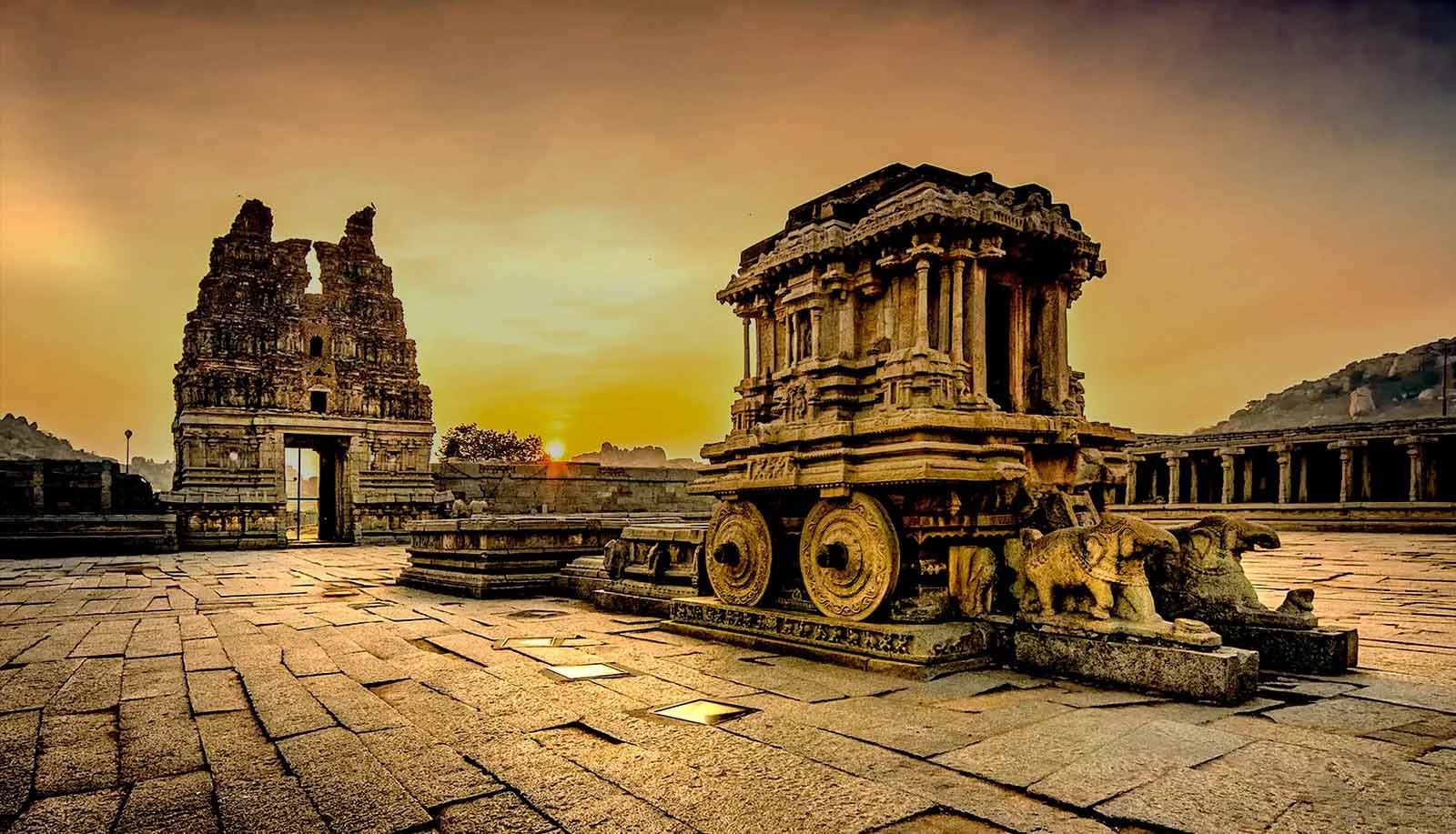
Why Hampi is Perfect for Your Celebration
- UNESCO World Heritage Site backdrop — Vijayanagara ruins provide a genuinely unique, photogenic setting found nowhere else in India
- Intimate scale suits small-to-medium weddings and cultural gatherings without the impersonal feel of large resort complexes
- Riverside ghats and ancient mandapas offer natural ceremonial spaces with deep historical resonance
- Winter season (November–February) delivers reliably cool, dry, and clear days — ideal for outdoor heritage events
- Strong Karnataka cultural identity makes it a natural home for Ugadi celebrations and regional folk festivals
- Relatively lower event footprint compared to mainstream destinations means more exclusivity and privacy for guests

Top Venues in Hampi
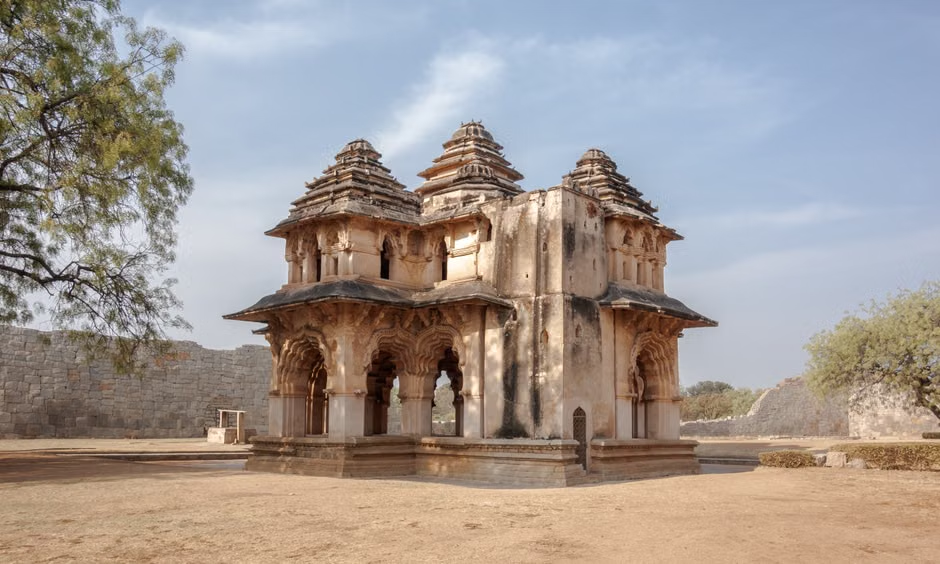
Evolve Back Kamalapura Palace

Hampi's Boulders Resort
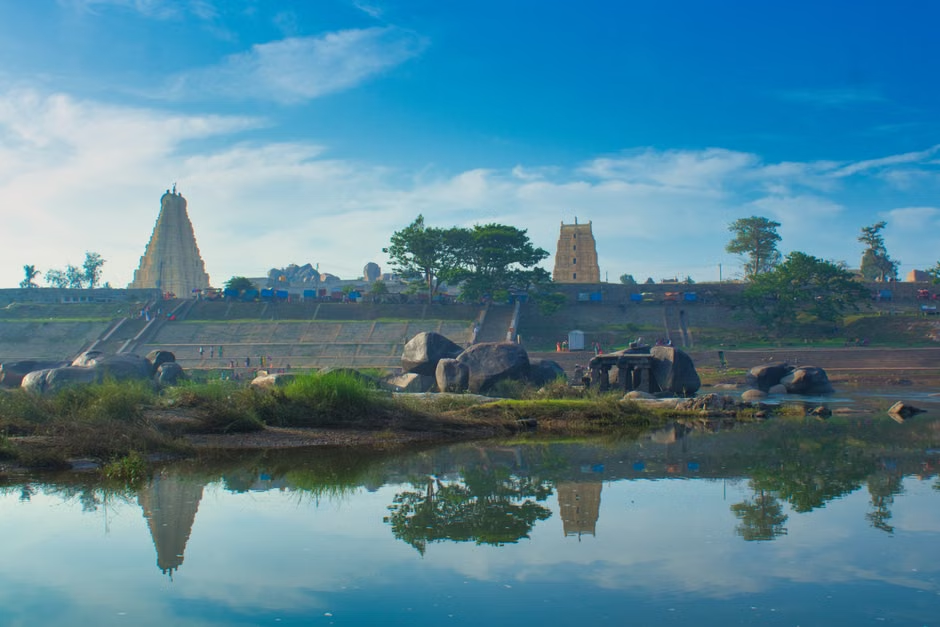
Clarks Inn Hampi
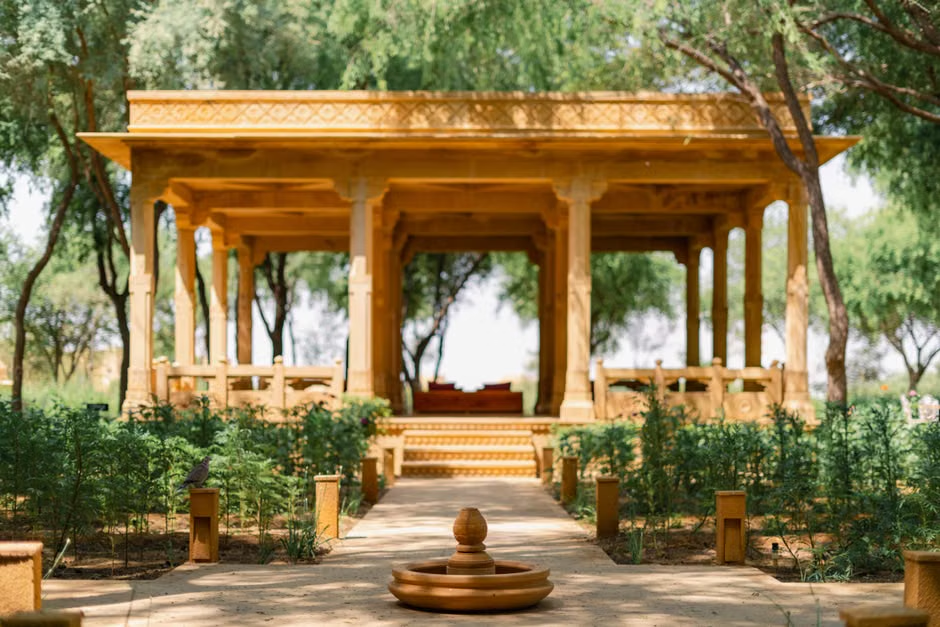
Kishkinda Heritage Resort
Compare Hampi with Other Top Destinations
Frequently Asked Questions
Is Hampi a good destination for a heritage or palace-style wedding?
Yes. Hampi is one of India's most distinctive settings for a heritage wedding, with the Vijayanagara Empire ruins, ancient stone mandapas, and heritage resort courtyards providing a genuinely historical atmosphere. It suits couples who want a ceremony rooted in real history rather than a themed recreation of it. The scale is best suited to intimate-to-medium guest lists rather than large productions.
What guest-group sizes can Hampi realistically accommodate for a wedding or event?
Hampi's heritage resorts and boutique properties are best suited to events of roughly 30–200 guests. The destination's venue inventory is genuinely boutique in scale — this is a strength for intimate, exclusive celebrations but a practical constraint for larger gatherings. Hosts planning for 200+ guests should consider whether the local accommodation and venue capacity can comfortably support their numbers.
How do guests typically travel to Hampi for a destination event?
Most guests arrive via Hospet Junction railway station, approximately 13 km from Hampi, which has train connections from Bengaluru, Hyderabad, and Goa. The nearest airport with scheduled services is Vidyanagar Airport, though connectivity is limited. Guests from Bengaluru or Hyderabad commonly take overnight trains, making rail the most practical option for the majority of attendees.
What is the best time of year to hold a wedding or celebration in Hampi?
November through February is strongly recommended. Temperatures are cool and comfortable, skies are reliably clear, and the landscape looks its best in winter light — all critical for a destination where outdoor settings are central to the experience. The summer months bring intense heat above 38°C, and the monsoon (July–September) brings heavy rain that disrupts outdoor events.
Is Hampi suitable for an Ugadi or Karnataka cultural gathering?
Yes, particularly so. Hampi is the heartland of the Vijayanagara Empire and a living centre of Karnataka's cultural identity, making it a deeply meaningful and authentic setting for Ugadi celebrations. Local folk performers, traditional Karnataka cuisine, and nearby temple rituals are all genuinely available, giving cultural gatherings here a regional authenticity that is difficult to replicate elsewhere.
What kinds of event spaces and venues are available in Hampi?
Hampi's event spaces include heritage resort courtyards and lawns, riverside ghat settings along the Tungabhadra, boutique resort gardens in the Anegundi and Kamalapura areas, and indoor heritage halls within select properties. The landscape itself — boulders, ruins, river — functions as a dramatic natural backdrop. There are no large convention centres or purpose-built banquet complexes; the character is consistently boutique and heritage-oriented.
How should we manage guest movement and local transport during a multi-day event in Hampi?
Pre-arranged shuttle vehicles are strongly recommended. Hampi's key areas — the main ruins, Anegundi across the river, and properties in Kamalapura — are spread out and not walkable from a single point. Auto-rickshaws are available locally but coordinating a large guest group without dedicated transport creates friction. Most heritage properties and event planners experienced in Hampi will assist with vehicle arrangements.
Are local vendors and caterers in Hampi experienced enough for a destination wedding?
For authentic Karnataka cuisine and cultural programming — folk performers, classical musicians, traditional décor — local vendors are genuinely strong. For highly bespoke multi-cuisine menus or elaborate production décor, it is common practice to bring specialist vendors from Bengaluru or Hyderabad. Engaging an event management company with prior Hampi experience is advisable for anything beyond a straightforward small gathering.
Are there any regulatory considerations for holding an event near the Hampi ruins?
Yes. Events within or immediately adjacent to the core UNESCO World Heritage Zone require coordination with the Archaeological Survey of India (ASI). This is a manageable process but adds a planning layer that does not exist at conventional resort destinations. Most experienced local event planners are familiar with the requirements. Events held within private heritage resort properties outside the core zone typically do not face the same restrictions.
What makes Hampi different from other heritage wedding destinations in India?
Hampi offers a genuinely archaeological heritage setting — ancient Vijayanagara ruins, boulder landscapes, and a sacred river — rather than a restored palace or fort repurposed for events. The destination sees relatively few large-scale weddings, which means greater exclusivity and a less commercialised atmosphere. Its Karnataka cultural identity also gives it a regional authenticity that is distinct from Rajasthan-centric heritage destinations.
Is Hampi suitable for a small, intimate wedding rather than a large destination wedding?
Yes — in fact, Hampi is particularly well-suited to intimate weddings. The boutique scale of local properties, the spread-out geography, and the heritage atmosphere all work best when guest numbers are small enough to feel curated and personal. Couples planning for 30–80 guests will find the destination's character aligns naturally with an intimate celebration in a way that larger events cannot fully leverage.

Ready to explore venues in Hampi?
Hampi: Heritage Wedding & Cultural Event Destination Guide
◆Hampi is a UNESCO World Heritage Site in northern Karnataka, best suited to palace and heritage weddings, intimate destination weddings, Ugadi and Karnataka cultural gatherings, and smaller celebratory events that value historical atmosphere over large-scale luxury infrastructure. Its primary vibe is Royal and Heritage — defined by the dramatic Vijayanagara Empire ruins, boulder-strewn landscapes, and the sacred Tungabhadra River. The ideal season runs from November through February, when temperatures are cool and skies are clear. Accessibility requires some advance planning — guests typically arrive via Hospet Junction by train or by road from Bengaluru or Hyderabad — but the destination rewards the effort with a genuinely rare and exclusive event experience.
Hampi at a Glance
| Attribute | Detail |
|---|---|
| Best For | Palace / Heritage Wedding, Ugadi / Karnataka Cultural Gathering, Intimate Wedding, Destination Wedding |
| Primary Vibe | Royal & Heritage |
| Other Vibes | Cultural, Riverside, Intimate, Rustic-Luxe |
| Best Season | Winter (November–February) |
Why Choose Hampi?
- Unrivalled heritage backdrop: The Vijayanagara ruins — including ancient mandapas, royal enclosures, and riverside temples — provide a ceremonial setting that no purpose-built resort can replicate. Photographs and memories from a Hampi event are genuinely distinctive.
- Intimate scale and exclusivity: Hampi's boutique and heritage property inventory naturally limits guest counts, which works strongly in favour of couples and hosts who want a private, curated experience rather than a large, impersonal event.
- Deep Karnataka cultural identity: The destination is rooted in Vijayanagara history and Kannada tradition, making it a natural and meaningful setting for Ugadi celebrations, Karnataka folk performances, and regional cultural gatherings.
- Reliable winter season: November through February delivers consistently cool, dry, and clear conditions — particularly important for outdoor ceremonies among the ruins or on riverside ghats, where weather is central to the experience.
- Lower event footprint: Compared to mainstream wedding destinations, Hampi sees relatively fewer large-scale events, which means greater privacy, more attentive local hospitality, and a less commercialised atmosphere for guests.
- Scenic diversity within a compact area: Within a short distance, hosts can access boulder landscapes, river ghats, ancient temple complexes, and lush paddy fields — giving multi-day celebrations a variety of visual settings without long transfers.
Which Celebrations Work Best in Hampi?
- Palace / Heritage Wedding: Hampi is among the most historically resonant settings in India for a heritage-style wedding. Ancient royal enclosures, stone mandapas, and heritage resort courtyards allow ceremonies to feel genuinely rooted in Vijayanagara grandeur rather than merely themed around it.
- Ugadi / Karnataka Cultural Gathering: As the heartland of the Vijayanagara Empire and a living centre of Karnataka's cultural identity, Hampi is a deeply appropriate and meaningful venue for Ugadi celebrations — the Kannada and Telugu New Year — with local folk performances, traditional cuisine, and temple rituals all naturally available.
- Intimate Wedding: The boutique scale of Hampi's hospitality properties makes it particularly well-suited to small, close-knit weddings of 30–100 guests, where the focus is on atmosphere, personal detail, and a shared experience rather than scale.
- Destination Wedding: For couples seeking a destination that is genuinely different — not a beach resort or a palace city that guests have already visited — Hampi offers a compelling, story-worthy alternative with strong visual impact and cultural depth.
- Wedding Reception: Open-air lawns and heritage courtyards within local properties can host evening receptions with the ruins as a dramatic backdrop, particularly beautiful under winter night skies.
- Welcome Dinner / Pre-Wedding Celebration: Riverside settings and boutique resort gardens are well-suited to relaxed welcome dinners, allowing guests to absorb the landscape and atmosphere before the main event.
- Cultural Festival Gathering / Local Folk Festival / Fair / Temple Festival: Hampi's calendar of temple festivals and its proximity to living Karnataka folk traditions make it a natural gathering point for cultural events that want authentic regional programming rather than imported entertainment.
- Diwali Celebration: The ancient stone architecture and open landscapes of Hampi take on a particularly atmospheric quality when lit for Diwali, and the destination's intimacy makes it well-suited to private, curated festival celebrations.
- Milestone Birthdays (40th / 50th / 60th / 70th): The destination's exclusivity and visual drama make it a strong choice for milestone birthday gatherings where the host wants the setting itself to feel like a gift to guests.
- Annual Conference / Awards & Gala Night / Product Launch: Hampi's heritage properties can accommodate smaller corporate events and gala evenings for groups that want an unconventional, high-impact setting — though organisers should note that the destination's infrastructure is better suited to boutique-scale corporate events than large conferences.
Venues & Event Spaces
Hampi's event venue landscape is defined by heritage resorts and boutique properties rather than large convention hotels or purpose-built banquet complexes. The most distinctive spaces include:
- Heritage resort courtyards and lawns: Several properties in and around Hampi have been developed with sensitivity to the surrounding landscape, offering open-air event spaces that frame views of boulders, paddy fields, or the Tungabhadra River.
- Riverside and ghat settings: The Tungabhadra riverbank provides a naturally ceremonial atmosphere for rituals, pheras, and smaller outdoor gatherings, particularly at dawn and dusk.
- Ancient mandapas and open-air archaeological spaces: While formal event permissions within the core UNESCO-protected zone require coordination with the Archaeological Survey of India, the surrounding landscape and buffer areas offer dramatic open-air settings.
- Boutique resort gardens: Properties in the Anegundi and Kamalapura areas — across the river from the main ruins — offer more secluded garden and lawn spaces suitable for intimate ceremonies and receptions.
- Indoor heritage halls: Some heritage properties feature restored or heritage-inspired indoor halls suitable for evening receptions, gala dinners, and cultural performances, providing a weather-secure option alongside outdoor spaces.
Hosts planning larger events (200+ guests) should note that Hampi's venue inventory is genuinely boutique in scale — this is a feature for intimate celebrations but a practical constraint for large gatherings.
Best Time to Celebrate
The winter season, November through February, is the clear and strongly recommended window for events in Hampi. Daytime temperatures during this period typically range from the low-to-mid 20s°C, with cool evenings that make outdoor ceremonies and receptions genuinely comfortable. Skies are reliably clear, which is critical for a destination where the visual drama of the landscape — boulders, ruins, river — is central to the event experience. Sunrise and sunset light during winter months is particularly striking against the ochre stone of the ruins.
March and April represent a transitional shoulder period — temperatures begin climbing sharply, and while events are still possible, outdoor ceremonies in the afternoon become uncomfortable. May and June bring intense heat, regularly exceeding 38°C, making outdoor events impractical and potentially unsafe for guests. July through September is the monsoon season — heavy and sometimes unpredictable rainfall makes outdoor events at risk of disruption, and some access roads and river crossings can become difficult. October is a post-monsoon transitional month with residual humidity and occasional rain; while conditions improve through the month, it is generally considered a shoulder period rather than a reliable event window. The net result is that Hampi has a relatively compact but high-quality event season — hosts who commit to November–February will find conditions consistently excellent.
Getting There & Local Connectivity
By air: The nearest airport with scheduled services is Vidyanagar Airport (also known as Jindal Vijayanagar Airport), located approximately 35 km from Hampi. Flight connectivity to this airport is limited, with services primarily from Bengaluru and a small number of other cities. Most guests travelling from major metros will find it more practical to fly into Bengaluru (Kempegowda International Airport) and continue by overnight train or road — a journey of roughly 6–7 hours. Guests from Hyderabad can reach Hampi in approximately 7–8 hours by road or train.
By rail: Hospet Junction, approximately 13 km from Hampi, is the primary railhead and is reasonably well-connected to Bengaluru, Hyderabad, Goa, and other major cities. Several overnight trains serve this route, making train travel a practical and comfortable option for guests from these cities. Local auto-rickshaws, taxis, and hired vehicles connect Hospet to Hampi and to properties in the surrounding area.
Local movement: Within Hampi and its surroundings, movement is primarily by auto-rickshaw, hired car, or bicycle. The terrain is spread out — the main ruins, the Anegundi area across the river, and properties in Kamalapura are not all walkable from a single point. For event groups, pre-arranged shuttle vehicles are strongly recommended to manage guest movement between accommodation, ceremony venues, and dining locations smoothly.
Local Vendor & Hospitality Ecosystem
Hampi's vendor ecosystem is growing but still developing relative to more established wedding destinations. The destination has a genuine base of experienced local hospitality professionals, particularly within its heritage resort properties, who are accustomed to managing small-to-medium events with care and cultural sensitivity.
- Catering: Local caterers can deliver authentic Karnataka cuisine — including traditional Udupi-style vegetarian spreads and regional non-vegetarian options — with quality and reliability. For more elaborate multi-cuisine or fusion menus, bringing in specialist caterers from Bengaluru or Hyderabad is a common and practical approach.
- Décor and florals: Local décor vendors are available and familiar with heritage-appropriate styling. For highly bespoke or elaborate décor concepts, event planners typically coordinate with vendors from larger cities who travel to the site.
- Entertainment and cultural programming: Hampi has genuine access to Karnataka folk performers, classical musicians, and traditional dance troupes — this is one area where the destination's cultural identity is a real asset rather than a logistical challenge.
- Photography and videography: The destination attracts photographers specifically for its landscape, and there is a community of experienced photographers familiar with shooting in the ruins and riverside settings. Destination photographers from Bengaluru and Hyderabad also regularly work here.
- Event management: For larger or more complex events, engaging a destination event management company with prior Hampi experience is advisable — the destination's logistical quirks (spread-out geography, limited large-vehicle access in some areas, ASI coordination for certain spaces) reward local knowledge.
Pros & Things to Consider
Why Hampi Works Well
- Genuinely unique UNESCO heritage setting — no other destination in India offers the same combination of ancient ruins, boulder landscapes, and riverside atmosphere
- Intimate scale creates a naturally exclusive, private event experience
- Strong Karnataka cultural identity supports authentic regional programming for cultural gatherings and festivals
- Reliable, comfortable winter season with clear skies and cool temperatures
- Lower event saturation means guests experience the destination rather than a crowded event circuit
- Heritage resort properties offer a level of character and atmosphere that generic luxury hotels cannot match
Things to Consider
- Limited large-scale venue capacity: Hampi is not suited to weddings or events requiring 300+ guests — the local property inventory is genuinely boutique, and attempting to scale beyond it creates logistical strain
- Connectivity requires planning: There are no direct flights from most major Indian cities to a well-connected nearby airport; guests need to plan train journeys or long road transfers, which can be a barrier for older or less mobile guests
- Vendor ecosystem is developing: Highly bespoke or elaborate event concepts may require importing vendors from Bengaluru or Hyderabad, adding coordination complexity and logistics cost
- ASI regulations: Events within or immediately adjacent to the core UNESCO-protected zone require coordination with the Archaeological Survey of India — this is manageable but adds a layer of planning that does not exist at conventional resort destinations
- Limited digital connectivity: Mobile data and Wi-Fi coverage in parts of Hampi and surrounding areas can be patchy — relevant for guests who expect seamless connectivity throughout their stay
- Compact event season: The usable event window is genuinely narrow (November–February); hosts with flexible dates have an advantage, but those locked into other months face real weather challenges
When Hampi May Not Be the Right Fit
- Large guest lists (200+ guests): If your celebration requires accommodating a large number of guests under one roof or in a single large venue, Hampi's boutique property inventory will not comfortably support it — a destination with larger resort infrastructure would serve you better.
- Guests with limited travel flexibility: If a significant portion of your guest list includes elderly guests, young children, or guests who find long train journeys or road transfers difficult, the absence of convenient direct air connectivity may make Hampi a challenging choice.
- Events planned outside November–February: If your dates fall in the summer months (March–June) or during the monsoon (July–September), Hampi's outdoor-centric appeal is significantly diminished and weather risk is high — a destination with more year-round usability would be more appropriate.
- Highly elaborate, multi-vendor production events: If your event concept requires a large number of specialist vendors, complex technical production, or extensive imported décor, the logistical overhead of coordinating everything into a remote heritage destination may outweigh the setting's appeal — a more vendor-mature destination would reduce friction.