
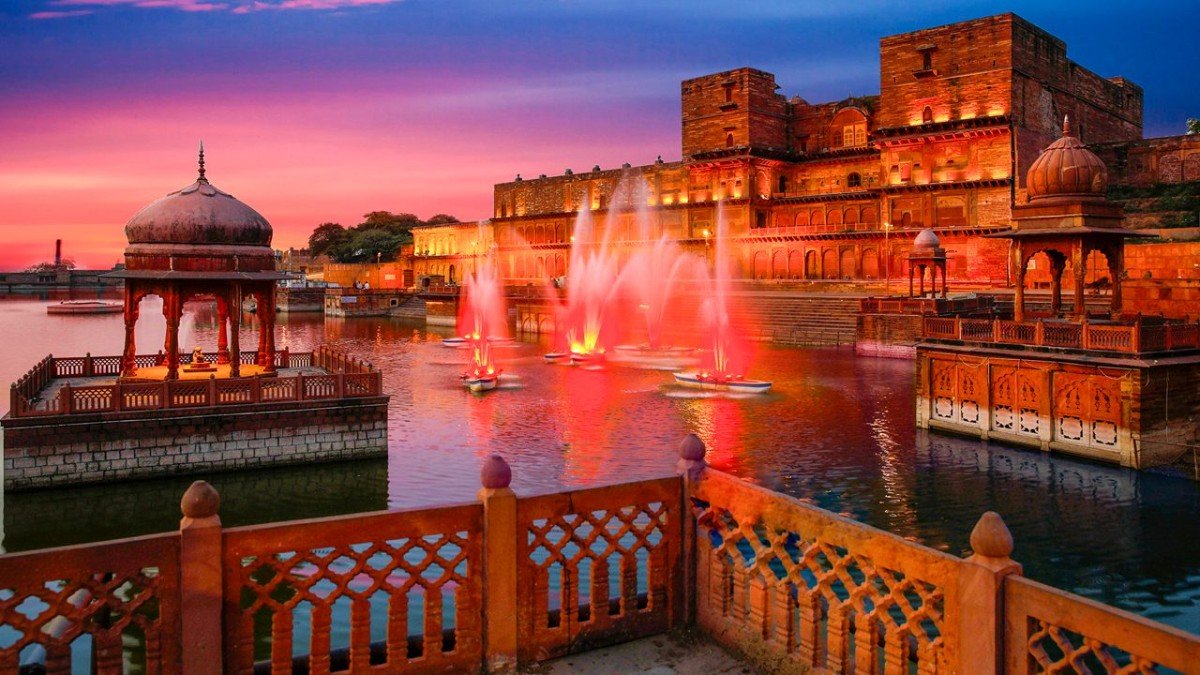
Why Dholpur is Perfect for Your Celebration
- Authentic red sandstone palaces offer a genuinely royal backdrop unavailable in more commercialised heritage cities
- Dramatic Chambal ravine landscape creates unique, cinematic settings for pre-wedding shoots and outdoor ceremonies
- Low tourist footfall ensures privacy and exclusivity for intimate and destination weddings
- Dholpur Railway Station sits on a major mainline, making it accessible from Delhi, Mumbai and Chennai without a flight
- Teej and Gangaur festivals are celebrated with traditional Rajput fervour, offering rich cultural programming for event guests
- Compact town geography keeps guests, venues and local experiences within easy reach of one another
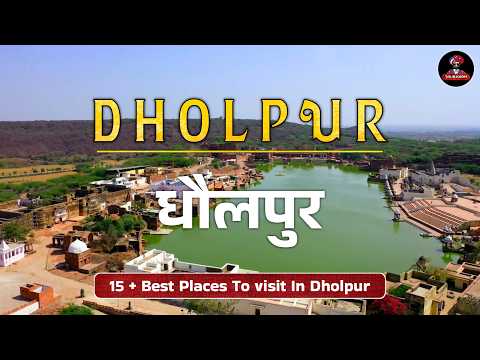
Top Venues in Dholpur
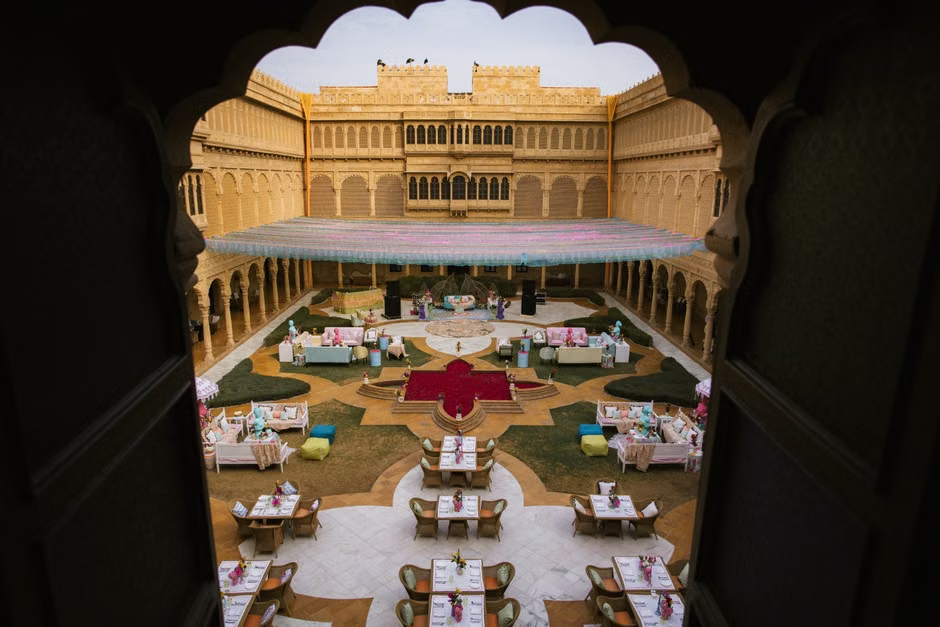
Dholpur Palace (Raj Niwas Palace)
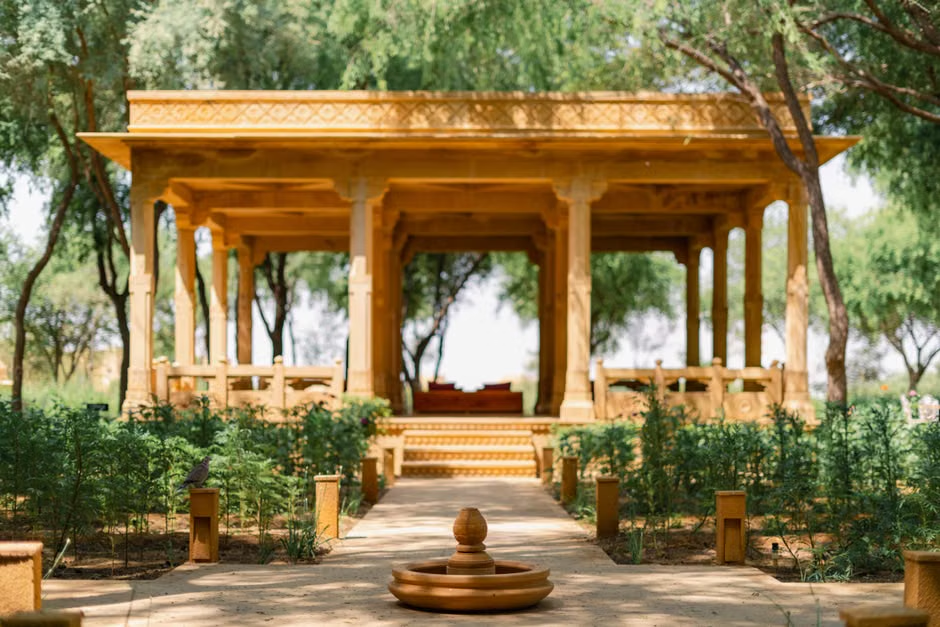
Shergarh Fort & Resort
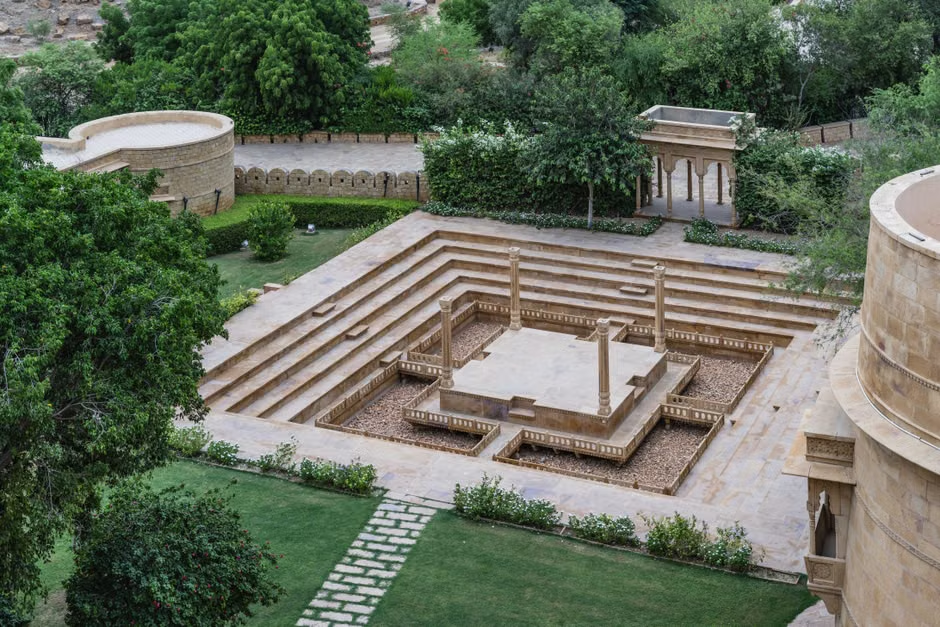
Hotel Chambal Safari Lodge
Compare Dholpur with Other Top Destinations
Frequently Asked Questions
Is Dholpur a good destination for a palace wedding?
Yes. Dholpur is particularly well-suited to palace and heritage weddings. The town's red sandstone palaces offer authentic Rajput royal architecture, formal courtyards, and heritage gardens that create a genuinely regal setting. Because Dholpur sees far less tourist traffic than other Rajasthan wedding cities, palace properties can typically be taken over exclusively for a wedding group, ensuring privacy throughout the celebration.
What guest-group sizes can Dholpur venues realistically accommodate?
Dholpur's heritage properties are best suited to intimate and mid-size events — typically 50 to 250 guests. For groups larger than 200–250, accommodation inventory becomes a constraint and overflow planning (potentially using properties in nearby Agra) becomes necessary. The destination is strongest for couples who want an exclusive, close-knit celebration rather than a large-scale production.
How do guests typically travel to Dholpur for a wedding?
Rail is the most practical option. Dholpur Railway Station is on a major broad-gauge mainline with regular services from Delhi (approximately 3–4 hours), Agra (under an hour), and connections to Mumbai and Chennai. Guests flying in will generally route through Delhi or Agra airports and travel onward by road or rail. The road journey from Agra takes roughly 1–1.5 hours.
What is the best time of year to hold a wedding or celebration in Dholpur?
November through February is the optimal window. Temperatures are mild and comfortable for outdoor ceremonies, evenings are clear and cool, and this period aligns with the broader north Indian wedding season when vendors and hospitality staff are most available. March and October are workable shoulder months, but summer (April–June) and monsoon (July–September) are generally unsuitable for outdoor heritage events.
Can Dholpur host Teej and Gangaur festival celebrations as part of a wedding?
Yes. Teej and Gangaur are observed in Dholpur with genuine Rajput community participation — processions, folk music, and traditional rituals. Event planners can incorporate these festivals into a wedding itinerary to give guests an authentic cultural experience. Gangaur falls in March–April, so events timed around it should plan for slightly warmer conditions than the core winter season.
What kinds of event spaces are available in Dholpur?
The primary event spaces are heritage palace courtyards, sandstone terraces, formal gardens, and banquet halls within palace structures. Fort-based heritage resorts in the surrounding area offer more rustic outdoor lawns and open terraces. For pre-wedding functions and welcome dinners, ravine-edge outdoor settings and heritage courtyard formats are both genuinely achievable during the winter season.
Do I need to bring wedding vendors from outside Dholpur?
For standard catering, local folk performers, and basic decoration, local vendors are available and experienced in traditional Rajasthani wedding formats. For specialist requirements — high-end floral design, large AV setups, or destination wedding planners — vendors are typically sourced from Agra, Jaipur, or Delhi. Agra is under an hour away by road, making this logistically manageable.
Is Dholpur suitable for a destination birthday celebration or corporate incentive trip?
Yes, for smaller groups. The exclusivity of Dholpur's palace properties, the Chambal ravine scenery, and the town's unhurried pace make it a credible choice for milestone birthday getaways and corporate incentive trips where a distinctive, non-generic setting is the priority. It is not suited to large-scale MICE events, but for groups of 20–80 seeking a private heritage experience, it works well.
How is local transport managed for wedding guests once they arrive in Dholpur?
The town is compact, and most heritage properties are within a short drive of the railway station. Wedding groups typically arrange chartered coaches or tempo travellers for transfers between the station, accommodation, and event venues. Local auto-rickshaws and taxis are available for smaller groups. Local operators are familiar with wedding-group logistics and can be coordinated through the venue or a local event planner.
What makes Dholpur different from other Rajasthan wedding destinations?
Dholpur's distinguishing factors are its very low tourist footfall, its distinctive red sandstone palace architecture, and the dramatic Chambal ravine landscape — none of which are replicated in the more heavily marketed Rajasthan wedding cities. This combination delivers genuine exclusivity and a visual character that is specific to this location, rather than a polished but familiar heritage-hotel experience.
Is Dholpur safe for wedding guests, including elderly guests and children?
Generally yes. Dholpur is a small, relatively quiet town with a low-crime character typical of smaller Rajasthan heritage towns. The main practical consideration for elderly guests and children is the summer heat — events outside the November–February window should have robust indoor contingency plans. During the winter season, the climate is mild and the town's compact geography keeps travel distances short.

Ready to explore venues in Dholpur?
Dholpur: Royal Palace Weddings, Heritage Venues & Festival Celebrations
◆Dholpur is a heritage town in southeastern Rajasthan best suited to palace and heritage weddings, intimate destination weddings, and traditional Rajput festival celebrations such as Teej and Gangaur. Its primary vibe is Royal and Heritage, shaped by red sandstone palaces, Chambal ravine scenery, and a low-tourism atmosphere that delivers genuine exclusivity. The town is most accessible by rail — Dholpur Railway Station sits on a major mainline — with the nearest airport roughly an hour away. It suits small-to-medium guest lists particularly well, and its relative seclusion keeps the overall event experience private and immersive.
Dholpur at a Glance
| Attribute | Detail |
|---|---|
| Best For | Teej & Gangaur Celebration, Palace / Heritage Wedding, Intimate Wedding, Destination Wedding |
| Primary Vibe | Royal & Heritage |
| Other Vibes | Rustic, Intimate, Cultural |
| Best Season | Winter (November–February) |
Why Choose Dholpur?
- Authentic royal architecture: Dholpur's palaces are built from the region's distinctive red Dholpur sandstone — the same material used in many Mughal and Rajput monuments — giving events a genuinely historic, not reconstructed, setting.
- Chambal ravine landscape: The dramatic ravine terrain along the Chambal River provides a cinematic natural backdrop for outdoor ceremonies and pre-wedding photography that is unlike anything available in more conventional Rajasthan wedding cities.
- Privacy and exclusivity: Dholpur receives far fewer tourists than Jaipur, Udaipur or Jodhpur, which means palace properties can be taken over entirely for a wedding without the intrusion of general hotel guests or passing visitors.
- Strong rail connectivity: Dholpur Railway Station is on the Delhi–Mumbai and Delhi–Chennai broad-gauge mainlines, making it reachable from major metros without requiring guests to fly into a small regional airport.
- Living festival culture: Teej and Gangaur are celebrated here with traditional Rajput customs, folk music, and processions — giving event planners access to authentic cultural programming that can be woven directly into a wedding itinerary.
- Compact geography: The town's small footprint means guests, venues, local markets, and cultural sites are all within easy reach, reducing the logistical complexity of moving a large group around.
Which Celebrations Work Best in Dholpur?
- Teej & Gangaur Celebration: These festivals are among the most important in the Rajput calendar and are observed in Dholpur with genuine community participation — processions, folk performances, and traditional rituals. Hosting a celebration timed to coincide with either festival gives guests an immersive cultural experience that goes well beyond a standard event backdrop.
- Palace / Heritage Wedding: Dholpur's sandstone palaces are purpose-built for this format. The architecture, courtyards, and formal gardens provide a ready-made ceremonial environment, and the heritage character of the properties means décor requirements are naturally lower — the venue itself does much of the visual work.
- Intimate Wedding: The town's smaller venue inventory and private-property character make it particularly well-suited to weddings of 50–200 guests where the couple wants a close-knit, exclusive atmosphere rather than a large-scale production.
- Destination Wedding: For couples whose guest list is travelling from across India or internationally, Dholpur offers the full destination-wedding proposition — a distinctive location, heritage accommodation, and a cultural identity — without the saturation of more heavily marketed Rajasthan wedding cities.
- Wedding Reception: Palace courtyards and sandstone terraces translate well to evening reception formats, where lighting against the red stone creates a warm, dramatic ambience suited to formal celebrations.
- Welcome Dinner / Pre-Wedding Celebration: The ravine landscape and palace gardens offer natural settings for informal pre-wedding gatherings — sundowners on a terrace overlooking the Chambal terrain, or folk-music evenings in a heritage courtyard, are both genuinely achievable here.
- Temple Festival, Cultural Festival Gathering & Local Folk Festival / Fair: Dholpur's religious and folk calendar — including local temple festivals and seasonal fairs — provides a ready framework for cultural gathering events that want an authentic Rajasthani character rather than a staged one.
- Diwali Celebration: The sandstone palaces lit with diyas and traditional lanterns during Diwali create a visually striking setting for private celebrations, and the town's quieter character means the festival retains a community warmth that larger cities sometimes lose.
- Corporate Events (Annual Conference, Product Launch, Incentive Trip): The exclusivity and heritage character of Dholpur's palace properties make them viable for smaller corporate events where a distinctive, non-generic venue is a priority. The town is not a large-scale MICE destination, but for incentive trips or leadership retreats, the setting is genuinely compelling.
- Birthday Brunch / Sundowner & Destination Birthday Getaway: The combination of palace venues, ravine scenery, and a relaxed pace makes Dholpur a credible choice for milestone birthday celebrations where the group wants something memorable and private rather than a busy resort experience.
Venues & Event Spaces
Dholpur's event venue landscape is anchored by its heritage palace properties, which typically offer formal courtyards, sandstone terraces, lawned gardens, and banquet halls within the palace structure itself. These properties are generally suited to small-to-medium guest lists and lend themselves to multi-day wedding formats where guests stay on-site throughout the celebration.
Beyond the palaces, the area around Dholpur includes fort-based heritage resorts that offer a more rustic, fortress-style setting — appropriate for events that want a rugged, dramatic character rather than the formal elegance of a palace. These properties typically have outdoor event lawns and open terraces that work well for evening ceremonies and receptions.
For more straightforward accommodation and event support, mid-range lodge and resort properties near the Chambal wildlife corridor provide functional event spaces with natural surroundings — suitable for pre-wedding functions, welcome dinners, or overflow accommodation for larger guest lists.
Outdoor event formats — including mandap ceremonies on palace lawns, ravine-edge sundowners, and folk-performance evenings in heritage courtyards — are all genuinely achievable here during the winter season, and the sandstone architecture provides a naturally photogenic frame for every format.
Best Time to Celebrate
November through February is the clear optimal window for events in Dholpur. Daytime temperatures during this period typically range from around 10°C to 25°C, making outdoor ceremonies, garden receptions, and multi-day celebrations comfortable for guests of all ages. Evenings are cool and clear, which suits candlelit or lantern-lit outdoor formats particularly well.
This window also coincides with the Teej and Gangaur festival calendar (Gangaur falls in March–April, so events timed to incorporate it should plan for late February or early March, accepting slightly warmer conditions), and with the broader north Indian wedding season when vendors, decorators, and hospitality staff are at their most experienced and available.
March and October function as shoulder months — temperatures are rising or falling respectively, and while outdoor events remain feasible, the comfort margin is narrower. October in particular can still carry residual post-monsoon humidity.
April through June should generally be avoided for outdoor events. Dholpur sits in a semi-arid zone and summer temperatures regularly exceed 40°C, making outdoor ceremonies genuinely uncomfortable and potentially unsafe for elderly guests or young children. Air-conditioned indoor formats remain possible but significantly limit the heritage outdoor experience that defines this destination.
July through September brings the monsoon. The Chambal ravines, while visually dramatic in the rains, carry flooding risk, and road access to some heritage properties can be disrupted. Outdoor event infrastructure is difficult to maintain, and the general humidity reduces the appeal of the sandstone palace settings that are Dholpur's primary draw.
Getting There & Local Connectivity
Dholpur is most conveniently reached by rail. The town's railway station sits on one of India's busiest broad-gauge mainlines, with regular services connecting it to Delhi (approximately 3–4 hours), Agra (under an hour), and onward to Mumbai and Chennai. For guests travelling from major metros, this makes Dholpur genuinely accessible without requiring a flight.
The nearest commercial airport is at Agra, roughly 55 km away. Agra has limited scheduled connectivity compared to major hubs, so guests flying in from distant cities will typically route through Delhi and then travel onward by road or rail. The road journey from Agra to Dholpur takes approximately 1–1.5 hours under normal conditions.
Within Dholpur itself, the town is compact and most heritage properties are within a short drive of the railway station. For wedding groups, chartered coaches or tempo travellers are the standard solution for moving guests between the station, accommodation, and event venues — local transport operators are familiar with this requirement. Auto-rickshaws and taxis are available for smaller groups and individual transfers.
Guests arriving from Jaipur or other Rajasthan cities can reach Dholpur by road in approximately 3–4 hours, making it accessible for regional guests who prefer to drive.
Local Vendor & Hospitality Ecosystem
Dholpur's vendor ecosystem is smaller and more specialised than that of Rajasthan's major wedding cities. The town has an established base of local caterers experienced in Rajasthani cuisine and traditional wedding formats, and the palace properties typically maintain relationships with trusted local vendors for decoration, music, and ritual services.
For larger or more elaborate productions — particularly those requiring specialist floral designers, destination wedding planners, or high-end audio-visual setups — it is common and advisable to bring vendors in from Agra, Jaipur, or Delhi. The proximity to Agra (under an hour by road) makes this logistically straightforward, and Agra's vendor market is well-developed for wedding-scale events.
Folk performers — including Kalbeliya dancers, Rajasthani musicians, and puppet artists — are available locally and add an authentic cultural dimension to events that is harder to source genuinely in more commercialised destinations. Heritage property managers in Dholpur are generally experienced in coordinating these elements for wedding groups.
Accommodation inventory is limited relative to a large guest list. Groups exceeding 150–200 guests will need to plan overflow accommodation carefully, potentially using properties in Agra as a supplement, with guests bussed to Dholpur for event days.
Pros & Things to Consider
Why Dholpur Works Well
- Genuine, unrestored heritage palace architecture that delivers an authentic royal atmosphere
- Very low tourist footfall ensures privacy and full-property exclusivity for wedding groups
- Strong rail connectivity from Delhi and other major cities reduces dependence on limited air access
- Living Rajput festival culture (Teej, Gangaur) provides authentic cultural programming options
- Chambal ravine scenery offers a dramatic, distinctive natural backdrop unavailable elsewhere in Rajasthan
- Compact town geography simplifies guest logistics during multi-day events
Things to Consider
- Venue inventory is limited — the town cannot comfortably support very large guest lists (300+) without significant overflow accommodation planning
- Specialist wedding vendors (high-end florists, AV companies, destination planners) typically need to be sourced from Agra, Jaipur, or Delhi and transported in
- The nearest airport has limited scheduled connectivity, which can complicate travel for guests flying from distant cities or internationally
- Summer months are genuinely extreme — any event outside the November–February window requires careful indoor contingency planning
- Digital connectivity (mobile data, broadband) is more limited than in larger Rajasthan cities, which can affect live-streaming, social media sharing, and vendor coordination during the event
When Dholpur May Not Be the Right Fit
- Very large guest lists (300+ guests): The local heritage property inventory does not comfortably support very large weddings without significant logistical complexity. A destination with a broader hotel base would serve large-scale events better.
- Guests requiring direct international flight access: There is no international airport within easy reach of Dholpur. Groups with a significant proportion of international guests may find the multi-leg journey (international flight to Delhi, then onward by rail or road) adds meaningful travel fatigue.
- Events planned for April through September: The combination of extreme summer heat and monsoon conditions makes outdoor heritage events genuinely difficult during this period. Couples with fixed dates in these months would be better served by a destination with more robust indoor venue infrastructure.
- Events requiring a large, on-the-ground specialist vendor ecosystem: If the event concept depends heavily on specialist vendors (international DJs, large-format floral installations, complex AV productions), the need to import most of these from distant cities adds cost and coordination complexity that a more vendor-mature destination would avoid.