
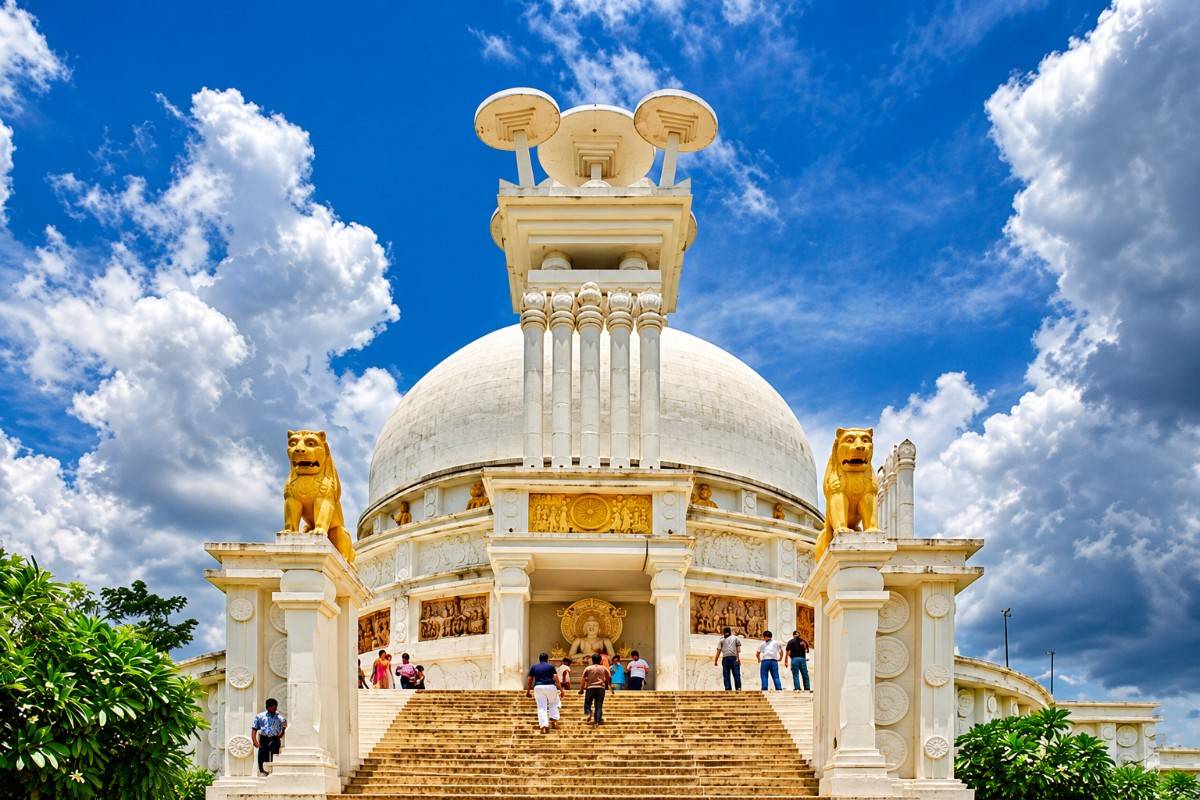
Why Dhauli is Perfect for Your Celebration
- Home to the Dhauli Shanti Stupa and Ashoka's rock edicts — a uniquely powerful backdrop for spiritual and pilgrimage gatherings
- Closely tied to Odia cultural identity, making it ideal for Raja Parba celebrations and regional cultural festivals
- Located just 8–12 km from Bhubaneswar's airport and railway station, giving guests straightforward access from across India
- The Daya River setting provides a serene, contemplative atmosphere rarely found at mainstream event destinations
- Proximity to Bhubaneswar means guests can access the full hospitality infrastructure of a state capital while gathering at a spiritually resonant site
- Particularly well-suited to smaller, meaning-driven gatherings — religious family functions, naming ceremonies, and community events — where atmosphere matters more than scale
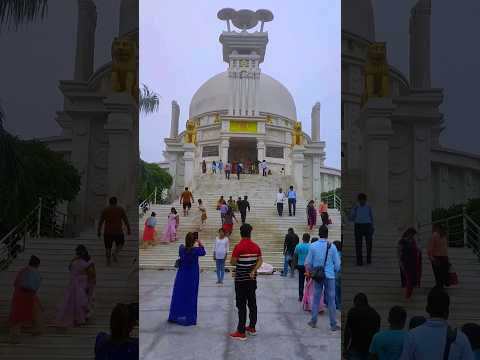
Top Venues in Dhauli
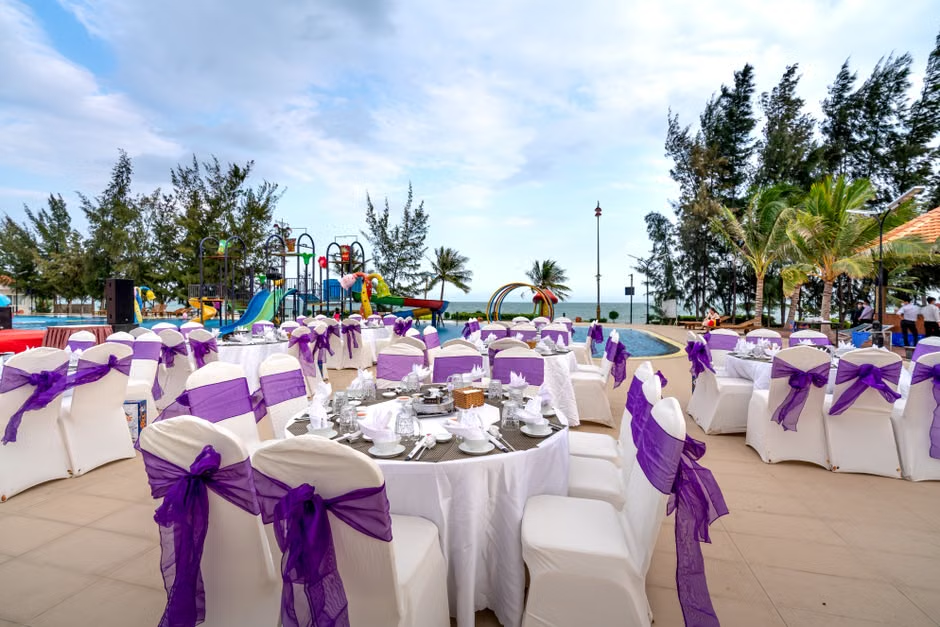
Mayfair Lagoon
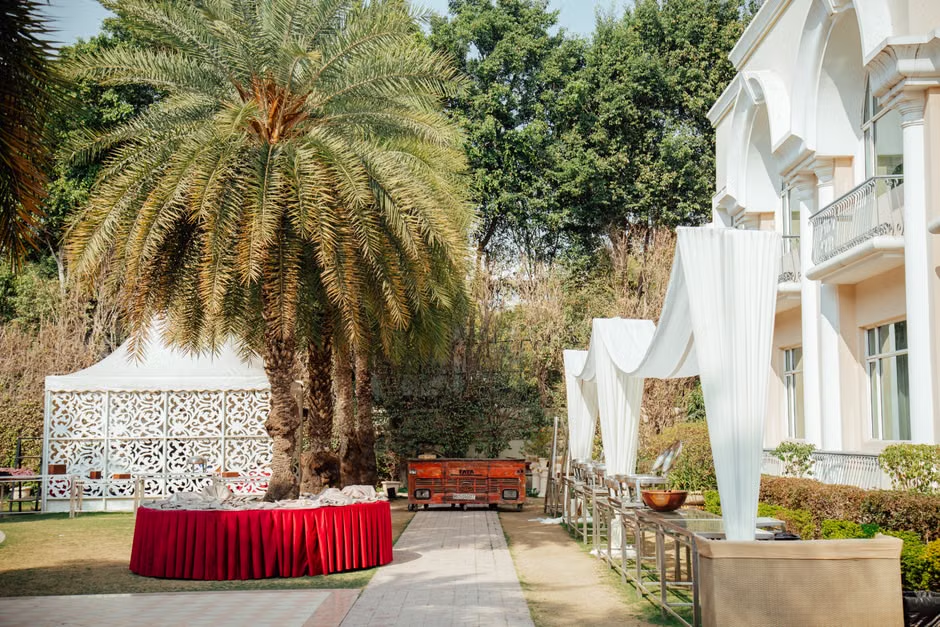
Trident Bhubaneswar
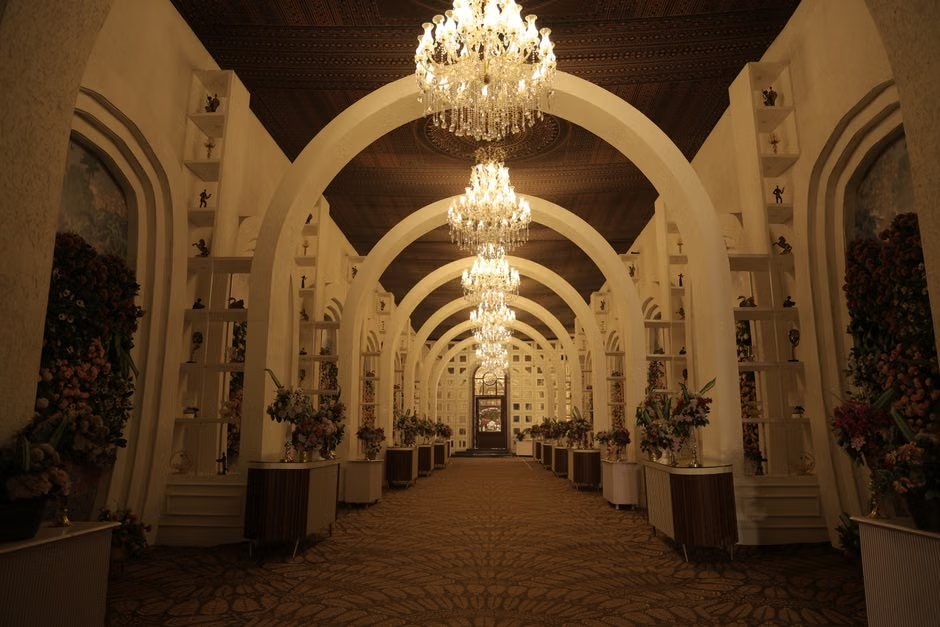
Hotel Swosti Premium
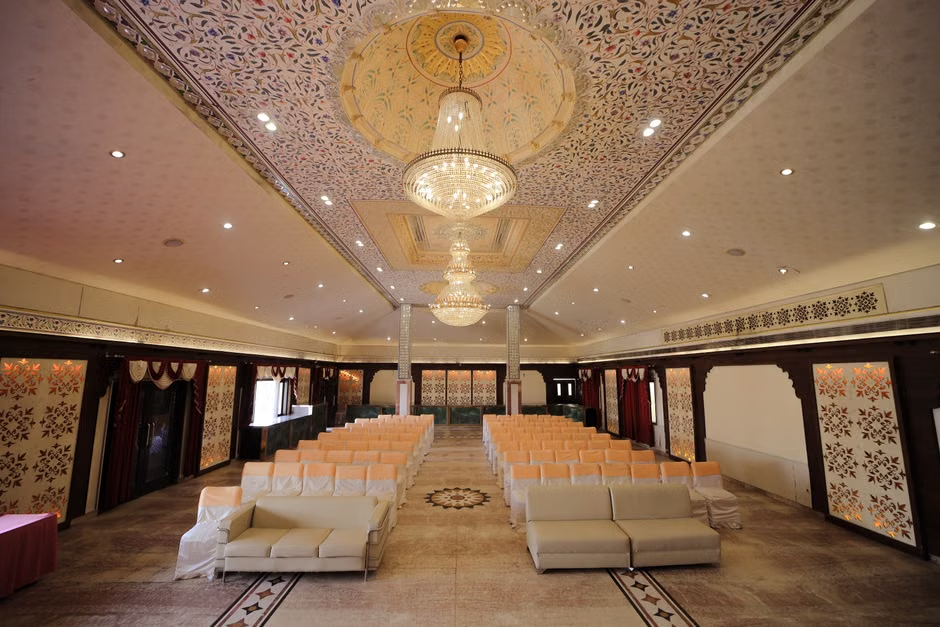
Lemon Tree Hotel Bhubaneswar
Compare Dhauli with Other Top Destinations
Frequently Asked Questions
Is Dhauli a good destination for a Raja Parba or Odia cultural gathering?
Yes, it is particularly well-suited. Dhauli sits within the cultural heartland of Odisha, close to Bhubaneswar, and carries deep Odia heritage significance. Its open grounds and historically resonant setting make it a natural backdrop for Raja Parba celebrations and broader Odia cultural gatherings that benefit from an authentic sense of place rather than a generic event venue.
What kind of spiritual or pilgrimage gatherings work well at Dhauli?
Dhauli is one of eastern India's most significant pilgrimage sites — the location of Ashoka's transformation and home to the Dhauli Shanti Stupa. Buddhist pilgrimage groups, interfaith spiritual retreats, and Hindu religious gatherings all find the site's atmosphere genuinely conducive. The Daya River setting adds to the contemplative character that makes spiritual events here feel grounded rather than staged.
How many guests can realistically be accommodated for an event at Dhauli?
Dhauli itself is an open heritage site rather than a venue with fixed capacity. For outdoor ceremonial or cultural events, the grounds can support mid-to-large groups, though very large gatherings may require authority permissions. Guest accommodation is handled through Bhubaneswar's hotels, which collectively support a wide range of group sizes — from intimate family functions to several hundred attendees.
What is the nearest airport to Dhauli, and how long does it take to get there?
Biju Patnaik International Airport in Bhubaneswar is the nearest airport, approximately 10–12 km from Dhauli. The drive typically takes 20–30 minutes. The airport connects to major Indian cities including Delhi, Mumbai, Kolkata, Hyderabad, and Chennai, making it reasonably accessible for guests travelling from across the country.
Is there a railway station close to Dhauli?
Yes. Bhubaneswar Railway Station is approximately 8–10 km from Dhauli and is a major junction on the East Coast Railway line, with direct trains from Delhi, Kolkata, Mumbai, Chennai, and many other cities. For large groups travelling from within Odisha or neighbouring states, rail is often the most practical option.
What is the best time of year to plan an event at Dhauli?
November through February is the optimal window. Temperatures are cool and dry — typically comfortable for outdoor ceremonies and cultural performances. The monsoon (June–September) brings heavy rainfall that disrupts outdoor events, and the pre-summer months (March–May) see temperatures that can exceed 38°C, making outdoor gatherings uncomfortable, particularly for elderly guests or large pilgrimage groups.
What kinds of venues and event spaces are available for groups visiting Dhauli?
Dhauli's open grounds near the Shanti Stupa and Daya River are used for outdoor ceremonial and cultural events. For formal event infrastructure — banquet halls, landscaped lawns, catering facilities, and accommodation — organisers draw on Bhubaneswar's hotel and hospitality ecosystem, which is a short drive away and offers a range of property types suited to different group sizes and event styles.
How do guests typically get around once they arrive at Dhauli?
Most event groups hire dedicated coaches or minibuses from Bhubaneswar to Dhauli, as public transport frequency to the site is limited. App-based cabs and auto-rickshaws are available from Bhubaneswar for smaller groups. Parking near the site exists but can become congested during major festival periods, so coordinated group transport is generally the more reliable approach.
Are local vendors and caterers experienced with Odia cultural and religious events?
Generally yes. Bhubaneswar's vendor ecosystem includes caterers familiar with Odia cuisine and ritual food requirements, and decorators experienced with traditional Odia aesthetics. For events with a strong cultural or religious character, local vendors often bring contextual knowledge that is difficult to source from outside the region. Very large or highly produced events may need to supplement with specialists from a wider network.
Can Dhauli be privately booked for an exclusive event?
Not in the way a resort or banquet hall can be. Dhauli is a public heritage site of national importance, and organisers must work within site guidelines and coordinate with relevant authorities for larger events. Groups requiring complete venue exclusivity — where no other visitors are present — should factor this into their planning and consider whether the site's character aligns with their event's needs.
Is Dhauli suitable for a corporate offsite or leadership retreat?
It can work well for smaller, reflective corporate formats — leadership retreats or team-building programmes that benefit from a contemplative, historically grounded setting away from conventional conference environments. The proximity to Bhubaneswar's hotels, which offer meeting facilities, means the logistical side is manageable. It is less suited to large-scale corporate conferences requiring extensive AV infrastructure on-site.

Ready to explore venues in Dhauli?
Dhauli: Spiritual Gatherings, Cultural Festivals & Event Venues in Odisha
◆Dhauli is a spiritually significant site on the banks of the Daya River, approximately 8 km south of Bhubaneswar in Odisha. It is best suited to spiritual gatherings, Odia cultural celebrations such as Raja Parba, pilgrimage events, religious family functions, and community ceremonies. Its primary vibe is Spiritual & Soulful, anchored by the Dhauli Shanti Stupa and Emperor Ashoka's rock edicts. The best season for events is November through February, when the weather is cool and dry. Accessibility is generally good, with Bhubaneswar's airport and railway station both within roughly 10–12 km, and the city's hospitality infrastructure supporting guest accommodation.
Dhauli at a Glance
| Attribute | Detail |
|---|---|
| Best For | Raja Parba / Odia Cultural Gathering, Cultural Festival Gathering, Spiritual / Pilgrimage Gathering, Religious Family Function |
| Primary Vibe | Spiritual & Soulful |
| Other Vibes | Heritage & Contemplative, Community-Centred, Culturally Rooted |
| Best Season | Winter (November–February) |
Why Choose Dhauli?
- Unmatched spiritual resonance: Dhauli is the site of Ashoka's transformation and the Dhauli Shanti Stupa — a backdrop that carries genuine historical and spiritual weight, making it unlike any generic event venue.
- Deep Odia cultural identity: The site is intrinsically linked to Odisha's heritage, making it a natural home for Raja Parba celebrations, Odia cultural gatherings, and regional folk festivals that benefit from an authentic sense of place.
- Practical accessibility via Bhubaneswar: Guests travelling from across India can reach Bhubaneswar by air or rail with relative ease, and Dhauli is a short drive from the city — reducing the logistical burden on event organisers.
- Serene riverside setting: The Daya River provides a calm, contemplative atmosphere that is genuinely rare among event destinations, particularly suited to pilgrimage gatherings, spiritual retreats, and reflective community ceremonies.
- Proximity to Bhubaneswar's hospitality infrastructure: While Dhauli itself is a quiet site, the state capital's hotels, caterers, and event vendors are within easy reach, giving organisers access to professional services without sacrificing the site's spiritual character.
- Suited to meaning-driven, mid-sized gatherings: Dhauli works particularly well for groups where the significance of the occasion — a religious function, a naming ceremony, a community gathering — matters more than spectacle or scale.
Which Celebrations Work Best in Dhauli?
Raja Parba / Odia Cultural Gathering: Raja Parba, Odisha's celebrated festival honouring womanhood and the earth, has deep cultural roots in this region. Dhauli's proximity to Bhubaneswar and its strong Odia identity make it a particularly fitting location for community-scale Raja Parba celebrations and broader Odia cultural gatherings that seek an authentic, heritage-grounded setting.
Cultural Festival Gathering: The site's historical significance and its association with peace and transformation make it a compelling venue for cultural festivals that blend performance, heritage, and community participation. Outdoor cultural programmes benefit from the site's open landscape and the symbolic weight of its surroundings.
Spiritual / Pilgrimage Gathering: Dhauli is, at its core, a pilgrimage site. Groups organising spiritual retreats, Buddhist pilgrimage gatherings, or interfaith contemplative events will find the Shanti Stupa and the Daya River setting genuinely conducive to the tone they are seeking — this is not a manufactured spiritual atmosphere but a historically grounded one.
Religious Family Function: Families holding religious ceremonies — whether connected to Buddhist, Hindu, or broader Odia spiritual traditions — benefit from Dhauli's sacred character. The site lends a sense of occasion and reverence to family-scale religious functions that a conventional banquet hall cannot replicate.
Local Folk Festival / Fair: Odisha has a rich tradition of folk performance, including Odissi dance, Chhau, and Pala. Dhauli's open grounds and cultural associations make it a suitable backdrop for folk festival programming, particularly events that aim to present regional traditions in a historically resonant context.
Temple Festival: The broader Dhauli area, situated within the cultural orbit of Bhubaneswar — one of India's most temple-dense cities — is well-suited to temple festival gatherings. Events tied to the ritual calendar of Odia religious life find a natural home here.
Venues & Event Spaces
Dhauli itself is primarily an open heritage and pilgrimage site rather than a venue-dense event district. Event organisers typically work with a combination of the site's outdoor grounds for ceremonial or cultural programming, and the broader Bhubaneswar hospitality ecosystem — which includes full-service hotels with banquet halls, landscaped lawns, and conference facilities — for accommodation, catering, and formal event infrastructure. Properties in and around Bhubaneswar range from well-appointed business hotels with mid-scale banquet capacity to larger resort-style properties with outdoor event lawns capable of hosting several hundred guests. For spiritual or pilgrimage gatherings, the open grounds near the Shanti Stupa and the Daya River embankment provide a setting that no indoor venue can substitute. Organisers planning larger cultural festivals may also work with municipal or cultural authority permissions for use of the broader site area. The general character of available spaces leans toward meaningful, atmosphere-led settings rather than high-glamour ballroom environments.
Best Time to Celebrate
The winter months of November through February are the clear optimal window for events at Dhauli. Temperatures during this period typically range from the mid-teens at night to the mid-to-upper twenties during the day — comfortable for outdoor ceremonies, processions, and cultural performances that are central to the kinds of gatherings Dhauli hosts best. The air is dry, skies are generally clear, and the Daya River setting is at its most pleasant. This is also the period when Odisha's broader cultural calendar is most active, with festivals and heritage events drawing visitors from across the state and beyond.
The pre-summer months of March through May see temperatures climb steadily, often exceeding 38°C by April and May. Outdoor events become physically demanding for guests, and the heat is particularly challenging for elderly attendees or large pilgrimage groups. June through September brings the Bay of Bengal monsoon, with heavy and sometimes unpredictable rainfall that makes outdoor ceremonial events unreliable. October is a transitional month — the monsoon typically retreats, but humidity can remain elevated and conditions are variable. It is generally considered a shoulder period rather than a reliable event window, though early-to-mid November marks a clear improvement.
Getting There & Local Connectivity
Dhauli is served by Biju Patnaik International Airport in Bhubaneswar, which connects to major Indian cities including Delhi, Mumbai, Kolkata, Hyderabad, Chennai, and Bengaluru. For guests travelling from eastern India, Kolkata is a particularly well-connected hub. The airport is approximately 10–12 km from Dhauli, making it one of the more accessible pilgrimage and heritage sites in eastern India from an air travel perspective.
Bhubaneswar Railway Station is a major junction on the East Coast Railway line, with direct trains from Delhi, Kolkata, Mumbai, Chennai, and numerous other cities. It is approximately 8–10 km from Dhauli. For large guest groups travelling from within Odisha or neighbouring states, rail is often the most practical and comfortable option.
Local movement between Bhubaneswar and Dhauli is straightforward by road — the route is well-maintained and the journey typically takes 20–30 minutes depending on traffic. For event groups, hiring dedicated coaches or minibuses from Bhubaneswar is the standard approach, as Dhauli itself has limited public transport frequency. Auto-rickshaws and app-based cabs are available from Bhubaneswar for smaller groups. Parking at and near the Dhauli site is available but can become congested during major festival periods, so coordinated group transport is advisable.
Local Vendor & Hospitality Ecosystem
Dhauli's event ecosystem is best understood as an extension of Bhubaneswar's, rather than a standalone vendor market. Bhubaneswar, as Odisha's state capital, has a reasonably mature hospitality and events industry — including caterers experienced in Odia cuisine and ritual food requirements, decorators familiar with traditional Odia aesthetics, and audio-visual vendors capable of supporting cultural performances and outdoor ceremonies. For events with a strong Odia cultural or religious character, local vendors often bring genuine contextual knowledge that is difficult to source from outside the region.
That said, the ecosystem is more developed for mid-scale events than for very large or highly produced gatherings. Organisers planning events for several hundred guests with complex production requirements may need to supplement local vendors with specialists brought in from Bhubaneswar's broader network or, for very large events, from Kolkata or other regional hubs. Accommodation capacity in the immediate Dhauli area is limited — guests are typically housed in Bhubaneswar hotels, which offer a reasonable range of options across comfort levels. Coordination between the event site and guest accommodation therefore requires deliberate planning, particularly for pilgrimage groups with early-morning ceremonial schedules.
Pros & Things to Consider
Why Dhauli Works Well
- Genuinely unique spiritual and historical atmosphere — the Shanti Stupa and Ashoka's edicts provide a backdrop with real cultural weight
- Strong alignment with Odia cultural identity, making it a natural home for Raja Parba, folk festivals, and regional religious functions
- Good accessibility via Bhubaneswar's airport and railway station, both within a short drive
- Proximity to Bhubaneswar's hospitality infrastructure means professional catering, accommodation, and event support are available nearby
- The riverside and open-ground setting is well-suited to outdoor ceremonial events, processions, and cultural performances
- Relatively uncrowded compared to mainstream event destinations, offering a sense of calm and focus appropriate to spiritual gatherings
Things to Consider
- Dhauli is a heritage and pilgrimage site, not a purpose-built event venue — organisers must work within site guidelines and, for larger events, coordinate with relevant authorities for permissions
- On-site accommodation does not exist; all guests must be housed in Bhubaneswar, requiring reliable group transport logistics, especially for early-morning ceremonies
- The local vendor ecosystem, while competent for mid-scale events, may require supplementation for very large or highly produced gatherings
- The destination is strongly suited to spiritually and culturally grounded events — groups seeking a glamorous, high-production celebration environment may find the site's character at odds with that vision
- Major festival periods can bring significant visitor numbers to the site, which may affect the exclusivity or intimacy of a private gathering if not planned carefully
When Dhauli May Not Be the Right Fit
- Large-scale, high-production weddings or galas: Groups seeking a grand ballroom, luxury resort grounds, or a destination with a dense concentration of purpose-built wedding venues will find Dhauli's offering limited — the site's strength is atmosphere and cultural meaning, not event infrastructure at scale.
- Monsoon-season outdoor events: Any event planned between June and September that relies on outdoor spaces faces genuine weather risk; the Bay of Bengal monsoon brings heavy and unpredictable rainfall that is difficult to plan around at an open heritage site.
- Guests with very limited connectivity to Bhubaneswar: While Bhubaneswar is well-connected, guests travelling from remote locations without direct rail or air links may face long, multi-leg journeys — a consideration for pilgrimage groups with elderly or mobility-limited participants.
- Events requiring complete site exclusivity: As a public heritage site of national importance, Dhauli cannot be privately booked in the way a resort or banquet hall can — groups seeking a fully private, exclusive venue environment should consider alternatives.