
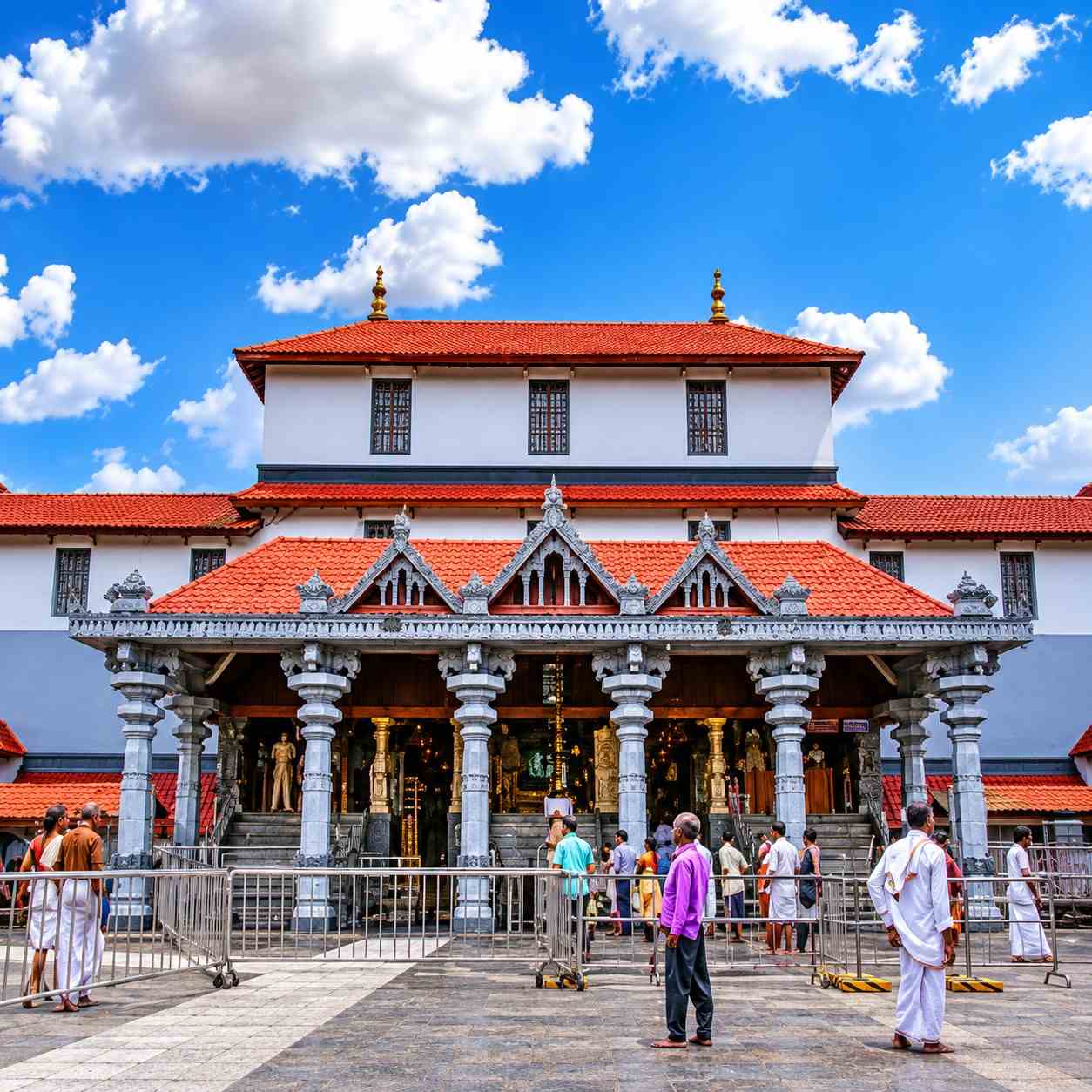
Why Dharmasthala is Perfect for Your Celebration
- Home to the revered Shri Manjunatha Temple — a living, active pilgrimage site that lends profound sanctity to religious family functions and temple festivals
- Strong community and dharma culture managed by the Heggade family institution, ensuring disciplined, respectful event hosting
- Surrounded by the lush Western Ghats, offering a serene, distraction-free environment ideal for spiritual gatherings and leadership retreats
- Well-established infrastructure for large pilgrim groups — accommodation, dining, and logistics are routinely managed at scale by the temple trust
- Deeply embedded Tulu and Kannada cultural traditions make it an authentic setting for Ugadi celebrations and Karnataka cultural gatherings
- Cool, pleasant winter months (November–February) align perfectly with major temple festivals and family reunion seasons
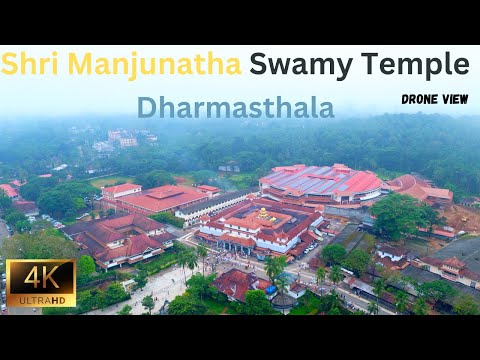
Top Venues in Dharmasthala
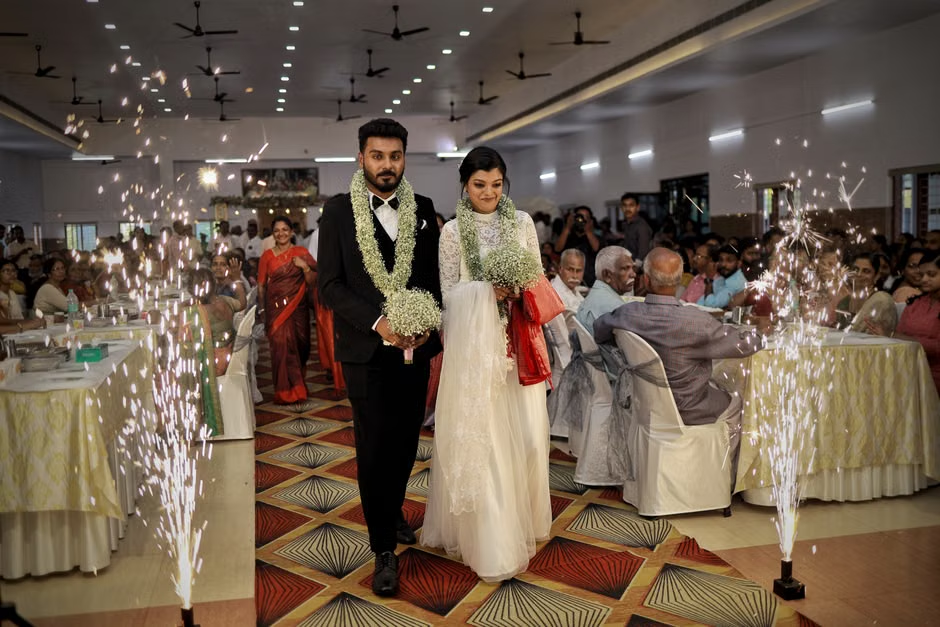
Dharmasthala Devasthana Guest House (Yatri Nivas)
Compare Dharmasthala with Other Top Destinations
Frequently Asked Questions
Is Dharmasthala a good destination for a religious family function?
Yes, it is among the most naturally suited towns in Karnataka for religious family functions. The presence of the Shri Manjunatha Temple, the Devasthana's institutional hospitality infrastructure, and the town's deeply devotional community ethos create an environment where religious milestones — pujas, thread ceremonies, post-pilgrimage family gatherings — feel genuinely meaningful rather than staged.
What size of guest group can Dharmasthala realistically accommodate for an event?
Dharmasthala works best for intimate to mid-sized gatherings — typically up to 150–200 guests. The temple trust's own facilities can handle larger pilgrim groups for community dining and basic accommodation, but for events requiring coordinated hospitality across a single property, the local inventory suits smaller groups more comfortably. Larger guest lists require distributing accommodation across multiple properties.
How do guests typically travel to Dharmasthala for an event?
Most guests fly into Mangaluru International Airport, which connects to major Indian metros, and then travel onward by road — a journey of roughly 75–90 km taking approximately 2 to 2.5 hours. Chartered buses or private vehicle convoys from Mangaluru are the most practical option for large groups. Rail access is available but limited, with Mangaluru Junction being the most connected nearby station.
When is the best time of year to plan a celebration in Dharmasthala?
November through February is the optimal window. The weather is cool and dry, with comfortable daytime temperatures and low humidity — ideal for temple processions, outdoor gatherings, and multi-day family functions. This period also aligns with several of the town's own major temple festivals, allowing guests to combine a personal celebration with the town's cultural calendar.
What kinds of event spaces are available in Dharmasthala?
The primary event infrastructure consists of temple trust-managed community halls, accommodation complexes, and open gathering spaces suited to religious functions and community meals. A small number of independent guesthouses and modest resorts are also available. For events requiring elaborate banquet setups or outdoor lawns with décor production, planners typically look to properties along the Mangaluru–Dharmasthala corridor.
Is Dharmasthala suitable for a Ugadi celebration or Karnataka cultural gathering?
Yes, particularly so. Ugadi carries deep cultural resonance in this region, and Dharmasthala's Tulu-Kannada cultural fabric, temple environment, and community gathering tradition make it a meaningful setting for marking this occasion. The town's own festival calendar in the winter-to-spring transition period aligns well with the spirit of such gatherings.
Can I arrange local transport for a large guest group once they arrive in Dharmasthala?
Yes, but it requires advance planning. The town itself is compact and walkable near the temple complex, but guests spread across multiple accommodation points will need dedicated vehicles. Local auto-rickshaws and hired cars are available, though supply can be stretched during peak festival periods. Arranging a dedicated fleet through a Mangaluru-based operator is the more reliable approach for large groups.
Are there catering restrictions I should know about when planning an event in Dharmasthala?
Yes. The Dharmasthala Devasthana's own facilities operate on a strictly vegetarian, alcohol-free basis, in keeping with the town's religious character. Events requiring non-vegetarian menus or alcohol service need to source catering outside the temple trust's facilities. This is a genuine constraint planners should factor in early, particularly if the guest list has varied dietary expectations.
What makes Dharmasthala suitable for a spiritual or pilgrimage gathering?
The town is built around the principle of dharma — righteous community service — and the Shri Manjunatha Temple is one of South India's most active pilgrimage sites. The Devasthana's infrastructure routinely manages large pilgrim groups, the natural Western Ghats setting is calming and reflective, and the community ethos actively supports the kind of collective, purposeful gathering that a pilgrimage group seeks.
Do I need to source event vendors from outside Dharmasthala?
For most specialist event services — decorators, professional AV, entertainment, multi-cuisine catering — yes. The local vendor ecosystem is oriented toward pilgrimage hospitality rather than conventional event production. Planners typically engage vendors from Mangaluru or Bengaluru and arrange their travel as part of the event logistics. For religious functions using the Devasthana's own facilities, the institutional support is strong and largely self-contained.
Is Dharmasthala safe for large family groups including elderly guests and children?
Yes. Dharmasthala is widely regarded as one of the safest pilgrimage towns in South India. The public environment is well-maintained, community norms are respectful, and the Devasthana actively manages crowd safety during major events. The main consideration for elderly guests is the road journey from Mangaluru through ghat terrain, which can be tiring — comfortable, well-maintained vehicles and planned rest stops are advisable.
Can Dharmasthala work for a corporate leadership retreat or team-building offsite?
Yes, for the right kind of team. Dharmasthala's serene Western Ghats setting, reflective spiritual atmosphere, and distance from urban distractions make it genuinely suitable for leadership retreats focused on purpose, values, or community service themes. It is less suited to high-energy team-building formats requiring extensive activity infrastructure or entertainment options — those formats are better served by a resort destination with broader amenities.

Ready to explore venues in Dharmasthala?
Dharmasthala: Temple Weddings, Spiritual Gatherings & Cultural Event Venues
◆Dharmasthala is a small but spiritually significant pilgrimage town in the Dakshina Kannada district of Karnataka, best suited for religious family functions, temple festivals, spiritual and pilgrimage gatherings, and Karnataka cultural celebrations such as Ugadi. Its primary character is deeply devotional — anchored by the ancient Shri Manjunatha Temple and governed by a strong community dharma ethos. The town is most accessible and comfortable during the winter months of November through February. Guest travel requires advance planning via road from Mangaluru, and the local accommodation inventory is modest in scale, making it ideal for intimate to mid-sized gatherings rather than large-format destination weddings.
Dharmasthala at a Glance
| Attribute | Detail |
|---|---|
| Best For | Ugadi / Karnataka Cultural Gathering, Religious Family Function, Temple Festival, Spiritual / Pilgrimage Gathering |
| Primary Vibe | Spiritual & Soulful |
| Other Vibes | Community-Centred, Heritage, Nature-Immersed |
| Best Season | Winter (November–February) |
Why Choose Dharmasthala?
- Living pilgrimage sanctity: The Shri Manjunatha Temple is not a heritage monument but an active, deeply venerated shrine — lending genuine spiritual weight to any religious family function or temple festival held here.
- Institutional event management: The Dharmasthala Devasthana (temple trust) has decades of experience managing large pilgrim groups, meaning basic logistics — accommodation blocks, community dining (annadana), and crowd management — are handled with unusual competence for a town of this size.
- Tulu and Kannada cultural authenticity: Celebrations rooted in Karnataka's coastal traditions — Ugadi, folk performances, community rituals — feel genuinely at home here rather than staged for tourists.
- Western Ghats natural setting: The surrounding forested hills provide a calm, distraction-free backdrop that suits leadership retreats, spiritual gatherings, and community events seeking a reflective atmosphere.
- Strong safety and community discipline: Dharmasthala is widely regarded as one of the safest pilgrimage towns in South India, with a well-maintained public environment and respectful community norms — a meaningful consideration for family groups with elders and children.
- Accessible from Mangaluru: While not a metro hub, Dharmasthala is reachable within roughly 75–90 km of Mangaluru International Airport, making it feasible for guests flying in from major Indian cities.
Which Celebrations Work Best in Dharmasthala?
- Ugadi / Karnataka Cultural Gathering: Ugadi — the Karnataka and Andhra new year — carries deep cultural resonance in this region. Dharmasthala's temple environment, community gathering spaces, and Tulu-Kannada cultural fabric make it a particularly meaningful place to mark this occasion with extended family or a community group.
- Religious Family Function: Whether a thread ceremony, a post-pilgrimage family puja, or a multi-generational religious milestone, Dharmasthala's sacred atmosphere and institutional hospitality infrastructure make it one of the most naturally suited towns in Karnataka for such occasions.
- Temple Festival: The town hosts its own major festivals — including the Laksha Deepotsava — that draw enormous gatherings. Families and communities who wish to time a celebration around a temple festival will find the local ecosystem already geared for it.
- Spiritual / Pilgrimage Gathering: Groups undertaking a collective pilgrimage — whether a family, a corporate team seeking a reflective offsite, or a community organisation — will find Dharmasthala's infrastructure, ethos, and setting genuinely supportive of that intent.
- Cultural Festival Gathering: Dharmasthala has a tradition of hosting cultural programmes, classical music, and folk performances tied to its temple calendar. Groups interested in Karnataka's performing arts traditions can find authentic programming here, particularly in the winter season.
- Local Folk Festival / Fair: The region's Tulu folk traditions — including Yakshagana performances and community fairs — are alive and practised here. A gathering timed to coincide with local folk events offers guests an immersive cultural experience that is genuinely rooted in place.
Venues & Event Spaces
Dharmasthala's event infrastructure is shaped primarily by its identity as a pilgrimage town rather than a conventional wedding or MICE destination. The dominant venue type is the temple trust-managed accommodation and community hall complex, which can host religious functions, community meals (annadana), and cultural programmes at scale. These spaces are functional, well-maintained, and deeply appropriate for spiritual and religious gatherings, though they are not designed for the décor-heavy, multi-vendor production typical of a destination wedding.
Beyond the temple trust properties, the town and its immediate surroundings offer a small number of independent guesthouses and modest resorts that can accommodate intimate family groups. For events requiring more elaborate banquet or outdoor lawn setups, planners typically look to properties along the Mangaluru–Dharmasthala corridor, where the landscape opens up and a broader range of hospitality infrastructure exists. Outdoor spaces within the Western Ghats setting — forested clearings, riverside areas — can be considered for smaller, nature-immersed gatherings, though these require careful logistical planning and are weather-dependent outside the winter window.
Best Time to Celebrate
The winter months of November through February are the clear optimal window for events in Dharmasthala. Temperatures during this period typically range from the low-to-mid 20s°C at night to the low 30s°C during the day, with low humidity and minimal rainfall — conditions that make outdoor gatherings, temple processions, and multi-day family functions genuinely comfortable. This window also aligns with several of the town's own major temple festivals, meaning guests can combine a personal celebration with the town's own cultural calendar.
March through May brings rising temperatures and increasing humidity as the pre-monsoon season builds. While events are still possible indoors, the heat and mugginess make outdoor functions uncomfortable, and the general atmosphere is less conducive to the kind of extended, relaxed gathering that Dharmasthala is best suited for.
June through September is the Southwest Monsoon season, and the Western Ghats — of which Dharmasthala is a part — receive some of the heaviest rainfall in India during this period. Roads can become difficult, outdoor events are essentially impractical, and the town's pilgrim traffic itself tends to be lower. Event planners should treat this period as a firm avoid window for any outdoor or multi-day celebration.
October is a transitional month — the monsoon typically retreats, but residual rainfall and humidity can persist into early October. Late October can be acceptable for indoor events, but November is the safer starting point for confident outdoor planning.
Getting There & Local Connectivity
The primary air gateway for Dharmasthala is Mangaluru International Airport, which connects to major Indian metros including Bengaluru, Mumbai, Chennai, and Hyderabad, as well as select international routes. From the airport, Dharmasthala is reached by road — a journey of roughly 75–90 km through the Western Ghats foothills, typically taking between 2 and 2.5 hours depending on traffic and road conditions. The route is scenic but involves ghat sections, so guests who are not accustomed to hilly terrain should be prepared for winding roads.
Rail access is more limited. The nearest station with meaningful connectivity is Mangaluru Junction, from which guests would need to travel onward by road. There is a closer station at Subramanya Road, but its connectivity to the national rail network is narrower. For large guest groups, chartered bus or private vehicle convoys from Mangaluru are the most practical and commonly used approach — the temple trust and local operators are experienced in managing such logistics.
Within Dharmasthala itself, the town is compact and walkable for those staying near the temple complex. For guests spread across multiple accommodation points, local auto-rickshaws and hired vehicles are available, though the supply of vehicles can be stretched during peak festival periods. Event planners should arrange dedicated transport for guest groups rather than relying on ad-hoc local availability during busy seasons.
Local Vendor & Hospitality Ecosystem
Dharmasthala's hospitality ecosystem is genuinely distinctive — but in a way that differs from conventional event destinations. The Dharmasthala Devasthana (temple trust) operates its own accommodation, community dining, and event management infrastructure at a scale that few private operators in a town this size could match. For religious functions, pilgrimages, and community gatherings that align with the temple's own ethos, this institutional support is a significant asset.
For events requiring conventional wedding or corporate event vendors — decorators, DJ services, multi-cuisine catering, professional AV production — the local ecosystem is more limited. Planners typically need to source specialist vendors from Mangaluru or Bengaluru and arrange their travel and accommodation as part of the event budget. This is a manageable but real logistical consideration that distinguishes Dharmasthala from more developed event destinations.
Catering within the temple complex is predominantly sattvic and vegetarian, in keeping with the town's religious character. Events that require non-vegetarian menus or alcohol service will need to look outside the temple trust's own facilities, and planners should be aware that Dharmasthala maintains a strong community norm around these matters. This is not a limitation for the event types the town is best suited for — but it is a genuine constraint for planners whose guest list has different expectations.
Pros & Things to Consider
Why Dharmasthala Works Well
- Unmatched spiritual authenticity — few towns in South India offer this level of living temple culture as an event backdrop
- Institutional logistics support from the Devasthana for religious and community gatherings
- Exceptionally safe, well-maintained public environment — suitable for elders, children, and large family groups
- Genuine Tulu-Kannada cultural programming available, particularly during the winter festival season
- Serene Western Ghats setting provides a natural, calming atmosphere that enhances reflective or spiritual events
- Strong community dining (annadana) tradition means large groups can be fed efficiently and respectfully
Things to Consider
- Accommodation inventory is modest — large guest lists (200+) will need to be distributed across multiple properties, some of which may be 30–60 minutes away
- Specialist event vendors (decorators, AV, entertainment) typically need to be sourced from Mangaluru or Bengaluru, adding logistical complexity
- The town's strong religious and community norms mean non-vegetarian catering and alcohol are not available within the temple trust's own facilities
- Road access through ghat sections can be slow and uncomfortable for guests not accustomed to hilly terrain, particularly in large coach convoys
- Mobile and internet connectivity within the town can be patchy, which may affect guests expecting reliable digital access throughout their stay
When Dharmasthala May Not Be the Right Fit
- Large-format destination weddings (300+ guests) with elaborate production: The local venue and accommodation inventory is not designed for high-production, multi-day wedding formats at scale. Guests expecting palace ballrooms, luxury resort lawns, or a wide choice of 4- and 5-star properties will find the options here limited.
- Events requiring non-vegetarian menus or alcohol as a central feature: Dharmasthala's community norms and the temple trust's own facilities are firmly vegetarian and alcohol-free. Events where these are important to the guest experience are better suited to a different destination.
- Monsoon-season outdoor celebrations (June–September): The Western Ghats monsoon is intense and prolonged. Any event with significant outdoor components planned during this window faces a high risk of disruption.
- Guests with very limited travel flexibility: Reaching Dharmasthala requires a road journey from Mangaluru, through ghat terrain. For elderly guests or those with mobility challenges who cannot manage a 2+ hour road transfer, the journey itself may be a meaningful barrier.