
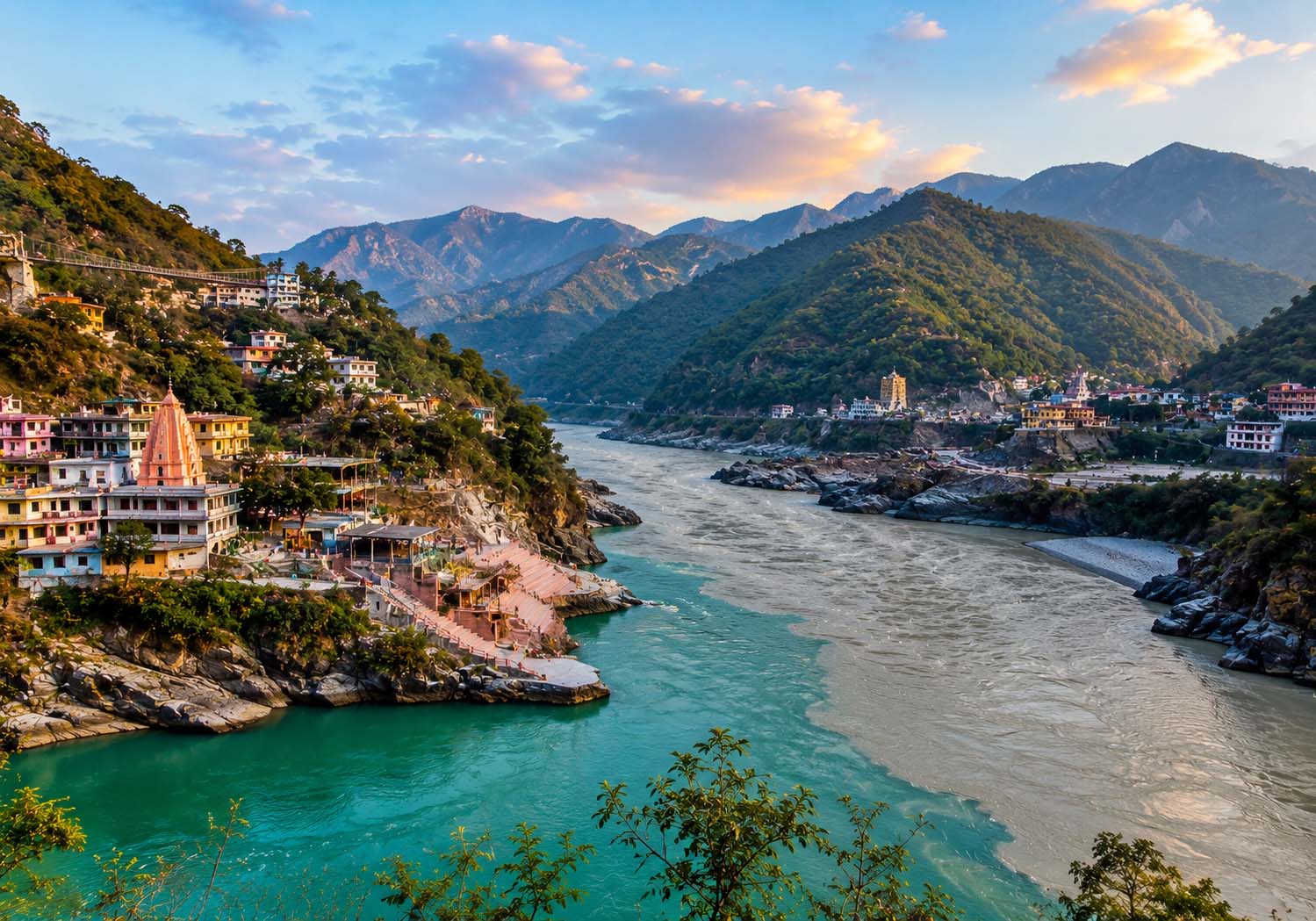
Why Devprayag is Perfect for Your Celebration
- Sangam of Alaknanda and Bhagirathi — one of India's most sacred river confluences, ideal for Ganga-centric spiritual gatherings
- Ancient Raghunath Temple and riverside ghats provide authentic ceremonial backdrops for temple festivals and religious functions
- Intimate Himalayan town scale suits small, deeply personal gatherings, naming ceremonies, and pilgrimage-linked family events
- Post-monsoon autumn season (September–October) brings clear skies, lush green hills, and a spiritually charged atmosphere
- Strong local tradition of folk culture, seasonal melas, and community festivals rooted in Garhwali heritage
- Relatively undiscovered by mass tourism, offering privacy and an unmediated spiritual experience for guests
Compare Devprayag with Other Top Destinations
Frequently Asked Questions
Is Devprayag a good destination for a Ganga or spiritual festival gathering?
Yes, strongly so. Devprayag sits at the confluence of the Alaknanda and Bhagirathi rivers — the point where the Ganges is formally born — making it one of the most spiritually significant locations in India for Ganga-centred gatherings. The town's ghats, aarti traditions, and experienced local priests make it particularly well-suited to this type of event.
What size of gathering can Devprayag realistically support?
Devprayag is best suited to intimate gatherings, typically in the range of 20 to 80 guests. The town's accommodation and event space inventory is modest, and groups larger than this will need to distribute guests across multiple properties or arrange for some to stay in Rishikesh and travel up for the event. The riverside ghats can accommodate larger ceremonial assemblies, but overnight hosting capacity is the primary constraint.
How do guests typically get to Devprayag?
Most guests arrive via Dehradun (the nearest airport, roughly 95 km away) or Rishikesh (the nearest railway station with good connectivity, approximately 70 km away), followed by a road transfer into the hills. Organised group transfers or chartered vehicles from either hub are the most practical approach. The journey by road from Rishikesh typically takes around two hours depending on conditions.
When is the best time of year to hold an event in Devprayag?
Autumn — specifically September and October — is the recommended window. Post-monsoon conditions bring clear skies, lush scenery, comfortable temperatures, and reliable road access. This period also coincides with major Hindu festivals like Navratri and Dussehra, adding natural cultural energy to any spiritual gathering. Winter brings severe cold, and the monsoon (June–August) carries landslide and road-closure risks.
What kinds of event spaces are available in Devprayag?
The primary event spaces are the riverside ghats — open, ceremonially significant, and well-suited to aarti, puja, and festival gatherings. A small number of independent guesthouses and retreat properties offer modest indoor and terrace spaces for groups. Dharamshalas provide functional accommodation and basic gathering areas for pilgrimage parties. Devprayag is best approached as a ceremonial destination rather than a conventional banquet-hall venue hub.
Are local priests and ritual specialists available in Devprayag for ceremonies?
Yes. Devprayag has a well-established community of priests and ritual specialists experienced in managing group ceremonies, Ganga puja, and pilgrimage-related rites. This is one of the town's genuine strengths for spiritual and religious events — organisers typically do not need to import ceremonial expertise from outside, which both reduces complexity and adds authenticity.
What is the catering and food situation for events in Devprayag?
Local catering is oriented toward sattvic (pure vegetarian) cuisine, consistent with the town's spiritual character. Simple, high-quality vegetarian meals for groups are generally well-handled locally. Events requiring elaborate multi-cuisine menus or non-vegetarian catering will need to engage vendors from Rishikesh or Haridwar and arrange transport, which adds logistical complexity.
Is Devprayag suitable for a temple festival or cultural gathering?
Yes. The Raghunath Temple and associated shrines provide authentic ceremonial settings for temple festivals, and the region's living Garhwali folk culture — including seasonal melas, folk music, and community celebrations — makes it a natural fit for cultural festival gatherings. Events that draw on local traditions rather than importing generic entertainment will feel genuinely rooted in place.
What should event organisers know about local transport once guests arrive?
Devprayag town is compact and largely walkable between the ghats, main temple, and central accommodation. However, the narrow mountain roads and limited parking make large vehicle convoys challenging. Organisers should plan group transfers carefully, brief guests on the pace of movement, and avoid scheduling tight back-to-back transfers. Local taxis and shared vehicles are available but should be pre-arranged for groups.
Are there any important restrictions or cultural considerations for events in Devprayag?
Yes. Devprayag is a deeply religious pilgrimage town, and events should be planned with respect for its spiritual character. Alcohol is generally not appropriate in this setting, and non-vegetarian food is not part of the local culture. Loud commercial entertainment or heavily produced event formats may feel out of place. Events that align with the town's devotional atmosphere will be better received by both the local community and guests.

Ready to explore venues in Devprayag?
Devprayag: Sacred Confluence for Spiritual Gatherings, Temple Festivals & Pilgrimage Events
◆Devprayag is best suited to spiritually oriented gatherings — Ganga festivals, pilgrimage assemblies, temple celebrations, and culturally rooted family ceremonies — held against the backdrop of one of India's most sacred river confluences in the Garhwal Himalayas of Uttarakhand. Its primary vibe is Spiritual & Soulful, and it is particularly well-matched to intimate, meaning-driven events rather than large-scale weddings or corporate productions. The best season is autumn (September–October), when post-monsoon clarity brings lush scenery and comfortable temperatures. Accessibility requires planning — guests typically travel via Dehradun or Rishikesh — and the local accommodation inventory is modest, making this destination most appropriate for smaller, deeply intentional gatherings.
Devprayag at a Glance
| Attribute | Detail |
|---|---|
| Best For | Ganga / Spiritual Festival Gathering, Spiritual / Pilgrimage Gathering, Temple Festival, Cultural Festival Gathering |
| Primary Vibe | Spiritual & Soulful |
| Other Vibes | Himalayan & Serene, Folk & Cultural, Intimate & Devotional |
| Best Season | Autumn (September–October) |
Why Choose Devprayag?
- One of India's most sacred confluences: The meeting point of the Alaknanda and Bhagirathi rivers — where the Ganges is formally born — gives Devprayag an unmatched spiritual authority that no constructed venue can replicate. Events held here carry genuine religious and cultural weight.
- Ancient temple infrastructure: The Raghunath Temple and several smaller shrines along the ghats provide authentic ceremonial spaces for temple festivals, puja gatherings, and ritually significant family functions without requiring elaborate external decoration.
- Intimate, undisturbed scale: Devprayag remains a small, relatively unhurried pilgrimage town. For groups seeking privacy, focused spiritual experience, and freedom from the commercial noise of larger tourist destinations, this scale is a genuine asset.
- Living Garhwali folk culture: The region has a strong tradition of seasonal melas, folk music, and community festivals rooted in Garhwali heritage — making it a natural fit for cultural festival gatherings and local folk fairs that feel genuinely embedded in place.
- Post-monsoon natural beauty: The autumn window delivers the Himalayas at their most visually dramatic — clear skies, green hillsides, and the rivers running full and vivid — creating a naturally spectacular setting for outdoor ceremonies and riverside gatherings.
- Spiritual ecosystem already in place: Priests, ritual specialists, and puja service providers are locally available and experienced in managing group ceremonies, reducing the need to import specialist vendors from outside.
Which Celebrations Work Best in Devprayag?
- Ganga / Spiritual Festival Gathering: Devprayag is among the most appropriate places in India for a Ganga-centred festival gathering. The sangam itself — where two sacred rivers merge — is the ceremonial focal point, and the town's ghats, aarti traditions, and temple calendar make large-scale spiritual assemblies feel entirely natural here.
- Spiritual / Pilgrimage Gathering: Groups undertaking a shared pilgrimage — whether as part of the Char Dham circuit or as a standalone devotional journey — find Devprayag a meaningful halt or base. The town's infrastructure is oriented around pilgrims, and the atmosphere supports collective spiritual practice.
- Temple Festival: The Raghunath Temple and associated shrines host seasonal festivals that local and visiting communities participate in together. Organising a private or community temple festival event here benefits from existing ritual knowledge and a genuinely sacred physical setting.
- Cultural Festival Gathering: Garhwali cultural traditions — folk dance, regional music, seasonal harvest celebrations — are alive in this area. A cultural festival gathering that draws on these traditions rather than importing generic entertainment will feel authentic and resonant.
- Local Folk Festival / Fair: The region's mela tradition means that folk fairs are a familiar format for local communities. Organising or participating in a folk festival here connects guests to a living cultural practice rather than a staged performance.
- Religious Family Function: Families choosing Devprayag for a religious function — whether a mundan, thread ceremony, or ancestral rite — benefit from the town's concentration of experienced priests and the spiritual significance of performing rituals at the Ganga's source point.
Venues & Event Spaces
Devprayag's venue landscape is characterised by its modest scale and spiritual orientation rather than by luxury hospitality infrastructure. The primary event spaces are the riverside ghats themselves — open, ceremonially significant, and capable of accommodating small to medium gatherings for aarti, puja, and festival events. Several dharamshalas and pilgrim rest houses provide functional group accommodation and basic gathering spaces suited to pilgrimage parties and religious family groups.
A small number of independent guesthouses and retreat-style properties in and around the town offer modest event hosting capability — typically suited to groups of 20 to 80 guests — with open terraces or garden areas that can be used for ceremonies. These properties are generally simple in character, prioritising the natural and spiritual setting over elaborate event production facilities.
For groups requiring more structured event infrastructure — dedicated banquet halls, professional AV setups, or large outdoor lawns — the nearest meaningful options are found further down the valley toward Rishikesh or Haridwar, which have a more developed hospitality and events ecosystem. Devprayag itself is best approached as a ceremonial destination rather than a conventional event venue hub.
Best Time to Celebrate
Autumn (September–October) is the clearly preferred window for events in Devprayag, and the reasons go beyond simply pleasant weather. By September, the monsoon has largely withdrawn from the Garhwal hills, leaving the landscape at its most vivid — rivers running clear and full, hillsides intensely green, and the sky reliably open. Temperatures in this period are comfortable for outdoor ceremonies, typically ranging from the mid-teens at night to the mid-to-upper twenties during the day, making extended riverside gatherings and outdoor puja sessions genuinely comfortable for guests of all ages.
Crucially, the post-monsoon period also coincides with several important festivals in the Hindu calendar — including Navratri and Dussehra — which adds a natural cultural energy to any spiritual gathering planned during this window. The roads to Devprayag, which can be disrupted by landslides during the monsoon, are generally reliable and clear by September, making guest travel significantly more predictable.
Winter (December–February) brings severe cold to this altitude, with temperatures dropping close to or below freezing at night. While the town remains accessible, outdoor ceremonies become uncomfortable and the pilgrimage season is largely dormant. Summer (March–May) sees increasing heat in the lower valleys and pre-monsoon instability, and while the Char Dham pilgrimage season opens in spring, the weather window for comfortable outdoor events is narrow. Monsoon (June–August) brings heavy rainfall, a genuine risk of landslides on mountain roads, and significant disruption to travel — this period is not recommended for planned group events.
Getting There & Local Connectivity
Devprayag is accessible primarily by road. The nearest commercial airport is at Dehradun, roughly 95 km away, which connects to major Indian cities including Delhi, Mumbai, and Bengaluru. From Dehradun, guests travel onward by road — a journey of approximately two and a half to three hours depending on traffic and road conditions. The nearest railway station with meaningful connectivity is at Rishikesh, approximately 70 km from Devprayag, which itself connects to the broader rail network via Haridwar junction.
For most guest groups, the practical entry point is Delhi — either by flight to Dehradun or by overnight train to Haridwar/Rishikesh — followed by a road transfer into the hills. This multi-leg journey is manageable but requires advance coordination, particularly for elderly guests or large groups. Chartered vehicles or organised group transfers from Rishikesh or Dehradun are the most practical solution for event logistics.
Within Devprayag itself, the town is compact and walkable for most purposes. The ghats, main temple, and central accommodation are all within a short distance of each other. However, the narrow mountain roads and limited parking mean that large vehicle convoys require careful management, and guests should be briefed to expect a different pace of movement than in a plains city.
Local Vendor & Hospitality Ecosystem
Devprayag's vendor ecosystem is genuinely strong in the areas that matter most for its primary event types. Ritual and ceremonial specialists — priests, puja organisers, and Ganga aarti coordinators — are locally available and experienced in managing group ceremonies of varying scales. This is a meaningful advantage for pilgrimage gatherings and temple festivals, where importing specialist knowledge from outside would be both costly and less authentic.
For catering, the local offering is oriented toward sattvic (pure vegetarian) cuisine consistent with the town's spiritual character. Groups expecting elaborate multi-cuisine banquet menus will need to plan carefully, as the local catering infrastructure is not oriented toward large-scale event production. Simple, high-quality vegetarian meals for groups are generally well-handled locally.
Decoration and event production vendors are limited within the town itself. For anything beyond basic floral and traditional decoration, organisers typically need to engage vendors from Rishikesh or Haridwar and arrange transport. Similarly, professional photography, sound systems, and lighting rigs are more reliably sourced from the larger towns down the valley.
Accommodation capacity is the most significant constraint. The town's guesthouses and retreat properties can comfortably house smaller groups, but larger gatherings — say, 100 or more guests requiring overnight stays — will need to distribute accommodation across multiple properties or arrange for some guests to stay in Rishikesh and travel up for the event itself.
Pros & Things to Consider
Why Devprayag Works Well
- Unmatched spiritual authenticity — the Ganga's origin confluence is a genuinely sacred and visually powerful setting
- Experienced local priests and ritual specialists reduce the need to import ceremonial expertise
- Intimate town scale creates a focused, undistracted atmosphere for devotional gatherings
- Post-monsoon autumn season delivers excellent natural scenery and comfortable outdoor conditions
- Living Garhwali folk and festival culture adds genuine cultural depth to gatherings
- Relatively undiscovered by mass tourism, offering a more private and authentic experience
Things to Consider
- No direct air or rail access — all guests must travel by road from Dehradun or Rishikesh, which adds journey time and complexity
- Accommodation inventory is modest; large groups (100+ guests) cannot be housed entirely within the town
- Event production infrastructure (sound, lighting, large-scale catering) must largely be sourced from outside the town
- Mountain road conditions can be unpredictable, particularly in shoulder seasons — contingency planning for guest travel is essential
- The town's spiritual and sattvic character means it is not well-suited to events involving alcohol or non-vegetarian catering
- Internet and mobile connectivity can be patchy, which may affect coordination during the event itself
When Devprayag May Not Be the Right Fit
- Large guest lists requiring on-site accommodation: If your gathering involves more than 60–80 guests who all need to stay in one place, Devprayag's current accommodation inventory will not comfortably support this without significant logistical compromise.
- Guests with limited mobility or travel tolerance: The multi-leg journey — flight to Dehradun, then a mountain road transfer — can be demanding for elderly guests or those with mobility challenges. A destination with direct rail or road access from major cities would serve such groups better.
- Events requiring elaborate production infrastructure: If your event vision involves large stages, professional lighting rigs, multi-cuisine banquets, or high-end décor production, the local vendor ecosystem is not well-positioned to deliver this without substantial outside sourcing.
- Monsoon-season plans: Any event planned between June and August faces a genuine risk of road disruption, landslides, and heavy rainfall that could affect both guest travel and outdoor ceremonies — a different season or destination would be more reliable for this window.