
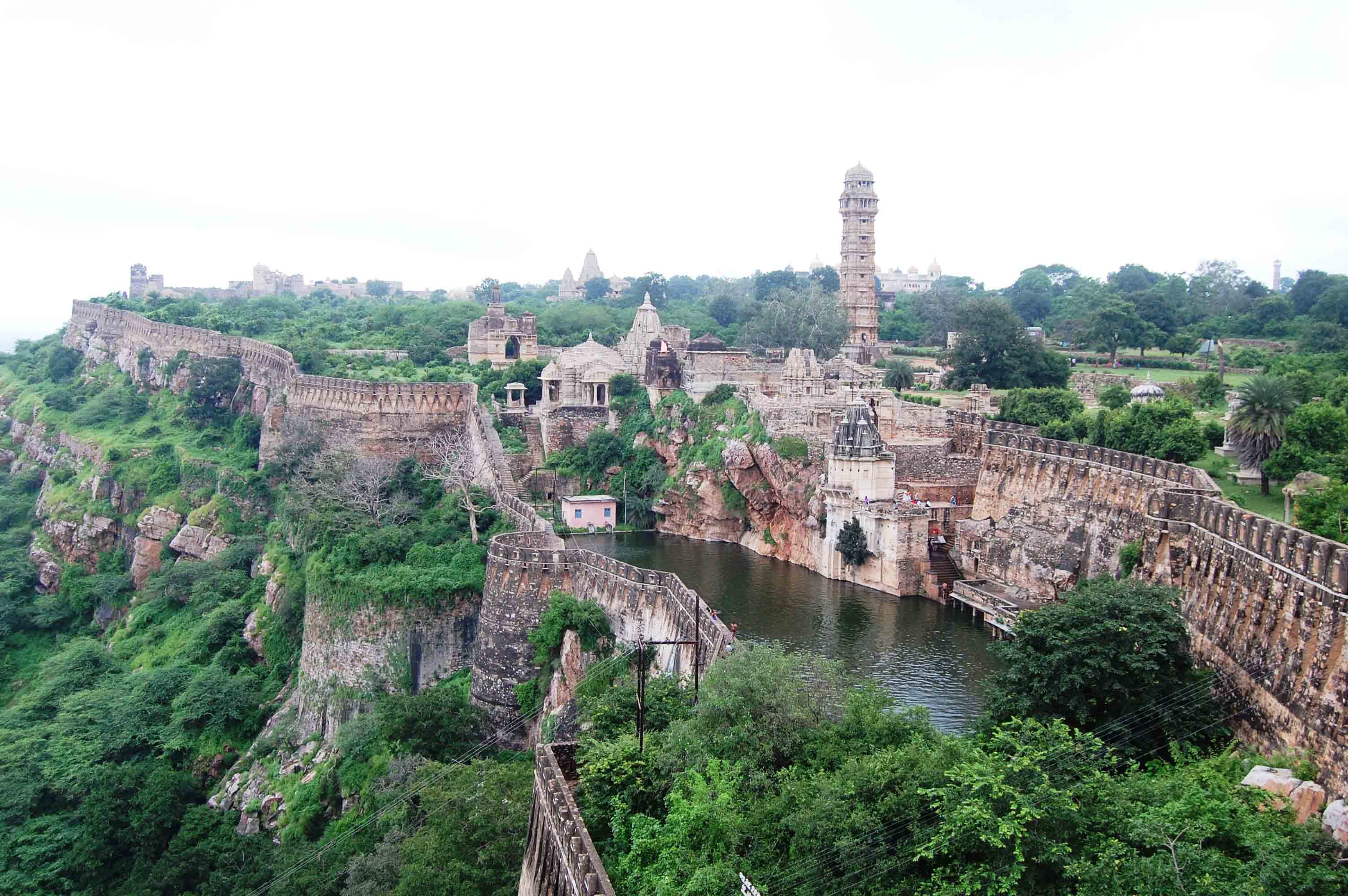
Why Chittorgarh is Perfect for Your Celebration
- Chittorgarh Fort — one of India's largest hill forts — provides an unmatched dramatic backdrop for heritage and palace-style weddings
- Deep-rooted Rajput traditions make it a natural fit for Teej, Gangaur, and other religious family celebrations
- Authentic Rajasthani folk music, dance, and cuisine add genuine cultural richness to any event
- Relatively uncrowded compared to Jaipur or Udaipur, offering a more intimate and exclusive celebration atmosphere
- Direct rail connectivity to major cities makes guest travel manageable for mid-size gatherings
- Winter months deliver reliably cool, dry, and photogenic conditions ideal for outdoor ceremonies and processions
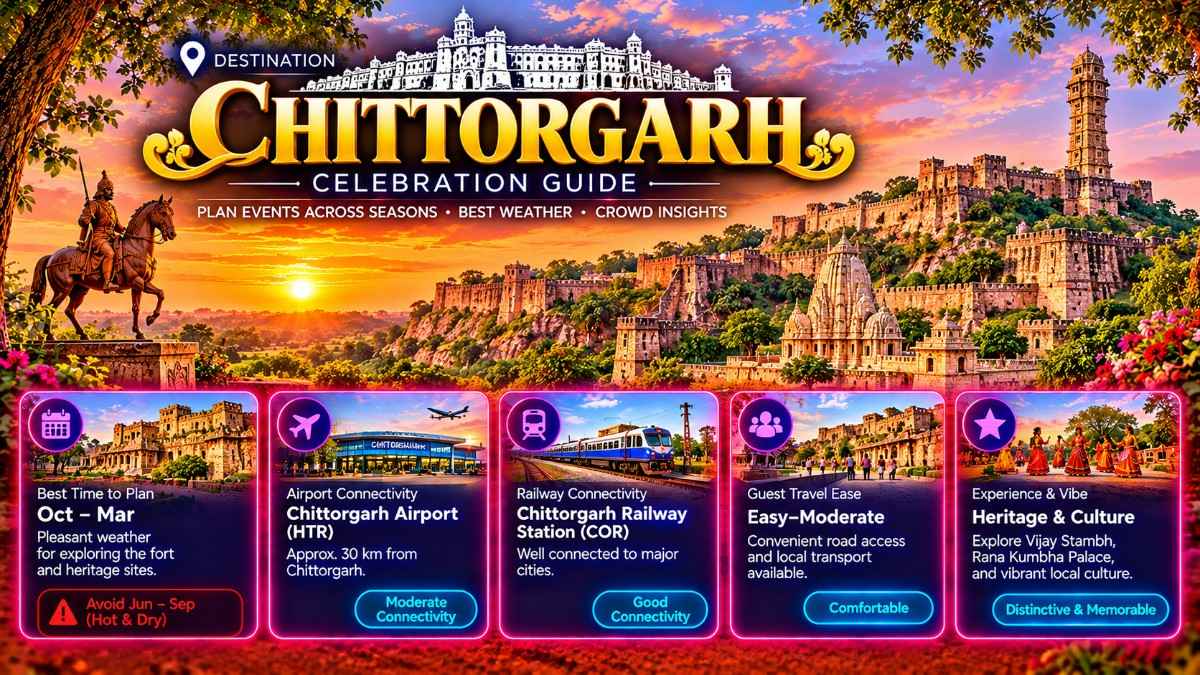
Top Venues in Chittorgarh
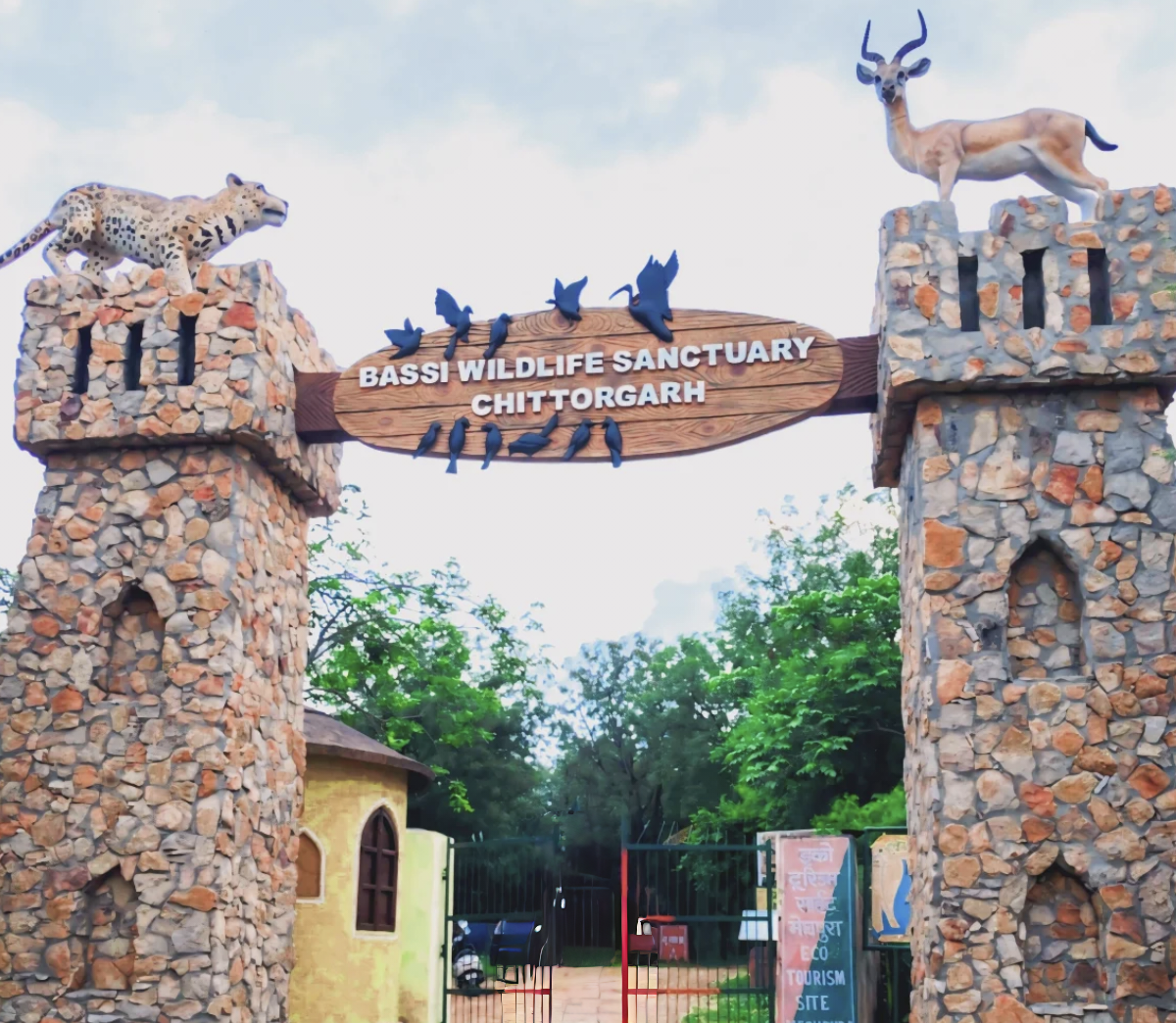
The Bassi Fort Palace
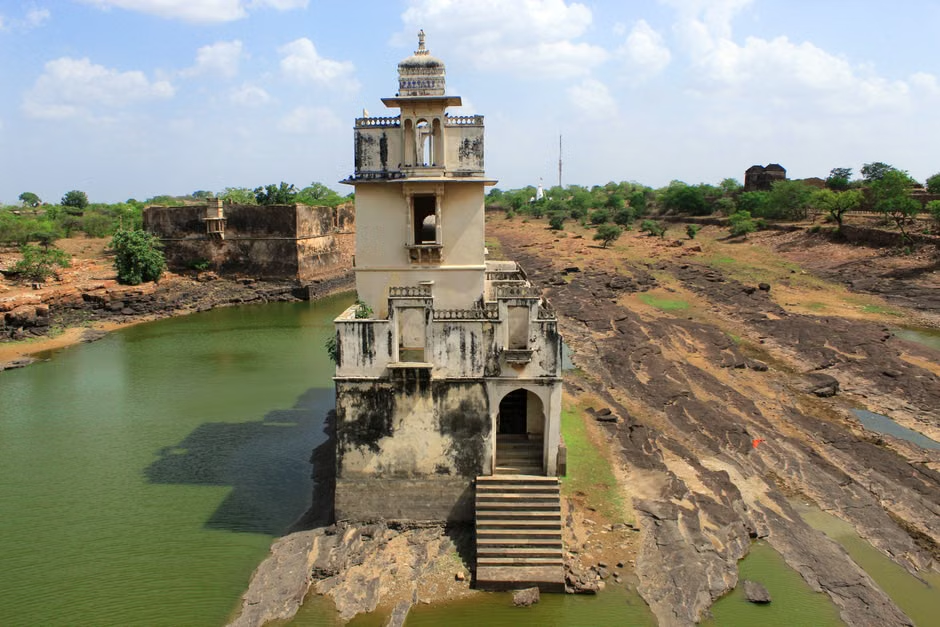
Padmini Palace Hotel
Compare Chittorgarh with Other Top Destinations
Frequently Asked Questions
Is Chittorgarh a good destination for a heritage or palace-style wedding?
Yes, it is particularly well-suited to heritage and palace-style weddings. Chittorgarh Fort — one of India's largest hill forts and a UNESCO World Heritage Site — provides a dramatic historical backdrop, and the city's Rajput architectural character extends to local heritage properties and haveli-style venues. Couples who want a wedding rooted in genuine Rajasthani history and culture, rather than a recreated palace aesthetic, will find Chittorgarh a compelling and authentic choice.
Can Teej and Gangaur celebrations be held in Chittorgarh?
Yes, and Chittorgarh is among the most authentic places in Rajasthan to do so. The city has its own living Gangaur procession tradition, and local artisans, priests, and folk performers are deeply familiar with the rituals involved. Families who time their celebrations around these festivals gain access to a genuinely festive civic atmosphere that adds real cultural depth to the event.
What guest group sizes can Chittorgarh venues realistically support?
Chittorgarh's venue inventory is generally best calibrated for gatherings of around 50 to 300 guests. Intimate weddings and mid-size family functions are particularly well-served. Very large weddings of 500 or more guests may find it challenging to consolidate accommodation and event space in a single location, and may need to spread guests across multiple properties.
How do guests typically travel to Chittorgarh for a destination wedding?
The most practical option for most guests is by train — Chittorgarh Railway Station is a well-connected junction with direct or easy-connection services from Delhi, Jaipur, Udaipur, Ajmer, and Mumbai. Guests flying in use Maharana Pratap Airport in Udaipur, approximately 115 km away, and then travel onward by road — roughly a two-hour transfer. Pre-arranged group transport from Udaipur is strongly recommended for large guest lists.
What is the best time of year to plan a wedding or celebration in Chittorgarh?
November through February is the optimal window. Temperatures are cool and dry — typically 15°C to 25°C during the day — making outdoor ceremonies, fort-view events, and processions comfortable and photogenic. March can work in its early weeks, but heat builds quickly. May through June brings extreme heat above 40°C, and July through September brings monsoon rains that disrupt outdoor events.
What kinds of venues are available for events in and around Chittorgarh?
The venue landscape is defined primarily by heritage properties — converted havelis, palace hotels, and fort-adjacent properties with period architecture, open courtyards, and traditional Rajasthani interiors. Within a short drive, rural fort palace properties offer more exclusive, residential-style settings ideal for intimate destination weddings. Hotel lawns and banquet halls are available for larger receptions, though the overall scale is more modest than in larger Rajasthani cities.
Is Chittorgarh suitable for religious family functions?
Yes, it is particularly well-suited. The city contains a significant concentration of ancient, active temples — including within the fort complex itself — and local priests and ritual specialists are experienced in facilitating traditional ceremonies. Whether the function is a pre-wedding puja, a post-wedding thanksgiving, or a standalone religious gathering, the spiritual infrastructure and cultural context in Chittorgarh are genuinely strong.
What local entertainment and cultural elements can be incorporated into an event here?
Chittorgarh has a strong local tradition of Rajasthani folk performance — Ghoomar dancers, Kalbeliya artists, Bhopa storytellers, and dhol players are available locally and are typically more authentically rooted in Mewari tradition than performers in larger tourist cities. Traditional Rajasthani cuisine, including Mewari specialities, is another genuine highlight that local caterers deliver well.
Do I need to bring vendors from outside Chittorgarh for a wedding?
For core elements — traditional catering, folk performers, priests, and basic décor — local vendors are generally capable and experienced. For more specialised services such as luxury floral design, high-end photography, or contemporary décor concepts, many families supplement with vendors brought in from Udaipur or Jaipur. This is a common and well-established practice, and local properties are generally accustomed to accommodating outside vendor teams.
Is Chittorgarh a good fit for an intimate wedding?
Yes, it is one of the destination's genuine strengths. Heritage properties in and around the city are well-calibrated for smaller guest lists of 30 to 100 people, where the focus is on personal experience, cultural authenticity, and meaningful ritual. The more intimate scale also makes the city's moderate transport connectivity much more manageable, since coordinating a small group is significantly simpler than moving a large wedding party.
What should I know about local transport for guests once they arrive in Chittorgarh?
Auto-rickshaws and local taxis are available for individual travel, but for wedding groups the most practical solution is pre-arranged coaches or tempo travellers to move guests between accommodation, the fort, and event venues. The fort is accessed via a winding ascent, and some sections require walking on uneven stone paths — this is worth communicating clearly to guests in advance, particularly those with mobility considerations.
Is Chittorgarh safe for guests travelling for a wedding or celebration?
Yes, Chittorgarh is generally considered a very safe destination for visitors and event guests. It is a well-established heritage tourism city in Rajasthan with a stable, welcoming local community. Standard travel precautions apply, but there are no particular safety concerns that would distinguish it negatively from other Rajasthani destinations.

Ready to explore venues in Chittorgarh?
Chittorgarh: Heritage Fort Weddings, Cultural Celebrations & Event Venues
◆Chittorgarh is best suited to heritage and palace-style weddings, Teej and Gangaur celebrations, religious family functions, and intimate destination weddings where cultural authenticity matters more than large-scale resort infrastructure. Its primary vibe is Royal and Heritage, anchored by one of India's largest and most historically significant hill forts. The best season runs from November through February, when the weather is cool and dry. Guest accessibility is moderate — the city has a well-connected railway station but no commercial airport of its own, requiring guests flying in to travel onward by road from Udaipur. The overall character is more intimate and culturally immersive than the larger Rajasthani circuit cities, making it a strong choice for families who want a meaningful, rooted celebration rather than a purely luxury resort experience.
Chittorgarh at a Glance
| Category | Details |
|---|---|
| Best For | Teej & Gangaur Celebration, Palace / Heritage Wedding, Destination Wedding, Religious Family Function |
| Primary Vibe | Royal & Heritage |
| Other Vibes | Cultural, Spiritual, Intimate, Folk-Traditional |
| Best Season | Winter (November–February) |
Why Choose Chittorgarh?
- Unrivalled fort backdrop: Chittorgarh Fort, a UNESCO World Heritage Site and one of the largest hill forts in Asia, provides a dramatic, historically charged setting that no purpose-built resort can replicate — particularly powerful for baraat processions, pheras, and ceremonial photography.
- Authentic Rajput cultural immersion: The city's living traditions — Mewari folk music, Ghoomar dance, Gangaur processions, and temple rituals — can be woven directly into wedding and celebration programmes in a way that feels genuinely local rather than staged.
- Less crowded than the major circuit: Unlike Jaipur or Udaipur, Chittorgarh sees far fewer large-scale tourist and wedding groups simultaneously, which typically translates to more exclusive venue access, quieter streets for processions, and a more personal hospitality experience.
- Strong rail connectivity: Chittorgarh Railway Station is a junction on major routes connecting Delhi, Jaipur, Udaipur, and Mumbai, making it genuinely reachable by train for guests from across India without requiring a flight.
- Deep spiritual and religious significance: The city's ancient temples — including the Meera Temple and Kumbha Shyam Temple within the fort complex — make it a particularly resonant location for religious family functions, naming ceremonies, and temple festivals.
- Intimate scale suits mid-size gatherings: The local venue and hospitality ecosystem is well-calibrated for gatherings of 50–300 guests, making it a comfortable fit for families who want a destination feel without the logistical complexity of a very large wedding.
Which Celebrations Work Best in Chittorgarh?
Teej & Gangaur Celebration: Chittorgarh is among the most authentic places in Rajasthan to celebrate Teej and Gangaur. The city's own Gangaur procession is a living tradition, and families who time their celebrations around these festivals gain access to a genuinely festive civic atmosphere, local artisans, and ceremonial elements that are deeply embedded in the local culture rather than recreated for tourists.
Palace / Heritage Wedding: The combination of fort architecture, haveli-style properties, and Rajput ceremonial traditions makes Chittorgarh a natural setting for a heritage-format wedding. Venues with period character allow for traditional rituals, folk performances, and royal-themed décor that feel contextually appropriate rather than borrowed from elsewhere.
Destination Wedding: For couples who want a destination wedding with genuine historical weight and cultural depth — rather than a beach or hill-station setting — Chittorgarh offers a distinctive and memorable choice. The relatively lower footfall compared to more commercialised destinations means the experience can feel more personal and exclusive.
Religious Family Function: The density of ancient, active temples within and around the fort makes Chittorgarh particularly well-suited to religious family functions — whether a pre-wedding puja, a post-wedding thanksgiving, or a standalone religious gathering. Priests, ritual specialists, and the infrastructure for traditional ceremonies are readily available locally.
Wedding Reception: Heritage lawns and palace courtyards within the city and its surroundings provide atmospheric settings for evening receptions, with folk entertainment, traditional Rajasthani cuisine, and fort-lit skylines adding a distinctive character to what might otherwise be a standard banquet format.
Intimate Wedding: Chittorgarh's smaller-scale heritage properties are particularly well-suited to intimate weddings of 30–100 guests, where the focus is on personal experience, cultural authenticity, and meaningful ritual rather than scale and spectacle. Smaller guest lists also make the logistics of the city's moderate connectivity much more manageable.
Venues & Event Spaces
Chittorgarh's event venue landscape is defined primarily by heritage properties and palace-style hotels — converted havelis, fort-adjacent guesthouses, and small palace hotels that offer period architecture, open courtyards, and traditional Rajasthani interiors. Within a short drive of the city, there are also rural fort palace properties that offer more exclusive, residential-style settings ideal for intimate destination weddings where the entire property can be taken over by a single family group.
For larger gatherings, hotel lawns and banquet halls in the city's mid-range properties can accommodate receptions and mehendi functions, though the overall scale of available indoor banquet space is more limited than in larger Rajasthani cities. Outdoor spaces — including fort-view terraces, garden lawns, and open courtyards — are among the most distinctive features of the local venue inventory, and are best used during the winter months when the weather reliably cooperates.
Families planning very large weddings (500+ guests) should note that the local venue inventory is more naturally calibrated to mid-size gatherings, and may need to plan accommodation across multiple properties rather than a single large resort campus.
Best Time to Celebrate
The winter months of November through February are the clear optimal window for events in Chittorgarh. Daytime temperatures typically range from around 15°C to 25°C, with cool, dry evenings well-suited to outdoor ceremonies, fort-view dinners, and processions. The air is clear, the fort and surrounding landscape are at their most photogenic, and the risk of weather disruption is minimal.
March and early April represent a short shoulder window — temperatures are rising but not yet extreme, and events held in the first half of March can still be comfortable. By mid-April, daytime heat becomes a significant constraint for outdoor events.
May and June bring intense heat, with temperatures regularly exceeding 40°C. Outdoor events are genuinely impractical, and even indoor venues without strong air conditioning become uncomfortable. This period is strongly inadvisable for any celebration with significant outdoor components.
July through September is the monsoon season. While Chittorgarh does not receive the heaviest monsoon rainfall of the region, rain is unpredictable and can be heavy enough to disrupt outdoor events, damage décor, and make the fort's stone pathways slippery and difficult for guests. The fort itself, while dramatic in the monsoon mist, is not safely or comfortably accessible for large groups in wet conditions.
October is a transitional month — the monsoon typically withdraws, and temperatures begin to moderate. Early-to-mid October can still be warm and humid, but late October events are increasingly viable and can offer good value as the peak season has not yet fully begun.
Getting There & Local Connectivity
Chittorgarh is most conveniently reached by train. Chittorgarh Railway Station is a significant junction on the Western Railway zone, with direct or well-connected services from Delhi, Jaipur, Udaipur, Ajmer, and Mumbai. For guests travelling from major metros, the train is often the most practical and comfortable option, with overnight services available from Delhi and Mumbai.
For guests flying in, the nearest commercial airport is Maharana Pratap Airport in Udaipur, which is approximately 115 km away — roughly a two-hour road journey. Udaipur airport has connections to Delhi, Mumbai, and a number of other Indian cities, making it a workable gateway, though the onward road transfer adds meaningful travel time and requires pre-arranged transport for groups.
Within the city, local transport options include auto-rickshaws, taxis, and hired vehicles. For wedding groups, pre-arranged coach or tempo traveller hire is the most practical solution for moving guests between accommodation, the fort, and event venues. The city's road network is generally adequate for this purpose, though the fort itself is accessed via a winding ascent that requires smaller vehicles or a willingness to walk sections of the approach.
Guests arriving from smaller cities or towns may find the journey requires one or more connections, so clear travel guidance from the event organiser is particularly valuable for Chittorgarh events.
Local Vendor & Hospitality Ecosystem
Chittorgarh has a genuine but modestly scaled local vendor ecosystem for weddings and events. Local caterers are well-versed in traditional Rajasthani cuisine — dal baati churma, gatte ki sabzi, ker sangri, and a range of Mewari specialities — and can deliver authentic food experiences that are a genuine highlight of any celebration here.
Folk performers — including Ghoomar dancers, Kalbeliya artists, Bhopa storytellers, and dhol players — are available locally and add a layer of cultural authenticity that is difficult to replicate in more urbanised destinations. These performers are typically more affordable and more genuinely rooted in local tradition than their counterparts in larger tourist cities.
For more specialised wedding services — high-end décor, professional photography and videography, floral design, and luxury catering — families often supplement local vendors with teams brought in from Udaipur or Jaipur. This is a common and well-established practice, and most local properties are accustomed to accommodating outside vendors alongside their in-house teams.
The hospitality workforce in Chittorgarh is generally warm and attentive, with a strong tradition of family-run properties where personal service is a genuine priority. However, the overall scale of professional event management infrastructure is smaller than in the major Rajasthani wedding hubs, so early planning and clear vendor coordination are particularly important.
Pros & Things to Consider
Why Chittorgarh Works Well
- Genuinely historic and culturally resonant setting — the fort and its temples provide a backdrop with real historical depth
- Authentic Rajput and Mewari cultural traditions available to incorporate into celebrations
- Less crowded and more exclusive than the major Rajasthani wedding destinations
- Good rail connectivity makes the city reachable for guests from across India without flying
- Local folk performers, traditional cuisine, and artisan crafts add distinctive character to events
- Well-suited to mid-size gatherings where personal attention and cultural immersion are priorities
Things to Consider
- No commercial airport in the city itself — guests flying in face a roughly two-hour road transfer from Udaipur, which adds complexity for large groups
- The local venue inventory is more limited in scale than larger Rajasthani cities — very large weddings (500+ guests) may find accommodation and event space harder to consolidate in one location
- Specialist wedding vendors (luxury décor, high-end photography, international cuisine) may need to be sourced from Udaipur or Jaipur and transported in, adding logistical coordination
- The fort's access roads and pathways are not always easily navigable for elderly guests or those with mobility considerations — this requires advance planning
- Summer heat is genuinely extreme and effectively rules out outdoor events for several months of the year
When Chittorgarh May Not Be the Right Fit
- Very large weddings (500+ guests): If your guest list is very large and you need a single-campus resort that can accommodate everyone under one roof with multiple large banquet halls, Chittorgarh's current venue inventory may not comfortably support that scale — a larger Rajasthani city would be a more practical choice.
- Guests with limited travel flexibility: If a significant portion of your guest list is elderly, has mobility challenges, or is travelling internationally and needs seamless airport-to-venue connectivity, the two-hour road transfer from the nearest airport and the fort's uneven terrain may create genuine difficulties.
- Events planned for May through September: If your dates are fixed in the summer or monsoon months, Chittorgarh's extreme heat and unpredictable rainfall make outdoor events — which are among the destination's greatest strengths — largely impractical. A destination with better year-round indoor infrastructure would serve you better in those months.
- Couples seeking a primarily modern luxury resort experience: If the priority is a contemporary five-star resort with full spa, pool, and international hospitality infrastructure rather than heritage character and cultural immersion, Chittorgarh's current property landscape is not the strongest match — the destination's real strength lies in its heritage and cultural authenticity, not in modern luxury resort amenities.