
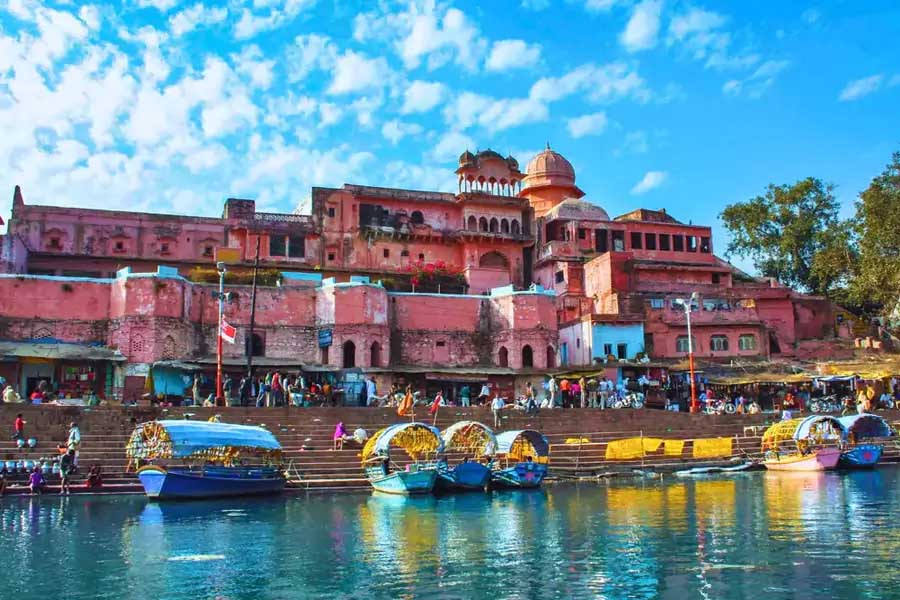
Why Chitrakoot is Perfect for Your Celebration
- One of Hinduism's most sacred sites — deeply associated with Lord Ram, Sita, and Lakshmana, lending unmatched spiritual gravitas to religious ceremonies
- Mandakini River ghats provide a naturally atmospheric backdrop for rituals, aarti ceremonies, and family religious functions
- Dense forest cover and the Vindhya hills create a serene, distraction-free environment ideal for spiritual retreats and leadership gatherings
- Festivals like Diwali and Holi are celebrated with exceptional devotional intensity, drawing pilgrims and families from across central India
- Relatively uncrowded compared to larger pilgrimage cities, offering a more intimate and personal experience for family gatherings
- Strong local tradition of hosting religious and cultural events means local vendors and priests are well-versed in ceremony logistics
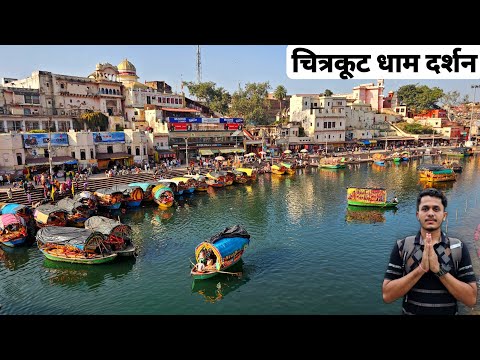
Top Venues in Chitrakoot
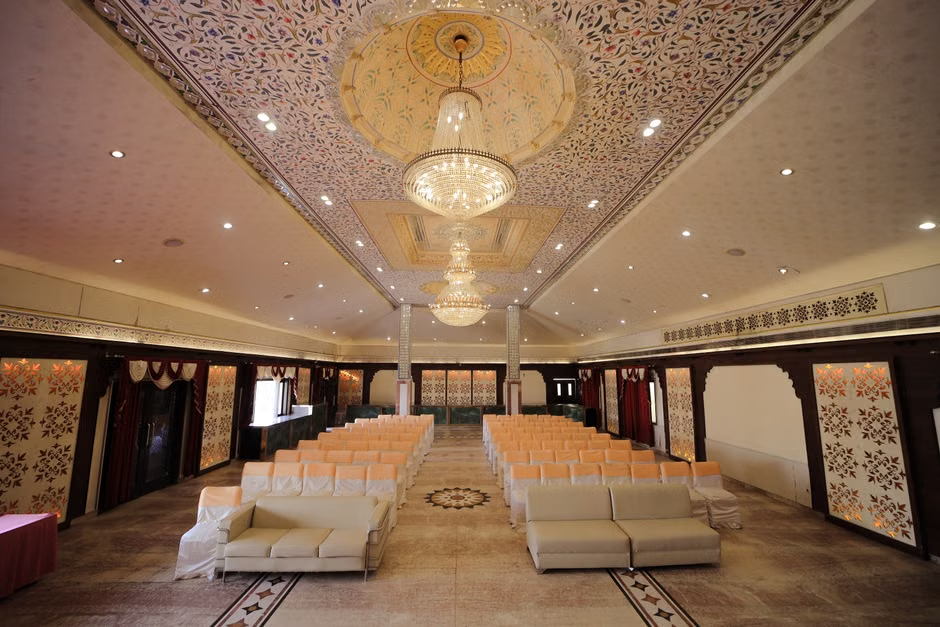
Hotel Janki
Compare Chitrakoot with Other Top Destinations
Frequently Asked Questions
Is Chitrakoot a good destination for a religious family function?
Yes. Chitrakoot is among the most suitable destinations in central India for religious family functions. Its deep association with the Ramayana, the presence of experienced local priests, and the sacred Mandakini River ghats create an environment that adds genuine spiritual meaning to samskara ceremonies, puja events, and family religious milestones. The local ecosystem of ritual specialists is well-practiced in organizing these events for large family groups.
What is the best time of year to hold an event in Chitrakoot?
November through February is the optimal window. The weather is cool and dry, with daytime temperatures typically between 15°C and 25°C, making outdoor ghat ceremonies and open-air gatherings comfortable. The Mandakini River is calm and fully accessible post-monsoon. Summer months (March–May) bring intense heat, and the monsoon (June–September) brings flooding risk near the ghats and disrupted road access.
How do guests typically travel to Chitrakoot?
Most guests reach Chitrakoot by road or rail. The nearest railway station — Chitrakoot Dham Karwi — connects via Manikpur Junction to major cities including Delhi, Allahabad, and Varanasi. By road, Allahabad (Prayagraj) is approximately 130 km away and Satna approximately 80 km. The nearest airports are Khajuraho and Allahabad, both roughly 150–175 km away, requiring onward road travel of 3–4 hours.
What size of guest group can Chitrakoot realistically accommodate?
Chitrakoot is best suited to intimate-to-medium-scale gatherings, typically up to around 150–200 guests. The town's accommodation stock is distributed across multiple modest hotels, dharamshalas, and retreat properties rather than concentrated in a single large venue. For groups above 150 guests, early booking and coordination across multiple properties is essential, particularly during the peak winter season.
Is Chitrakoot suitable for a Diwali or Holi celebration?
Yes, particularly Diwali. Celebrating Diwali on the Mandakini ghats — with oil lamps on the river and temple illuminations — is a deeply atmospheric experience that is difficult to replicate elsewhere. Holi in Chitrakoot retains a traditional, devotionally rooted character. Both festivals are celebrated with genuine community participation, making them meaningful choices for families seeking a spiritually significant rather than purely festive event.
What kinds of venues are available for events in Chitrakoot?
Chitrakoot offers riverfront ghat spaces, temple premises and dharamshalas with event halls, modest riverfront hotels with banquet facilities and open lawns, and forest retreat properties suited to spiritual or corporate retreats. The inventory is functional and atmospheric rather than large-scale luxury. Most properties can accommodate gatherings of 50–150 guests comfortably within their own facilities.
Is Chitrakoot appropriate for a spiritual or pilgrimage retreat?
Yes. Chitrakoot is one of the most naturally suited destinations in India for spiritual and pilgrimage retreats. Key sites including Kamadgiri, Gupt Godavari, Hanuman Dhara, and Sati Anusuiya form a well-established pilgrimage circuit. The forested, serene environment and the town's deeply devotional character make it equally suitable for leadership retreats and team-building gatherings that benefit from a contemplative, distraction-free setting.
What catering options are available for events in Chitrakoot?
Local catering in Chitrakoot is predominantly vegetarian and sattvic, reflecting the town's pilgrimage identity. This is a genuine strength for events where a pure vegetarian menu is required. For non-vegetarian or multi-cuisine catering, specialist vendors typically need to be sourced from Allahabad, Satna, or other nearby cities, which requires advance planning and adds some logistical complexity.
Can Chitrakoot host a temple festival or cultural gathering?
Yes. Chitrakoot's active temple calendar — with significant dates including Ram Navami and Kartik Purnima — provides a natural framework for temple festival gatherings. The region's Bundeli folk traditions, including music and dance, offer authentic cultural programming for community and cultural festival events. Local folk fairs and melas also provide immersive anchors for extended family or community gatherings.
What should event planners know about local vendor availability in Chitrakoot?
Chitrakoot has strong local expertise in priests, ritual specialists, and basic vegetarian catering — all well-suited to religious events. For elaborate event production such as large-scale lighting, stage design, or contemporary décor, vendors typically need to be engaged from Allahabad, Satna, or Bhopal. Planning lead times should account for this, and early coordination with local contacts is advisable for winter-season events when demand is highest.
Is Chitrakoot suitable for a corporate offsite or leadership retreat?
Yes, with the right expectations. Chitrakoot's forested, spiritually charged environment makes it genuinely well-suited to leadership retreats and corporate offsites that prioritize reflection, team cohesion, and a break from urban distraction. It is less suited to large-scale corporate conferences requiring high-capacity AV infrastructure or luxury amenities. Groups of 20–60 participants in a retreat format will find it a distinctive and effective setting.

Ready to explore venues in Chitrakoot?
Chitrakoot: Spiritual Celebrations, Religious Events & Riverfront Retreats
◆Chitrakoot is one of central India's most significant pilgrimage destinations, straddling the Madhya Pradesh–Uttar Pradesh border along the sacred Mandakini River. It is strongest for spiritually rooted celebrations — religious family functions, pilgrimage gatherings, temple festivals, and devotional events tied to the Hindu calendar. The primary vibe is Spiritual & Soulful, shaped by ancient ghats, dense forest, and deep Ramayana heritage. The best season runs from November through February, when the weather is cool and dry. Accessibility is moderate — road and rail connections are functional, though no direct flights serve the town — making it most practical for guests traveling from central and northern India.
Chitrakoot at a Glance
| Attribute | Detail |
|---|---|
| Best For | Holi / Diwali Celebration, Religious Family Function, Spiritual / Pilgrimage Gathering, Temple Festival |
| Primary Vibe | Spiritual & Soulful |
| Other Vibes | Culturally Rooted, Serene & Forested, Devotionally Immersive |
| Best Season | Winter (November–February) |
Why Choose Chitrakoot?
- Unmatched Ramayana heritage: Chitrakoot is directly associated with Lord Ram's 11.5-year forest exile, making it one of the most spiritually charged locations in the Hindu tradition — a quality no constructed venue can replicate.
- Sacred riverfront setting: The Mandakini River ghats — particularly Ram Ghat — provide a naturally atmospheric backdrop for aarti ceremonies, ritual bathing, and family religious observances that are central to many Indian celebrations.
- Intimate scale: Unlike larger pilgrimage cities, Chitrakoot remains relatively uncrowded outside major festival peaks, allowing families and groups to experience the destination with a degree of personal space and calm.
- Forested, distraction-free environment: The surrounding Vindhya hills and dense forest cover create a genuinely contemplative atmosphere well-suited to spiritual retreats, leadership offsite gatherings, and community events that benefit from seclusion.
- Deep local expertise in religious ceremonies: The town has a long-established ecosystem of priests, pandits, and local vendors who are experienced in organizing large-scale religious functions, making logistics for puja-centric events more straightforward than in a generic event city.
- Accessible from major central Indian cities: Chitrakoot is reachable by road from Allahabad (Prayagraj), Varanasi, Satna, and Banda, making it a practical choice for guests traveling from Uttar Pradesh and Madhya Pradesh.
Which Celebrations Work Best in Chitrakoot?
- Holi / Diwali Celebration: Both festivals carry exceptional devotional weight in Chitrakoot. Diwali on the ghats — with oil lamps floating on the Mandakini — is a deeply moving experience. Holi here retains a traditional, community-rooted character that resonates strongly with families seeking a spiritually meaningful celebration rather than a purely festive one.
- Religious Family Function: Mundan ceremonies, thread ceremonies, annaprashan, and other samskara rituals are naturally at home in Chitrakoot's temple-rich environment. The presence of experienced local priests and the sanctity of the location add genuine meaning to these milestones.
- Spiritual / Pilgrimage Gathering: Organizing a family or community pilgrimage around Chitrakoot's key sites — Kamadgiri, Gupt Godavari, Hanuman Dhara, Sati Anusuiya — is a well-established practice. The town's infrastructure, while modest, is geared toward accommodating groups on spiritual journeys.
- Temple Festival: Chitrakoot's temple calendar is active and varied. Events tied to Ram Navami, Kartik Purnima, and other significant dates draw large congregations and create a natural framework for community celebrations and family gatherings.
- Cultural Festival Gathering: The region's Bundeli folk traditions — music, dance, and oral storytelling — provide a culturally rich backdrop for gatherings that want to incorporate authentic local heritage rather than generic entertainment.
- Local Folk Festival / Fair: Seasonal fairs and melas in and around Chitrakoot offer a genuinely immersive experience of rural central Indian culture, making them an excellent anchor for community gatherings and extended family reunions.
Venues & Event Spaces
Chitrakoot's venue landscape is shaped by its identity as a pilgrimage town rather than a commercial event hub. The primary event spaces available include:
- Riverfront ghat spaces: The ghats along the Mandakini — particularly Ram Ghat — serve as natural open-air venues for aarti, ritual ceremonies, and community gatherings. These are public spaces managed by local authorities and temple trusts, and their use for private events typically requires coordination with local administration.
- Temple premises and dharamshalas: Several temples and associated dharamshalas (pilgrim rest houses) have halls and open courtyards that can accommodate medium-sized religious functions. These spaces are particularly well-suited to puja-centric events and family ceremonies.
- Riverfront hotels and retreats: A number of modest hotels and retreat properties along or near the Mandakini offer in-house event spaces — typically banquet halls and open lawns — suitable for gatherings of 50 to 150 guests. These properties generally combine accommodation with event facilities, which simplifies logistics for out-of-town groups.
- Forest retreat properties: The forested outskirts of Chitrakoot host a small number of retreat-style properties that are particularly suited to spiritual retreats, leadership offsites, and team-building gatherings that benefit from natural seclusion.
- Community and cultural halls: The town has civic and community halls that can be engaged for larger cultural gatherings, folk festivals, and community events, though these are functional rather than atmospheric spaces.
Overall, Chitrakoot's venue inventory is best suited to intimate-to-medium-scale events (typically under 200 guests). Groups requiring large-scale banquet infrastructure or luxury resort facilities should factor this into their planning.
Best Time to Celebrate
The winter months of November through February are the clear optimal window for events in Chitrakoot, for several concrete reasons:
- Temperature: Daytime temperatures typically range from around 15°C to 25°C, making outdoor ghat ceremonies, processions, and open-air gatherings genuinely comfortable. Evenings are cool and pleasant.
- Mandakini River conditions: Post-monsoon, the river settles to a calm, clear state by November, making ghat-side events visually and practically ideal. The water level is manageable and the ghats are fully accessible.
- Festival alignment: Several of Chitrakoot's most significant religious dates — including Kartik Purnima and the post-Diwali period — fall within or just before this window, allowing events to align with the local devotional calendar.
- Pilgrim crowd management: While Chitrakoot sees pilgrims year-round, the winter months outside major festival peaks offer a balance of spiritual atmosphere without overwhelming crowds, which is important for private family events.
Seasons to avoid:
- March–May (Pre-summer and summer): Temperatures climb sharply, regularly exceeding 38°C by April and May. Outdoor events become impractical, and the heat significantly affects guest comfort, particularly for elderly attendees and children who form a large part of religious family gatherings.
- June–September (Monsoon): The Mandakini and surrounding areas receive heavy rainfall. Ghat areas can flood, outdoor spaces become unusable, and road access — particularly from smaller connecting towns — can be disrupted. This season is strongly inadvisable for any event that relies on outdoor or ghat-side settings.
- October is a transitional shoulder month — the monsoon typically recedes, temperatures begin to moderate, and the post-monsoon landscape is lush. It is generally acceptable for events, though early October can still carry residual monsoon risk.
Getting There & Local Connectivity
Chitrakoot's accessibility is moderate and requires some advance planning for out-of-town guests:
- By air: The nearest airport with regular commercial services is Khajuraho Airport, approximately 175 km away. Guests flying in will need to arrange onward road travel, which adds roughly 3–4 hours to the journey. Allahabad (Prayagraj) Airport is another option at a comparable distance, with broader connectivity to major Indian cities.
- By rail: Chitrakoot Dham Karwi Railway Station is the primary railhead, connected via Manikpur Junction to the broader Indian Railways network. Manikpur sits on the main Howrah–Mumbai and Delhi–Chennai trunk routes, making it reachable from most major cities with a change at Manikpur. Journey times from Delhi are typically 8–10 hours; from Allahabad, around 3–4 hours.
- By road: Road access is practical from Allahabad/Prayagraj (approximately 130 km), Satna (approximately 80 km), Banda (approximately 75 km), and Varanasi (approximately 250 km). State highway and national highway connections are functional, though road quality on some approach routes can be variable.
- Local transport: Within Chitrakoot, auto-rickshaws, e-rickshaws, and shared tempos are the primary modes of local transport. For groups, pre-arranged private vehicles or minibuses are strongly recommended, as organized group transport options are limited. The town is compact enough that most key sites and ghat areas are within a short ride of central accommodation.
Local Vendor & Hospitality Ecosystem
Chitrakoot's vendor ecosystem is genuinely strong in areas directly tied to its pilgrimage identity, and more limited in areas associated with large-scale commercial event production:
- Priests and ritual specialists: The town has a well-established community of experienced pandits and ritual specialists who are accustomed to organizing complex religious ceremonies for large family groups. This is one of Chitrakoot's genuine strengths as an event destination.
- Catering: Local catering is predominantly vegetarian and sattvic in character, reflecting the town's religious identity. This is ideal for events where a pure vegetarian menu is required or preferred. Groups requiring non-vegetarian catering will find options more limited and may need to arrange specialist caterers from nearby cities.
- Decoration and event production: Basic floral decoration and traditional event styling are available locally. However, for elaborate event production — large-scale lighting, stage design, or contemporary décor — vendors from Allahabad, Satna, or Bhopal are typically engaged, which adds lead time and logistics to planning.
- Accommodation capacity: The town's accommodation stock is primarily composed of dharamshalas, modest hotels, and a small number of retreat properties. For large guest lists (100+ out-of-town guests), accommodation will need to be distributed across multiple properties, and early booking during the winter season is essential.
- Photography and media: Local photography services are available and experienced with religious and family event formats. For cinematic wedding-style videography or high-end photography, bringing a team from a larger city is advisable.
Pros & Things to Consider
Why Chitrakoot Works Well
- Genuinely sacred and spiritually immersive setting that adds authentic meaning to religious family events
- Mandakini River ghats provide a naturally beautiful and ceremonially significant backdrop unavailable in most event cities
- Strong local ecosystem of priests and ritual specialists experienced with large family religious functions
- Relatively intimate and uncrowded outside major festival peaks, allowing for a more personal experience
- Vegetarian catering tradition is a natural fit for sattvic, puja-centric events
- Cool, dry winter weather makes outdoor ceremonies genuinely comfortable for guests of all ages
- Bundeli folk culture provides authentic local entertainment options that are distinctive and memorable
Things to Consider
- No direct flight connectivity — guests flying in face a 3–4 hour onward road journey from the nearest airports, which can be tiring for elderly guests or large groups
- Luxury accommodation options are limited; groups accustomed to 5-star resort facilities will find the local inventory more modest
- Large-scale event production (elaborate décor, professional AV, large banquet infrastructure) requires vendors to be sourced from outside the town, adding planning complexity
- Non-vegetarian catering is not a local strength and requires advance arrangement
- Accommodation capacity for very large guest lists (200+) is constrained and requires careful advance planning across multiple properties
- Internet and mobile connectivity can be patchy in some areas, which may affect guests who need to stay connected during multi-day events
When Chitrakoot May Not Be the Right Fit
- Large-scale weddings requiring luxury resort infrastructure: Groups expecting a single large luxury property with in-house banquet halls for 300+ guests, high-end spa facilities, and contemporary event production will find Chitrakoot's current venue inventory insufficient for those needs.
- Events planned during the monsoon (June–September): Any celebration that relies on outdoor settings, ghat-side ceremonies, or road access from smaller connecting towns faces genuine logistical risk during the monsoon season, when flooding and disrupted access are real possibilities.
- Guests primarily traveling from South India or distant metros without rail connections: The absence of direct flights and the relatively complex rail routing from southern India means that for guest groups concentrated in cities like Chennai, Bengaluru, or Hyderabad, the travel burden may be disproportionate to the event scale.
- Events requiring a non-vegetarian or multi-cuisine catering focus: Chitrakoot's food culture is deeply vegetarian and sattvic. Events where diverse or non-vegetarian catering is central to the guest experience will require significant external vendor coordination and may not achieve the same quality as in a larger, more culinarily diverse event city.