
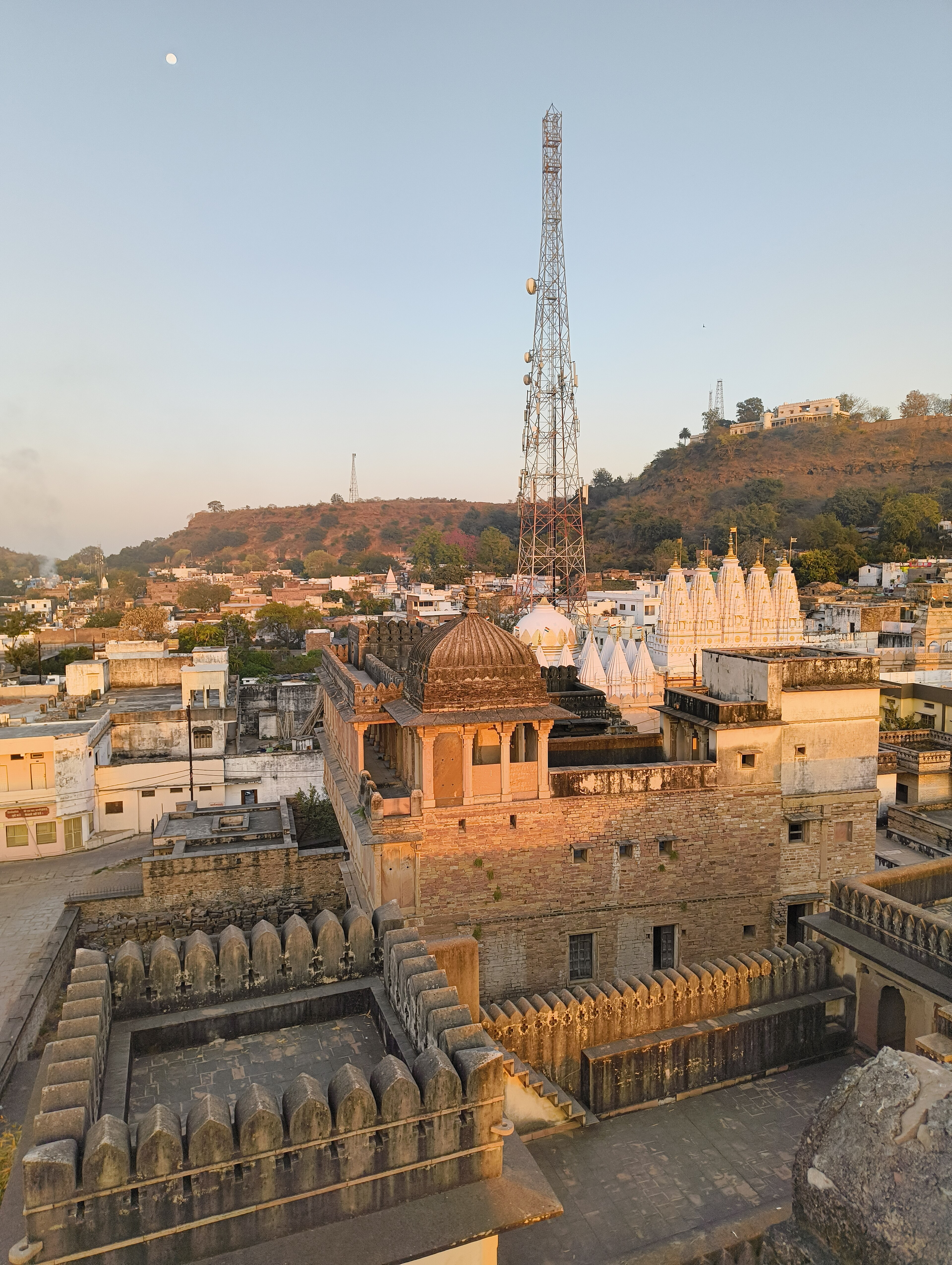
Why Chanderi is Perfect for Your Celebration
- Chanderi Fort and Koshak Mahal offer rare, photogenic medieval backdrops for heritage wedding ceremonies
- The town's living silk-weaving tradition adds a uniquely local cultural dimension to welcome dinners and folk gatherings
- Compact, walkable heritage core makes it ideal for intimate, immersive multi-day celebrations
- Cool, dry winters (November–February) provide near-perfect outdoor event conditions
- Low tourist footfall ensures privacy and exclusivity for destination wedding groups
- Jain temples and historic step-wells create authentic settings for religious family functions and cultural festival gatherings
Compare Chanderi with Other Top Destinations
Frequently Asked Questions
Is Chanderi a good destination for a heritage or palace-style wedding?
Yes. Chanderi is particularly well-suited to palace and heritage weddings. The town's medieval fort, Koshak Mahal, and Mughal-era gateways provide an authentic architectural backdrop that is rare in central India. The setting works best for intimate to mid-sized gatherings where atmosphere and historical character are the primary draw, rather than large-scale production events.
What guest-group sizes can Chanderi realistically accommodate for a wedding?
Chanderi is best suited to gatherings of roughly 50 to 200 guests. The town's accommodation inventory is spread across several heritage properties and guesthouses, and no single venue can comfortably host a very large group under one roof. For intimate weddings and destination weddings with a curated guest list, the scale is well-matched; for very large weddings, the local infrastructure will feel stretched.
What is the best time of year to hold a wedding or celebration in Chanderi?
November through February is the strongly recommended window. This winter period brings cool, dry weather — typically 10°C to 25°C during the day — that is ideal for outdoor ceremonies and evening receptions against Chanderi's stone monuments. The summer months (March–May) bring intense heat, and the monsoon (June–September) disrupts outdoor events and road access.
How do guests typically travel to Chanderi for a destination wedding?
Most guests arrive by train to Lalitpur (approximately 37 km away), which connects to major central Indian rail routes including Delhi, Bhopal, and Jhansi. From Lalitpur, guests travel onward by road. For those flying, the nearest airport with meaningful connectivity is at Gwalior, requiring a further road journey. Event planners typically arrange coordinated vehicle transfers from Lalitpur or Jhansi for the guest group.
What kinds of event spaces and venues are available in Chanderi?
Chanderi offers heritage properties with internal courtyards, open terraces, and garden lawns as primary event spaces. The town's historic structures — fort precincts, palace ruins, and temple courtyards — can also be engaged for ceremonies with appropriate local permissions. There are no large convention-style banquet halls; the destination is oriented toward atmosphere-first, smaller-scale events rather than high-capacity productions.
Can Chanderi host pre-wedding events like welcome dinners or folk cultural gatherings?
Yes, and these are among the destination's strongest offerings. Chanderi's living silk-weaving tradition, Bundeli folk music, and local cuisine make welcome dinners and cultural gatherings genuinely distinctive. A folk performance, artisan demonstration, or locally-catered regional thali dinner can turn a standard pre-wedding event into a memorable, place-specific experience that guests are unlikely to encounter elsewhere.
Is Chanderi suitable for religious family functions or temple ceremonies?
Yes. Chanderi has a significant concentration of Jain temples and historic Hindu shrines that provide authentic, architecturally meaningful settings for religious family functions and temple festival gatherings. Families seeking a spiritual dimension to their celebration alongside the heritage wedding elements will find the town's religious landscape genuinely supportive of that intent.
What should event planners know about the local vendor ecosystem in Chanderi?
Chanderi has a developing rather than fully mature vendor ecosystem. Local catering draws on genuine Bundeli and Madhya Pradesh culinary traditions and is well-suited to standard event requirements. However, specialist vendors — high-end décor, international cuisine, professional audio-visual setups — typically need to be sourced from Jhansi, Bhopal, or further afield. Planners should build extra lead time into logistics for outstation vendor coordination.
How is mobile and internet connectivity in Chanderi during an event?
Connectivity in Chanderi is limited relative to larger cities. Mobile data and internet access are available but not reliably fast or consistent. Event planners should not depend on real-time digital coordination during the event itself and are advised to brief vendors and the guest group in advance about connectivity expectations. Offline coordination plans and pre-downloaded materials are recommended.
Is Chanderi a practical choice for guests who are elderly or have limited mobility?
It requires careful planning. The journey to Chanderi involves a multi-leg trip — typically a train to Lalitpur followed by a road transfer — which can be tiring for elderly guests or those with mobility constraints. Within the town, the heritage sites involve uneven stone surfaces. Planners hosting guests with these needs should arrange dedicated vehicle support and identify accessible event spaces within properties rather than at open monument sites.
What makes Chanderi distinctive compared to other heritage wedding destinations in central India?
Chanderi's distinctiveness lies in the combination of genuinely intact medieval architecture, a living artisan silk tradition, and very low tourist footfall — giving destination wedding groups a level of privacy and immersion that is harder to achieve in more heavily visited heritage towns. The destination rewards couples who prioritise authenticity and atmosphere over large-scale infrastructure or well-known brand recognition.

Ready to explore venues in Chanderi?
Chanderi: Heritage Fort Weddings, Intimate Celebrations & Cultural Events
◆Chanderi is a compact medieval town in Madhya Pradesh best suited to palace and heritage weddings, intimate destination weddings, and cultural gatherings. Its primary vibe is Royal and Heritage — defined by a well-preserved fort, Mughal-era gateways, Jain temples, and a living silk-weaving tradition. The town works best for curated, smaller guest lists (typically under 200) who value atmosphere and authenticity over large-scale logistics. Winters (November–February) are the clear event season. Accessibility requires planning — guests typically travel via road from Jhansi or Lalitpur — making Chanderi most appropriate for committed destination-wedding groups rather than large, geographically dispersed gatherings.
Chanderi at a Glance
| Attribute | Detail |
|---|---|
| Best For | Palace / Heritage Wedding, Destination Wedding, Intimate Wedding, Wedding Reception |
| Primary Vibe | Royal & Heritage |
| Other Vibes | Cultural, Artisan, Spiritual, Serene |
| Best Season | Winter (November–February) |
Why Choose Chanderi?
- Rare medieval architecture as a living backdrop: Chanderi Fort, Koshak Mahal, and the Badal Mahal Gate are not reconstructed heritage sets — they are original, standing structures that frame ceremonies and receptions with genuine historical weight.
- Exclusivity through remoteness: Chanderi receives relatively few leisure tourists compared to better-known heritage towns, which means a destination wedding group can effectively take over the town's atmosphere without competing with large tourist crowds.
- Living silk culture adds a distinctive local layer: The Chanderi silk weave is one of India's most celebrated handloom traditions. Welcome dinners, folk cultural gatherings, and pre-wedding events can be meaningfully woven around artisan demonstrations and local craft markets.
- Compact geography suits multi-day celebrations: The heritage core, accommodation options, and key monuments are all within a short distance of each other, reducing logistics complexity for a small, curated guest group.
- Authentic Jain and Hindu temple settings: For families seeking a religious family function or temple festival component, Chanderi's Jain temples and historic shrines provide genuinely sacred, architecturally significant spaces.
- Winter climate is reliably comfortable: November through February brings cool, dry days and clear skies — conditions that are particularly well-suited to outdoor ceremonies, evening receptions, and open-air welcome dinners.
Which Celebrations Work Best in Chanderi?
- Palace / Heritage Wedding: Chanderi's fort and Mughal-era monuments make it one of central India's most atmospheric settings for a heritage-style wedding ceremony. The architecture is authentic rather than restored-for-tourism, lending genuine gravitas to the occasion.
- Destination Wedding: The town's remoteness is an asset here — guests who travel to Chanderi are fully committed to the experience, and the destination's self-contained character encourages the immersive, multi-day format that destination weddings thrive on.
- Intimate Wedding: Chanderi is particularly well-matched to smaller guest lists. Its heritage properties and event spaces are scaled for gatherings of 50–150 guests, and the town's quiet character amplifies the sense of occasion for a close-knit celebration.
- Wedding Reception: An evening reception against the illuminated silhouette of Chanderi Fort or within a heritage courtyard offers a visual and atmospheric quality that is difficult to replicate in a conventional banquet hall setting.
- Welcome Dinner / Pre-Wedding Celebration: The town's artisan culture and local cuisine make welcome dinners especially memorable — a folk music performance, a silk-weaving demonstration, or a locally-catered thali dinner can turn a standard pre-wedding event into a genuinely distinctive experience.
- Regional Folk & Cultural Festival Gathering: Chanderi's Bundeli folk traditions, its weaving community, and its calendar of local festivals make it a natural host for cultural gatherings that want to engage with a living regional heritage rather than a staged performance.
Venues & Event Spaces
Chanderi's event infrastructure is characterised by heritage properties and boutique guesthouses rather than large resort complexes. The most distinctive event spaces are the town's historic structures — fort precincts, palace ruins, and temple courtyards — which can be engaged for ceremonies and receptions through appropriate local permissions. Heritage-style accommodation properties in and around the town typically offer internal courtyards, lawns, and open terraces that function as intimate event spaces for smaller gatherings.
Outdoor lawns and garden settings are available at several properties and are best used during the winter months. For larger receptions, event planners typically work with a combination of the property's own grounds and nearby heritage open spaces. There are no large convention-style banquet halls in Chanderi — the destination is fundamentally oriented toward atmosphere-first events rather than high-capacity, logistics-heavy productions. Groups requiring a dedicated ballroom or a single venue capable of seating several hundred guests in a conventional banquet format will find the local inventory limited.
Best Time to Celebrate
November through February is the clear window for events in Chanderi. Daytime temperatures during this period typically range from around 10°C to 25°C, with cool evenings that are well-suited to outdoor ceremonies and open-air receptions. The air is dry and clear, which is particularly important for photography against Chanderi's stone monuments — the winter light on sandstone and granite is especially striking in the early morning and late afternoon.
March and April see temperatures rising sharply, and by May the heat is intense enough to make outdoor events impractical and uncomfortable for guests. The monsoon arrives in June and continues through September, bringing humidity and rainfall that disrupts outdoor setups and can affect road access to the town. October is a transitional month — the monsoon typically recedes, but residual humidity and unpredictable weather make it a less reliable choice than November. In practical terms, mid-November through late January represents the most dependable window, with February remaining a good option for those who want slightly warmer evenings.
Getting There & Local Connectivity
Chanderi is a road-dependent destination. The nearest railway station at Lalitpur (approximately 37 km away) connects to the broader central Indian rail network, including routes from Delhi, Bhopal, and Jhansi — making it the most practical arrival point for guests travelling by train. From Lalitpur, guests travel onward to Chanderi by road.
The nearest airport with meaningful connectivity is at Gwalior, which is a significant drive away. Guests flying in from major metros will typically need to plan for a road journey of several hours after landing, or consider breaking the journey with an overnight stop. Event planners organising a destination wedding in Chanderi generally arrange coordinated coach or vehicle transfers from Lalitpur or Jhansi for the guest group — this is both practical and adds to the sense of a curated, hosted experience.
Within Chanderi itself, the town is compact and most key sites are reachable by auto-rickshaw or on foot. For a wedding group, hiring a small fleet of local vehicles for the duration of the event is the standard approach. Mobile connectivity and internet access are available but should be considered limited relative to larger cities — guests and planners should factor this into communication and coordination plans.
Local Vendor & Hospitality Ecosystem
Chanderi's vendor ecosystem is developing rather than mature by the standards of established wedding destinations. Local catering can draw on a genuine regional cuisine tradition — Bundeli and broader Madhya Pradesh flavours — and there are local caterers experienced in handling event-scale meals. However, for highly specialised requirements (international cuisine, large-scale multi-course banquets, or niche dietary formats), planners typically bring in vendors from Jhansi, Bhopal, or even further afield.
Décor and floral vendors are available locally for standard requirements, but elaborate, design-led décor installations generally require sourcing from larger nearby cities. The same applies to professional audio-visual and lighting setups — local availability exists, but quality and scale may require supplementing with outstation vendors.
On the hospitality side, Chanderi's accommodation properties are characterised by genuine warmth and local knowledge. Staff at heritage properties are typically well-versed in the town's history and can meaningfully contribute to the guest experience through guided walks, artisan introductions, and local cultural programming. This human dimension of hospitality is one of Chanderi's genuine strengths — it is a place where the host community is genuinely engaged with its own heritage, and that comes through in the event experience.
Pros & Things to Consider
Why Chanderi Works Well
- Authentic medieval architecture provides a ceremony and reception backdrop that is genuinely rare in India
- Low tourist footfall means privacy and exclusivity for destination wedding groups during the event period
- Living silk and folk traditions offer meaningful cultural programming for multi-day celebrations
- Compact geography simplifies logistics for small, curated guest groups
- Winter climate is reliably dry, cool, and photogenic — particularly flattering for outdoor heritage settings
- Jain temples and historic shrines provide authentic spaces for religious family functions
Things to Consider
- Accommodation inventory is limited — a large guest list will require guests to stay across multiple properties, which adds coordination complexity
- No large-scale banquet or convention venue exists; the destination is not suited to receptions of several hundred guests in a conventional format
- Specialist vendors (high-end décor, international catering, professional AV) typically need to be sourced from and transported from larger cities, adding to planning lead time and logistics
- Road access is the primary mode of arrival; guests with limited mobility or those unaccustomed to long road journeys may find the approach tiring
- Digital connectivity is limited — planners should not rely on real-time coordination via mobile data during the event itself
When Chanderi May Not Be the Right Fit
- Large guest lists (300+): The local accommodation and venue inventory is not scaled for very large weddings. Groups of this size will face genuine constraints in finding sufficient rooms and a single event space large enough for the full gathering.
- Guests with limited travel flexibility: The multi-leg journey required to reach Chanderi — typically involving a flight to a regional airport followed by a long road transfer — is not well-suited to elderly guests, guests with young children, or those with tight travel windows.
- Events planned for summer or monsoon months: Outdoor events between March and September face either extreme heat or active monsoon conditions. Chanderi's most distinctive spaces are outdoors; an event that cannot use them loses much of the destination's core appeal.
- Couples seeking a full-service luxury resort experience: Chanderi's heritage properties offer character and authenticity, but the destination does not currently have the kind of large, full-amenity luxury resort infrastructure that some couples expect for a destination wedding. Those priorities are better served by other heritage destinations with a more developed luxury hospitality sector.