
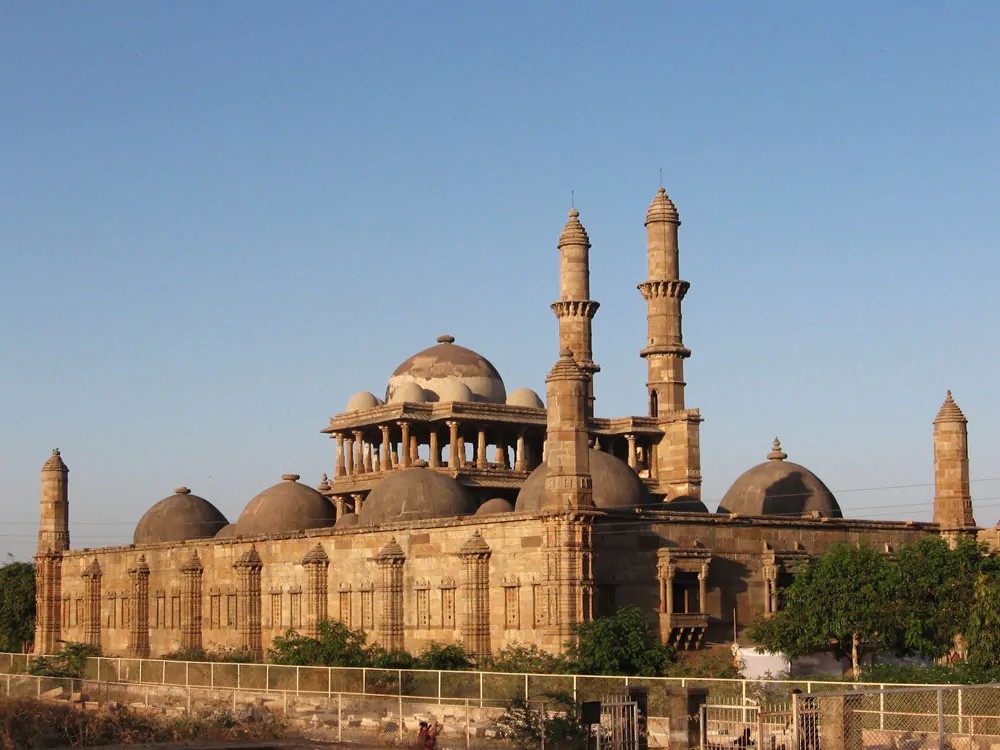
Why Champaner is Perfect for Your Celebration
- UNESCO World Heritage Site backdrop — 15th–16th century mosques, forts, and temples unique to Champaner-Pavagadh
- Navratri and Garba celebrations at Pavagadh's Mahakali Temple draw massive, spiritually charged gatherings
- Uttarayan (kite festival) is celebrated with particular enthusiasm across Gujarat, including Champaner's open landscapes
- Intimate and heritage weddings benefit from the rare, uncrowded historic setting with minimal commercial clutter
- Cool, dry winters (November–February) make outdoor ceremonies and processions genuinely comfortable
- Proximity to Vadodara (~45–50 km) gives access to a major city's vendor, catering, and hospitality ecosystem
Compare Champaner with Other Top Destinations
Frequently Asked Questions
Is Champaner a good destination for a heritage or palace-style wedding?
Yes. Champaner is particularly well-suited to heritage and palace-style weddings. Its UNESCO World Heritage Site status means ceremonies can be set against 15th–16th century fort walls, ancient gateways, and Indo-Islamic architectural details that are genuinely rare. It suits couples who prioritise historical authenticity and a distinctive sense of place over conventional resort amenities.
What is the best time of year to hold a wedding or event in Champaner?
November through February is the optimal window. Winter brings cool, dry conditions — typically comfortable for outdoor ceremonies and evening receptions — with no rain and manageable temperatures. The summer months (April–June) are extremely hot, and the monsoon (July–September) makes outdoor heritage settings impractical.
How do guests typically travel to Champaner?
Most guests arrive via Vadodara, which has a domestic airport and a major railway junction, both approximately 45–50 km from Champaner. From Vadodara, the road journey takes roughly one to one-and-a-half hours. Guests from Ahmedabad can also drive, though the journey is longer at approximately two to two-and-a-half hours.
Is Champaner suitable for Navratri and Garba celebrations?
Yes, and it is among the most culturally resonant settings for Navratri in Gujarat. The Mahakali Temple atop Pavagadh Hill is one of the state's most significant Shakti shrines, giving Navratri celebrations here a spiritual depth and authenticity that distinguishes them from urban Garba events. Planners should book well in advance, as the period is busy.
Can Champaner host an Uttarayan gathering?
Yes. Champaner's open landscapes and relatively uncrowded setting make it a distinctive choice for Uttarayan kite-festival gatherings. The open skies and heritage backdrop give the celebration a character that differs meaningfully from rooftop or resort-lawn events in larger cities.
What guest-group sizes can Champaner realistically accommodate?
Champaner is best suited to intimate and mid-sized gatherings — typically up to around 100–150 guests for events where accommodation is sourced locally. Larger guest lists are manageable but require housing most guests in Vadodara and running daily transfers, which adds logistical complexity. Very large weddings of 300+ guests are better served by destinations with more extensive local hotel inventory.
What kinds of event spaces are available in Champaner?
The most distinctive spaces are heritage courtyards, fort precincts, and open grounds within the Champaner-Pavagadh Archaeological Park. Accommodation-linked event lawns and halls are available but modest in scale. For larger receptions, planners typically combine Champaner's heritage settings for key ceremonies with banqueting facilities sourced from Vadodara.
Do I need special permissions to hold an event at Champaner's heritage sites?
Yes. Champaner-Pavagadh is a protected UNESCO World Heritage Site managed by the Archaeological Survey of India. Using protected structures or precincts for private events requires advance permissions from the relevant authorities. Planners should initiate this process early — ideally six months or more before the event date — as approvals are not guaranteed and timelines can vary.
Are local vendors and caterers available in Champaner for events?
Champaner does not have a self-contained local wedding vendor ecosystem. Specialist décor, catering, sound, lighting, and coordination teams are typically sourced from Vadodara and, for larger productions, from Ahmedabad. Both cities have experienced event vendor markets. Logistics of transporting equipment and staff to Champaner are manageable with advance planning.
Is Champaner suitable for a destination wedding with outstation guests?
Yes, for couples who want a genuinely distinctive, off-the-beaten-path destination. Guests travelling from major Indian cities can reach Champaner via Vadodara with reasonable ease. The destination's UNESCO heritage character and cultural depth make it memorable for outstation guests, though the travel journey is longer than for more mainstream Gujarat wedding destinations.
What makes Champaner different from other Gujarat wedding destinations?
Champaner's UNESCO World Heritage status and its association with the Pavagadh pilgrimage site give it a cultural and historical weight that is genuinely distinct within Gujarat. It is less commercialised, more intimate, and architecturally unique — suited to couples and planners who prioritise authenticity and a sense of place over large-scale resort infrastructure.

Ready to explore venues in Champaner?
Champaner: Heritage Fort Weddings, Festivals & Cultural Events
◆Champaner is a UNESCO World Heritage Site in Gujarat, best suited to heritage and palace-style weddings, Navratri and Garba celebrations, Uttarayan gatherings, and intimate destination events. Its primary vibe is Royal and Heritage — defined by 15th–16th century Indo-Islamic forts, mosques, and Hindu temples rather than luxury resort infrastructure. The destination is most accessible in winter (November–February), when the climate is genuinely comfortable for outdoor ceremonies. Guests typically arrive via Vadodara, roughly 45–50 km away, which provides the nearest airport and major railway connection. Accommodation within Champaner itself is limited and modest in scale, making it best suited to smaller, curated gatherings rather than large-scale weddings.
Champaner at a Glance
| Category | Details |
|---|---|
| Best For | Navratri & Garba Celebration, Uttarayan Gathering, Palace / Heritage Wedding, Intimate Wedding |
| Primary Vibe | Royal & Heritage |
| Other Vibes | Pilgrimage & Sacred, Rustic & Authentic, Cultural & Festival |
| Best Season | Winter (November–February) |
Why Choose Champaner?
- UNESCO World Heritage status: Champaner-Pavagadh Archaeological Park is one of Gujarat's most significant heritage sites, offering a backdrop of genuine historical and architectural weight that purpose-built event venues simply cannot replicate.
- Navratri at Pavagadh: The Mahakali Temple atop Pavagadh Hill is one of Gujarat's most revered Shakti shrines. Navratri celebrations here carry deep spiritual and cultural significance, drawing pilgrims and celebrants from across the region in a way that is distinctly different from urban Garba events.
- Uttarayan landscape: Champaner's open skies and relatively uncrowded terrain make it a naturally appealing setting for kite-flying gatherings during Uttarayan, with a more intimate, community-rooted character than larger city celebrations.
- Uncrowded and authentic: Unlike heavily commercialised heritage destinations, Champaner retains a quieter, less-touristed character — a genuine advantage for couples and planners seeking privacy and an uncluttered historic setting.
- Vadodara as a support hub: The proximity of Vadodara (~45–50 km) means that while Champaner itself has limited hospitality infrastructure, guests can access a full range of accommodation, catering vendors, décor suppliers, and transport from a well-connected city nearby.
- Winter climate genuinely suits outdoor events: November through February brings cool, dry conditions that make outdoor ceremonies, processions, and evening receptions comfortable — a meaningful practical advantage for heritage-style events that rely on open-air settings.
Which Celebrations Work Best in Champaner?
Navratri & Garba Celebration: Champaner's connection to the Pavagadh Mahakali Temple gives Navratri celebrations here a spiritual depth and cultural authenticity that is particularly meaningful for families with devotional ties to the region. The open heritage landscape also provides natural space for large Garba gatherings.
Uttarayan Gathering: Gujarat's kite festival is celebrated with enthusiasm across the state, and Champaner's open skies and relatively uncrowded setting make it a distinctive choice for groups wanting to mark Uttarayan in a heritage environment rather than a city rooftop or resort lawn.
Palace / Heritage Wedding: The fort walls, ancient gateways, and Indo-Islamic architectural details of Champaner create a genuinely rare ceremonial backdrop. Couples drawn to history and architectural grandeur — rather than manicured resort gardens — will find this setting compelling.
Intimate Wedding: The limited scale of local accommodation and event spaces is actually an advantage for smaller guest lists. An intimate wedding here benefits from exclusivity, a sense of place, and a setting that feels personal rather than generic.
Destination Wedding: For guests willing to travel to an off-the-beaten-path location, Champaner offers a genuinely memorable destination wedding experience — particularly for those who value heritage and cultural immersion over conventional luxury resort amenities.
Wedding Reception: Evening receptions against the illuminated fort structures or within heritage courtyards can be visually striking, especially during the cooler winter months when outdoor settings are at their most comfortable.
Venues & Event Spaces
Champaner's event infrastructure is characterised by heritage properties, government-managed tourist facilities, and open archaeological spaces rather than purpose-built banquet halls or luxury resort complexes. The most distinctive event spaces are the heritage courtyards, fort precincts, and open grounds within and around the Champaner-Pavagadh Archaeological Park — though use of protected UNESCO-listed structures for private events is subject to Archaeological Survey of India permissions and should be confirmed well in advance with relevant authorities.
Within the town itself, accommodation-linked event spaces are modest in scale, generally suited to gatherings of up to 100–150 guests. For larger receptions or multi-day wedding programmes requiring more extensive banqueting infrastructure, planners typically combine Champaner's heritage settings for key ceremonies with accommodation and reception facilities sourced from Vadodara, which offers a broader range of hotel banquet halls, outdoor lawns, and resort properties within a manageable driving distance.
Outdoor lawns and open grounds adjacent to heritage structures are among the most visually impactful options for ceremonies and Garba nights, particularly during the winter season when the weather is reliably dry and cool. Temporary event structures — mandaps, shamiana tents, lighting rigs — are routinely brought in by vendors from Vadodara and Ahmedabad for events in this area.
Best Time to Celebrate
The winter months of November through February are the clear optimal window for events in Champaner. Daytime temperatures typically range from the mid-teens to the mid-twenties Celsius, and evenings are cool and dry — conditions that make outdoor ceremonies, Garba nights, and heritage processions genuinely comfortable rather than merely tolerable. The absence of humidity and rain during this period is particularly important for a destination where most of the most compelling event settings are outdoors or semi-open.
March and early April represent a transitional shoulder period — temperatures begin rising noticeably, and while events are still feasible, the comfort window for outdoor programming narrows, particularly for evening events that run late.
April through June brings intense heat to this part of Gujarat, with temperatures regularly exceeding 38–40°C. Outdoor events during this period are genuinely impractical, and even indoor spaces without robust air conditioning become uncomfortable. This period is strongly inadvisable for any event type that relies on Champaner's heritage outdoor settings.
July through September is the Southwest Monsoon season. Champaner receives meaningful rainfall during this period, and the combination of rain, humidity, and the vulnerability of heritage stone surfaces makes outdoor events impractical. The Pavagadh Hill approach can also become slippery and logistically challenging during heavy rain. October is a transitional month — conditions improve progressively, and late October can be acceptable for some event types, though November is generally the safer starting point for planning purposes.
Getting There & Local Connectivity
The primary gateway for guests travelling to Champaner is Vadodara, which has both a domestic airport (served by multiple airlines connecting to Mumbai, Delhi, and other major Indian cities) and a major railway junction with broad national connectivity. The road journey from Vadodara to Champaner takes approximately one to one-and-a-half hours depending on traffic and road conditions, and is manageable for guest groups travelling by coach or private vehicle.
Guests travelling from Ahmedabad — Gujarat's largest city and a major air hub — face a somewhat longer road journey of approximately two to two-and-a-half hours, but this remains a realistic option for those with better flight connections into Ahmedabad than Vadodara.
Within Champaner itself, local public transport is limited. For event groups, the practical approach is to arrange dedicated coach or minibus transfers between Vadodara (or guest accommodation there) and Champaner for each event day or ceremony. The heritage site and town are compact enough that once guests arrive, movement within the area is manageable on foot or by small vehicle. Planners should factor in the logistics of coordinating multi-point pickups and the one-to-one-and-a-half hour transfer time when scheduling event timings.
Local Vendor & Hospitality Ecosystem
Champaner's own local vendor ecosystem is limited relative to larger Gujarat event destinations. The town does not have a mature, self-contained wedding industry infrastructure — specialist décor companies, large catering operations, professional sound and lighting vendors, and experienced wedding coordinators are not based in Champaner itself.
In practice, most event planners working in Champaner source their vendor teams from Vadodara and, for larger or more elaborate productions, from Ahmedabad. Both cities have well-developed event vendor markets with experience in heritage and outdoor event settings. The logistics of transporting equipment, décor, and catering from these cities to Champaner are manageable but require advance planning and clear coordination, particularly for multi-day events.
Catering for events in Champaner is typically handled by Vadodara-based caterers who are experienced with Gujarati cuisine and can accommodate both traditional vegetarian menus (appropriate for the destination's pilgrimage character) and broader multi-cuisine requirements. Local hospitality staff within Champaner are generally courteous and accustomed to pilgrimage and heritage tourism, though large-scale event service staffing will need to be supplemented from Vadodara.
For events tied to Navratri or other major festival periods, planners should be aware that vendor availability across the region tightens significantly, and early booking — ideally six to twelve months in advance — is advisable.
Pros & Things to Consider
Why Champaner Works Well
- Genuinely rare UNESCO heritage setting — architectural backdrops unavailable at any conventional event venue
- Navratri and Uttarayan celebrations carry authentic cultural and spiritual weight specific to this location
- Uncrowded and private character suits intimate weddings and curated gatherings
- Cool, dry winters provide a reliable outdoor event window from November through February
- Vadodara's proximity gives access to a full vendor and accommodation ecosystem without requiring everything to be sourced locally
- Relatively undiscovered as an event destination — offers genuine novelty and memorability for guests
Things to Consider
- On-site accommodation is limited in scale and category — large guest lists will need to be housed primarily in Vadodara, adding a daily transfer requirement
- No mature, self-contained local wedding vendor ecosystem — all specialist suppliers must be brought in from Vadodara or Ahmedabad
- Use of protected heritage structures for private events requires permissions from the Archaeological Survey of India, which involves lead time and is not guaranteed
- Connectivity for international guests or those from distant Indian cities requires a Vadodara or Ahmedabad connection — there is no direct long-haul access
- Festival periods (particularly Navratri) bring significant pilgrim and tourist crowds to the Pavagadh area, which can affect logistics, accommodation availability, and the sense of exclusivity
When Champaner May Not Be the Right Fit
- Large-scale weddings (300+ guests): The local accommodation and venue infrastructure cannot comfortably absorb very large guest lists without extensive logistical complexity. Destinations with larger resort and hotel inventories will serve big weddings more smoothly.
- Guests requiring direct international or long-haul connectivity: Champaner has no airport of its own, and Vadodara's airport, while functional, has limited international routes. Guests flying in from abroad will typically need a connecting flight, which adds travel complexity.
- Events planned for April through September: The combination of extreme summer heat and monsoon rains makes this destination genuinely unsuitable for outdoor heritage events during these months. A climate-controlled venue destination would be a more practical choice for this period.
- Planners seeking a fully self-contained luxury resort experience: Champaner does not currently have large luxury resort properties with in-house ballrooms, spa facilities, and full wedding coordination teams. Those seeking that kind of turnkey luxury infrastructure will find better options elsewhere in Gujarat or Rajasthan.