
Why Bundi is Perfect for Your Celebration
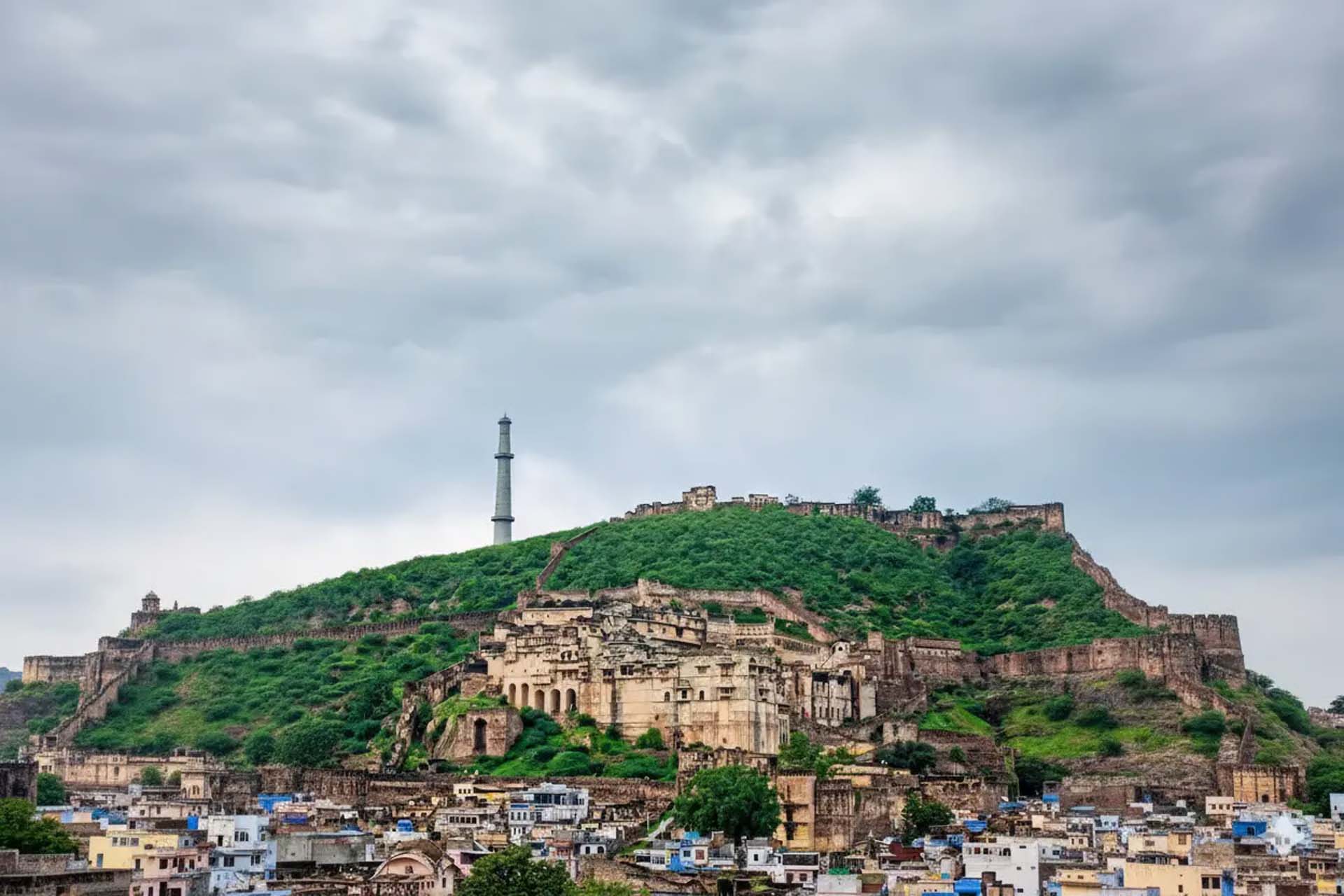
- Taragarh Fort and historic havelis provide dramatic, authentic backdrops unavailable in more commercialised Rajasthan cities
- Intimate town scale suits smaller, curated guest lists — ideal for 50–200 person celebrations
- Rich Rajput and Hadoti folk traditions (Teej, Gangaur, local fairs) integrate naturally into wedding programming
- Relatively uncrowded compared to Jaipur or Udaipur, offering privacy and exclusivity for events
- Cool, dry winters (November–February) create near-perfect outdoor event conditions
- Heritage havelis and palace-style properties offer characterful, photogenic settings that larger cities rarely match at this scale
Top Venues in Bundi
Bundi Villas (Bundi Vilas)
Ishwari Niwas Palace
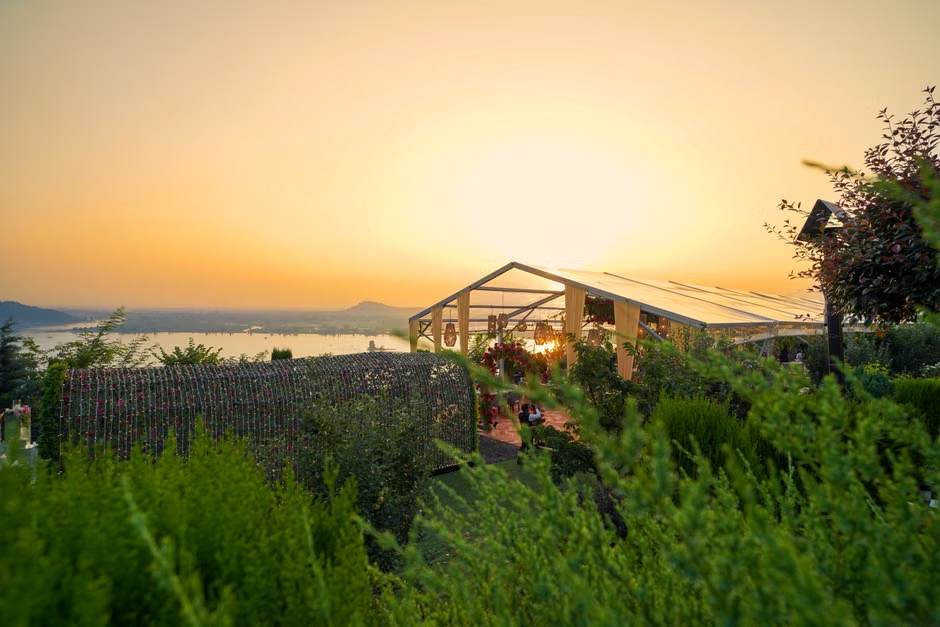
Kasera Paradise
Compare Bundi with Other Top Destinations
Frequently Asked Questions
Is Bundi a good destination for an intimate wedding?
Yes. Bundi is particularly well-suited to intimate weddings of 50–150 guests. Its heritage havelis, palace courtyards, and rooftop terraces are naturally scaled for smaller, curated celebrations, and the town's unhurried pace and atmospheric old-city character create a setting that feels personal and distinctive rather than generic. Couples who prioritise authenticity over large-scale production will find Bundi a strong fit.
What makes Bundi suitable for a palace or heritage wedding?
Bundi has genuine Rajput architectural heritage — Taragarh Fort, the Garh Palace murals, and privately-operated heritage havelis — that provides authentic palace-style settings without the heavy commercialisation of Rajasthan's more prominent cities. The visual character is real rather than reconstructed, which makes it particularly compelling for couples seeking a heritage wedding with genuine historical atmosphere.
What is the best time of year to hold a wedding or celebration in Bundi?
November through February is the optimal window. This period brings cool, dry weather with clear skies — daytime temperatures typically around 15°C–25°C — making outdoor ceremonies, rooftop dinners, and multi-day celebrations genuinely comfortable. March begins to warm up, and by April–June heat becomes a serious logistical challenge. July–September is the monsoon season and is generally unsuitable for outdoor events.
How do guests typically travel to Bundi?
Most guests arrive via Kota Junction, a major station on the Delhi–Mumbai rail corridor, and then travel approximately 35–40 km by road to Bundi. This makes train travel practical for guests from Delhi, Mumbai, and cities along that route. Guests requiring air travel typically fly into Kota Airport (limited services) or route through Jaipur or Udaipur airports and travel onward by road.
What kinds of event venues are available in Bundi?
Bundi's venue landscape is defined by heritage character — painted havelis with intimate courtyards, palace-style properties with lawns, and rooftop terraces overlooking Taragarh Fort or the town's famous step-wells. These spaces suit ceremonies, receptions, and welcome dinners for smaller guest groups. Large banquet halls or purpose-built resort convention spaces are not a feature of Bundi's offering.
Can Bundi accommodate a large wedding guest list?
Realistically, Bundi works best for guest lists up to around 200–250 people. Beyond that, the local heritage venue inventory becomes genuinely stretched — there are a limited number of properties capable of hosting large-format events, and the town's narrow old-city lanes can complicate logistics for very large groups. Couples expecting 300+ guests should assess venue capacity carefully before committing.
Is Bundi suitable for a Teej or Gangaur celebration?
Yes, and it is one of the stronger choices in Rajasthan for this. Bundi has a living tradition of Teej and Gangaur festivals, with authentic local processions, folk performances, and community rituals. Hosting a Teej or Gangaur-themed event here carries genuine cultural authenticity — the traditions are local rather than imported, which makes the experience meaningfully different from a themed event at a resort in a larger city.
What local cultural elements can be incorporated into a Bundi wedding or celebration?
Bundi's Hadoti folk traditions offer rich programming options: Kalbelia dancers, Manganiyar musicians, traditional Rajput dhol performers, and local craft demonstrations are all available locally. The town's step-wells, fort, and painted havelis also serve as natural backdrops for heritage walks and photography excursions that keep destination guests engaged across a multi-day celebration.
How developed is the local vendor ecosystem for events in Bundi?
Bundi has a genuine but developing vendor ecosystem. Local folk performers, traditional caterers serving Hadoti cuisine, and heritage-setting photographers are well-represented. For specialised requirements — elaborate décor, large AV production, international cuisine — planners typically coordinate vendors from Kota or Jaipur who travel in for the event. The ecosystem rewards planners who value authenticity and are comfortable managing some external vendor logistics.
Is local transport within Bundi manageable for a wedding guest group?
It requires planning. The old city is compact but its narrow lanes are not always accessible to large vehicles, which can complicate equipment delivery and guest movement. Auto-rickshaws and hired cars are the standard local transport modes. For groups staying across multiple properties, a coordinated shuttle arrangement is strongly advisable, particularly for evening events when guests are moving between venues.
Is Bundi a good fit for a destination birthday celebration or milestone event?
Yes, particularly for 40th, 50th, 60th, or 70th birthday celebrations where the host wants a distinctive, experience-led setting rather than a conventional party venue. Bundi's heritage character, rooftop terraces, and folk cultural programming create a naturally immersive environment for milestone gatherings. It works best for groups of 30–100 guests who value the destination experience as part of the celebration itself.
What should event planners be aware of when planning in Bundi for the first time?
Key planning considerations include: booking heritage properties well in advance (the inventory is small and the peak November–February window fills quickly); arranging coordinated road transfers from Kota for arriving guests; sourcing specialised vendors from Kota or Jaipur rather than expecting a fully self-contained local supply; and confirming vehicle access routes to specific venues in the old city before finalising logistics for equipment and décor delivery.

Ready to explore venues in Bundi?
Bundi: Heritage Wedding & Celebration Destination in Rajasthan
◆Bundi is a heritage town in Rajasthan's Hadoti region, best suited to intimate weddings, palace-style celebrations, and cultural festival gatherings. Its primary vibe is Royal & Heritage — defined by Taragarh Fort, indigo-painted havelis, and ancient step-wells rather than large-scale luxury infrastructure. The destination works best for curated guest lists of roughly 50–200 people who value authenticity and atmosphere over scale. Accessibility is moderate: most guests arrive via Kota (a major rail junction) and travel onward by road. The optimal event season is November through February, when the climate is cool and dry. Bundi is generally more affordable than Udaipur or Jaipur, though its venue inventory is smaller.
Bundi at a Glance
| Category | Detail |
|---|---|
| Best For | Intimate Wedding, Palace / Heritage Wedding, Destination Wedding, Wedding Reception |
| Primary Vibe | Royal & Heritage |
| Other Vibes | Folk & Cultural, Offbeat & Intimate, Step-Well Mystique |
| Best Season | Winter (November–February) |
Why Choose Bundi?
- Unmatched architectural authenticity: Taragarh Fort, the Garh Palace murals, and hundreds of indigo-washed havelis create a visual backdrop that is genuinely rare — far less commercialised than Rajasthan's more prominent cities.
- Intimate scale suits smaller celebrations: Bundi's compact old city and its heritage properties are naturally configured for curated, close-knit gatherings rather than mass-attendance events, making it particularly well-suited to intimate weddings and private milestone celebrations.
- Living folk culture: The Hadoti region's traditions — Teej, Gangaur, local fairs, and Rajput folk music — can be woven directly into event programming in a way that feels organic rather than staged.
- Privacy and exclusivity: Bundi receives a fraction of the tourist footfall of Jaipur or Udaipur, meaning event groups can effectively take over heritage properties and public spaces without the intrusion common in busier destinations.
- Excellent winter climate: November through February brings clear skies, low humidity, and temperatures that make outdoor evening events genuinely comfortable — a significant practical advantage for multi-day celebrations.
- Accessible via a major rail hub: Kota Junction, roughly 35–40 km away, sits on the main Delhi–Mumbai rail corridor, making Bundi reachable by train for guests from most major Indian cities without requiring a flight.
Which Celebrations Work Best in Bundi?
Intimate Wedding
Bundi's heritage havelis and palace courtyards are naturally scaled for smaller ceremonies — typically 50 to 150 guests. The town's unhurried pace and atmospheric old-city lanes create a setting where every detail feels considered rather than lost in scale. Couples seeking a deeply personal, visually distinctive wedding rather than a large-format production will find Bundi particularly well-matched.
Palace / Heritage Wedding
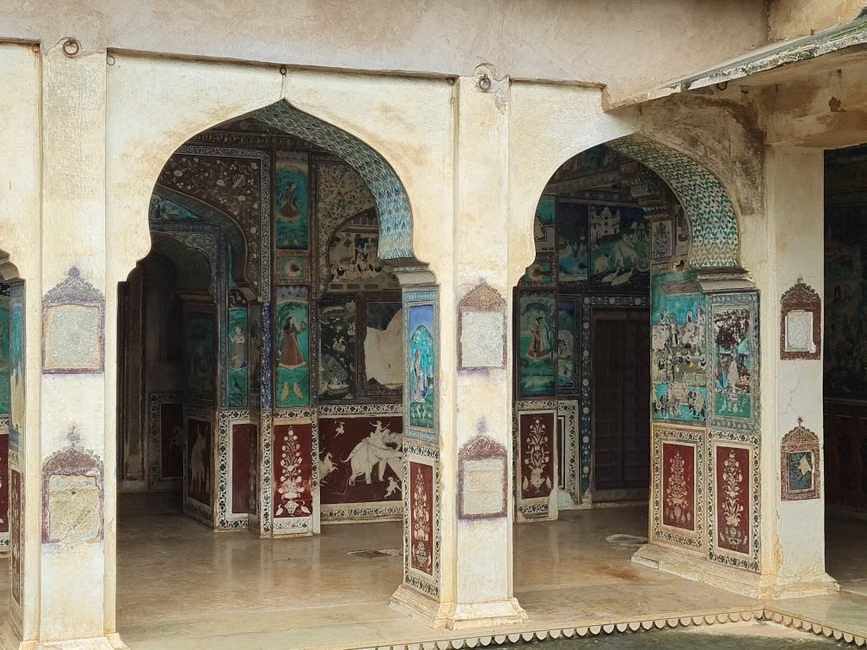
With Taragarh Fort, the Garh Palace complex, and several privately-operated heritage havelis available for event use, Bundi offers genuine Rajput palace aesthetics without the premium pricing of Rajasthan's most famous heritage venues. The architectural character — carved stone, painted interiors, step-well courtyards — is authentic rather than reconstructed.
Destination Wedding
For couples whose guest list is drawn from across India or internationally, Bundi functions well as a destination wedding location precisely because of its offbeat character. Guests who have attended weddings in Jaipur or Udaipur will find Bundi genuinely different — the town itself becomes part of the experience, with heritage walks, step-well visits, and fort excursions naturally filling the surrounding days.
Wedding Reception
Heritage property lawns and palace courtyards in Bundi provide atmospheric reception settings, particularly for evening events lit by lanterns and traditional diyas. The intimate scale means receptions here tend to feel warm and personal rather than formal and distant.
Welcome Dinner / Pre-Wedding Celebration
Bundi's rooftop terraces — many overlooking the step-wells or the fort — are among the most characterful settings in Rajasthan for a welcome dinner. The combination of fort-lit skylines and folk music performances makes pre-wedding evenings here genuinely memorable for arriving guests.
Teej & Gangaur Celebration
Bundi has a strong living tradition of Teej and Gangaur festivals, with processions, folk performances, and community rituals that event planners can incorporate into celebration programming. Hosting a Teej or Gangaur-themed event here carries cultural authenticity that purpose-built resort venues in larger cities cannot replicate.
Cultural Festival Gathering
The town's annual Bundi Utsav and its broader Hadoti folk calendar make it a natural host for cultural gatherings — corporate offsites with a heritage theme, family reunions built around a festival, or milestone birthday celebrations that incorporate local art, craft, and performance traditions.
Venues & Event Spaces
Bundi's event venue landscape is defined by heritage character rather than large-scale resort infrastructure. The primary venue types available include:
- Heritage havelis: Privately-operated painted mansions within the old city, typically offering intimate courtyards, rooftop terraces, and characterful interiors suited to ceremonies and dinners of up to 100–150 guests.
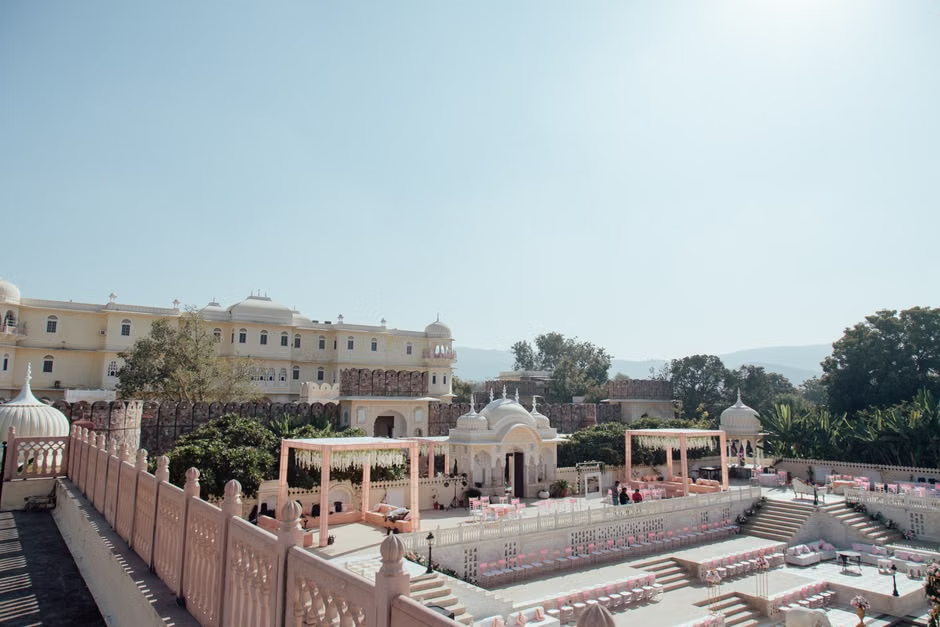
- Palace-style properties: Former royal residences that have been converted into hospitality venues, offering larger lawns and formal event spaces alongside heritage accommodation for the wedding party.
- Rooftop terraces: A distinctive Bundi feature — many heritage properties have elevated terraces with direct sightlines to Taragarh Fort or the step-wells, making them particularly sought-after for sundowners, welcome dinners, and post-ceremony receptions.
- Fort and step-well surrounds: For ceremonial photography and pre-event programming, the areas around Taragarh Fort and Bundi's famous step-wells (baolis) serve as dramatic natural backdrops, though formal event hosting within protected monument zones requires appropriate permissions.
- Outdoor lawns: Several heritage properties maintain garden or lawn spaces suitable for mandap setups and outdoor receptions, particularly well-used during the cool winter months.
Event planners should note that Bundi's venue inventory is smaller than that of Rajasthan's major cities — the destination is best approached with flexibility and early booking, particularly for the peak November–February window.
Best Time to Celebrate
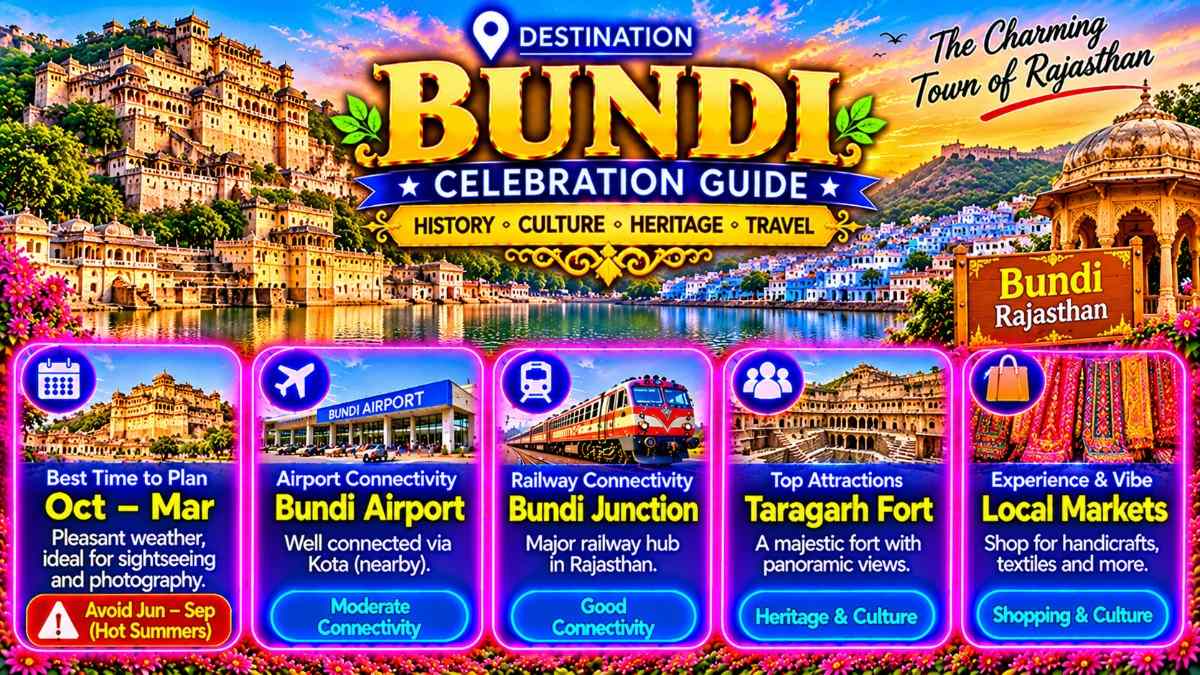
November through February is the clear optimal window for events in Bundi. Daytime temperatures during this period typically range from around 15°C to 25°C, with cool, dry evenings that make outdoor ceremonies and receptions genuinely comfortable. Skies are reliably clear, which matters significantly for the fort-view rooftop settings and outdoor mandap setups that define Bundi's most distinctive event experiences.
The October shoulder period can work for events — the monsoon has typically cleared by mid-October and temperatures are beginning to moderate — but early October can still carry residual humidity and occasional unseasonal rain, so it carries slightly more weather risk than the core winter window.
March and early April represent a transitional period: daytime temperatures begin climbing toward 35°C+, and while evenings remain manageable in March, the heat becomes a genuine logistical challenge for outdoor events by April. Air-conditioned indoor spaces become necessary rather than optional.
May and June bring peak summer heat, regularly exceeding 40°C in the Hadoti region. Outdoor events are not practical, and even indoor events require robust cooling infrastructure that heritage properties may not always provide at the required scale.
July through September is the monsoon season. Bundi and the surrounding Hadoti region receive meaningful rainfall during this period — the step-wells fill dramatically and the landscape turns green, which has its own visual appeal, but the combination of heat, humidity, and unpredictable heavy rain makes this period unsuitable for outdoor celebrations and logistically challenging for multi-day events.
Getting There & Local Connectivity
Most guests reach Bundi via Kota Junction, which sits on the main Delhi–Mumbai rail corridor and is one of Rajasthan's better-connected railway stations. From Kota, Bundi is approximately 35–40 km by road — a journey of roughly 45–60 minutes depending on traffic. This makes train travel a genuinely practical option for guests arriving from Delhi, Mumbai, or other cities along that corridor.
Kota Airport operates limited scheduled services; guests requiring air connectivity from cities not directly served by Kota will typically route through Jaipur or Udaipur airports and then travel onward by road, which adds several hours to the journey. Event planners coordinating large guest groups should factor in this multi-leg travel pattern and consider arranging chartered coaches or coordinated road transfers from Kota.
Within Bundi itself, the old city is compact and partially navigable on foot, though the narrow lanes of the heritage quarter are not always accessible to large vehicles. Local auto-rickshaws and hired cars are the standard modes of intra-city movement for event guests. For groups staying across multiple heritage properties, a coordinated shuttle arrangement is advisable, particularly for evening events when guests are moving between venues after dark.
Road connectivity from Jaipur (approximately 210 km) and Chittorgarh (approximately 130 km) is reasonable, making self-drive or hired-car arrivals a viable option for guests from those cities.
Local Vendor & Hospitality Ecosystem
Bundi has a developing but genuinely capable local vendor ecosystem for events, shaped by years of heritage tourism and a growing interest in the destination for intimate weddings. Local strengths include:
- Folk performers and cultural artists: Kalbelia dancers, Manganiyar musicians, and traditional Rajput dhol performers are available locally and integrate naturally into wedding programming without the artificiality of importing performers from outside.
- Local catering: Hadoti cuisine — distinct from the more widely-known Marwari food traditions — offers event menus with genuine regional character. Local caterers experienced in large-format traditional meals are available, though planners seeking highly specialised cuisine (international menus, molecular gastronomy, etc.) may need to bring in vendors from Kota or further afield.
- Floral and décor: Basic floral and traditional décor vendors operate locally. For elaborate, high-production wedding décor, planners typically work with vendors based in Kota or Jaipur who travel to Bundi for the event.
- Photography: Bundi's visual character — the fort, step-wells, painted walls — attracts destination photographers who are familiar with the location. Both local and visiting photographers with strong heritage-setting portfolios are available.
The overall ecosystem is best described as authentic but not fully industrialised — it suits planners who value character and are willing to coordinate some vendor logistics from outside the town, rather than those expecting a fully self-contained, plug-and-play event infrastructure.
Pros & Things to Consider
Why Bundi Works Well
- Genuinely rare architectural character — fort, step-wells, and painted havelis create backdrops unavailable elsewhere at this scale
- Intimate town scale naturally suits smaller, curated celebrations without feeling under-resourced
- Living folk and festival traditions (Teej, Gangaur, Bundi Utsav) add authentic cultural programming options
- Relatively uncrowded — event groups can enjoy a sense of exclusivity that busier Rajasthan cities rarely offer
- Excellent winter climate for outdoor events, with reliably clear skies and comfortable temperatures
- Accessible via Kota Junction on the main Delhi–Mumbai rail line, making train travel practical for many guests
Things to Consider
- Limited venue inventory: The number of heritage properties capable of hosting events is small — early booking is essential, and large guest lists (300+) will find the local supply genuinely stretched.
- Air connectivity is limited: Kota Airport has restricted scheduled services; guests from many cities will face multi-leg journeys, which can be a deterrent for older or less mobile guests.
- Vendor ecosystem requires coordination: Specialised vendors (high-end décor, international catering, large AV production) typically need to be sourced from Kota or Jaipur and transported in, adding logistical complexity.
- Narrow old-city lanes: Heritage quarter streets are not always accessible to large vehicles, which can complicate equipment delivery and guest movement for events held in the most atmospheric locations.
- Seasonal weather risk outside November–February: The destination's outdoor-event appeal is heavily concentrated in a four-month window; events outside this period require contingency planning for heat or rain.
When Bundi May Not Be the Right Fit
- Very large guest lists (300+ guests): Bundi's heritage venue inventory is not configured for large-scale events. Couples expecting a guest list above 250–300 will likely find the local supply of suitable spaces insufficient without significant compromise on setting or logistics.
- Guests with limited travel flexibility: For a guest list that includes many elderly or mobility-limited guests, or guests travelling internationally without convenient connections through Kota or nearby airports, the multi-leg journey to Bundi can be a genuine hardship that a more accessible destination would avoid.
- Events planned for May–September: The combination of extreme summer heat (May–June) and monsoon rains (July–September) makes outdoor celebrations impractical and indoor events logistically demanding. Couples with fixed dates in this window would be better served by a destination with more robust all-weather infrastructure.
- High-production, large-format events: Couples or planners seeking a fully industrialised event ecosystem — large specialist vendors on-site, multiple competing luxury venues, extensive AV and production infrastructure — will find Bundi's offering more limited than Rajasthan's major event cities. The destination rewards those who value atmosphere and authenticity over production scale.