
Why Alwar is Perfect for Your Celebration
- Authentic Rajput forts and palace properties provide a genuinely royal wedding backdrop
- Proximity to Delhi (~150 km) makes guest travel straightforward by road or rail
- Alwar Railway Station offers direct connections to Delhi and Jaipur, easing multi-city guest logistics
- Aravalli hills and Sariska Tiger Reserve surroundings add dramatic natural scenery to outdoor events
- Relatively less commercialised than Jaipur or Udaipur, offering more privacy for intimate celebrations
- Cool, dry winters (November–February) are ideal for outdoor ceremonies, lawn dinners, and heritage venue events
Top Venues in Alwar
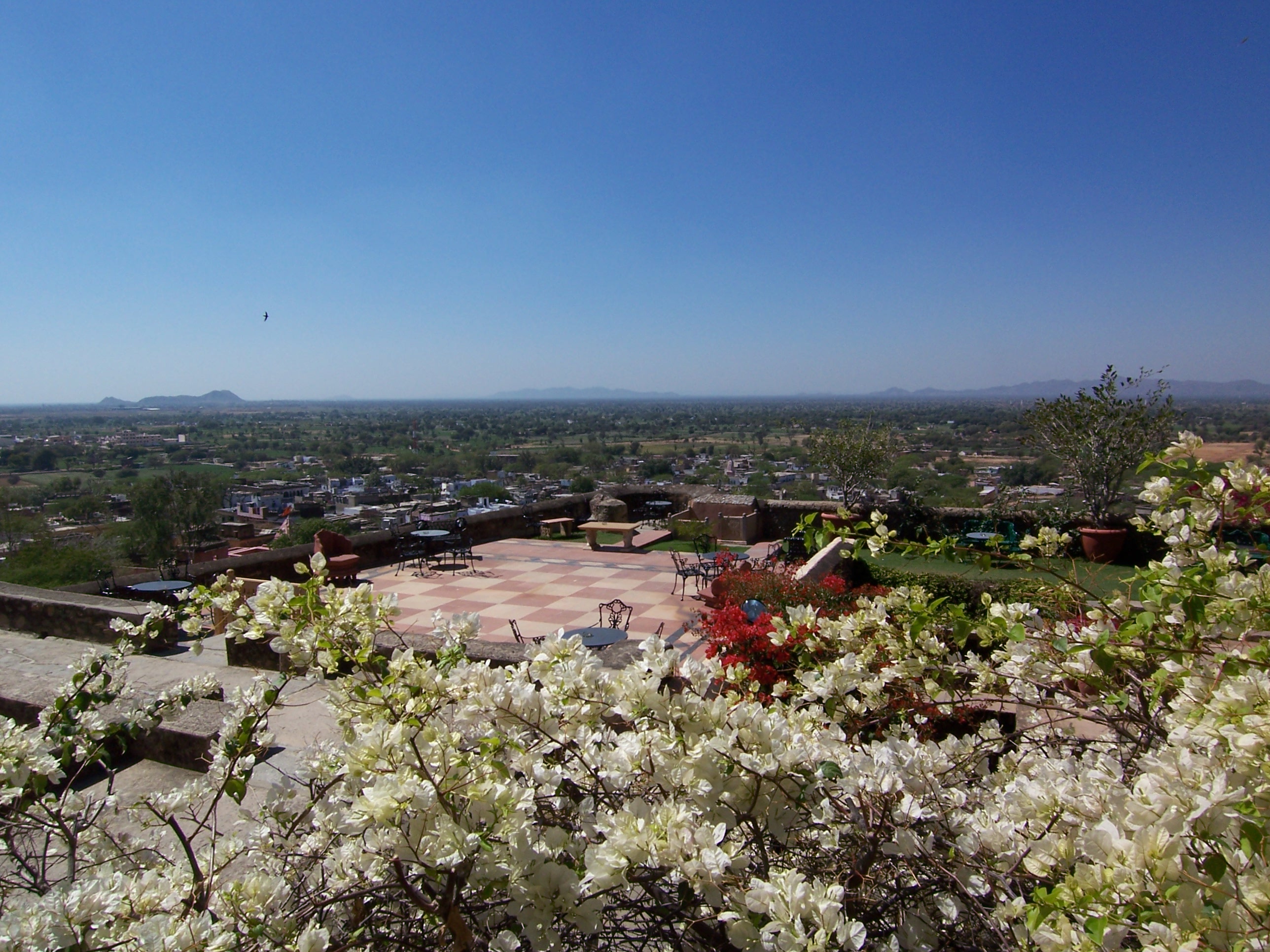
Neemrana Fort-Palace (Neemrana)
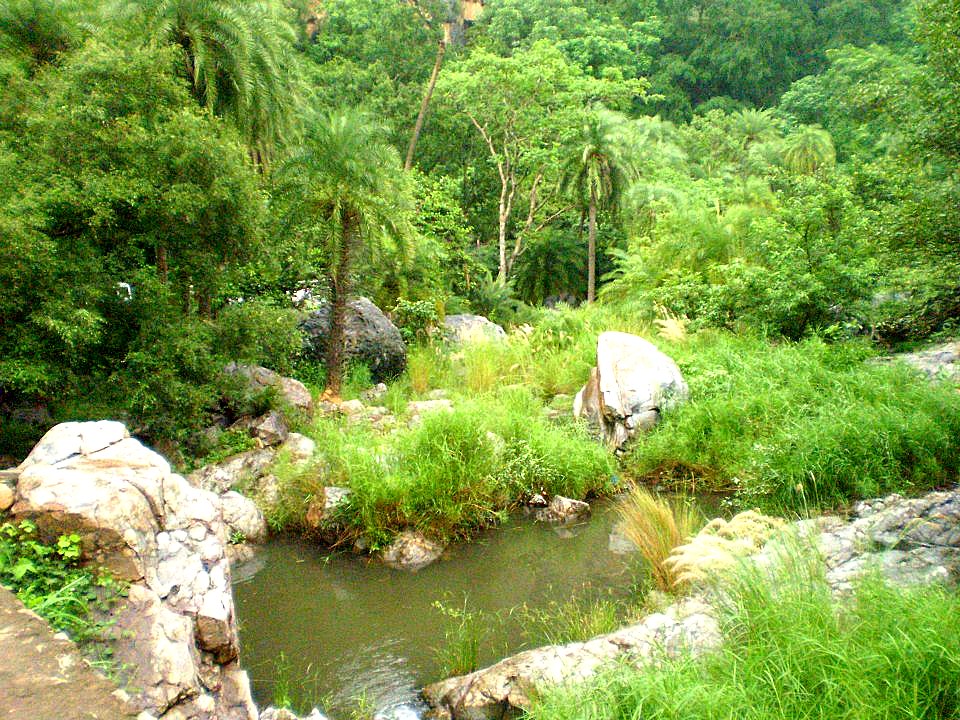
Sariska Palace
Compare Alwar with Other Top Destinations
Frequently Asked Questions
Is Alwar a good destination for a heritage or palace wedding?
Yes. Alwar is particularly well-suited to palace and heritage weddings. The district has genuine Rajput-era fort and palace properties that provide an authentic royal setting. It is less commercialised than Jaipur or Udaipur, which means heritage venues here can often be more exclusively held for a wedding group, offering greater privacy and a more immersive experience.
What is the best time of year to hold a wedding or event in Alwar?
November through February is the optimal window. Temperatures are cool and dry, making outdoor ceremonies, lawn receptions, and evening dinners genuinely comfortable. December and January are the peak months. Avoid May–June (extreme heat) and July–September (monsoon), when outdoor events are largely impractical.
How do guests typically travel to Alwar for a destination event?
Most guests travel by train or road. Alwar Railway Station (AWR) is on the Delhi–Jaipur main line, with express trains from Delhi taking approximately two to two-and-a-half hours. By road, Alwar is around three hours from Delhi. The nearest major airport is Indira Gandhi International Airport in Delhi, roughly 150 km away, with onward travel by road or rail.
What size of guest list can Alwar realistically accommodate for a destination wedding?
Alwar is best suited to intimate to mid-sized events — typically up to 200–300 guests when combining multiple heritage properties across the district. Very large guest lists of 500 or more may find the combined accommodation and event space inventory limiting, and would require careful multi-property coordination.
What kinds of event venues are available in and around Alwar?
The venue landscape is dominated by heritage palace properties, fort-adjacent resorts, and haveli-style hotels. These typically offer a mix of indoor banquet halls with period architecture and outdoor lawns or courtyards. The Sariska belt adds wildlife-adjacent heritage resorts. Purpose-built modern convention facilities are not a feature of Alwar's venue inventory.
Is Alwar suitable for a small, intimate wedding?
Yes. Many of Alwar's heritage properties are naturally sized for smaller gatherings — typically under 150 guests — which means the space-to-guest ratio feels generous and personal. The destination's quieter, less-touristed character also adds to the sense of exclusivity that intimate weddings benefit from.
Can Alwar host corporate events like conferences, gala nights, or incentive trips?
Yes, particularly for events where a distinctive, non-generic setting adds value. Heritage palace properties work well for awards and gala nights, incentive trips, and product launches. A Sariska wildlife excursion can be incorporated into an incentive programme. Large-scale conference requirements with extensive breakout room infrastructure are less well-served by the local venue inventory.
Are local vendors and caterers available in Alwar for events?
A growing base of local decorators, Rajasthani caterers, and folk performers is available. Established heritage properties typically have in-house catering and event teams. For specialist requirements — luxury floral design, high-end audio-visual, or international cuisine — vendors are generally brought in from Delhi or Jaipur, both within practical driving distance.
Is Alwar suitable for Teej, Gangaur, or other traditional Rajasthani celebrations?
Yes. Alwar has a strong Rajasthani cultural identity, and local folk performers, artisans, and cultural practitioners are available to bring Teej and Gangaur traditions authentically into a wedding programme. The destination's heritage environment makes these celebrations feel genuinely rooted rather than staged for a tourist audience.
What makes Alwar different from other Rajasthan wedding destinations?
Alwar is less commercialised and more private than Rajasthan's primary wedding circuits. Its fort and palace venues carry genuine historical character, and the Aravalli hills and Sariska wildlife surroundings add a natural scenic dimension. The strong rail link from Delhi also makes it more accessible by train than many comparable heritage destinations in the state.
What should event planners be aware of when planning in Alwar?
Key considerations include: the specialist vendor ecosystem requires sourcing some services from Delhi or Jaipur; total accommodation capacity is limited for very large groups; some heritage properties have narrow access roads requiring advance vehicle planning; and the destination is strongly seasonal — the winter window (November–February) is when the destination performs at its best for outdoor events.

Ready to explore venues in Alwar?
Alwar: Heritage Wedding & Corporate Event Destination in Rajasthan
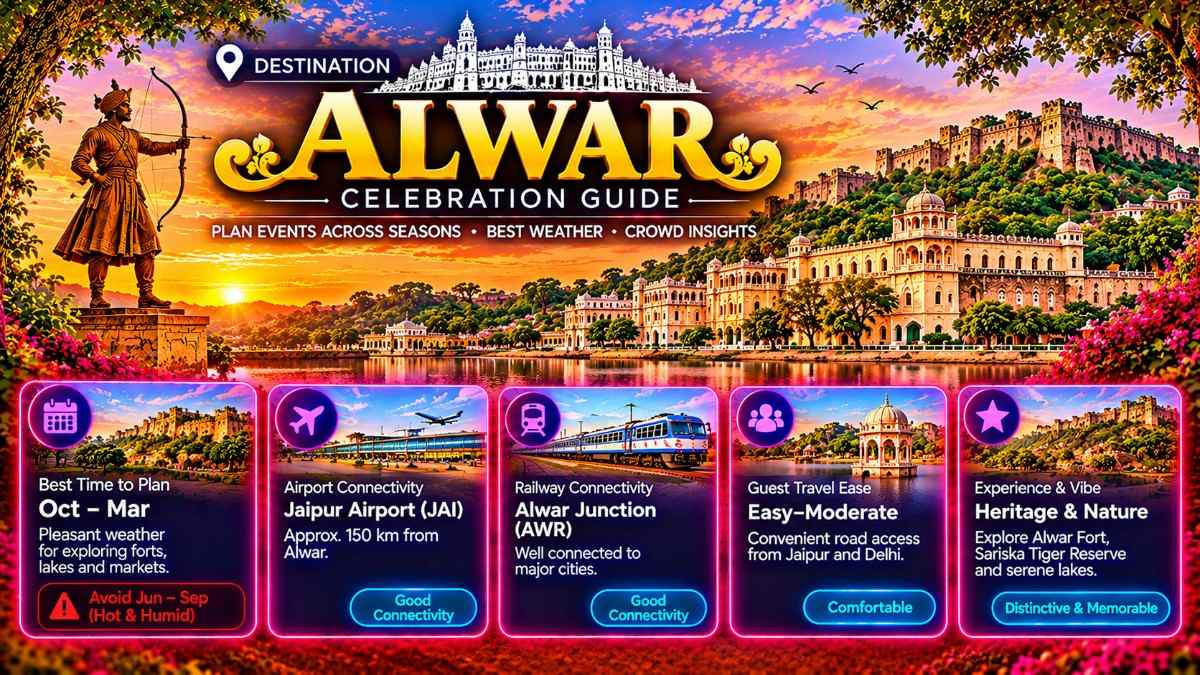
◆Alwar is a heritage-first destination in eastern Rajasthan, best suited to palace and heritage weddings, intimate destination celebrations, wedding receptions, and corporate events that benefit from a royal, fort-and-Aravalli setting. Its primary vibe is Royal & Heritage. The best season runs from November through February, when cool, dry weather makes outdoor ceremonies and lawn dinners genuinely comfortable. Alwar sits roughly 150 km from Delhi and has its own railway station with direct connections to Delhi and Jaipur, making guest logistics manageable. It is less commercialised than Jaipur or Udaipur, which suits couples and planners seeking privacy and authenticity over a heavily-touristed circuit.
Alwar at a Glance
| Attribute | Detail |
|---|---|
| Best For | Palace / Heritage Wedding, Destination Wedding, Wedding Reception, Intimate Wedding |
| Primary Vibe | Royal & Heritage |
| Other Vibes | Rustic, Intimate, Nature-Surrounded |
| Best Season | Winter (November–February) |
Why Choose Alwar?
- Authentic fort and palace venues: Alwar and its immediate surroundings — including the Sariska belt and the Neemrana corridor — offer genuine Rajput-era palace and fort properties that provide a historically rooted, visually dramatic setting rather than a replica heritage aesthetic.
- Relative privacy and exclusivity: Unlike Jaipur or Udaipur, Alwar does not attract the same volume of leisure tourists, which means heritage properties here can be more exclusively held for a wedding or corporate group, reducing the sense of a shared public venue.
- Strong rail connectivity from Delhi: Alwar Railway Station (AWR) sits on the Delhi–Jaipur main line, with frequent trains making it straightforward for guests travelling from the capital or from Jaipur to reach the destination without requiring a flight.
- Aravalli hills and Sariska Tiger Reserve backdrop: The natural landscape surrounding Alwar — forested Aravalli ridges, the Sariska wildlife sanctuary, and historic step-wells — adds a scenic dimension that enriches outdoor pre-wedding shoots, welcome dinners, and excursion programmes for guests.
- Culturally rich setting for traditional celebrations: Alwar has a strong Rajasthani cultural identity, making it a particularly fitting location for Teej & Gangaur celebrations, religious family functions, and ceremonies that draw on Rajput customs and folk traditions.
- Accessible from multiple cities: Beyond Delhi, Alwar is reachable by road from Jaipur (roughly 150 km) and sits on a well-maintained national highway corridor, giving event planners flexibility in routing guests from multiple origin cities.
Which Celebrations Work Best in Alwar?
Palace / Heritage Wedding: This is Alwar's strongest suit. The district's fort and palace properties — some centuries old — provide a setting that is difficult to replicate elsewhere. Ceremonies held within or against the backdrop of Rajput-era architecture carry an authenticity that resonates strongly with couples seeking a genuinely royal aesthetic.
Destination Wedding: Alwar works well as a destination wedding base because it is close enough to Delhi to be accessible yet far enough to feel like a genuine escape. Guests can be accommodated across heritage properties, and the destination's relative quietness means the event can feel fully immersive rather than one of many events happening simultaneously in the same town.
Wedding Reception: Heritage lawns, palace courtyards, and fort terraces provide dramatic reception settings, particularly in the winter months when evenings are cool and clear. The visual backdrop of illuminated fort walls or Aravalli hillsides makes for memorable reception photography and a strong sense of occasion.
Intimate Wedding: For smaller guest lists — typically under 150 — Alwar's heritage properties are particularly well-suited. Many of the palace and haveli-style venues in the district are sized for intimate gatherings rather than mass-scale events, which means the space-to-guest ratio feels generous and personal rather than crowded.
Welcome Dinner / Pre-Wedding Celebration: The Aravalli landscape and heritage courtyards lend themselves naturally to atmospheric welcome dinners. A candlelit dinner in a fort courtyard or a folk-music evening on a palace lawn sets a strong tone for the celebrations that follow.
Teej & Gangaur Celebration: Alwar's deep roots in Rajasthani culture make it one of the more authentic settings in which to observe or incorporate Teej and Gangaur traditions into a wedding programme. Local artisans, folk performers, and cultural practitioners are available to bring these celebrations to life in a way that feels genuinely rooted rather than staged for tourists.
Religious Family Function: The city's temples, heritage properties with dedicated puja spaces, and the general cultural environment make it a comfortable and appropriate setting for religious family functions that require both ceremonial space and a respectful, tradition-aligned atmosphere.
Annual Conference / Awards & Gala Night / Incentive Trip / Product Launch: Corporate events benefit from Alwar's heritage properties, which offer a distinctive, non-generic setting that stands apart from standard hotel conference rooms. A gala night in a palace ballroom or an incentive trip combining a heritage stay with a Sariska wildlife excursion provides a memorable experience that reinforces the event's purpose.
Anniversary Celebration / Vow Renewal / Family Reunion / Retirement Celebration: The intimate scale of many Alwar heritage properties, combined with the destination's scenic and cultural richness, makes it well-suited to milestone personal celebrations where the setting itself is part of the gift.
Venues & Event Spaces
Alwar's event venue landscape is defined primarily by heritage palace properties and fort-adjacent resorts. These typically feature a combination of indoor banquet halls — often with period architecture, carved stonework, and traditional Rajasthani detailing — and outdoor lawns or courtyards that can be dressed for ceremonies, receptions, or dinners. The Sariska belt, within the district, adds a category of wildlife-adjacent heritage resorts that combine natural surroundings with heritage aesthetics, suitable for smaller groups seeking an immersive experience.
The Neemrana corridor, on the Delhi–Jaipur highway near Alwar's district boundary, includes one of Rajasthan's most celebrated fort-palace properties, which has been sensitively restored and operates as a multi-level heritage hotel with multiple event terraces and lawns at different elevations — a genuinely distinctive format for a wedding or corporate event.
Within Alwar city itself, heritage havelis and palace-style properties offer more compact event spaces suited to intimate weddings, family functions, and smaller corporate gatherings. Outdoor spaces here are generally best used in the winter season; the summer heat and monsoon rains make uncovered outdoor venues impractical for much of the rest of the year.
Across the destination, the general character of available event spaces leans toward heritage and character-rich rather than large-scale modern convention facilities. Groups requiring very large ballrooms, purpose-built conference centres, or high-capacity banquet halls of the kind found in major metro hotels may find the local inventory more limited in that specific format.
Best Time to Celebrate
The winter months of November through February are the clear optimal window for events in Alwar. Daytime temperatures during this period typically range from the mid-teens to the mid-twenties Celsius, and evenings are cool and clear — conditions that make outdoor ceremonies, lawn receptions, and candlelit dinners genuinely comfortable rather than aspirational. The dry air and low humidity also mean that décor, floral arrangements, and fabric-heavy mandap setups hold up well through the day and into the evening.
December and January are the peak months within this window, offering the most reliably cool evenings. November and February are slightly warmer at either end but still very comfortable, and they carry the advantage of slightly lower demand at heritage properties compared to the December peak.
March and April represent a transitional shoulder period — daytime temperatures begin climbing noticeably, and by April outdoor events in the afternoon become uncomfortable. Evening events remain feasible in March but require contingency planning for warmer-than-expected nights.
May and June bring peak summer heat to Alwar, with temperatures regularly exceeding 40°C. Outdoor events are not practical, and even indoor venues without strong air conditioning can be challenging. This period is generally not recommended for destination events.
July through September is the monsoon season. While Alwar does not receive the heaviest monsoon rainfall compared to coastal or high-rainfall regions, the rains are sufficient to disrupt outdoor events, create access difficulties on some rural roads leading to heritage properties, and reduce the visual appeal of the landscape for photography. Indoor-only events are possible but the season is generally avoided for destination celebrations.
October is a genuine shoulder month — the monsoon typically recedes, temperatures begin to moderate, and the landscape is green and fresh. It is an increasingly viable option for events, particularly in the second half of the month, though it sits just outside the curated best-season window.
Getting There & Local Connectivity
Alwar is served by its own railway station — Alwar Railway Station (AWR) — on the Delhi–Jaipur main line, one of India's busiest and best-served rail corridors. Guests travelling from Delhi can reach Alwar in approximately two to two-and-a-half hours by express train, making it one of the more rail-accessible heritage destinations in Rajasthan for a Delhi-based guest list. Jaipur is similarly well-connected by rail.
The nearest major international and domestic airport is Indira Gandhi International Airport (DEL) in Delhi, approximately 150 km away. The road journey from Delhi to Alwar via the NH-48 and NH-248 corridor typically takes around three hours depending on traffic, and is a comfortable drive for guests arriving by car or hired vehicle. For guests flying in from other Indian cities, Delhi is the natural hub, with onward travel to Alwar by road or rail.
Within Alwar and the surrounding district, local transport for event groups is typically arranged through hired vehicles — cars, tempo travellers, and coaches — coordinated by the event planner or the heritage property itself. The road network connecting Alwar city to Sariska and to the Neemrana corridor is generally in reasonable condition, though some routes to more remote heritage properties may involve narrower roads that require advance planning for large coach movements.
For guests arriving from multiple cities, the combination of good rail access from Delhi and Jaipur, and a manageable road journey from the capital, means that Alwar is generally accessible without requiring guests to take a dedicated flight — a practical advantage for events with a mixed guest profile.
Local Vendor & Hospitality Ecosystem
Alwar's vendor ecosystem is developing rather than fully mature compared to Rajasthan's primary wedding destinations. The city and district have a growing base of local wedding decorators, caterers specialising in Rajasthani cuisine, folk performers (including Kalbeliya dancers, Manganiyar musicians, and puppet artists), and event coordinators with experience in heritage property events.
Heritage properties in the district — particularly the larger and more established ones — typically have in-house catering and event management teams with experience handling destination weddings and corporate events. For specialist requirements (luxury floral design, high-end audio-visual production, international cuisine catering, or large-scale lighting installations), planners generally bring vendors in from Delhi or Jaipur, both of which are within practical driving distance for vendor logistics.
Accommodation inventory across the destination is sufficient for intimate to mid-sized events — typically up to 200–300 guests when combining multiple properties — but very large guest lists (500+) may require a combination of properties across the district, which adds a coordination layer. The hospitality culture at Alwar's heritage properties is generally warm and attentive, with a strong tradition of personalised service that suits the intimate, family-oriented character of most events held here.
Pros & Things to Consider
Why Alwar Works Well
- Genuine Rajput-era fort and palace venues that provide an authentic heritage aesthetic
- Less crowded and more private than Rajasthan's primary wedding circuits
- Strong rail connectivity from Delhi makes guest travel straightforward and affordable
- Aravalli hills and Sariska wildlife surroundings add natural scenic value to the event experience
- Culturally rich environment well-suited to traditional Rajasthani celebrations and religious functions
- Winter weather (November–February) is reliably cool and dry, ideal for outdoor events
Things to Consider
- The specialist vendor ecosystem is less developed than in Jaipur or Udaipur — luxury or highly specialist vendors typically need to be sourced from Delhi or Jaipur and transported in
- Total accommodation capacity across the destination is more limited than in larger Rajasthan cities, which can constrain very large guest lists
- No commercial airport in Alwar itself — guests flying in must travel onward from Delhi, adding time and logistics for those arriving by air
- Some heritage properties involve narrow access roads that require advance planning for large vehicle movements
- Summer months (May–June) and the monsoon (July–September) significantly limit outdoor event viability, making the destination strongly seasonal
When Alwar May Not Be the Right Fit
- Very large guest lists (500+): The combined accommodation and event space inventory across Alwar's heritage properties is generally better suited to intimate to mid-sized events. Couples or planners expecting to host 500 or more guests under one roof may find the local venue scale limiting.
- Events planned for summer or monsoon months: If the event date falls between May and September, Alwar's outdoor heritage spaces — which are central to the destination's appeal — are largely impractical due to extreme heat or monsoon rains. A destination with better indoor infrastructure or a different climate profile would serve better in those months.
- Guests requiring direct flight access: For a guest list that is predominantly flying in from distant cities, the absence of a local airport and the need for a 2–3 hour onward journey from Delhi adds a logistical layer that some guests may find inconvenient, particularly elderly or international attendees.
- Events requiring large-scale modern conference or convention facilities: Alwar's venue character is heritage-first. Planners needing large purpose-built convention centres, high-capacity modern ballrooms, or extensive breakout room infrastructure will find the local inventory does not match that brief.