

Why Almora is Perfect for Your Celebration
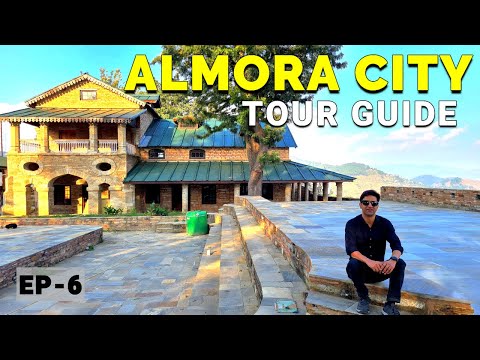
- Ancient Kumaoni temples and colonial-era heritage buildings provide authentic ceremonial backdrops unavailable in most hill destinations
- Panoramic views of the Nanda Devi and Trishul peaks create a naturally dramatic setting for outdoor ceremonies and receptions
- Deeply spiritual character — proximity to sacred ghats and pilgrimage sites suits Ganga-inspired and religious family gatherings
- Intimate town scale is ideal for small to mid-size celebrations where privacy and exclusivity matter more than grand ballroom capacity
- Rich local folk traditions — Kumaoni music, dance, and cuisine — add genuine cultural texture to welcome dinners and pre-wedding events
- Pleasant May–June weather offers clear mountain air and comfortable temperatures, avoiding the extremes of the plains during the same period
Top Venues in Almora

The Kumaon
Shervani Hilltop Resort
Zostel Homes Almora
Compare Almora with Other Top Destinations
Frequently Asked Questions
Is Almora a good destination for a heritage or palace-style wedding?
Yes. Almora is particularly well-suited to heritage weddings. The town's colonial bungalows, traditional Kumaoni architecture, and ancient temple settings provide authentic ceremonial backdrops with genuine historical character. While Almora does not have palace-scale properties in the Rajasthani sense, its heritage properties and ridge-top venues offer a distinctive Himalayan heritage aesthetic that is difficult to find elsewhere in North India.
What guest group sizes can Almora venues realistically accommodate?
Almora's venues are best suited to intimate to mid-size gatherings — typically between 30 and 150 guests. The local accommodation inventory is limited, and groups larger than 80–100 guests will need to be distributed across multiple properties. For very large weddings of 200 or more guests, the destination's infrastructure will be significantly stretched and a different location is likely more practical.
How do guests typically travel to Almora for a destination event?
Most guests travel by train to Kathgodam — the nearest railhead, well-connected to Delhi and major North Indian cities — and then by road to Almora, a journey of approximately two to three hours. Guests flying in use Pantnagar Airport, which handles limited domestic routes, followed by a road transfer. Coordinated group transfers from Kathgodam are strongly recommended for event groups.
What is the best time of year to hold a wedding or celebration in Almora?
May and June are the recommended months. During this period, mountain roads are fully accessible, skies are generally clear, temperatures are comfortably warm, and the Himalayan peaks are often visible — ideal for outdoor ceremonies and photography. The monsoon (July–September) and winter months (December–February) are best avoided for events.
What kinds of venues are available in Almora for events?
Almora offers heritage resorts, colonial bungalows, ridge-top boutique properties, and forest-edge eco-resorts. Most venues feature outdoor lawns or terraced gardens with Himalayan views. There are no large convention centres or grand ballrooms — the venue landscape strongly favours intimate, nature-integrated settings over large-format event spaces.
Is Almora suitable for a spiritual or religious gathering?
Yes, it is particularly well-suited. Almora's deep connection to Kumaoni pilgrimage culture, its ancient temples, and its proximity to sacred sites in the broader Kumaon region make it a genuinely resonant environment for spiritual gatherings, Ganga-inspired ceremonies, temple festivals, and religious family functions. The town's spiritual character is lived-in rather than staged for visitors.
Can local vendors in Almora handle catering and décor for a destination event?
Local caterers are well-equipped to provide authentic Kumaoni cuisine and can handle intimate to mid-size events. For larger groups or highly produced events requiring elaborate décor and staging, supplementing local vendors with teams from Haldwani or Nainital is advisable. Folk performers — musicians and dancers rooted in Kumaoni tradition — are genuinely accessible and add distinctive cultural programming.
How reliable is connectivity and infrastructure in Almora for event guests?
Mobile and internet connectivity in Almora is functional in the town centre but can be patchy at ridge-top and forest-edge properties. Power supply is generally reliable, though backup arrangements are standard practice for events. Road infrastructure is good during May–June but can be affected by landslides during the monsoon. Guests should be briefed on connectivity limitations in advance.
Is Almora a practical choice for a welcome dinner or pre-wedding celebration?
Yes. Almora's cultural richness makes pre-wedding programming particularly easy to make distinctive. A welcome dinner can draw on Kumaoni cuisine, local folk performers, and open-air settings under Himalayan skies. The town's arts tradition and accessible local talent mean that a culturally immersive welcome evening is genuinely achievable without importing entertainment from outside.
What makes Almora different from other Himalayan hill-town wedding destinations?
Almora's distinguishing qualities are its depth of Kumaoni cultural heritage, its ancient temple landscape, and its long history as a centre of arts and spirituality in the hills. Unlike more commercialised hill stations, Almora retains a lived-in, community character. This makes it particularly suited to couples and families who want a celebration rooted in genuine place and culture rather than a resort-packaged mountain experience.

Ready to explore venues in Almora?
Almora: Heritage Weddings, Spiritual Festivals & Himalayan Event Venues
◆Almora is a Kumaoni hill town in Uttarakhand best suited to heritage weddings, spiritual and religious gatherings, intimate destination weddings, and cultural festival events. Its primary vibe is serene and nature-rooted, shaped by ancient temples, forested ridgelines, and panoramic Himalayan views. The recommended season is May–June, when mountain roads are clear and the weather is comfortably warm. Accessibility requires planning — guests typically travel by road from Kathgodam (the nearest railhead, roughly 90 km away) — making Almora most practical for groups willing to embrace a genuine mountain journey. The local hospitality ecosystem is modest in scale, favouring intimate gatherings over large-format weddings.
Almora at a Glance
| Attribute | Detail |
|---|---|
| Best For | Palace / Heritage Wedding, Ganga / Spiritual Festival Gathering, Destination Wedding, Wedding Reception |
| Primary Vibe | Nature & Serene |
| Other Vibes | Spiritual, Cultural, Heritage |
| Best Season | Summer (May–June) |
Why Choose Almora?
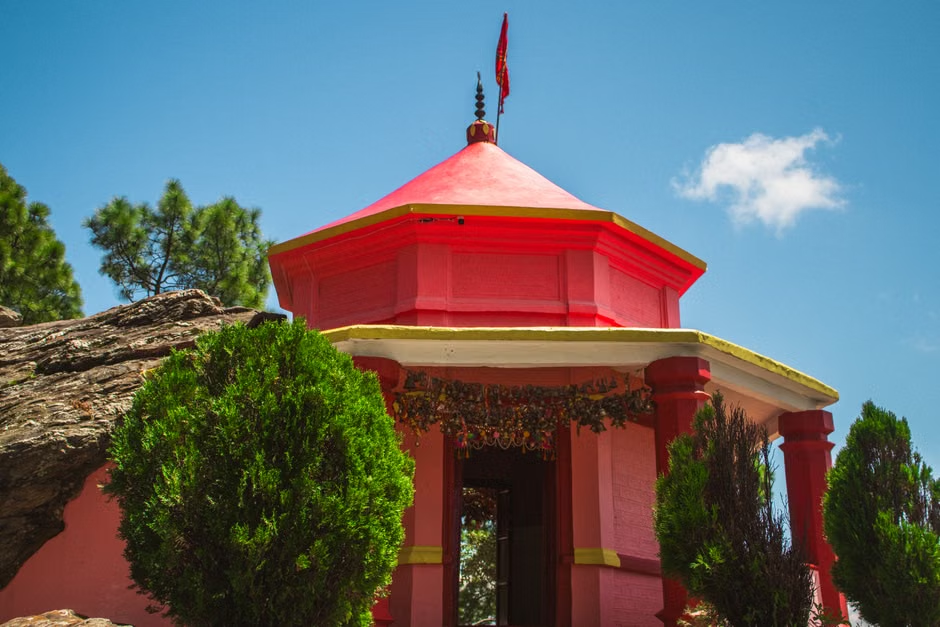
- Authentic Kumaoni heritage: Almora's ancient temples — including Nanda Devi Temple and Chitai Golu Devta Temple — and colonial-era bazaars provide ceremonial and photographic backdrops that are genuinely distinctive, not manufactured for tourism.
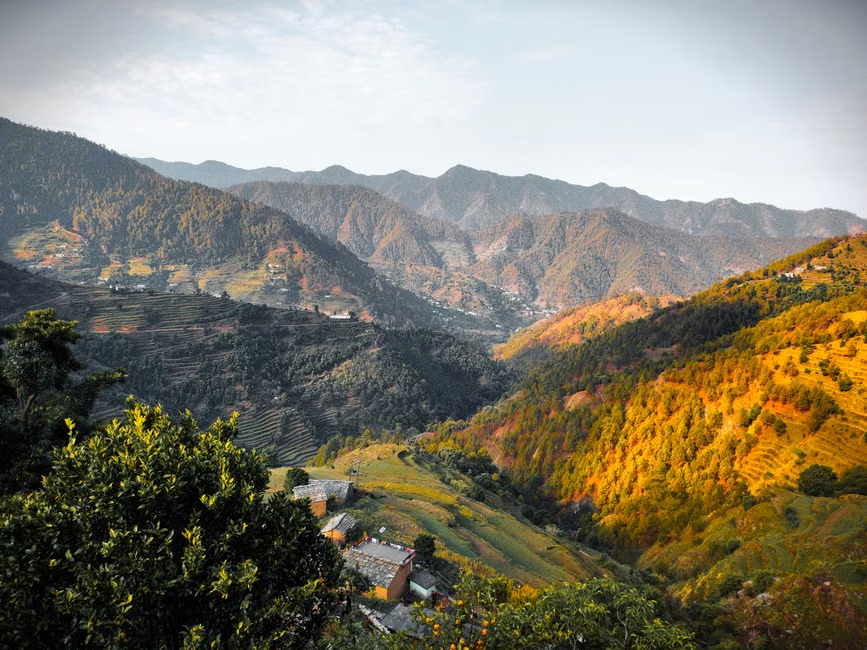
- Himalayan panoramas as a natural stage: The town sits on a horseshoe-shaped ridge with unobstructed views of Nanda Devi, Trishul, and Panchachuli peaks — a setting that elevates outdoor ceremonies and receptions without requiring elaborate décor.
- Spiritual depth for religious and cultural events: Proximity to sacred sites, ghats, and pilgrimage routes makes Almora particularly well-suited to Ganga-inspired gatherings, temple festivals, and religious family functions where the environment itself carries ceremonial meaning.
- Privacy and exclusivity at a small scale: Almora's limited accommodation inventory, while a logistical consideration for large groups, works in favour of intimate celebrations — a small guest list can effectively take over a property and enjoy a level of exclusivity rarely possible in larger resort towns.
- Rich living folk culture: Kumaoni music (Jagar, Jhora), traditional dance, and local cuisine offer genuine cultural programming for welcome dinners, pre-wedding evenings, and cultural festival gatherings — not imported entertainment, but rooted local tradition.
- Cooler summer alternative: During May–June, when plains cities are at peak heat, Almora offers comfortable temperatures and clear mountain air, making it a practical and appealing choice for guests travelling from Delhi, Lucknow, or other North Indian cities.
Which Celebrations Work Best in Almora?
Palace / Heritage Wedding: Almora's colonial bungalows, heritage havelis, and properties built around traditional Kumaoni architecture provide the character and visual richness that define a heritage wedding. The town's historical layering — Chand dynasty, British hill-station era, and living temple culture — gives these celebrations an authenticity that purpose-built resort venues cannot replicate.
Ganga / Spiritual Festival Gathering: The Kumaon region's deep connection to pilgrimage culture, sacred rivers, and Himalayan spirituality makes Almora a natural host for gatherings centred on ritual, devotion, or spiritual community. Events tied to the lunar calendar, religious milestones, or family puja traditions find a genuinely resonant environment here.
Destination Wedding: For couples who want a wedding that feels like a journey — where the travel itself becomes part of the experience — Almora delivers. The mountain road approach, the ridge-top setting, and the sense of arrival at somewhere genuinely remote create a destination wedding atmosphere that is earned rather than staged.
Wedding Reception: Outdoor lawns and terraces with Himalayan backdrops make for memorable reception settings, particularly in the May–June window when evenings are clear and cool. The intimate scale of local venues suits receptions for close family and friends rather than large open-invitation gatherings.
Intimate Wedding: Almora is arguably at its strongest for very small weddings — 30 to 80 guests — where the priority is depth of experience over scale. The local venue inventory is well-matched to this size, and the natural environment does much of the atmospheric work.
Welcome Dinner / Pre-Wedding Celebration: A welcome dinner in Almora can draw on Kumaoni cuisine, local folk performers, and bonfire settings under open Himalayan skies — creating a genuinely memorable first evening that sets the tone for the celebrations to follow. The town's cultural richness makes pre-wedding programming here particularly easy to make distinctive.
Cultural Festival Gathering: Almora has a long tradition of hosting cultural events — it was a centre of the Kumaoni arts revival in the 20th century and continues to support local theatre, music, and craft. Groups organising cultural festival gatherings will find a community and infrastructure that understands and values this kind of event.
Venues & Event Spaces
Almora's event venue landscape is characterised by heritage properties and mountain resorts rather than large convention-style hotels. The most common venue types include:
- Heritage resorts and colonial bungalows converted for hospitality use, typically offering outdoor lawns, terraced gardens, and mountain-view event spaces suited to ceremonies and intimate receptions.
- Ridge-top boutique properties with panoramic Himalayan views, where the outdoor setting itself functions as the primary event backdrop — minimal décor required.
- Temple courtyards and traditional community spaces that can be engaged for spiritual gatherings, cultural festivals, and religious family functions, subject to local permissions and community coordination.
- Forest-edge camps and eco-resorts in the broader Kasar Devi and surrounding areas, suited to informal welcome dinners, pre-wedding gatherings, and small cultural events with a nature-immersive character.
Almora does not have large banquet halls or convention centres capable of hosting several hundred guests under one roof. Groups planning events here should expect a distributed, multi-space approach rather than a single grand venue.
Best Time to Celebrate
May and June are the recommended months for events in Almora. During this period, the monsoon has not yet arrived, mountain roads are fully accessible, daytime temperatures are pleasantly warm (typically in the low-to-mid 20s Celsius), and evenings are clear enough for outdoor ceremonies and receptions. The Himalayan peaks are often visible without cloud cover, which matters significantly for photography and the overall visual experience of an outdoor event.
The monsoon season (July through September) brings heavy and often unpredictable rainfall to the Kumaon hills. Landslides are a genuine risk on the approach roads, outdoor events become impractical, and the logistical complexity of moving a guest group safely increases substantially. This period is best avoided for any event that depends on reliable access and outdoor spaces.
October and November represent a partial shoulder season — the monsoon has cleared, skies are often crisp, and the autumn light is beautiful. However, temperatures begin to drop noticeably by November, and some higher-altitude access roads may become less reliable. Small, flexible gatherings can work well in October; November requires careful planning around accommodation heating and guest comfort.
December through February brings genuine winter cold to Almora, with temperatures that can drop to near or below freezing at night. Frost is common, outdoor events are not feasible, and the overall guest experience for a celebration is significantly constrained. This period is not recommended for events.
March and April see the town warming gradually, with rhododendrons in bloom and increasingly pleasant conditions. However, pre-monsoon weather can be unpredictable, with occasional hail and unsettled afternoons. These months can work for very small, flexible gatherings but carry more weather risk than May–June.
Getting There & Local Connectivity
Almora is a hill town, and reaching it requires a road journey — there is no railway station in the town itself, and the nearest airport serves limited routes. Guests should plan their travel with this in mind, and event organisers should build buffer time into arrival and departure schedules.
The nearest railhead is Kathgodam, which is well-connected to Delhi and other major North Indian cities by overnight and day trains. From Kathgodam, the road journey to Almora takes approximately two to three hours depending on traffic and road conditions — a scenic but winding mountain drive that some guests find tiring after a long train journey. Arranging coordinated group transfers from Kathgodam is strongly recommended for larger guest groups.
The nearest airport is Pantnagar, which handles limited domestic routes. Guests flying in will still face a road journey of roughly two hours or more to reach Almora. For guests travelling from cities not directly connected to Pantnagar, the practical entry point remains Delhi by air, followed by an overnight train to Kathgodam and then road transfer — a journey that typically spans 10–14 hours door to door from Delhi.
Within Almora itself, the town is compact and walkable in its central areas, but the surrounding ridge properties and event venues are spread across hillside roads that require vehicles. Local taxis and hired vehicles are the standard mode of group movement. Road quality is generally adequate in the May–June season but can deteriorate during and after the monsoon.
Local Vendor & Hospitality Ecosystem
Almora has a functioning but modest hospitality ecosystem. Local caterers with genuine expertise in Kumaoni cuisine are available and can provide a distinctive culinary experience — dishes like Bhatt ki Churkani, Aloo ke Gutke, and Bal Mithai are authentic to the region and add real character to event menus. However, the range of large-scale catering operations capable of serving several hundred guests simultaneously is limited, and event organisers planning for larger groups may need to bring in additional catering support from Haldwani or Nainital.
Décor and event production vendors are present in the town but are generally better suited to intimate, nature-integrated aesthetics than to elaborate ballroom-style productions. For highly produced events requiring significant floral, lighting, or staging infrastructure, supplementing local vendors with teams from larger nearby cities is advisable.
Photography and videography professionals familiar with mountain light and heritage settings are available locally and in the broader Kumaon region — the area has a well-established tradition of arts and visual culture that translates into a reasonable pool of creative talent. Folk performers — musicians, dancers, and storytellers rooted in Kumaoni tradition — are genuinely accessible and add authentic cultural programming that is difficult to replicate elsewhere.
Accommodation capacity across the town and its immediate surroundings is limited. For guest groups larger than 80–100 people, accommodation will need to be distributed across multiple properties, which requires careful coordination of transport and scheduling. This is a genuine logistical consideration, not merely a minor inconvenience, and should be factored into event planning from the outset.
Pros & Things to Consider
Why Almora Works Well
- Genuinely distinctive heritage and spiritual character — not a manufactured resort environment
- Panoramic Himalayan views that serve as a natural, high-impact event backdrop
- Authentic Kumaoni cultural programming (folk music, dance, cuisine) readily available
- Excellent fit for intimate celebrations where depth of experience matters more than scale
- Pleasant May–June weather offers a comfortable alternative to plains heat during the same period
- Very safe environment with a welcoming local community accustomed to visitors
Things to Consider
- Limited accommodation inventory means large guest groups must be distributed across multiple properties — requires careful coordination
- Road-only access from the nearest railhead (approximately 2–3 hours) can be tiring for elderly guests or those with mobility considerations
- Monsoon season (July–September) makes the destination effectively unsuitable for outdoor events and introduces genuine safety risks on approach roads
- Event production infrastructure is modest — highly produced, large-scale events will require importing vendors and equipment from larger cities
- Internet and mobile connectivity can be patchy, particularly at ridge-top and forest-edge properties — worth flagging to guests in advance
- The town's intimate scale, while an asset for small celebrations, means there is limited flexibility to scale up if a guest list grows significantly
When Almora May Not Be the Right Fit
- Large weddings (200+ guests): The local accommodation and venue inventory cannot comfortably absorb very large guest groups without significant logistical complexity. A destination with larger resort infrastructure would serve these events better.
- Monsoon-season events: Any celebration planned between July and September faces genuine risks — heavy rainfall, potential road closures, and the near-impossibility of outdoor events. If the event date falls in this window, a different destination or season is strongly advisable.
- Guests with limited mobility or long-haul international travel: The multi-leg journey (flight to Delhi or Pantnagar, train or road to Kathgodam, mountain road to Almora) is demanding. For guest groups that include elderly relatives, young children, or international travellers on tight schedules, a more directly accessible destination may be more considerate.
- Highly produced, large-format events: Events requiring extensive staging, large floral installations, or significant technical production infrastructure will find the local vendor ecosystem stretched. Groups with ambitious production requirements are better served by destinations with a more mature event production industry.