
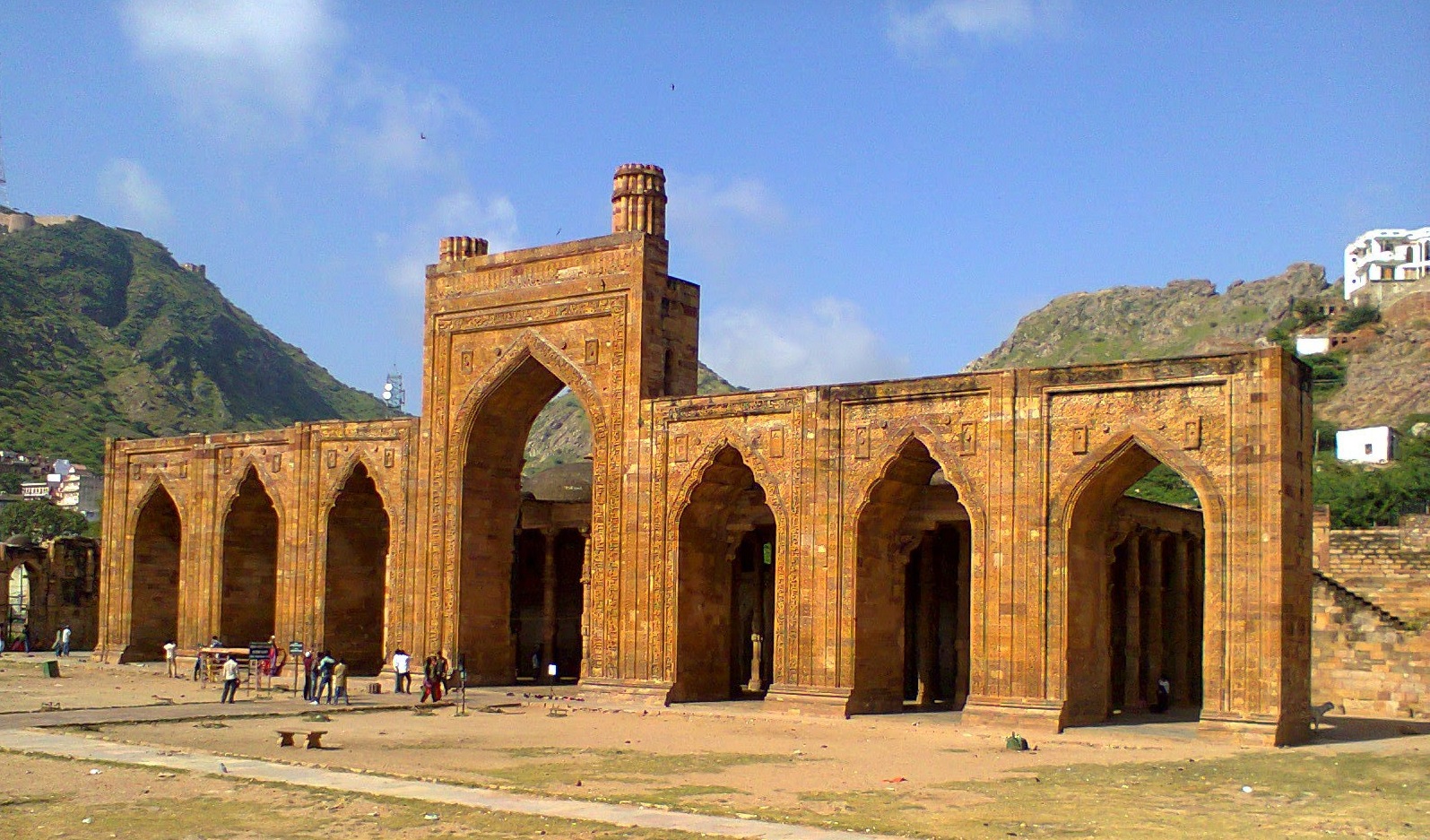
Why Ajmer is Perfect for Your Celebration
- Home to the Dargah Sharif of Khwaja Moinuddin Chishti — one of India's most visited pilgrimage sites, ideal for spiritually anchored gatherings
- Gateway to Pushkar, adding sacred lake rituals, Brahma Temple visits, and fair-season energy to any celebration itinerary
- Deep-rooted Teej and Gangaur festival traditions make it one of Rajasthan's most authentic settings for these celebrations
- Ajmer Junction is a major railway hub with direct trains from Delhi, Mumbai, Jaipur, and Ahmedabad — easy for outstation guests
- Heritage havelis, lakeside properties near Pushkar, and mid-scale banquet venues offer varied event backdrops
- Vibrant local folk music, Qawwali traditions, and Rajasthani craft markets enrich the cultural experience for guests
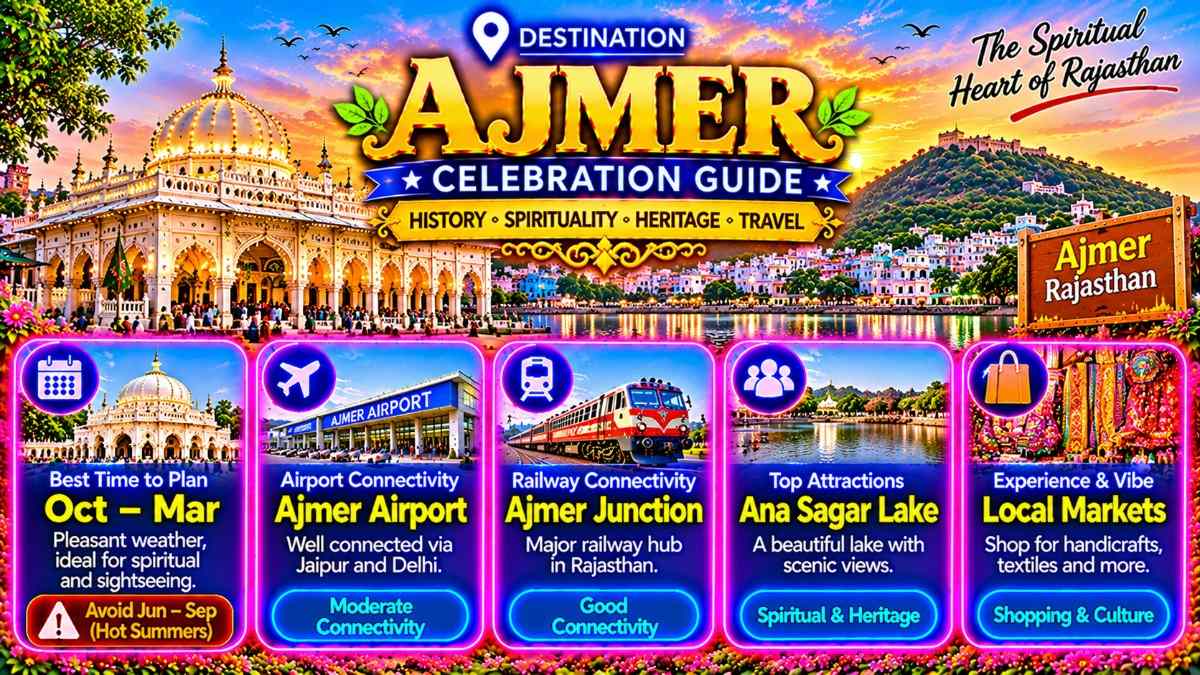
Top Venues in Ajmer
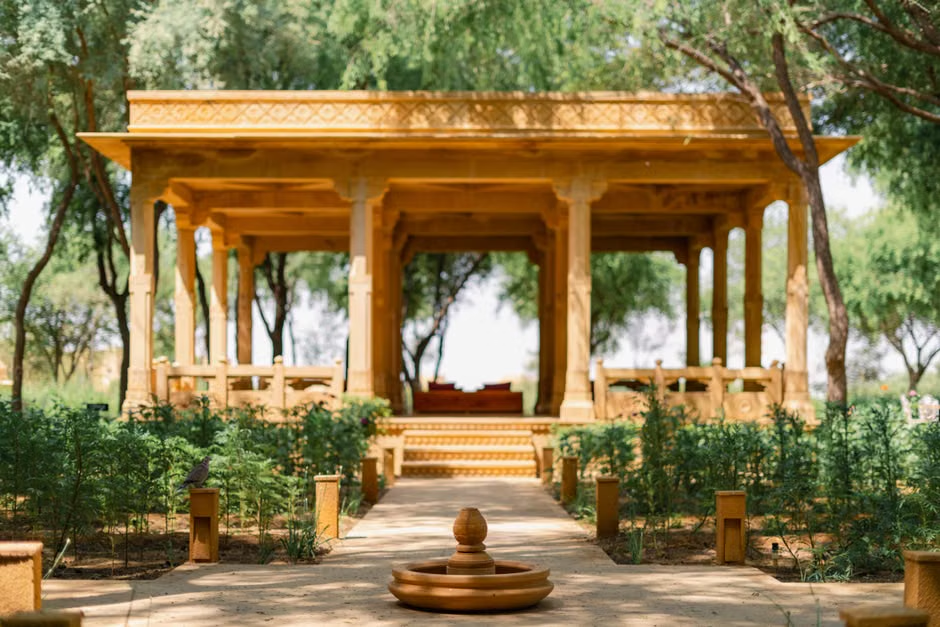
The Westin Pushkar Resort & Spa
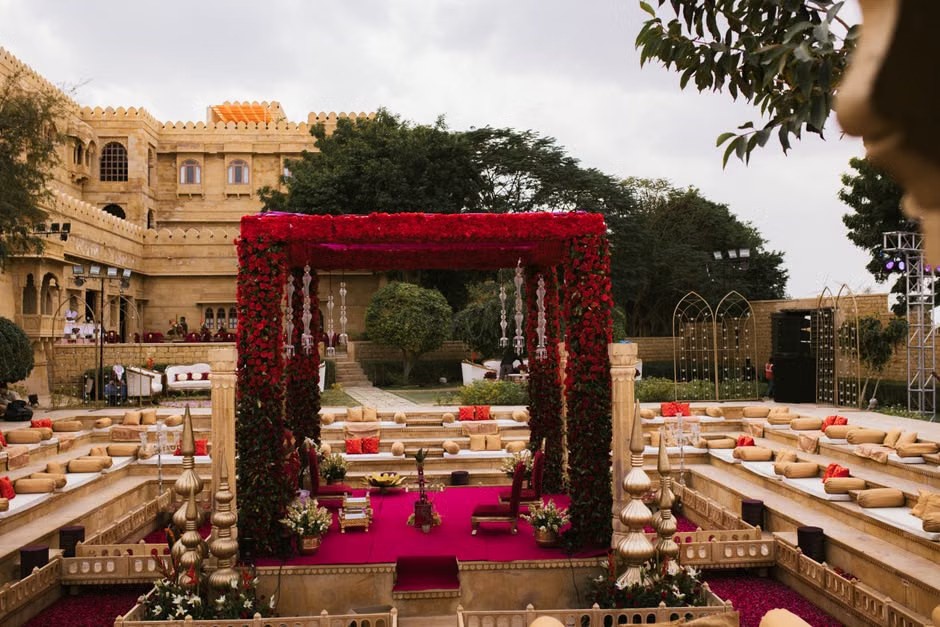
Mansingh Palace Ajmer
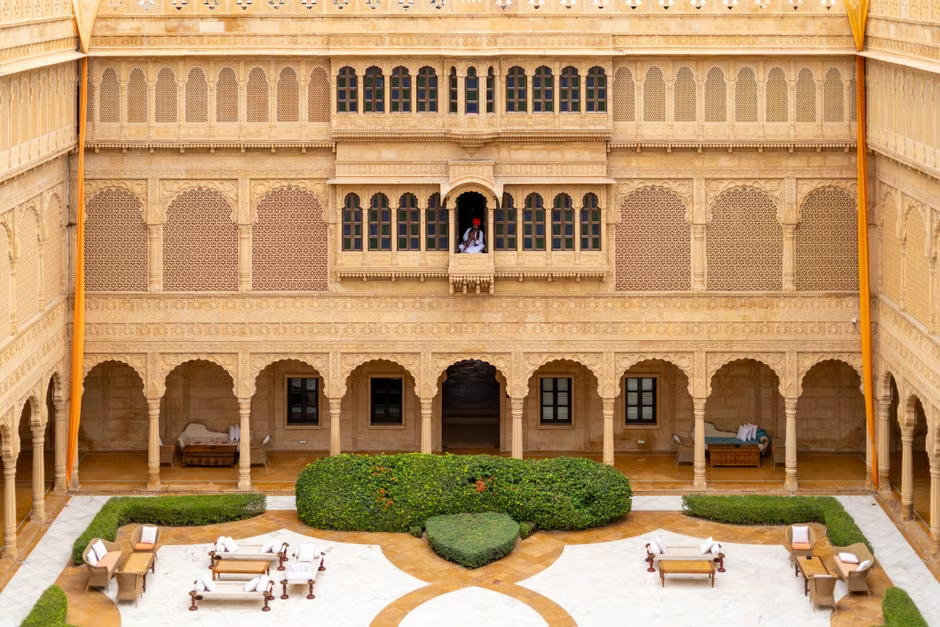
Hotel Pushkar Palace
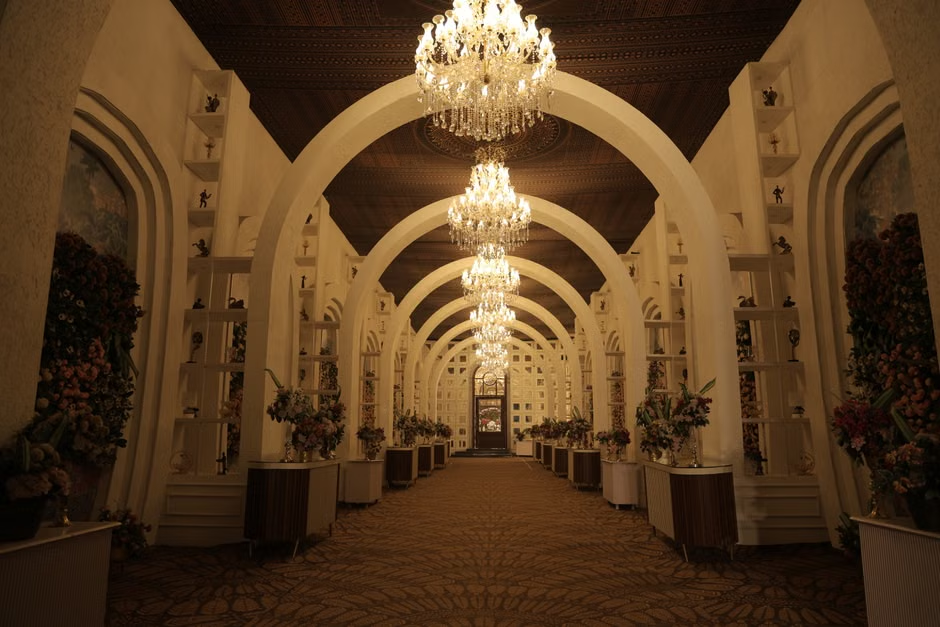
Hotel Nagpal Continental
Compare Ajmer with Other Top Destinations
Frequently Asked Questions
Is Ajmer a good destination for a Teej or Gangaur celebration?
Yes, Ajmer is one of the most authentic settings in Rajasthan for Teej and Gangaur. These festivals are deeply embedded in local community life — processions, traditional puja rituals, and folk performances are genuine rather than staged. Families celebrating these occasions here experience the festivals as a living cultural event, which adds real meaning to the gathering.
What makes Ajmer suitable for a spiritual or pilgrimage gathering?
Ajmer is home to the Dargah Sharif of Khwaja Moinuddin Chishti, one of India's most visited pilgrimage sites, and sits just 11 km from Pushkar's sacred Brahma Temple and holy lake. This makes it a natural base for pilgrimage-linked family gatherings, Urs visits, mannat fulfilment ceremonies, and interfaith spiritual retreats — with local hospitality well-attuned to this kind of event.
What guest group sizes can Ajmer venues realistically support?
Ajmer and nearby Pushkar together can comfortably support gatherings of roughly 100 to 400 guests across the available heritage properties, resort venues, and banquet spaces. Very large events exceeding 500 guests may find the local high-capacity venue inventory limited, and planners should assess specific venue capacities carefully during the site-selection stage.
What is the best time of year to plan an event in Ajmer?
November through February is the optimal window. The weather is cool and dry, with daytime temperatures typically between 15°C and 25°C — comfortable for outdoor ceremonies, processions, and evening gatherings. March onwards brings rising heat, and the monsoon (July–September) disrupts outdoor setups. October is a usable shoulder month for indoor events but is not ideal for outdoor celebrations.
How do guests typically travel to Ajmer for an event?
Most outstation guests travel by rail — Ajmer Junction is a major railhead with direct services from Delhi, Jaipur, Mumbai, and Ahmedabad. Guests flying in use Kishangarh Airport, approximately 30 km from the city centre, though flight routes are limited and many guests will connect through Jaipur and travel onward by road. Advance coordination of local transfers is recommended for large groups.
What kinds of venues are available for events in and around Ajmer?
The venue landscape includes heritage havelis and hotel banquet halls within Ajmer city, and resort-style properties with outdoor lawns near Pushkar, roughly 11 km away. The overall character leans toward intimate, culturally textured spaces rather than large convention-style facilities. Pushkar venues are strictly vegetarian and alcohol-free, which is an important planning consideration.
Is Ajmer suitable for a religious family function?
Yes. Ajmer's spiritual atmosphere, proximity to major pilgrimage sites, and established local catering and hospitality ecosystem make it well-suited to religious family functions — whether a post-pilgrimage gathering, a prayer ceremony, or a religious milestone celebration. Caterers experienced in traditional vegetarian Rajasthani menus and ritual-aligned event formats are readily available locally.
What cultural entertainment options are available for events in Ajmer?
Ajmer has genuine depth in Qawwali performance — artists of real calibre are locally based given the city's connection to the Dargah. Rajasthani folk performers including Manganiyar musicians, Langa singers, and Kalbelia dancers are accessible through established local contacts. These are living traditions rather than tourist-facing recreations, which gives events here a distinctive cultural authenticity.
How far in advance should I plan an event in Ajmer during the Pushkar Fair season?
If your event falls in November, coinciding with the Pushkar Camel Fair, plan at least 6–9 months in advance. Accommodation demand across Ajmer and Pushkar peaks sharply during this period, and venue availability tightens considerably. For events outside the fair window — December through February — 3–6 months of lead time is generally sufficient for most event scales.
Are there local event management vendors in Ajmer, or should I bring in an external planner?
Local vendors for catering, decoration, folk entertainment, and photography are well-established in Ajmer, particularly for religious and cultural events. However, full-service destination wedding event management companies with complex multi-day production capabilities are fewer locally. Families planning elaborate events often engage a planner based in Jaipur who has established Ajmer-area vendor relationships and can coordinate remotely.
Can Ajmer work for a corporate offsite or community gathering?
Yes, for smaller to mid-sized corporate offsites or community gatherings with a cultural or wellness theme, Ajmer and nearby Pushkar offer a distinctive, spiritually grounded setting that stands apart from conventional conference destinations. Resort properties near Pushkar provide meeting spaces alongside wellness and cultural programming. Very large corporate events requiring extensive AV infrastructure may find the local supply more limited.

Ready to explore venues in Ajmer?
Ajmer: Spiritual Celebrations, Cultural Gatherings & Event Venues
◆Ajmer is best suited to spiritually anchored celebrations, religious family functions, and culturally rooted gatherings rather than large-scale luxury destination weddings. Its primary identity is Spiritual & Soulful — shaped by the Dargah Sharif of Khwaja Moinuddin Chishti, proximity to Pushkar's sacred lake, and deep Rajasthani folk traditions including Teej and Gangaur. The best season runs from November through February, when the climate is cool and dry. Ajmer is well-connected by rail from major cities, making outstation guest travel manageable, though air connectivity remains limited. The hospitality base spans heritage properties and mid-scale hotels, with luxury resort options available in nearby Pushkar.
Ajmer at a Glance
| Attribute | Detail |
|---|---|
| Best For | Teej & Gangaur Celebration, Spiritual / Pilgrimage Gathering, Cultural Festival Gathering, Religious Family Function |
| Primary Vibe | Spiritual & Soulful |
| Other Vibes | Heritage & Folk, Culturally Immersive, Community-Centred |
| Best Season | Winter (November–February) |
Why Choose Ajmer?
- Unmatched spiritual significance: The Dargah Sharif of Khwaja Moinuddin Chishti draws millions of visitors annually and lends a profound, cross-community spiritual dimension to any pilgrimage gathering or religious family function held here.
- Gateway to Pushkar: Situated just 11 km from Ajmer, Pushkar adds the sacred Brahma Temple, the holy Pushkar Lake, and the world-famous Pushkar Camel Fair backdrop — extending the cultural and spiritual canvas available to event planners considerably.
- Authentic Teej and Gangaur traditions: Ajmer and its surrounding region observe Teej and Gangaur with genuine community participation — processions, folk music, traditional dress, and rituals that are deeply embedded in local life rather than staged for tourists.
- Strong railway connectivity: Ajmer Junction is a major railhead on the Western Railway network, with direct services from Delhi, Mumbai, Jaipur, Ahmedabad, and Jodhpur — making it one of the more accessible smaller Rajasthani cities for outstation guests arriving without a car.
- Rich Qawwali and folk music culture: The Qawwali tradition at the Dargah and the Rajasthani folk performance ecosystem (Manganiyar musicians, Kalbelia dancers) give events here a distinctive, living cultural texture that is genuinely hard to replicate elsewhere.
- Relatively intimate scale: For families seeking a meaningful, community-centred celebration without the overwhelming scale of a large wedding city, Ajmer's more contained hospitality ecosystem can feel appropriately personal and grounded.
Which Celebrations Work Best in Ajmer?
Teej & Gangaur Celebration: Ajmer is among the most authentic settings in Rajasthan for these festivals. Gangaur processions, traditional puja rituals, and the community energy surrounding these events are deeply woven into local life — families celebrating Teej or Gangaur here experience the festival as a genuine cultural immersion rather than a curated backdrop.
Spiritual / Pilgrimage Gathering: The Dargah Sharif makes Ajmer one of India's foremost pilgrimage destinations. Families organising a gathering around a Urs visit, a mannat fulfilment, or a broader interfaith spiritual retreat will find the city's infrastructure and local hospitality well-attuned to this kind of event.
Cultural Festival Gathering: Between the Pushkar Fair season, Qawwali evenings at the Dargah, and Rajasthani folk performance traditions, Ajmer offers a genuinely rich cultural festival context. Groups gathering to experience and celebrate Rajasthani culture — music, craft, cuisine, and ritual — find the city a compelling base.
Religious Family Function: Whether a post-pilgrimage family gathering, a prayer ceremony, or a religious milestone celebration, Ajmer's spiritual atmosphere and range of banquet and heritage spaces make it a natural fit for family functions with a devotional dimension.
Temple Festival: The region's temple calendar — including the Brahma Temple at Pushkar and several significant shrines within Ajmer — supports temple festival gatherings that draw extended families and community groups across seasons, with the winter months being particularly comfortable for outdoor participation.
Local Folk Festival / Fair: The Pushkar Camel Fair (typically November) and various local melas tied to the Rajasthani festival calendar make Ajmer and its surroundings a genuinely active fair and folk festival destination. Groups attending or organising around these events find the local ecosystem well-practised in managing large, diverse crowds.
Venues & Event Spaces
Ajmer's event venue landscape is characterised by heritage properties and mid-scale hotels within the city, complemented by a growing cluster of resort and spa properties in nearby Pushkar that offer more expansive outdoor lawns and larger guest capacities. Within Ajmer itself, banquet halls attached to established hotels, heritage havelis adapted for private functions, and open courtyards within older properties form the core of the available inventory. For events requiring larger outdoor spaces, lakeside resort settings near Pushkar — roughly 11 km away — provide a more scenic and spacious alternative. The overall venue character leans toward intimate, culturally textured spaces rather than grand ballroom-style convention facilities. Groups planning large-scale destination weddings with multiple simultaneous function spaces may find the local inventory more limited than in larger Rajasthani cities, but for gatherings of a few hundred guests seeking authentic ambience, the options are genuinely well-suited.
Best Time to Celebrate
The winter months of November through February are the clear optimal window for events in Ajmer. Daytime temperatures during this period typically range from around 15°C to 25°C, with cool evenings that make outdoor ceremonies, processions, and evening gatherings comfortable. The dry air and clear skies also mean that decorations, floral arrangements, and outdoor setups hold up well without the humidity-related challenges of other seasons.
November is particularly significant because it coincides with the Pushkar Camel Fair, which brings a festive, culturally charged atmosphere to the entire region — though it also means accommodation demand peaks sharply and advance planning becomes essential. December and January offer the most reliably comfortable conditions for daytime outdoor events. February remains pleasant, with Gangaur preparations beginning to build toward the end of the month.
March through June sees temperatures climb steeply, regularly exceeding 38°C by May and June — outdoor events become genuinely uncomfortable and logistically challenging, and guest experience suffers significantly. July through September brings the monsoon, with rainfall disrupting outdoor setups and road connectivity in parts of the region. October is a transitional shoulder month — temperatures begin to ease but can still be warm, and the post-monsoon humidity lingers; it is usable for indoor events but is not the preferred window for outdoor celebrations.
Getting There & Local Connectivity
By rail, Ajmer Junction is the most practical and reliable arrival point for most guests. It sits on the main Delhi–Ahmedabad and Delhi–Mumbai Western Railway lines, with direct express services from Jaipur (approximately 2 hours), Delhi (approximately 6–7 hours), and Mumbai (approximately 16–18 hours). For guests travelling from across Rajasthan, rail is typically the most straightforward option.
By air, Kishangarh Airport serves the Ajmer region and is located approximately 30 km from the city centre. However, flight connectivity at Kishangarh remains limited — the airport handles a relatively small number of routes, and guests flying from cities not directly served will need to connect through Jaipur (approximately 130 km away) or another major hub. For events with a significant proportion of outstation guests arriving by air, factoring in the Jaipur connection and onward road transfer is important in the planning timeline.
By road, Ajmer is well-connected via National Highway to Jaipur, Jodhpur, and Udaipur. The Jaipur–Ajmer expressway makes the Jaipur–Ajmer leg a smooth approximately 2-hour drive. Local movement within Ajmer and between Ajmer and Pushkar is manageable by hired vehicles and auto-rickshaws, though coordinating group transport for a large guest contingent requires advance arrangement with local operators, as the city's public transport infrastructure is not designed for large event groups.
Local Vendor & Hospitality Ecosystem
Ajmer's vendor ecosystem is well-developed for religious and cultural events — caterers experienced in both vegetarian Rajasthani cuisine (essential for Pushkar-adjacent events, where the town itself is strictly vegetarian) and broader North Indian menus are readily available. Decorators familiar with traditional Rajasthani motifs, marigold and marigold-and-rose arrangements, and folk-festival aesthetics are part of the established local supply chain.
For Qawwali performances, folk musicians, and Rajasthani cultural troupes, Ajmer has genuine depth — the city's proximity to the Dargah means that Qawwali artists of real calibre are locally based, and Rajasthani folk performers (Manganiyar, Langa, Kalbelia) are accessible through established local contacts. Photography and videography vendors with experience in pilgrimage and religious event documentation are also present, though for high-end cinematic wedding production, some planners bring specialist teams from Jaipur or Delhi.
The hospitality ecosystem is more attuned to mid-scale and heritage-style events than to ultra-luxury production. Event management companies with full-service destination wedding capabilities are fewer here than in larger Rajasthani cities, so families planning complex multi-day events may benefit from engaging a planner based in Jaipur who has established Ajmer-area vendor relationships.
Pros & Things to Consider
Why Ajmer Works Well
- Genuinely one of India's most spiritually significant cities — adds authentic meaning to pilgrimage gatherings and religious functions
- Teej and Gangaur celebrations here carry real cultural depth, not a tourist-facing recreation
- Strong rail connectivity makes outstation guest travel straightforward for most of India
- Proximity to Pushkar significantly expands the venue, scenic, and cultural options available within a short drive
- Qawwali and Rajasthani folk performance traditions are locally rooted and genuinely accessible
- Relatively less crowded than major Rajasthani wedding cities during the winter season, giving events a more intimate character
Things to Consider
- Air connectivity is limited — guests flying in from distant cities will typically need a connecting journey via Jaipur, adding travel time and complexity
- The luxury venue inventory is smaller than in Jaipur or Udaipur; very large events (500+ guests) may find the local supply of high-capacity spaces constrained
- Pushkar, just 11 km away, is a strictly vegetarian and alcohol-free town — events planned with Pushkar venues must account for these restrictions, which may not suit all guest profiles
- The Pushkar Camel Fair period (typically November) drives significant accommodation demand across the region — early booking is essential and last-minute planning becomes very difficult
- Full-service destination wedding event management companies are fewer locally; complex productions may require bringing in external planners
When Ajmer May Not Be the Right Fit
- Large-scale luxury destination weddings: Families seeking a grand, multi-function destination wedding with extensive luxury venue options and a deep pool of high-end event management companies will generally find larger Rajasthani cities better equipped for that scale and style.
- Guests with limited travel flexibility: If a significant portion of the guest list is flying in from cities without direct Kishangarh connections and finds long road transfers difficult, the connectivity gap may create a poor guest experience.
- Outdoor events planned for summer: Any celebration requiring comfortable outdoor spaces between April and June will face serious heat-related challenges — Ajmer's summer temperatures make outdoor event planning genuinely impractical during this window.
- Events requiring a strictly non-vegetarian or alcohol-inclusive venue near Pushkar: If the event is based in or around Pushkar specifically, the town's vegetarian and alcohol-free character is a hard constraint that cannot be worked around within Pushkar itself.