
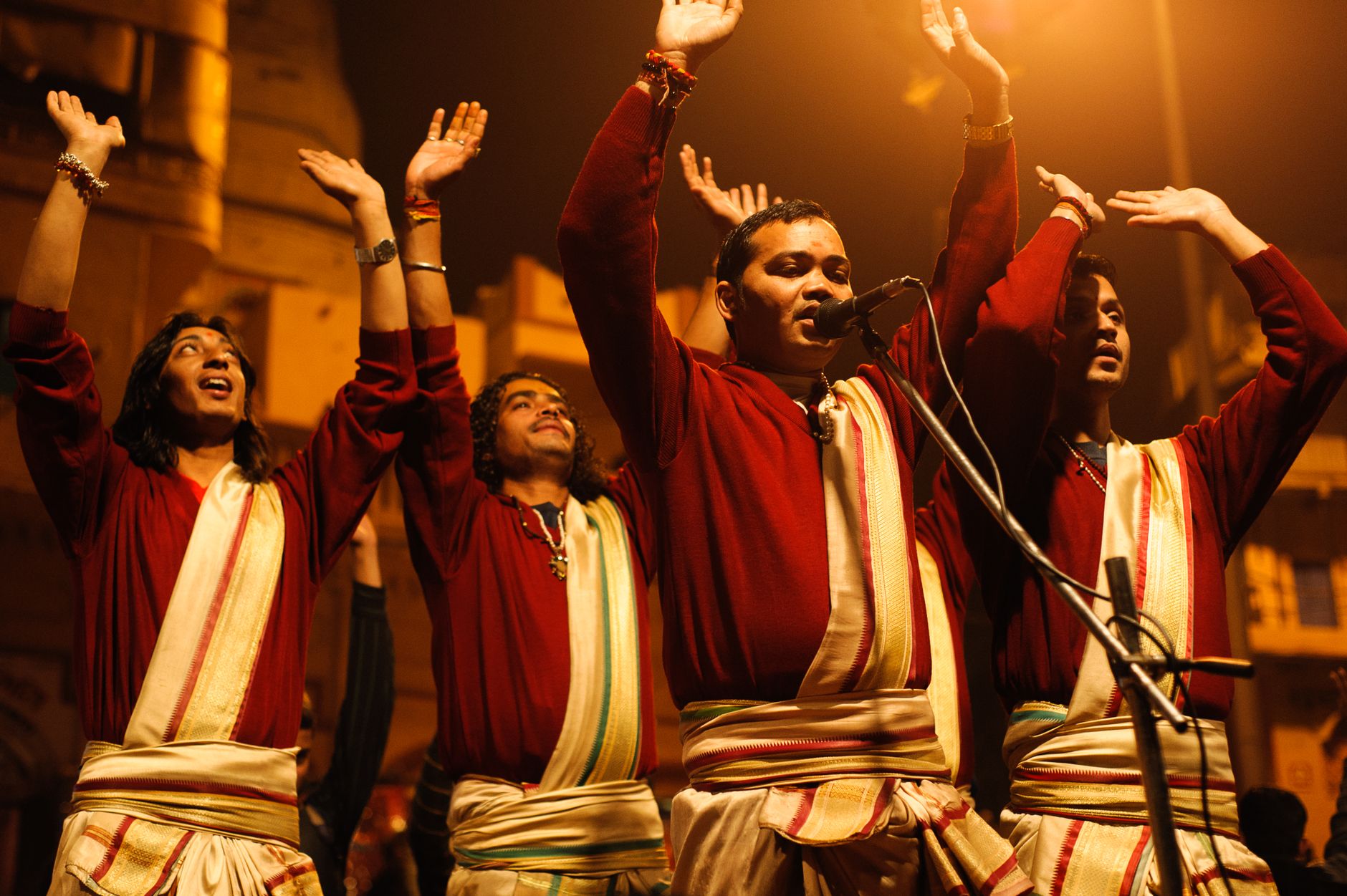
Devotional Bhajans for Every Sacred Occasion
Religious cermony in Surat
Traditional Bhajan Mandali Services in Surat
A Traditional Bhajan Mandali transforms any religious ceremony in Surat into a profoundly spiritual experience. Whether you are organising a Satyanarayan puja at your home in Adajan, a jagran in Vesu, or a namkaran in Katargam, the soul-stirring sounds of a devotional singing ensemble set the divine tone that no recorded playlist can replicate. Surat's deep-rooted Gujarati and Vaishnav traditions make the city especially receptive to live kirtan mandali performances, and families across the city continue to regard live bhajan singing as an essential part of every auspicious occasion. Happiffie helps you find, compare, and book the right group effortlessly.
Quick Answer
A Traditional Bhajan Mandali is a live group of trained devotional singers and accompanying musicians who perform bhajans, kirtans, and stotras at religious ceremonies such as pujas, jagrans, namkarans, and griha-pravesh rituals. In Surat, these groups typically include 5–15 performers with instruments like harmonium, tabla, manjira, and dholak, and are available for bookings starting from approximately ₹5,000 for a 2-hour session.
What Is a Traditional Bhajan Mandali and Why Does It Matter?
A Traditional Bhajan Mandali is a structured collective of vocalists and instrumentalists who specialise in performing sacred compositions from Hindu scripture, including padas of Mirabai, dohas of Kabir, and Vaishnav kirtans rooted in the Pushti Marg tradition. Unlike a casual music group, a proper mandali follows a sequence — mangalacharan, stuti, main kirtan, and aarti — that mirrors the liturgical rhythm of the ceremony itself. In Surat, where Gujarati devotional culture is especially vibrant, a skilled Bhajan Sangh group understands local ragas, regional dialects of bhajan poetry, and the specific customs of communities like Patidar, Jain Vaishnav, and Swaminarayan followers. This cultural literacy is what separates a memorable ceremony from a generic performance. When you hire a devotional singing ensemble from Happiffie, you get performers who are rehearsed, punctual, and aligned with your pandit's schedule — so the spiritual flow of your event is never disrupted.
Which Ceremonies in Surat Are Best Suited for a Bhajan Mandali?
A Traditional Bhajan Mandali is appropriate for a wide spectrum of Hindu religious ceremonies in Surat. Jagran nights — especially during Navratri, Shivratri, and Ram Navami — are the most popular occasions, where a kirtan mandali performs through the night in community halls in areas like Piplod, Pal, and Varachha. Satyanarayan kathas, namkaran samskaras, griha-pravesh pujas, and mundan ceremonies all benefit from live bhajan singing that creates a continuous sacred soundscape. Anniversary pujas at family temples in Katargam and Sagrampura frequently feature a Bhajan Sangh group performing for 3–4 hours. Even corporate religious events — such as foundation-stone ceremonies (bhumi pujas) for factories in Sachin GIDC or Pandesara — are increasingly incorporating religious bhajan performers to elevate the spiritual significance of the occasion. Happiffie's listings cover all these ceremony types with filters for guest count, duration, and budget.
How Much Does a Traditional Bhajan Mandali Cost in Surat?
Pricing for a Traditional Bhajan Mandali in Surat depends on group size, performance duration, instruments included, and the occasion type. A small 5-member group with harmonium, tabla, and manjira for a 2-hour home puja typically starts at ₹5,000–₹8,000. A mid-sized 8–10 member devotional singing ensemble suitable for a community hall jagran ranges from ₹12,000 to ₹22,000 for a 4-hour session. Full-night jagran packages with a 12–15 member kirtan mandali, sound system, and lighting can reach ₹35,000–₹60,000 depending on the neighbourhood and the group's reputation. For festive devotional music during large events like temple anniversaries or public Navratri celebrations in Surat's Diamond District, prices can exceed ₹75,000. Always confirm whether travel allowance, sound equipment rental, and prasad arrangements are included in the quoted price. Happiffie displays itemised quotes so you can compare fairly.
Setups and Formats: Choosing the Right Configuration
Not every ceremony calls for the same setup. For an intimate puja at a 2BHK apartment in Althan or Vesu, a compact 4–5 member traditional bhajan mandali with acoustic instruments is ideal — minimal noise intrusion and just the right spiritual warmth. A mid-format setup of 8–10 members works well for bungalow courtyards, society clubs, or small mandirs in areas like Puna or Udhna. Large community events at town halls, dharamshalas in Sagrampura, or open grounds in Pal Gam benefit from a full-format 12–15 member group with a PA system. Some religious bhajan performers also offer a hybrid format where live singing is layered with tasteful backing tracks for outdoor venues where acoustics are challenging. Understanding the venue's acoustic profile and neighbour proximity is essential before deciding on amplification. Happiffie's vendor profiles specify which setups each group offers, so you never face last-minute surprises.
How Do You Plan a Successful Bhajan Mandali Booking in Surat?
Successful spiritual event planning starts well before the ceremony date. First, finalise your muhurat with your pandit, because the mandali's start time must align with the puja's auspicious timing — usually at a specific tithi and nakshatra. Book your Traditional Bhajan Mandali at least 3–4 weeks in advance for regular occasions, and 6–8 weeks ahead for peak seasons like Navratri, Diwali, or Shravan. Share the ceremony type, expected guest count, venue address, and any specific bhajan requests (for example, Swaminarayan kirtans or Sai bhajans) at the time of booking. Confirm whether the group handles their own harmonium tuning, mic setup, and breakdown — or if you need to arrange a separate sound vendor. For puja and havan arrangements, check if the mandali customarily performs after the havan or simultaneously in a separate space. Happiffie's booking flow captures all these details upfront, ensuring the group arrives fully prepared.
Bhajan Mandali Setup Types: A Practical Comparison for Surat Ceremonies
Expert Recommendation
Best for Intimate Home Pujas
Best for Community Jagrans
Best for Large Temple or Public Events
Best for Budget-Conscious Families
Best for Traditional Sampraday Ceremonies
Best for Destination or Outdoor Venue Ceremonies
How to Choose the Right Option
✅ Pre-booking Checklist
- Confirm your ceremony muhurat with the pandit before fixing the mandali's start time
- Decide on group size based on your venue dimensions and expected guest count
- Specify your community tradition (Swaminarayan, Vaishnav, general Hindu) at the time of enquiry
- Share a preferred bhajan list at least 7 days before the event
- Clarify whether the group provides their own PA system or if you need a separate sound vendor
- Confirm travel allowance, overtime rates, and break requirements for long-duration events
- Book 4–6 weeks in advance for regular occasions and 8 weeks ahead during festival seasons
🎯 Selection Criteria
- Repertoire match: Does the group know the specific bhajans and kirtans your ceremony requires?
- Community experience: Has the group performed for your sampraday or religious tradition before?
- Group size and instrument configuration relative to your venue's acoustic capacity
- Punctuality and professionalism: Will they arrive on time and coordinate with your pandit?
- Duration flexibility: Can they extend or shorten the performance without disrupting the ceremony flow?
💰 Cost / Quality Factors
- Group size directly scales cost — each additional member typically adds ₹800–₹1,500 to the base rate
- Peak festival dates (Navratri, Shravan Mondays, Ram Navami) command 20–40% premium pricing
- Sound system inclusion can add ₹3,000–₹8,000 to the package but eliminates a separate vendor
- Travel distance beyond Surat city limits (e.g., Surat rural or Navsari) adds a conveyance surcharge
- Years of experience and community reputation significantly influence quality and reliability
- Venue type (indoor, outdoor, temple) affects the mandali's instrument and mic choices
⚠️ Common Mistakes to Avoid
- Booking without checking if the group is familiar with your specific religious tradition or sampraday
- Not confirming the start time with both the pandit and the mandali independently — misalignment disrupts the puja
- Assuming sound equipment is always included without verifying it explicitly in the booking
- Forgetting to discuss overtime rates before the event — unexpected extensions can cause disputes
- Booking a very large group for a small apartment venue where acoustic volume becomes uncomfortable
- Delaying booking during peak festive seasons, leading to unavailability of reputed groups
People Also Ask
How many members should a bhajan mandali have for a home puja in Surat?
What is the difference between a kirtan mandali and a bhajan mandali?
Can a bhajan mandali perform for Jain or Swaminarayan ceremonies in Surat?
How far in advance should I book a bhajan mandali for Navratri in Surat?
What instruments does a traditional bhajan mandali typically use?
Is a sound system included in a bhajan mandali booking, or do I need to arrange it separately?
Can I request specific bhajans or limit the repertoire to a particular deity?
What is the typical duration of a bhajan mandali performance for a puja in Surat?
Related Experiences on Happiffie
Devotional Bhajan Groups in Trichy
Sacred Voices for Every Ceremony
Sacred Bhajan Groups in Manali
Perfect Boutonnieres for Surat Weddings
Move Every Guest Seamlessly in Udaipur
Sacred Music for Every Celebration
Frequently Asked Questions
What is a Traditional Bhajan Mandali, and what do they perform at ceremonies in Surat?
How much does a Traditional Bhajan Mandali cost for a home puja in Surat?
Which localities in Surat have the highest demand for bhajan mandali bookings?
Can I book a kirtan mandali specifically for a Swaminarayan ceremony in Surat?
Is it necessary to provide food or refreshments for the bhajan mandali during long events?
What should I do if my puja gets delayed and the mandali's scheduled time shifts?
Do bhajan mandali groups in Surat also perform at non-residential venues like temples or dharamshalas?
How do I know if a bhajan mandali is experienced enough for a large public event in Surat?
Key Takeaways
- A Traditional Bhajan Mandali elevates any Hindu religious ceremony in Surat by providing live, liturgically structured devotional music tailored to your occasion and community tradition.
- Group sizes range from 4 to 15 members with pricing from ₹5,000 for compact home-puja setups to ₹75,000+ for full-night jagran packages with sound systems.
- Surat's diverse religious communities — Swaminarayan, Pushti Marg, Vaishnav, Jalaram — each have specific repertoire expectations; always verify the group's sampraday experience before booking.
- Book at least 4–6 weeks ahead for regular ceremonies and 8 weeks in advance for Navratri, Shravan, or Shivratri to secure a reputed Bhajan Sangh group.
- Always confirm muhurat alignment with your pandit before locking the mandali's performance schedule to maintain the spiritual continuity of the ceremony.
- Sound system inclusion, travel surcharges, and overtime rates are key cost variables — request an itemised quote to compare accurately on Happiffie.
- Sharing a specific bhajan list at least one week before the event ensures the devotional singing ensemble performs repertoire that resonates with your guests and ceremony intent.
Book Your Traditional Bhajan Mandali in Surat Today
Compare devotional singing ensembles, check availability, and get itemised quotes — all in one place on Happiffie.
Explore Bhajan Mandalis
Are you a Vendor? Grow Your Business with Happiffie!
- High intent verified leads
- Reverse auction opportunities
- AI business tools & insights
- Dedicated vendor dashboard
- Grow your business, your way
It's free & takes less than 2 minutes!