
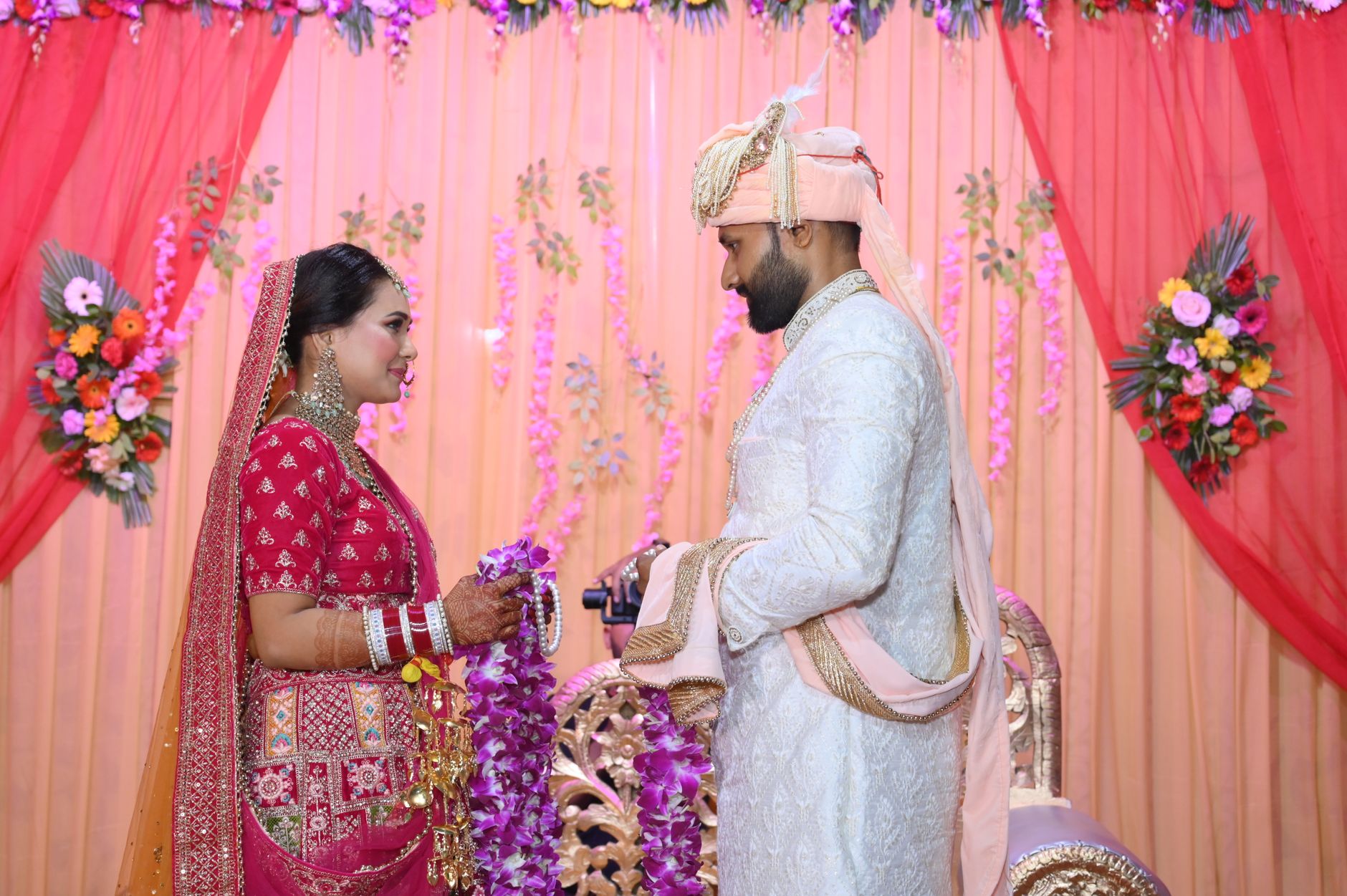
Traditional Varmala in Srinagar
Religious cermony in Srinagar
Traditional Varmala in Srinagar: Complete Guide
The Traditional Varmala is one of the most visually stunning and emotionally charged moments of any Indian wedding — the instant when the bride and groom exchange floral garlands to formally accept each other as life partners. In Srinagar, this sacred ritual blends Hindu wedding garland customs with the valley's legendary floral heritage, producing garlands woven from roses, marigolds, and rare Kashmiri blooms that simply cannot be replicated elsewhere. Whether you are planning an intimate riverside celebration near the Dal Lake ghats or a grand banquet hall affair in Rajbagh, understanding the Varmala ceremony in its Kashmiri context — from wedding flower decoration choices to bridal mandap setup — will help you create a moment your family will treasure for generations.
Quick Answer
A Traditional Varmala, also called Jai Mala, is the ritual exchange of flower garlands between bride and groom during a Hindu wedding. It symbolises mutual acceptance and marks the formal beginning of their union. In Srinagar, garlands are typically crafted from roses, marigolds, lotus buds, and local Kashmiri flowers, and the exchange is performed at the mandap amid Vedic chants, family blessings, and celebratory music.
What Makes a Traditional Varmala Special in Srinagar?
Srinagar's floriculture tradition gives the Traditional Varmala a distinct identity that sets it apart from ceremonies in other Indian cities. The Kashmir Valley produces some of India's finest roses, tulips, and lotus flowers, meaning locally sourced garlands carry a fragrance and freshness that imported blooms cannot match. A well-crafted Hindu wedding garland from a Srinagar florist typically features tight-set Rajnigandha tuberose interspersed with local pink roses and silver foliage, creating a garland that photographs beautifully against the backdrop of walnut-wood mandap pillars or a shikara-themed stage. The Varmala ceremony here is also woven into broader Kashmiri wedding traditions, where the Lagan ceremony precedes the garland exchange, and the family's pandit recites Sanskrit shlokas specific to the region's Shaivite customs. Understanding these layers helps couples and families plan a ceremony that feels authentic rather than assembled from a generic checklist. Couples planning outdoor mandap setups near Nishat Bagh or the Shalimar Garden find that the natural floral environment of Srinagar enhances the Jai Mala ritual in ways no artificial decoration can replicate.
Garland Styles and Floral Choices for Your Varmala Ceremony
Choosing the right flowers is the single most important aesthetic decision for any Varmala ceremony. In Srinagar, florists typically offer four distinct garland styles: the classic marigold-and-rose garland (INR 800–2,500 per pair), the premium Rajnigandha-and-orchid garland (INR 3,000–6,000 per pair), the designer garland with ribbon detailing and imported roses (INR 6,000–12,000 per pair), and the heirloom-style garland using dried flowers, pearls, and Kashmiri embroidery accents (INR 10,000–18,000 per pair). The floral garland exchange is not purely decorative — the weight, length, and fragrance of the garland are considered auspicious, and many families consult their pandit before finalising the flower variety. Local florists near Lal Chowk and the Residency Road flower market are best approached at least four to six weeks before the wedding date, especially during peak wedding season between April–June and October–November when demand for fresh blooms surges sharply. A well-planned wedding flower decoration brief should specify whether you want scent-heavy flowers (tuberose, jasmine) or visually bold ones (marigold, red rose) to suit your photography and videography requirements.
How Much Does a Traditional Varmala Cost in Srinagar?
The overall cost of a Traditional Varmala in Srinagar depends on three main components: the garlands themselves, the mandap or stage decoration, and any additional ceremonial props like garland-holder trays, floral crowns, or petal cannons. Basic garlands from local vendors start at INR 800–1,500 per pair and are suitable for budget-conscious families. Mid-range designer garlands with mixed exotic flowers average INR 4,000–8,000 per pair. If you also commission a bridal mandap setup specifically designed to frame the Jai Mala ritual — with a floral arch, petal shower arrangement, and coordinated seating for the pandit — total decoration costs can range from INR 25,000 to INR 1,20,000 depending on the scale and venue. Venue type matters significantly: a houseboat ceremony on Dal Lake requires waterproof flower arrangements and additional logistical coordination, adding roughly 20–30% to standard costs. Garden venues like those in Brein or Hyderpora offer more straightforward setups. Wedding ceremony planning budgets in Srinagar should always allocate a 10–15% buffer for last-minute floral replacements, especially during monsoon months when fresh flower availability fluctuates.
Kashmiri Wedding Traditions Around the Varmala Ritual
The Traditional Varmala in a Kashmiri Hindu, or Kashmiri Pandit, wedding carries ritual significance that goes beyond the aesthetic spectacle. The ceremony is embedded within a sequence of rites: the Tilak (groom's anointing), the Sankalp (ceremonial pledge), and then the Varmala exchange, after which the couple proceeds to the Saat Phere. Kashmiri wedding traditions dictate that the bride's side presents the groom's garland first, followed by the groom garlanding the bride — a sequence that signifies the bride's family formally welcoming the groom. In many Kashmiri Pandit families, the garlands are made with specific white flowers associated with purity, rather than the bright marigold combinations more common in North Indian ceremonies. The Jai Mala ritual is also accompanied by naad (ceremonial music with shehnai and dhol), and the moment is considered so auspicious that elders often shower the couple with akshata (rice and turmeric). Families planning ceremonies in venues like Tagore Hall or private farmhouses in Soura should discuss these customs with the venue coordinator and pandit well in advance to ensure the space and schedule accommodate every traditional element without compromise.
How to Plan a Flawless Varmala Ceremony: Mandap, Timing, and Logistics
Executing a flawless Varmala ceremony in Srinagar requires precise coordination between your florist, pandit, photographer, and venue manager. The bridal mandap setup should be finalised at least two days before the wedding so that fresh flowers can be arranged on the morning of the event. Ensure the mandap height allows the groom to be lifted by his brothers or friends — a beloved tradition during the floral garland exchange — without hitting the floral canopy above. Lighting is critical: warm golden lighting between 3,000–4,000 Kelvin makes floral colours pop on camera, while harsh white light washes out delicate Kashmiri blooms. Timing matters too — the Hindu wedding garland exchange is ideally scheduled in the muhurta window specified by the pandit, typically in the late morning or early evening. Coordinate with your videographer to position at least two cameras to capture both the bride's and groom's expressions simultaneously. In Srinagar's outdoor venues, wind can be a significant challenge for petal showers and lightweight garlands, so consult with your decorator about weighted garland bases or sheltered staging areas. Wedding ceremony planning in a hilly, valley terrain like Srinagar also requires contingency plans for sudden weather changes between April and June.
Traditional Varmala Setup Options in Srinagar: A Practical Comparison
Expert Recommendation
Best for Intimate Celebrations
Best for Large Guest Counts
Best for Budget-Conscious Couples
Best for Traditional Kashmiri Ceremonies
Best for Destination Weddings
Best for Modern Couples
How to Choose the Right Option
✅ Pre-booking Checklist
- Confirm the muhurta timing with your pandit before fixing the ceremony schedule
- Book your florist 4–6 weeks ahead, especially during April–June and October–November peak seasons
- Align garland flower choices with your overall wedding flower decoration palette and photography brief
- Inspect the bridal mandap setup two days before the wedding to allow fresh flower arrangement on the wedding morning
- Brief your photographer on a two-camera setup to capture both bride's and groom's expressions during the floral garland exchange
- Arrange a weather contingency plan and sheltered staging for any outdoor venue in Srinagar
- Confirm the ritual sequence (Tilak, Sankalp, Varmala) with your pandit and share it with your venue coordinator
- Allocate a 10–15% budget buffer for last-minute floral replacements or weather-related changes
🎯 Selection Criteria
- Florist's experience with Kashmiri wedding traditions and local bloom sourcing
- Garland style compatibility with your overall wedding theme and colour palette
- Venue suitability for both the ritual sequence and the playful groom-lifting tradition
- Pandit's familiarity with Kashmiri Pandit or regional Hindu Varmala customs
- Photography and videography setup alignment with mandap height and lighting
- Seasonal flower availability and freshness guarantee from your chosen florist
💰 Cost / Quality Factors
- Flower variety and sourcing (local Kashmiri vs. imported) significantly impacts freshness and cost
- Venue type — houseboat, garden, or banquet hall — affects logistics cost by 20–40%
- Season affects flower price and availability; monsoon months carry supply risk
- Mandap scale and structural complexity drive decoration costs independently of garlands
- Custom or heirloom garland craftsmanship requires specialist florists who charge a premium
- Photography and lighting equipment upgrades add INR 5,000–15,000 but dramatically improve ceremony memories
⚠️ Common Mistakes to Avoid
- Booking a florist too late during peak season, resulting in limited or wilted flower options
- Ignoring wind and weather conditions when planning an outdoor floral garland exchange setup
- Choosing garland colours that clash with bridal outfit or mandap decoration palette
- Skipping a pre-wedding mandap inspection, leading to last-minute decoration adjustments on the wedding day
- Failing to brief the photographer on the ritual sequence, resulting in missed candid moments during the Jai Mala ritual
- Underestimating the budget buffer needed for a Traditional Varmala in a destination or outdoor setting
People Also Ask
What flowers are traditionally used in a Varmala ceremony in Srinagar?
What is the difference between Varmala and Jai Mala?
How early should I book a florist for the Varmala ceremony in Srinagar?
Can I have an outdoor Traditional Varmala in Srinagar near Dal Lake?
What is the approximate cost of a Hindu wedding garland in Srinagar?
How does Kashmiri Pandit tradition differ in the Varmala ritual?
What mandap setup works best for a Traditional Varmala in Srinagar?
Is wedding ceremony planning in Srinagar different from other Indian cities?
Related Experiences on Happiffie
South Indian Varmala in Vadodara
Floral Garland Exchange in Udaipur
Telugu Garlands for Your Sacred Union
Sacred Blooms for Jain Ceremonies
Sacred Blooms for Your Church Wedding
Mandap Chandelier Setup in Nashik
Tamil Wedding Ceremony Items in Surat
Frequently Asked Questions
What is a Traditional Varmala in a Srinagar Hindu wedding?
Which Srinagar neighbourhoods are best for an outdoor Varmala ceremony?
How many garlands are needed for a Traditional Varmala?
Can non-Kashmiri couples have a Traditional Varmala ceremony in Srinagar?
What is the best time of year for a Varmala ceremony in Srinagar?
How do I ensure my Varmala garlands stay fresh throughout the ceremony?
Does Happiffie help with full wedding ceremony planning in Srinagar?
Key Takeaways
- The Traditional Varmala is a sacred floral garland exchange that marks the formal acceptance between bride and groom in a Hindu wedding.
- Srinagar's rich floriculture heritage makes it uniquely suited for exceptional Varmala ceremonies using locally grown roses, lotus, and Rajnigandha.
- Garland costs in Srinagar range from INR 800 to INR 18,000 per pair depending on flower variety, craftsmanship, and season.
- Kashmiri Pandit traditions follow a specific ritual sequence — Tilak, Sankalp, then Varmala — often with white flowers and shehnai accompaniment.
- Outdoor venues near Dal Lake, Shalimar Bagh, and Nishat Bagh offer iconic backdrops but require weather contingency planning.
- Book florists 4–6 weeks in advance during peak wedding seasons to secure fresh, premium Kashmiri blooms.
- A well-coordinated bridal mandap setup, professional lighting, and a two-camera photography brief are essential to capture the Varmala ceremony perfectly.
- Happiffie connects Srinagar couples with trusted local vendors for every element of their Traditional Varmala and broader wedding ceremony planning needs.
Plan Your Perfect Traditional Varmala in Srinagar
Discover verified local florists, mandap decorators, and ceremony planners on Happiffie — and create a Varmala moment your family will cherish forever.
Explore Srinagar Vendors
Are you a Vendor? Grow Your Business with Happiffie!
- High intent verified leads
- Reverse auction opportunities
- AI business tools & insights
- Dedicated vendor dashboard
- Grow your business, your way
It's free & takes less than 2 minutes!