
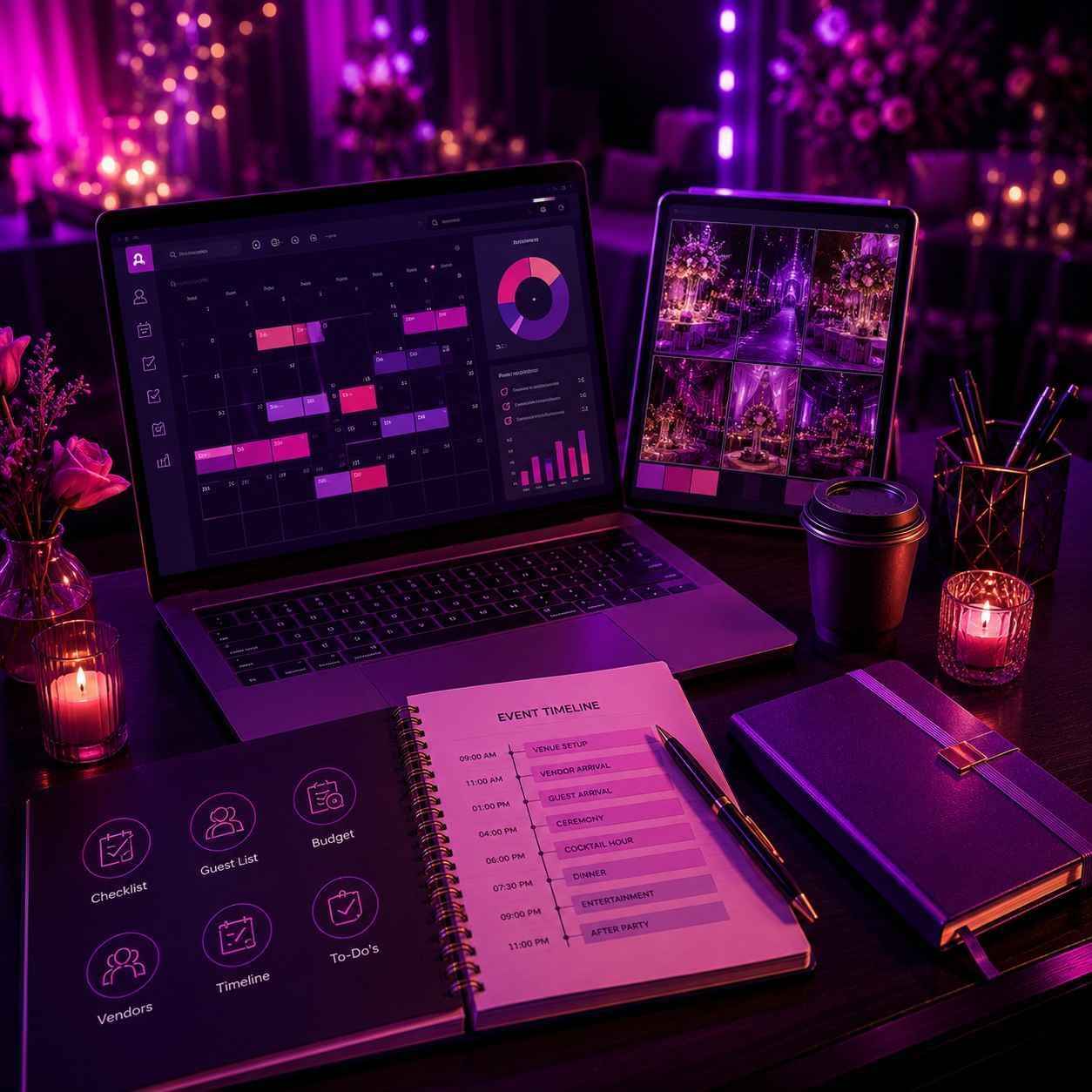
Explore All Planning Tools
Plan your wedding, party or special event with useful tools and resources that make organising every detail easier and more efficient.
Plan Better,
Celebrate with Happiffie
From organising your event details to managing budgets, guests, schedules and essential checklists, Happiffie brings useful planning tools together to make every celebration easier to plan and manage.
- Smart Planning ToolsOrganise important event details with easy-to-use planning tools
- Plan Your BudgetKeep track of event expenses and make informed planning decisions
- Ready-to-Use ChecklistsStay organised with practical checklists for every stage of your event





- 400+Curated Events
- 6Event Universes
- 1000+Verified Vendors
- 70+Locations
- 24/7Customer Support


Not sure which packages fits your celebration?
Let Hiya & Hanu help you find the perfect match!
Explore Celebration Packages- AI-Powered MatchingSmart suggestions for you
- Budget OptimizerGet the best experiences in your budget
- End-to-End SupportWe are with you at every step
Serving Celebrations across 75+ locations in India
Popular Smart Planning Tools for Streamlined Celebration Preparation
◆Planning a celebration involves countless details that must come together at the right time. From venue selection and supplier bookings to guest communication and final arrangements, every decision can influence another part of the occasion. As celebrations become larger and more sophisticated, managing this information manually can become increasingly difficult.
Popular smart planning tools offer a practical digital approach to organising these responsibilities. They provide structured ways to record information, monitor progress, review budgets and manage important deadlines. Rather than replacing personal judgement, these tools help organisers spend less time searching for information and more time making meaningful decisions.
Kerala provides an interesting environment for modern celebration planning. Traditional weddings can involve several ceremonies and extended family participation, while destination celebrations may require accommodation and transportation planning. Birthday parties, anniversaries, engagement functions and corporate occasions bring their own requirements.
A useful planning system should adapt to these differences. It should make complicated preparation easier to understand without making the planning process unnecessarily technical.
Why Smart Planning Tools Are Becoming Popular
Traditional planning often relies on notebooks, spreadsheets, messaging applications and individual reminders. These methods can work for smaller occasions, but information becomes harder to control as the number of suppliers and tasks increases.
Popular smart planning tools bring multiple planning areas into a more structured environment. Organisers can maintain task information, supplier details, budgets, guest records and schedules without constantly switching between unrelated sources.
This can also improve visibility. When a decision changes, organisers can identify which other arrangements may need updating.
For example, an increase in guest numbers may affect catering quantities, seating arrangements and transportation. A venue change can influence décor, entertainment and infrastructure requirements.
The value of a smart tool lies in making these relationships easier to manage.
Organising the Celebration Budget
Budget management is one of the most practical applications of planning technology. Celebration costs often come from many different sources, and smaller additions can accumulate quickly.
A digital budget system can separate expenditure into categories such as venue, catering, décor, photography, entertainment, transportation and hospitality.
This gives organisers a clearer view of projected and confirmed spending. It also makes supplier comparisons easier when several quotations are being considered.
For families planning celebrations in Kerala, this can be particularly useful when balancing traditional requirements with modern enhancements.
A smart budget does not simply focus on reducing expenditure. It helps identify where investment creates the greatest value and where unnecessary additions can be avoided.
Managing Suppliers More Effectively
Celebrations frequently involve numerous suppliers. Depending on the occasion, organisers may work with decorators, caterers, photographers, musicians, entertainers, florists, rental providers and venue teams.
Keeping all their information together can simplify communication. A planning system can store supplier contacts, quotations, service descriptions, payment details and agreed responsibilities.
This becomes valuable when comparing alternatives. Price alone may not indicate the strongest choice because suppliers can differ in inclusions, service levels and setup requirements.
Recording these differences allows organisers to make more informed selections.
For larger celebrations, supplier timelines can also be documented. This helps identify situations where several teams need access to the venue within the same period.
Improving Guest Organisation
Guest information can quickly become one of the most complicated parts of celebration preparation. Weddings may involve hundreds of invitees, while corporate functions can require attendee registration and structured communication.
Smart planning tools can help organise invitation status, attendance information, seating requirements and special arrangements.
Destination events require additional consideration. Guests may need accommodation, transfers, local transportation or programme information.
Keeping these details organised can make hospitality more consistent. It can also help organisers respond more quickly when guest numbers change.
The purpose is not to reduce hospitality to data. Instead, organised information gives hosts more time to focus on the personal side of welcoming people.
Creating Useful Planning Checklists
A celebration contains many small tasks that are easy to overlook. Finalising menus, confirming deliveries, approving décor, checking equipment and coordinating arrivals can all affect the final result.
Smart checklists turn these responsibilities into visible actions. Tasks can be arranged according to priority and timing, helping organisers understand what needs attention first.
Early preparation may focus on venue research and supplier selection. Later stages can involve final confirmations and guest arrangements. The final days can focus on delivery checks, payments and event-day responsibilities.
This staged approach reduces the risk of leaving important tasks until the last moment.
Supporting Wedding Planning in Kerala
Kerala weddings can involve multiple functions, traditional customs and different groups of family members. Each function may have its own venue, décor, catering and entertainment requirements.
Popular smart planning tools can help divide these responsibilities while maintaining a wider view of the complete wedding.
For example, a mehndi function may require different entertainment and décor from the main reception. A traditional ceremony may involve specific timing and family responsibilities.
Organisers can create separate planning areas for each function while keeping shared supplier and guest information accessible.
This makes multi-day celebrations easier to manage without treating every function as an isolated occasion.
Helping Birthday Celebrations Stay Organised
Birthday celebrations can appear simpler than weddings, but larger parties can involve significant preparation. Theme décor, entertainment, catering, cake arrangements, invitations and children's activities may all require separate suppliers.
Planning technology can help parents and hosts keep these details together.
For children's parties, timing is particularly important. Entertainment, food service and activities should be arranged around the age and attention span of the children attending.
For milestone birthdays, the focus may shift towards guest hospitality, décor, photography and entertainment.
A flexible planning system can accommodate both formats.
Supporting Corporate Occasions
Corporate events often depend on accurate schedules and clear responsibilities. Conferences, award ceremonies, annual gatherings, launches and business celebrations can involve speakers, attendees, technical teams, catering providers and venue staff.
Smart planning tools can help organisers maintain programme information and supplier requirements in one accessible location.
They can also support preparation for presentations, networking sessions and scheduled activities.
When several departments participate in an event, a shared planning structure can reduce uncertainty about responsibilities.
This is especially useful when the event needs to maintain a professional image while accommodating changing requirements.
Managing Décor and Venue Requirements
Venue and décor decisions are closely connected. A particular stage design may require specific dimensions, while furniture arrangements can influence guest movement and available space.
Planning tools allow organisers to record these practical details before installation begins.
For outdoor celebrations, organisers may need to consider weather contingencies, power access, lighting and temporary structures. Indoor functions can involve venue access windows, ceiling limitations and capacity restrictions.
Recording these details early can help suppliers prepare more accurately.
It also makes venue comparisons more meaningful because organisers can assess practical suitability rather than focusing only on appearance.
Planning Entertainment and Technical Services
Entertainment requirements can vary significantly between occasions. A wedding may include live music and DJs, while a corporate event may require presentation equipment, microphones and audiovisual support.
Popular smart planning tools can help organisers record technical requirements alongside programme schedules.
This is useful when several suppliers share venue access. Lighting teams, entertainment providers and decorators may need to complete setup in a particular sequence.
A clear schedule can reduce conflicts and help each supplier understand when their responsibilities begin.
Making Event Schedules More Practical
A celebration schedule should provide structure without becoming unnecessarily rigid. Ceremonies may run longer than expected, guests may arrive gradually and supplier setup can sometimes take additional time.
Digital scheduling tools allow organisers to build realistic timelines and adjust them as plans evolve.
Important activities can be placed in sequence while allowing reasonable gaps between major transitions.
This is particularly important for weddings and corporate functions where several activities need to happen within a fixed period.
The best schedule is one that supports the celebration rather than making everyone feel controlled by the clock.
Sharing Information With the Planning Team
Large occasions rarely depend on one person. Family members, professional planners, venue teams and suppliers may all contribute to preparation.
A central digital system can provide a shared reference point where appropriate. This reduces the need to repeatedly request the same information from different people.
It can also improve accountability. When responsibilities are clearly recorded, everyone can understand what has been agreed and what remains unfinished.
However, access should be managed carefully. Not every supplier needs access to every piece of information.
The planning structure should therefore balance collaboration with appropriate information control.
Choosing Tools According to Event Size
The most popular smart planning tools are not automatically the right choice for every celebration. A small family gathering may require only task management and budgeting, while a large wedding may need comprehensive supplier and guest management.
Choosing a system according to actual requirements prevents unnecessary complexity.
Organisers should consider how many people will use the tool, how many suppliers are involved and how frequently information will change.
Ease of use is also important. A sophisticated system that nobody updates regularly will provide limited value.
The best planning approach is one that fits naturally into the organiser's existing workflow.
Using Technology Without Losing the Human Touch
Digital planning can improve organisation, but celebrations remain fundamentally human experiences.
Technology can record a guest's dietary preference, but hospitality comes from how thoughtfully that preference is handled. It can store a supplier's delivery time, but successful execution still depends on professional communication.
Popular smart planning tools should therefore be treated as supporting infrastructure rather than replacements for human expertise.
Professional planners can use technology to strengthen administrative processes while focusing their attention on creative and interpersonal responsibilities.
Families can do the same when organising their own occasions.
Preparing for the Final Week
The final week should focus on confirmation rather than major decision-making. By this point, the venue, suppliers, guest arrangements and major programme details should already be established.
A planning tool can help organisers review outstanding tasks and identify anything that still needs attention.
Final guest numbers can be checked against catering and seating. Supplier arrival times can be reconfirmed. Payments, deliveries and venue access arrangements can also be reviewed.
Keeping this information organised can reduce unnecessary stress during the final days.
Building a More Organised Celebration Experience
Popular smart planning tools can make celebration preparation more structured without making it impersonal. They bring together budgets, supplier information, guest details, schedules and task management within a clearer workflow.
For Kerala weddings, birthdays, corporate occasions and family functions, this can reduce administrative pressure while improving decision-making.
The strongest planning systems are not necessarily the most complicated. They are the ones that make important information easy to find, update and understand.
When organisers combine suitable technology with experienced professionals and thoughtful preparation, celebrations can become easier to manage from the first decision to the final guest departure.
A well-organised planning process creates room for what matters most: welcoming people, enjoying the occasion and creating an experience that feels considered from beginning to end.
Frequently Asked Questions
1. What are popular smart planning tools for celebrations?
They are digital resources designed to organise celebration tasks, budgets, supplier information, guest details, schedules and other preparation requirements.
2. Can smart planning tools help with wedding preparation?
Yes. They can organise multiple wedding functions, supplier responsibilities, guest information, budgets, schedules and final confirmations.
3. Are these tools suitable for birthday parties?
Yes. They can help manage invitations, themes, entertainment, catering, cake arrangements, activities and supplier bookings.
4. Can corporate event organisers use smart planning tools?
Yes. Corporate organisers can use them for programme schedules, attendee information, supplier requirements, venue arrangements and technical planning.
5. How do smart tools help manage celebration expenses?
They can categorise projected and confirmed expenditure, making it easier to monitor costs and compare supplier quotations.
6. Can these tools manage supplier information?
Yes. Depending on the platform, organisers can maintain supplier contacts, quotations, responsibilities, payment information and important deadlines.
7. Do smart planning tools help with guest management?
They can organise attendance information, seating requirements, accommodation details, dietary preferences and transportation arrangements.
8. When should I start using a smart planning tool?
Starting during the early planning stage is usually beneficial because budgets, suppliers, guest details and schedules can be organised from the beginning.
9. Can a planning tool replace an event planner?
No. It can reduce administrative work, but professional planners provide practical experience, supplier knowledge, creative judgement and on-site expertise.
10. How do I choose the right smart planning tool?
Consider the celebration's size, number of suppliers, guest requirements, budget complexity, scheduling needs and how many people will participate in planning.