
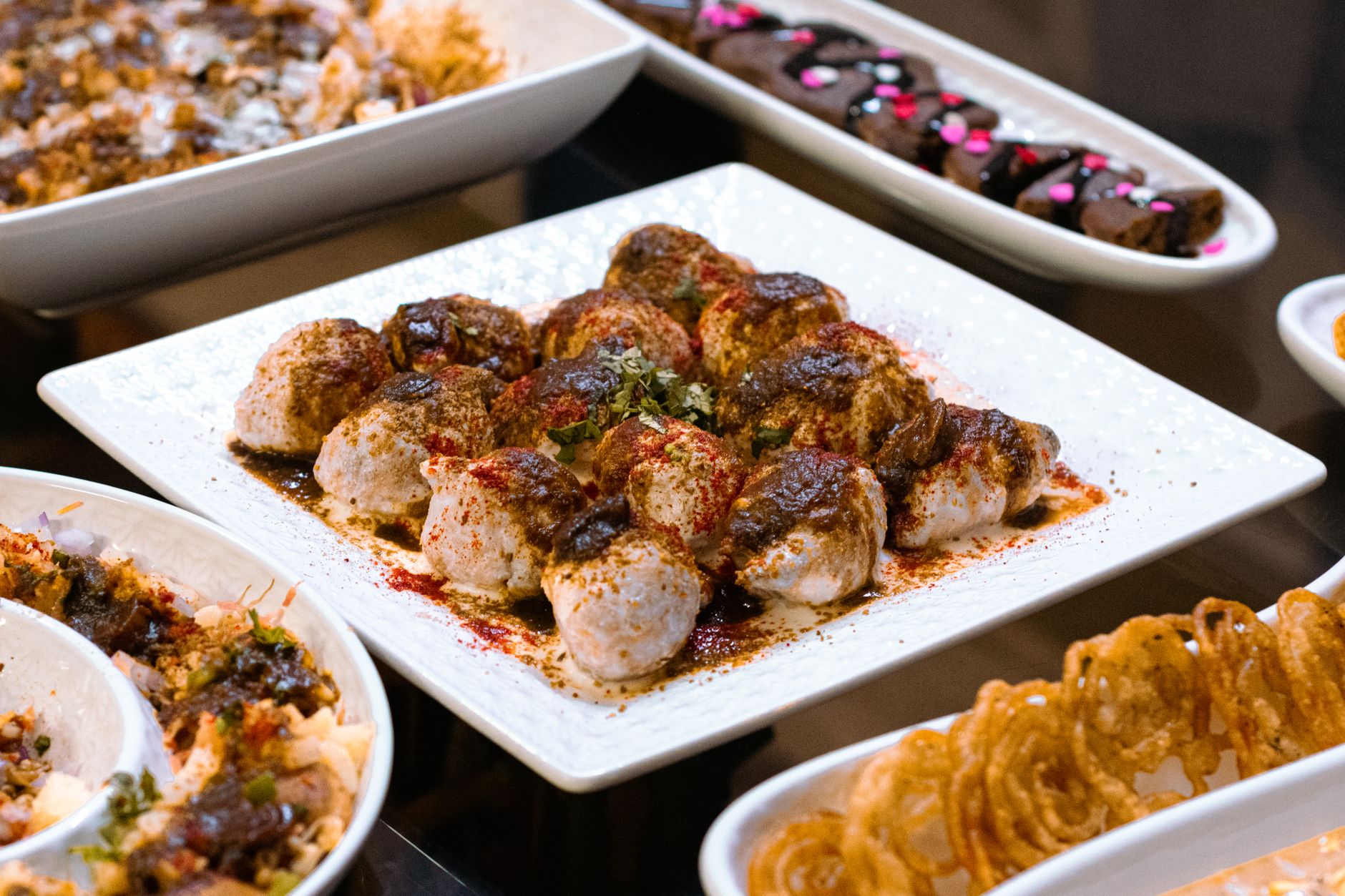
Sacred Feasts for Every Holy Occasion
F&B in Pune
Temple Style Pure Prasad Holy Buffets in Pune
When a sacred occasion calls for food that carries the same purity as the rituals themselves, Temple Style Pure Prasad Holy Buffets are the gold standard for Pune families planning poojas, griha pravesh ceremonies, satyanarayan kathas, and namakaran celebrations. These specialised spreads go far beyond ordinary vegetarian catering — every dish is cooked without onion, garlic, or tamasic ingredients, aligned with the philosophy of sattvic food catering for events that nourish both body and spirit. Pune's diverse neighbourhoods, from the old wadas of Kasba Peth to the new township societies of Hinjewadi, each carry their own festive traditions, and a well-executed devotional theme food presentation ensures that the divine energy of the ceremony flows seamlessly into the dining experience. Happiffie connects you with verified Pune caterers who specialise in this deeply respectful culinary tradition.
Quick Answer
Temple Style Pure Prasad Holy Buffets are specialised catering spreads prepared strictly without onion, garlic, and non-vegetarian ingredients, following sattvic cooking principles used in Hindu temples. Served at religious ceremonies such as poojas, kathas, griha pravesh, and annaprashan events in Pune, these buffets typically include dishes like panchakhadya, khichdi, panchamrit, sabudana items, sweet sheera, and regional Maharashtrian prasad preparations, presented in a devotional theme that mirrors the sacred atmosphere of the occasion.
What Makes Temple Style Pure Prasad Holy Buffets Different from Regular Veg Catering?
Most vegetarian catering menus in Pune still rely heavily on onion and garlic for flavour, which is why they cannot qualify as truly sacred food. Temple Style Pure Prasad Holy Buffets follow a completely different set of principles rooted in ancient Ayurvedic and Vaishnava cooking traditions. Every ingredient is chosen for its sattvic quality, meaning it is light, pure, and conducive to mental clarity and spiritual elevation. This makes them fundamentally different from a standard veg buffet at a birthday party or corporate lunch. The cooking process itself is considered an act of devotion. Caterers who specialise in no onion no garlic catering pune train their kitchen staff to maintain strict hygiene standards, use copper or stainless-steel vessels where traditional practice demands it, and avoid cross-contamination with tamasic foods. Many also offer the option of having a pandit or cook who observes personal religious discipline to supervise food preparation, adding another layer of sanctity. The menu composition for a religious ceremony buffet spread typically includes panchakhadya, panchamrit, sabudana vada, tilgul preparations, pure ghee halwa, batata bhaji, varanfal, puran poli, and various regional sweet offerings. Seasonal and regionally appropriate ingredients are preferred. For example, during Shravan month, Pune caterers often feature more fasting-friendly items like rajgira sheera, sama rice pulao, and singhada flour pooris, all of which fit naturally within the auspicious event catering setup. Presentation also sets these buffets apart. Banana leaf service, terracotta diyas placed along the serving counter, marigold garland decor, and brass urli centrepieces all contribute to a pure vegetarian feast decoration that feels sacred rather than merely festive. The visual storytelling of the spread reinforces the intention behind the meal, making guests feel they are receiving prasad rather than simply eating catered food.
Popular Occasions for Holy Prasad Buffets Across Pune's Neighbourhoods
Pune's cultural calendar is packed with occasions that call for sattvic food catering for events. Griha pravesh ceremonies in newer housing societies in Wakad, Baner, and Undri are among the most common bookings, as families moving into a new home traditionally feed guests with pure, blessed food as an act of gratitude. Satyanarayan pooja, one of the most widely observed Hindu rituals in Maharashtra, is another high-demand occasion, with families in Sadashiv Peth, Deccan Gymkhana, and Aundh regularly hosting between 50 and 300 guests. Namekaran and annaprashan ceremonies in Pune's family-centric areas like Kothrud and Pimple Saudagar often lean toward a traditional pooja bhojan service that includes specially prepared kheers, panchamrit stations, and age-old recipes handed down through Maharashtrian Brahmin culinary traditions. Ram navami, Ganesh Chaturthi pre-puja feedings, and Diwali Lakshmi pooja gatherings are peak seasons when bookings for Temple Style Pure Prasad Holy Buffets surge significantly across the city. Institutional and community-scale events also drive demand. Math trusts and cultural organisations in areas like Narayan Peth and Shaniwaar Peth regularly commission large-scale prasad distributions that can serve 500 to 2,000 devotees. These require a highly organised religious ceremony buffet spread with efficient serving lines, large-capacity vessels, and experienced serving staff who understand the etiquette of prasad distribution — offering food with reverence and not permitting wastage. Wedding pre-rituals such as haldi, mehendi pooja, and engagement tilak ceremonies also increasingly opt for Temple Style Pure Prasad Holy Buffets as the preferred F&B format, especially in families that observe strict dietary codes during the days leading up to the main wedding. This trend is particularly visible in Pune's Brahmin, Jain, and Vaishnav communities.
How Much Does a Temple Style Pure Prasad Holy Buffet Cost in Pune?
Pricing for Temple Style Pure Prasad Holy Buffets in Pune varies based on guest count, menu complexity, service style, and the level of devotional theme food presentation required. For a basic sattvic meal covering 50 to 100 guests — typically including 8 to 10 dishes, simple banana-leaf or plate service, and one sweet item — you can expect to budget approximately INR 350 to INR 600 per head. This tier is common for neighbourhood satyanarayan poojas and small griha pravesh gatherings. For a mid-range religious ceremony buffet spread covering 100 to 300 guests with a more elaborate menu of 14 to 18 dishes, live counters for halwa or khichdi, branded brass or copper serving ware, and a dedicated presentation setup, pricing typically falls between INR 650 and INR 1,100 per head. At this level, caterers offering no onion no garlic catering pune also provide uniformed serving staff and full setup and teardown services. Large-scale institutional events serving 500 or more guests can negotiate bulk rates that bring per-head costs down to INR 250 to INR 400, depending on menu simplicity and self-service formats. Premium experiences — which include hand-painted terracotta tableware, personalised prasad packing, floral rangoli around serving stations, and a pandit bhojan arrangement pune component for 10 to 20 priests — can reach INR 1,500 to INR 2,500 per head for the high-end segment. Additional cost factors include venue proximity (caterers in central Pune may charge less for travel than those travelling to Talegaon or Lavasa), the number of live cooking counters, organic or certified purity of ingredients, and whether the family requires a dry run or pre-event tasting. Always request an all-inclusive quote that accounts for serving equipment, gas cylinders, and post-event cleaning.
Choosing the Right Caterer for Sattvic Food Catering for Events
Selecting the right catering partner for Temple Style Pure Prasad Holy Buffets requires more rigorous vetting than a standard event caterer. The single most important criterion is the caterer's demonstrated experience with no onion no garlic catering pune, supported by references from previous religious events rather than corporate or wedding parties. Ask specifically whether their kitchen is a dedicated sattvic kitchen or a shared facility — cross-contamination risk is a genuine concern for devout families. Menu authenticity is the second pillar. A reliable caterer will offer traditional Maharashtrian prasad items such as shira, modak, batata bhaji, amti, varan, and puran poli alongside pan-Indian sattvic options like panchakhadya, sabudana khichdi, and panchamrit. Be cautious of caterers who substitute processed sauces or pre-made mixes into their traditional pooja bhojan service, as this undermines the purity that defines the entire offering. Presentation capability matters enormously for the auspicious event catering setup. A well-presented spread with a pure vegetarian feast decoration — think brass urli filled with flowers, tulsi sprigs near serving counters, diyas, and hand-printed menu boards in Devanagari script — elevates the atmosphere and shows that the caterer understands the cultural context of the occasion, not just the food. Logistics and reliability are non-negotiable. Confirm the caterer's ability to deliver hot food on time, the number of serving staff per 100 guests (ideally one server per 25 guests for a buffet), and their contingency plan for power cuts or delayed venue access. Happiffie's verified caterer network in Pune is curated to include professionals who have specifically handled religious and devotional events, giving you confidence that the sacred nature of your occasion will be respected from kitchen to table.
What Is the Ideal Menu for a Traditional Pooja Bhojan Service in Pune?
A well-designed traditional pooja bhojan service menu for Pune follows a logical structure that mirrors the rhythm of the ceremony itself. The meal typically begins with panchamrit — a sacred mixture of milk, curd, honey, ghee, and sugar — offered as the divine opening course. This is followed by panchakhadya, a five-ingredient prasad made from coconut, sesame, jaggery, and other sacred components that varies slightly by community and season. The main course of a Temple Style Pure Prasad Holy Buffets spread in Pune often includes puran poli or sweet puri alongside a mild yellow moong dal, a dry batata bhaji, sabudana khichdi, and a simple varan-bhaat combination (toor dal with steamed rice and pure ghee). Seasonal vegetables prepared without onion and garlic but flavoured with hing, cumin, mustard seeds, turmeric, and fresh coriander provide variety without compromising purity. For the sweet course, Pune caterers typically offer one or two options from shira (semolina halwa with ghee and cardamom), kheer, basundi, or seasonal modaks depending on the occasion. For Ganesh Chaturthi prep events or Sankashti gatherings, ukadiche modak — steamed rice flour dumplings filled with coconut and jaggery — is almost mandatory and a point of pride for skilled sattvic caterers. Beverages in a religious ceremony buffet spread are usually limited to chaas (buttermilk), kokam sherbat, or plain water to keep the menu fully sattvic. Some premium setups also include filter coffee or masala milk served in clay kulhads, which contributes both to the devotional theme food presentation and to reducing single-use plastic — an increasingly popular choice among eco-conscious Pune hosts. The pandit bhojan arrangement pune component, served separately for officiating priests, often includes additional items like dahi, raw sugar, and seasonal fruits as per ritual requirement.
Comparing Setup Types for Temple Style Pure Prasad Holy Buffets in Pune
Expert Recommendation
Best for Intimate Home Poojas (20–60 guests)
Best for Mid-Size Griha Pravesh Celebrations (60–200 guests)
Best for Large Community or Temple Events (200–2,000 guests)
Best for Budget-Conscious Families
Best for Destination or Resort Venue Ceremonies (Lavasa, Mulshi)
Best for Premium Multi-Day Religious Programmes
How to Choose the Right Option
✅ Pre-booking Checklist
- Confirm the caterer runs a dedicated sattvic kitchen with no onion, garlic, or non-veg cross-contamination
- Request a full menu proposal with every dish listed and its preparation method described
- Arrange a pre-event tasting at least two weeks before your occasion to verify taste and purity
- Confirm guest count tiers with the caterer (minimum guarantee vs. actual headcount) and understand any overage charges
- Discuss decoration and setup requirements including serving vessel style, banana leaf availability, and diya placement
- Clarify pandit bhojan arrangement pune requirements separately from the main guest menu
- Verify that the caterer holds valid FSSAI registration and has experience with religious ceremony buffet spreads specifically
- Get a written all-inclusive quote covering food, staff, equipment, travel, setup, and teardown with clear terms for advance payment
🎯 Selection Criteria
- Demonstrated specialisation in no onion no garlic catering pune with verifiable religious event references
- Ability to scale menu complexity and guest count to match your specific occasion and venue constraints
- Quality and sourcing of core ingredients — especially pure ghee, fresh produce, and traditional grains
- Staff training in the etiquette and reverence appropriate for a devotional theme food presentation
- Responsiveness and flexibility in accommodating community-specific traditions or last-minute guest count changes
💰 Cost / Quality Factors
- Guest count directly drives per-head pricing — larger events attract meaningful bulk discounts from most Pune caterers
- Menu complexity and number of live counters significantly increase both cost and setup time requirements
- Ingredient quality tier — organic, stone-ground, or certified-pure ingredients command a 20 to 30 percent premium
- Venue location and accessibility affect travel and logistics costs, particularly for events outside Pune city limits
- Season and date — peak religious months like Shravan and festive clusters around Diwali see higher caterer rates and lower availability
- Decor level chosen for the pure vegetarian feast decoration, from basic to premium brass-and-floral setups, adds INR 50 to INR 300 per head
⚠️ Common Mistakes to Avoid
- Booking a generic vegetarian caterer without explicitly confirming their no-onion no-garlic sattvic capability
- Underestimating the guest count and not agreeing on a flexible upper-limit clause with the caterer
- Ignoring the pandit bhojan arrangement pune component until the day of the event, causing last-minute stress
- Choosing a caterer based purely on low price without verifying ingredient purity and kitchen standards
- Failing to communicate the specific deity, occasion, or community tradition to the caterer, resulting in a mismatched menu
- Not confirming power, water, and cooking space availability at the venue in advance for live counter setups
People Also Ask
What is the meaning of a Temple Style Pure Prasad Holy Buffet?
Which occasions in Pune are best suited for a holy prasad buffet?
Is no-onion no-garlic catering available in all areas of Pune?
How far in advance should I book a prasad holy buffet caterer in Pune?
What is the difference between sattvic food and regular vegetarian food?
Can I customise the menu for a pooja bhojan service in Pune?
What decor elements are included in a devotional theme food presentation?
How many dishes are typically served at a temple style prasad buffet?
What is a pandit bhojan arrangement and is it different from the main buffet?
Are there options for large-scale prasad distribution at community events in Pune?
Can prasad buffet caterers in Pune handle both indoor and outdoor venues?
Does Happiffie verify the purity standards of its listed prasad caterers in Pune?
Related Experiences on Happiffie
Authentic Jain Catering Services
Divine Ceremonies Made Perfect
Authentic Chaat Counters for Your Events
Pandal Setups That Steal the Show
Jain Feasts Done Right in Pune
All Wedding & Event Services
Frequently Asked Questions
What exactly is a Temple Style Pure Prasad Holy Buffet and why is it different from a veg buffet in Pune?
Which caterers in Pune specialise in no onion no garlic catering for religious events?
How many guests can a prasad holy buffet setup typically serve in Pune?
Can I request regional Maharashtrian prasad dishes specifically for my Pune event?
What is the best time of year to book Temple Style Pure Prasad Holy Buffets in Pune?
Does the auspicious event catering setup include serving staff or is it self-service?
Is it possible to have an organic or certified-pure ingredient menu for my holy prasad buffet in Pune?
What should I tell the caterer when booking a prasad buffet for a satyanarayan pooja in Pune?
Can the buffet decor match the devotional theme of my pooja venue in Pune?
Are there fasting-friendly options within a Temple Style Pure Prasad Holy Buffet menu?
How does Happiffie help me find the right prasad buffet caterer for my event in Pune?
What pure vegetarian feast decoration options are typically available with prasad catering in Pune?
Key Takeaways
- Temple Style Pure Prasad Holy Buffets are strictly sattvic — cooked without onion, garlic, or tamasic ingredients — making them fundamentally different from regular vegetarian event catering.
- Pune's diverse religious calendar, from satyanarayan poojas in Deccan to griha pravesh ceremonies in Hinjewadi, creates year-round demand for specialist sattvic caterers.
- Pricing ranges from approximately INR 250 per head for large community distributions to INR 2,500 per head for premium multi-course setups with live counters and devotional decor.
- A devotional theme food presentation using banana leaves, brass vessels, diyas, and marigolds is as important as the food itself in creating a truly sacred atmosphere.
- Always verify a caterer's dedicated sattvic kitchen status and ask for references from previous religious events — not corporate or wedding parties — before booking.
- Pandit bhojan arrangement, fasting-friendly menus, and community-scale bulk distribution are specialised sub-services within this category that require advance planning and explicit confirmation.
- Book at least four to six weeks ahead during peak seasons like Shravan, Navratri, and Diwali to secure experienced Temple Style Pure Prasad Holy Buffets caterers in Pune.
- Happiffie's Pune F&B vendor network includes curated specialists in religious ceremony buffet spreads, making it a reliable starting point for families seeking both quality and purity assurance.
Plan Your Sacred Feast in Pune with Happiffie
Connect with Pune's top-rated Temple Style Pure Prasad Holy Buffets caterers — verified, sattvic, and ready for your next auspicious occasion.
Explore Prasad Caterers
Are you a Vendor? Grow Your Business with Happiffie!
- High intent verified leads
- Reverse auction opportunities
- AI business tools & insights
- Dedicated vendor dashboard
- Grow your business, your way
It's free & takes less than 2 minutes!