
Dress Every Occasion Perfectly in Pune
B&G in Pune
Smart Wardrobe Planning for Occasions: The Complete Bride & Groom Guide for Pune Weddings
A Pune wedding is rarely a single event — it is a glorious cascade of mehendi evenings at home in Kothrud, sangeet nights in Baner banquet halls, pheras at heritage venues in Shivajinagar, and reception galas in Wakad. Smart Wardrobe Planning for Occasions is the art of ensuring every outfit — from the bride's Paithani saree to the groom's Jodhpuri bandhgala — tells a cohesive, culturally resonant story across each ceremony. Getting bridal outfit coordination right means balancing budget, fabric suitability for Pune's warm weather, and the expectations of two families. This guide walks brides and grooms through occasion-based outfit planning, cost benchmarks in INR, a wedding wardrobe checklist, and the expert decisions that separate a stress-free celebration from a last-minute wardrobe crisis.
Quick Answer
Smart Wardrobe Planning for Occasions means systematically mapping each wedding ceremony — mehendi, sangeet, haldi, pheras, reception — to the right outfit, colour, fabric, and accessory. For a Pune couple, this typically involves 4 to 7 distinct looks across multiple days. Planning 4 to 6 months in advance, setting per-event budgets, and coordinating the wedding day colour palette between bride and groom are the three most critical steps.
Why Does Smart Wardrobe Planning for Occasions Matter More Than Ever for Pune Couples?
Pune weddings have grown significantly more multi-event in structure over the last decade. A middle-class family in Aundh or Hadapsar may host anywhere from four to seven separate ceremonies spread over two to three days. Each function carries its own dress code expectation — casual and playful for haldi, richly embroidered for the wedding day, and glamorous for the reception. Without smart wardrobe planning for occasions, couples routinely face last-minute panic, outfit clashes between the bride and groom, and budget overruns that could have been avoided with a simple outfit calendar. Bridal outfit coordination becomes especially complex when families are sourcing lehengas from Laxmi Road in the old city, sherwanis from Camp-area boutiques, and jewellery from Narayan Peth — all without a unified plan. A structured wedding wardrobe checklist helps couples assign an outfit, colour mood, and accessory set to each function before any purchase is made. This prevents the common mistake of buying a heavily embellished lehenga for a morning haldi ceremony where simpler cotton or georgette works far better. Seasonal fabric selection for weddings is equally important: Pune's summer months from March to May demand lightweight fabrics like chanderi, linen silk, and organza, while December and January weddings can accommodate heavier velvets and brocades without discomfort. Starting the planning process at least four to six months before the wedding date gives couples enough time to book trial fittings, arrange alterations, and source matching accessories without rushing.
Mapping Every Ceremony: The Essential Wedding Wardrobe Checklist
A reliable wedding wardrobe checklist starts with listing every function on the event calendar and assigning outfit priorities. For most Pune Maharashtrian weddings, the core functions include haldi, mehendi, sangeet, the wedding ceremony itself (with possible outfit change for vidaai), and the reception. Each event demands a different outfit philosophy. Haldi calls for clothes that can be stained — yellow or turmeric-toned outfits in simple cotton or synthetic fabric are ideal, and many brides choose to repurpose an older kurta or buy an affordable piece specifically for this event. Mehendi evenings typically favour jewel tones — deep greens, burnt oranges, and rich pinks — in lighter fabrics. Sangeet nights are the moment for high-impact groom styling for wedding parties: a well-fitted bandhgala or an Indo-western jacket paired with churidar works beautifully under stage lighting. The wedding ceremony itself demands the most investment — a Paithani or Banarasi for the bride and a richly embroidered sherwani or traditional dhoti-kurta for the groom. The reception is where couples can experiment with lehenga and sherwani pairing in coordinated hues — rose gold and ivory, royal blue and blush, or jewel green and cream are popular combinations in Pune's wedding circuit. Writing all of this down in a checklist — function, outfit, colour, fabric, budget, and vendor source — gives both families a single reference document and dramatically reduces coordination errors. A good checklist also flags accessories: the nath, maang tikka, haar, and bangles for the bride; the brooch, pocket square, and mojris for the groom.
How Much Does a Complete Bridal and Groom Wardrobe Cost in Pune?
Budget is the single most searched question around occasion-based outfit planning for couples. Costs in Pune vary enormously based on designer label versus local boutique, fabric quality, and embroidery intricacy. For a bride planning four to five outfits, a realistic mid-range budget runs from INR 1.5 lakh to INR 4 lakh for all ceremonies combined. A haldi outfit might cost INR 1,500 to INR 8,000; a mehendi lehenga from INR 15,000 to INR 60,000; a sangeet outfit from INR 25,000 to INR 80,000; the main wedding lehenga or Paithani from INR 40,000 to INR 3 lakh or more; and the reception gown or lehenga from INR 30,000 to INR 1.5 lakh. For grooms, a full set of occasion-based outfit planning across four functions typically runs INR 60,000 to INR 2 lakh. A quality sherwani for the wedding ceremony alone costs INR 20,000 to INR 80,000 from reputed Pune tailors. Jewellery and accessory coordination adds another INR 30,000 to INR 5 lakh depending on whether gold sets are family heirlooms or newly purchased. Couples on tighter budgets should focus maximum spending on the wedding day outfit and reception look, and choose rentals or affordable ready-to-stitch options for haldi and mehendi. Bridal outfit coordination services — where a professional stylist helps map outfits across events — typically charge INR 10,000 to INR 35,000 in Pune and can prevent costly purchase mistakes that outweigh the fee.
Groom Styling for Wedding Events: A Pune-Specific Approach
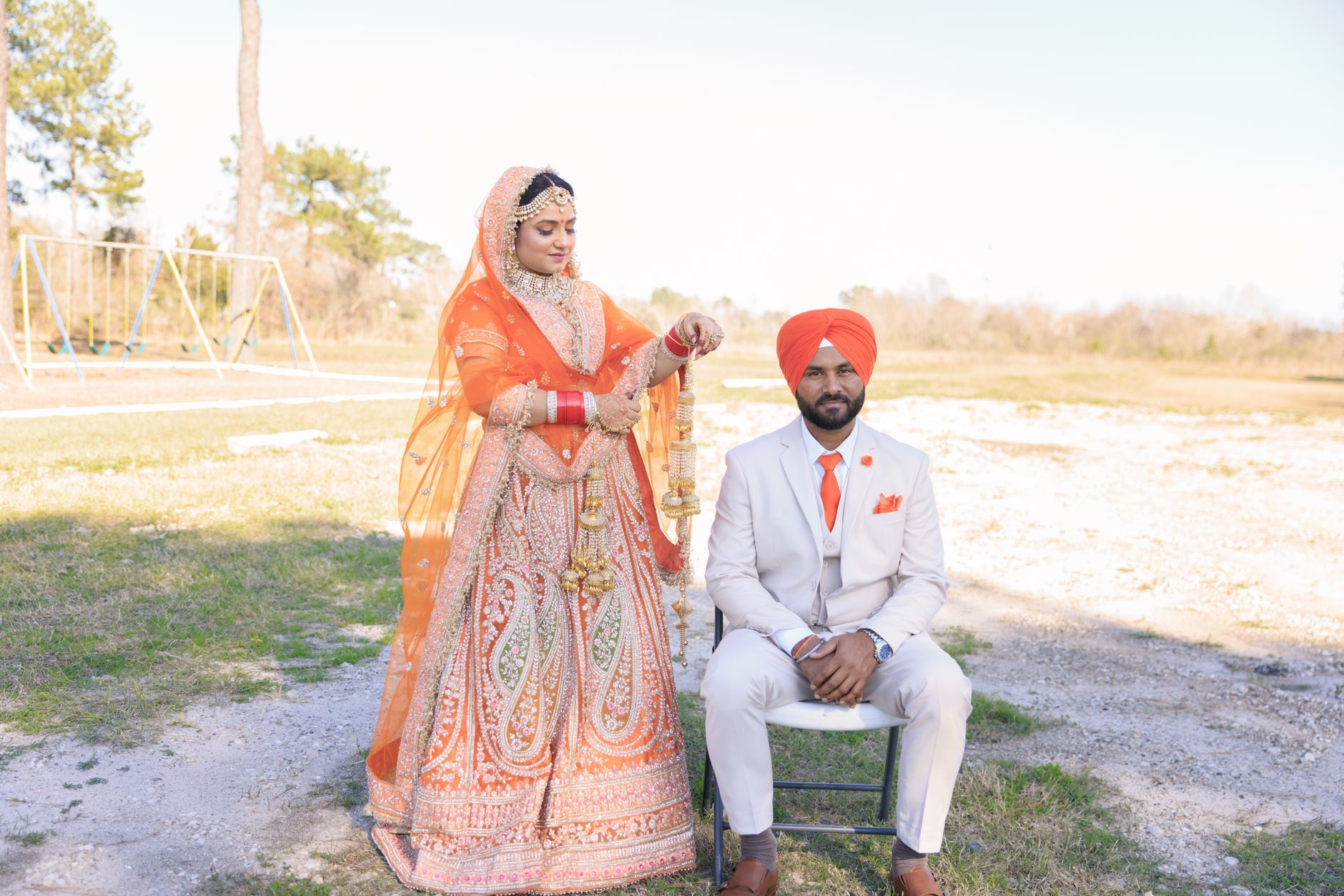
Groom styling for wedding occasions is frequently under-planned compared to the bridal look, yet the groom appears in every photograph and video alongside the bride. A well-dressed groom elevates the visual narrative of the entire wedding. In Pune, the most popular groom looks for 2024 and 2025 include the classic off-white or cream sherwani with gold zari work for the pheras, the navy or bottle-green bandhgala for the reception, and a pastel Indo-western jacket for the sangeet. Smart wardrobe planning for occasions means the groom's outfits must be calibrated to the wedding day colour palette set by the bride. If the bride is wearing a deep red and gold Banarasi for the ceremony, the groom in a beige or ivory sherwani with gold detailing creates a classic, complementary pairing. If the bride wears dusty rose for the reception, the groom in a steel grey suit or bandhgala with a rose pocket square achieves a modern, coordinated look. Lehenga and sherwani pairing should be discussed as a joint exercise, not two separate shopping trips. Fabric and silhouette also matter: a heavily brocaded sherwani may feel oppressive in May heat at an outdoor venue in Lavale, while a lighter silk-cotton blend keeps the groom comfortable without sacrificing elegance. Grooms should book their first outfit trials at least 8 weeks before the wedding to allow time for two or three rounds of alterations — a step that is routinely skipped and regretted.
What Common Mistakes Should Pune Brides and Grooms Avoid in Wardrobe Planning?
Even the most excited Pune couples make avoidable mistakes when planning wedding wardrobes. The first is buying outfits in silos — the bride shops with her family, the groom with his, and nobody checks whether their looks are complementary until the day of the event. Jewellery and accessory coordination is another area where errors accumulate: choosing a heavy kundan set for a casual mehendi ceremony or minimal studs for the grand reception are both mismatches that affect the overall aesthetic. Ignoring seasonal fabric selection for weddings is a particularly Pune-specific problem given the city's warm climate for most of the year — heavy velvet or thick brocade for a summer afternoon phera can cause real discomfort. Overlooking colour coordination with the wedding venue decor is subtle but impactful: a bride in a fuchsia lehenga at a pastel-decorated banquet hall can look visually jarring in photographs. Occasion-based outfit planning should also account for practical needs — a six-metre saree drape may be meaningful for the ceremony but exhausting to manage during a long reception; a stitched saree or pre-draped alternative deserves consideration. Finally, many couples forget to plan outfit changes: if the bride wants to change between the wedding ceremony and reception, the logistics of dressing rooms, helpers, and timing must be built into the event schedule. Smart wardrobe planning for occasions addresses all of these concerns with a simple pre-event coordination meeting between the couple, their families, and ideally a wedding stylist.
Wardrobe Planning Approaches for Pune Brides and Grooms: A Practical Comparison
Expert Recommendation
Best for Intimate Home Ceremonies (Under 100 Guests)
Best for Large Banquet Hall Weddings (300–800 Guests)
Best for Destination Weddings in Lonavala or Mulshi
Best for Budget-Conscious Pune Couples
Best for Traditional Maharashtrian Weddings
Best for Modern Couples Wanting Contemporary Looks
How to Choose the Right Option
✅ Pre-booking Checklist
- List every wedding function with its date, time, and venue type (indoor, outdoor, home) before buying any outfit
- Agree on the wedding day colour palette with your partner before either of you visits a single boutique
- Set individual per-function budgets in INR and total combined wardrobe budget before any shopping begins
- Check Pune's seasonal weather for your wedding month and plan seasonal fabric selection for weddings accordingly
- Book your first outfit trials and alteration appointments at least 8 weeks before the wedding date
- Carry fabric swatches from the bride's outfits when shopping for groom's wardrobe to ensure lehenga and sherwani pairing is accurate
- Plan jewellery and accessory coordination for each function at the same time as the outfit, not as a separate afterthought
- Do a full dress rehearsal — complete outfit with jewellery, footwear, and hair — at least one week before the event
🎯 Selection Criteria
- Outfit suitability for each function's formality level and cultural expectations
- Fabric comfort relative to Pune's climate and the venue type (air-conditioned hall versus open lawn)
- Visual coordination between bride and groom across every function
- Vendor reliability — confirmed alteration timelines and delivery dates in writing
- Authentic alignment with family traditions, especially for Maharashtrian or North Indian ceremony rituals
- Photographic impact — how the outfit reads under different lighting conditions used at Pune wedding venues
💰 Cost / Quality Factors
- Embroidery and zardozi intricacy significantly affects price — handwork costs two to five times machine embroidery
- Fabric quality (pure silk versus art silk, handloom versus power loom) affects both price and longevity
- Designer label versus independent boutique price difference can be INR 50,000 or more for comparable looks
- Alteration complexity for custom fits adds INR 3,000–15,000 and requires multiple fitting appointments
- Accessory and jewellery rental versus purchase changes total wardrobe cost by INR 30,000–2 lakh
- Number of functions requiring distinct outfits is the single biggest driver of total wardrobe budget
⚠️ Common Mistakes to Avoid
- Shopping for each function's outfit in isolation without a unified occasion-based outfit planning calendar
- Ignoring seasonal fabric selection for weddings and choosing heavy fabrics for warm-weather Pune ceremonies
- Treating groom styling for wedding events as secondary — uncoordinated groom looks affect every wedding photograph
- Buying outfits before confirming final venue decor colours, which can result in clashing palettes
- Underestimating alteration time and leaving fittings to the last two weeks before the wedding
- Skipping a rehearsal wear session, which often reveals footwear, blouse, or jewellery issues that need resolving
People Also Ask
How early should I start wardrobe planning for my Pune wedding?
What is a realistic budget for a bride's full wardrobe across all functions in Pune?
How do I coordinate the bride and groom outfits without looking too 'matchy-matchy'?
Which fabrics work best for summer weddings in Pune?
What should a wedding wardrobe checklist include?
Can I rent outfits for some functions to save money?
How important is jewellery planning as part of wardrobe coordination?
What is the best colour for a Pune bride's wedding day lehenga?
How do I plan outfits if the wedding spans multiple days?
Should grooms invest in a professional stylist for their wedding look?
What are the most common outfit mistakes at Pune weddings?
How do I involve both families in wardrobe planning without conflict?
Related Experiences on Happiffie
Stunning Bridal Rentals in Hyderabad
Pune's Best Groom Hair Styles
Premium Kids Occasion Wear
Your Dream Bridal Look Awaits
All Wedding & Event Services
Venues in Pune
Frequently Asked Questions
How does smart wardrobe planning for occasions work for a Pune wedding specifically?
Where in Pune can brides shop for wedding lehengas and sarees?
How do I build a wedding wardrobe checklist if I have never done this before?
Is bridal outfit coordination the same as hiring a wedding stylist?
What is the right approach to lehenga and sherwani pairing for the main wedding ceremony?
How do I handle jewellery and accessory coordination if I am using family heirlooms?
How much extra should I budget for alterations and fittings in Pune?
What seasonal fabric choices work for a winter wedding in Pune?
How do I plan groom styling for wedding functions without looking overdressed for casual events?
Can Pune couples book wardrobe planning services through Happiffie?
How should the wedding day colour palette be decided as a couple?
What mistakes do Pune grooms most commonly make in wardrobe planning?
Key Takeaways
- Smart wardrobe planning for occasions means mapping each wedding function to a specific outfit, colour, fabric, and accessory set well before shopping begins.
- Pune couples should start planning four to six months before the wedding to allow for trials, alterations, and coordinated jewellery sourcing.
- The wedding day colour palette must be agreed between bride and groom first — it anchors every other outfit decision across all functions.
- Mid-range full bridal wardrobes for four to five Pune wedding functions cost INR 1.5 lakh to INR 4 lakh, with the ceremony lehenga or saree taking the largest share.
- Seasonal fabric selection for weddings is especially important in Pune — lightweight chanderi, organza, and silk-cotton blends outperform heavy brocades in warm-weather months.
- A rental-plus-purchase hybrid strategy is the most cost-effective approach for couples with four or more functions, saving INR 30,000–60,000 without compromising on quality.
- Jewellery and accessory coordination should be planned alongside each outfit, not after — carry fabric swatches to every jewellery appointment.
- Groom styling for wedding events is as critical as bridal looks — uncoordinated groom outfits appear in every photograph and video of the celebration.
Start Your Smart Wardrobe Planning for Occasions with Happiffie
Connect with Pune's best bridal stylists, outfit consultants, and accessory vendors — all in one place. Build your complete wedding wardrobe checklist and coordinate every look for every function effortlessly.
Explore Pune Vendors
Are you a Vendor? Grow Your Business with Happiffie!
- High intent verified leads
- Reverse auction opportunities
- AI business tools & insights
- Dedicated vendor dashboard
- Grow your business, your way
It's free & takes less than 2 minutes!