
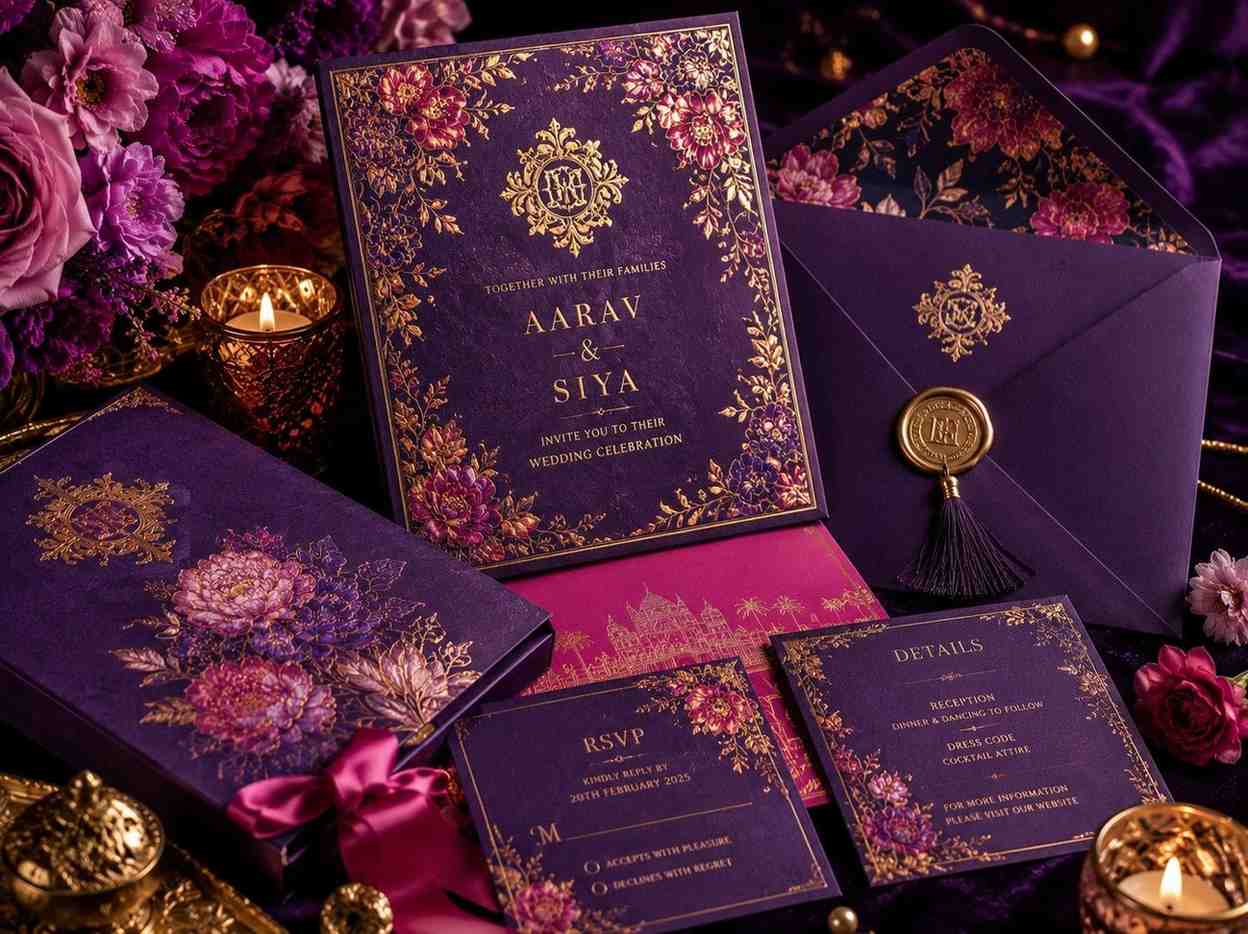
Explore All Invitation & Stationery
Discover elegant wedding invitations, personalised stationery, event invites and creative paper details for weddings, parties, corporate events and special celebrations in Chennai.
Invite With Style,
Celebrate with Happiffie
From elegant wedding invitations and personalised stationery to creative event invites and celebration paper goods, Happiffie helps you discover invitation and stationery services that bring your event's theme, personality and special moments to life.
- Elegant Invitation DiscoveryExplore beautiful invitation designs suited to every occasion
- Personalised GiftingDiscover customised designs that reflect your event and style
- Creative Event DetailsFind stationery ideas that add a polished touch to your celebration
Popular Invitation & Stationery
 Engagement
 Mehendi
 Sangeet
 Haldi
Haldi Wedding
 Reception
 Pre Wedding Shoot
 Save The Date Shoot
 Ring Ceremony
 Destination Wedding
 Aviratham (Engagement)
 Guru Pooja
 Kashi Yatra
 Oonjal Ceremony
 Muhurtham
 Vidaai
 Post Wedding Shoot
 Anniversary Celebration
 Vow Renewal
 Honeymoon Celebration
 Bridal Shower
 Bachelor Party
 Bachelorette Party
 Cocktail Party
 House Warming
 Griha Pravesh
 Satyanarayan Puja
 Naming Ceremony
 Thread Ceremony
 Upanayanam
- 400+Curated Events
- 6Event Universes
- 1000+Verified Vendors
- 70+Locations
- 24/7Customer Support


Not sure which packages fits your celebration?
Let Hiya & Hanu help you find the perfect match!
Explore Celebration Packages- AI-Powered MatchingSmart suggestions for you
- Budget OptimizerGet the best experiences in your budget
- End-to-End SupportWe are with you at every step
Serving Celebrations across 75+ locations in India
Trending Printed Invites and Stationery Designs for Modern Celebrations
◆Printed stationery continues to evolve as hosts look for invitations that feel personal, stylish and relevant to their celebrations. Modern designs are moving beyond standard layouts, combining thoughtful typography, distinctive paper choices, refined details and meaningful personalisation.
Trending printed invites and stationery designs can support weddings, birthdays, anniversaries, corporate functions, engagement parties and private celebrations. Each occasion offers opportunities to create stationery that reflects its personality while communicating essential information clearly.
Hyderabad's diverse celebration culture provides a strong setting for both traditional and contemporary invitation styles. Families may choose heritage-inspired artwork for weddings, while younger hosts may prefer minimalist compositions, expressive illustrations or modern typography.
A successful stationery collection should balance visual appeal with usability. Guests need to understand dates, timings, locations and response requirements without searching through a complicated design. When creativity and clarity work together, printed stationery can create a strong introduction to the celebration.
Understanding Current Invitation Design Trends
Invitation design trends change as printing technology, lifestyle preferences and event aesthetics evolve. Contemporary stationery increasingly focuses on individuality rather than following a single universal style.
Minimal layouts, artistic illustrations, tactile papers and restrained embellishments are becoming useful ways to create distinction. Personalised details can also make a printed invitation feel more connected to the host or occasion.
At the same time, traditional motifs remain relevant, especially for weddings and cultural ceremonies. These elements can be presented through updated typography, modern spacing and sophisticated colour combinations.
The strongest designs are not necessarily the most elaborate. A carefully balanced invitation can create a memorable impression through proportion, texture and thoughtful visual hierarchy.
Modern Wedding Invitation Designs
Wedding invitations remain one of the most expressive forms of event stationery. Couples and families often want the invitation to establish the tone for the entire wedding.
Contemporary wedding designs can combine clean typography with subtle illustrations, botanical artwork, architectural references or abstract patterns. Traditional weddings may incorporate cultural motifs while using a more modern layout.
Layered invitation suites can provide additional information without overcrowding the main card. Separate inserts can communicate ceremony timings, accommodation details, dress guidance or travel information.
The design should remain easy to read. Names, dates, venue details and RSVP information need clear visual prominence regardless of how decorative the overall invitation becomes.
Personalised Printed Invitations
Personalisation remains an important part of contemporary stationery design. Hosts increasingly want invitations that feel created specifically for their occasion rather than selected from a generic catalogue.
Names, custom illustrations, meaningful symbols and location-inspired artwork can add personality.
For weddings, artwork may reference a memorable destination or cultural detail. Birthday invitations can reflect hobbies, interests or a chosen theme.
Corporate invitations can also incorporate personalised information for speakers, delegates or special guests.
Personalisation should remain purposeful. Too many custom elements can make a design crowded and reduce the importance of essential event information.
Contemporary Birthday Stationery
Birthday invitations offer considerable creative freedom. Children's parties can use illustrated themes, imaginative characters and playful typography.
Teenage and adult celebrations may favour more refined approaches, including editorial layouts, bold type treatments or sophisticated colour combinations.
Milestone birthdays can use premium card stock and personalised wording to create a more formal invitation.
Supporting stationery can include thank-you cards, menu cards, party schedules or personalised tags.
The chosen style should reflect the personality of the celebration rather than simply following a fashionable design trend.
Corporate Invitation Designs
Corporate event stationery increasingly combines professionalism with contemporary visual presentation.
Conferences, networking events, award ceremonies, product launches and annual celebrations can use clean layouts with strong information hierarchy.
Typography should remain highly readable, especially when invitations contain registration details, venue information or programme timings.
Supporting materials can use the same visual system across name cards, programme sheets, menus and welcome cards.
A consistent stationery direction can help create recognition throughout the event while avoiding repetitive designs on every printed piece.
Minimalist Stationery
Minimalism continues to influence printed invitation design. Clean layouts, generous spacing and restrained decoration can create a sophisticated appearance.
Minimal stationery does not mean removing personality. Typography, paper texture and carefully selected visual accents can provide enough character without overwhelming the page.
This approach works particularly well for contemporary weddings, milestone birthdays, engagement celebrations and professional events.
Minimal designs can also make important information easier to read. Guests can identify key details quickly because the layout is not competing with excessive decoration.
Artistic and Illustrated Invitations
Illustration can give stationery a distinctive visual identity. Custom artwork can portray venues, landscapes, floral arrangements, architecture or meaningful objects associated with the celebration.
For Hyderabad occasions, illustrations can draw subtle inspiration from local architectural character or cultural elements.
Birthday invitations can use playful artwork, while wedding stationery can use elegant line illustrations or botanical compositions.
Illustration should support the information rather than dominate it. The strongest layouts create a balance between artwork and readable typography.
Typography-Led Designs
Typography itself can become the primary design element. Carefully selected typefaces can establish formality, personality or modernity without relying heavily on decorative graphics.
Elegant serif fonts can work well for formal celebrations. Clean sans-serif typefaces can create a contemporary appearance, while expressive display lettering can highlight names or event headings.
Combining two complementary typefaces can create hierarchy. However, too many fonts can make a stationery suite appear inconsistent.
Good typography should always remain readable at the final printed size.
Tactile Paper and Texture
Paper texture is becoming an important part of the physical invitation experience. Guests notice the weight and surface of a card as soon as they handle it.
Textured stocks can create warmth and depth. Smooth papers can support crisp modern designs, while heavier card can provide a substantial feel.
Paper choice should correspond with the printing process and intended aesthetic.
A carefully selected stock can create a premium impression without requiring excessive decorative finishing.
Contemporary Envelope Styling
The envelope is an important part of the invitation experience because it is the first element guests see.
Modern envelope designs may use complementary colours, subtle patterns, printed liners or restrained personalised details.
Wedding stationery can use coordinated envelopes that reflect the main invitation. Birthday designs can introduce a playful accent, while corporate invitations may retain a clean professional appearance.
The envelope should remain practical. Appropriate sizing and durable construction help protect the invitation during delivery.
Save-the-Date Trends
Save-the-date cards are particularly useful for weddings and destination celebrations. Modern versions often use simplified layouts that introduce the visual identity without revealing every event detail.
A date, names and basic celebration reference may be sufficient at this stage.
The design can establish colours, typography or illustration styles that later appear on the formal invitation.
Digital communication can then provide additional information as planning progresses.
RSVP Design
RSVP cards remain useful when organisers require formal attendance confirmation. Contemporary designs tend to prioritise simplicity.
Response instructions should be immediately visible. Guests should understand how to confirm attendance and when their response is required.
Printed RSVP cards can be coordinated with the invitation while using a more compact layout.
Digital RSVP links can also be included where appropriate, providing a convenient alternative for modern celebrations.
Menu and Place Card Designs
Stationery trends extend beyond invitations. Menu cards and place cards can contribute to the visual character of the event itself.
Menus can use the same typography and paper family as the invitation while presenting food information clearly.
Place cards can introduce individual names without requiring elaborate decoration.
For formal weddings and dinners, these details can help create a more organised table setting.
The design should remain functional so guests can easily read names and menu information.
Programme and Welcome Cards
Programme cards can help guests understand the sequence of activities at weddings, ceremonies and formal functions.
Contemporary designs often use concise information, clear headings and generous spacing.
Welcome cards can provide practical details about accommodation, schedules or event locations.
Corporate functions may use similar formats for session programmes and speaker information.
The design should make information easy to scan rather than turning practical details into a dense block of text.
Colour Directions for Modern Stationery
Colour plays an important role in establishing the atmosphere of printed invitations.
Modern wedding stationery may use neutral combinations, soft botanical tones or carefully controlled accent colours. Birthday designs can use stronger combinations when appropriate.
Corporate stationery often benefits from restrained colours connected to the organisation's visual identity.
Using a limited palette can create consistency across an invitation suite and supporting event materials.
The most effective colour schemes use contrast thoughtfully so that important text remains readable.
Printed and Digital Communication
Printed stationery and digital communication can complement each other effectively.
A physical invitation can create the formal first impression, while digital messages can provide updates, reminders, maps and RSVP links.
This approach is particularly useful for large celebrations where information may change after invitations have been printed.
Digital communication can also reduce the need for additional printed inserts, helping keep the stationery collection focused.
The printed invitation remains the tangible expression of the occasion, while digital channels provide flexibility.
Sustainable Invitation Trends
Sustainability is becoming increasingly relevant to stationery decisions. Hosts may look for recycled papers, responsible sourcing and reduced packaging.
Accurate quantity planning can also reduce waste. Ordering only the number of invitations genuinely required prevents unnecessary production.
Digital RSVP systems can reduce the need for additional paper.
Sustainable choices do not necessarily mean sacrificing appearance. Natural textures, restrained printing and thoughtful design can create a sophisticated result.
Stationery for Different Celebrations
Different events benefit from different stationery approaches.
Weddings may require complete invitation suites with multiple supporting cards. Birthdays can focus on expressive themes and personalised artwork.
Corporate functions often need structured invitations and practical programme materials. Private parties may use simpler cards with strong visual character.
Understanding the occasion helps determine how much stationery is necessary and which design direction will feel appropriate.
Coordinating Invitations with Event Décor
Invitation stationery can introduce visual cues that continue throughout the celebration.
A floral invitation may inspire table arrangements, while an architectural motif can influence venue styling.
Typography and colour accents can also appear subtly across menus, signage and place cards.
The goal is not to reproduce the invitation everywhere. Instead, small visual connections can make the event feel more cohesive.
This approach allows stationery to establish the design language before guests arrive.
Budget Considerations
A trending design does not have to involve expensive production. Strong typography, balanced layouts and suitable paper can create considerable visual impact.
Hosts can prioritise the main invitation while simplifying supporting stationery.
Premium finishes can be reserved for selected elements where they create the greatest difference.
Accurate quantity planning also helps control costs. The number of invitations should reflect actual households or recipients rather than total individual guests.
A clear stationery plan makes it easier to balance creativity and expenditure.
Proofing and Printing
Proofing is essential before final production. Names, dates, timings, venue details and RSVP information should all be reviewed carefully.
Designers and organisers should also check typography, alignment and spacing at the final printed size.
A physical sample can be useful for assessing paper texture, colour reproduction and finishing.
Approving the proof before the full order is produced can help prevent expensive corrections later.
Ordering Ahead of the Celebration
Advance planning gives organisers more time to explore design choices and compare production methods.
Weddings and large celebrations may require invitations to be delivered to guests across different cities.
Supporting stationery can also take additional time to prepare, especially when names or seating arrangements are personalised.
Early ordering creates flexibility if quantities, wording or design elements need to change.
Creating a Cohesive Stationery Collection
A modern stationery suite should feel connected without becoming repetitive.
The invitation, envelope, RSVP card, programme, menu and thank-you card can share selected elements such as typography, paper or colour accents.
Each piece should still have a distinct function and appropriate layout.
This balance creates a stationery collection that feels thoughtfully designed from the first announcement through to the post-event thank-you.
Final Thoughts
Trending printed invites and stationery designs are increasingly focused on individuality, tactile quality and clear communication. Modern celebrations can combine contemporary typography, artistic illustration, distinctive paper and personal details to create invitations that feel genuinely relevant.
Hyderabad's diverse event culture offers plenty of scope for traditional, modern and fusion approaches. Weddings can combine heritage with contemporary layouts, birthdays can embrace expressive themes, and corporate occasions can use structured designs with professional character.
The most successful stationery is not simply fashionable. It should reflect the celebration, communicate important details clearly and work naturally with the wider event aesthetic.
With thoughtful design, suitable materials and careful production planning, printed stationery can create anticipation long before guests reach the venue and leave a lasting physical impression after the celebration.
Frequently Asked Questions
1. What are trending printed invitation designs?
Current styles include minimalist layouts, personalised artwork, typography-led compositions, textured paper, restrained embellishments and contemporary colour combinations.
2. Are modern designs suitable for traditional weddings?
Yes. Traditional motifs can be combined with contemporary typography, spacing and paper choices to create a balanced fusion design.
3. Can printed invitations be personalised?
Yes. Names, custom illustrations, meaningful symbols, location references and event-specific wording can be incorporated.
4. What stationery is commonly used with wedding invitations?
Save-the-date cards, RSVP cards, envelopes, ceremony programmes, accommodation inserts, menu cards, place cards and thank-you notes are common options.
5. Are minimalist invitations suitable for formal occasions?
Yes. Minimalist designs can look highly sophisticated when typography, spacing, paper quality and information hierarchy are carefully considered.
6. Can birthday invitations use custom illustrations?
Yes. Custom illustrations can reflect the theme, interests or personality of the person being celebrated.
7. Can digital RSVPs be combined with printed invitations?
Yes. A printed invitation can provide the formal introduction while digital RSVP systems offer convenient response management.
8. How can stationery match event décor?
Colours, typography and selected motifs can be repeated subtly across menus, signage, table settings and other decorative elements.
9. Should a physical proof be checked before printing?
Yes. A physical proof can help assess paper, colour, typography, finishing and overall appearance before the complete order is produced.
10. How early should printed invitations be ordered?
Major celebrations benefit from advance ordering to allow time for design approval, proofing, printing, addressing and delivery.