
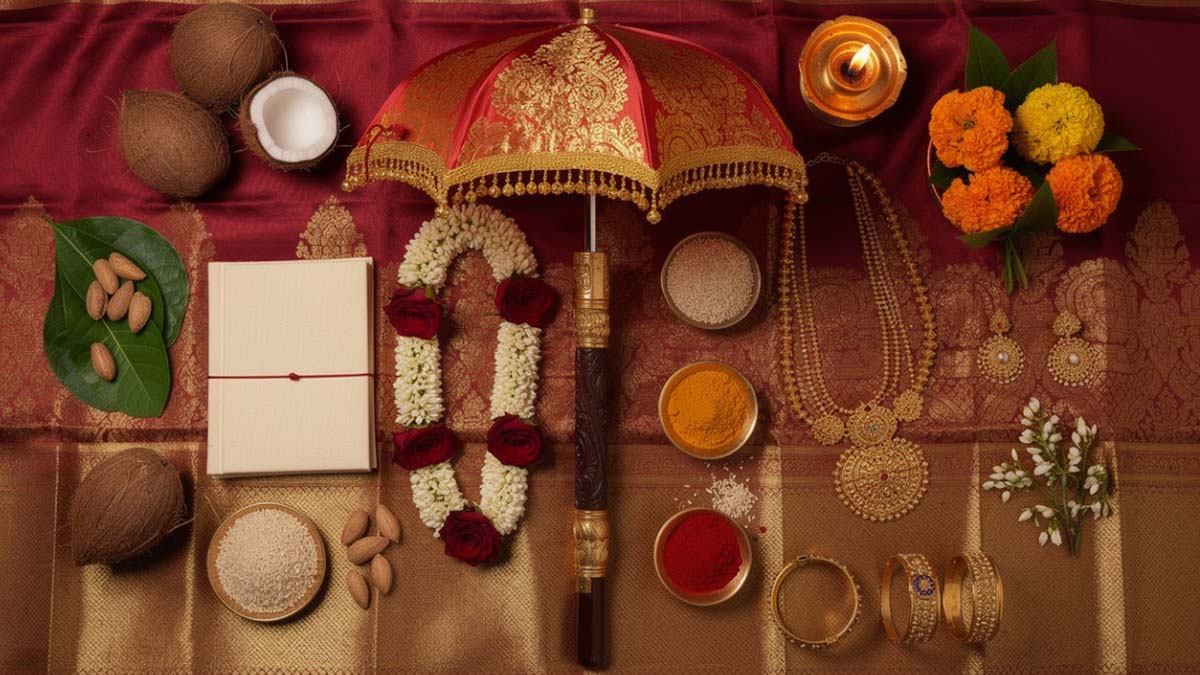
Brahmin Bridal Pattu Pai Collections
Religious cermony in Mumbai
Traditional Brahmin Wedding Pattu Pai Collections in Mumbai
For families planning a sacred Brahmin ceremony in Mumbai, Traditional Brahmin Wedding Pattu Pai Collections represent far more than clothing — they are a living expression of heritage, devotion, and ancestral pride. These curated sets typically include Kanjivaram silk wedding trousseau pieces, pattu pavadai bridal collections for young girls, and richly zari-bordered sarees for the bride and senior women. Mumbai's growing South Indian community has created strong demand for authentic pattu pai packages that honour every ritual moment, from the Naandi ceremony to the Saptapadi. Whether your wedding is an intimate family gathering in Matunga or a grand celebration at a Chembur banquet hall, understanding what a traditional wedding religious ceremony essentials package should include helps you spend wisely and dress every participant with grace.
Quick Answer
Traditional Brahmin Wedding Pattu Pai Collections are curated sets of silk garments — including Kanjivaram sarees, pattu pavadais, and dhoti-angavastram pieces — gifted or worn across key Brahmin wedding rituals. In Mumbai, these collections range from INR 15,000 to INR 3,00,000 depending on silk grade, zari content, and the number of garments included. They serve both religious ceremony requirements and trousseau gifting traditions.
What Are Traditional Brahmin Wedding Pattu Pai Collections?
Traditional Brahmin Wedding Pattu Pai Collections are carefully assembled sets of pure silk garments packaged in a single pai (box or bundle) and exchanged between families during a Brahmin wedding. The word 'pattu' means silk in Tamil and Telugu, and 'pai' refers to the traditional bag or box in which garments are presented. A standard collection includes the bride's Kanjivaram silk saree, a matching blouse piece, the groom's silk dhoti and angavastram, pattu pavadai bridal collections for young girls in the family, and sometimes a silk saree for the bride's mother. In Mumbai, families of Tamil Iyer, Tamil Iyengar, Telugu Brahmin, and Kannada Brahmin communities follow this gifting tradition closely. Each garment is chosen to align with the specific ritual in which it will be worn — the bride's main saree for the Muhurtham, a separate saree for the Nalangu, and so on. Choosing the right Brahmin wedding silk saree sets within each pai ensures ritual correctness and visual harmony across the ceremony.
Ritual Significance and What Each Garment Covers
Every garment inside a Traditional Brahmin Wedding Pattu Pai Collection has a designated ritual purpose, and understanding this prevents costly errors when ordering. The Muhurtham saree is the most important piece — it must be a pure Kanjivaram silk wedding trousseau saree with traditional motifs like the temple border, mango buttas, or peacock pallu. The Nalangu or Sumangali Prarthanai calls for a different saree, often in a contrasting colour to the Muhurtham saree. The pattu pavadai bridal collections for young girls are gifted by the groom's family and worn by nieces or younger sisters during the procession. South Indian wedding ceremony decor is closely tied to the colours of these silks — the mandap draping, flower arrangements, and even banana leaf placements are coordinated with the predominant saree colours. Families in Mumbai often consult with a pandit or experienced wedding planner familiar with Mumbai Brahmin wedding rituals to finalise the garment list before purchasing. Brahmin bridal silk attire is never selected casually; it carries blessings, family identity, and aesthetic continuity.
How Much Do Pattu Pai Collections Cost in Mumbai?
Pricing for Traditional Brahmin Wedding Pattu Pai Collections in Mumbai varies significantly based on silk purity, zari type, weave complexity, and the number of garments included in the set. A basic pattu pai for a modest ceremony — covering the bride's saree and a dhoti set — starts around INR 18,000 to INR 35,000. A mid-range collection that includes Kanjivaram silk wedding trousseau pieces for the bride, groom, and immediate family members typically falls between INR 60,000 and INR 1,50,000. Premium collections featuring handwoven pure silk with real gold zari, sourced directly from Kanchipuram weavers, can range from INR 1,80,000 to INR 3,00,000 or higher. Bridal trousseau planning Mumbai families should also budget for the pattu pavadai bridal collections separately, as these are often gifted by the groom's side and can cost INR 5,000 to INR 25,000 per set depending on the child's size and embellishment. Always request GST-inclusive pricing and check whether the quoted amount includes blouse bits, falls, and petticoats — these are frequently excluded.
Where in Mumbai Can You Source Authentic Collections?
Mumbai has well-established pockets for sourcing authentic Brahmin wedding silk saree sets, with Matunga (East and West) being the most prominent hub for the South Indian community. The area around King's Circle in Matunga is popularly called 'Mini Madras' and hosts numerous silk saree retailers familiar with Traditional Brahmin Wedding Pattu Pai Collections and the specific motifs each sub-community prefers. Mulund, Chembur, and Thane also have reputable retailers catering to Tamil and Telugu Brahmin families. For families seeking traditional wedding religious ceremony essentials beyond garments — including paddy, turmeric, sacred thread, and copper vessels — specialist puja supply shops in Matunga and Sion are reliable. When sourcing Kanjivaram silk wedding trousseau items, always ask for the Silk Mark certification issued by the Central Silk Board of India; this is the only government-backed guarantee of pure silk content. Online platforms have expanded access for Mumbai families who prefer doorstep delivery, but physically examining the zari, lustre, and weave density remains the most reliable quality check for Brahmin bridal silk attire.
How Should You Plan Bridal Trousseau Around the Ceremony Calendar?
Bridal trousseau planning Mumbai families must account for the full ritual calendar, not just the main wedding day. A typical four-day Brahmin wedding in Mumbai includes the Naandi, Sumangali Prarthanai, Muhurtham, and Grihapravesam — each requiring specific silk attire. Traditional Brahmin Wedding Pattu Pai Collections should therefore be planned with a garment-by-ritual mapping at least three to four months before the wedding date. Kanjivaram weavers and reputable retailers often require six to twelve weeks for custom weaves with specific border patterns or family initials woven into the saree. South Indian wedding ceremony decor planners in Mumbai recommend sharing the saree colour palette with the florist and mandap decorator early, so that marigold, jasmine, and rose selections complement rather than clash with the silk tones. Mumbai Brahmin wedding rituals also involve gifting Brahmin bridal silk attire to the bride's paternal aunts and the groom's sisters, so the total garment count is often higher than families initially estimate. Building a 10 to 15 percent buffer into your textile budget is standard practice among experienced bridal trousseau planners in the city.
Comparing Pattu Pai Collection Types for Mumbai Brahmin Weddings
Expert Recommendation
Best for intimate family ceremonies
Best for large guest-count celebrations
Best for budget-conscious families
Best for traditional purist families
Best for destination weddings from Mumbai
Best for modern Brahmin couples blending traditions
How to Choose the Right Option
✅ Pre-booking Checklist
- Map every ritual in your wedding calendar and list the garment required for each ceremony day
- Confirm the sub-community tradition (Tamil Iyer, Iyengar, Telugu Brahmin, Kannada Brahmin) to ensure correct motifs and colour norms
- Request Silk Mark certification for every pure silk purchase above INR 10,000
- Check whether blouse bits, falls, and petticoats are included in quoted prices
- Align the primary saree colour palette with your South Indian wedding ceremony decor vendor at least 8 weeks before the wedding
- Budget a 10-15 percent contingency for additional gifting sarees typically requested by elders closer to the wedding
- Confirm delivery timelines in writing if ordering custom-woven pieces from out-of-Mumbai weavers
- Label each garment by ritual day before packing to avoid confusion at the venue
🎯 Selection Criteria
- Silk purity — prioritise Silk Mark certified Kanjivaram or Dharmavaram weaves for main ceremony garments
- Zari quality — real gold zari retains lustre for decades; tested silver zari with gold coating is acceptable for secondary pieces
- Motif alignment — choose motifs (temple border, mango butta, rudraksham) that match your specific Brahmin sub-community's traditions
- Retailer credibility — prefer stores with documented sourcing from known weaving centres and transparent return policies
- Colour coordination — ensure the full pattu pai palette works cohesively for family photographs and ceremony aesthetics
- Garment count accuracy — confirm the exact number of sarees, dhotis, and pavadais included before finalising any package
💰 Cost / Quality Factors
- Silk grade (pure silk vs. art silk vs. blended) is the single largest driver of price variation
- Zari type (real gold, tested silver, or copper-based) significantly affects both cost and long-term value
- Weave complexity — intricate patterns with multiple colour threads cost more and take longer to produce
- Retailer location — Matunga-based stores may price higher than direct sourcing from Kanchipuram but offer convenience and easy returns
- Season timing — prices for Kanjivaram silk wedding trousseau pieces rise by 15-25 percent during peak Mumbai wedding season (November to February)
- Customisation add-ons — personalised initials, family symbols, or unusual border patterns carry a premium of INR 3,000 to INR 15,000 per saree
⚠️ Common Mistakes to Avoid
- Buying all garments at the last minute and accepting whatever colour is in stock rather than what is ritually appropriate
- Overlooking the pattu pavadai bridal collections for young girls until the week before the wedding, when sizes and designs are limited
- Assuming all silk sold in Mumbai is pure — always demand Silk Mark certification or conduct a burn test
- Failing to coordinate Traditional Brahmin Wedding Pattu Pai Collections colours with the mandap and floral decor, resulting in clashing ceremony photographs
- Ignoring the groom's dhoti and angavastram quality, which is as visible as the bride's saree during the Muhurtham
- Not accounting for the full garment count including extended family gifting sarees, leading to budget overruns close to the wedding date
People Also Ask
What is typically included in a Traditional Brahmin Wedding Pattu Pai Collection?
How do I verify the purity of silk in a pattu saree bought in Mumbai?
What is the difference between a pattu pavadai and a lehenga for a Brahmin wedding?
How far in advance should I order pattu sarees for a Mumbai Brahmin wedding?
Are there specific saree colours considered auspicious for a Brahmin Muhurtham in Mumbai?
What is the typical budget for a full Traditional Brahmin Wedding Pattu Pai Collection in Mumbai?
Can I buy Brahmin wedding pattu collections online and ship to Mumbai?
How many pattu sarees are typically gifted in a South Indian Brahmin wedding?
Related Experiences on Happiffie
Handwoven Silk Sarees for Your Big Day
Find Your Dream Bridal Lehenga
Find Your Perfect Bridal Silk Saree in Goa
Sacred Paruppu Thengai for Brahmin Weddings
Sacred Sounds for Your South Indian Wedding
Stunning Designer Bridal Trousseau Presentations
Sacred Addutera Rituals, Perfected in Goa
Frequently Asked Questions
What does 'pattu pai' literally mean in the context of a Mumbai Brahmin wedding?
Which Brahmin communities in Mumbai follow the pattu pai tradition?
Is it acceptable to buy readymade pattu sarees from Mumbai stores instead of ordering from Kanchipuram?
How many days before the Mumbai Brahmin wedding should pattu pai garments be ready?
What is the significance of the temple border in Kanjivaram silks used for Brahmin ceremonies?
Can the groom's silk dhoti in a Traditional Brahmin Wedding Pattu Pai Collection be a readymade piece?
Are there Mumbai-based event services that help coordinate Traditional Brahmin Wedding Pattu Pai Collections with the full ceremony?
What is the difference between Kanjivaram and Dharmavaram silk sarees for a Brahmin wedding?
Key Takeaways
- Traditional Brahmin Wedding Pattu Pai Collections are curated sets of pure silk garments covering every participant and ritual in a Brahmin wedding ceremony.
- In Mumbai, complete collections range from INR 40,000 for modest packages to INR 3,00,000 or more for premium handwoven sets.
- Silk Mark certification from the Central Silk Board of India is the only reliable government-backed guarantee of pure silk content.
- Matunga (King's Circle area) is Mumbai's primary hub for authentic Brahmin wedding silk saree sets and traditional wedding religious ceremony essentials.
- Custom-woven Kanjivaram pieces require a 6-12 week lead time; begin bridal trousseau planning Mumbai-side at least 3-4 months before the wedding.
- Aligning the saree colour palette with South Indian wedding ceremony decor is essential for cohesive ceremony visuals and photography.
- A 10-15 percent budget buffer for additional gifting sarees is standard practice, as elder requests for extra garments are common.
- Each garment within a Traditional Brahmin Wedding Pattu Pai Collection has a specific ritual role — purchasing without a ritual-mapped garment list is a leading cause of overspending.
Plan Your Brahmin Wedding Pattu Pai Collection with Happiffie
Connect with Mumbai's trusted South Indian wedding ceremony experts who understand every ritual, saree, and tradition that makes your Brahmin wedding truly sacred.
Explore Mumbai Vendors
Are you a Vendor? Grow Your Business with Happiffie!
- High intent verified leads
- Reverse auction opportunities
- AI business tools & insights
- Dedicated vendor dashboard
- Grow your business, your way
It's free & takes less than 2 minutes!