
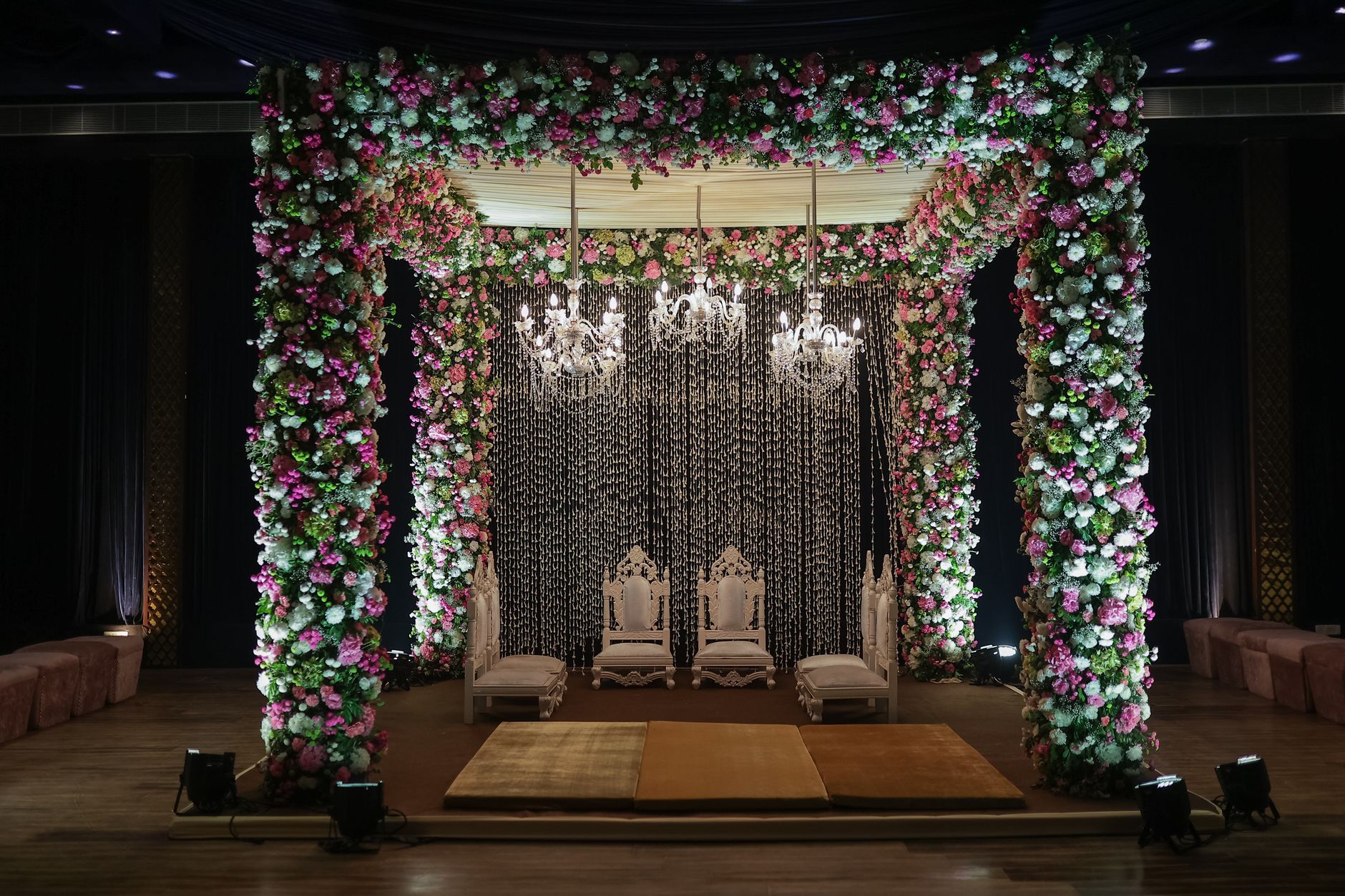
South Indian Ceremony Styling in Mumbai
Decor in Mumbai
South Indian Ceremony Styling in Mumbai: Complete Guide
South Indian Ceremony Styling brings the richness of Dravidian wedding traditions — jasmine garlands, mango-leaf toranams, brass lamps, and vibrant kanchipuram silk drapes — into Mumbai's contemporary event spaces. Whether you are planning a Tamil Brahmin muhurtham, a Malayali Nair wedding, or a Telugu sapta-padi ceremony, authentic traditional South Indian floral setup transforms any hall or lawn into a living temple. Mumbai's diverse South Indian diaspora, concentrated in areas like Matunga, Chembur, and Thane, has created a thriving community of specialist decorators who understand ritual sequencing, sacred geometry, and the banana leaf and marigold aesthetics that define these ceremonies. Happiffie connects you with verified decor vendors who deliver both devotion and design.
Quick Answer
South Indian Ceremony Styling refers to the ritual-specific decoration of wedding and ceremony spaces using elements rooted in Dravidian traditions: jasmine and marigold garlands, brass kuthuvilakku lamps, banana stems, mango-leaf toranams, kolam art, and silk-draped mandaps. In Mumbai, specialist decorators offer packages for Tamil, Telugu, Kannada, and Malayali ceremonies, with costs typically ranging from INR 80,000 to INR 6,00,000 depending on venue size, floral volume, and customisation depth.
What Makes South Indian Ceremony Styling Distinct from North Indian Decor?
South Indian Ceremony Styling is rooted in Agamic temple aesthetics rather than Mughal-influenced opulence. Where North Indian decor leans on rose petals, chandeliers, and draping fabric, a South Indian setup centres on living botanical elements: fresh jasmine strings, banana stems anchoring each mandap pillar, coconut fronds woven into canopies, and clay or brass lamps placed at precise ritual positions. The colour palette draws from nature — turmeric yellow, vermilion red, and deep green — rather than gold foil or LED-lit backdrops. Tamil wedding decor specifically incorporates a kolam-drawn entrance and a silk-canopied oonjal (swing) for the couple, while Telugu setups typically feature a talambralu (rice-shower) stage with a raised wooden platform. These distinctions matter enormously to families who want ceremonies conducted correctly, and Mumbai decorators with genuine South Indian specialisation understand the difference between a decorative prop and a ritually significant element.
Key Elements of an Authentic Traditional South Indian Floral Setup
A traditional South Indian floral setup is built on a hierarchy of sacred and aesthetic components. At the foundation sits the mandap — four or eight pillars wrapped in banana stems and marigold strings, topped with a canopy of mango leaves and coconut fronds. Brass kuthuvilakku (lamp towers) flank the entrance and the main seating area, their wicks fed with sesame oil. Fresh jasmine — sold by the metre in Mumbai's Dadar flower market — is woven into hanging curtains, bride's hair accessories, and stage borders. Banana leaf and marigold aesthetics extend to the dining setup as well: traditional sadhya or lunch is served on banana leaves edged with small floral arrangements. Carnatic wedding stage design adds another layer with rangoli or kolam panels at stage corners, often drawn live by a specialist artist on the morning of the ceremony. Each element has a ritual function, so the best decorators brief their teams on placement timings relative to muhurtham schedules.
How Much Does South Indian Ceremony Styling Cost in Mumbai?
South Indian Ceremony Styling in Mumbai is priced across a wide band depending on scale, sourcing, and customisation. Entry-level packages for intimate ceremonies of 50-100 guests in a Matunga community hall or Chembur banquet start around INR 80,000 to INR 1,20,000 and typically include mandap florals, entrance toranam, and basic lamp placement. Mid-range packages for 150-300 guests — common for suburban venues in Thane or Navi Mumbai — range from INR 1,80,000 to INR 3,50,000 and add a floral oonjal, full-stage backdrop, and a traditional South Indian floral setup for the dining hall. Premium or destination-style setups for 400-plus guests at hotels like those in Andheri or BKC, featuring imported flowers, custom brass rentals, and live kolam artists, can reach INR 5,00,000 to INR 6,00,000. South Indian wedding budget planning should account for jasmine price volatility — rates spike by 40-60% during peak wedding months of December, January, and April-May — so locking in florals through your decorator early is critical.
Carnatic Wedding Stage Design: What Should the Mandap Setup Include?
A well-executed Carnatic wedding stage design positions the couple's platform as the visual and spiritual centrepiece of the entire venue. The stage should face east or north as per Vastu, with the main backdrop formed by layered arches of jasmine, marigold, and tube roses in the community's preferred colour sequence. Brass kalasam (ceremonial pots) are placed at each arch corner, filled with rice, mango leaves, and a coconut. The oonjal or swing — mandatory in Tamil and some Kannada ceremonies — should be suspended from a sturdy ceiling beam or a freestanding wooden frame, decorated with fresh flower chains and silk fabric. Side panels often feature large banana-leaf installations or jute-rope hangings with embedded terracotta motifs, reflecting Kerala or Tamil Nadu temple corridors. Brahmin ceremony mandap decor additionally requires a homa kund (fire pit) space at mandap centre — the decor team must leave a clear, ventilated 4-by-4-foot zone with a fireproof surface, coordinate with the priest on dimensions, and ensure no synthetic fabrics are used within two feet of the homa area.
How Do You Find and Evaluate a South Indian Ceremony Styling Specialist in Mumbai?
Evaluating a South Indian Ceremony Styling vendor in Mumbai requires more than reviewing a portfolio of pretty photographs. First, confirm that the decorator has executed ceremonies matching your specific regional tradition — Tamil Iyer, Tamil Nadar, Malayali Nair, Telugu, and Kannada ceremonies each have distinct mandap layouts and element placements. Ask to see an itemised work order that lists every floral element, lamp count, and fabric piece, so you can compare quotes fairly. Verify that the vendor sources jasmine and marigold from reliable wholesale suppliers (Dadar Flower Market is the benchmark for Mumbai freshness) and confirm their backup plan if a flower shipment is delayed. Mumbai wedding venue selection often locks a preferred vendor list, so check whether your chosen hall allows external decorators before signing. Discuss the setup timeline: a full traditional South Indian floral setup for 300 guests typically requires 8-10 hours of in-venue work, which means the team must access the hall the evening before. Finally, insist on a walkthrough one hour before guests arrive to correct wilted elements and confirm lamp placements with the priest.
South Indian Ceremony Styling Options in Mumbai: A Practical Comparison
Expert Recommendation
Best for intimate ceremonies (under 75 guests)
Best for large guest counts (300-plus)
Best for budget-conscious families
Best for traditional Brahmin ceremonies
Best for fusion or modern couples
Best for destination-style setups in Mumbai hotels
How to Choose the Right Option
✅ Pre-booking Checklist
- Confirm the decorator's experience with your specific regional tradition (Tamil, Telugu, Malayali, Kannada) before signing any contract.
- Verify venue access timing — ensure the team can enter at least 10 hours before the muhurtham for a full South Indian Ceremony Styling setup.
- Ask for a written itemised quote listing every element: stem count, lamp count, fabric meterage, and staffing hours.
- Check jasmine sourcing — confirm the vendor's supplier and request a freshness guarantee with a replacement clause for wilted florals.
- Clarify homa kund placement with both your priest and the decorator, ensuring a fireproof zone and ventilation compliance with the venue.
- Confirm the vendor's backup plan for last-minute floral shortages, especially during peak December-January and April-May wedding season.
- Review the dismantling plan — full South Indian floral setups generate significant organic waste; confirm the team clears the venue within the agreed window.
- Check whether the venue's preferred vendor list restricts external decorators and factor this into your Mumbai wedding venue selection.
🎯 Selection Criteria
- Regional specialisation: the decorator must demonstrate knowledge of your specific community's ritual layout, not just generic South Indian aesthetics.
- Floral sourcing transparency: vendors who source from Dadar Flower Market can guarantee same-day freshness critical for long ceremonies.
- Team size and logistics: a credible full-scale South Indian Ceremony Styling team has at least 8-12 members for a 200-guest event.
- Priest coordination: the best decorators have established working relationships with Vedic priests and can adjust timelines to match muhurtham requirements.
- Portfolio depth: request references or photo documentation of at least three ceremonies matching your tradition and guest-count range.
💰 Cost / Quality Factors
- Jasmine price volatility: rates can spike 40-60% in peak season, significantly affecting South Indian wedding budget planning — lock in pricing early.
- Venue size and ceiling height: taller ceilings enable grander toranam arches and suspended oonjal swings, impacting both design and cost.
- Floral import costs: using imported flowers like orchids or anthuriums alongside marigold raises package costs by 25-40%.
- Staffing hours: extended setup timelines or multiple ceremony zones each require additional labour, which is typically billed separately.
- Customisation depth: live kolam artists, custom brass rentals, and handwoven silk canopies are premium add-ons that substantially elevate the final quote.
- Dismantling and waste management: some Mumbai venues charge extra for post-event cleanup of organic material — clarify responsibility upfront.
⚠️ Common Mistakes to Avoid
- Booking a generic decor vendor without South Indian specialisation — incorrect element placement can disrupt ritual flow and upset elders.
- Ignoring jasmine freshness timelines — ordering arrangements too early for a long outdoor ceremony results in wilting before key ritual moments.
- Failing to coordinate the homa kund zone with the decorator — synthetic materials near the fire are a safety and ritual hazard.
- Overlooking the dining hall in the decor brief — banana leaf and marigold aesthetics in the dining area are highly visible to all guests and equally important.
- Not confirming venue rules on open flames — some Mumbai banquet halls restrict or prohibit brass lamps with live wicks, requiring electric alternatives.
- Underestimating setup time — assuming a four-hour setup for a full traditional South Indian floral setup leads to an incomplete venue on the day of the ceremony.
People Also Ask
Which neighbourhoods in Mumbai have the best South Indian wedding decor vendors?
Can a South Indian ceremony be styled inside a hotel banquet hall in Mumbai?
How far in advance should I book a South Indian wedding decor team in Mumbai?
What is a typical South Indian wedding decor package in Mumbai?
Is jasmine mandatory in South Indian Ceremony Styling?
Can I mix contemporary elements with traditional South Indian floral setup?
How many hours does it take to set up South Indian ceremony decor in Mumbai?
What is the difference between Tamil wedding decor and Malayali ritual decoration?
Related Experiences on Happiffie
Tamil Aarthi Plates for Your Wedding
Sacred Kerala Decor in Indore
Sacred Sounds for Your South Indian Wedding
Lucknow's Finest Stage Design
Celebrate Big at Trade Fair Grounds
Sacred Snacks for Every Brahmin Ritual
Frequently Asked Questions
What does South Indian Ceremony Styling typically include in a Mumbai wedding package?
Are there South Indian ceremony decor specialists near Matunga or Chembur in Mumbai?
How is Malayali ritual decoration different from Tamil wedding decor in Mumbai?
Can South Indian Ceremony Styling be done in a five-star hotel ballroom in Mumbai?
How do I plan a South Indian wedding budget for decor in Mumbai?
What is a Carnatic wedding stage design and who needs it?
What is the best time of year to book South Indian Ceremony Styling in Mumbai?
Does Happiffie verify South Indian decor vendors in Mumbai?
Key Takeaways
- South Indian Ceremony Styling in Mumbai is distinct from North Indian decor, rooted in botanical, temple-inspired elements like jasmine, banana stems, mango leaves, and brass lamps rather than fabric drapes and chandeliers.
- Costs range from INR 80,000 for intimate setups to INR 6,00,000 for premium hotel-scale events; jasmine price volatility in peak months is the single biggest budget variable.
- Tamil, Telugu, Kannada, and Malayali ceremonies each have distinct mandap layouts and ritual requirements — always specify your community to your decorator.
- A full traditional South Indian floral setup for 200-300 guests requires 8-12 hours of in-venue work, making evening-before access to the venue essential.
- Brahmin ceremony mandap decor demands a clear, ventilated homa kund zone and avoidance of all synthetic materials near the fire — verify this with both priest and decorator.
- Matunga, Chembur, and Thane are Mumbai's primary hubs for South Indian wedding decor expertise, with Dadar Flower Market as the benchmark for fresh floral sourcing.
- Book specialist South Indian Ceremony Styling vendors four to five months in advance during peak wedding season to secure both availability and locked-in floral pricing.
- Happiffie lists verified Mumbai decor vendors with regional South Indian specialisation, enabling transparent comparison of packages, pricing, and portfolio before you commit.
Find Your South Indian Ceremony Styling Expert in Mumbai
Browse verified decor specialists on Happiffie — compare packages, check regional expertise, and book with confidence for your muhurtham.
Explore Decor Vendors
Are you a Vendor? Grow Your Business with Happiffie!
- High intent verified leads
- Reverse auction opportunities
- AI business tools & insights
- Dedicated vendor dashboard
- Grow your business, your way
It's free & takes less than 2 minutes!