
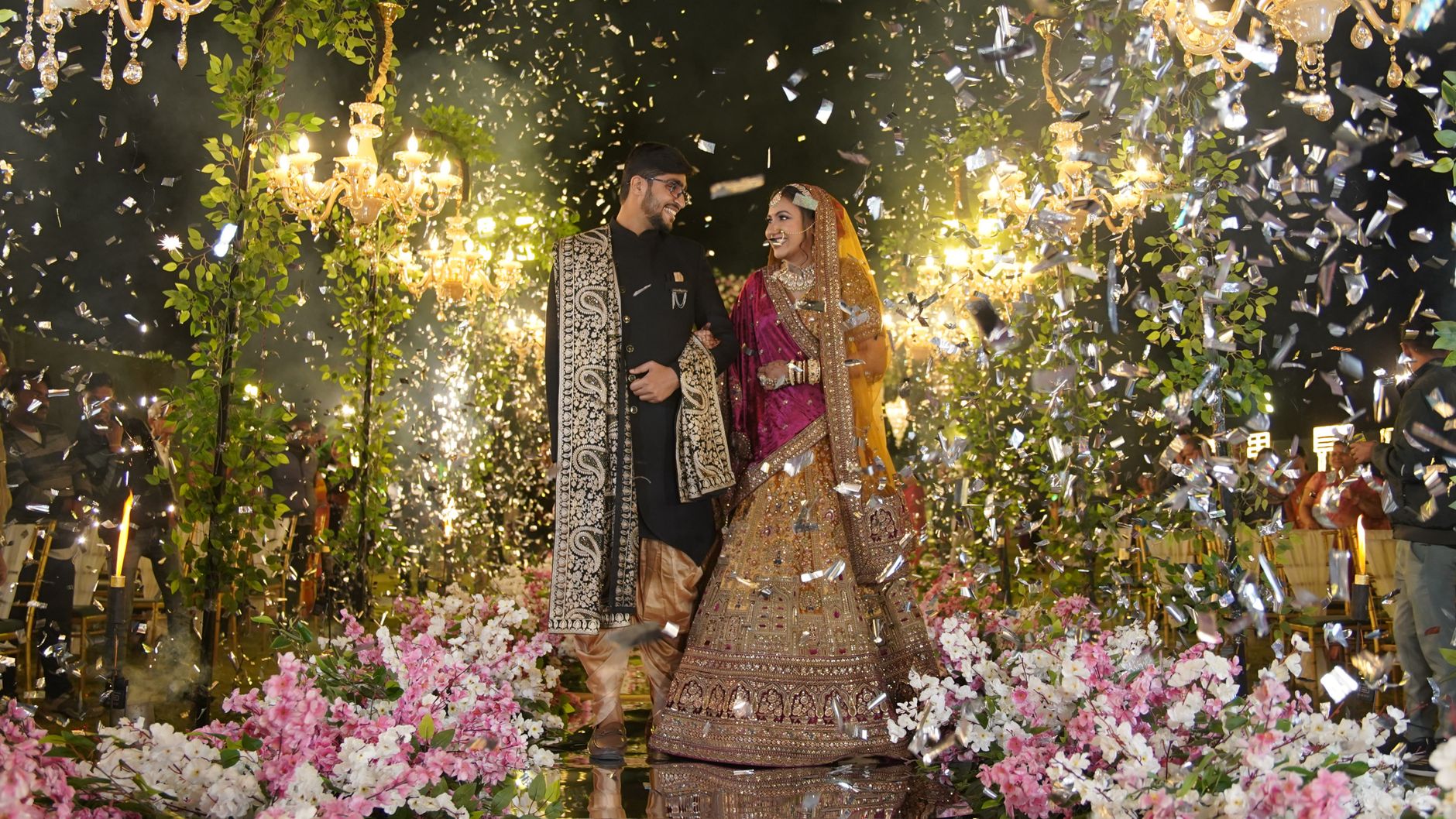
Seamless Entry. Zero Chaos.
Infrastructure in Mumbai
Smart Entry Control Systems for Mumbai Events & Weddings
Mumbai weddings are grand, high-energy affairs — from intimate roka ceremonies in Bandra to 1,000-guest shaadis at Andheri banquet halls. Managing who enters, when, and how is no longer a job for a clipboard and a stressed family member at the gate. Smart Entry Control Systems bring together automated guest check-in systems, real-time guest lists, and digital validation tools to create a smooth, dignified arrival experience. Paired with robust event security infrastructure and contactless event technology, these systems eliminate gate crashes, reduce entry queues, and give families the peace of mind to actually enjoy the celebration rather than manage it.
Quick Answer
Smart Entry Control Systems are technology-driven solutions that manage and validate guest access at events and weddings. They typically combine QR code or RFID-based digital ticketing and gate management, biometric entry management, and real-time dashboards to ensure only invited guests enter the venue. In a Mumbai wedding context, they replace manual registers, reduce entry queues significantly, prevent gate-crashing, and generate accurate headcounts — making them essential infrastructure for events with 200 or more guests.
What Are Smart Entry Control Systems and Why Do Mumbai Weddings Need Them?
Smart Entry Control Systems are integrated hardware-and-software setups that verify, log, and manage guest access at an event venue. Instead of relying on printed lists and manual ticking, these systems use QR codes, RFID wristbands, biometric scans, or facial recognition to validate each guest in real time. Mumbai, as India's most densely populated metro, presents unique wedding logistics challenges — high-rise banquet venues in Lower Parel, sprawling farmhouses in Madh Island, and heritage bungalows in Juhu all require different entry configurations. A proper system integrates with your digital invitation platform so every RSVP generates a unique entry credential. When a guest arrives, their credential is scanned, the database updates instantly, and entry is granted or flagged within seconds. This eliminates both accidental omissions and deliberate gate-crashing, which is a real concern at large Mumbai celebrations. Beyond security, these systems provide hosts with live attendance dashboards, so caterers and seating managers can adjust in real time — a genuine operational advantage for complex, multi-function weddings.
Key Technologies Inside a Modern Entry Control Setup
The backbone of any Smart Entry Control System is the credential layer — the method used to identify a guest. QR-code-based digital ticketing and gate management is the most common starting point: guests receive a unique QR code via WhatsApp or email, which is scanned at the gate using a handheld device or fixed scanner. RFID access control for events goes a step further, embedding guest credentials in wristbands or printed cards that are tapped against a reader, ideal for multi-day functions like a two-day sangeet-and-wedding combo at a Goregaon resort. Biometric entry management, which uses fingerprint or facial recognition, is the premium tier — contactless, very fast, and virtually spoof-proof, though it requires advance biometric enrollment from guests, which suits destination-wedding formats better than walk-in day guests. Most systems today pair these hardware layers with a cloud-based operator dashboard, giving the event manager, security staff, and the host family visibility into arrivals in real time. The best vendors also integrate with WhatsApp-based RSVP flows, which aligns with how most Indian wedding communications already work.
How Much Do Smart Entry Control Systems Cost in Mumbai?
Pricing for Smart Entry Control Systems in Mumbai depends on guest count, number of entry points, credential type, and duration of the event. For a 200-300 guest function with single-gate QR scanning, expect to budget between Rs. 15,000 and Rs. 35,000 for a full-day setup including operator staff. RFID access control for events — where wristbands are printed and encoded for each guest — typically adds Rs. 20 to Rs. 60 per wristband on top of base setup fees, pushing total costs for a 500-guest wedding to Rs. 60,000–Rs. 1,20,000. Biometric entry management systems, requiring pre-event enrollment and higher-grade hardware, start around Rs. 80,000 for a single-day event and scale upward for multi-function deployments. Contactless event technology packages bundled with digital ticketing and gate management often come as a combined offering from event-tech vendors, making them more cost-effective than sourcing each component separately. Always request itemised quotes — separate hardware rental, software licensing, staffing, and contingency support costs.
Comparing Entry Control Options for Indian Wedding Venues
Not every Mumbai venue or wedding format suits the same entry control approach. A 60-guest intimate reception at a Worli restaurant does not need the same infrastructure as a 700-guest baraat procession arriving at a Mulund banquet hall. When evaluating Smart Entry Control Systems, consider the physical layout of the venue — the number of entry gates, whether there is a pre-function lobby for credential scanning, and whether power and internet connectivity are reliable. Wedding venue crowd management also depends on how your guest list is structured: are all guests arriving within a 30-minute window (common at muhurat-driven ceremonies) or across a three-hour cocktail window? Simultaneous arrival peaks demand higher scanner throughput, which means more lanes or faster biometric entry management terminals. The comparison table below maps common setup types to their strengths and ideal use cases, giving you a data-driven starting point.
What Are the Most Common Mistakes Families Make with Event Entry Planning?
The single biggest mistake is treating Smart Entry Control Systems as a last-minute add-on. Entry infrastructure needs to be confirmed at least 3-4 weeks before the event so guest credentials can be generated, tested, and communicated. Families often underestimate the number of entry lanes needed — one scanner lane handles roughly 150-200 guests per hour under smooth conditions; a 600-guest wedding with a 45-minute arrival window needs at least three to four lanes. Another common error is not accounting for elderly guests or those without smartphones, who cannot self-scan QR codes — a well-designed system always includes a backup manual override lane. Guest experience at Indian weddings is deeply tied to arrival dignity; long queues at the gate set a negative tone before the celebration even begins. Finally, many families skip the post-event data export, which is actually invaluable — real headcount data helps caterers and future event planners calibrate portion sizes and seating accurately.
Smart Entry Control System Types: Side-by-Side Comparison for Mumbai Events
Expert Recommendation
Best for intimate celebrations (under 150 guests)
Best for large banquet weddings (500+ guests)
Best for destination or resort weddings
Best for budget-conscious families
Best for multi-day functions
Best for corporate and hybrid events
How to Choose the Right Option
✅ Pre-booking Checklist
- Confirm the venue's number of entry gates and available space for scanner stations at least 4 weeks in advance
- Ensure your guest RSVP platform integrates with or exports data to the entry control vendor's system
- Request a test scan demonstration before the event day to validate credential generation and scanner speed
- Designate a dedicated entry coordinator who has admin access to the live dashboard on the day
- Plan a manual fallback lane for guests without smartphones or those who have lost credentials
- Collect post-event attendance logs and share with caterers and venue managers for future calibration
- Confirm that the vendor provides on-site technical support staff, not just remote helpline access
- Check whether the system supports differential zone access if you have VIP or family-only areas
🎯 Selection Criteria
- Guest count and expected arrival peak window — determines number of lanes and scanner throughput needed
- Venue type and connectivity — outdoor or heritage venues need offline-capable hardware
- Integration with your invitation and RSVP platform for seamless credential generation
- Vendor's track record with similar-scale Indian wedding or event deployments in Mumbai
- Data privacy policy — confirm how biometric or personal data is stored, used, and deleted post-event
- Scalability — can the system handle last-minute plus-one additions or on-the-day guest list changes
💰 Cost / Quality Factors
- Base hardware rental cost vs. per-guest variable cost (wristbands, printed credentials)
- Number of operator staff included vs. hired separately — staffing is often 40–50% of total cost
- Software licensing fees for the dashboard, RSVP integration, and post-event reporting
- Connectivity backup costs — dedicated mobile hotspot or backup 4G router rental
- Contingency support charges for extended event hours or last-minute guest list changes
- Premium pricing for biometric enrollment sessions held before the event date
⚠️ Common Mistakes to Avoid
- Booking entry control infrastructure less than two weeks before the event — insufficient time for credential generation and testing
- Underestimating the number of scanner lanes for simultaneous arrival peaks at muhurat-driven ceremonies
- Choosing a system without a manual override lane, leaving elderly or credential-less guests stranded at the gate
- Not briefing guests on how to use their credential — include a one-sentence instruction in your invitation message
- Ignoring post-event data exports, which are valuable for catering quantity planning and future event benchmarking
- Selecting a vendor based on price alone without verifying their outdoor or large-event deployment experience in Mumbai
People Also Ask
Can Smart Entry Control Systems work at outdoor venues in Mumbai like farmhouses or beach properties?
How early do guests receive their entry credentials when using digital ticketing and gate management?
Is biometric entry management suitable for large Indian joint-family weddings where many guests are elderly?
What happens if a guest loses their QR code or RFID wristband on the wedding day?
Do RFID access control systems for events generate any post-event reports?
How does contactless event technology improve the guest experience at a Mumbai wedding?
Is it possible to set up differential access zones using Smart Entry Control Systems at a wedding?
How does automated guest check-in differ from a traditional security guard system?
Related Experiences on Happiffie
Zero Chaos. Every Guest Welcomed.
Secure Event Access with RFID Technology
Seamless Entry. Smooth Exits. Happiffie.
Simplify Guest Coordination
Transform Your Dream Wedding Venue
Mumbai's Finest Wedding Infrastructure
Master Guest Experiences for Your Celebration
Illuminate Every Moment with Laser Magic
Frequently Asked Questions
What is the minimum guest count where Smart Entry Control Systems become worthwhile in Mumbai?
Can RFID access control for events be used at venues that have multiple entry points?
How does biometric entry management handle data privacy for wedding guests?
Does automated guest check-in work if the venue has poor internet connectivity?
Can Smart Entry Control Systems be integrated with live seating management software?
How does digital ticketing and gate management handle VIP or family entrances separately?
What contingency should families have if the Smart Entry Control System fails on the wedding day?
Are there Mumbai-specific regulations around using facial recognition or biometric data at private events?
Key Takeaways
- Smart Entry Control Systems replace manual guest lists with real-time digital validation, dramatically reducing gate queues and entry disputes at Mumbai weddings.
- QR-code systems suit budgets under Rs. 35,000 for mid-size events; RFID access control for events is the best value at scale for 300–1,000 guests.
- Biometric entry management offers the highest security but requires advance guest enrollment — best suited for exclusive or destination wedding formats.
- Always plan for a manual fallback lane to maintain a dignified guest experience at Indian weddings, particularly for elderly or less tech-savvy attendees.
- Multi-lane setups are essential for simultaneous arrival peaks; one scanner lane handles roughly 150–200 guests per hour under optimal conditions.
- Post-event attendance data exports are a practical tool for caterers, venue managers, and future event planning — always request them from your vendor.
- Contactless event technology bundled with digital ticketing and gate management offers the best cost-to-feature ratio for most Mumbai family celebrations.
- Book entry infrastructure at least 3–4 weeks before the event to allow credential generation, testing, and guest communication.
Get Your Mumbai Wedding Entry Infrastructure Right
Browse verified Smart Entry Control Systems providers on Happiffie — compare packages, check availability, and get custom quotes for your event size and venue.
Explore Entry Solutions
Are you a Vendor? Grow Your Business with Happiffie!
- High intent verified leads
- Reverse auction opportunities
- AI business tools & insights
- Dedicated vendor dashboard
- Grow your business, your way
It's free & takes less than 2 minutes!