
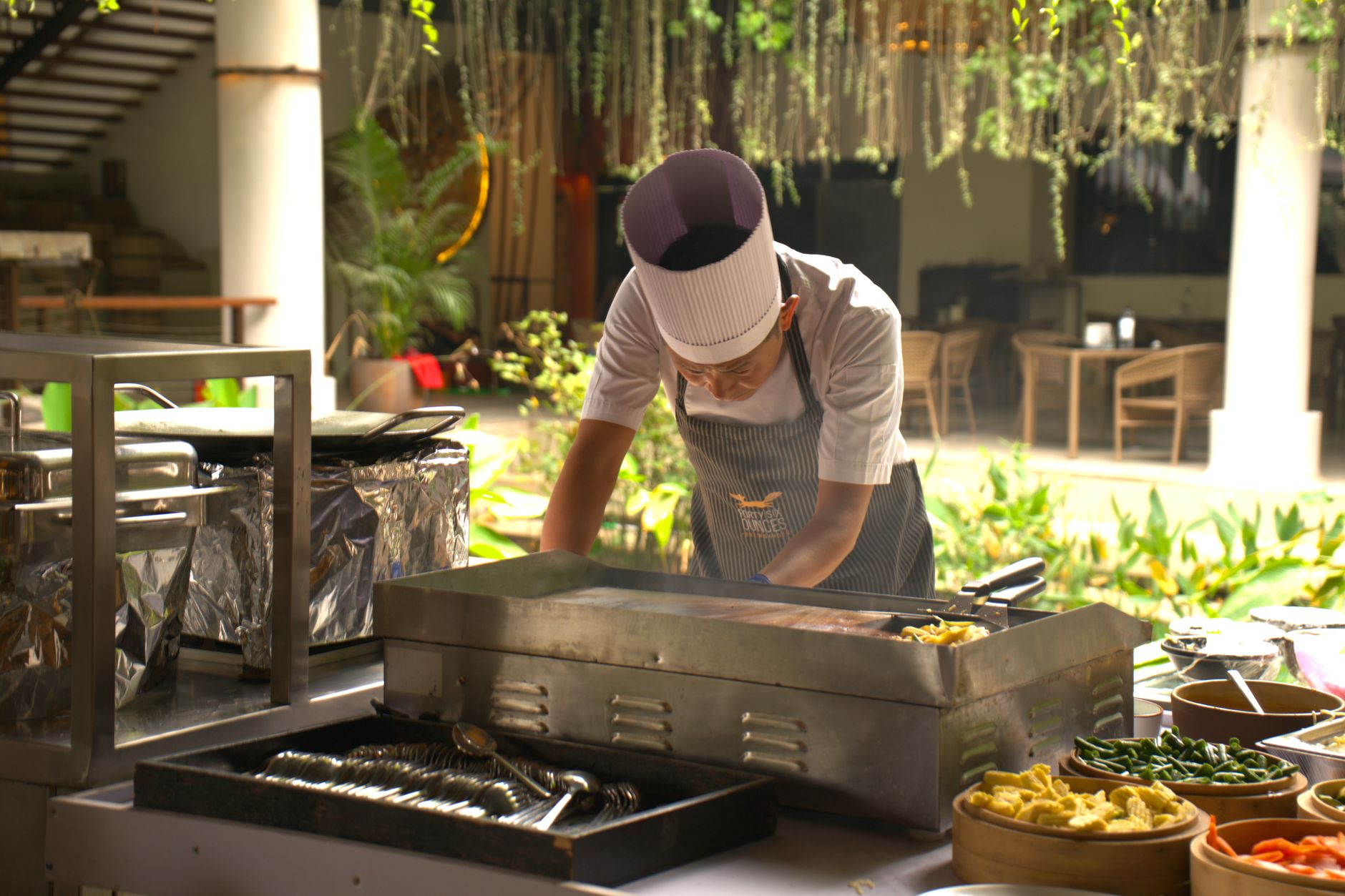
Asia on a Plate, Live at Your Event
F&B in Mumbai
Live Pan Asian Kitchen Concepts for Mumbai Events
Live Pan Asian Kitchen Concepts are redefining the F&B experience at Mumbai weddings, corporate galas, and milestone celebrations. From sizzling wok counters in Bandra banquet halls to hand-rolled sushi bars at Juhu beachside venues, these setups transform catering into a full sensory performance. Unlike a static buffet, Asian live cooking stations let guests customise bowls of ramen, dim sum, and pad thai in real time, ensuring food is served piping hot and theatrically fresh. For hosts seeking premium buffet catering options that leave a lasting impression, there is no more memorable choice than a curated pan Asian spread cooked live before your guests.
Quick Answer
Live Pan Asian Kitchen Concepts are interactive catering setups where trained chefs cook Japanese, Chinese, Thai, Korean, and Vietnamese dishes live at your event. Guests choose ingredients and watch their food prepared fresh — at wok counters, sushi rolls bars, or dim sum stations. Popular at Mumbai weddings, corporate events, and social parties, these concepts typically cost between INR 800 and INR 2,200 per plate depending on the number of counters, cuisine variety, and guest count.
What Exactly Are Live Pan Asian Kitchen Concepts?
Live Pan Asian Kitchen Concepts are fully staffed, chef-operated food stations that bring the theatre of Asian restaurant kitchens into your event venue. Each station is dedicated to a specific cuisine or cooking technique — a teppanyaki grill, a dim sum steamer, a Thai wok counter, or a sushi rolling bar. Chefs engage guests directly, explaining ingredients, adjusting spice levels, and plating dishes to order. This format is fundamentally different from a pre-cooked buffet because the food is assembled or cooked at the moment of serving. In Mumbai's competitive event catering scene, live food station experiences like these have become a strong differentiator, signalling a host's investment in guest experience. They work equally well for intimate 50-guest sangeet nights in Andheri and grand 800-guest wedding receptions at Five Star hotels in Lower Parel.
Why Mumbai Couples and Event Hosts Choose Asian Live Cooking Stations
Mumbai has one of India's most food-literate event audiences. Guests at a Powai tech company offsite or a Worli wedding reception have dined at premium Asian restaurants and expect comparable quality at private events. Asian live cooking stations deliver that expectation while adding a communal, interactive layer that a restaurant cannot. Pan Asian food counters also solve a common catering headache — food quality degrading over a long service window. Because dishes are made to order, the last guest served at the 10 PM mark enjoys the same freshness as the first guest at 8 PM. Themed event food setups around Asian cuisine also double as décor: bamboo screens, lantern lighting, and chef uniforms all contribute to a cohesive visual aesthetic that elevates venue styling.
How Much Do Live Pan Asian Kitchen Concepts Cost in Mumbai?
Pricing for Live Pan Asian Kitchen Concepts in Mumbai is typically structured per plate or per counter per event. A single interactive Asian cuisine setup — say, one dim sum station with two chefs — begins at approximately INR 45,000 to INR 70,000 for a 200-guest event, translating to roughly INR 225–350 per head for that station alone. A comprehensive multi-counter arrangement covering Japanese, Thai, and Chinese cuisines with live wok and noodle stations, a sushi counter, and a dessert mochi bar can range from INR 900 to INR 2,200 per plate all-inclusive. Venue location influences cost significantly: setups in South Mumbai or premium Bandra venues with restricted service lifts and tight kitchen access attract a 10–20% surcharge. Wedding catering Mumbai vendors typically offer package discounts when pan Asian counters are bundled with Indian main course stations.
Cuisines and Formats Within a Pan Asian Kitchen
A well-designed pan Asian food counters arrangement typically draws from at least three distinct Asian culinary traditions to give guests meaningful variety. Japanese counters can feature sushi rolling, ramen, or teppanyaki grills where chefs theatrically sear proteins on a hot iron plate. Chinese stations focus on dim sum baskets, Cantonese wonton soup, or Sichuan dry-wok preparations. Thai counters serve pad thai, green curry, and satay with peanut dipping sauce. Korean concepts have grown sharply popular in Mumbai, with bibimbap bowls and Korean fried chicken finding enthusiastic audiences. Vietnamese pho bars, where guests build their own noodle bowl with fresh herbs, bean sprouts, and broth, add a lighter, wellness-oriented counter for health-conscious guests. Premium buffet catering options often include a pan Asian dessert counter with mochi, matcha churros, and fried ice cream to round off the meal.
How Do You Plan and Book Live Pan Asian Kitchen Concepts in Mumbai?
Planning Live Pan Asian Kitchen Concepts requires decisions across cuisine selection, staffing, equipment logistics, and venue coordination — ideally beginning four to six weeks before the event date. Start by confirming your venue's kitchen infrastructure: does it have a gas supply point near the banquet floor, adequate ventilation for wok cooking, and power capacity for induction counters? Next, shortlist caterers with verifiable experience in interactive Asian cuisine setups, and request a tasting session — live food station experiences are only as good as the on-the-day execution, and a tasting reveals knife skills, seasoning balance, and presentation quality. Communicate your guest profile clearly: a corporate event in BKC may lean toward lighter Japanese and Vietnamese options, while a festive family wedding in Chembur may call for bolder Chinese and Thai flavours. Happiffie's curated network of Mumbai F&B vendors specialising in Live Pan Asian Kitchen Concepts makes comparison, shortlisting, and booking straightforward, with transparent pricing and verified reviews.
Live Pan Asian Kitchen Concepts: Setup Types Compared
Expert Recommendation
Best for intimate celebrations (30–80 guests)
Best for large wedding receptions (400+ guests)
Best for corporate and MICE events
Best for budget-conscious hosts
Best for destination and farmhouse events near Mumbai
Best for cocktail-style standing receptions
How to Choose the Right Option
✅ Pre-booking Checklist
- Confirm venue has adequate ventilation or exhaust for live wok and flame cooking
- Check whether the venue permits open-flame gas burners or requires induction-only setups
- Request a live tasting session from your shortlisted caterer before signing the contract
- Clarify the vegetarian-to-non-vegetarian guest ratio and share it with your caterer
- Agree on the number of chefs, assistants, and service staff per counter in the written agreement
- Confirm equipment — counters, woks, steamers, induction units — is included in the quoted price
- Coordinate setup and breakdown timings with the venue manager to avoid conflict with other vendors
- Discuss a contingency plan for ingredient shortages or equipment failure on the event day
🎯 Selection Criteria
- Chef team's demonstrable experience with the specific Asian cuisines on your chosen menu
- Quality and freshness of ingredients — sourcing from established wholesale markets or importers
- Ability to handle your exact guest count without compromising service speed or food quality
- Flexibility to customise spice levels, portion sizes, and dietary accommodations
- Track record at similar venue types — banquet hall, outdoor lawn, rooftop, or farmhouse
💰 Cost / Quality Factors
- Number of live counters directly drives total cost — each additional station adds INR 40,000–80,000
- Imported ingredients (Japanese short-grain rice, authentic fish sauce, Korean gochujang) increase cost versus local substitutes
- Chef specialisation — a trained sushi chef commands a significantly higher day rate than a general Asian cuisine cook
- Venue accessibility surcharges apply at locations with restricted loading, upper-floor banquet rooms, or limited parking for catering vehicles
- Event duration beyond three hours may require additional ingredient replenishment charges
- Off-season bookings (March through June) often attract 10–20% lower pricing from caterers
⚠️ Common Mistakes to Avoid
- Booking a vendor without a live tasting — photographs and menus do not reveal actual food quality
- Under-staffing counters, resulting in long queues and cold food during peak service
- Choosing too many cuisine types without matching the budget, leading to thin, underprepared execution across all stations
- Ignoring venue infrastructure constraints — attempting live wok cooking in a venue without commercial exhaust is a fire-safety and comfort issue
- Not specifying vegetarian-safe prep areas in the contract, risking cross-contamination complaints
- Finalising the menu without consulting your primary guest demographic — a health-focused corporate crowd has different preferences from a festive family wedding audience
People Also Ask
What cuisines are included in a live pan Asian kitchen at a Mumbai wedding?
How many chefs are needed for a live pan Asian station at a 300-guest event?
Are live Asian food stations suitable for guests who eat only vegetarian food?
Can live pan Asian kitchen concepts work at an outdoor venue in Mumbai?
How far in advance should I book a live pan Asian catering vendor in Mumbai?
What is the difference between a live pan Asian kitchen and a regular Asian buffet?
What budget should I set aside for live pan Asian kitchen concepts at my Mumbai wedding?
Which Mumbai neighbourhoods have the best venues for live pan Asian kitchen setups?
Related Experiences on Happiffie
Live Cooking That Wows Your Guests
Pan Asian Dining Redefined
Pan Asian Food Bars in Goa
Craft Your Perfect Wedding Menu
Live Food Counters for Pune Events
Roll In the Flavours, Pune!
Transform Your Kochi Event with Premium Displays
Frequently Asked Questions
What are Live Pan Asian Kitchen Concepts and how do they work at a Mumbai event?
How many live pan Asian counters do I need for a 250-guest Mumbai wedding?
Are live pan Asian kitchen setups allowed at Mumbai's heritage and older banquet venues?
Can Live Pan Asian Kitchen Concepts be combined with Indian food stations at a wedding?
What is the minimum guest count for a live pan Asian kitchen to be cost-effective?
Do live pan Asian kitchen vendors handle décor and styling of the food counters?
How do I verify the quality of a pan Asian catering vendor before booking in Mumbai?
Is it possible to have a fully vegan menu at a live pan Asian kitchen in Mumbai?
Key Takeaways
- Live Pan Asian Kitchen Concepts transform event catering into an interactive performance, with chefs cooking Japanese, Chinese, Thai, Korean, and Vietnamese dishes live at your venue.
- Mumbai weddings and corporate events increasingly prefer Asian live cooking stations over static buffets because they ensure fresher food, better guest engagement, and higher visual impact.
- Pricing ranges from INR 800 to INR 2,200 per plate in Mumbai depending on the number of counters, cuisine complexity, ingredient sourcing, and venue logistics.
- Venue infrastructure — ventilation, gas or induction access, floor space — must be confirmed before booking any live food station experiences.
- A live tasting session is non-negotiable; it reveals chef skill, ingredient quality, and execution speed before you commit to a contract.
- Bundling pan Asian counters with Indian main course stations in wedding catering Mumbai packages often delivers better per-plate value than booking them separately.
- Off-season bookings and induction-based setups can meaningfully reduce costs without sacrificing the quality of interactive Asian cuisine setups.
- Happiffie connects Mumbai hosts with verified F&B vendors specialising in Live Pan Asian Kitchen Concepts, enabling easy comparison and transparent booking.
Bring Asia Alive at Your Next Mumbai Event
Explore Happiffie's curated network of Mumbai F&B vendors specialising in Live Pan Asian Kitchen Concepts — compare packages, request tastings, and book with confidence.
Explore Pan Asian Vendors
Are you a Vendor? Grow Your Business with Happiffie!
- High intent verified leads
- Reverse auction opportunities
- AI business tools & insights
- Dedicated vendor dashboard
- Grow your business, your way
It's free & takes less than 2 minutes!